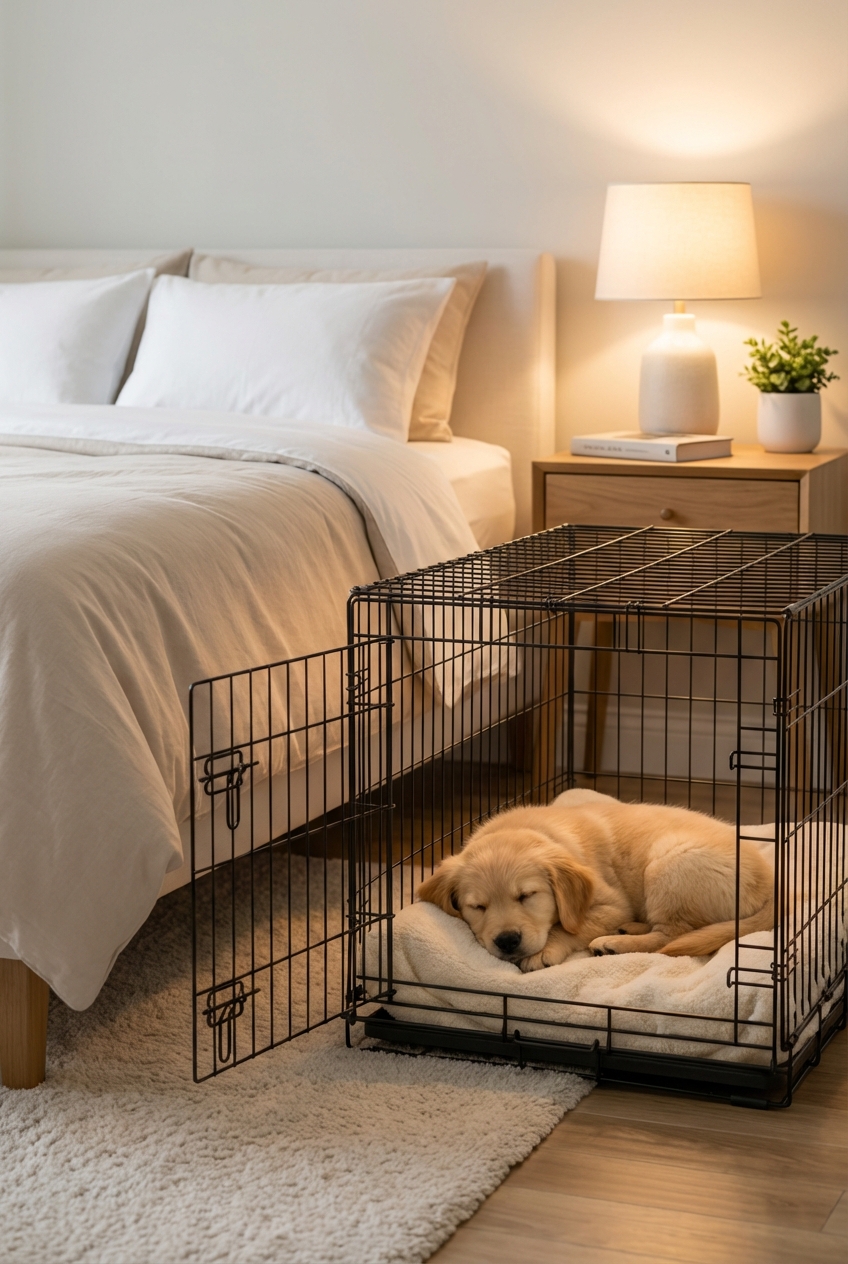
A vet-approved guide to crate training your puppy at night: ideal crate setup, safe comfort tips, bedtime routine, handling crying, and boring potty breaks f...
Article
•
Designer Mixes
Crate Training a Puppy at Night

Shari Shidate
Designer Mixes contributor
Bringing home a puppy is exciting, exhausting, and honestly a little emotional, especially at bedtime. As a veterinary assistant here in Frisco, Texas, I hear the same worry all the time: “I don’t want my puppy to feel abandoned at night.” The good news is that nighttime crate training can be both family-friendly and kind when you set it up the right way.
Crate training is not about punishment. It is about creating a safe “den” where your puppy can sleep, settle, and learn a predictable routine. That routine is what helps the whole family get better rest.
Why night crate training helps
Most puppies do best with structure. At night, a crate can:
- Protect your puppy from chewing cords, swallowing toys, or getting into household hazards while you sleep.
- Support potty training because many puppies avoid soiling their sleeping area (though very young pups, puppy-mill backgrounds, and medical or GI issues can change that).
- Reduce nighttime chaos because your puppy learns where to rest instead of roaming and crying for attention in different places.
- Give kids clarity about boundaries: when the puppy is in the crate, the puppy is resting.
Helpful context: puppies wake often because they have small bladders and immature sleep patterns. A crate does not stop normal puppy needs, but it helps you respond consistently.
Set up the crate for calm
Pick the right size
The crate should be large enough for your puppy to stand up, turn around, and lie down comfortably. Too large can make potty accidents more likely because the puppy may sleep on one side and eliminate on the other. If your crate is sized for an adult dog, use a divider panel as your puppy grows.
Location matters
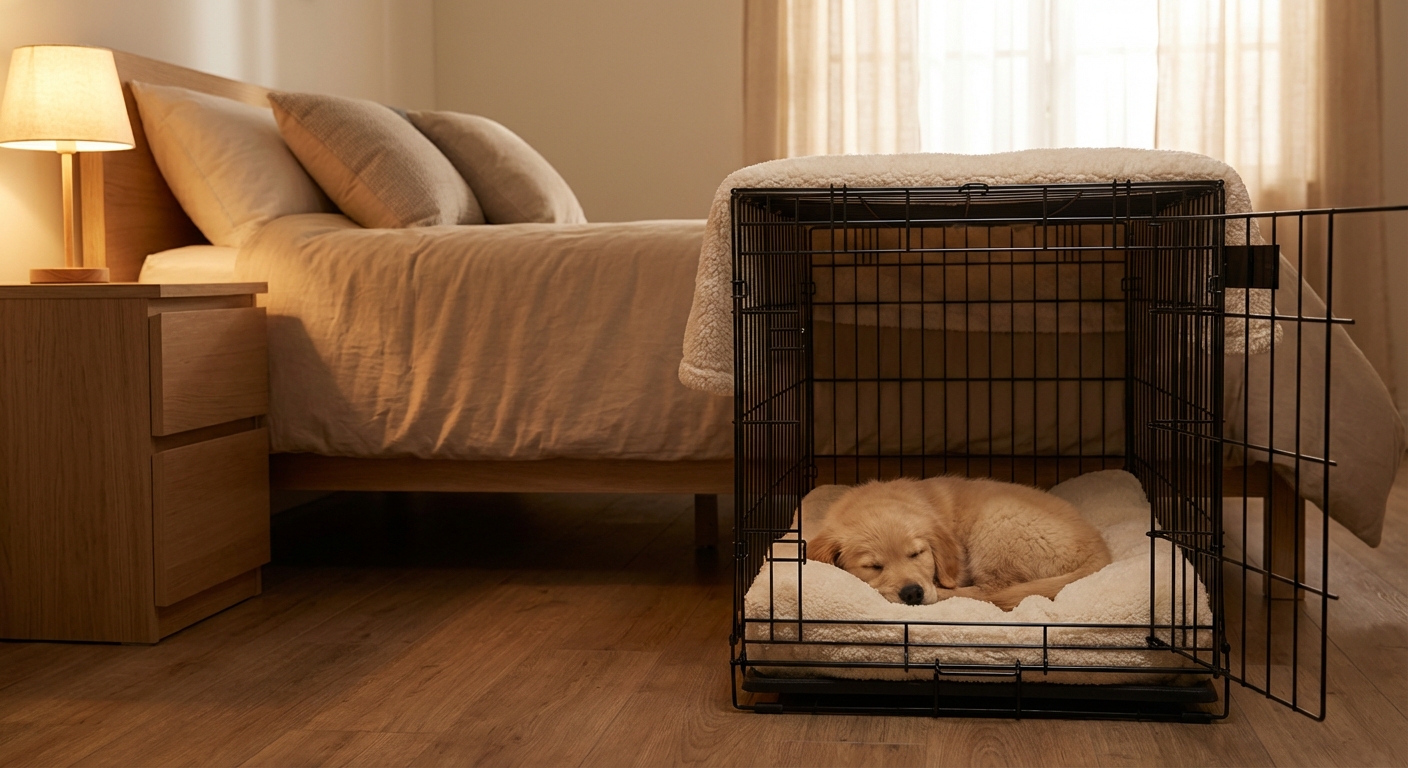
For the first couple of weeks, I strongly recommend placing the crate in your bedroom or right outside it. Being close helps your puppy feel secure, and it helps you respond faster to likely potty needs.
If you live in an apartment or have close neighbors, consider placing the crate away from shared walls and using white noise to reduce sound carry.
Keep bedding simple and safe
- Use a flat, washable mat or towel to start.
- Avoid fluffy bedding for heavy chewers.
- Skip collars and tags in the crate for safety.
- Double check latches so a clever puppy cannot push the door open.
Add comfort cues
- White noise can help block household sounds.
- A covered top (light blanket over the crate) can help some puppies settle, as long as airflow stays good.
- A safe lick option can help a puppy self-soothe, but choose carefully (see the feeding and safety notes below).
A gentle nighttime plan
Step 1: Make the crate a happy place
Night success starts before bedtime. Throughout the day:
- Toss a treat into the crate and let your puppy go in and come out freely.
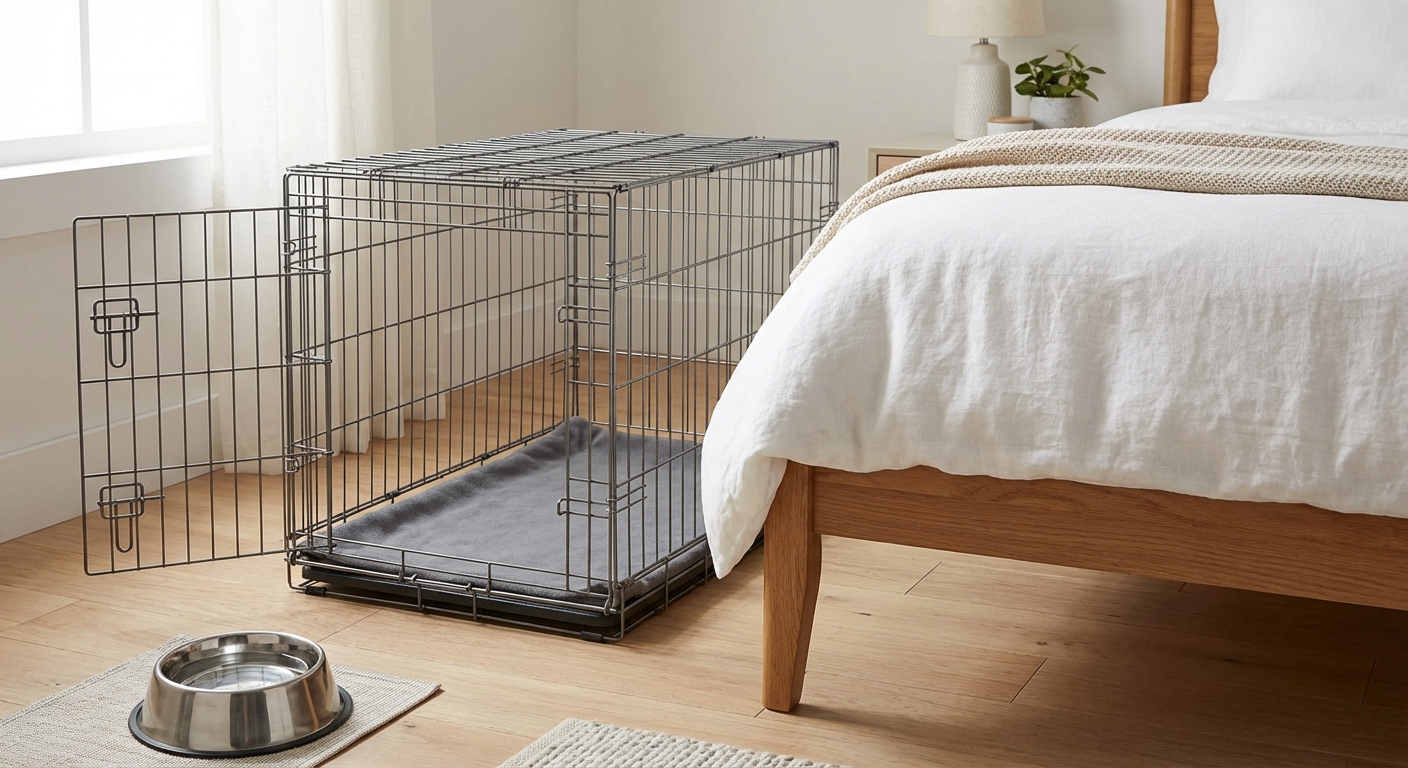
- Feed meals near the crate, then gradually move the bowl just inside the doorway.
- Practice short “crate breaks” while you are nearby (30 to 60 seconds), then release calmly.
Tip for families: have kids help by quietly tossing treats in when the puppy chooses the crate. The rule is “no reaching in, no squealing, no banging on the door.”
Step 2: Keep bedtime predictable
Puppies thrive on routines. Aim for the same sequence each night:
- Last potty trip
- Quiet cuddle or calm petting
- Into the crate with a small treat
- Lights down, voices low
Avoid intense play right before bed. It can leave your puppy over-tired and mouthy, like a toddler who skipped a nap.
Step 3: Build comfort without “cry it out” extremes
Some protest is normal, especially the first few nights. Your goal is to be kind and consistent without teaching “noise opens doors.”
- If your puppy just went potty and is whining, give them a brief moment. Many puppies settle with a little time.
- If whining escalates or you suspect a potty need, take your puppy out on leash, quietly, with no playtime.
- When potty is done, straight back into the crate.
If your puppy is truly panicking (not just fussing), go slower. Do more daytime crate practice, shorten nighttime expectations, and talk with your veterinarian or a qualified trainer for a plan that fits your puppy.
If you only remember one thing: potty trips should be boring. That is how your puppy learns nighttime is for sleep, not parties.
How often for potty breaks?
Every puppy is different, but here are realistic general expectations:
- 8 to 10 weeks: often 1 to 2 potty trips overnight
- 10 to 12 weeks: often 1 potty trip
- 12 to 16 weeks: many puppies start sleeping longer stretches
A common rule of thumb is that puppies can hold it about their age in months plus one hour as a general guideline, often closer to a daytime maximum for many puppies. At night, some puppies can go a bit longer, and many still need breaks at 8 to 12 weeks. Breed, size, water intake, and health all matter.
If your puppy has diarrhea, frequent urination, straining, accidents despite a solid routine, or seems painful, call your veterinarian. Those can be signs of parasites, diet intolerance, or a urinary tract issue.
Family tips to prevent setbacks
Crate rules for kids
- No waking the puppy.
- No fingers through the bars.
- No teasing with toys.
- Only adults open the crate door during the night routine.
This protects your puppy’s sleep and prevents nipping habits that start when an over-tired puppy is handled too much.
Use a schedule board
If multiple adults share responsibility, write down the last potty time, last meal, and last water. Sleep deprivation makes all of us forgetful.
Plan for the first three nights
The first few nights are usually the hardest. If possible, avoid starting crate training right before a big family event, travel, or a week when everyone is stressed.
What to do when they cry
Here is a simple way to troubleshoot crying without guessing:
Check the basics
- Did they potty right before bed?
- Is the room too hot or too cold?
- Is the crate in a high-traffic, noisy spot?
- Did they have enough daytime naps? Over-tired puppies can melt down.
Use calm reassurance
Some puppies settle if you place your hand near the crate (not inside) or speak softly for 10 to 20 seconds. Then stop. The goal is comfort without turning it into a game.
Avoid common mistakes
- Do not use the crate as punishment. It should stay emotionally safe.
- Do not let kids crowd the crate. It raises arousal, not calm.
- Do not reward screaming. If you open the door during peak crying, you accidentally teach “louder works.”
Feeding and nighttime safety
Food choices and timing can affect sleep. For most puppies:
- Offer dinner a few hours before bedtime.
- Keep late-night treats small.
Many families find it helpful to pick up the water bowl about 1 to 2 hours before bed to reduce overnight accidents. Safety note: do not restrict water for long periods, and be extra cautious in hot weather, after heavy play, or with very young puppies. If your puppy has any medical concerns (or your veterinarian has given different instructions), follow your vet’s guidance.
If you use a lick item to help settling, choose options that are sized for your puppy and low risk when used with supervision. In general, I prefer:
- A puppy-safe, appropriately sized Kong-style toy with a small amount of wet food, plain canned pumpkin, or puppy-safe kibble paste, then frozen
- A lick mat used while you are present and able to monitor
Avoid leaving your puppy unattended overnight with anything that can break into chunks or become a choking hazard (for example: bully sticks, rawhide, cooked bones, small chews, or toys that your puppy can shred). When in doubt, skip it at night and use it during supervised daytime sessions.
Signs it is working
Progress often looks like:
- Your puppy enters the crate more willingly
- Whining decreases over a few nights
- Nighttime potty trips become quicker and less frequent
- Your puppy wakes up calmer instead of frantic
If you are seeing small improvements, keep going. Consistency is what teaches security.
When to get extra help
It is time to loop in your veterinarian or a qualified trainer if:
- Crying escalates every night for more than a week despite a consistent plan
- Your puppy panics, drools excessively, or injures themselves trying to escape
- Potty accidents increase or urine seems painful
- You suspect separation anxiety or fear issues
There is no shame in asking for support. Early help can prevent long-term stress for both your puppy and your family.
Bedtime checklist
- Evening potty and calm wind-down
- Crate near your sleeping area (at first)
- Safe, simple bedding
- White noise if needed
- Final potty trip before lights out
- Overnight potty trips: quiet, leash, no play
You do not have to do this perfectly. You just have to do it kindly and consistently. In a few weeks, many families tell me their puppy trots into the crate at night like it is their own little bedroom.