

A step-by-step puppy crate training guide: choosing the right crate, building positive associations, first-week routines, nighttime potty breaks, and solutio...
Article
•
Designer Mixes
Crate Training a Puppy

Shari Shidate
Designer Mixes contributor
Crate training, sometimes called kennel training, is one of the kindest things you can teach a puppy when it is done thoughtfully. A crate gives your pup a safe place to rest, helps with potty training, and can prevent dangerous chewing when you cannot supervise. As a veterinary assistant here in Frisco, Texas, I also see how crate training can reduce stress for dogs during travel, boarding, grooming, and vet visits.
The goal is simple: your puppy chooses the crate because it feels secure, not because they are forced. Let’s walk through the whole process step by step, including common problems and how to fix them.
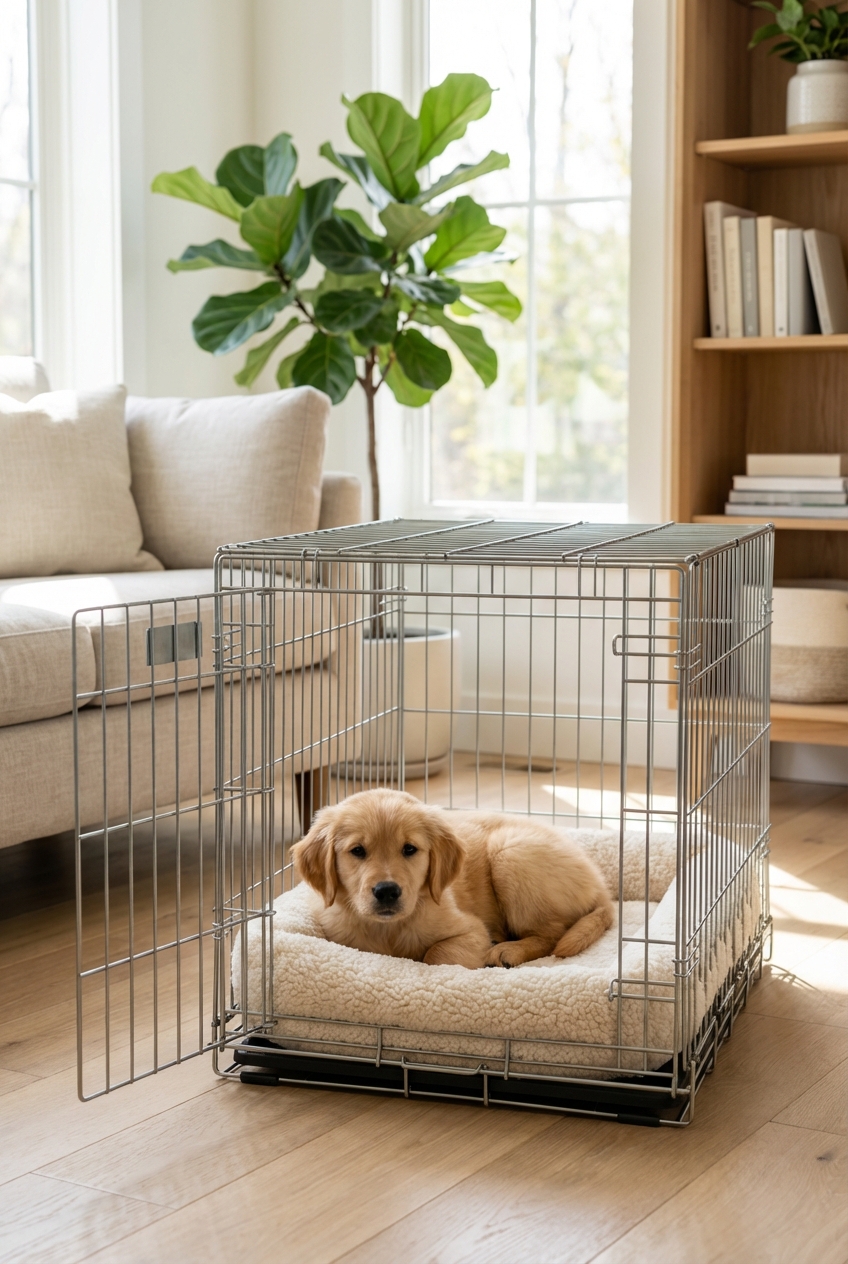
What crate training is and is not
What it is
- A comfort skill: teaching your puppy to settle and nap in a designated space.
- A management tool: preventing accidents and unsafe behavior when you cannot supervise.
- A life skill: preparing your dog for car travel, vet hospitalization, boarding, or emergency evacuation.
What it is not
- Not punishment: the crate should never be used as a “time-out” space tied to fear.
- Not a long-term babysitter: puppies need frequent potty breaks, training, play, and social time.
- Not a place to ignore distress: crying that escalates into panic needs a plan, not a “they will get over it” approach.
Choosing the right crate setup
Crate type
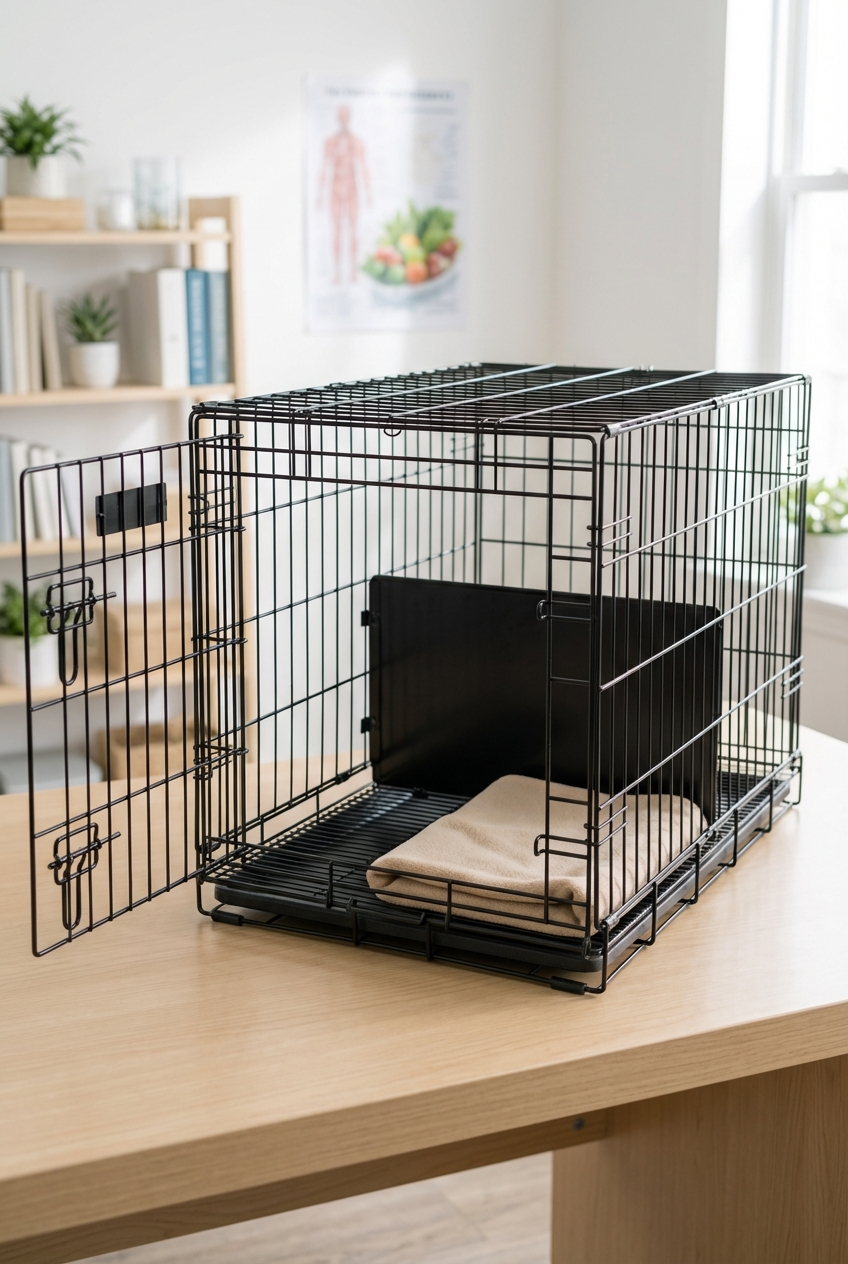
- Wire crate: great airflow and visibility, easy to clean, often comes with a divider panel.
- Plastic airline-style crate: cozy and den-like, helpful for some pups who get overstimulated.
- Soft-sided crate: best for calm dogs who are already comfortable in a crate. New puppies who chew or panic can damage them quickly.
Correct size
Your puppy should be able to stand up, turn around, and lie down comfortably. For potty training, avoid too much extra space, because many puppies are more likely to potty in one corner and sleep in another. If you bought an adult-size crate, use a divider panel to make the space puppy-sized.
Where to place it
- Daytime: a main living area so your puppy feels included and can relax around normal household sounds.
- Nighttime: many families do best with the crate in the bedroom at first so the puppy feels safe and you can hear potty needs quickly.
What goes inside
- Comfortable, washable bedding (unless your puppy eats bedding, then use a flat mat or an easy-to-clean crate pad).
- A safe chew like a puppy-appropriate rubber toy, plus a small portion of their meal inside it if your vet says that is okay.
- Water: many healthy puppies do fine overnight without a bowl, which can support potty training and reduce spills. That said, very young puppies, warm rooms, certain medical situations, and some medications make water access more important. When in doubt, follow your veterinarian’s guidance.
Safety note: skip collars or dangling tags in the crate to reduce snag risk, especially with wire crates.
Before you start
Meet basic needs first
A puppy who has to potty, is under-exercised, or is overstimulated will struggle to settle. Before crate time, aim for a quick rhythm of potty break, short play or training, then quiet time.
Use food to build a positive association
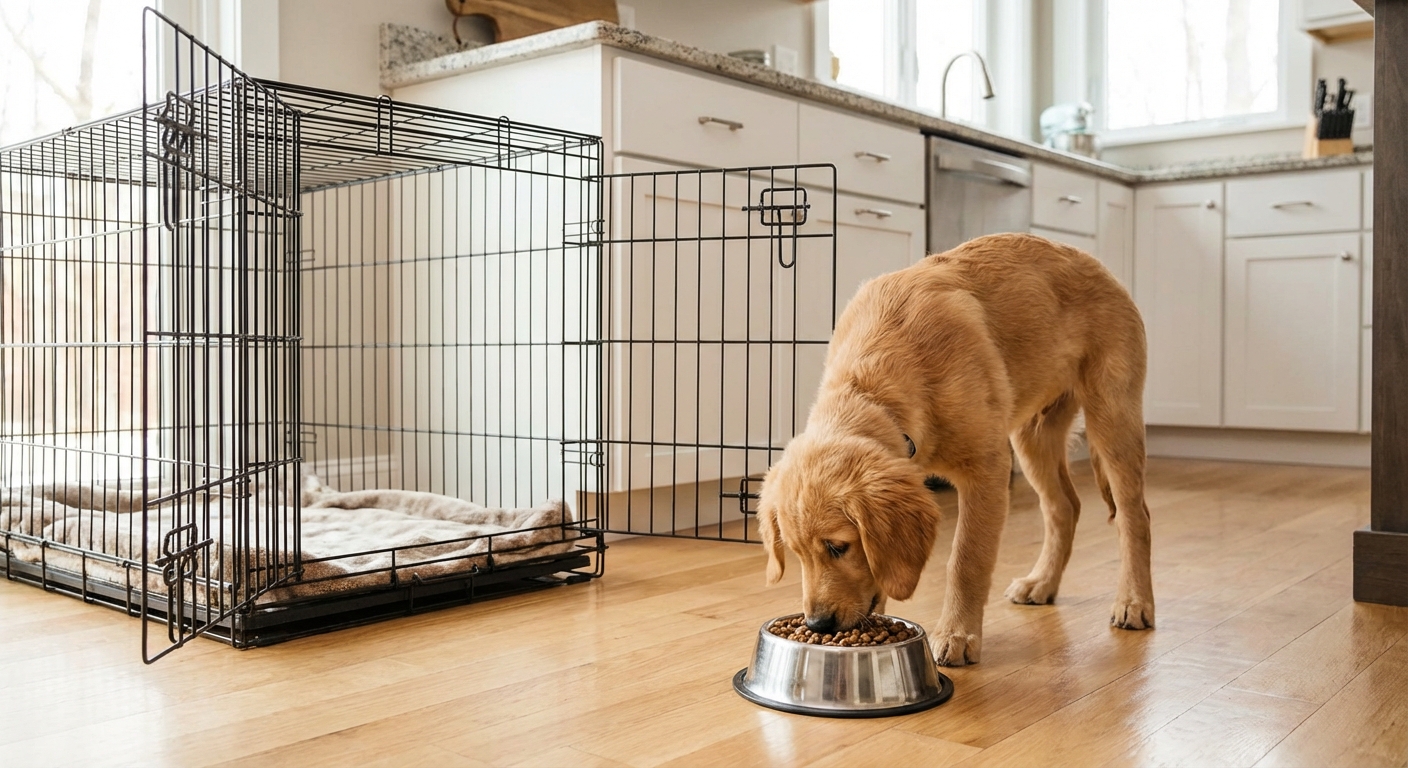
Food is a powerful teacher. If your puppy learns that wonderful things appear in the crate, they begin to choose it on their own. You can feed meals near the crate, then inside the crate, then with the door gently closed for short periods.
Teach a simple crate cue
Once your puppy is happily going in, add a cue like “crate” or “bed.” Say the cue once, toss a treat inside, and let your puppy walk in. Over time, you can fade the treat toss and reward after they enter.
Step-by-step crate training
Step 1: Make it open and inviting
Leave the door open and toss a treat just inside the entrance. Let your puppy go in and come back out. Repeat several times. Keep your tone calm and upbeat.
Step 2: Build duration with the door open
Once your puppy is comfortable stepping in, scatter a few treats inside, or give a stuffed food toy. Let them linger. If they exit, that is okay. We are building confidence, not forcing stillness.
Step 3: Close the door for 1 to 5 seconds
When your puppy is focused on a chew or treat, gently close the door, wait 1 to 5 seconds, then open it while they are still calm. Gradually repeat and increase time.
Important timing note: this is not about opening the door because your puppy cries. It is about preventing worry by increasing difficulty in tiny steps. If your puppy vocalizes, wait for a brief quiet pause (even one second), then open and reward calm so you do not accidentally teach “noise makes the door open.”
Step 4: Add short “you move away” moments
Close the door and take one step back, then return and reward calm. Slowly increase to walking around the room, then briefly leaving the room. Do this in tiny increments.
Step 5: Practice naps in the crate
Puppies learn fastest when they are sleepy. After a potty break, guide your pup to the crate with a chew, dim the room, and keep things boring. Many puppies settle easier with a light blanket draped over part of a wire crate to reduce visual stimulation.
Airflow check: never cover the crate in a way that traps heat or reduces ventilation. Leave plenty of open sides, especially in warm Texas weather, and make sure your puppy is not panting or restless from being too hot.
Step 6: Nighttime routine
At night, keep it simple and predictable.
- Potty break right before bed.
- Into the crate with a calm cue like “bed.”
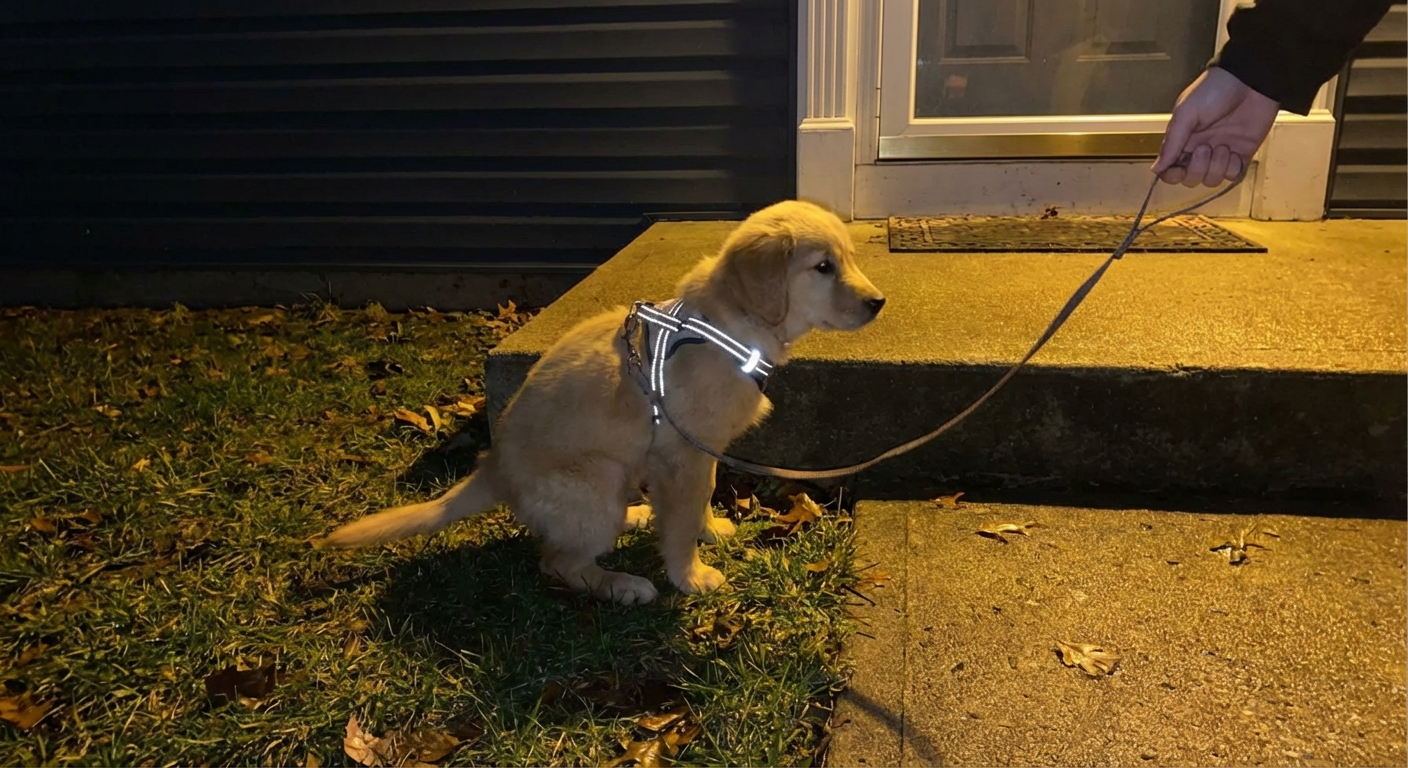
- If your puppy cries, pause and listen. If it sounds like true distress, or they have not pottied in a while, take them out on leash for a quick potty only, then back to the crate.
How long is too long?
Age, breed, and individual bladder control matter, and some puppies (especially very young pups, pups with tummy trouble, anxious pups, or those from crowded early environments) may soil even with a good setup. Use the crate as a helpful tool, not a place where your puppy regularly has to “tough it out.”
General guideline
These are common starting points for maximum comfortable crate time during the day when you cannot supervise. Always adjust for your puppy’s needs and your veterinarian’s advice.
- 8 to 10 weeks: about 30 to 60 minutes
- 10 to 12 weeks: about 1 to 2 hours
- 3 to 4 months: about 2 to 3 hours
- 5 to 6 months: about 3 to 4 hours
Overnight: many puppies can go longer while sleeping, but expect nighttime potty trips early on.
If you work long hours, plan for a pet sitter, a trusted friend, daycare, or a safe puppy-proofed area with a playpen. Many puppies cannot comfortably hold it for a full workday, even if they are “technically” crate trained.
Crate training and potty training
Many puppies avoid soiling their sleeping space, which is why an appropriately sized crate can support potty training. But it is not universal, and accidents can happen with very young puppies, anxiety, diarrhea, or puppies who had to eliminate where they slept before they came to you.
Here is the simple pattern that works for most families:
- Take your puppy out immediately after they come out of the crate.
- Use the same potty spot and a consistent cue.
- Reward with a tiny treat and calm praise right after they finish.
- If your puppy has accidents, do not punish. Adjust supervision, schedule, and crate size.
Important: if your puppy is repeatedly soiling the crate, it can signal the crate is too large, potty breaks are too infrequent, or there is a medical issue like diarrhea or a urinary problem. Talk with your vet if this is happening.
Practice longer absences
Crate comfort and being alone are related, but not identical. Some puppies will relax in a crate when you are nearby, but struggle when you leave the house. Build this skill gradually.
- Start tiny: crate your puppy with a chew, step out of sight for 5 to 10 seconds, return, and reward calm.
- Mix it up: do many short, easy repetitions instead of a few long ones.
- Keep departures boring: low-key exits and returns reduce big emotional swings.
- Avoid “out of nowhere” long crating: work up to real-life lengths slowly so your puppy does not rehearse panic.
If you see signs of true panic (drooling, trying to break out, hurting teeth or nails, nonstop escalating distress), stop pushing duration and get professional help.
Common problems and gentle fixes
Crying or barking
- Check needs first: potty, hunger, thirst, too hot or cold.
- Reward calm: even a brief pause in crying can be marked and rewarded.
- Go back a step: if you increased time too quickly, shorten sessions and rebuild.
- Add a settling routine: short play, potty, then crate with a chew.
Biting the crate or trying to escape
- Increase exercise and enrichment outside the crate.
- Offer safer chew outlets like puppy-specific rubber toys. Use extra caution with edible chews, especially if your puppy is a power chewer or tends to swallow chunks.
- Do not let it become a wrestling match: if panic is building, reduce difficulty and get help from a trainer.
Separation anxiety concerns
It is normal for puppies to protest a little, especially early on. But true panic, drooling, self-injury, or nonstop escalating distress needs professional guidance. Your veterinarian can rule out medical causes and refer you to a qualified trainer or veterinary behaviorist.
Fine with the door open, upset when it closes
This is common. Practice “door closed” in micro-sessions while your puppy is eating something high value. Close for 2 seconds, open while they are calm, repeat. The goal is to make the closed door feel boring and safe.
Helpful tools
Often helpful
- Crate divider for growing puppies.
- Enrichment toys that are size-appropriate and durable for puppies.
- White noise or a fan for light sleepers.
- Enzyme cleaner for accidents near the crate.
Use caution or skip
- Loose blankets for puppies who shred and swallow fabric.
- Crate bumpers that can be chewed.
- Anything with strings that can be ingested.
Simple daily schedule
Every household is different, but puppies thrive on predictable rhythms. Here is a sample flow you can adapt:
- Morning: potty, breakfast, short play, brief training, potty, nap in crate.
- Midday: potty, walk or play, lunch (if your puppy is on 3 meals), potty, crate rest.
- Afternoon: potty, enrichment and social time, potty, short crate session.
- Evening: dinner, calm time, potty, settle in crate for night.
If you work long hours, consider a pet sitter, daycare, or a safe puppy-proofed area with a playpen. Many puppies simply cannot comfortably hold it for a full workday.
When to ask your vet
Please reach out to your veterinarian if you notice:
- Diarrhea, vomiting, or frequent accidents that seem out of proportion for age.
- Straining to urinate, blood in urine, or signs of pain.
- Escalating panic in the crate or self-injury.
- Sudden change in behavior around the crate after doing well.
Crate training should make life calmer and safer for your puppy and for you. If it is getting more stressful over time, that is a sign to slow down and get support.
The bottom line
Crate training works best when you go slow, reward what you want, and keep the crate a peaceful place. Aim for short wins each day. A puppy who feels safe resting in a crate grows into an adult dog who handles life’s transitions with more confidence.
If you want, you can start today with one simple step: leave the crate door open, toss in a few treats, and let your puppy discover that good things happen there.