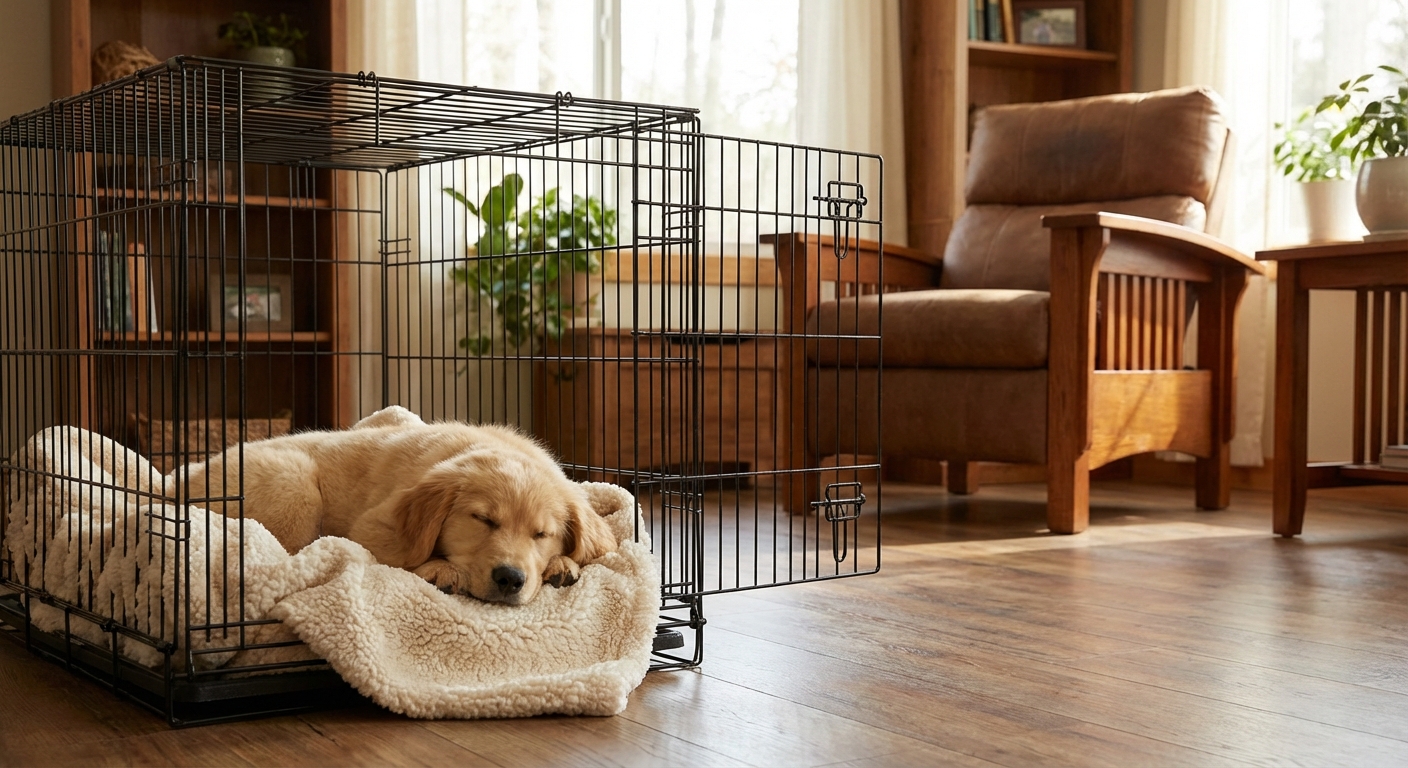
A step-by-step puppy crate training guide: choosing the right crate, building positive associations, first-week routines, nighttime potty breaks, and solutio...
Article
•
Designer Mixes
Crate Training a Puppy

Shari Shidate
Designer Mixes contributor
As a veterinary assistant here in Frisco, Texas, I see a pattern: puppies who learn to relax in a crate often have an easier time settling, staying safe, and building confidence as they grow. Crate training is not about “locking a puppy up.” It is about teaching a life skill: how to settle, self-soothe, and stay out of trouble when you cannot supervise.
If you keep it positive, go at your puppy’s pace, and use the crate thoughtfully, it becomes a cozy bedroom. And yes, it can also be a powerful tool for potty training, safe sleep, and preventing chewing disasters, but it is not a substitute for supervision, training, and meeting your puppy’s needs.
What crate training really teaches
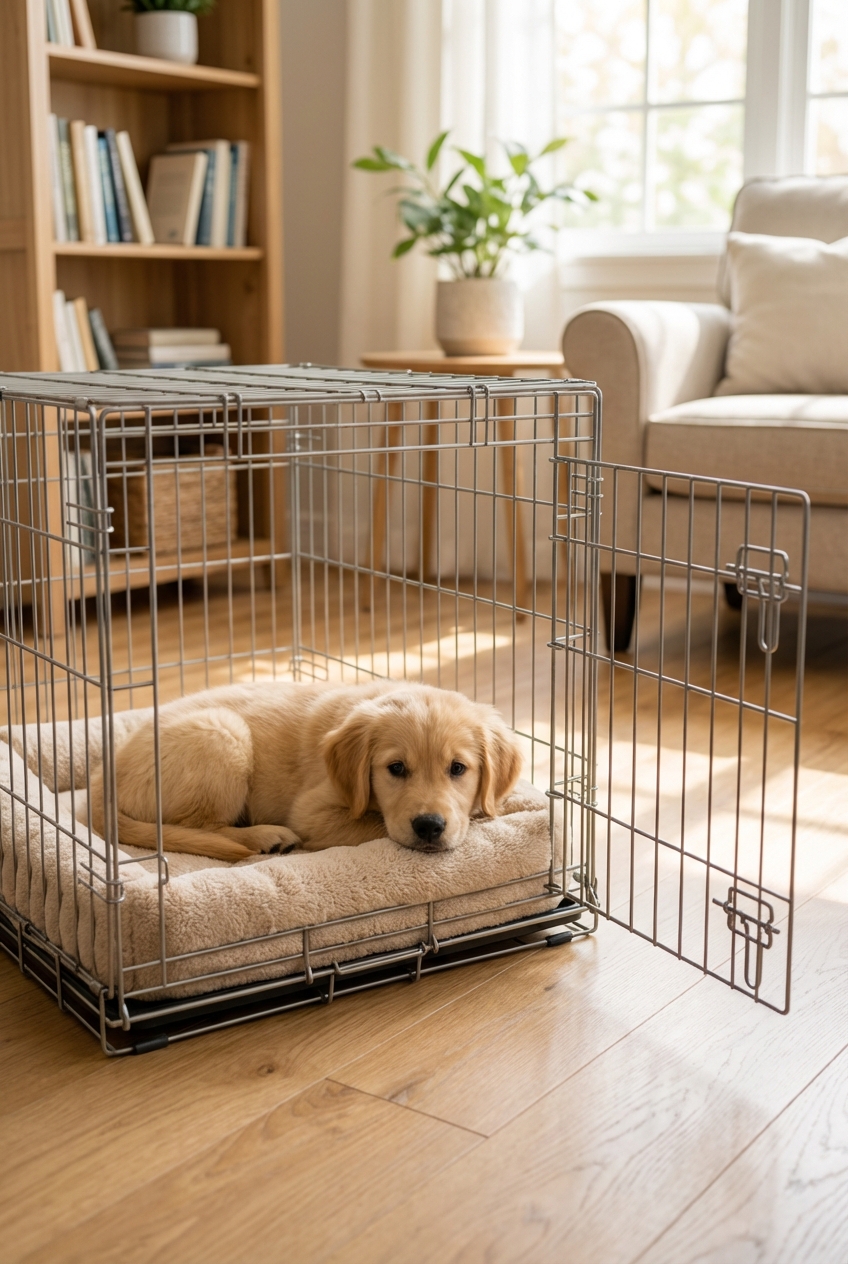
Puppies are not born understanding our homes. They explore with their mouths, they have tiny bladders, and they get overtired like toddlers. A crate creates a safe, predictable space that helps you guide behavior instead of constantly correcting it.
- Safety: Prevents chewing cords, swallowing socks, or getting into household hazards.
- Potty training support: Many puppies prefer not to soil where they sleep, so the crate can support bladder habits. Caveat: Some puppies, especially those raised in crowded kennel settings, may not have that instinct yet. That is not your fault, and it just means you may need smaller increments, more frequent potty breaks, and extra cleanup management.
- Calm independence: Short, successful crate sessions teach your puppy that being alone is okay.
- Better sleep: Puppies need a lot of rest. A crate reduces overtired zoomies and cranky nipping.
- Vet and travel readiness: Many clinics and grooming facilities use kennels. Familiarity lowers stress.
Picking the right crate setup
Crate type
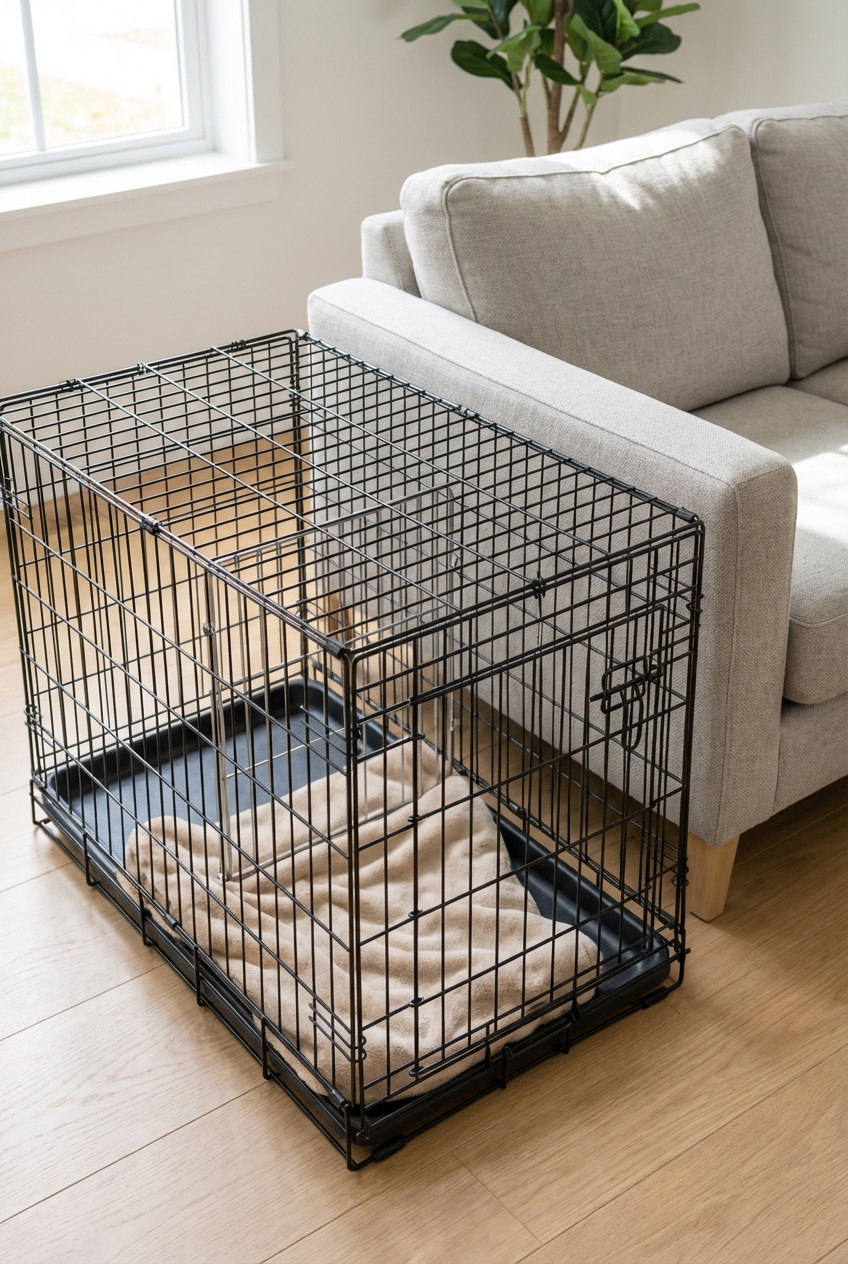
- Wire crate with divider: Great for home training and growing puppies, good airflow, easy to adjust size.
- Plastic airline-style crate: Often cozier and helpful for travel, can reduce visual stimulation for some pups.
- Soft-sided crate: Best for calm dogs and supervised situations. Not ideal for puppies who chew, scratch, or panic.
Size matters
Choose a crate that allows your puppy to stand up, turn around, and lie down comfortably. If it is too large, some puppies will potty on one side and sleep on the other. For growing pups, a crate with a divider panel is ideal.
Location matters too
Place the crate where life happens. For most families, that is the living room during the day and the bedroom at night, at least for the early weeks. Puppies do better when they can hear you nearby.
What to put inside
- Soft, washable bedding (or none at first if your puppy chews fabric).
- A safe chew or food toy to create a positive association.
- Water? For short sessions (usually under 1 to 2 hours), many puppies do fine without water. For longer crating, offer water in a clip-on, spill-resistant bowl. In warm climates like North Texas, after heavy play, or if your puppy is ill (vomiting, diarrhea) or on vet-directed increased fluids, prioritize hydration and ask your veterinarian for guidance.
Safety note: Skip collars and tags in the crate to reduce snag risk.
Another safety note: Avoid leaving rope toys, plush toys that shred, or new chews unattended. If you are not sure an item is safe for solo crate time, choose a vet-approved food puzzle or a simple chew you have already seen your puppy handle safely.
How to introduce the crate (without drama)
Think of crate training as a series of tiny wins. The goal is for your puppy to choose the crate and to feel relaxed inside it.
Meet needs first
Before longer crate time, run a quick checklist: potty, a little play or training, a calm-down minute, then a chew or food toy. Most crate complaints get worse when a puppy is full of energy, needs to potty, or is overtired.
Step 1: Make the crate a treat zone
- Prop the door open so it cannot swing and startle your puppy.
- Toss a treat just inside the doorway. Let your puppy go in and come right back out.
- Repeat, gradually tossing treats farther back.
Step 2: Add meals and food puzzles
Feeding meals in the crate is one of the fastest ways to build positive feelings. Start with the door open, then briefly close it while your puppy eats.
If closing the door makes them hesitate or stop eating, open it again and slow down. You want the crate to feel easy, not like a test.
Step 3: Close the door for seconds, not minutes
Close the door, offer a treat through the bars, then open the door again. Build duration slowly. If your puppy panics, you went too fast.
Step 4: Add a calm routine
Puppies thrive on predictable patterns. A simple routine could be: potty break, short play, small drink, calm chew in crate, nap.
Normal fussing vs real distress
Many puppies protest a little at first. Normal fussing is brief whining that fades as they settle. Real distress looks more intense: frantic scrambling, biting the bars, nonstop escalation, heavy drooling, trying to injure themselves to escape, or not calming even with very short sessions. If you see distress signs, stop pushing duration and talk with your vet or a qualified positive reinforcement trainer.
Common crate mistakes
Mistake: Using the crate only when you are frustrated
If the crate only appears after biting, barking, or chaos, your puppy will learn the crate predicts “I am in trouble.” Instead, crate your puppy for naps, during meals, and during calm moments too.
Mistake: Waiting until your puppy is overtired
Overtired puppies get mouthy and wild. When you notice the second wind, guide them into a nap with a chew, dim the room, and keep it boring.
Mistake: Letting the puppy out when they are screaming
If you open the door during intense vocalizing, your puppy can learn that noise makes you return. Instead, aim to release during a brief pause. If your puppy is truly distressed, you may need to shorten sessions and rebuild positive steps.
Mistake: Too much time in the crate
Crates are helpful, but puppies still need play, training, socialization, and bathroom breaks. A puppy who is crated too long may have accidents, increased anxiety, and pent-up energy.
Crate training and potty training
Crate training is not a replacement for potty training. It is a management tool that helps you prevent accidents while your puppy learns the routine.
A simple schedule that helps most puppies
- Immediately after waking
- After eating (often within 5 to 20 minutes)
- After play
- Before crating
- Every 1 to 2 hours for young puppies, adjusting for age and progress
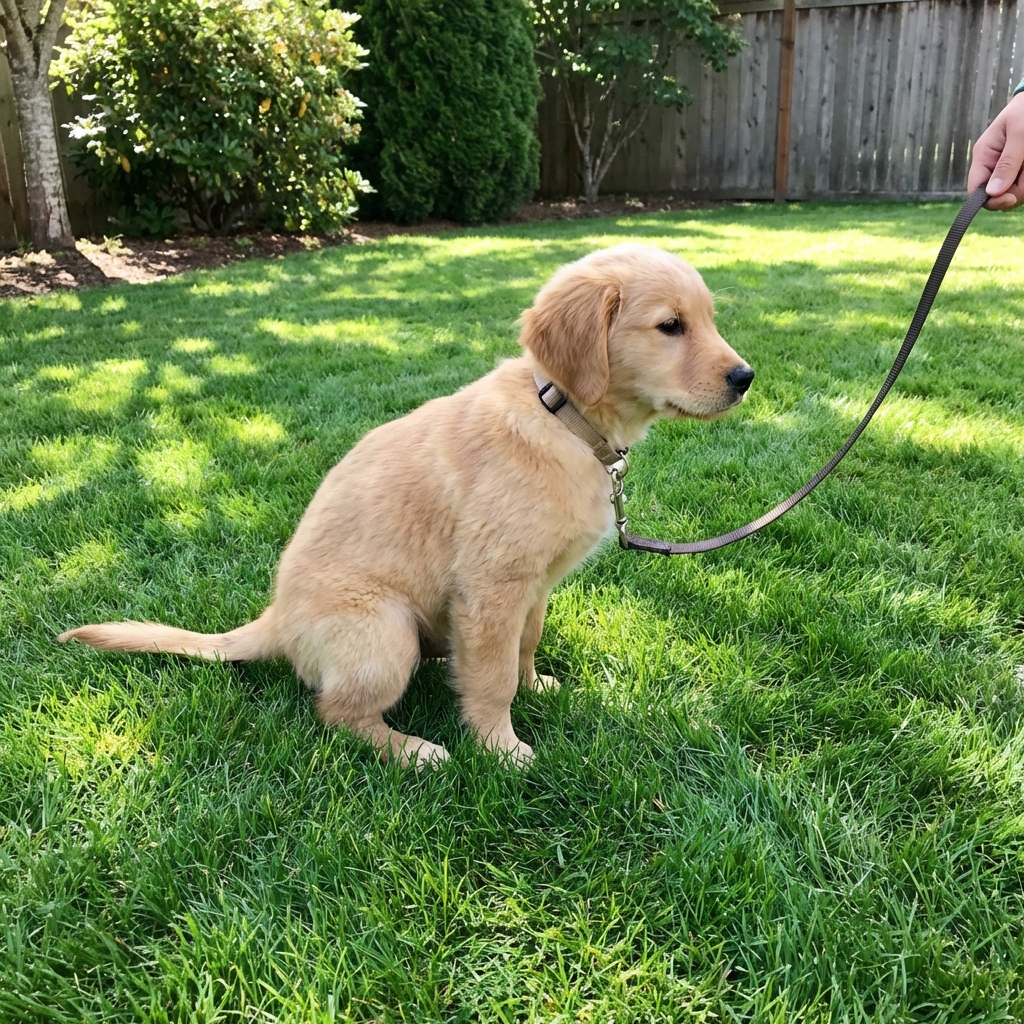
Reward potty success outdoors with a small treat and calm praise right after they finish. Then you can offer freedom or a nap, depending on their energy.
Nighttime crate training
Most new puppy owners want two things at night: fewer accidents and more sleep. The crate can help with both, especially when it is close to you at first.
- Start in the bedroom: Many puppies settle faster when they can hear you breathing.
- Keep nights boring: If your puppy wakes to potty, take them out quietly, no play, no big chatting.
- Watch the pattern: If your puppy wakes at the same time nightly, set an alarm for 10 minutes before that and guide them out. Then you can slowly move the time later as they mature.
Reality check: Very young puppies may need one or more nighttime potty trips. That is normal development, not disobedience.
How long can a puppy be crated?
This depends on age, bladder control, health, and what your puppy is doing in the crate (sleeping versus wide awake). Many trainers use a general guideline of about one hour per month of age as a rough upper limit for daytime crating.
Important guardrail: This is not a goal to push toward. It is a rough ceiling, and many puppies need more frequent breaks, especially during active daytime hours, in hot weather, or when they are still learning to settle.
- 8 to 10 weeks: Often 30 to 60 minutes when awake, longer when sleeping.
- 3 to 4 months: Many can handle 1 to 2 hours between potty breaks.
- 5 to 6 months: Some can do 3 to 4 hours, with proper exercise and training.
If you work long shifts, consider a puppy-safe pen area, a midday dog walker, or doggy daycare when your veterinarian says it is appropriate.
Troubleshooting
“My puppy cries as soon as the door closes.”
- Go back a step and practice shorter closures.
- Use a food toy that takes time, not a treat that disappears in two seconds.
- Practice when your puppy is already sleepy after a potty break and a little play.
“My puppy barks when I leave the room.”
- Practice quick, low-key exits and returns.
- Reward calm behavior, not frantic behavior.
- Build distance and time slowly so your puppy stays under their stress threshold.
“My puppy peed in the crate.”
- Check crate size and adjust the divider.
- Increase potty breaks and clean with an enzymatic cleaner.
- Remember the exception: some puppies do not mind soiling early on, especially if they had to eliminate where they slept before coming home. In those cases, go back to very frequent breaks and smaller, easier wins.
- Rule out medical issues if accidents persist, especially if your puppy is drinking more than usual, straining, or urinating frequently.
When in doubt, assume your puppy is communicating a need, not “being bad.” Then adjust the plan so they can succeed.
Crate training vs separation anxiety
Crate training helps with safe rest and short absences, but it is not the same as treating separation anxiety. A puppy with separation-related panic may do worse in a crate and may need a different setup (like a pen or puppy-proofed room) plus a structured behavior plan.
If your dog shows intense panic, self-injury, heavy drooling, nonstop escalation, or destructive escape behavior, talk with your veterinarian and consider a qualified trainer who uses positive reinforcement. Some dogs need an individualized plan, and getting help early can make a big difference.
Keeping the crate positive
Once your puppy is doing well, keep the crate habit strong. Occasionally toss treats inside, offer a chew, and let your dog choose it as a resting spot. Many adult dogs will walk into their crate on their own when they want quiet time.
- Leave the crate door open when you are home (when safe to do so).
- Do short happy crate sessions even after training is complete.
- Use the crate for calm breaks, not punishment.