
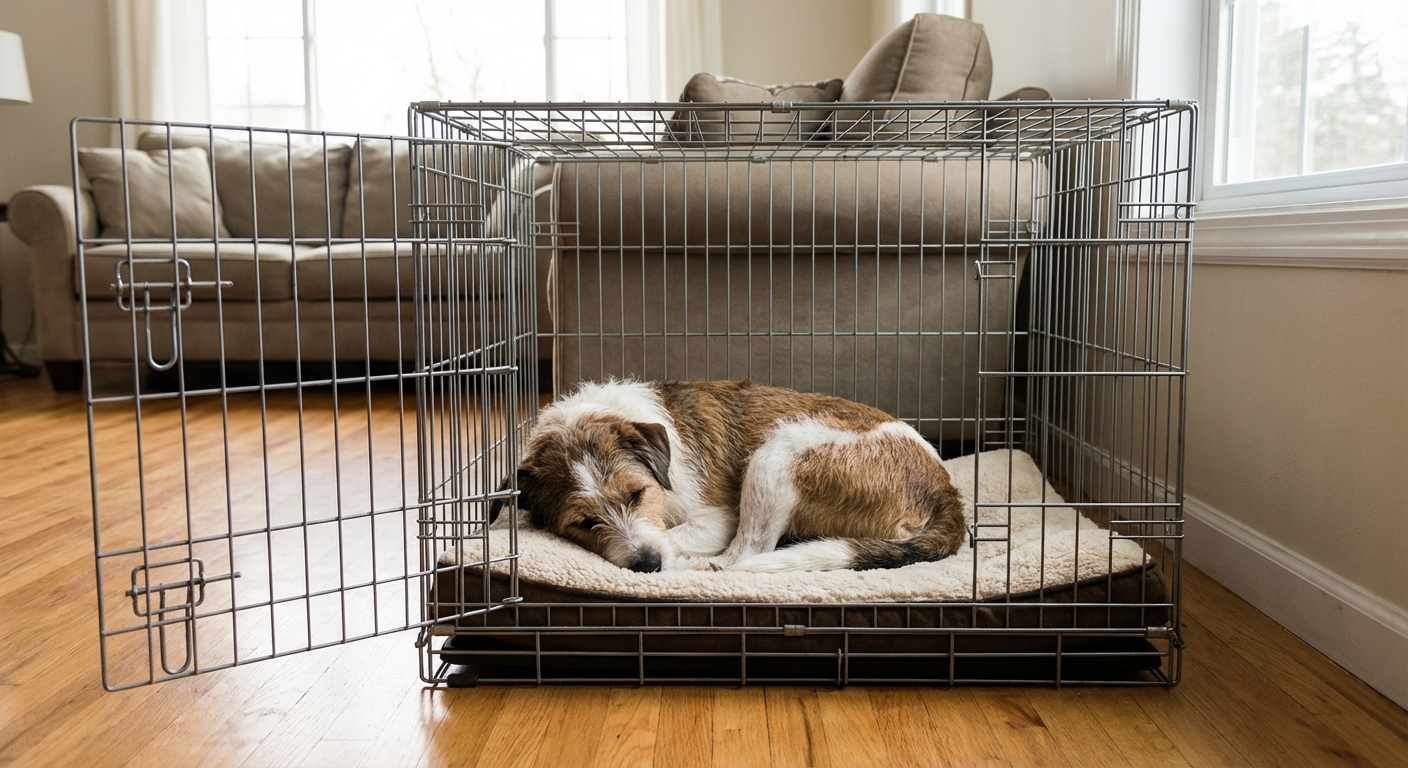
Learn gentle, vet-informed crate training for puppies, adult dogs, and seniors. Pick the right crate, set it up safely, follow a step-by-step plan, and troub...
Article
•
Designer Mixes
Crate Training 101 for Puppies, Adults, and Seniors

Shari Shidate
Designer Mixes contributor
As a veterinary assistant here in Frisco, Texas, I hear the same worry all the time: “I don’t want my dog to feel trapped.” That concern comes from a good place. The truth is, when a crate is introduced the right way, it becomes a safe, cozy space your dog chooses, not a punishment. It can help with housetraining, reduce stress during busy moments, and keep curious noses out of trouble.
Quick but important note: crate training is not the right tool for every dog. If your dog panics in a crate (trying to escape, injuring teeth or paws, or showing intense distress), you need a different plan and often professional support.
This guide walks you through crate training for every life stage, from tiny puppies to adult rescues to senior dogs who need comfort and routine.
What crate training really is
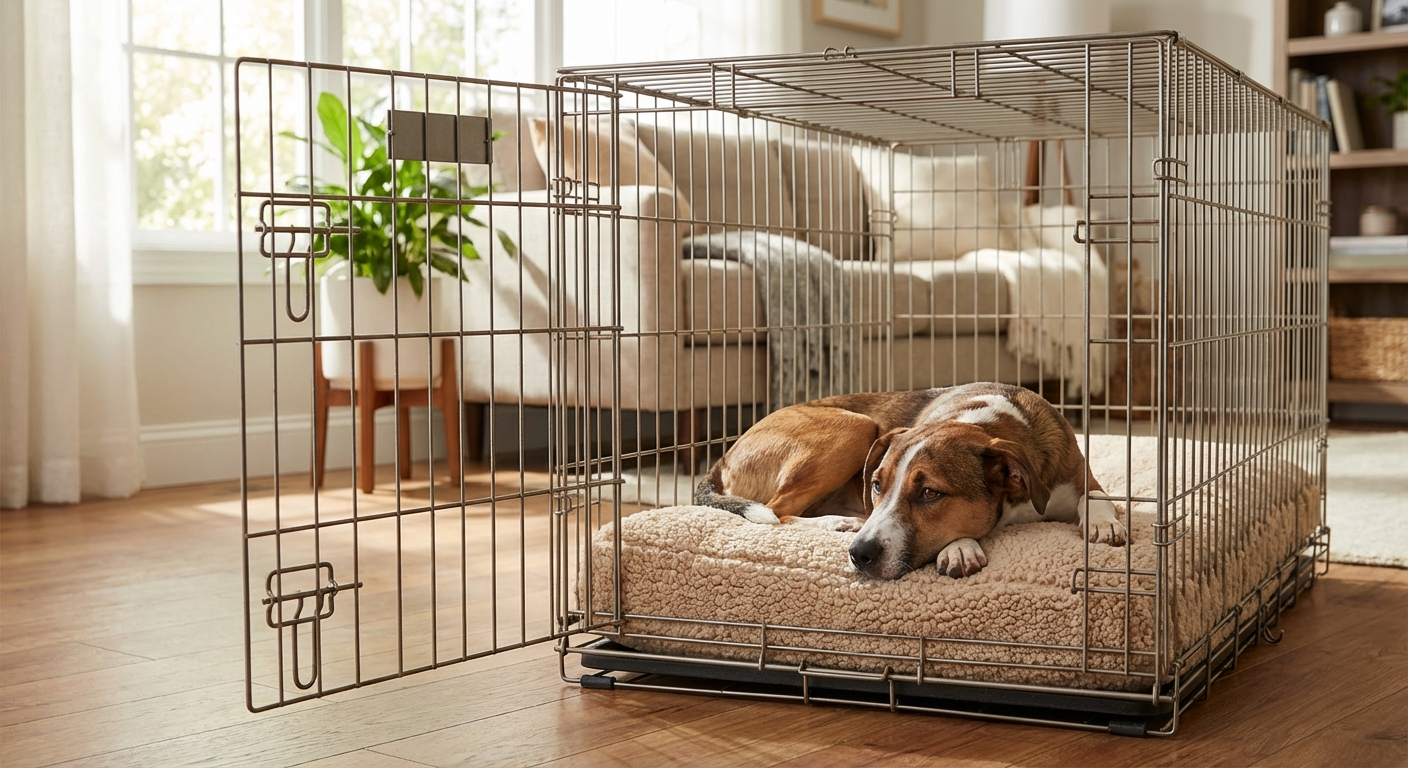
Crate training is teaching your dog to relax in a confined space for short periods, with the door sometimes open and sometimes closed. The goal is calm, safety, and predictability, not forced isolation.
When crate training is done well, the crate becomes a tool you can use for:
- Housetraining: most dogs avoid soiling their sleeping area.
- Safe management: during cooking, deliveries, guests, or when you cannot supervise.
- Travel and vet visits: a crate-comfortable dog often has less stress in cars, clinics, and boarding.
- Recovery: after surgery or injury, rest is easier when the crate feels familiar (always follow your veterinarian’s post-op instructions).
A crate should feel like a bedroom, not a jail. Comfort plus choice builds confidence.
Choosing the right crate and setup
Crate types
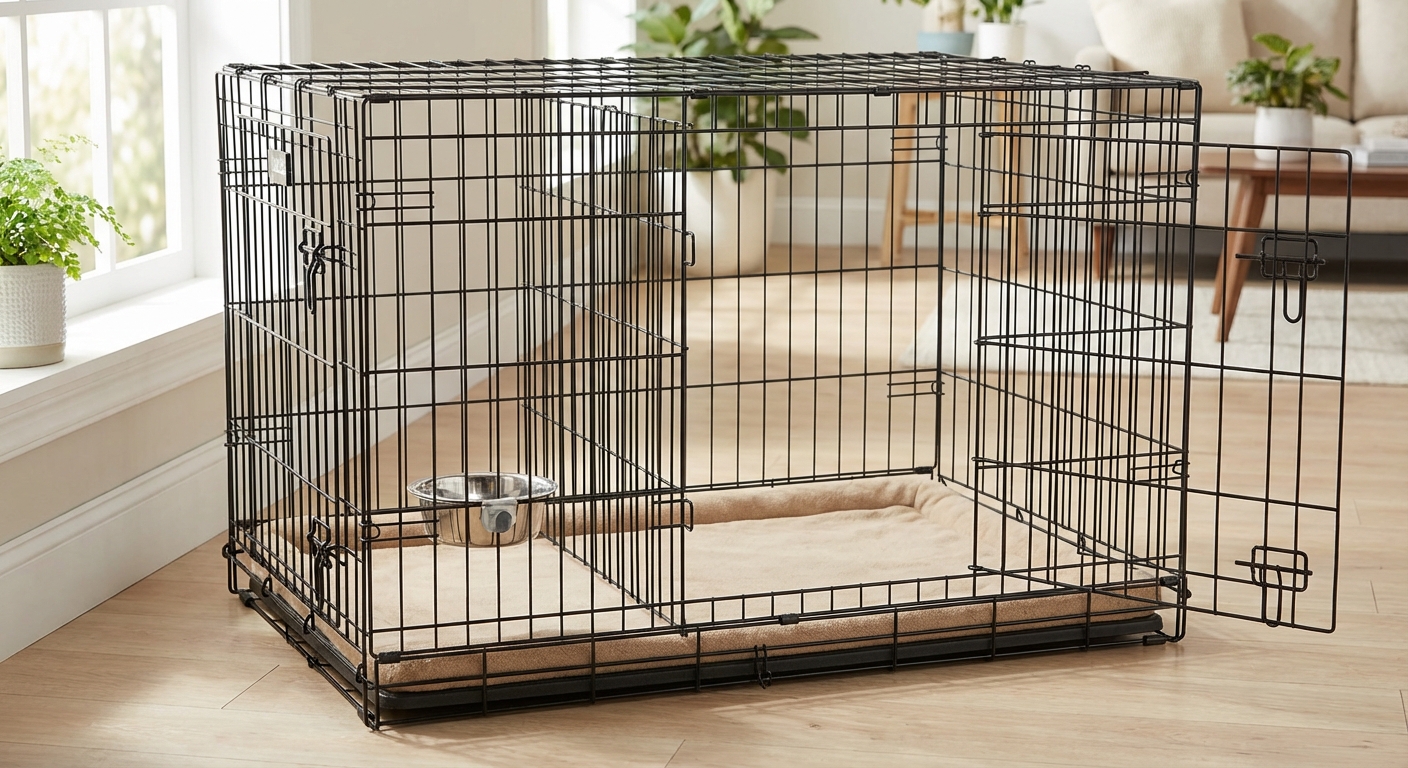
- Wire crates: great airflow, easy to clean, often include a divider for growing puppies.
- Plastic airline-style crates: den-like and cozy, helpful for many dogs who settle better with fewer visuals.
- Soft-sided crates: best for dogs who are already crate trained and do not chew or paw at exits.
Size matters
Your dog should be able to stand up, turn around, and lie down comfortably. For puppies, use a divider so the space is not big enough to potty in one corner and sleep in the other.
Make it inviting
- Add a comfortable mat or bed (for chewers, start with a flat, durable pad).
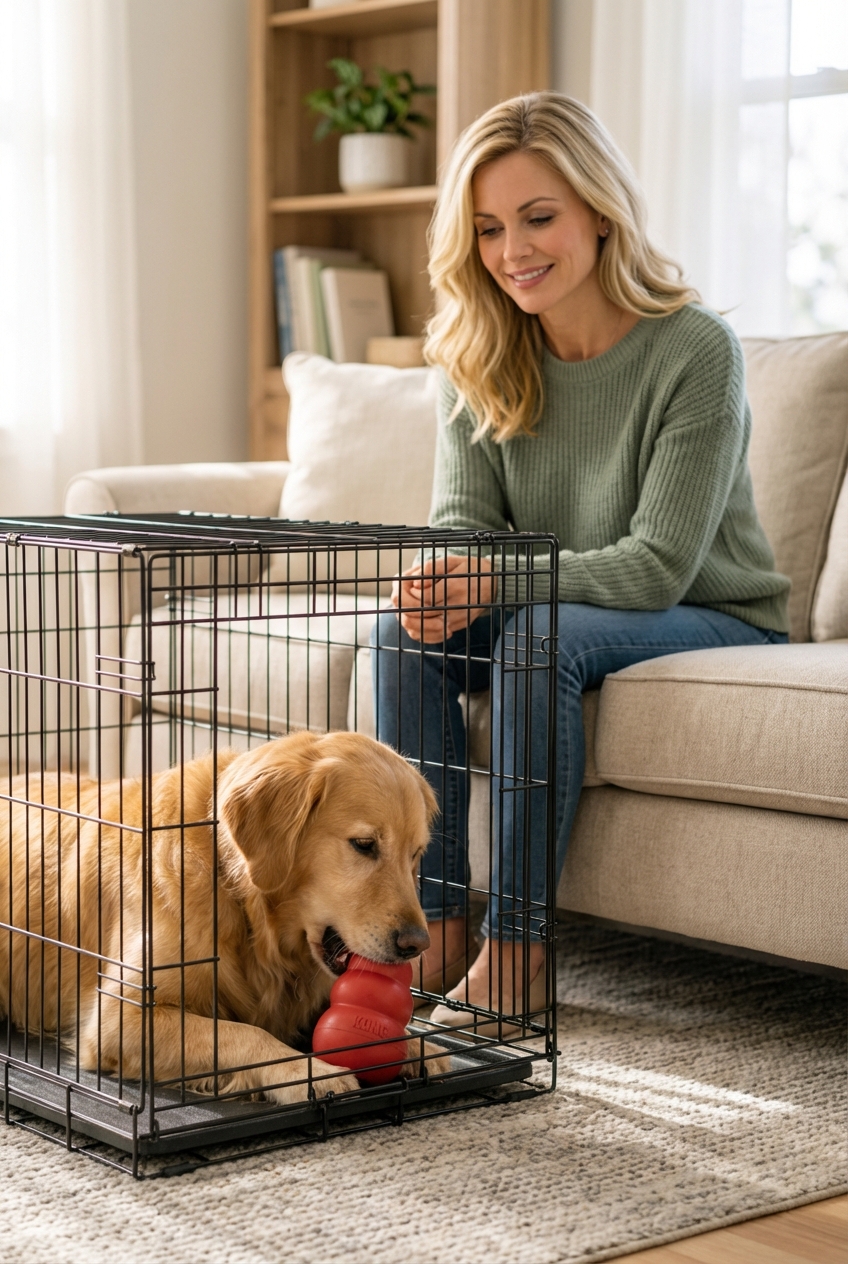
- Use a safe chew or food puzzle to build a positive association.
- Cover part of the crate with a light blanket if your dog relaxes in darker spaces, but keep airflow.
- Place the crate where your dog can see you. Many dogs settle best near the family activity. If your long-term goal is a quieter room, you can move the crate gradually over several days once your dog is comfortable.
Water and bowls
For short sessions, many dogs do fine without water. For longer crating, offer water using a clip-on bowl to reduce spills. For very young puppies overnight, ask your veterinarian for guidance based on age, housetraining progress, and any medical needs.
Safety basics
- Remove collars inside the crate if there is any risk of snagging on bars. If you feel your dog must wear a collar, ask about a breakaway collar and still supervise.
- Avoid leaving long strings, ribbon toys, or anything that can tangle.
- If your dog is a heavy chewer, skip plush beds at first.
The golden rules
- Slow is fast. Rushing creates panic, and panic creates setbacks.
- Crate equals good things. Meals, treats, calm praise, and restful naps can all happen in the crate.
- Never use the crate as punishment. If the crate predicts trouble, your dog will resist it.
- Train when your dog is calm and a little tired. Not overtired. Overtired puppies can get extra bitey and wound up.
- Release only during quiet. If you open the door during barking, you accidentally reward barking.
Simple reset rule: if you see stress, back up to the last step where your dog was truly relaxed.
Step-by-step crate training
Step 1: Open door, zero pressure
Leave the crate door open. Toss a treat just inside. If your dog steps in, let them come right back out. Repeat until your dog is willingly walking in.
Step 2: Build duration with a chew
Once your dog is comfortable entering, offer a long-lasting chew or stuffed food toy in the crate. Let them enjoy it with the door still open.
Step 3: Close the door briefly
Close the door for 5 to 10 seconds while your dog is happily eating. Open the door while they are still calm. It is fine if they finish the chew first. The goal is that your dog learns the door closes and opens without anything scary happening. Repeat, gradually increasing time.
Step 4: Add normal life sounds
While your dog is crated with something to do, stand up, sit down, wash a dish, or walk to another room and return. Start tiny and build up.
Step 5: Practice short departures
Once your dog can relax with you nearby, step out of sight for a few seconds, then return calmly. Build to minutes, then longer.
Step 6: Create a simple cue
Use a gentle cue like Crate or Bed. Say it once, toss a treat in, and let your dog follow through.
Tip: If your dog hesitates, you are going too fast. Go back to the last step where they were relaxed and repeat.
Crate training by age
Puppies (8 weeks to 6 months)
Puppies are learning bladder control and emotional regulation at the same time, so keep sessions short and predictable.
- Use the divider: right-sized space helps prevent pottying in the crate.
- Pair crate with naps: puppies often sleep a lot (commonly 18 to 20 hours a day, but it varies).
- Night routine: place the crate near your bed at first. Quiet reassurance is fine, but keep it low-key.
- Potty schedule: take them out after waking, after eating, after play, and before crating.
Nighttime whining
This is the part I talk owners through in clinic all the time. If your puppy wakes and cries in the night, assume it might be a potty need first.
- Take them out on leash to the same spot.
- Keep it boring. No play, no chatter, dim lights.
- If they potty, quiet praise and straight back to the crate.
- If they do not potty within a couple minutes, back to the crate calmly.
Realistic timeline: many puppies improve quickly in 1 to 2 weeks, but consistency matters more than speed.
Adult dogs (including rescues)
Adult dogs may come with a history. Some have never seen a crate. Others have a negative association. Expect training to be a little more emotional and a little less linear.
- Start with choice-based training: door open, treats tossed in, no pushing.
- Feed meals in the crate: this is one of the fastest ways to change feelings.
- Watch for stress signs: excessive panting, drooling, frantic scratching, trying to bite bars, or nonstop vocalizing.
In our clinic, I often see dogs who do fine in a crate when someone is home, but fall apart when left alone. That is a clue you may be dealing with separation anxiety, not a “crate problem.”
If your adult dog panics, do not “let them cry it out.” That can worsen confinement anxiety. Instead, scale back and consider professional help.
Senior dogs
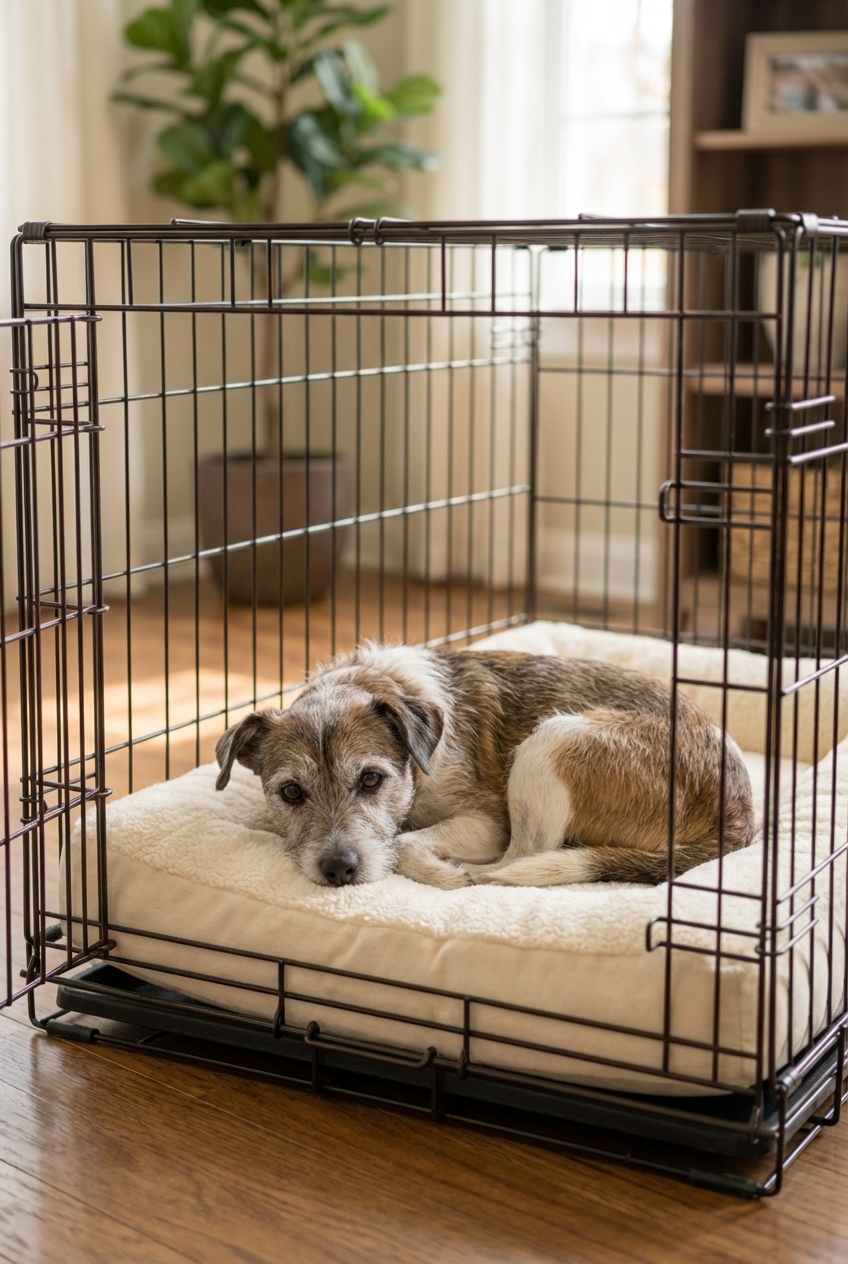
Many seniors love a crate because it is quiet and predictable, but comfort is everything.
- Choose easy entry: lower lip or front-opening crates can be gentler for arthritis.
- Add orthopedic support: a thicker bed helps sore joints.
- More frequent potty breaks: seniors may not be able to hold it as long.
- Keep it warm and draft-free: older dogs chill more easily.
How long can a dog stay in a crate?
This varies by age, health, and temperament. Think of these as starting points, not rules carved in stone.
- Puppies: a common guideline is about their age in months plus 1 hour (example: a 3-month-old puppy, about 4 hours max during the day). Some puppies need more frequent breaks, especially during active housetraining.
- Healthy adults: many can handle 4 to 6 hours comfortably during the day if they get exercise and potty breaks before and after. Longer stretches can happen occasionally, but it should not be the routine.
- Seniors: often need more frequent breaks due to mobility or bladder changes.
Crates are great for management and rest, but they should not replace exercise, training, and social time. If your schedule requires very long crating, consider a dog walker, pet sitter, doggy day care, or a safe playpen or baby-gated room setup.
Crate training vs separation training
A dog can be crate trained and still have separation anxiety. Crate training teaches comfort with confinement. Separation training teaches comfort with being alone. If your dog only struggles when you leave, focus on gradual alone-time practice and talk with a qualified trainer and your veterinarian.
When a crate may not be the best choice
Most dogs can learn to love a crate, but some should not be crated in the traditional way without a behavior plan.
- Dogs with severe confinement anxiety or a history of crate injury
- Dogs who break teeth, tear nails, or bloody their nose trying to escape
- Dogs whose veterinarian has recommended a different recovery setup
Alternatives: an exercise pen, a puppy-proofed room with a baby gate, or training your dog to settle on a mat (also called stationing) can keep everyone safe while you work on the underlying issue.
Common problems and fixes
Whining or barking
- First rule: confirm your dog has pottied, had water as appropriate, and had a little enrichment.
- Reward calm: open the door during quiet moments, not during noise.
- Increase exercise and mental work: a tired brain settles faster than a bored one.
Accidents in the crate
- Check crate size and add a divider.
- Increase potty breaks and supervision.
- Talk to your veterinarian if diarrhea, urinary issues, or sudden changes show up.
Chewing the crate or bedding
- Remove soft bedding temporarily and use a chew-resistant pad.
- Offer a safer chewing outlet like a rubber food toy.
- Increase enrichment outside the crate so the crate is for resting, not entertainment.
Panic or escape attempts
If your dog is injuring their nose, breaking teeth on bars, or hurting paws trying to escape, stop and reach out for help. This can be confinement anxiety or a form of separation anxiety. A qualified trainer and your veterinarian can guide a plan that may include behavior modification and, in some cases, medication support.
Making the crate part of daily life
Crate comfort sticks when it becomes normal, not a big event.
- Ask for
Cratewhile you shower, then release and reward. - Offer a chew in the crate while you eat dinner.
- Let your dog choose the crate for naps with the door open.
- Practice short crating even on days you are home, so the crate does not predict you leaving.
What I recommend as a vet assistant
Crate training is easiest when you combine comfort, routine, and the right kind of rewards. If you are ever unsure whether a behavior is training-related or medical, trust your instincts and call your veterinarian. Pain, urinary tract issues, and stomach upset can all sabotage crate training.
Most important: celebrate tiny wins. One calm minute becomes five. Five becomes a nap. And that nap becomes a peaceful, confident dog who knows exactly where to settle.
