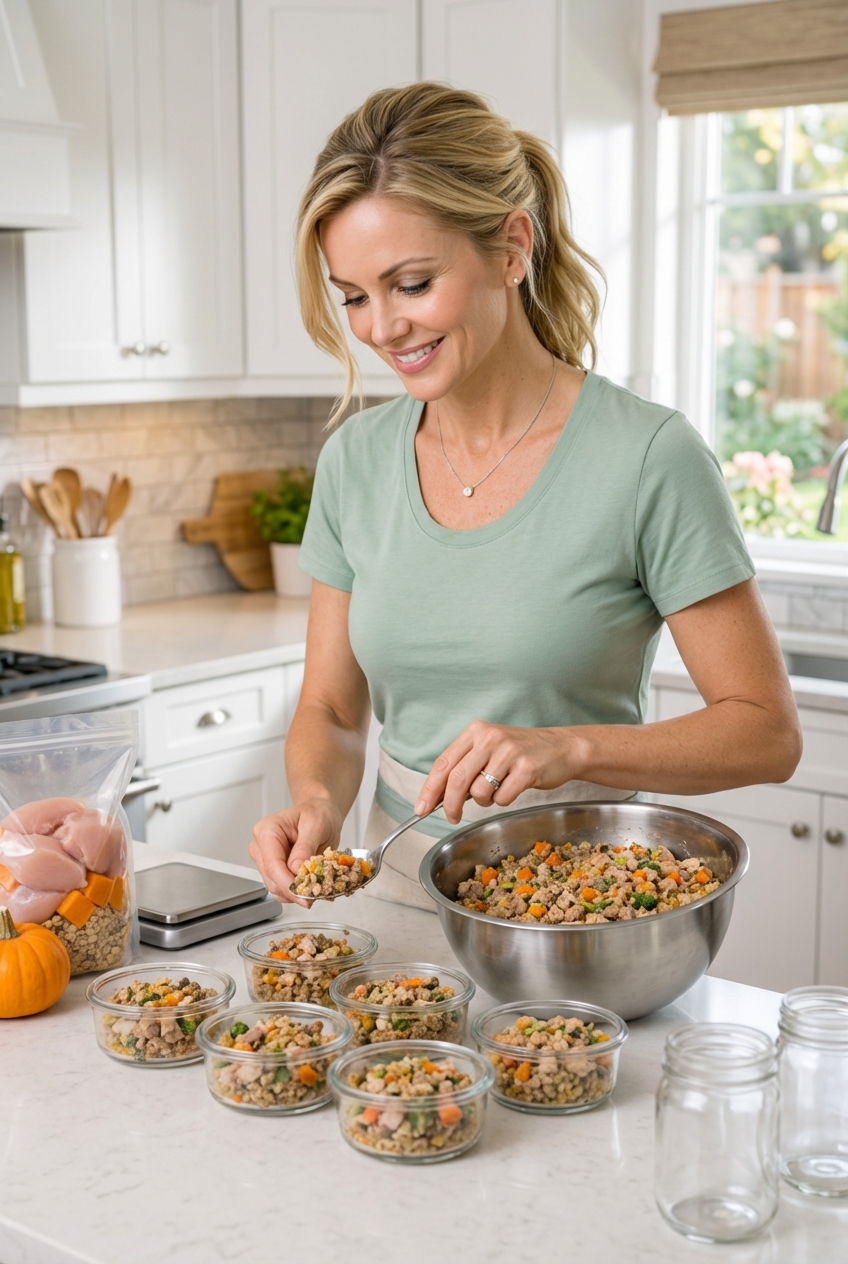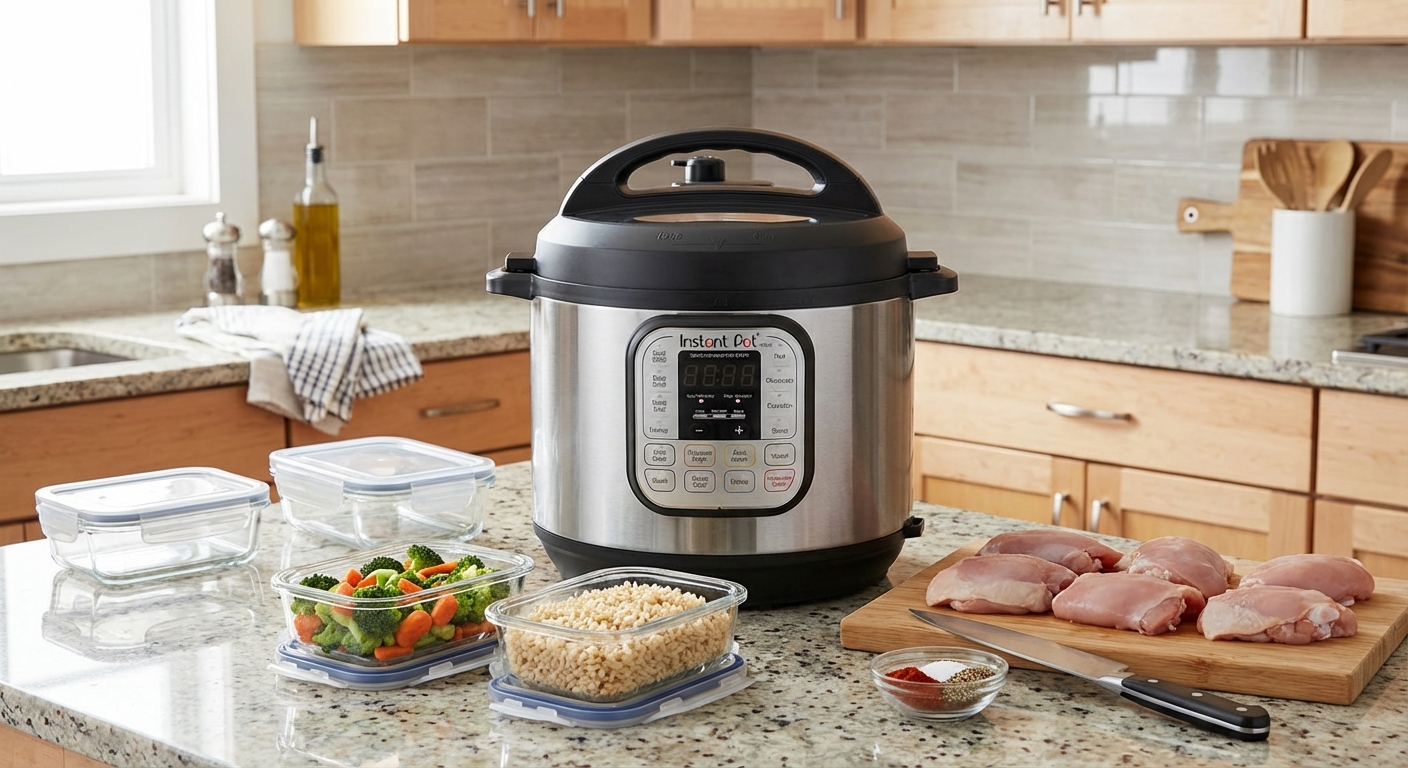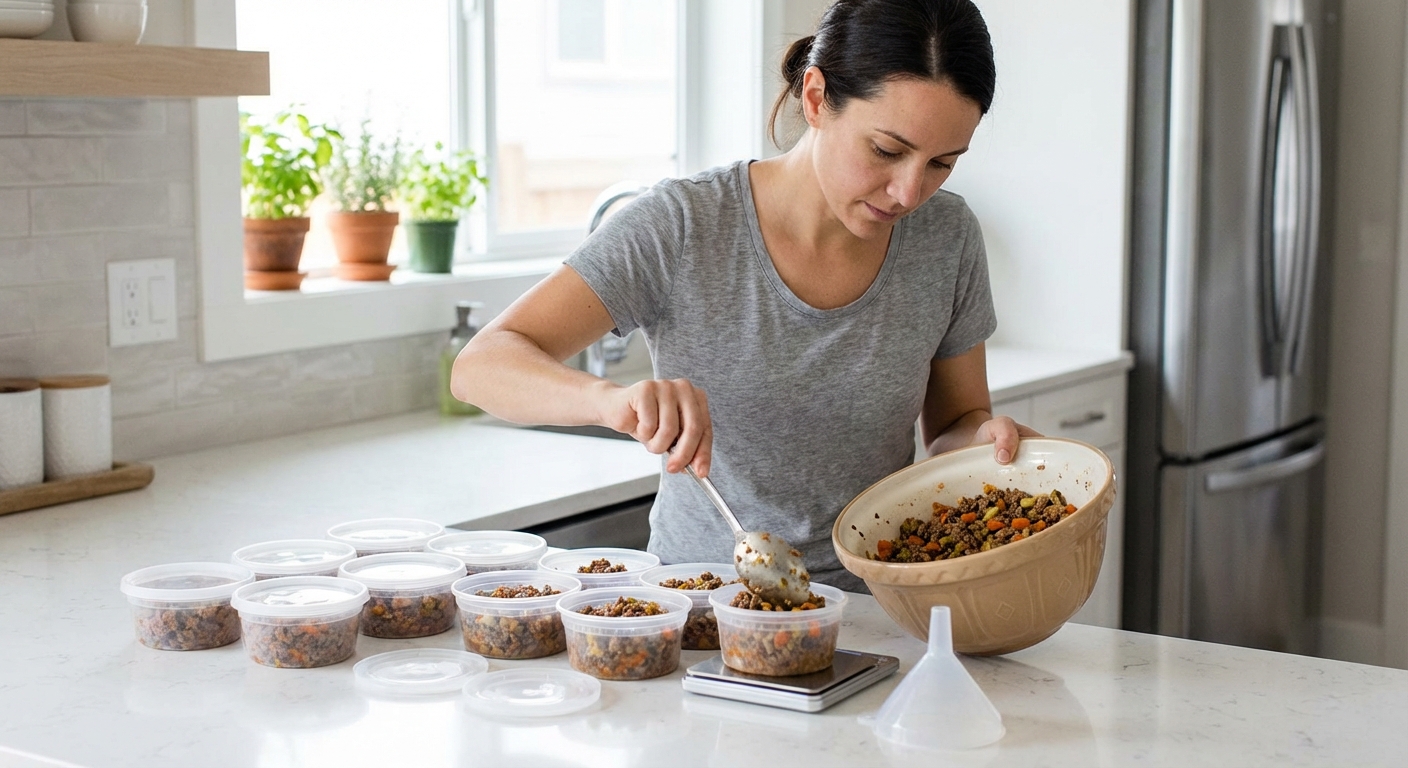
Make homemade cat food realistic with freezer meal prep. Learn how to pick a complete feline recipe, batch cook, portion by weight, freeze flat, label, thaw ...
Article
•
Designer Mixes
Cooked vs Raw Homemade Cat Food Safety

Shari Shidate
Designer Mixes contributor
Homemade cat food can be a wonderful way to support your cat’s health, especially when you want more control over ingredients, freshness, and quality. But the word homemade does not automatically mean safe. The biggest safety question I hear as a veterinary assistant is simple: Should I feed cooked or raw?
This guide walks you through the real-world safety pros and cons of cooked vs raw homemade cat food, what the evidence says about infectious risks, and how to reduce danger no matter which route you choose.
Quick note: This article is general education and is not a substitute for veterinary advice. If your cat has a medical condition, talk with your veterinarian (and ideally a veterinary nutritionist) before changing diets.
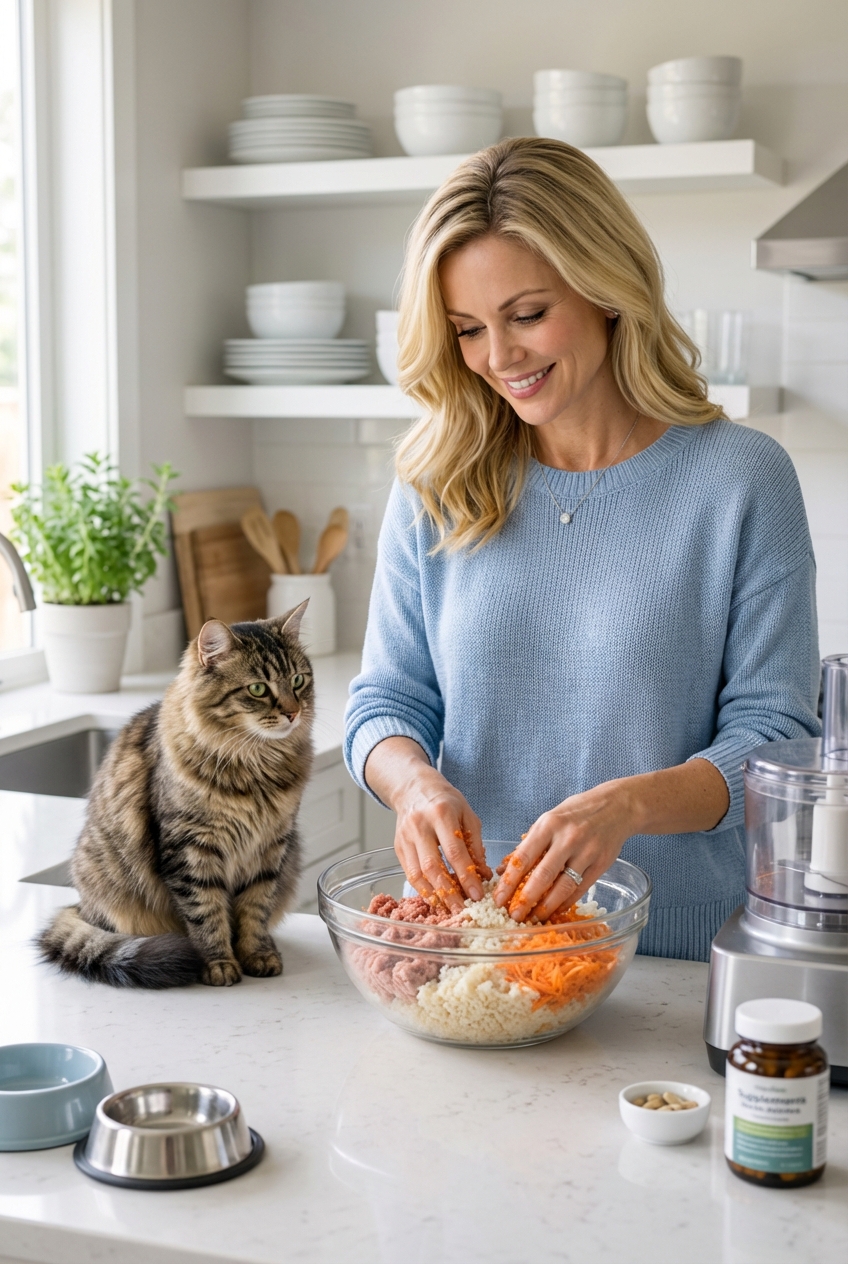
First, a quick cat nutrition reality check
Cats are obligate carnivores. That means they are designed to get most of their nutrition from animal tissues, not plants. From a safety standpoint, this matters because many homemade diets fail in two predictable ways:
- They are unbalanced long-term, especially missing taurine, calcium, vitamin A, vitamin D, iodine, or essential fatty acids.
- They mishandle food safety, especially with raw meat or improper storage.
Even if your recipe is “healthy,” it still needs to be complete and balanced for cats. The safest path is to use a recipe formulated by a board-certified veterinary nutritionist (ACVN in the US), or a recipe tool that meets recognized nutrition standards, then follow it precisely.
Cooked vs raw: key safety differences
1) Pathogens (bacteria and parasites)
Raw diets carry a higher risk of exposure to pathogens such as Salmonella, Campylobacter, pathogenic E. coli, and Listeria. These organisms can affect:
- Your cat (vomiting, diarrhea, fever, dehydration, sepsis in severe cases)
- You and your family (especially kids, seniors, pregnant people, and anyone immunocompromised)
- Your home environment (bacteria can spread from bowls, counters, sinks, sponges, and paws after using the litter box)
Cooked diets reduce this risk significantly because proper cooking kills many bacteria and parasites. It does not make food sterile, but it lowers the infectious load dramatically when paired with clean handling.
Evidence-based takeaway: if your household includes a high-risk person, cooked homemade is typically the safer option.
It is also worth knowing that cats can sometimes be asymptomatic shedders after exposure to foodborne bacteria, meaning they may spread organisms in feces even if they seem fine. That increases household exposure risk.
Source note for publication: Major veterinary and public health organizations have cautioned against raw feeding due to pathogen risk, especially in homes with high-risk people. Examples include the AVMA policy on raw or undercooked animal-source protein and the FDA pet food safety resources, which discuss contamination concerns and safe handling.
2) Bone safety
Feeding bone is a common reason people choose raw. But bones introduce risks:
- Cooked bones can splinter and are not safe.
- Raw bones can still break teeth, cause constipation, or lead to obstruction depending on size and the cat’s chewing habits.
For homemade diets, most veterinary nutritionists prefer measured calcium sources (like calcium carbonate or finely ground eggshell in the correct amount) instead of relying on bone.
3) Nutrient reliability
Both raw and cooked diets can be balanced, but raw diets are less forgiving of recipe changes. Small shifts in organ meat amounts, bone content, and supplement doses can swing nutrients widely.
Cooking can reduce certain nutrients, but that is not a deal-breaker. Balanced cooked recipes account for cooking losses by using the right ingredients and supplements in the right amounts.
When cooked homemade is safest
Cooked homemade tends to be the better safety fit when:
- You have children, older adults, a pregnant person, or an immunocompromised family member at home.
- Your cat has a history of GI disease, pancreatitis, or other conditions where foodborne illness could hit harder.
- You want a process that is easier to keep consistent: portioning, freezing, thawing, and cleaning.
Cooked safety basics
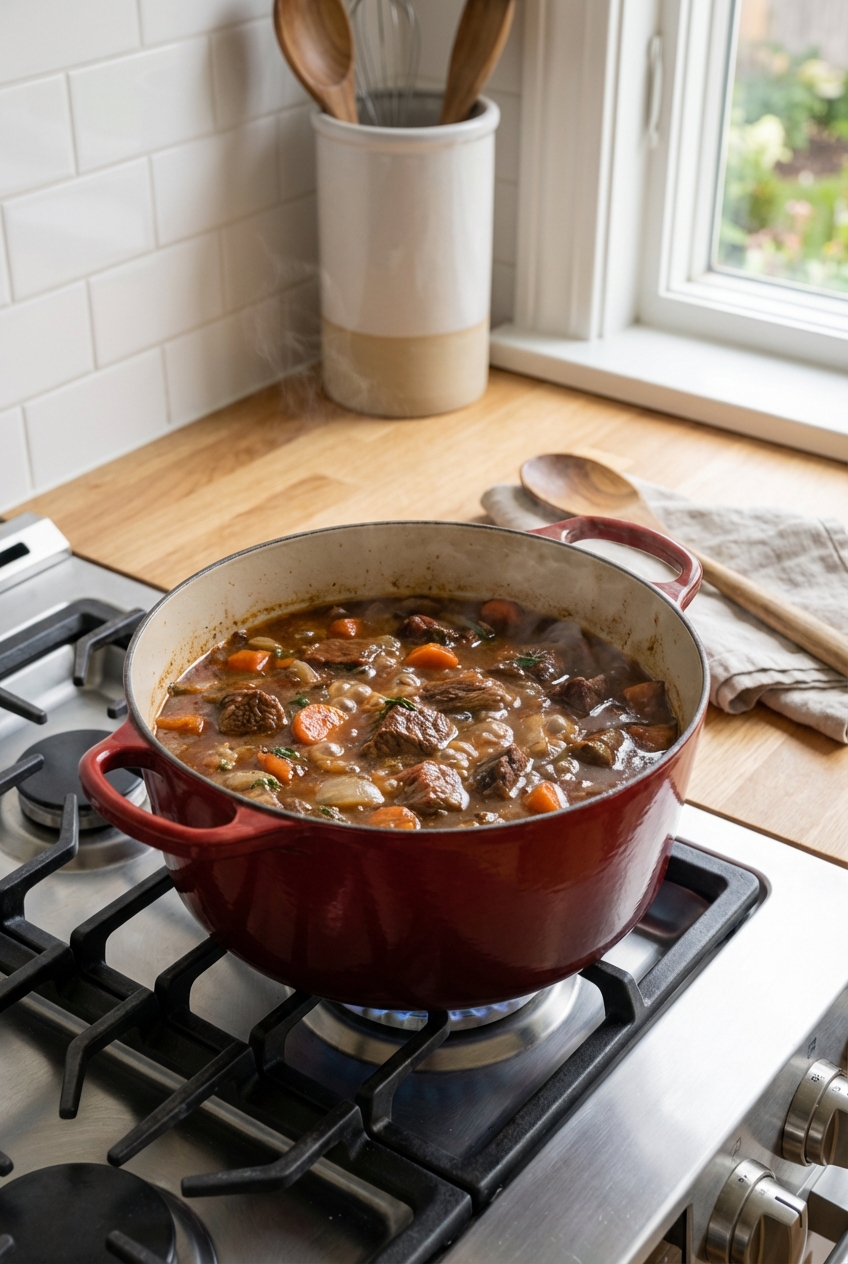
- Cook to safe temperatures: poultry and ground meats should reach 165°F (74°C); whole cuts of pork and beef are typically 145°F (63°C) with rest time. These are human food-safety targets and are helpful for reducing pathogens, but they do not replace a veterinary-formulated recipe.
- Don’t use cooked bones.
- Cool quickly: portion into shallow containers, refrigerate promptly, and freeze extra servings.
- Storage: as a general food-safety rule, use refrigerated portions within 2 to 3 days and keep frozen portions within about 2 to 3 months for best quality (follow your vet’s guidance and standard food-safety recommendations).
- Thaw safely: thaw in the refrigerator, not on the counter.
- Use supplements exactly as directed: especially taurine and calcium.
If you choose raw: reduce risk
I understand why some cat parents are drawn to raw. Some cats appear to do well on carefully formulated raw diets, and some owners prefer minimal processing.
From a safety standpoint, you need to go in with eyes open and strong hygiene habits. Even with great sourcing, you should assume raw meat can carry pathogens and plan accordingly.
Raw risk-reduction checklist
- Use a veterinary-formulated recipe and do not substitute ingredients casually.
- Buy from reputable sources with good cold-chain handling.
- Freeze strategically: freezing may reduce risk from some parasites, but it depends on the parasite, temperature, and time. Freezing is not a guarantee, and it does not reliably eliminate bacteria.
- Prep like it is hazardous food: separate cutting boards, dedicated utensils, immediate disinfection.
- Wash hands thoroughly after handling food, bowls, or cat waste.
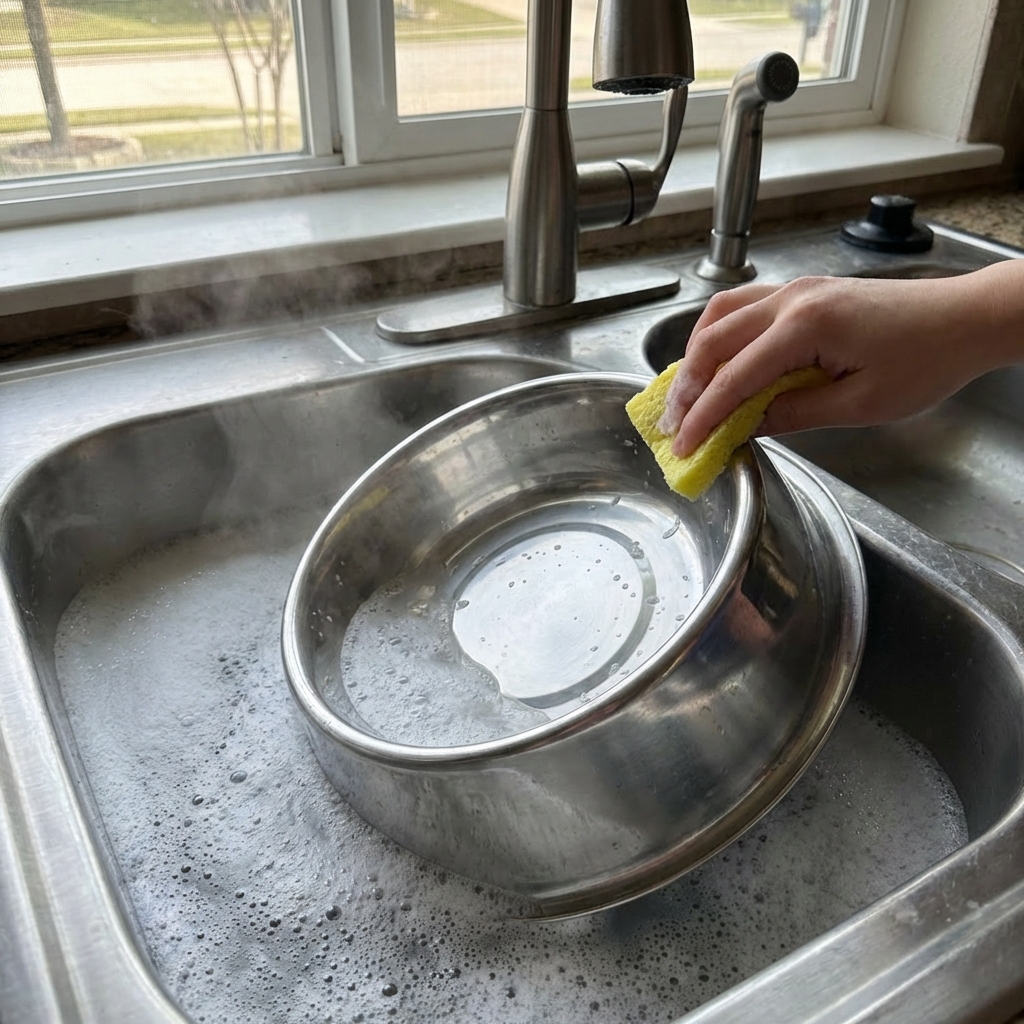
- Pick up bowls promptly and wash with hot, soapy water, ideally in a dishwasher with a heated dry cycle.
- Disinfect surfaces with an appropriate kitchen disinfectant and correct contact time.
- Limit exposure time: do not leave raw food out. Offer a portion and refrigerate the rest right away.
- Storage: treat raw pet food like raw meat. Refrigerate for short windows only (often 1 to 2 days depending on the recipe and handling) and freeze portions you will not use promptly.
Important: If anyone in your household is high-risk, many veterinary public health recommendations advise avoiding raw feeding because of the potential for household contamination.
Commercial raw vs homemade raw
Some people assume commercial raw is automatically safer than homemade raw. It can be more consistent nutritionally if it is formulated to meet recognized standards, but the pathogen risk can still be present.
Some brands use steps like high-pressure processing (HPP) to reduce contamination, but it is not the same as cooking and it does not eliminate the need for careful handling. Whether it is commercial or homemade, raw food should be treated as a higher-risk item in the home.
Common mistakes that make homemade unsafe
“I’ll just add supplements later”
Cats can develop nutrient deficiencies over time. Some, like taurine deficiency, can be serious and may affect the heart and eyes. If the recipe requires a supplement, it is not optional.
Too much liver or organ meat
Organ meats are valuable, but they must be used in precise amounts. Too much liver can contribute to vitamin A excess, which can harm bones and joints over time.
Calcium-to-phosphorus imbalance
Muscle meat is high in phosphorus and low in calcium. Cats need the ratio corrected with an appropriate calcium source. This is one of the most common “looks healthy but isn’t” homemade problems.
Unsafe human ingredients
Avoid ingredients that are toxic or risky for cats, including:
- Onion, garlic, chives
- Xylitol
- Alcohol
- Cooked bones
- Grapes and raisins (toxicity in cats is less clear than in dogs, but it is safest to avoid them)
Raw for dental health?
This is a popular idea, but the evidence is mixed, and bones can cause dental fractures. For dental health, safer, more predictable options include:
- Veterinary dental cleanings as recommended
- VOHC-accepted dental treats or diets (when appropriate)
- Tooth brushing with cat-safe toothpaste
In other words, you do not have to accept raw-food pathogen risk to support oral health.
A simple decision guide
Cooked homemade is usually best if you want:
- Lower pathogen risk
- Simpler home hygiene
- A safer fit for multi-person households
Raw homemade might be considered if:
- You can follow strict sanitation rules consistently
- Your household has no high-risk individuals
- You are using a properly formulated recipe and reliable sourcing
Either way, the safest homemade plan is one that is nutritionally complete, consistent, and handled like food safety truly matters, because it does.
Questions to ask your vet
- Does my cat have any health condition that changes what they can safely eat?
- What is my cat’s ideal calorie intake and target weight?
- Should we run baseline labs before the change?
- Can you refer me to a veterinary nutritionist for a balanced recipe?
- What warning signs should make me stop and call you?
If you ever see persistent vomiting, diarrhea, lethargy, loss of appetite, weight loss, straining to poop, or blood in stool, call your veterinarian right away.
Bottom line
If you are deciding between cooked and raw homemade cat food, cooked is typically the safer default for most homes because it reduces infectious risk and is easier to manage consistently. Raw can be done more carefully, but it demands strict hygiene and carries a higher household exposure risk.
My biggest encouragement is this: you do not have to do it perfectly on day one. Start by getting a balanced recipe, improving your food handling routine, and making one safe upgrade at a time. Your cat benefits from every thoughtful step you take.