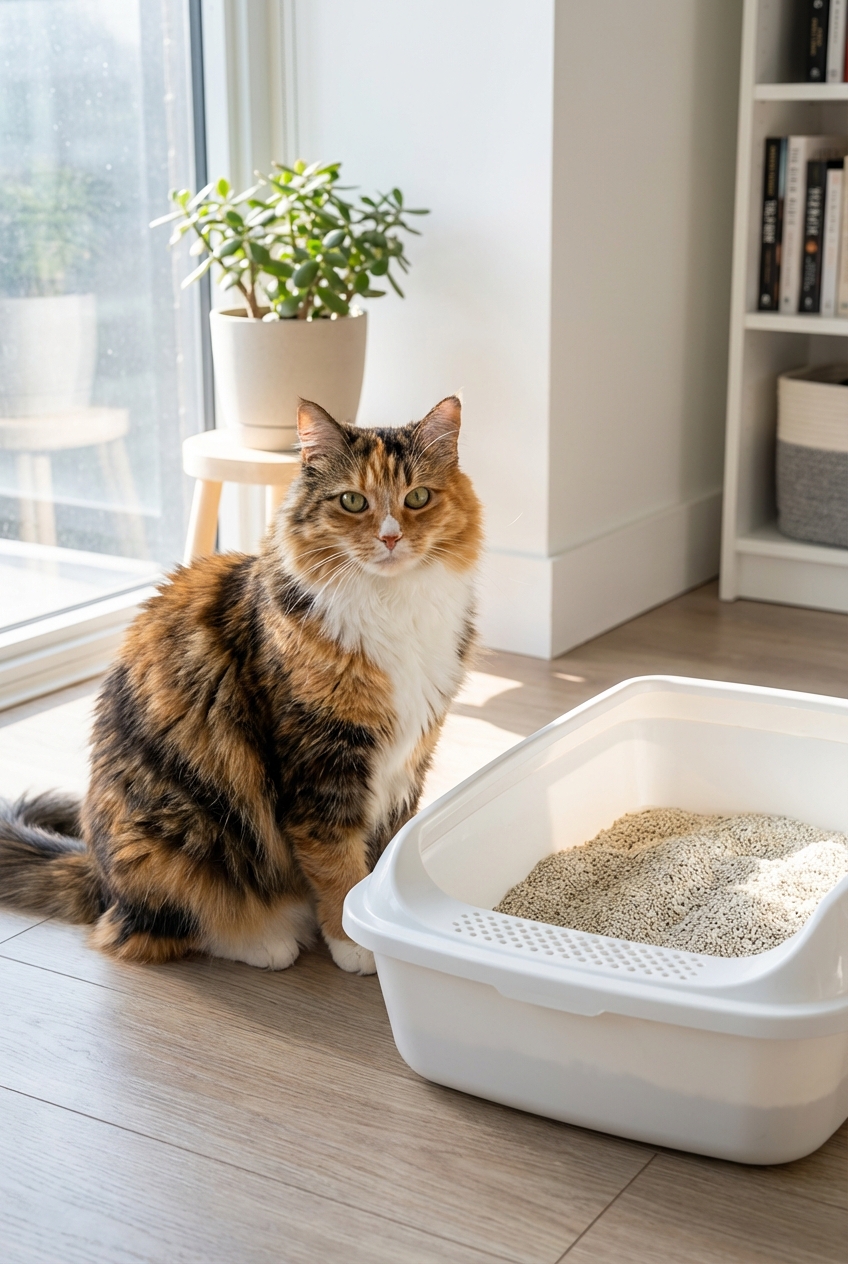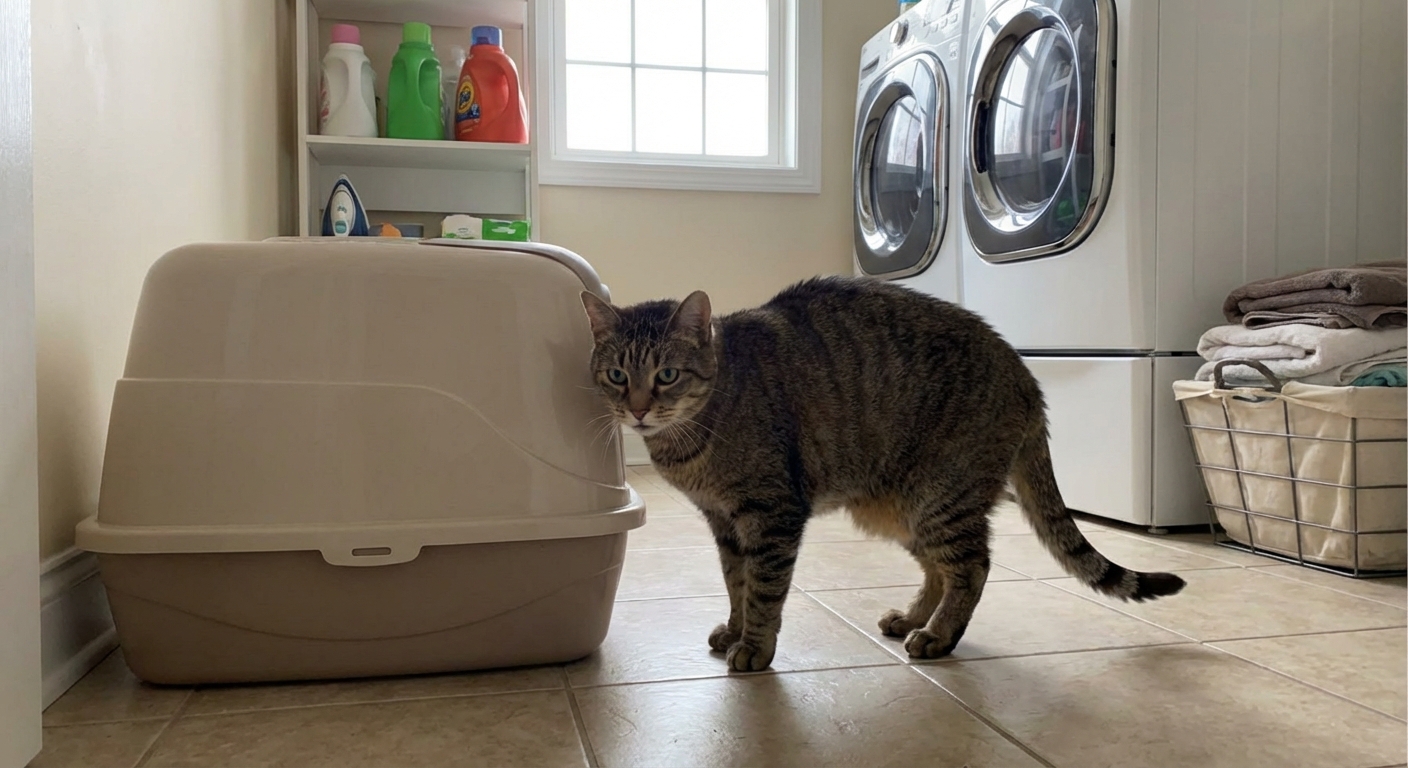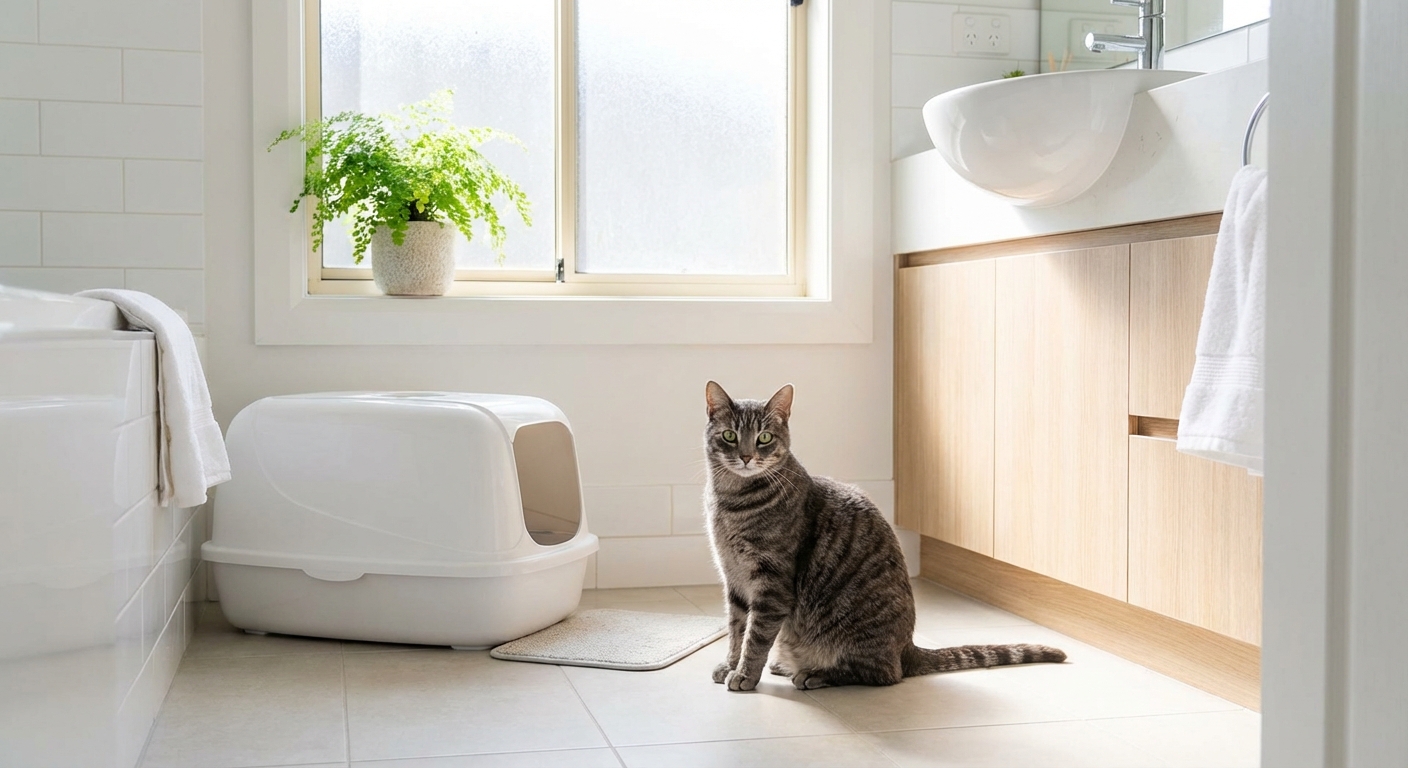
A practical guide to helping a constipated cat at home: hydration tips, plain pumpkin, vet-guided Miralax (PEG 3350), fiber, hairball support, red flags, and...
Article
•
Designer Mixes
Constipated Cat Symptoms

Shari Shidate
Designer Mixes contributor
If your cat is visiting the litter box again and again with little to show for it, it is easy to second-guess what you are seeing. Is it constipation, a hairball problem, stress, or something more urgent like a urinary blockage? As a veterinary assistant, I can tell you this: noticing the pattern early, and knowing what signs matter most, can make a huge difference for your cat’s comfort and safety.
Constipation in cats usually means stool is moving too slowly through the colon, causing it to become dry, hard, and painful to pass. Some cats develop obstipation (severe constipation where they cannot pass stool at all), and a smaller number develop megacolon (a stretched, weak colon that cannot push stool effectively). Those more serious forms require veterinary care.
Quick note: This article is for general information and does not replace veterinary advice. If your cat looks unwell or you suspect a urinary blockage, seek care right away.
Most common constipated cat symptoms
Constipation can be subtle at first. Many cats do not cry out. Instead, you see small behavior changes that add up over a few days. The most important thing is a change from your cat’s normal.
Litter box signs
- Straining to poop, often squatting for a long time
- Little to no stool produced, or only tiny hard pieces that look like pebbles
- Going less often than usual (many cats poop daily, but some healthy cats may go every 1 to 2 days depending on diet and routine)
- Frequent trips to the box with minimal results
- Stool outside the box (some cats associate the box with pain and avoid it)
Body and behavior signs
- Decreased appetite or acting “off” at meals (sniffing food then walking away, eating less than usual)
- Hiding, less social behavior, or seeming irritable when touched
- Low energy, sleeping more than usual
- Vomiting (can happen when constipation is more severe)
- Abdominal discomfort, tense belly, or flinching when picked up
- Possible dehydration signs like tacky gums or a dry coat (these can be subtle and nonspecific)
One important note: cats sometimes strain in the litter box due to urinary problems. If your cat is straining and you are not sure whether they are trying to pee or poop, treat it seriously and keep reading.
Constipation or urinary blockage?
Straining can look the same whether a cat is trying to pass stool or struggling to urinate. A urinary blockage is an emergency, especially in male cats.
More suggestive of constipation
- Hard, dry stool or pebble-like stool
- Normal urine output (you still see normal wet clumps in the litter)
- Straining mainly during bowel movements
More suggestive of a urinary emergency
- Repeated trips to the litter box with little or no urine
- Crying out while attempting to urinate
- Licking the genital area more than usual
- Bloody urine
- Rapid decline in energy, vomiting, or collapse
If you suspect your cat is blocked and not passing urine, go to an emergency vet immediately. Do not wait overnight.
What causes constipation in cats
Constipation is usually the result of one or more factors that slow the colon down, make stool too dry, or make it painful for a cat to posture and go.
- Dehydration: low water intake is a major contributor, especially for cats eating only dry food or cats with medical issues that affect hydration.
- Hair ingestion and grooming: hair can contribute to stool issues, particularly in long-haired cats.
- Dietary factors: low moisture intake, an inappropriate fiber level for that individual cat, or sudden diet changes.
- Obesity and inactivity: less movement can mean slower gut motility.
- Pain or arthritis: cats with sore hips or back pain may avoid the litter box or struggle to posture comfortably.
- Stress and routine disruption: some cats hold their stool when anxious or when the box is dirty or in an unpleasant location.
- Foreign material: string, bones, or other items can cause irritation or obstruction, which is different from simple constipation and can be an emergency.
- Underlying disease: kidney disease is a common contributor. Diabetes, neurologic issues, electrolyte imbalances, pelvic injury or narrowing, and chronic idiopathic constipation can also play a role. (Hyperthyroidism more often causes increased appetite and GI changes like diarrhea, but constipation can still happen in some cats due to dehydration or concurrent disease.)
- Medications: some prescriptions can reduce gut motility.
In clinic, we look at the whole picture: diet history, hydration, weight, medications, mobility, and what the litter box habits have been recently.
At-home checks
You do not need fancy tools to gather helpful information. A few quick checks can help you decide what to do next.
1) Track litter box output
- When was the last normal poop for your cat?
- What did the stool look like: normal log, small dry pieces, or none?
- Are there normal urine clumps?
2) Watch posture and effort
Prolonged or repeated straining, especially when nothing is produced, is a sign to take seriously. If your cat is crouching and pushing with no stool produced, do not assume it will resolve on its own.
3) Check hydration gently
Look for reduced interest in water, tacky gums, or a dry coat. These signs can be subtle, and dehydration can be hard to judge at home. If you suspect dehydration, it is worth a vet call.
4) Consider recent changes
- New food or a sudden switch?
- More dry food than usual?
- Less drinking or fewer water bowls?
- Stressful events: visitors, moving, new pets?
- New medications?
Kittens and seniors: constipation in kittens can be related to parasites or other issues and should be taken seriously. In senior cats, constipation often overlaps with arthritis, kidney disease, and reduced activity, so it is worth discussing prevention early.
Tips to help a constipated cat
If your cat is bright, alert, still eating some, and producing at least a small amount of stool, mild constipation may be managed with safe, supportive steps. The goal is to increase moisture, encourage movement, and reduce stool dryness.
Increase water intake
- Switch to or add canned food: wet food is one of the most practical ways to increase hydration.
- Add water or low-sodium broth to wet food to create a “stew” texture (avoid onions and garlic in broth).
- Use a cat water fountain: many cats prefer moving water.
- Offer multiple water stations in quiet, accessible spots.
Support the litter box setup
- Scoop at least once daily, more if you have multiple cats.
- Provide enough boxes: a common guideline is one per cat, plus one extra.
- Use a low-entry box for seniors or cats with arthritis.
Fiber only with vet guidance
Some cats benefit from a small amount of added fiber, while others do better on lower-fiber, highly digestible diets. Because cats vary so much, it is best to ask your veterinarian before adding products like psyllium, pumpkin, or fiber supplements.
Encourage movement
- Short play sessions 2 to 3 times a day can help gut motility.
- For older cats, even gentle “follow the toy” walking is useful.
Avoid risky home remedies
- Do not give human laxatives unless your veterinarian tells you to. Some products that people use (for example, polyethylene glycol or lactulose) are sometimes used in cats, but only under veterinary guidance and with the correct plan for your cat.
- Do not use mineral oil by mouth. If accidentally inhaled, it can cause serious pneumonia.
- Do not attempt enemas at home. Some enema products that are safe for people are dangerous for cats.
When to call the vet
Constipation can become painful and dangerous if it progresses. Contact your veterinarian the same day, or seek urgent care, if you notice any of the following:
- No stool produced for 48 hours and your cat seems uncomfortable or is straining
- Repeated unproductive straining
- Vomiting, especially more than once
- Not eating or refusing favorite treats
- Lethargy or hiding and acting unwell
- Bloated, painful abdomen
- Concern your cat may not be urinating normally
- Known ingestion of string, ribbon, bones, or foreign material
In clinic, treatment might include fluids, stool softeners or motility meds, safe veterinary enemas, or manual deobstipation under sedation for severe cases. Your vet may recommend x-rays to see how much stool is present and to check for obstruction.
Depending on your cat’s history and signs, your veterinarian may also do an exam and abdominal palpation, assess hydration, and recommend bloodwork and urinalysis (especially if dehydration, kidney disease, or urinary concerns are on the table). If there is concern about pelvic narrowing, neurologic disease, or chronic constipation, they may discuss additional imaging or a longer-term management plan.
Preventing constipation
Once a cat has been constipated, preventing repeat episodes is worth prioritizing. Chronic constipation is much easier to manage early than after the colon has been stretched for a long time.
- Prioritize moisture: a wet-food based diet or mixed feeding plan is often helpful.
- Keep water appealing: fountains, clean bowls, and multiple locations.
- Maintain a healthy weight: extra weight can reduce activity and worsen mobility issues.
- Address pain: if your cat has arthritis, talk with your vet about pain control and box access.
- Routine matters: consistent feeding, predictable home environment, and clean boxes reduce “holding it.”
- Follow your vet’s plan: if your cat needs stool softeners or a prescription GI diet, consistency is key.
If your instincts are telling you something is not right, trust that. Cats are masters at hiding discomfort, and constipation is one of those issues that can look mild until it suddenly is not.
Quick FAQ
How long can a cat go without pooping?
Some healthy cats may occasionally skip a day, especially if they ate less. The key is what is normal for your cat. If your cat has not pooped for 48 hours and is straining, vomiting, acting painful, or not eating, call your veterinarian.
Can hairballs cause constipation?
Hair can contribute to GI slowdown in some cats, especially if they groom a lot or have long fur. If your cat is frequently coughing up hairballs and also gets constipated, ask your vet about brushing routines, hairball diets, or safe lubricating products designed for cats.
Is pumpkin always a good idea?
Pumpkin helps some cats, but not all. Fiber can worsen constipation in certain situations, particularly if dehydration is the bigger issue. Your vet can tell you if pumpkin fits your cat’s case and how much to use.