Red, puffy, or goopy eyes in dogs? Learn the common signs and causes of conjunctivitis, safe cleaning and saline rinses, what to avoid, and urgent vet warnin...
Article
•
Designer Mixes
Conjunctivitis in Dogs: Symptoms Step by Step

Shari Shidate
Designer Mixes contributor
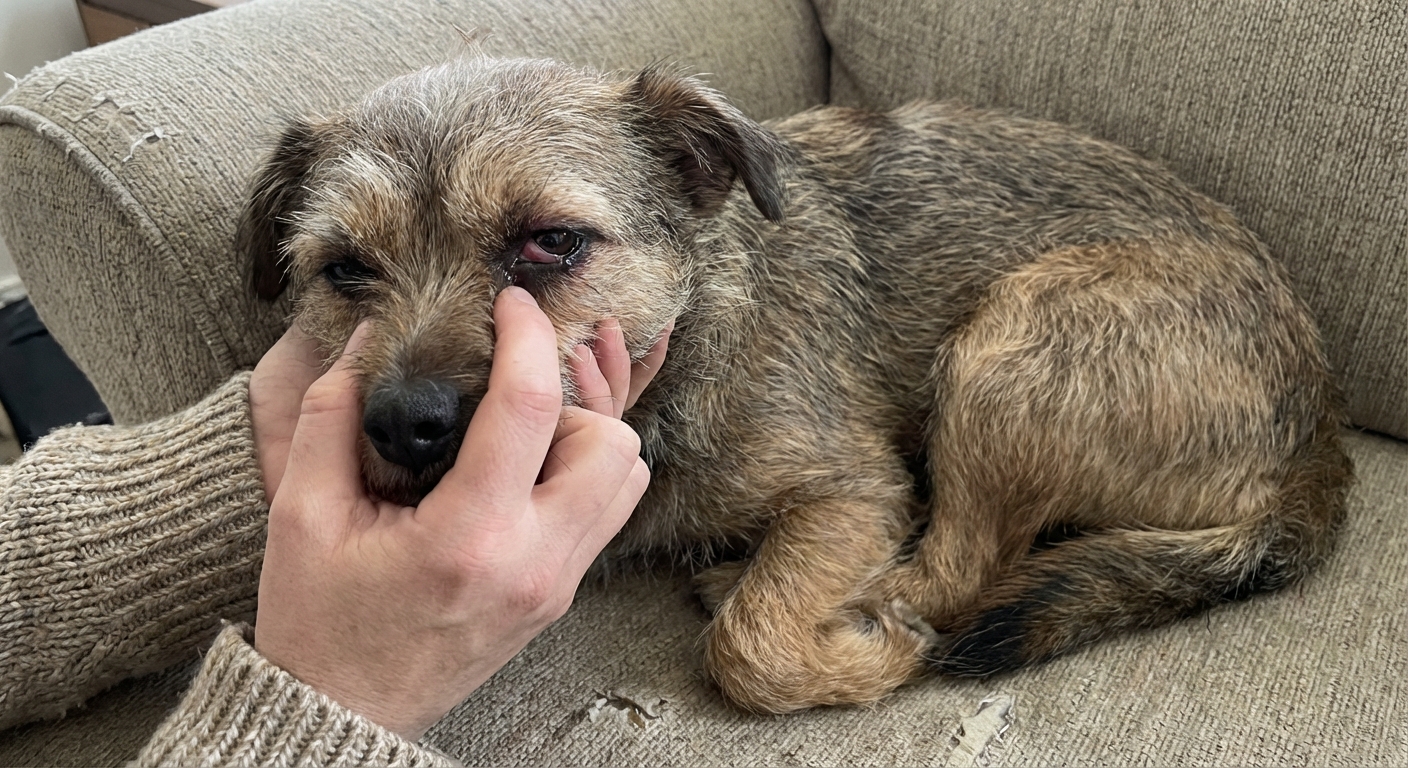
When a dog’s eye looks red, has discharge, or is extra teary, it is easy to assume it is “just allergies.” Sometimes it is. But those same signs can also show up with several different eye problems, including conjunctivitis, corneal scratches or ulcers, dry eye, eyelid issues, a blocked tear duct, or more serious (and painful) conditions like uveitis or glaucoma. As a veterinary assistant in Frisco, Texas, I have seen how quickly a mild, irritated eye can turn into a painful problem if the cause is not addressed.
This guide walks you through a common symptom progression owners may notice (not always in a neat order), what it can mean, what you can do at home safely, and when it is time to see your veterinarian right away.
What conjunctivitis looks like
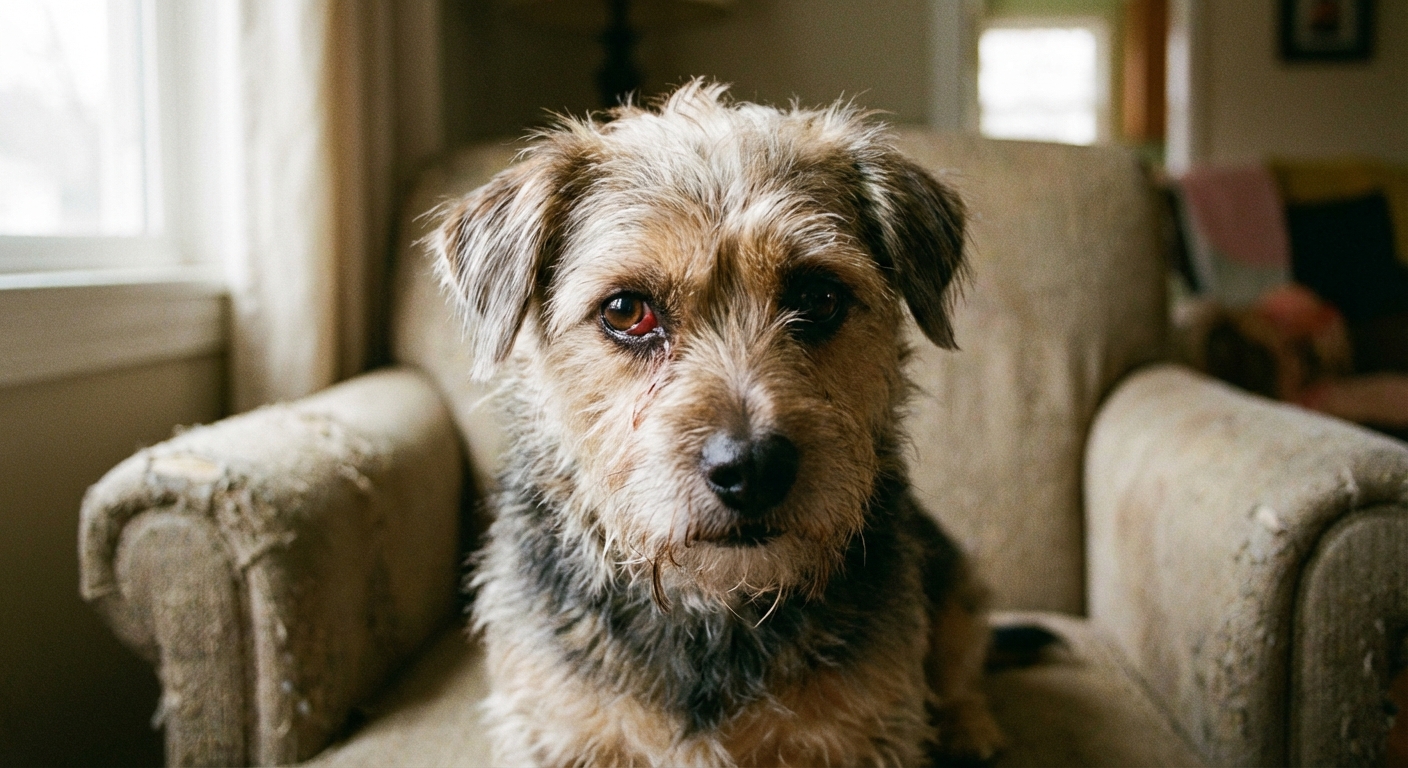
Conjunctivitis is inflammation of the conjunctiva, the thin tissue lining the eyelids and covering part of the eyeball. It is not one single disease. It is a sign that something is irritating or inflaming the eye, such as allergies, infection (viral or bacterial), dry eye, foreign material (like grass seeds), eyelid anatomy issues, blocked tear drainage, or exposure to smoke, shampoo, dust, or grooming sprays.
Some dogs get it once and it clears up quickly. Others get recurrent flare-ups that keep coming back until the underlying cause is treated.
Symptoms: step by step
Many cases follow a general pattern, but eyes can also go from “fine” to “painful” fast. For example, a foreign body or corneal ulcer can show up immediately with squinting and obvious discomfort. Use these steps to track what you are seeing and share it with your vet.
Important: If your dog is squinting, keeping the eye closed, or seems painful at any stage, treat it as prompt exam territory.
Step 1: Extra tearing
- One or both eyes look watery.
- Fur under the eye may look damp or stained.
- Your dog may blink a little more than usual.
Why it happens: Tearing is the eye’s first defense. It tries to flush out allergens, irritants, or early inflammation.
Step 2: Mild redness
- The whites of the eye look pink.
- The inner eyelid tissue looks irritated or mildly swollen.
- Your dog may start rubbing their face on carpet or furniture.
Tip: Compare both eyes in similar lighting. Subtle redness can be easier to spot side-by-side.
Step 3: Discharge turns cloudy
- Clear tears may become whitish or cloudy.
- You might notice more “sleep” at the corner of the eye.
- Discharge may collect after naps.
What it can suggest: The longer inflammation is present, the more mucus the eye tends to produce. This can occur with allergies, irritation, dry eye, or early infection.
Step 4: Yellow or green discharge
- Discharge becomes thick, sticky, yellow, or green.
- Eyelids may look crusty, especially in the morning.
- Your dog may squint or hold the eye partly closed.
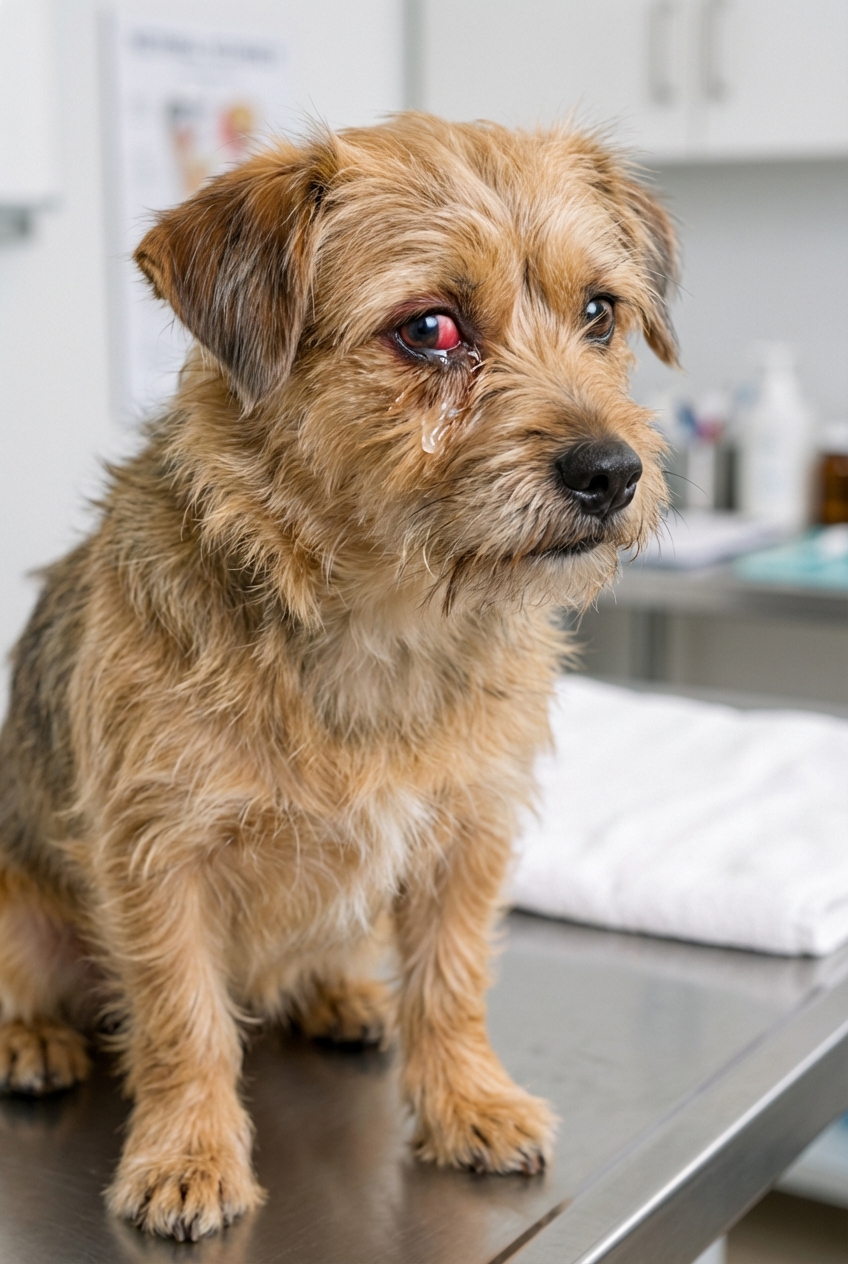
What it can suggest: Yellow or green discharge is often associated with bacterial involvement, but it can also happen with poor drainage or dry eye. Color alone cannot diagnose a bacterial infection. Either way, this is a strong reason to get a veterinary exam.
Step 5: Swelling and obvious discomfort
- Your dog squints, blinks repeatedly, or avoids bright light.
- The eyelids or tissues around the eye look swollen.
- Your dog paws at the face or cries when you touch near the eye.
Why this matters: Squinting usually means pain, and pain raises concern for corneal problems like an abrasion or ulcer, a foreign body, or deeper inflammation inside the eye. Corneal ulcers can worsen quickly and should be treated promptly.
Step 6: Eye stuck shut, haze, or behavior changes
- The eye is glued shut from discharge.
- The surface of the eye looks hazy or bluish.
- Your dog is lethargic, not eating well, or seems “off.”
Bottom line: At this stage, treat it as urgent. You do not want to wait and see with a painful eye.
Common causes: what your vet considers
Conjunctivitis is a symptom, so your veterinarian will work to find the cause. Here are some common categories:
- Allergies (seasonal pollen, dust, environmental triggers): often affects both eyes and may come with itchy skin.
- Irritants (smoke, shampoo, grooming sprays, dust): symptoms can start suddenly after exposure.
- Foreign material (grass awns, sand): often one eye, sudden squinting, lots of tearing.
- Dry eye (keratoconjunctivitis sicca): thick, sticky discharge and redness, sometimes chronic.
- Infectious causes (bacterial, viral): in adult dogs, true primary infectious conjunctivitis is generally less common than irritation, allergy, dry eye, or secondary infection. Some cases occur alongside respiratory illness or after close contact with other dogs.
- Anatomy (entropion, prominent eyes, hair rubbing the cornea): recurring irritation until corrected.
- Tear drainage issues (nasolacrimal blockage): chronic tearing, staining, and recurrent discharge.
Why an exam matters: Conditions like corneal ulcers, uveitis, and glaucoma can look like “pink eye” at first, but they can threaten comfort and vision if treatment is delayed.
What you can do at home safely
Home care is supportive only. It can keep your dog comfortable while you arrange veterinary care, or it can help mild irritation resolve if your vet agrees the eye is otherwise healthy.
1) Stop rubbing
- If your dog is pawing at the eye, use an E-collar (cone) to prevent injury.
- Rubbing can turn mild inflammation into a corneal scratch.
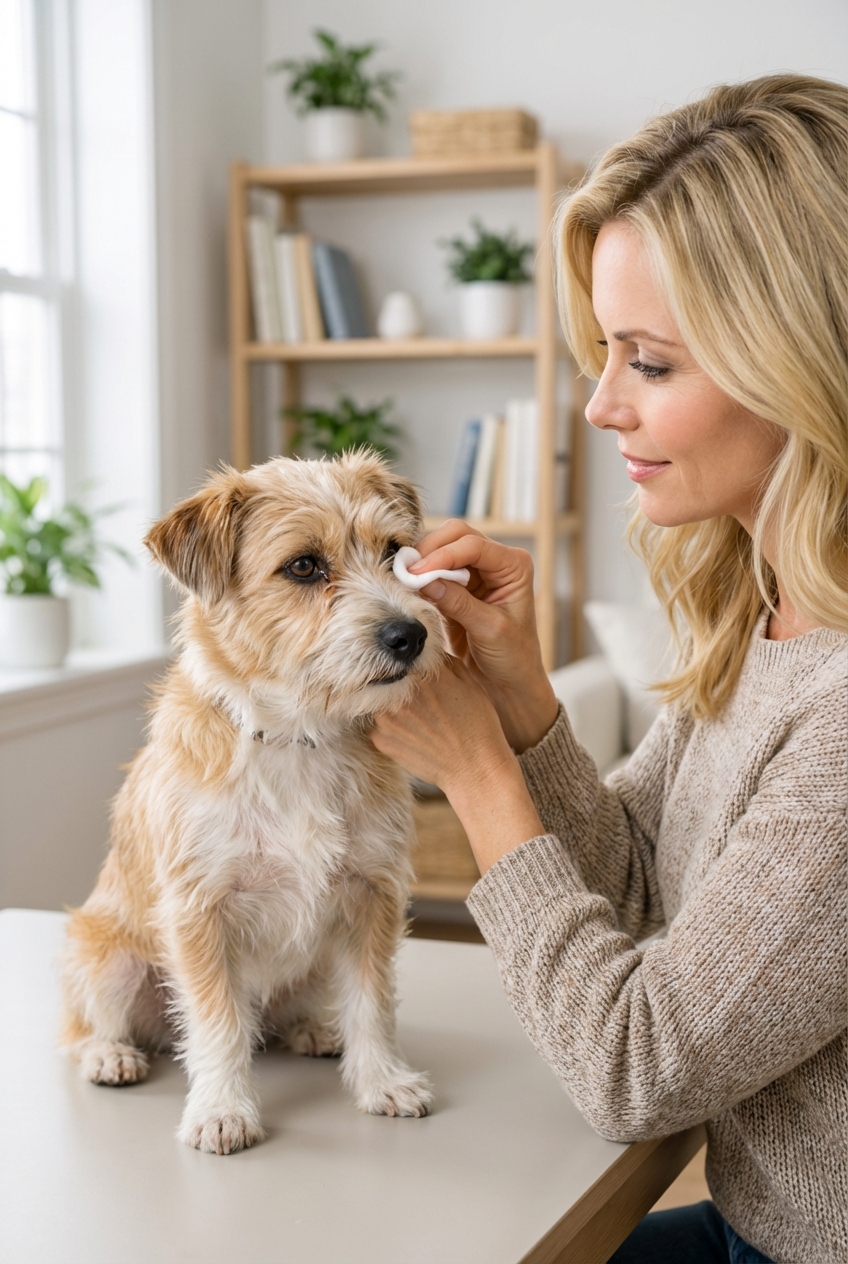
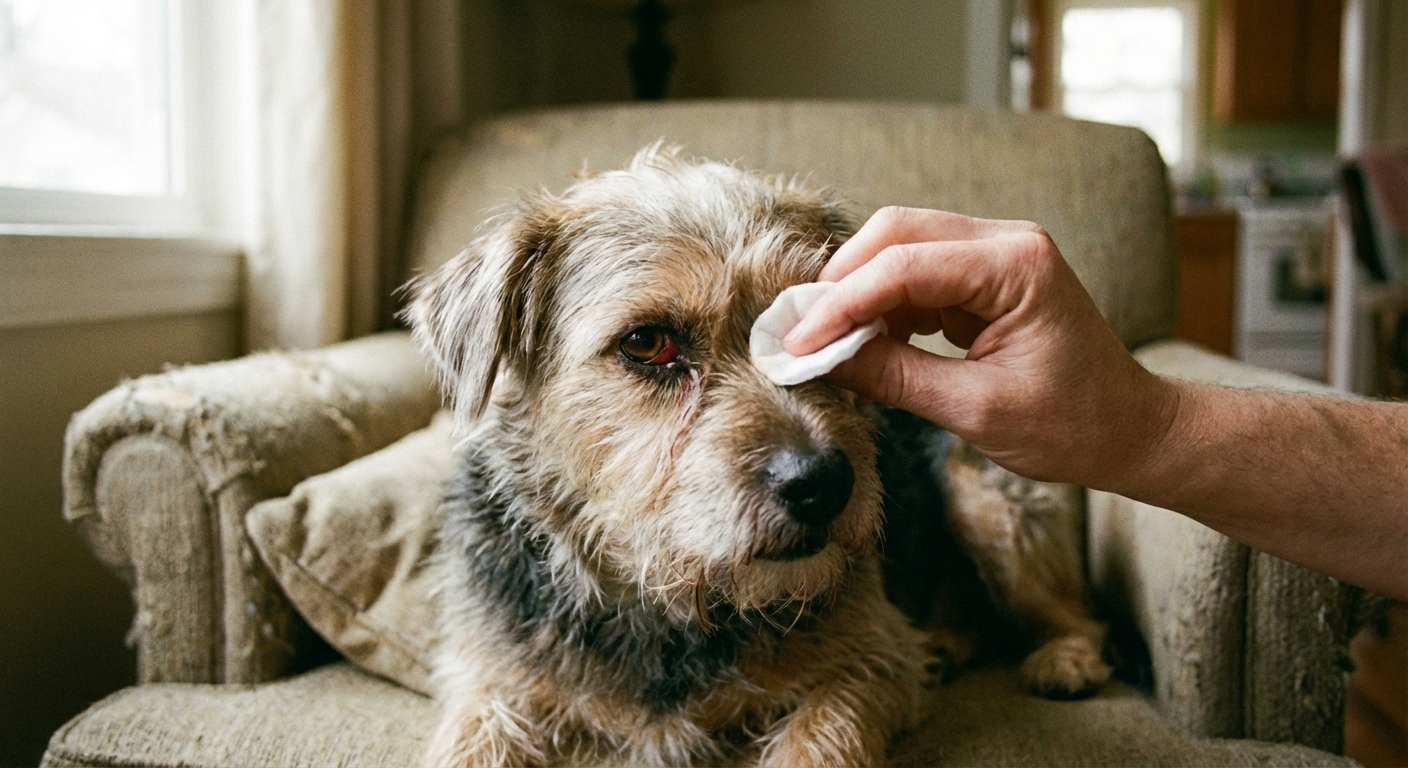
2) Clean discharge gently
- Wash your hands.
- Use a clean cotton pad or soft gauze with sterile ophthalmic saline or a pet-safe eye rinse (not homemade saline).
- Wipe from the inner corner outward, using a fresh pad each pass.
3) Use a warm compress
- Apply a warm, damp cloth to the closed eyelid for 30 to 60 seconds.
- This can loosen crusts and soothe irritated tissues.
4) Avoid common mistakes
- Do not use human eye drops unless your veterinarian instructs you. The biggest concern is steroid-containing drops, which can make corneal ulcers worse. Even products that seem harmless, like redness relievers, can be irritating or inappropriate for dogs. Plain artificial tears are sometimes used, but should still be vet-approved for your dog’s situation.
- Do not use leftover pet eye medications from a previous issue. The wrong medication can delay healing or cause complications.
- Do not use contact lens solution, peroxide, herbal remedies, or essential oils near the eye.
- Do not try to remove a stuck object from the eye surface. That is a job for a professional with proper tools.
- If your dog is painful or squinting, stop rinsing and get seen. Pain changes the risk level.
Helpful note: If you are heading to the vet, take a quick photo of the eye in good lighting. Eye symptoms can fluctuate, and a photo can help tell the story.
When to see the vet
Eye problems can change quickly. Contact your veterinarian the same day if you notice any of the following:
- Squinting or holding the eye closed
- Yellow or green discharge
- Cloudy or bluish haze to the eye surface
- Swelling around the eye
- Sudden onset after running in tall grass or brush
- Trauma (play injury, cat scratch, roughhousing)
- Your dog seems painful, lethargic, or not eating
If mild tearing or redness is not clearly improving within 24 to 48 hours, or it worsens at any time, schedule an exam.
Emergency now: A bulging eye, severe swelling, bleeding, a visible wound, or a dog who cannot open the eye should be treated as an urgent emergency.
What your vet may do
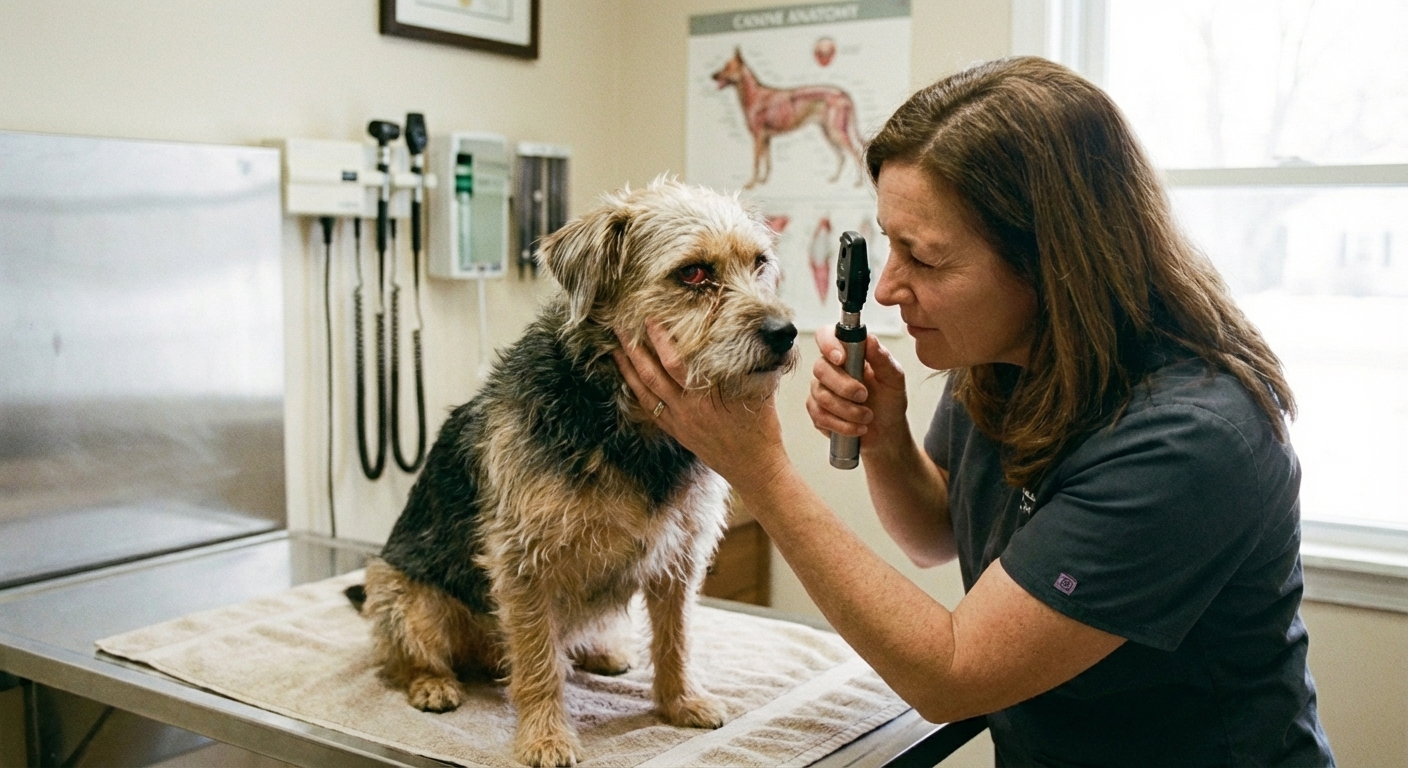
Many owners are surprised by how systematic an eye exam is. Your vet may recommend:
- Fluorescein stain to check for corneal scratches or ulcers
- Schirmer tear test to evaluate tear production and rule out dry eye
- Eye pressure check when glaucoma is a concern
- Inspection under the eyelids for foreign material
- Medication such as antibiotic drops or ointment, anti-inflammatory meds when appropriate, or dry-eye medications if needed
Keeping it from coming back
Some dogs, especially those with allergies or eye anatomy that traps hair and debris, are prone to repeat irritation. These simple habits can help:
- Trim hair around the eyes (or ask your groomer to keep it neat).
- Rinse after dusty adventures with sterile ophthalmic saline, especially after hikes or windy days. If your dog is squinting or painful, skip home rinses and get checked.
- Manage allergies with your veterinarian’s help, which may include medications, bathing routines, and avoiding triggers.
- Finish medications exactly as prescribed, even if the eye looks better in 24 to 48 hours.
- Practice good hygiene: wash hands after eye cleaning, do not share towels between dogs, and launder cloths used near the eyes. Most cases are not a major people risk, but some infectious causes can spread dog-to-dog.
Quick symptom tracker
If you are not sure whether the eye is improving, jot down these details once or twice daily:
- Which eye: left, right, or both
- Discharge: clear, white, yellow, green
- Redness: mild, moderate, severe
- Squinting: yes or no
- Rubbing or pawing: yes or no
- Energy and appetite: normal or decreased
This little log helps your vet decide whether you are dealing with simple irritation or something that needs more targeted treatment.
The takeaway
Conjunctivitis in dogs often starts small: a watery eye and a little redness. But eyes do not always follow a slow, orderly timeline. If discharge thickens, your dog begins squinting, or the eye looks cloudy, it is time to act quickly. The goal is always the same: protect the cornea, relieve discomfort, and treat the cause, not just the discharge you can see.
If you are ever unsure, call your veterinarian. With eyes, it is better to be a little early than a day too late.