Learn safe, practical home remedies for dog fleas: flea combing, gentle baths, itch soothing, and deep-cleaning your home to break the flea life cycle—plus...
Article
•
Designer Mixes
Comprehensive Home Flea Remedy for Dogs

Shari Shidate
Designer Mixes contributor
Fleas are tiny, but they can make your dog miserable fast. As a veterinary assistant in Frisco, Texas, I see the same pattern over and over: families treat the dog but forget the house, or they try a single home remedy once and expect it to “stick.” The truth is simpler and more hopeful.
A comprehensive home flea remedy for dogs is really a plan with three parts: relief for your dog, cleanup in your home and yard, and prevention so you do not end up right back where you started.
Below is a practical, evidence-based approach you can start today, using safe home steps plus clear guidance on when to bring in your veterinarian. This article is educational and not a substitute for veterinary care.
Know the flea life cycle
This is the biggest need-to-know tip: most fleas in an infestation are in the environment (eggs, larvae, and pupae), not on your dog. Adult fleas live on pets, but the other life stages build up in your home and yard. Many infestations persist because the environment keeps “re-seeding” the dog.
- Adult fleas bite and lay eggs after feeding.
- Eggs fall off into bedding, carpet, couch cracks, and baseboards.
- Larvae hide in dark areas and feed on organic debris.
- Pupae can wait and then emerge when vibration, warmth, and nearby activity signal a host.
That is why one bath or one spray rarely solves it. You want steady, repeated action for at least 4 weeks, and often 8 to 12 weeks for heavier infestations because pupae can linger before emerging.
Step 1: Confirm fleas
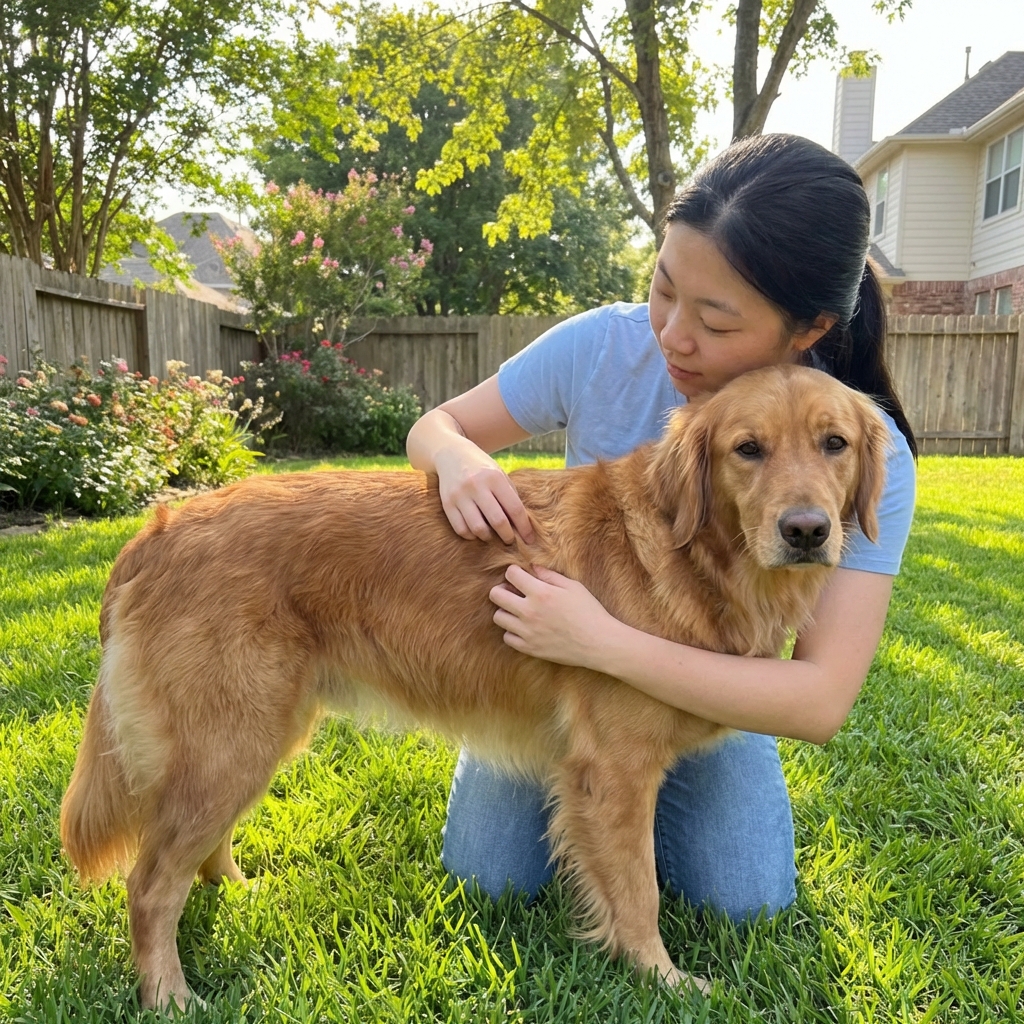
Common flea clues include intense itching at the back end and tail base, tiny dark specks in the coat, and red bumps on the belly or inner thighs.
Quick “flea dirt” test
- Comb your dog over a white paper towel.
- Put the black specks on the towel and add a few drops of water.
- If it turns reddish-brown, that is digested blood, also known as flea dirt.
Call your vet promptly if you notice
- Pale gums, weakness, or marked lethargy (possible anemia, especially in puppies).
- Open sores, hot spots, or severe skin infection.
- Tapeworm segments that look like rice grains near the rear end or in stool.
- Fleas on a puppy, senior, or medically fragile dog (they can decline faster).
A note on flea allergies
Some dogs have flea allergy dermatitis (FAD) and can itch intensely from just one or two bites. That means your dog may still be itchy even as the infestation improves. A flea comb and flea dirt checks help you judge progress more accurately than itching alone.
Step 2: Help your dog now
Use a flea comb daily
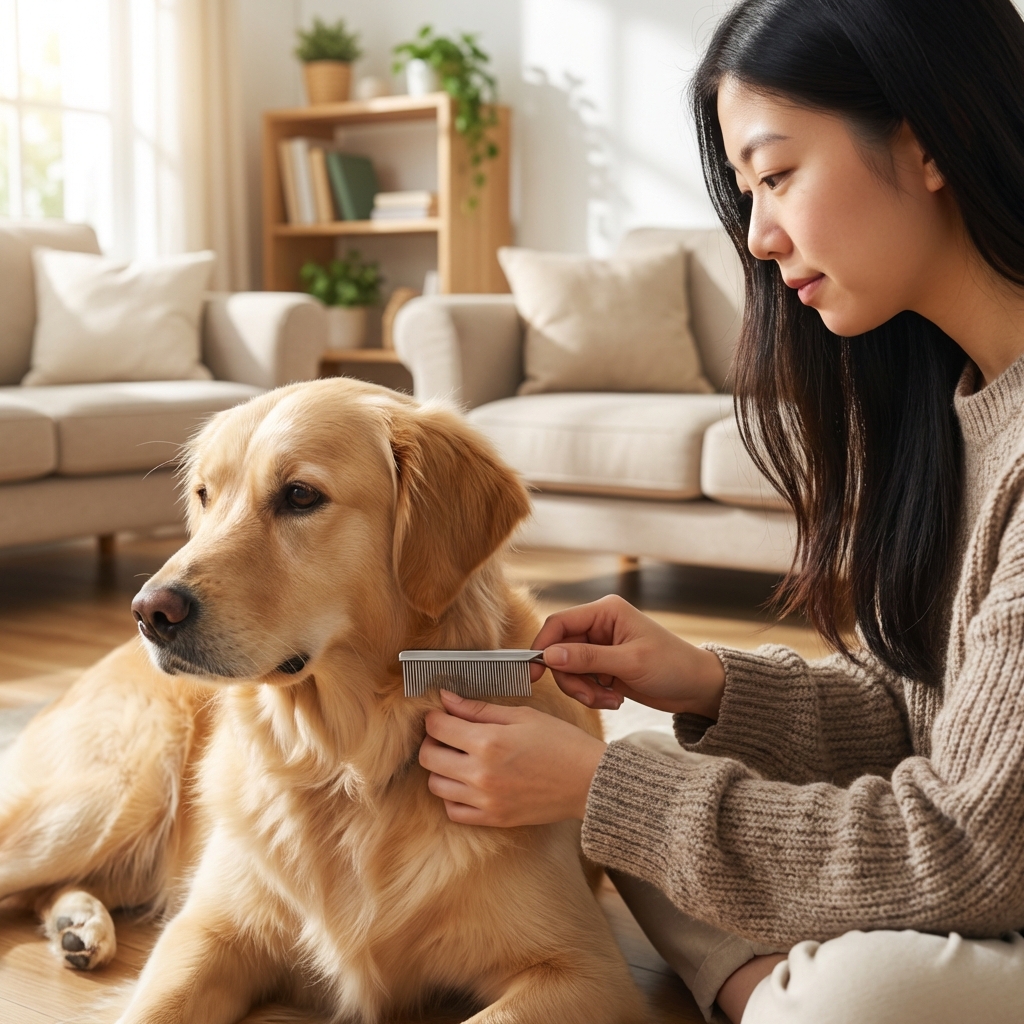
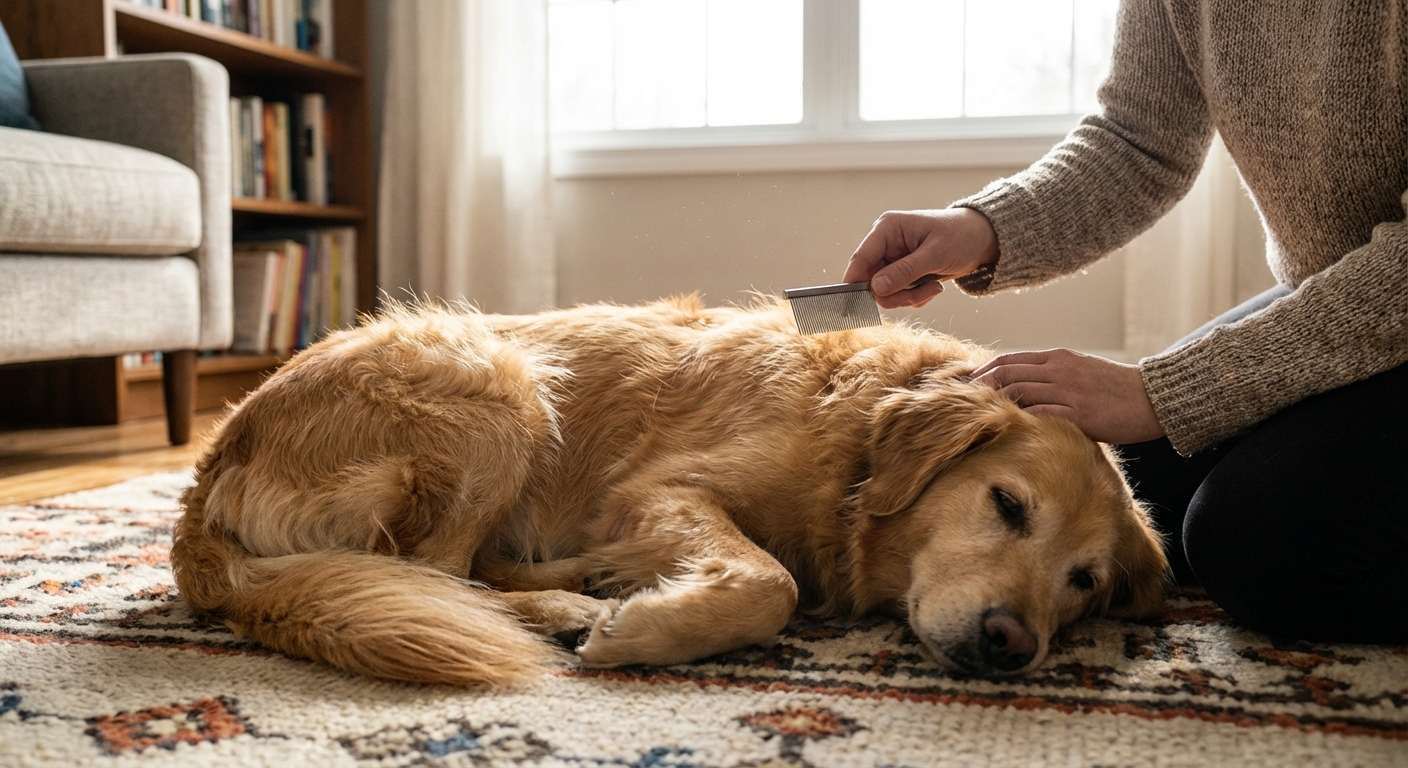
A flea comb is one of the most underrated home tools. It physically removes adult fleas and helps you monitor progress.
- Comb slowly, especially around the neck, tail base, belly, and inner thighs.
- Dip the comb into a bowl of warm water with a small amount of dish soap to trap and drown fleas.
- Do this daily for at least 10 to 14 days, then weekly to monitor.
Bathe strategically
A bath can help remove fleas and flea dirt, but over-bathing can dry out skin and make itching worse.
- Use a gentle pet shampoo. If you use a flea shampoo, follow label directions carefully.
- Start by lathering the neck first. This helps reduce fleas running to the face.
- Rinse thoroughly and dry well, especially if your dog is prone to hot spots.
Important: Never use essential oils on your dog unless your veterinarian specifically recommends and doses them. Many oils can be irritating or toxic to pets, and cats in the home are especially sensitive.
Treat every pet safely
If you have multiple pets, treat all of them with an appropriate flea product, or fleas will keep cycling through the household. Use species-specific products only.
- Do not use dog flea products on cats (some ingredients can be life-threatening to cats).
- Do not use cat products on dogs unless a veterinarian has directed you.
Avoid these “internet” remedies
- Garlic for fleas: It is not a safe flea treatment strategy and can be risky for some dogs.
- Undiluted vinegar or essential oils on the skin: can cause irritation and does not reliably break the life cycle.
- Household insect sprays not labeled for pet environments: high risk, low benefit.
Step 3: Treat your home
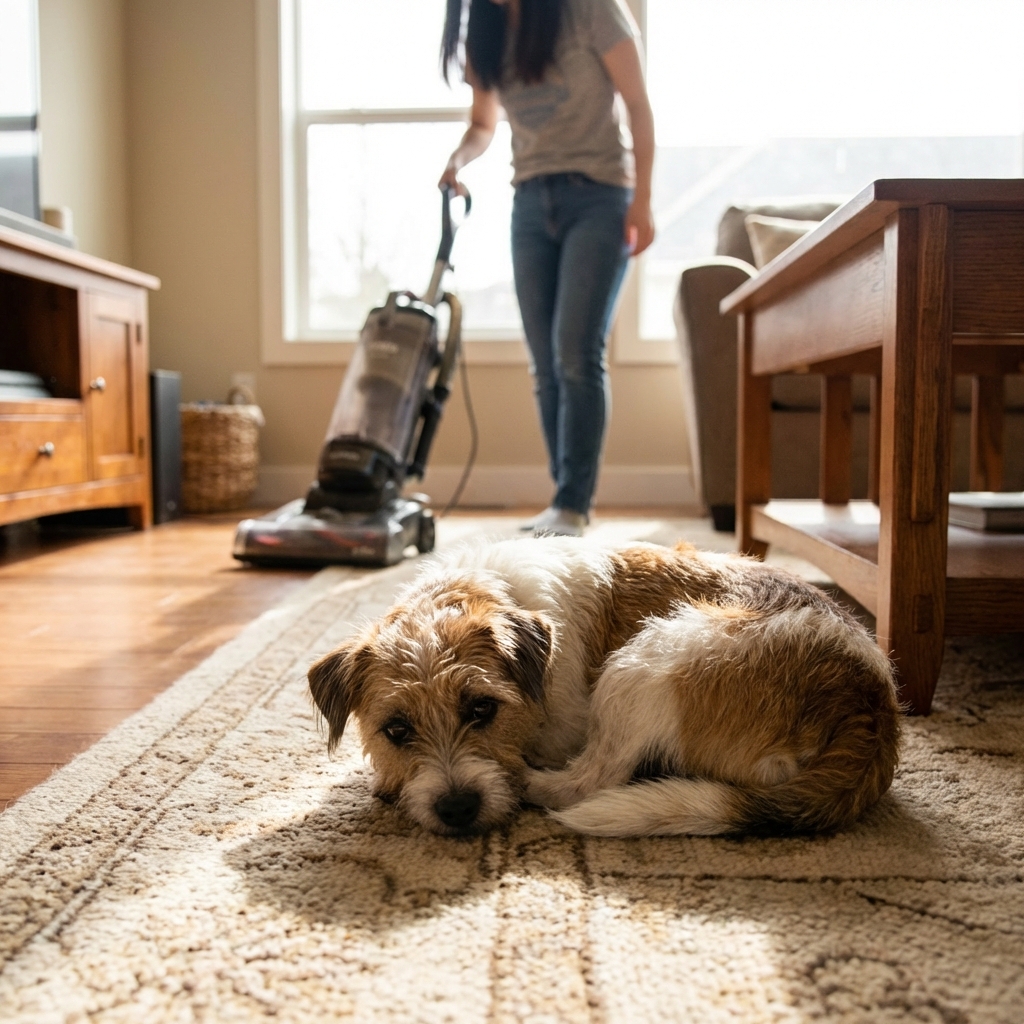
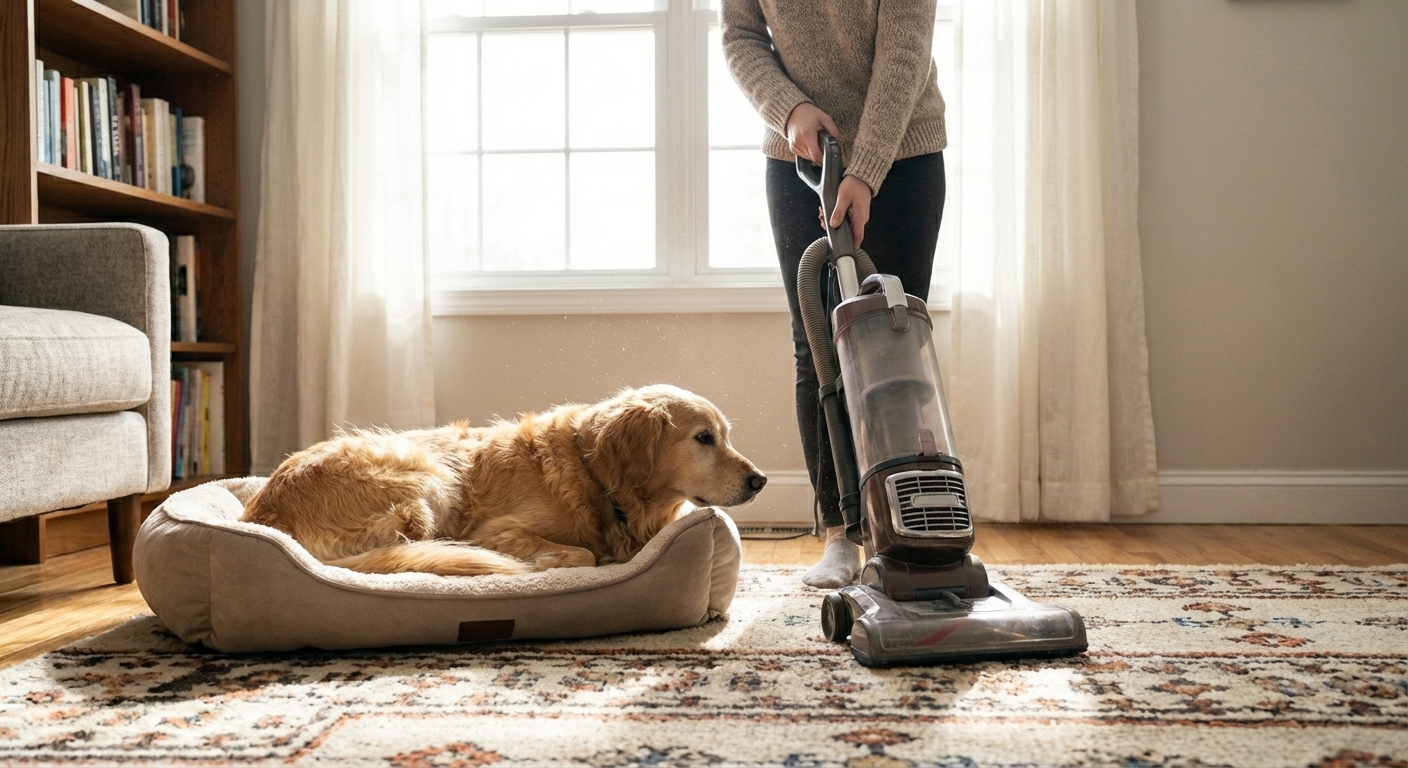
If you do only one thing beyond treating your dog, do this: vacuum thoroughly and often for two weeks. Vacuuming removes eggs and larvae and may stimulate pupae to emerge, which sounds awful, but it can make them easier to eliminate over time.
Daily cleaning checklist (first 10 to 14 days)
- Vacuum carpets, rugs, couch cushions, pet beds, and baseboards. Empty the canister outdoors or seal the bag and discard.
- Wash bedding (dog bedding, throws, your bedding if your dog sleeps with you) in hot water and dry on high heat.
- Focus on favorite zones: under beds, near doors, and the couch corner where your dog naps.
Optional: food-grade diatomaceous earth (DE), with caution
Some families use food-grade diatomaceous earth lightly in cracks and along baseboards. It can help dry out insects, but it must be used carefully and its real-world results can be variable.
- Use only food-grade, not pool grade.
- Apply a thin dusting, avoid creating airborne clouds, and keep pets away during application.
- Do not apply DE directly to your pet’s coat or skin. Inhalation and skin irritation are risks.
- DE can irritate lungs. If anyone in the home has asthma, I recommend skipping it.
DE alone is rarely enough for a serious infestation, but it can be a supportive tool as part of a broader plan.
When you may need more than cleaning
If you are dealing with a heavy infestation, vacuuming and laundry may not be enough on their own. In those cases, ask your veterinarian about options that help break the life cycle, such as products that include an insect growth regulator (IGR), or consider professional pest control that uses pet-safe, label-directed treatments.
Step 4: Yard steps
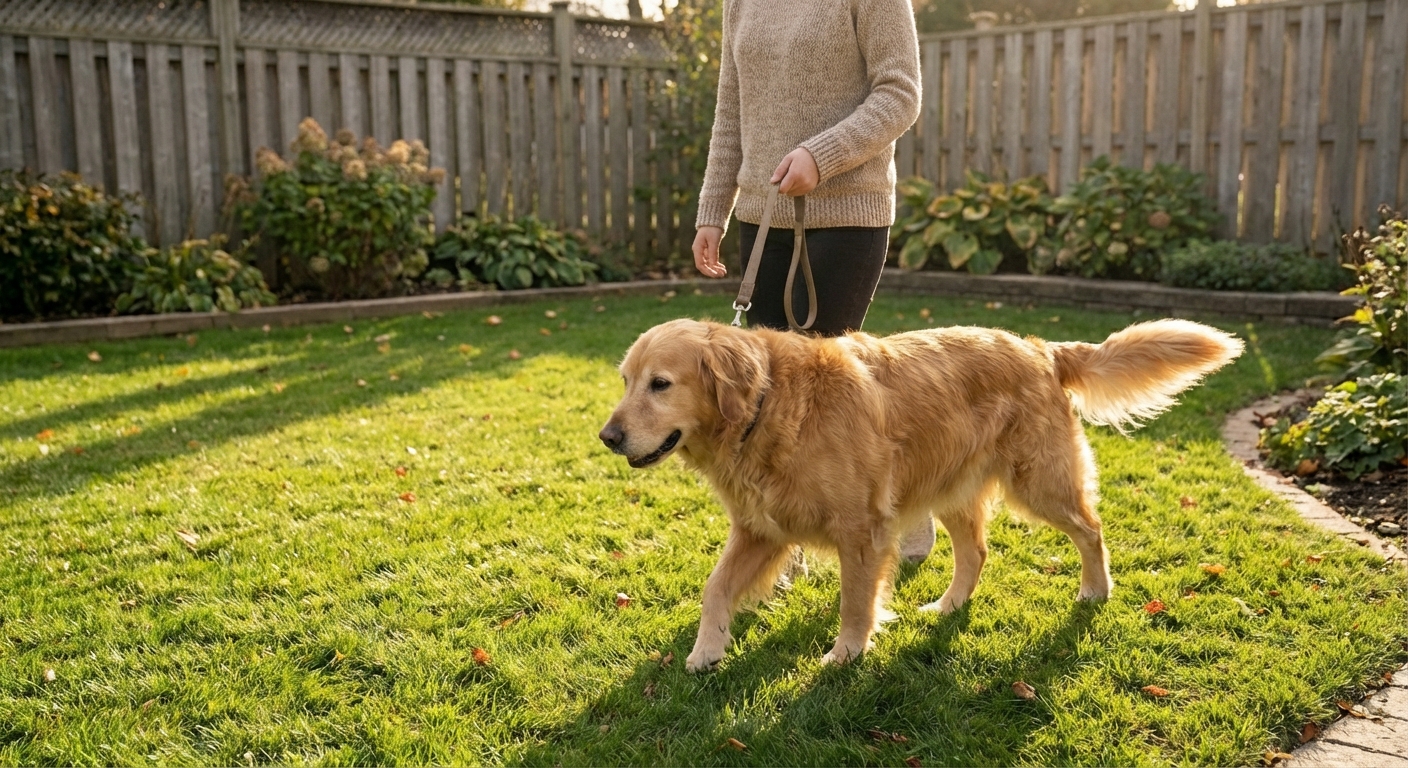
If your dog goes outside, the yard can be a constant flea source, especially in warm months. Fleas tend to build up where pets rest and where it stays shaded and humid, like under decks, along fences, and in protected corners.
- Mow and trim regularly to reduce shade and humidity.
- Rake debris where larvae can hide.
- Limit wildlife access when possible. Stray cats, opossums, and raccoons can carry fleas into your yard.
- Wash outdoor pet bedding and consider replacing old, heavily infested items.
If you are considering any yard insecticide, follow the label exactly and consider working with a professional, especially if you have kids, cats, or a dog that loves to roll in the grass.
When home steps are not enough
I love practical home care, but fleas are one of those issues where “natural only” can fail, especially in a heavy infestation. If you are still seeing live fleas after 7 to 10 days of consistent cleaning and combing, it is time to talk with your vet about a proven flea preventative.
Veterinary-approved preventatives are designed to break the flea life cycle reliably. Many are more effective and more consistently dosed than some over-the-counter options, and your vet can help you choose the safest option for your dog’s age, weight, health conditions, and lifestyle.
In North Texas, fleas can be persistent and, in many households, a year-round issue. If your dog has repeated flare-ups, consistent prevention is often the missing piece.
Home care works best when it is paired with the right prevention. You do not have to choose between “natural” and “effective.” You can build a plan that is both safe and realistic.
A simple 14-day reset
If you want a clear, doable roadmap, here is a balanced routine many households can follow. Think of the first 14 days as the intensive reset. You will usually need to continue prevention and some level of cleaning for several more weeks (often 4 to 8, sometimes up to 12) to fully outrun the life cycle.
Days 1 to 3
- Flea comb once daily.
- Bathe once (day 1 or 2) if your dog tolerates bathing well.
- Vacuum daily and wash bedding.
- Make a plan to treat all pets with a species-appropriate flea product.
Days 4 to 10
- Flea comb daily.
- Vacuum daily, especially sleeping areas and the couch.
- Continue laundering bedding every 2 to 3 days.
Days 11 to 14
- Flea comb every other day.
- Vacuum 3 to 4 times that week.
- Evaluate: if you still find live fleas or ongoing flea dirt, call your veterinarian for next-step prevention and environmental support.
Prevention that sticks
- Keep pets on consistent flea prevention, especially in warm climates and multi-pet homes.
- Treat all pets in the household as recommended by your veterinarian. Fleas do not respect species boundaries.
- Use species-specific products and never apply dog-only products to cats.
- Monitor with a flea comb weekly during peak season.
- Support skin health with a balanced diet and vet-recommended omega-3s if your dog has itchy, sensitive skin.
Fleas can feel never-ending, but once you tackle the life cycle and the environment, most families see real improvement within a couple of weeks. Then it is about consistency long enough to clear the later life stages. Start small, stay steady, and do not hesitate to use your veterinarian as a partner. You and your dog deserve relief.