Skunked dog? Learn the proven peroxide + baking soda + dish soap recipe, step-by-step bathing tips, face-safe cleanup, and when to call your vet.
Article
•
Designer Mixes
Complete Skunk Smell Off a Dog

Shari Shidate
Designer Mixes contributor
If you have ever had a dog get sprayed by a skunk, you already know this is not a “quick bath and done” kind of smell. Skunk spray is oily and sulfur-based, designed to cling and linger. The good news is that with the right approach and a little patience, you can get your dog smelling like themselves again.
As a veterinary assistant, I always remind pet parents: the goal is not just to cover up odor. It is to chemically break down the skunk oils safely, protect your dog’s skin and eyes, and keep the smell from transferring all over your home.
If you are unsure at any point, or your dog was sprayed directly in the face, a groomer or veterinarian can help.
Why skunk smell sticks
Skunk spray is an oily mixture that commonly includes sulfur-containing compounds such as thiols and thioacetates. Thiols create the immediate, sharp “skunk” odor. Thioacetates can break down over time, especially when the coat gets wet, and release more odor later. That is why a dog can seem improved, then smell terrible again after rain or a bath.
Because the spray is oily, plain water and many shampoos cannot lift it well. You need a solution that cuts oil and helps oxidize the odor compounds.
Before you bathe
1) Keep your dog outside if you can
Skunk oil transfers easily to carpets, couches, bedding, and even your own clothes. If it is safe and the weather allows, keep your dog outdoors while you gather supplies.
2) Remove collar or harness
Take off collars, harnesses, bandanas, and any removable gear right away. They hold oil and can re-contaminate the coat later.
3) Check eyes, nose, and mouth
Skunk spray can irritate eyes and mucous membranes. If your dog was sprayed directly in the face, you may see squinting, redness, tearing, drooling, or pawing at the face.
- If eyes are affected: flush with sterile saline eyewash if you have it and call your vet for guidance.
- If your dog is vomiting, struggling to breathe, or very lethargic: seek veterinary care right away.
4) Do not wet your dog yet
This is the step that surprises most people. Wetting the coat first can spread the oils and drive odor deeper. Start with a dry coat whenever possible.
The best home formula
The most evidence-based at-home option is an oxidizing solution made from hydrogen peroxide, baking soda, and dish soap. This combination helps oxidize the sulfur compounds and cut through oily residue so it can rinse away.
Skunk odor removal formula
- 1 quart (4 cups) of 3% hydrogen peroxide
- 1/4 cup of baking soda
- 1 to 2 teaspoons of grease-cutting dish soap (plain, unscented is ideal)
Safety notes
- Mix fresh each time. Do not store it in a closed bottle. It can build pressure and burst.
- Use in a well-ventilated area. Outdoors is best.
- Avoid eyes and inside ears. Use a damp cloth around the face rather than pouring solution.
- Keep your dog from licking. Supervise closely during the contact time and consider a cone if needed.
- Do not use on broken or very irritated skin. If the skin looks raw, has open sores, or your dog is in obvious pain, call your vet.
- Peroxide can lighten fur. This is cosmetic, but it can happen, especially on dark coats.
- Use gloves and old clothes. You do not want skunk oil on your skin or laundry.
How much to make
- Small dogs or spot treatments: you can halve the recipe and mix in an open bowl.
- Large dogs or heavy spray: you may need a second fresh batch. Mix it only when you are ready to use it.
Step-by-step wash
Step 1: Blot excess oil
With a paper towel or an old towel, gently blot the sprayed areas. Do not rub hard because that can spread oils.
Step 2: Apply to a dry coat
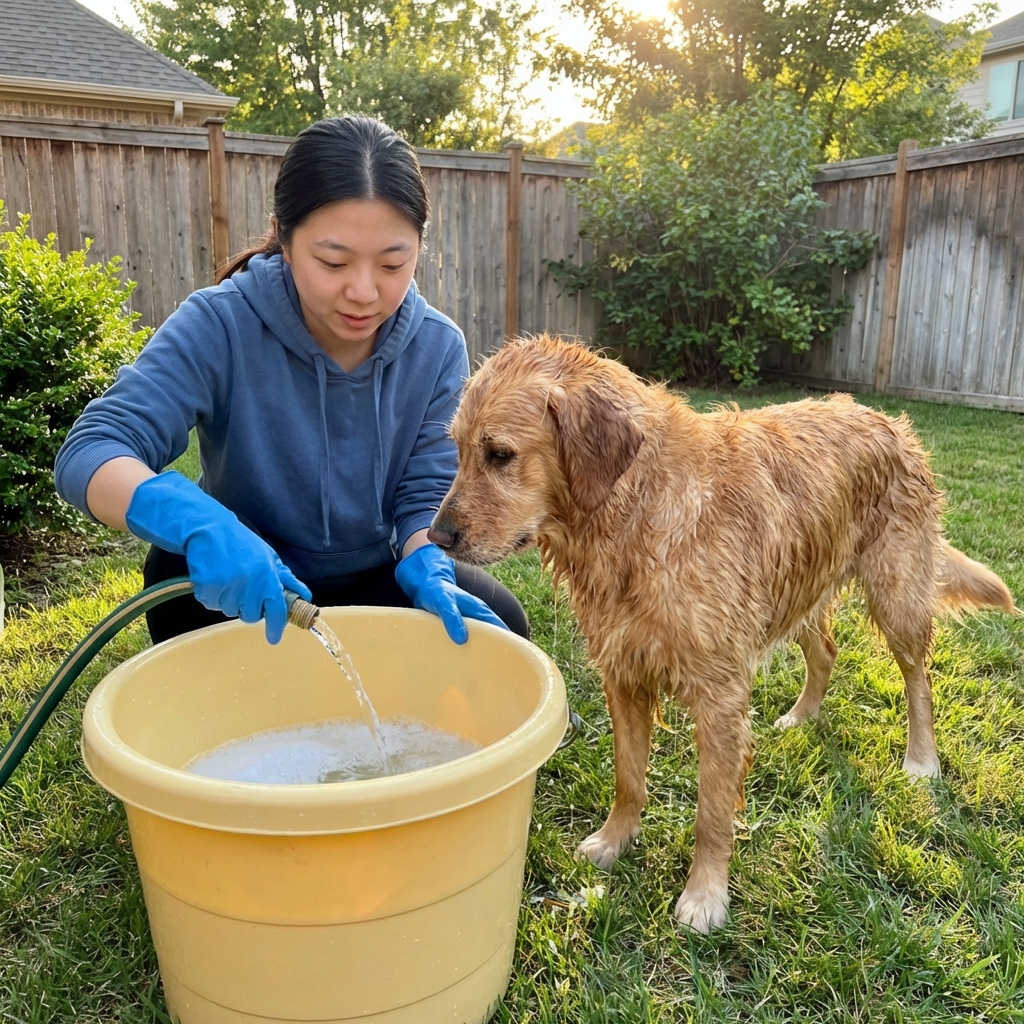
Working outdoors, massage the fresh solution into the coat, focusing on where your dog was sprayed. Keep it out of the eyes, mouth, and nose.
Step 3: Let it sit for 5 minutes
You want contact time, but you do not want it to dry on the coat. Five minutes is usually plenty. Supervise so your dog does not lick.
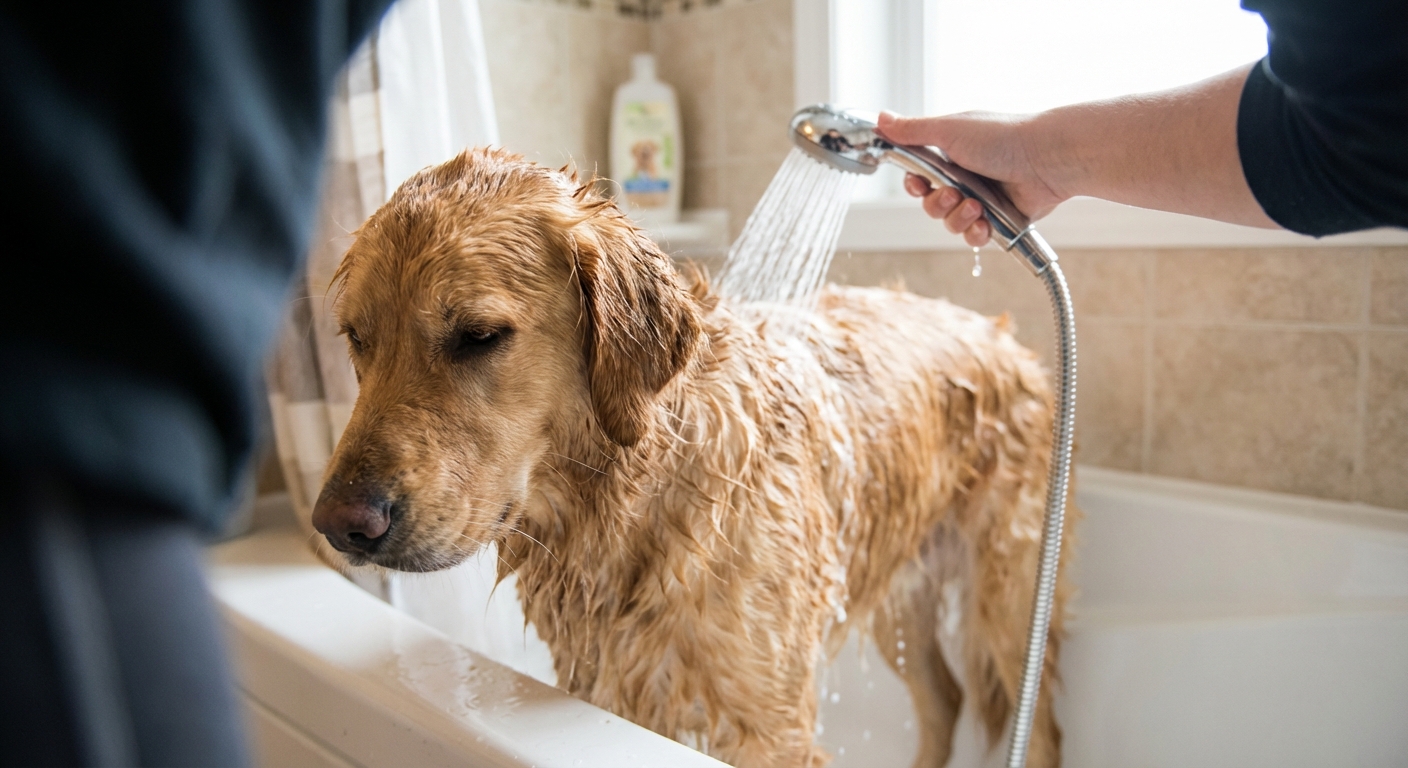
Step 4: Rinse very thoroughly
Rinse until the coat no longer feels slick or soapy and there is no product left in the fur. Incomplete rinsing can leave residue and irritation.
Step 5: Shampoo normally
Use a gentle dog shampoo after rinsing. This helps remove remaining oils and improves coat feel.
Step 6: Repeat if needed
Many dogs need two rounds, especially if the spray was heavy or close range. It is normal for the face or chest to be stubborn.
Face and eyes
The face is tricky because we need to protect the eyes. Here is what I recommend:
- Use a damp washcloth with a tiny amount of the solution and wipe carefully around the muzzle, cheeks, and chin.
- For fur close to the eyes, use a clean damp cloth. For the corners of the eyes, use plain sterile saline eyewash if needed.
- If your dog is squinting, holding the eye closed, or the eye looks red, call your veterinarian. Eye ulcers can happen and need prompt treatment.
What not to do
- Do not use tomato juice. It mostly masks odor and does not chemically neutralize skunk oils.
- Do not use essential oils on your dog. Many are irritating or toxic, and they do not fix the underlying odor compounds.
- Do not use bleach or harsh household cleaners. They can burn skin, damage the coat, and create dangerous fumes.
- Do not use this peroxide formula on cats without veterinary guidance. Cats groom themselves intensely and are more sensitive to topical products. Call your vet for the safest option.
Why the smell comes back
If you notice a “skunk comeback” after rain or a bath, it is usually from odor compounds that remained on the coat and re-activated when exposed to water. A second treatment often solves this.
Also, sometimes the smell is not your dog anymore. It is your gear and your house. Dog collars, harnesses, leashes, blankets, car upholstery, and your own jacket can hold onto skunk oil and re-transfer it.
Clean gear and home
Collars, harnesses, and leashes
- Soak washable items in warm water with a grease-cutting dish soap to help break up oily residue.
- Rinse well.
- Air dry outdoors in the sun if possible.
Bedding and washable fabrics
- Wash separately from other laundry.
- Add baking soda to the wash.
- Air dry first and sniff-check before using a dryer, since heat can set odors.
Hard surfaces and cars
Start with a degreasing step since skunk spray is oily. Wipe down entryways, floors, crates, carriers, and car interiors your dog touched using a mild dish soap solution, then rinse or wipe clean.
Pet-safe enzymatic cleaners can help with lingering odor, but they may not fully neutralize skunk smell on their own. If you use one, pair it with thorough cleaning and ventilation.
Helpful extras: open windows, run fans, wash your hands well, and change clothes after handling your dog.
When to call the vet
Professional help is a great option, especially for thick-coated dogs, dogs with sensitive skin, and dogs sprayed directly in the face.
- Eye redness, squinting, discharge, or swelling
- Persistent vomiting or excessive drooling after being sprayed
- Very young, senior, or medically fragile dogs
- Strong odor after multiple attempts, especially if skin looks irritated
Other options
If your dog has very sensitive skin, or you prefer not to use peroxide, consider a reputable commercial skunk shampoo or odor neutralizing product made for pets. Many groomers and veterinary clinics use professional-grade options that can be gentler while still targeting the odor compounds.
Prevention
Skunks are most active at dawn, dusk, and at night. A few habits can reduce your odds of repeat incidents:
- Walk dogs on leash in low-light hours.
- Keep trash secured and do not leave pet food outdoors.
- Use motion-activated lights in the yard.
- Block access under decks and sheds where skunks may den.
Action step to keep handy: save the peroxide, baking soda, and dish soap ingredients together in a labeled bin so you are not scrambling during a skunk emergency.
Quick checklist
- Keep your dog outside and avoid contact until treated.
- Remove collar or harness.
- Do not wet the coat first.
- Mix the peroxide, baking soda, and dish soap solution fresh.
- Apply to dry coat, wait 5 minutes, rinse well, then shampoo.
- Supervise closely to prevent licking and avoid eyes and ears.
- Clean collar, leash, bedding, car surfaces, and anything your dog touched.
- Call the vet for eye irritation, illness, or skin that looks damaged.