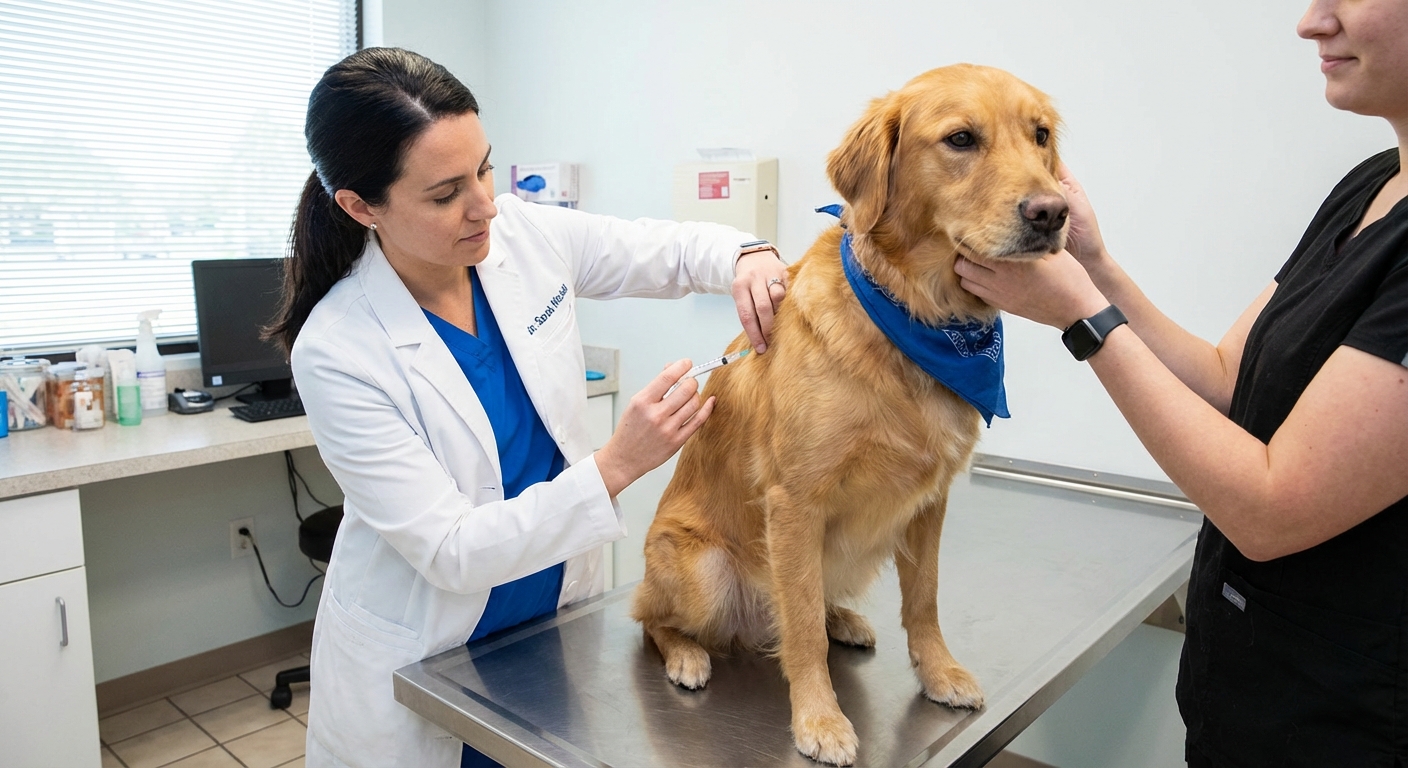
Confused by puppy shots? Get an evidence-based guide to core vs lifestyle vaccines, a typical DHPP/rabies timeline, safe early socialization, and expected si...
Article
•
Designer Mixes
Complete Puppy Shot Schedule

Shari Shidate
Designer Mixes contributor
Bringing home a puppy is pure joy, and also a little nerve-wracking. One of the best ways to protect that tiny new family member is to stay on track with vaccines. As a veterinary assistant here in Frisco, Texas, I can tell you this with confidence: most puppy vaccine schedules are simple, very doable, and incredibly effective when you start on time and finish the series.
This guide walks you through the typical puppy shot timeline, what each vaccine protects against, what to expect after shots, and how to keep your puppy safe while they are still building immunity.
Quick note: vaccine timing can vary a bit by vaccine brand, your puppy’s medical history, and local rules (especially for rabies). Your veterinarian is the best source for the exact schedule for your puppy.
Why puppies need a vaccine series
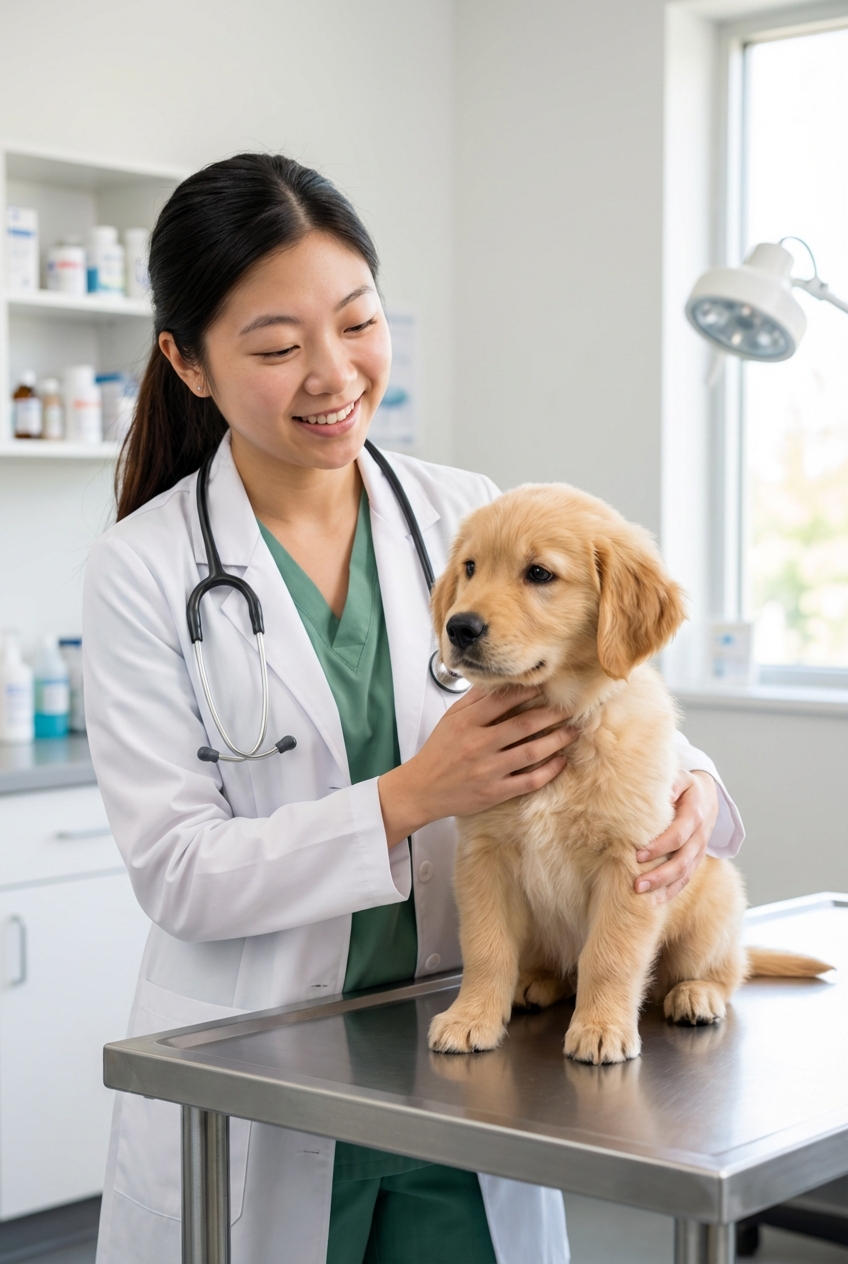
Puppies are not born with a fully trained immune system. They get early protection from their mom through colostrum, which contains maternal antibodies. Those antibodies are helpful, but they fade at different times for different puppies. That is why vaccines are given in a series every few weeks.
In plain terms, each booster is another chance to catch the moment when maternal antibodies have dropped low enough for your puppy to build strong, lasting protection.
Core vs lifestyle vaccines
Core (recommended for almost every puppy)
- DHPP (also called DAPP or DA2PP): distemper, adenovirus (hepatitis), parvovirus, and often parainfluenza
- Rabies: required by law in nearly all U.S. jurisdictions and critical for preventing a fatal disease
Small clarification: many combo “distemper-parvo” vaccines include parainfluenza (the “P” in DHPP/DA2PP), but product names and components can vary by manufacturer. Your vet will use what is appropriate for your area and your puppy.
Lifestyle (recommended based on routine and local risk)
- Bordetella (kennel cough): important for daycare, boarding, grooming, and training classes
- Leptospirosis: spread through wildlife urine and puddles, lakes, and wet soil
- Canine influenza (dog flu): risk increases in social dogs and outbreak areas
- Lyme: depends on tick exposure and regional prevalence
Your veterinarian will tailor this list to your puppy’s age, breed, health, and everyday life. A backyard-only puppy may need fewer extras than a puppy who visits parks, daycare, and boarding facilities.
Puppy shot schedule
Exact timing can vary slightly by clinic and vaccine brand, but this is the most common, evidence-based schedule used in the U.S. If your puppy started late or missed a booster, your vet can do a catch-up plan.
Helpful tip: lifestyle vaccines (like Bordetella, lepto, flu, and Lyme) can be added at any of these visits based on risk, facility requirements, and product labeling.
6 to 8 weeks
- DHPP #1
- Optional, based on risk: Bordetella (some oral or intranasal products can be started early; injectable products may have different minimum ages and schedules)
8 to 10 weeks
- Optional, based on risk: Leptospirosis #1 (commonly started at 8 to 9 weeks depending on product)
9 to 12 weeks
- DHPP #2
- Optional, if started: Leptospirosis #2 (typically 2 to 4 weeks after the first)
- Optional, based on risk: Canine influenza #1
12 to 16 weeks
- DHPP #3
- Rabies (often given at 12 to 16 weeks depending on local law)
- Optional, if started: Canine influenza #2 (typically 2 to 4 weeks after the first)
- Optional, based on risk: Lyme #1 (then booster 2 to 4 weeks later)
16 to 20 weeks (common for higher-risk pups)
- DHPP final dose (many puppies need a dose at 16 weeks or later for the most reliable parvo and distemper protection)
If your puppy started vaccines very early, missed boosters, or lives in a high-parvo area, your vet may recommend an additional DHPP booster so we know there is a dose after maternal antibodies have faded. It is not “extra” for everyone, it is a safety net when risk is higher.
1 year old (booster visit)
- DHPP booster
- Rabies booster (timing depends on local regulations and the vaccine used)
- Boosters for any lifestyle vaccines your puppy needs (Bordetella, lepto, flu, Lyme)
After that first-year booster, many core vaccines are often given every 3 years, while several lifestyle vaccines are given yearly. Rabies timing is always based on local law and the rabies vaccine label. Your veterinarian will guide you based on current standards and your dog’s exposure risk.
What each vaccine covers
DHPP (distemper, adenovirus, parvo, often parainfluenza)
This combination vaccine is the backbone of puppy protection.
- Parvovirus can be fatal and is easy to track in from shoes and public areas.
- Distemper affects the respiratory, GI, and nervous systems and can cause lifelong problems in survivors.
- Adenovirus can cause infectious hepatitis.
- Parainfluenza is a contributor to kennel cough (often included in combo vaccines).
Rabies
Rabies is nearly always fatal once symptoms appear, and it is a serious public health issue. This vaccine is required by law in most areas, with details set by your city, county, or state.
Bordetella
Bordetella bronchiseptica is a common cause of kennel cough. Vaccination does not guarantee zero cough, but it can reduce severity and spread. Many boarding and daycare facilities require it. Depending on the product used and facility rules, boosters may be recommended every 6 to 12 months.
Leptospirosis
Lepto is caused by bacteria found in the urine of infected wildlife and can live in water and damp environments. It can cause kidney or liver failure, and it is zoonotic, meaning people can get it too.
Most puppies need a 2-dose starter series, then boosters are typically given yearly if risk continues.
Canine influenza
Dog flu spreads in places where dogs gather. If it is in your region or your puppy will be social, it is worth discussing.
Lyme
Lyme disease is spread by ticks. In higher-risk areas, vaccination plus a consistent tick preventive can be a smart one-two punch.
Staying safe during the series
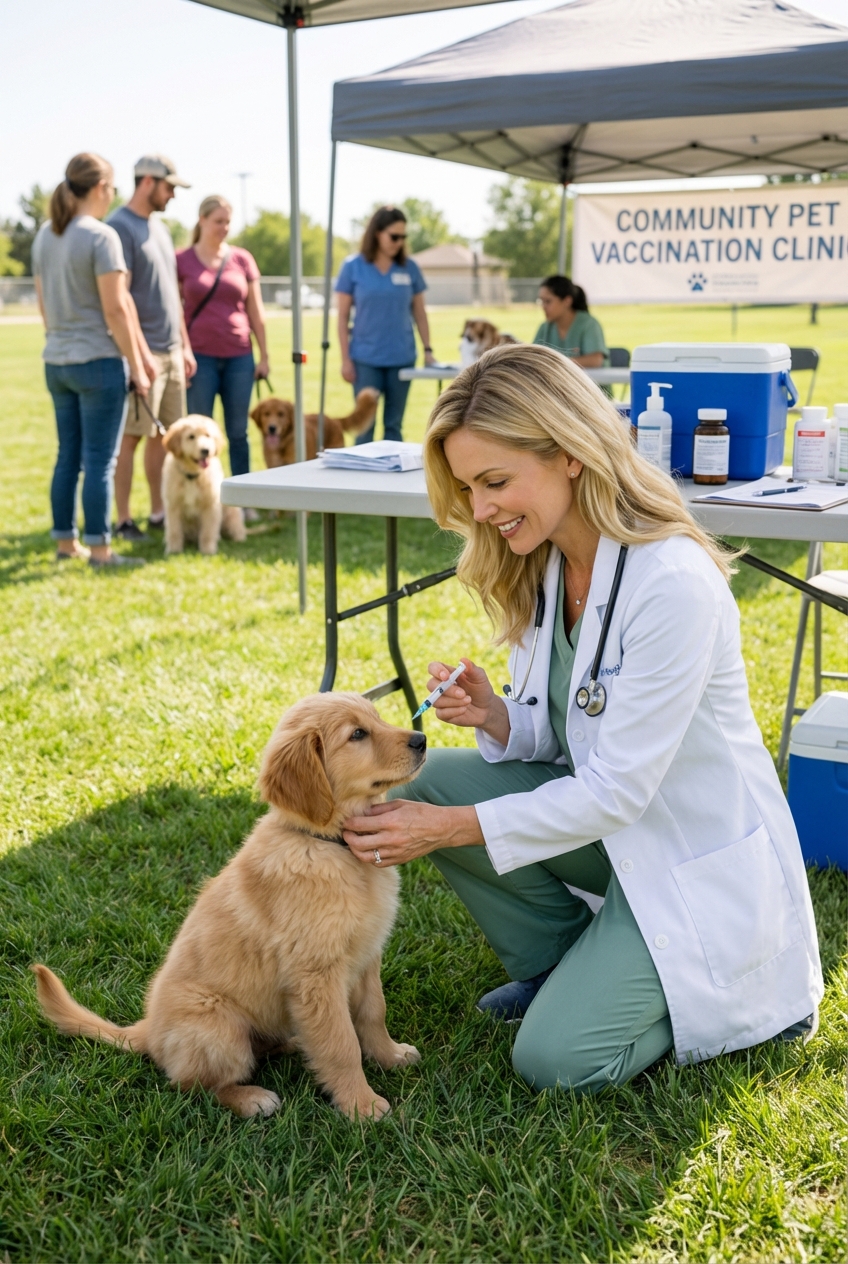
This is the part many families find confusing: you want to socialize your puppy, but you also want to avoid parvo and other contagious diseases.
Safer socialization ideas
- Invite healthy, fully vaccinated adult dogs to your home or yard for short play sessions.
- Carry your puppy in public places to expose them to sights and sounds without touching the ground. If you use a cart, stroller, or blanket, use a clean barrier and avoid shared surfaces unless you know they are disinfected.
- Attend a puppy socialization class that requires vaccination records and cleans properly.
- Practice handling at home: paws, ears, mouth, brushing, nail touches. This makes vet visits and grooming so much easier.
What to avoid until your vet gives the green light
- Dog parks
- High-traffic pet store floors
- Unknown dogs and areas where many dogs potty
- Shared water bowls in public
When protection kicks in
Most puppies are considered much better protected about 1 to 2 weeks after their final DHPP shot (the one given at 16 weeks or later). Your vet can help you decide when it is reasonable to expand walks and social outings based on your neighborhood risk.
Side effects and when to call
Most puppies do great after vaccines. Mild side effects can happen and typically resolve within 24 to 48 hours.
Normal, mild reactions
- Sleepiness or lower energy
- Mild soreness where the shot was given
- Decreased appetite for one meal
- A small, firm lump at the injection site that shrinks over time
Call your veterinarian right away if you notice
- Facial swelling, hives, or intense itchiness
- Vomiting or diarrhea that is repeated or severe
- Weakness, collapse, or trouble breathing
- Persistent pain, large swelling, or a lump that grows
If you are ever unsure, call. It is always better to ask early.
Missed shots and rescue pups
If you adopted your puppy from a shelter or rescue, you might have partial records or a schedule that started before you brought them home. That is normal.
- Bring every record you have to your first appointment, even if it is a photo on your phone.
- If the vaccine timing is unclear, your veterinarian may recommend restarting parts of the series. It is safe to repeat vaccines when needed, and it is often the most reliable path to full protection.
- Puppies should typically receive their final DHPP dose at 16 weeks or later for best parvo and distemper coverage.
Other must-dos at puppy visits
Many families lump all “preventive care” together, so it helps to know what else commonly happens alongside vaccines:
- Fecal testing and deworming: puppies commonly have intestinal parasites, even if they look perfectly healthy.
- Heartworm prevention: this is especially important in Texas. Your clinic will tell you the right start time for your puppy.
- Flea and tick prevention: your best option depends on your puppy’s age, weight, and exposure.
Cost planning
Vaccines are one of the most cost-effective tools in veterinary medicine, especially compared to treating parvo, distemper, or leptospirosis. If budgeting is tight, ask your clinic about:
- Puppy packages that bundle exams, vaccines, and fecal testing
- Local low-cost vaccine clinics for certain vaccines
- Spreading optional lifestyle vaccines over visits if appropriate
My best practical tip: put every appointment on your calendar the day you schedule it. Puppies grow fast, and it is easy to lose track of that 3 to 4 week booster window.
FAQs
When can my puppy go on walks?
Many veterinarians recommend waiting until your puppy has completed the core series, especially the final DHPP at 16 weeks or later, then giving it 1 to 2 weeks for immunity to build. In some areas with lower disease pressure, your vet may recommend controlled walks earlier. Ask based on your ZIP code and risk level.
Can vaccines cause illness?
Vaccines can cause mild, short-lived side effects like sleepiness or soreness. Serious reactions are uncommon. The diseases we vaccinate against are much more dangerous than the vaccine itself.
Do indoor puppies still need vaccines?
Yes. Viruses like parvo can be tracked indoors on shoes. Rabies matters because wildlife can enter yards and, in rare cases, homes. Most “indoor only” plans fall apart the first time you travel, board, or have an emergency.
Is it okay to give multiple vaccines in one visit?
It is common and generally safe. Your veterinarian balances protection with your puppy’s comfort and health history. If your puppy had a prior reaction, your vet may adjust the plan.
The takeaway
Sticking to a complete puppy shot schedule is one of the kindest, most protective things you can do for your dog. Start on time, finish the series, and work with your veterinarian to customize lifestyle vaccines like lepto and Bordetella based on your puppy’s real-world exposure.
If you would like, bring your puppy’s age and breed and your typical weekly routine, and I can help you create a set of questions to ask your veterinarian at your next visit.