Noticing a withdrawn, sleepy, or less playful cat? Discover the most common causes—from pain and stress to boredom or illness—plus vet red flags and simp...
Article
•
Designer Mixes
Common Signs of Cat Depression

Shari Shidate
Designer Mixes contributor
Cats are famously good at hiding discomfort, so when a cat seems “off,” it can be easy to second-guess yourself. In my work as a veterinary assistant here in Frisco, Texas, I have learned that what many families call cat depression is often a mix of stress, pain, medical illness, or a big environmental change. The good news is that there are clear, well-recognized signs you can watch for and practical steps you can take to help.
Important note: Many symptoms that look like depression can also signal a medical problem. If changes are sudden, severe, or last more than a few days, a veterinary visit is the safest next step.
What “cat depression” means
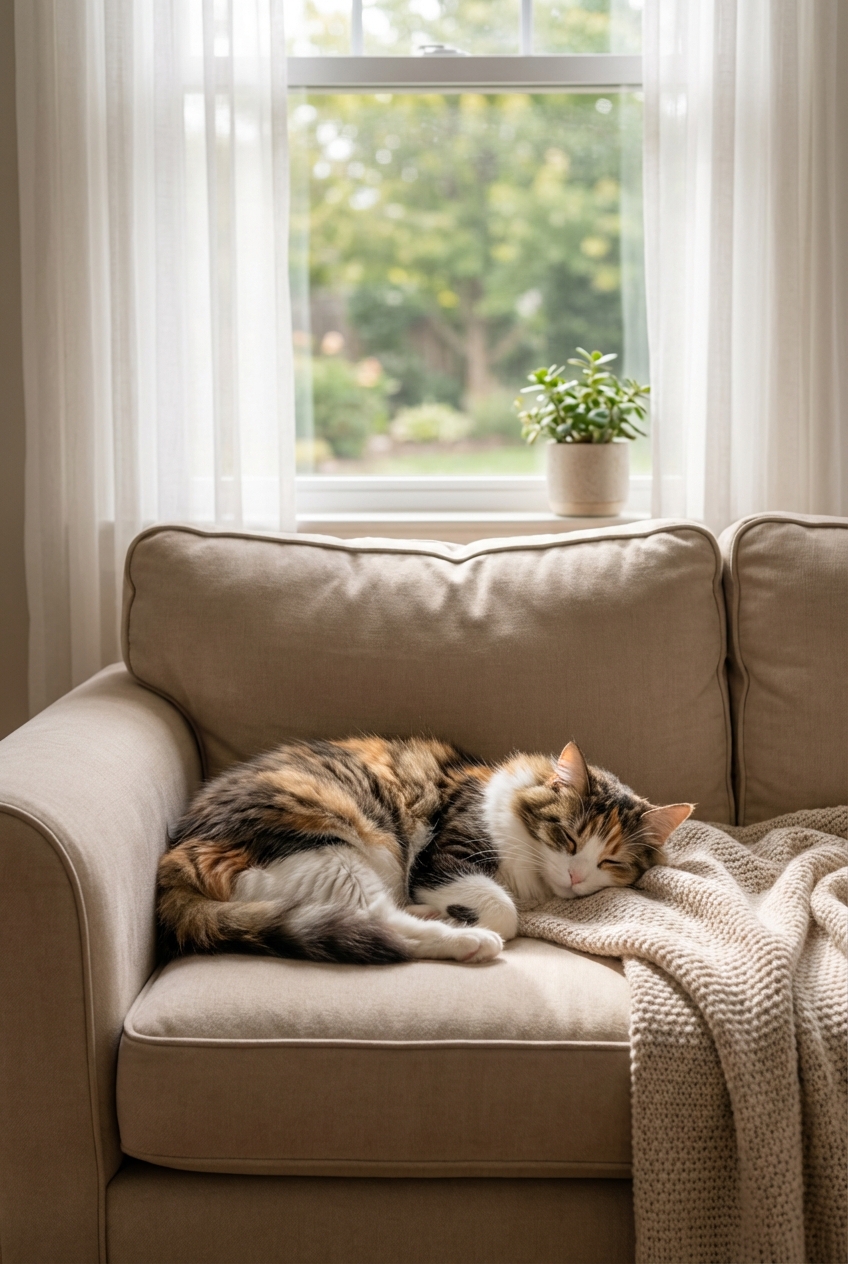
Unlike humans, cats cannot tell us they feel sad or hopeless. When we talk about “depression” in cats, we are usually describing behavior changes that suggest a cat is experiencing ongoing stress, grief, fear, boredom, or discomfort.
Common triggers include:
- Household changes: moving, remodeling, new baby, new roommate
- Loss: a pet or person passing away, a family member moving out
- Social stress: conflict with another cat, bullying, lack of safe spaces
- Environmental boredom: not enough play, hunting outlets, or enrichment
- Medical issues: dental pain, arthritis, thyroid disease, urinary tract problems, GI disease
Common signs (what they look like at home)
A single sign does not guarantee “depression.” What matters most is a change from your cat’s normal, especially if several signs appear together.
1) Hiding more than usual
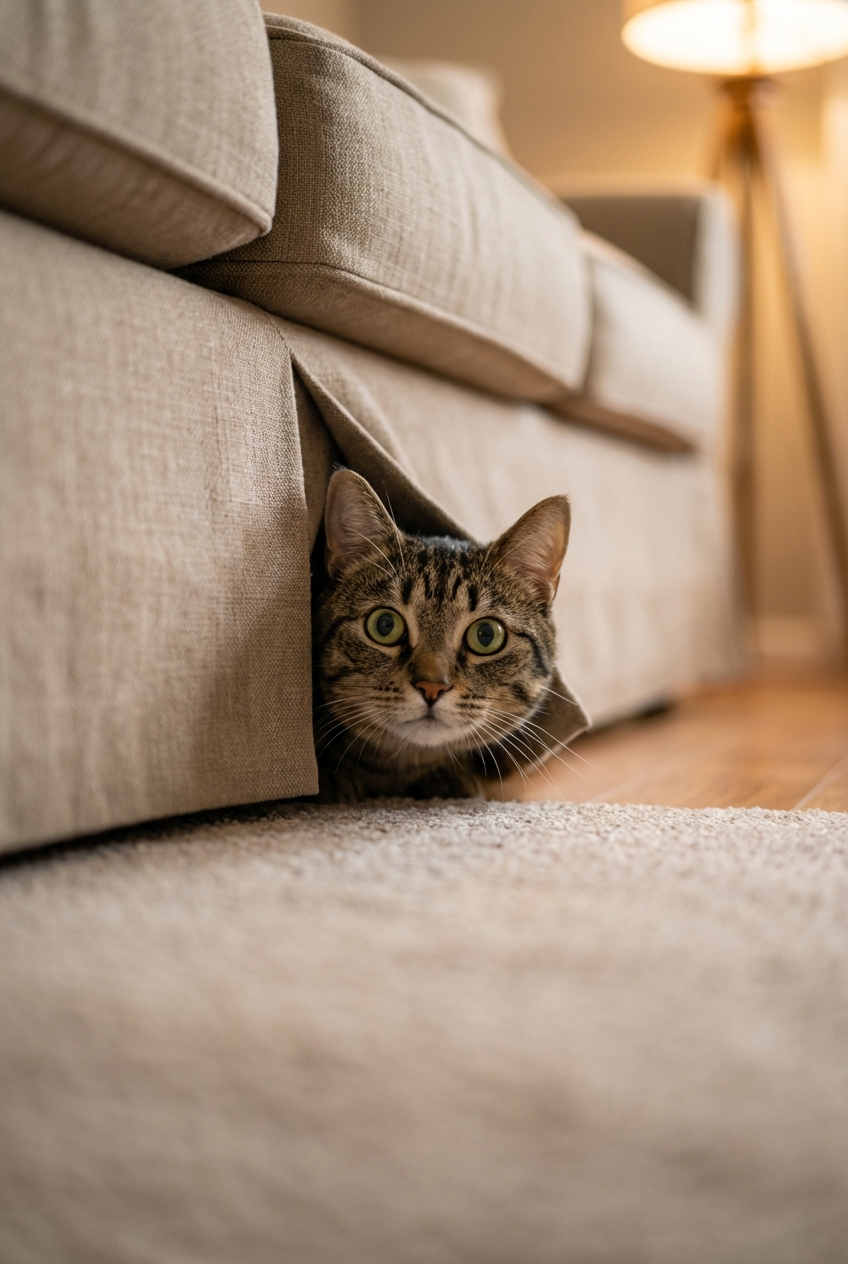
It is normal for cats to enjoy cozy hiding spots, but a stressed cat may spend hours tucked away, skip social time, or avoid favorite areas of the home.
2) Less interest in play or interaction
A cat who used to chase toys, greet you at the door, or “help” with chores may become disengaged. Some cats stop initiating affection, while others become unusually clingy.
3) Changes in sleep and routine
Cats sleep a lot, but stress or illness can shift patterns. You might see:
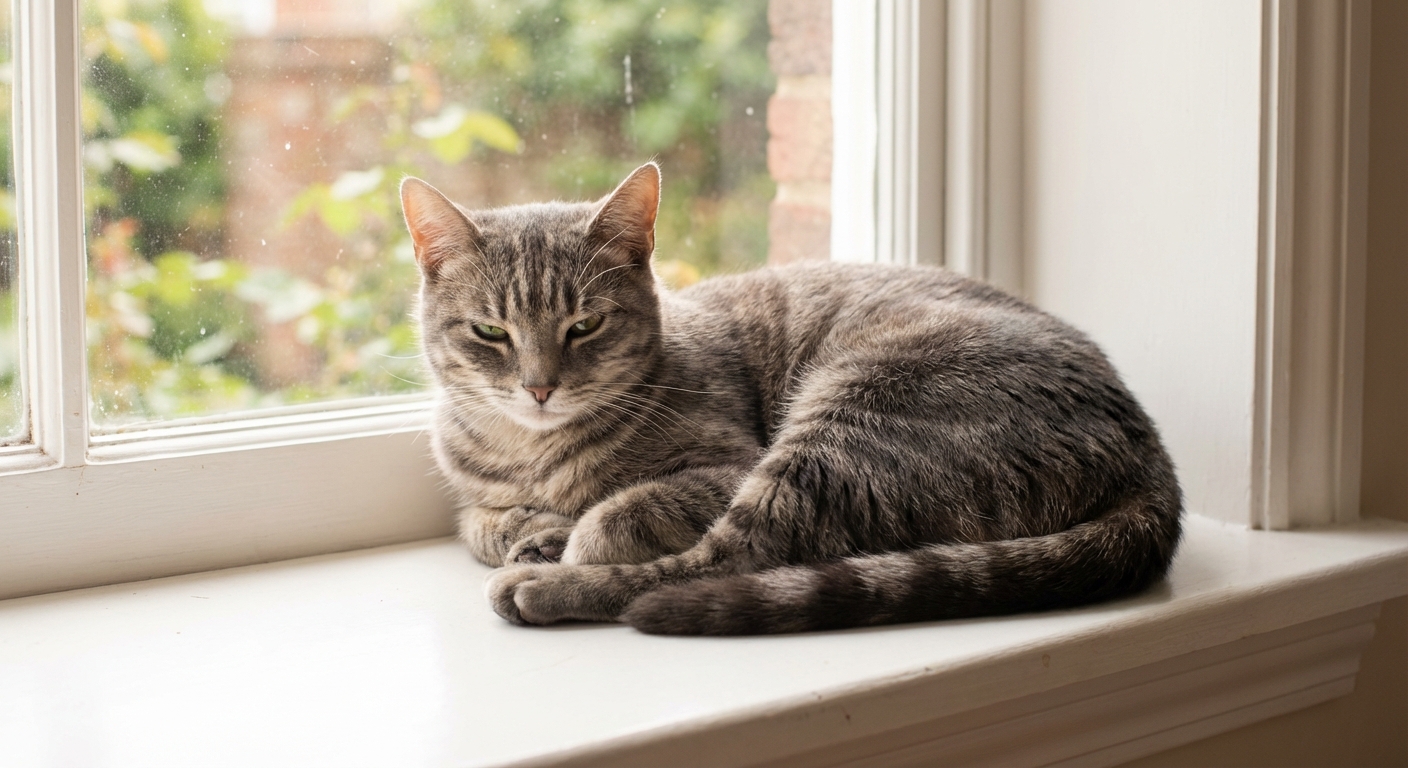
- Sleeping even more than usual
- Staying in one place for long stretches
- Being awake and restless at odd times
4) Appetite and weight changes
Reduced appetite is a big red flag. In cats, not eating can become dangerous, especially in overweight cats.
- Call your veterinarian if your adult cat will not eat for about 24 hours (sooner for kittens, seniors, or cats with other health issues).
- Urgent: 48 hours without adequate food is an emergency.
Some cats also overeat due to stress.
5) Litter box changes
A stressed cat may urinate or defecate outside the box, or may go less often due to constipation or urinary discomfort. This is one of the most important signs to take seriously because urinary issues can become emergencies.
Same-day emergency: If your cat is straining to urinate, making frequent trips with little to no urine, crying in the box, or cannot pass urine at all, seek urgent care right away. This is especially critical for male cats, who are at higher risk of life-threatening urinary blockage.
6) Less grooming or overgrooming
Some cats with stress or pain stop grooming and look dull or unkempt. Others overgroom and develop thinning fur or irritated skin, often on the belly or legs.
7) “Shut down” body language
Watch for subtle posture shifts:
- Hunched body, tucked paws
- Ears angled sideways or back
- Tail held tight to the body
- Less curiosity and scanning of the environment
8) Irritability or sudden aggression
Stress can look like crankiness. A cat who suddenly swats, growls, or avoids being touched may be experiencing pain or anxiety.
9) More vocalizing or less vocalizing
Some cats become quiet and withdrawn. Others start crying, yowling, or meowing more, especially at night. Both can be signs of distress or illness.
Senior note: Night vocalization in older cats can also be linked to medical issues like hyperthyroidism, high blood pressure, pain, or cognitive changes. It is worth a veterinary check, even if your cat seems “fine” otherwise.

Stress or medical issue? When it is urgent
Because many medical conditions can mimic stress-related behavior changes, it is safest to rule out health problems first. Contact your veterinarian promptly if you notice any of the following:
- Not eating or eating dramatically less for about 24 hours (sooner for kittens or medically fragile cats)
- Straining to urinate, frequent trips to the litter box, crying in the box, or little to no urine production (same-day emergency, especially for male cats)
- Repeated vomiting, diarrhea, or signs of dehydration
- Limping, difficulty jumping, or stiffness (common with arthritis)
- Bad breath, drooling, pawing at the mouth (often dental pain)
- Rapid weight loss or sudden weight gain
- Hiding plus other “not right” signs like marked lethargy, weakness, painful vocalizing, collapse, or breathing changes
If your vet clears medical causes, then you can focus confidently on a stress-reduction and enrichment plan at home.
What your vet may check
If you are wondering what a visit might involve, these are common next steps, depending on your cat’s age and symptoms:
- A full physical exam with a pain and mobility check
- Oral and dental evaluation
- Weight and body condition assessment
- Urinalysis (especially with litter box changes)
- Bloodwork to screen for common issues (including thyroid testing in older cats)
- Blood pressure check in seniors when indicated
What helps at home
Once medical concerns are addressed, consistent environmental support is where many cats start to improve.
Start with stability and safety
Stressed cats do best when their environment feels predictable.
- Keep routines steady: feed, play, and scoop litter at consistent times.
- Create safe zones: quiet rooms, covered beds, cat caves, or high perches where they can observe without being bothered.
- Reduce conflict: in multi-cat homes, spread out key resources so one cat cannot guard them.
Multi-cat basics
In multi-cat households, stress often comes from resource guarding, even when cats seem to “tolerate” each other. Aim for separation and choice:
- Multiple feeding and water stations in different areas
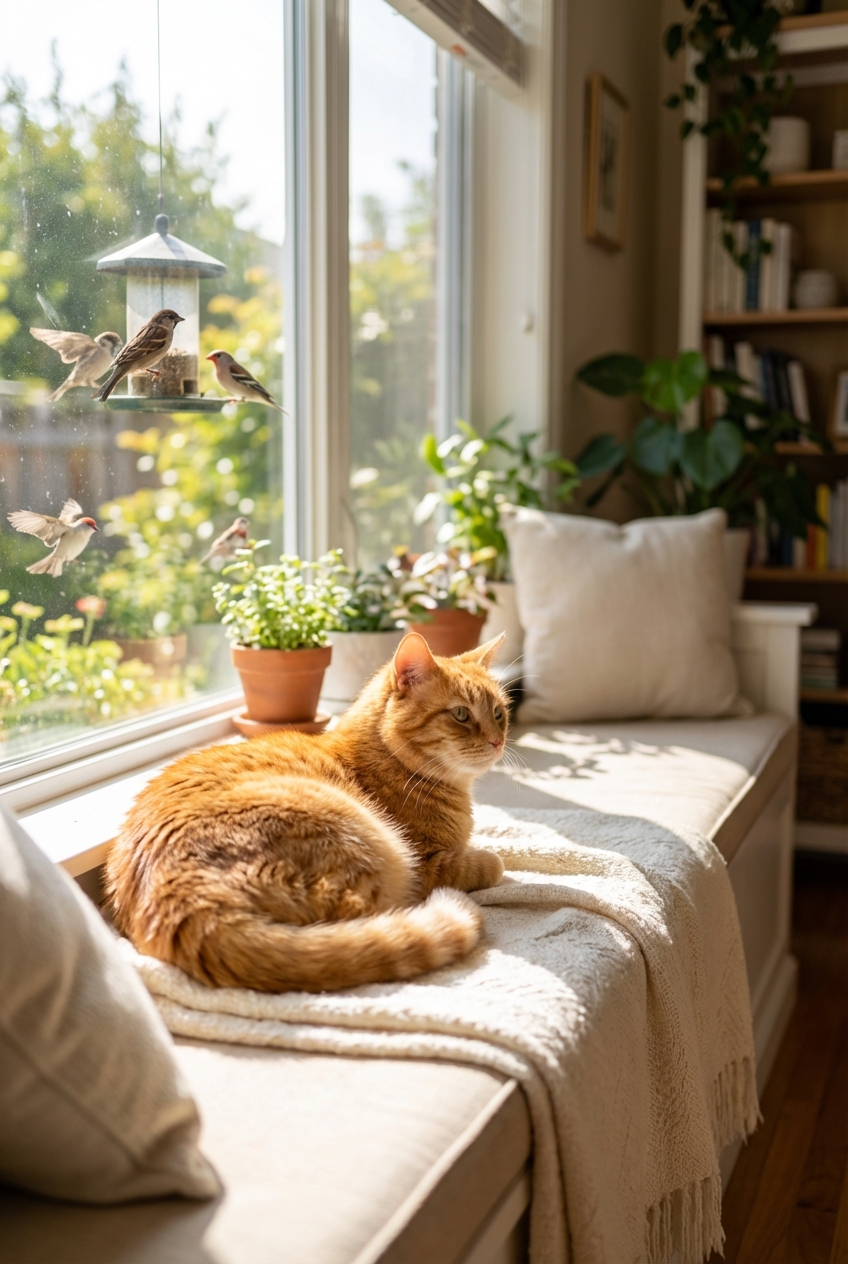
- More vertical space (cat trees, shelves, window perches)
- Multiple resting spots and hiding options
- If conflict is intense, ask your vet about a structured reintroduction plan
Litter box “cat math”
A common guideline is one litter box per cat, plus one extra, placed in different locations. Many behavior issues improve when cats have better bathroom options.
Also important: Do not punish litter box accidents. Scolding increases stress and can worsen the problem. Focus on medical rule-out, box setup, cleanliness, and stress reduction.
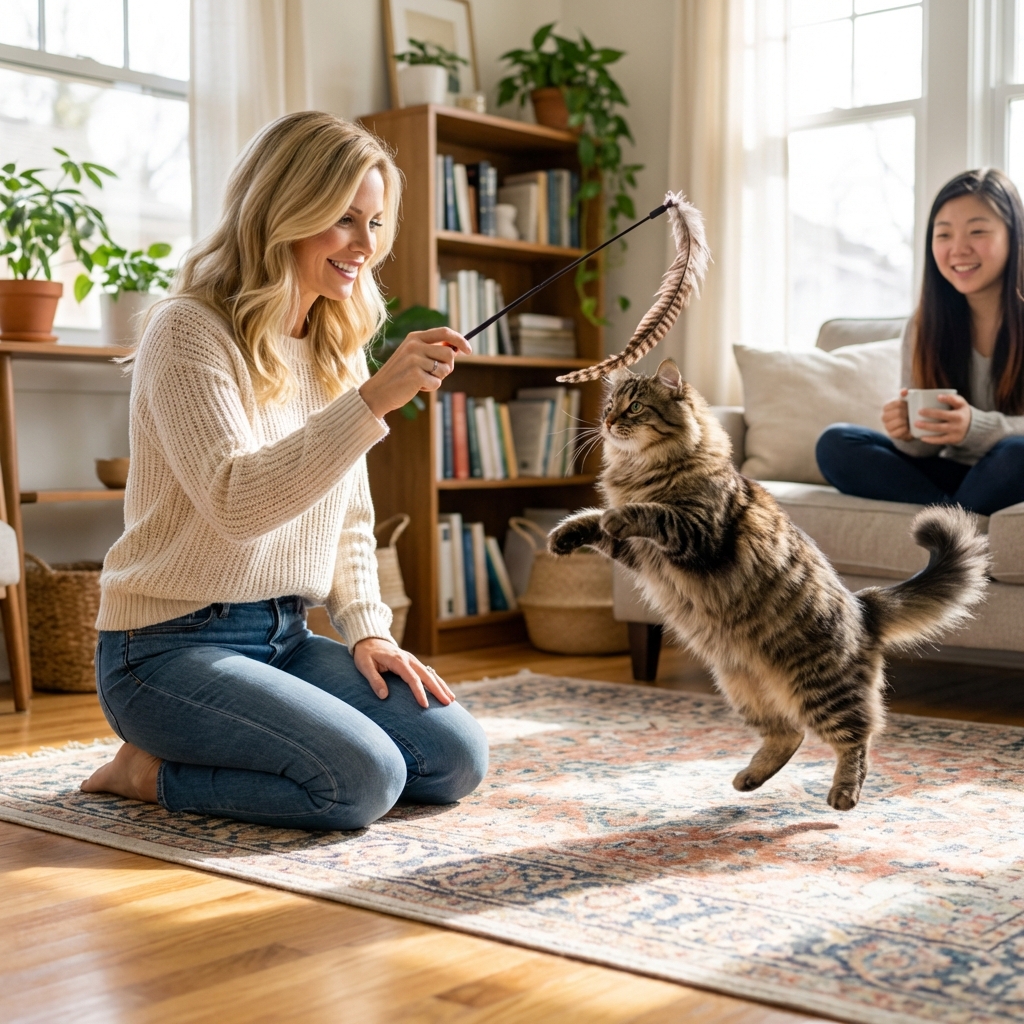
Bring back the hunt with short play
For many cats, mood and confidence improve when they can express natural hunting behavior.
- Try 5 to 10 minutes of wand-toy play 1 to 2 times daily.
- End play with a small meal or treat to complete the “hunt, catch, eat” cycle.
- Rotate toys weekly to keep them interesting.
Offer food enrichment
Boredom and low mood often improve when meals require a little thinking.
- Puzzle feeders
- Treat balls
- Small “snack hunts” around the house
Pheromones and calming supports
Synthetic feline facial pheromones (often in diffusers or sprays) may help some cats feel safer in their space. Calming diets or supplements may also be options, but evidence and results vary. It is best to discuss these with your veterinarian so they fit your cat’s health profile and do not interfere with other conditions or medications.
Build positive social time
Gentle, consistent connection helps, but avoid forcing contact.
- Invite, do not chase.
- Reward brave behavior with treats.
- Let your cat choose lap time and petting duration.
Grief and big changes
Cats often react to loss and change. If your cat’s behavior changed after a death, a move, or a new pet, focus on:
- Predictability: set routines and keep them.
- Scent comfort: keep familiar blankets or bedding available.
- Slow introductions: for new pets, use gradual, structured steps with separate safe spaces.
- More enrichment: add vertical space, scratching posts, window perches.
Give it time. Many cats improve over weeks as they adjust, especially when their environment feels safe and engaging.
When to get extra help
If your cat is still struggling after medical causes are ruled out and you have tried consistent home support for 2 to 4 weeks, consider asking your veterinarian about:
- Pain management (even subtle arthritis can change mood)
- Prescription anxiety medications for short or long-term support when appropriate
- Referral to a board-certified veterinary behaviorist for a structured treatment plan
Behavior help is not a last resort. It is a compassionate, science-based option.
A simple checklist
- Has my cat’s appetite changed?
- Is my cat using the litter box normally?
- Is there hiding, withdrawal, or irritability that is new?
- Did anything change in the home within the last 1 to 8 weeks?
- Can I add one new enrichment activity this week?
- Do I need to schedule a veterinary exam to rule out pain or illness?
Trust your instincts. If you feel like your cat is not themselves, that observation matters, and it is worth investigating with your veterinarian.