Dog diarrhea is stressful, but many mild cases improve fast with hydration and a short-term bland diet. Get safe food options, portions, foods to avoid, and ...
Article
•
Designer Mixes
Common Causes of Diarrhea in Dogs

Shari Shidate
Designer Mixes contributor
Diarrhea is one of the most common reasons dog parents call a vet, and I get it. It can feel scary, messy, and sudden. The good news is that many cases are mild and short-lived, especially when you know what to watch for and how to offer gentle support at home. Other times, diarrhea is your dog’s body waving a red flag that they need medical help quickly.
Below, I’ll walk you through the most common causes of diarrhea in dogs, what you can do right away, and when it’s time to call your veterinarian.
What diarrhea may be telling you
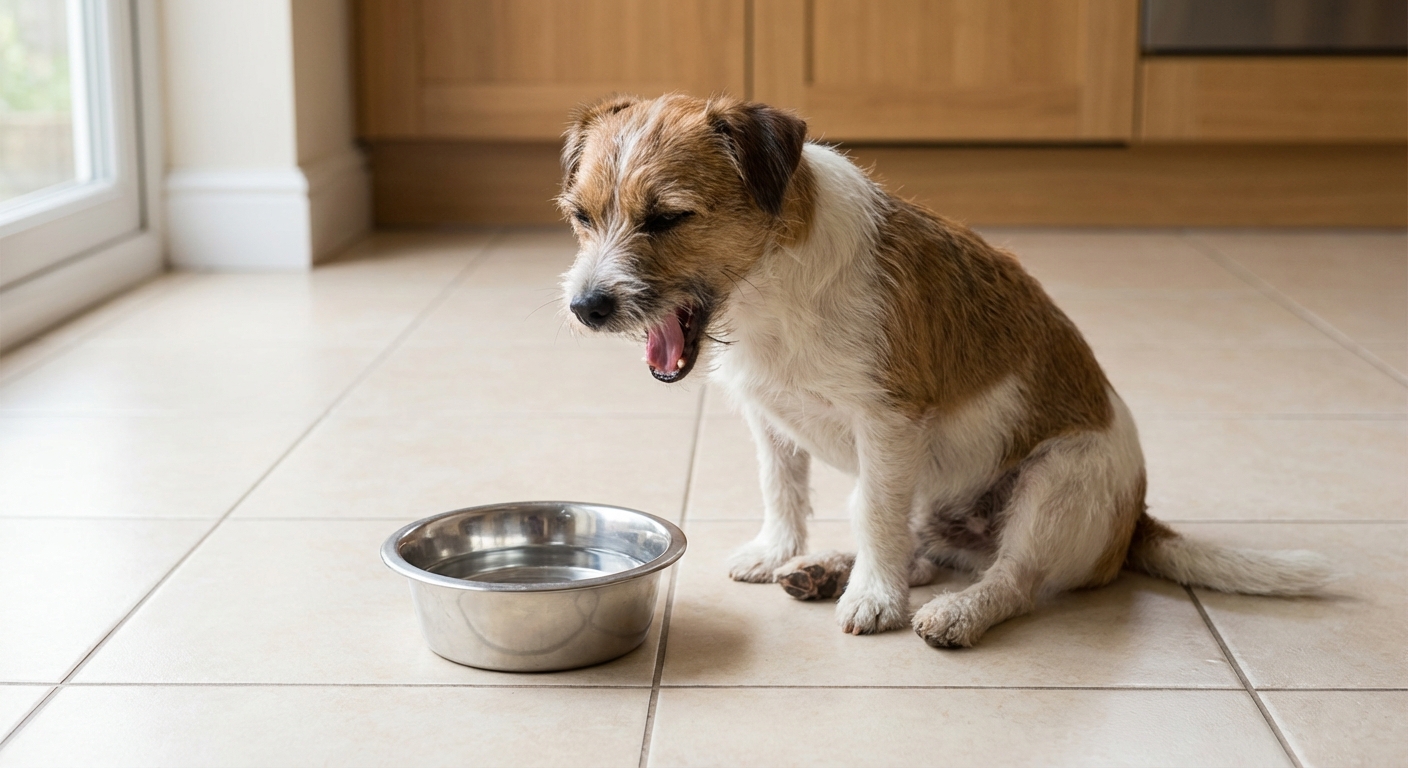
Diarrhea means the stool is looser and moving through the gut differently than normal. Often, that includes stool passing too quickly through the intestines so the body cannot absorb enough water and nutrients. But diarrhea can also be driven by inflammation, increased secretion, decreased absorption, or even “osmotic” effects from certain foods. In other words, there are several pathways to the same messy result.
Most causes fall into a few big categories: diet, infection, parasites, stress, medications, and underlying health conditions.
Small intestine vs. large intestine clues
- Small intestine diarrhea often looks like large-volume watery stool, sometimes with weight loss, poor appetite, or vomiting.
- Large intestine diarrhea tends to be frequent, small amounts with urgency. You may see mucus and sometimes bright red blood from irritation.
These clues are not a diagnosis, but they can help your vet narrow down what’s going on.
Common causes (and what they look like)
1) Diet changes and "garbage gut"
A very common trigger is simple dietary upset: a sudden food switch, rich treats, table scraps, getting into the trash, fatty leftovers, or chewing something they shouldn’t. The gut reacts with irritation and extra fluid in the intestines, and out comes diarrhea.
- Many cases are mild and improve in 24 to 48 hours with supportive care, especially if your dog is otherwise acting normal.
- Higher risk if your dog ate greasy foods, bones, or spoiled items.
2) Food intolerance or allergy
Some dogs develop chronic or recurring loose stool due to intolerance (trouble digesting an ingredient) or allergy (immune reaction). You may also notice itching, ear infections, gassiness, or frequent licking of paws.
- These cases often benefit from a veterinarian-guided diet trial rather than random food hopping.
3) Stress and routine disruption
Dogs truly can get “stress poop.” Travel, boarding, new pets, storms, guests, moving, or schedule changes can speed up gut motility and may affect the gut bacteria balance, too. This can be short-term, but if stress is ongoing, the diarrhea can linger.
4) Parasites
Intestinal parasites are extremely common, even in well-cared-for pets. Giardia, roundworms, hookworms, whipworms, and coccidia can all cause diarrhea. Puppies and dogs who visit dog parks, daycare, boarding facilities, or shared water bowls are at higher risk.
- Giardia often causes soft, foul-smelling stool that can be intermittent.
- Whipworms can cause chronic large-bowel diarrhea with mucus or blood.
A fecal test at your vet is the fastest way to stop guessing.
5) Viral or bacterial infection
Some dogs pick up contagious GI bugs. In puppies and unvaccinated dogs, viruses can be especially serious. Bacterial overgrowth or foodborne bacteria can also be involved, but antibiotics are not automatically the answer. Your veterinarian will decide based on severity, risk factors, and testing.
6) Medications and supplements
Antibiotics commonly cause diarrhea by disrupting normal gut bacteria. NSAIDs (pain meds), certain dewormers, and some supplements can also irritate the GI tract. If diarrhea starts after a new medication, call your veterinarian before stopping anything on your own.
7) Pancreatitis
Pancreatitis is inflammation of the pancreas and is often triggered by fatty foods. It can cause diarrhea, vomiting, belly pain, and lethargy. This is one of those situations where “waiting it out” can be risky.
8) Underlying disease
If diarrhea is persistent, recurring, or paired with weight loss, your vet may investigate conditions like inflammatory bowel disease (IBD), endocrine disorders (like Addison’s disease), liver disease, or exocrine pancreatic insufficiency (EPI). These dogs usually need a targeted plan, not just bland food.
What you can do at home
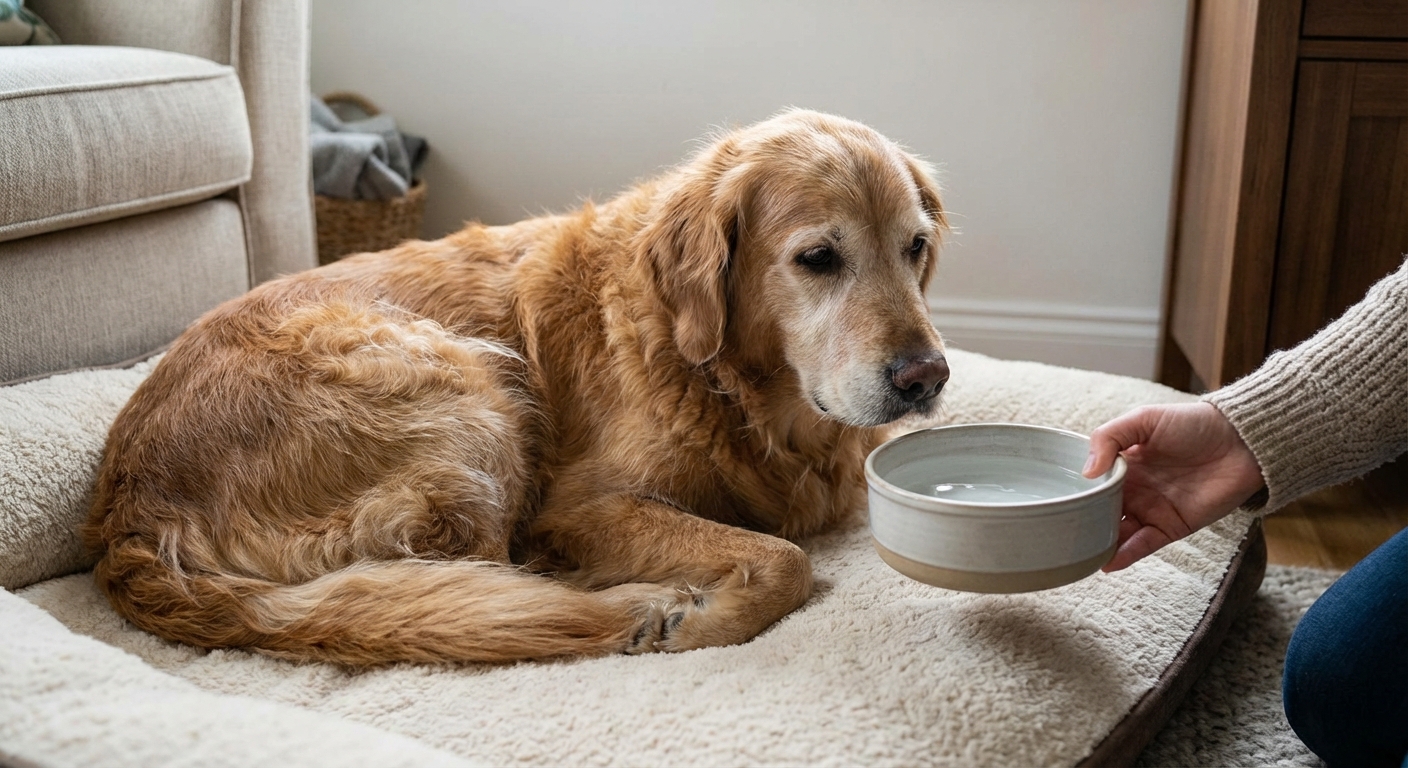
If your dog is bright, alert, drinking water, and the diarrhea is mild, you can often start with supportive care while keeping a close eye on symptoms.
In general, I avoid recommending fasting at home unless your veterinarian specifically advises it. Fasting can be risky for puppies, toy breeds, diabetic dogs, and dogs with other medical conditions.
What “mild” usually looks like
- A few loose stools, but your dog is still interested in food
- Normal or only slightly lower energy
- No repeated vomiting
- No significant blood in the stool
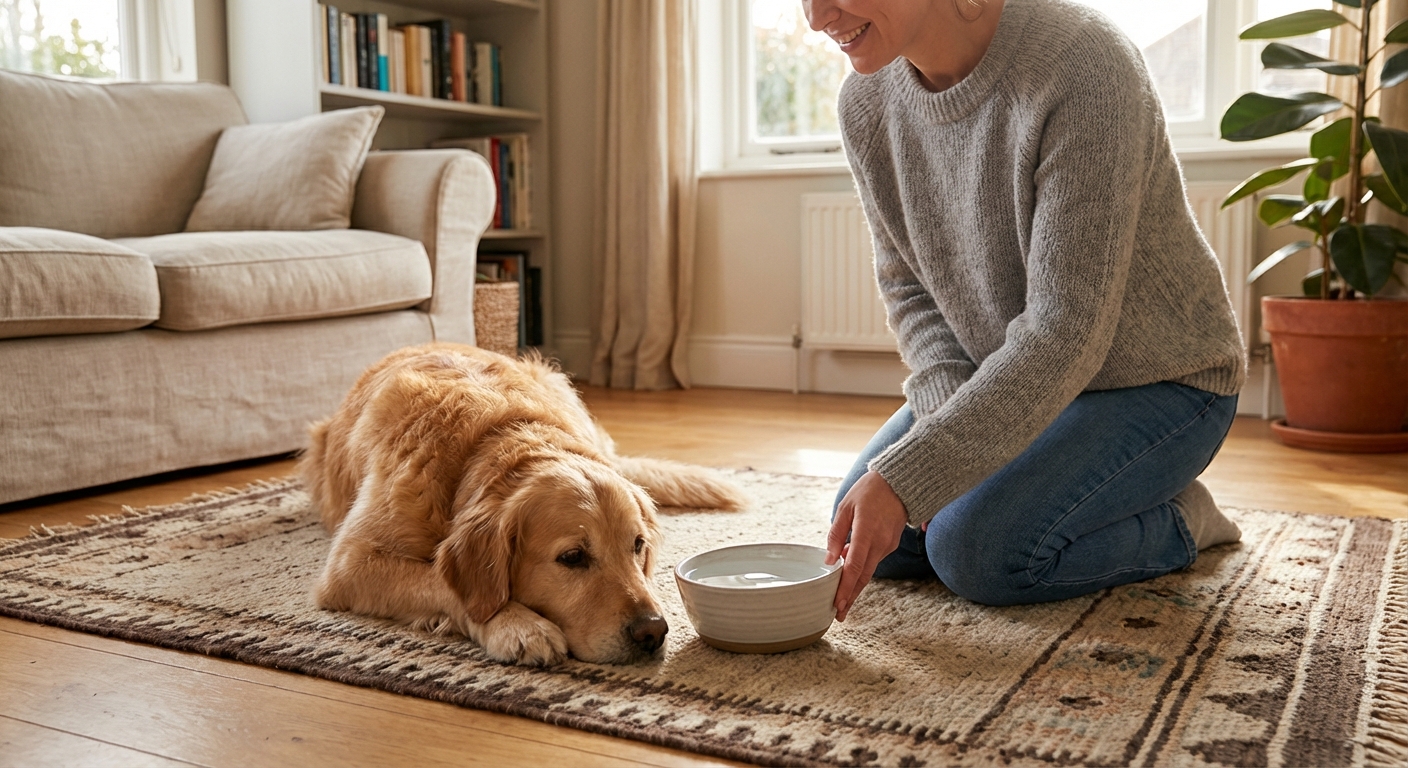
Step 1: Protect hydration
- Offer frequent access to fresh water.
- If your vet approves, ask about an electrolyte solution made for pets.
- Watch for dehydration signs: tacky gums, sunken eyes, weakness, or skin that stays “tented” when gently lifted.
Step 2: Simplify meals
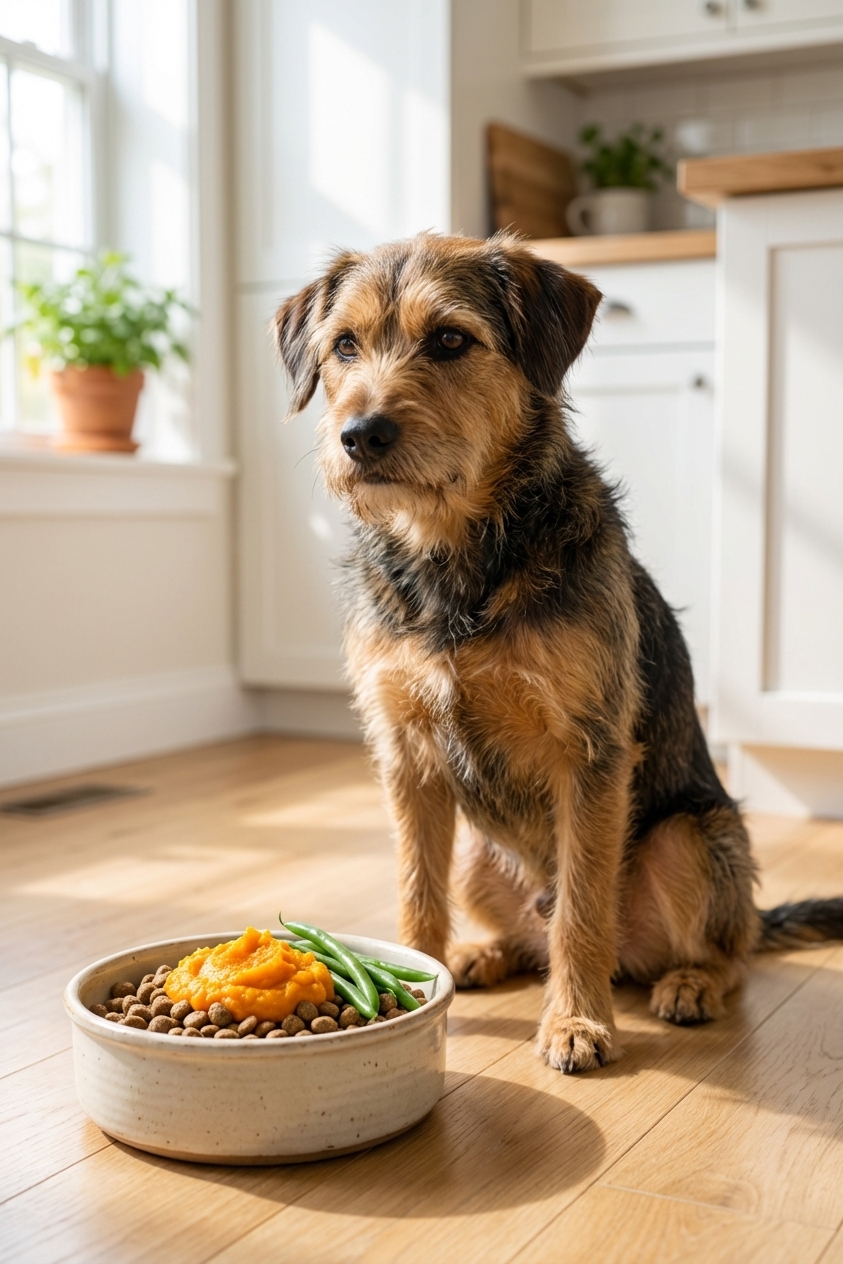
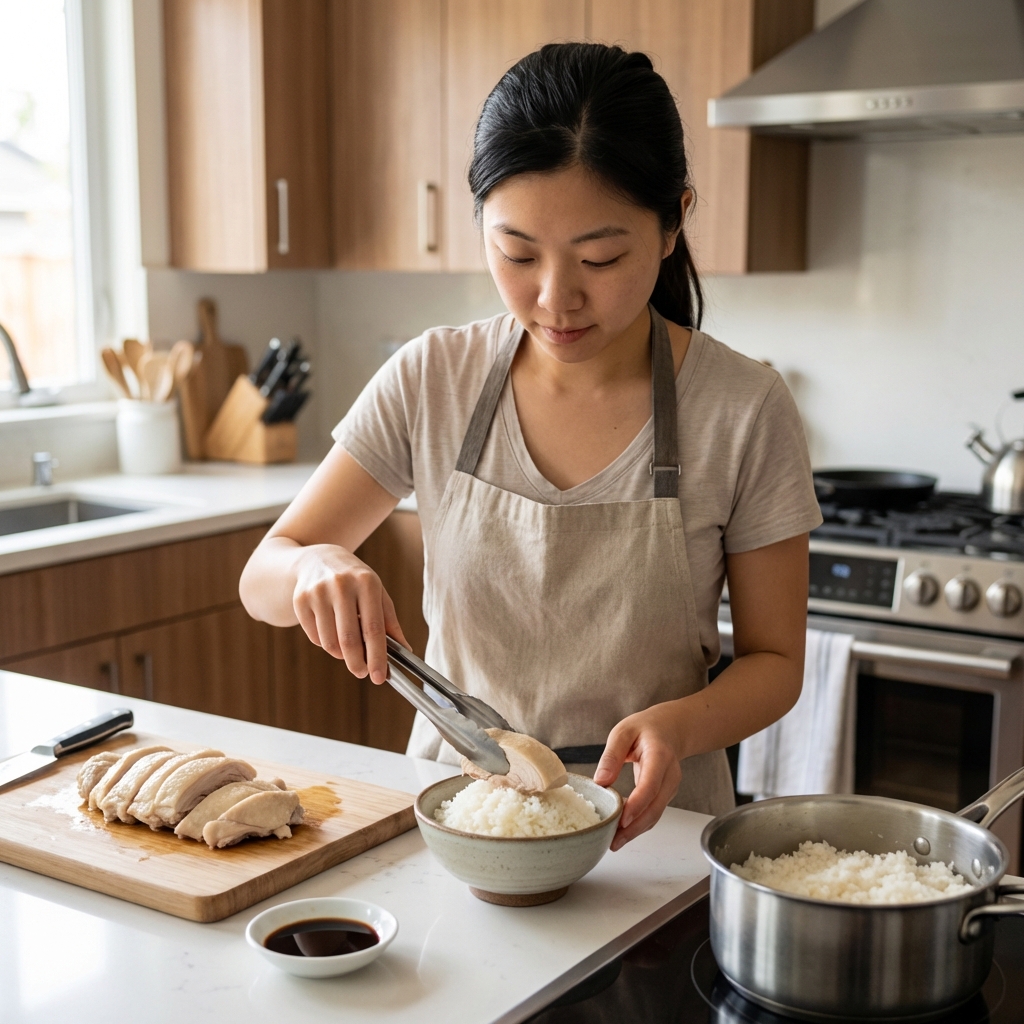
For many adult dogs, feeding a bland, easy-to-digest diet for a short period can help calm the gut. Common vet-recommended options include:
- Boiled skinless chicken breast with white rice
- Boiled lean turkey with white rice
- Veterinary GI diets if you have them on hand
Feed small meals, not one big portion. If your dog has other medical issues, is very young, or is very small, ask your veterinarian before changing feeding.
Step 3: Consider gut support
- Probiotics for dogs can help support a healthy gut balance, especially after stress or antibiotics. Use a product formulated for pets.
- Plain canned pumpkin (not pie filling) is often used for mild diarrhea because its soluble fiber may help firm stool. Ask your vet for a dose based on your dog’s size.
Step 4: Take it easy
Skip intense exercise for a day, keep potty breaks frequent, and prevent scavenging outside. If your dog is eating grass, raiding the litter box, or getting into compost, diarrhea often repeats.
Step 5: Reduce spread and reinfection
- Pick up stool promptly (even in your own yard).
- Wash your hands after cleanup.
- Do not let your dog share water bowls with other dogs.
- Avoid daycare, dog parks, and close dog to dog play until stools are normal for at least 48 hours, especially if Giardia or a contagious bug is possible.
When diarrhea is an emergency
Please contact your veterinarian or an emergency clinic right away if you notice any of the following:
- Puppy diarrhea, especially with vomiting or low energy
- Blood in stool (more than a small streak) or black, tarry stool
- Repeated vomiting, inability to keep water down, or severe lethargy
- Signs of dehydration or collapse
- Suspected toxin exposure (human meds, xylitol, grapes/raisins, chocolate, pesticides)
- Possible foreign body (chewed toys, socks, bones) or painful belly
- Diarrhea lasting more than 24 to 48 hours or getting worse
- Known medical conditions (kidney disease, diabetes, Addison’s, cancer) or your dog is on important meds
Trust your gut. If your dog seems “off” in a way that worries you, it is okay to call your vet for guidance.
What your veterinarian may do
At the clinic, your veterinarian will match testing to your dog’s symptoms, age, and risk factors. Common next steps include:
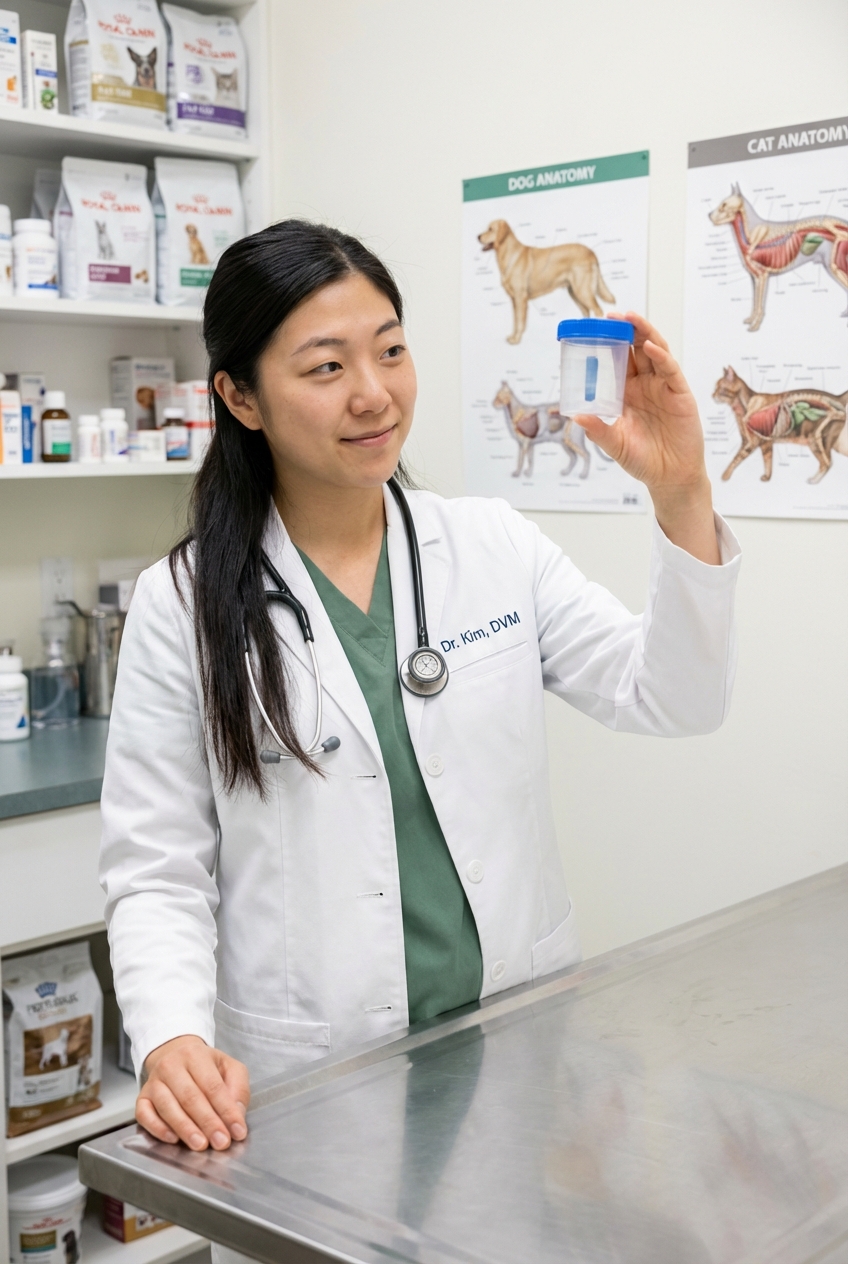
- Fecal testing for parasites and Giardia
- Parvovirus test in puppies or unvaccinated dogs
- Bloodwork to assess hydration, electrolytes, pancreas, liver, and inflammation
- X-rays or ultrasound if a blockage, pancreatitis, or other internal issue is suspected
- Prescription GI diet, probiotics, deworming, anti-nausea meds, or fluids as needed
The goal is to treat the cause, not just slow the symptoms.
What to bring or track
- A fresh stool sample, if possible
- A photo of the stool (color, mucus, blood)
- How often your dog is going and whether they are waking you at night
- Recent food changes, treats, chews, trash access, or new environments
- Any medications and supplements (including new flea and tick products)
Preventing future flare-ups
- Make food changes slowly over 7 to 10 days.
- Use parasite prevention recommended by your vet, and do periodic fecal checks.
- Limit high-fat treats, especially if your dog has had pancreatitis or a sensitive stomach.
- Keep the trash secured and supervise outdoor time if your dog is a scavenger.
- Support the gut with consistent, high-quality nutrition and vet-approved probiotics when appropriate.
- Have a plan for stress (predictable routine, gentle exercise, enrichment, and vet support for anxious dogs).
Most importantly, keep notes. If diarrhea keeps happening, write down the food, treats, new environments, medications, and timing. That little timeline can be incredibly helpful for your veterinarian.
A quick, caring takeaway
Diarrhea in dogs is common, but it is not something to ignore. Mild, short-lived diarrhea can often be supported at home with hydration, simple meals, and close monitoring. But bloody stool, vomiting, lethargy, dehydration, puppy diarrhea, or diarrhea that lasts more than a day or two deserves veterinary attention.
Your dog’s gut health is a big part of their overall vitality. When you respond early and thoughtfully, you help them bounce back faster and more comfortably.