A vet assistant explains how omega-3s (EPA and DHA) support dogs’ skin, coat, joints, and some heart conditions—plus how to dose by weight, read labels, ...
Article
•
Designer Mixes
Coconut Oil for Dogs’ Skin

Shari Shidate
Designer Mixes contributor
If your dog’s skin is itchy, flaky, or just not looking its best, coconut oil might be on your radar. I get it. It feels like a simple, natural solution, and in some cases it truly can help. But coconut oil is not a cure-all, and using it the wrong way can make certain skin problems worse. Let’s walk through what coconut oil can do for dogs’ skin, when it makes sense, and how to use it safely.
What coconut oil is
Coconut oil is mostly saturated fat made up of medium-chain fatty acids. The best-known one is lauric acid. In lab settings, components like lauric acid and monolaurin can show antibacterial and antifungal activity. In real life on real dogs, the clinical evidence is limited, and results depend on things like the specific skin condition, how the product is formulated, and whether it stays on the skin long enough to matter.
Think of coconut oil as a supportive tool for mild dryness or as a comfort helper during healing, not as the main plan for ongoing infections, significant allergies, or chronic skin disease.
Why dogs get itchy skin
Before you add anything to your dog’s skin, it helps to understand what you are treating. The most common reasons I see for skin trouble include:
- Environmental allergies (pollen, grasses, dust mites)
- Food sensitivities (often protein-related, sometimes additives)
- Flea allergy dermatitis (one bite can trigger intense itching)
- Yeast-associated dermatitis (often smells “corn chip” like and can look greasy or red)
- Bacterial skin infection (pimples, crusts, hot spots)
- Dry air and over-bathing (especially in winter or with harsh shampoos)
- Underlying hormone issues (like hypothyroidism, often with coat thinning)
If your dog is chewing paws, rubbing their face, getting repeated ear infections, or has recurrent hot spots, it is time to think bigger than coconut oil. Those signs often point to allergies (including atopic dermatitis) or infection that needs targeted treatment.
When it can help
1) Mild dryness and flakes
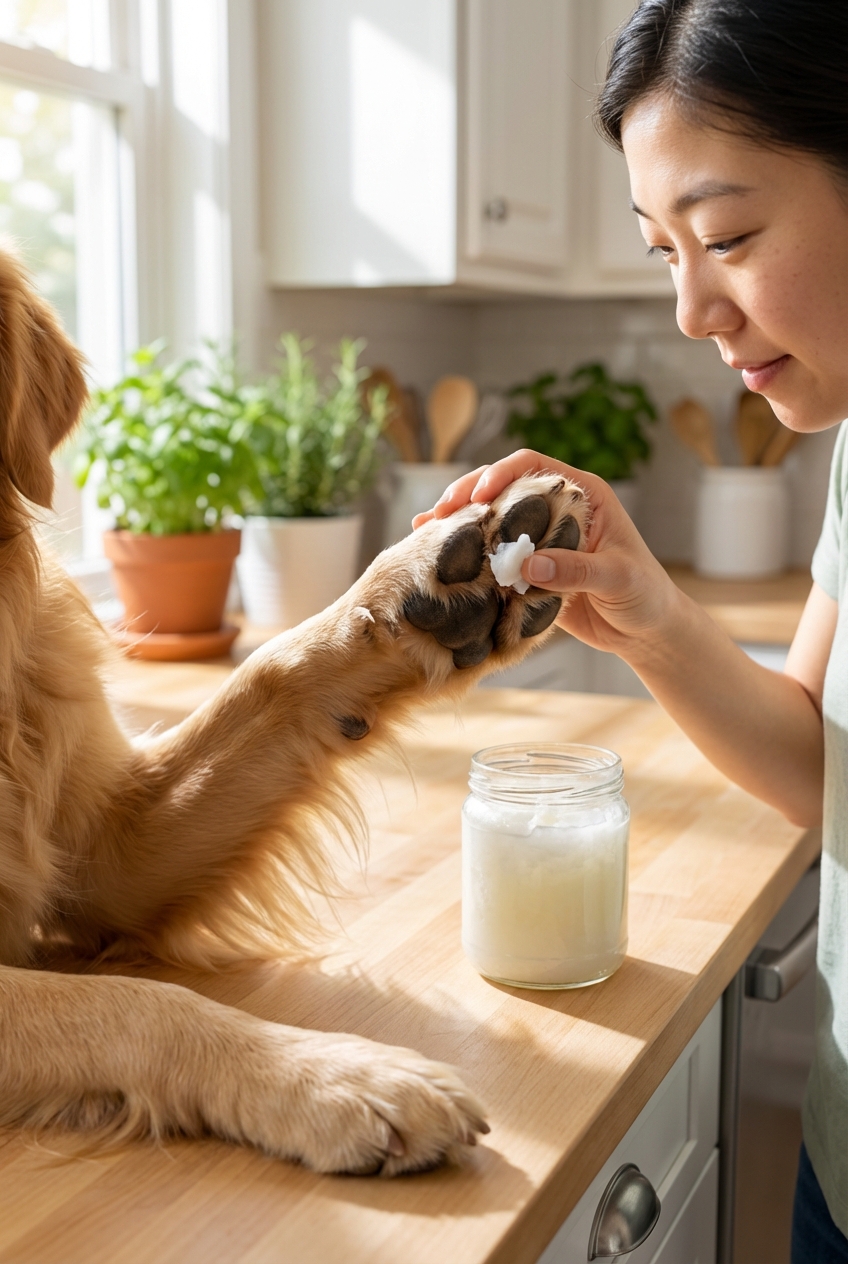
A tiny amount applied topically can temporarily improve the feel of dry skin and reduce visible flakes. It works by adding an occlusive layer that reduces moisture loss. This can be especially helpful on elbows, minor dry patches, and paw pads.
2) Light barrier support
Healthy skin is a barrier. When that barrier is compromised, irritants and microbes get in more easily. Coconut oil may help some dogs by improving surface hydration and comfort, which can reduce the itch-scratch cycle.
3) Coat and grooming
Used sparingly, coconut oil can make the coat look shinier and help with minor tangles. It is popular for curly-coated mixes that mat easily, but less is truly more.
When it can backfire
Greasy buildup
If you apply too much, the coat can trap dirt, pollen, and debris. For dogs with environmental allergies, that can mean more itching.
Yeast and skin folds
Malassezia yeast overgrowth is strongly linked to inflammation (often from allergies) and changes in the skin microclimate. Coconut oil is not automatically “anti-yeast” in real-world use. A greasy, occlusive layer can hold moisture in skin folds and between toes and may worsen irritation, which can aggravate yeast-associated dermatitis in some dogs. If your dog’s skin issue is greasy, smelly, red, or focused in folds, paws, or armpits, be cautious and talk with your veterinarian.
Stomach upset and weight gain
Coconut oil is calorie-dense, and many dogs will lick it off. That can reduce the topical benefit and can also cause loose stool. In predisposed dogs, adding extra dietary fat can increase pancreatitis risk. This is especially important for dogs that are small, older, overweight, or have a history of GI issues.
How to use it safely (topical)
Topical use is where coconut oil tends to make the most sense for skin comfort. Here is a practical, low-mess method:
- Choose the right oil: plain, unrefined, virgin coconut oil. Skip anything with fragrance or added essential oils.
- Patch test: apply a pinhead-sized amount to a small area. Watch for increased redness or itching over 24 hours.
- Use a tiny amount: think rice-grain sized for a small spot, or pea-sized for a larger patch. Warm it between your fingers until it turns clear.
- Apply to targeted spots: elbows, dry patches, or paw pads. Avoid heavily coating the entire dog.
- Keep it away from sensitive areas: avoid eyes, mouth, genitals, and deep skin folds. Do not apply to open, oozing, or actively infected skin unless your vet tells you to.
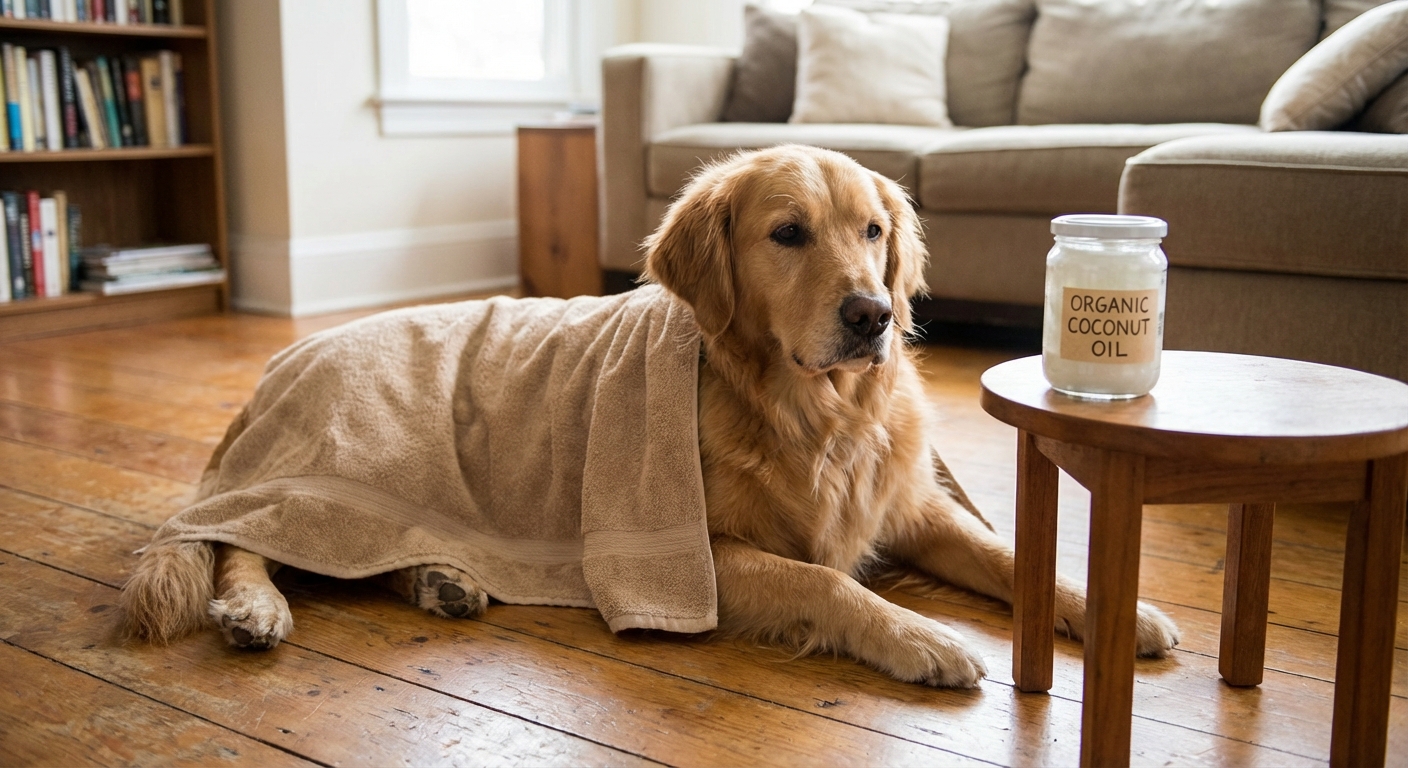
- Let it sit, then blot: after 10 to 20 minutes, gently blot excess with a clean towel to reduce greasiness and reduce how much your dog can lick off.
How often: start 2 to 3 times per week. If you see improvement without greasiness or itching, you can continue. If symptoms worsen, stop.
Less messy alternatives: if coconut oil feels too greasy, ask your vet about dog paw balms or skin barrier products like ceramide-based sprays or mousses. Many dogs tolerate those better, and they are designed to sit on the skin without leaving as much residue.
Can dogs eat it for skin?
Some people add coconut oil to food hoping for skin improvements. The evidence is mixed, and for many dogs, other fats are more reliably helpful for skin, especially omega-3 fatty acids (from fish oil) which have stronger support for inflammation and allergic skin.
If your veterinarian says coconut oil is appropriate for your dog, use conservative amounts and treat it like any high-fat add-in. There is no one perfect evidence-based dose for every dog, so consider this a cautious starting point that some veterinarians use for healthy dogs:
- Start very small: about 1/8 teaspoon for small dogs, 1/4 teaspoon for medium dogs, 1/2 teaspoon for large dogs.
- Increase slowly only if tolerated: every few days, and stop if stool softens, your dog seems nauseated, or itching worsens.
If your dog has a history of pancreatitis, is overweight, or has ongoing GI problems, do not add coconut oil without veterinary guidance.
Coconut oil plus a real plan
Here is how I like to pair coconut oil with practical skin troubleshooting, so you are not just masking symptoms.
If the issue is seasonal itching
- Wipe paws and belly after outdoor time to remove pollen.
- Use coconut oil only on localized dry spots or paw pads, not as a full-body coating.
- Ask your vet about allergy support options including omega-3s, medicated baths, or prescription itch control when needed.
If the issue is atopic dermatitis
- Coconut oil may soothe dryness, but it will not treat the underlying inflammation on its own.
- Work with your vet on an allergy plan (flea control, diet trial if indicated, meds, immunotherapy, and skin barrier care).
- Use topical coconut oil only as a spot treatment if your dog tolerates it, and stop if it increases greasiness or odor.
If the issue is dandruff from dry air or over-bathing
- Switch to a gentle, dog-specific moisturizing shampoo.
- Bathe less frequently unless your vet recommends otherwise.
- Use a small dab of coconut oil on dry patches 2 to 3 times weekly.
If the issue is hot spots or raw skin
- Skip coconut oil at first. Hot spots are often infected and need proper cleaning and sometimes medication.
- See your veterinarian, especially if the area is oozing, painful, or spreading.
- After healing begins and your vet approves, a tiny amount may help with dryness around the area.
When to call the vet
Please do not try to “oil your way through” these signs. Your dog may need a skin cytology test, parasite check, or prescription treatment:
- Skin is red, hot, swollen, oozing, or has a strong odor
- Hair loss, scabs, pustules, or recurring hot spots
- Frequent ear infections or constant paw licking
- Itching that disrupts sleep or daily life
- No improvement in 7 to 10 days with gentle home care
Coconut oil can be a helpful comfort tool, but chronic itch usually needs a plan that addresses allergies, parasites, or infection.
Simple routine for dry paws
If your dog’s paw pads are dry or rough, here is an easy routine that many dogs tolerate well:
- Clean paws with a damp cloth and dry thoroughly.
- Massage a tiny dab of coconut oil into each pad.
- Distract with a lick mat or chew for 5 to 10 minutes so it can absorb.
- Wipe any excess to prevent slipping on floors and to reduce licking.