
Dog seizures can be frightening. Learn signs of generalized vs focal seizures, what to do during and after an episode, when to seek emergency care, and how t...
Article
•
Designer Mixes
Cluster Seizures in Dogs

Shari Shidate
Designer Mixes contributor
Seeing your dog have a seizure is scary. Seeing more than one in a short window can feel downright panicky. Cluster seizures are a true veterinary emergency because the risk of overheating, reduced oxygenation (especially with prolonged seizures or airway compromise), aspiration, and status epilepticus rises with each event.
As a veterinary assistant, I want you to leave this page with two things: a clear plan for what to do right now, and a realistic long-term management path you can discuss with your veterinarian or ER team.
Quick note: This is general education, not a substitute for veterinary diagnosis or a prescription plan. Always follow your veterinarian’s instructions for your specific dog.

What cluster seizures are
A cluster seizure generally means two or more seizures within 24 hours, with your dog regaining consciousness between episodes. Definitions can vary a bit by neurologist or hospital protocol (some use a shorter time window), but the take-home message is the same: multiple seizures close together need urgent guidance and often urgent treatment.
Cluster vs. isolated seizures
- Isolated generalized (grand mal) seizure: a single seizure, typically 30 to 180 seconds, followed by a recovery phase (called the post-ictal phase) where dogs can be disoriented, restless, hungry, or temporarily blind.
- Focal seizure: twitching of one side of the face, jaw chomping, fly-biting, staring, or unusual movements that may or may not generalize. A single focal event can still be serious, but clusters are what push the risk higher.
- Cluster seizure: seizures repeat within hours. Even if each episode is short, the cumulative effects on the brain and body can become dangerous.
- Status epilepticus: a seizure lasting longer than about 5 minutes, or back-to-back seizures with no full recovery in between. This is a life-threatening emergency.
Why clusters are dangerous
Every seizure is a whole-body event. When seizures come in groups, your dog can struggle to “reset.” Complications we worry about include:
- Hyperthermia (overheating): muscle activity generates heat quickly.
- Low blood sugar: especially in very small dogs or puppies.
- Aspiration pneumonia: saliva or vomit inhaled into the lungs.
- Prolonged post-ictal confusion and risk of brain injury: pacing, blindness, agitation, disorientation. More severe brain effects are a bigger concern with prolonged or uncontrolled seizures.
- Progression to status epilepticus: the scenario we most want to prevent.
Emergency steps at home
If your dog is actively seizing, your job is to keep them safe, reduce stimulation, and gather the info the veterinary team will need.
During the seizure: safety first
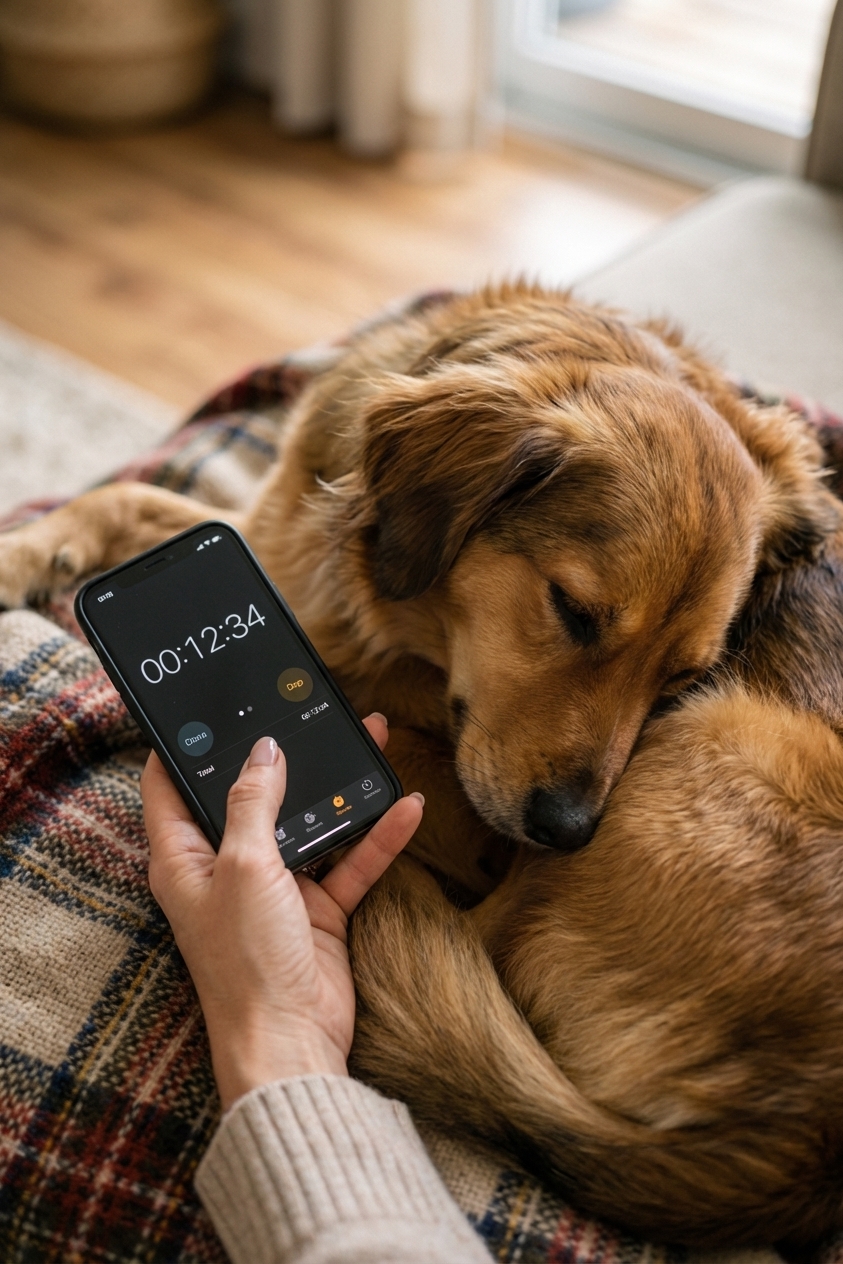
- Time it. Use your phone timer. In the moment, 30 seconds can feel like 5 minutes.
- Do not put your hands near the mouth. Dogs do not “swallow their tongue,” but they can bite hard without meaning to.
- Do not lift or carry your dog during an active seizure unless they are in immediate danger (for example, at the edge of stairs or near a sharp object). Moving a seizing dog can injure you and your dog.
- Remove hazards. Pull away chairs, sharp objects, and block stairs. Place a folded blanket near the head if you can do so safely.
- Dim lights and reduce noise. Calm, low stimulation helps during recovery.
- Keep other pets and children away.
After the seizure: cool, quiet, and hands-off
- Check breathing and gum color. Pink gums and steady breathing are reassuring. Blue or gray gums are an emergency.
- Be careful with your hands and face. Dogs can be confused and reactive in the post-ictal phase and may snap or bite. Avoid hugging, crowding their face, or trying to “hold them still.”
- Start cooling once the seizure stops. Move them to a cooler room, offer a fan, and place cool (not ice-cold) damp towels on paws and belly if they are very hot.
- Avoid unsafe cooling. Do not use ice baths or alcohol rubs unless your veterinary team tells you to.
- Do not force food or water right away. Wait until your dog can swallow normally and is more coordinated.
- Record a video if safe. A 10 to 20 second clip can help your veterinarian identify seizure type.
If your vet prescribed rescue meds, use them exactly as directed
Many seizure-prone dogs have a home rescue plan. Common options include diazepam (often given rectally) and midazolam (commonly prescribed for intranasal use). Some dogs also have short-term “pulse” dosing of levetiracetam (Keppra) during clusters. The best drug and route depend on your dog and your veterinarian’s protocol.
If you do not already have a plan, ask your vet for one before the next episode happens.
When to go to the ER
When in doubt, it is safer to be seen. Go to emergency care now if any of the following are true:
- Two or more seizures in 24 hours (a common definition of a cluster).
- A seizure lasts 5 minutes or longer, is approaching 5 minutes, or you are unsure of the duration.
- Back-to-back seizures without your dog fully regaining awareness (concern for status epilepticus).
- Difficulty breathing, choking, or persistent blue or gray gums.
- Severe overheating (very hot body, heavy panting that does not settle).
- Repeated vomiting, collapse, or signs of significant injury.
- First-ever seizure, especially in a puppy, a senior dog, or any dog with known toxin exposure possibility.
- Known or suspected toxin ingestion (xylitol, THC edibles, snail bait, human medications, illicit drugs, etc.). If you suspect toxins, you can also call a pet poison hotline (ASPCA Animal Poison Control or Pet Poison Helpline) for time-sensitive guidance while you head to care.
- Pregnant dogs, dogs with diabetes, kidney disease, liver disease, or other complex medical problems.
Tip: Call the ER while you are on the way. Tell them your dog is having cluster seizures, the dog’s weight, how many seizures, how long they lasted, and what rescue medication (if any) was given.
Transport tips
- Bring help if you can. One person can drive while the other monitors.
- Use a blanket as a stretcher for large dogs if needed, and keep hands away from the head during post-ictal confusion.
- Keep the car cool and quiet. Limit noise and bright light.
- Bring your seizure log and medication list, and bring rescue meds to the ER (do not give extra doses unless directed).
What the veterinary team may do
ER care focuses on stopping seizures, preventing the next one, and stabilizing the body.
- Rapid seizure control: often with benzodiazepines such as diazepam or midazolam.
- Anti-seizure loading or pulse therapy: levetiracetam is commonly used because it is generally well tolerated and can work quickly.
- Temperature control: cooling measures if hyperthermic.
- IV fluids and blood sugar checks: to correct dehydration, electrolyte imbalances, or hypoglycemia.
- Diagnostics: bloodwork is common. Depending on history, the team may recommend bile acids, toxin screening guidance, imaging (MRI), or referral to a neurologist.
- Medication level checks (in some cases): if your dog is on phenobarbital or bromide, the team may recommend checking levels depending on timing, dose history, and seizure control.
Medications for clusters
Medication choice depends on your dog’s seizure history, underlying cause, and how they respond. Your veterinarian will tailor the plan, but here are commonly discussed medications in cluster protocols.
Midazolam (Versed): rescue medication
Midazolam is a benzodiazepine commonly used for rapid seizure control. Many clinics prefer it for intranasal use at home because absorption can be reliable and fast.
- Purpose: rapid, short-acting seizure control.
- Important notes: follow your prescribed dose exactly. Sedation and unsteadiness can occur. If seizures continue after rescue dosing, that is an ER situation.
Diazepam (Valium): rescue medication
Diazepam is another benzodiazepine that can stop an active seizure and reduce short-term recurrence. It is often sent home as a rectal syringe, depending on your veterinarian’s protocol and what is appropriate for your dog.
- Purpose: rapid, short-acting seizure control.
- Important notes: follow your prescribed dose exactly. Sedation and unsteadiness can occur. If seizures continue after rescue dosing, that is an ER situation.
Levetiracetam (Keppra): fast bridge support
Levetiracetam is widely used as a maintenance medication in some dogs and as a short-term pulse protocol during clusters in others. Many vets like it because it has a relatively wide safety margin.
- Purpose: reduce additional seizures during a cluster window and help stabilize.
- Important notes: do not stop long-term seizure medications abruptly unless your veterinarian directs you. Ask whether your dog should use immediate-release or extended-release tablets, since dosing timing differs.
Other long-term anti-seizure medications your veterinarian may discuss include phenobarbital, potassium bromide, zonisamide, and others. The best regimen is the one that controls seizures with the fewest side effects for your dog.
Do not give human medications unless your veterinarian specifically instructs you to. Some drugs are dangerous for dogs, and others can interact with seizure meds.

Long-term management
Many dogs with epilepsy live full, happy lives, but cluster seizures usually mean we need a more proactive plan. Prognosis depends on the underlying cause and seizure control.
Common causes
- Idiopathic epilepsy: no structural cause found, often begins in young adult dogs. Some dogs are prone to clustering.
- Structural brain disease: inflammation, tumors, stroke, trauma, congenital issues.
- Metabolic causes: liver shunts or failure, kidney disease, electrolyte problems.
- Toxins: many household and outdoor exposures can trigger repeated seizures.
What helps most over time
- Seizure diary: date, time, duration, type, triggers, and recovery notes. Bring it to appointments.
- Consistent medication timing: missed doses are a common reason for breakthrough clusters, especially with medications like phenobarbital and bromide.
- Regular monitoring: some medications require blood level checks and liver monitoring.
- Trigger awareness: sleep disruption, stress, missed meals, and certain medications can lower the seizure threshold in some dogs.
- Weight and overall health: obesity, poor conditioning, and untreated disease can make recovery harder.
The goal is not always “zero seizures.” For many dogs, the realistic goal is fewer seizures, shorter seizures, and no clusters.
Seizure kit
When a cluster starts, it is hard to think clearly. A ready-to-go kit reduces panic and saves time.
What to include
- Your veterinarian’s instructions printed, including rescue medication dose, how often it can be repeated, and when to go to the ER.
- Rescue medication (if prescribed), plus any administration supplies.
- Current medication list with doses and times given.
- Phone numbers for your regular vet, nearest ER, and animal poison control resources.
- Timer (your phone works) and a small notepad for logging events.
- Cooling supplies: a small towel, instant cold pack wrapped in cloth, and a battery fan if you have one.
- Blanket to cushion your dog and help carry them safely.
- Clean-up supplies: gloves, paper towels, enzyme cleaner, and a trash bag.
- Muzzle only if directed by your vet and only for post-ictal confusion, never during a seizure. Many dogs are too disoriented and it can be unsafe.
Set up your home
- Use baby gates to block stairs if your dog is seizure-prone.
- Consider padding sharp furniture corners in the areas your dog spends time.
- Know the fastest route to your ER and keep a charged phone and car keys accessible.

FAQ
Should I wake my dog after a seizure?
Let your dog rest in a quiet, safe space. Post-ictal recovery can look like confusion, pacing, temporary blindness, hunger, or clinginess. Some dogs are also reactive and may bite if you crowd them, so give them space and keep your face away from their mouth.
Can my dog eat right after a seizure?
Wait until swallowing and coordination are normal. Offer small amounts of water first, then a small meal if your dog seems hungry and stable. If your dog had multiple seizures, contact your veterinarian or go to emergency care.
Is it always epilepsy?
No. Epilepsy is common, but toxins, metabolic disease, and brain disease can also cause clusters. That is why first-time seizures and clusters deserve urgent evaluation.
The bottom line
Cluster seizures are not something to “wait and see.” If your dog has had two or more seizures in 24 hours, a seizure that is approaching 5 minutes (or longer), or back-to-back seizures without full recovery, go to emergency care.
With a clear rescue plan, the right medications, and regular veterinary follow-up, many dogs can achieve good control and a strong quality of life. If your dog is seizure-prone, ask your veterinarian today about a written cluster protocol and a home emergency kit.