
Cloudy Eyes in Dogs: Nuclear Sclerosis vs. Cataracts

If your dog’s eyes are starting to look cloudy or blue-gray, it is completely normal to feel worried. I see this concern all the time in veterinary settings, and the good news is this: not all cloudiness means cataracts or vision loss.
Two of the most common reasons for a “hazy” look are nuclear sclerosis (a normal aging change) and cataracts (a true lens disease that can affect vision). But sometimes cloudy eyes can also signal glaucoma or uveitis, which are more urgent. It is also worth knowing that some “cloudiness” is actually on the surface of the eye, such as dry eye, corneal ulcers, or corneal deposits (lipid or mineral) that can look white or hazy.
One more helpful note: photos and lighting can be misleading. Reflections, flash, and bright windows can make a normal lens look cloudy. That is why an in-person exam matters.
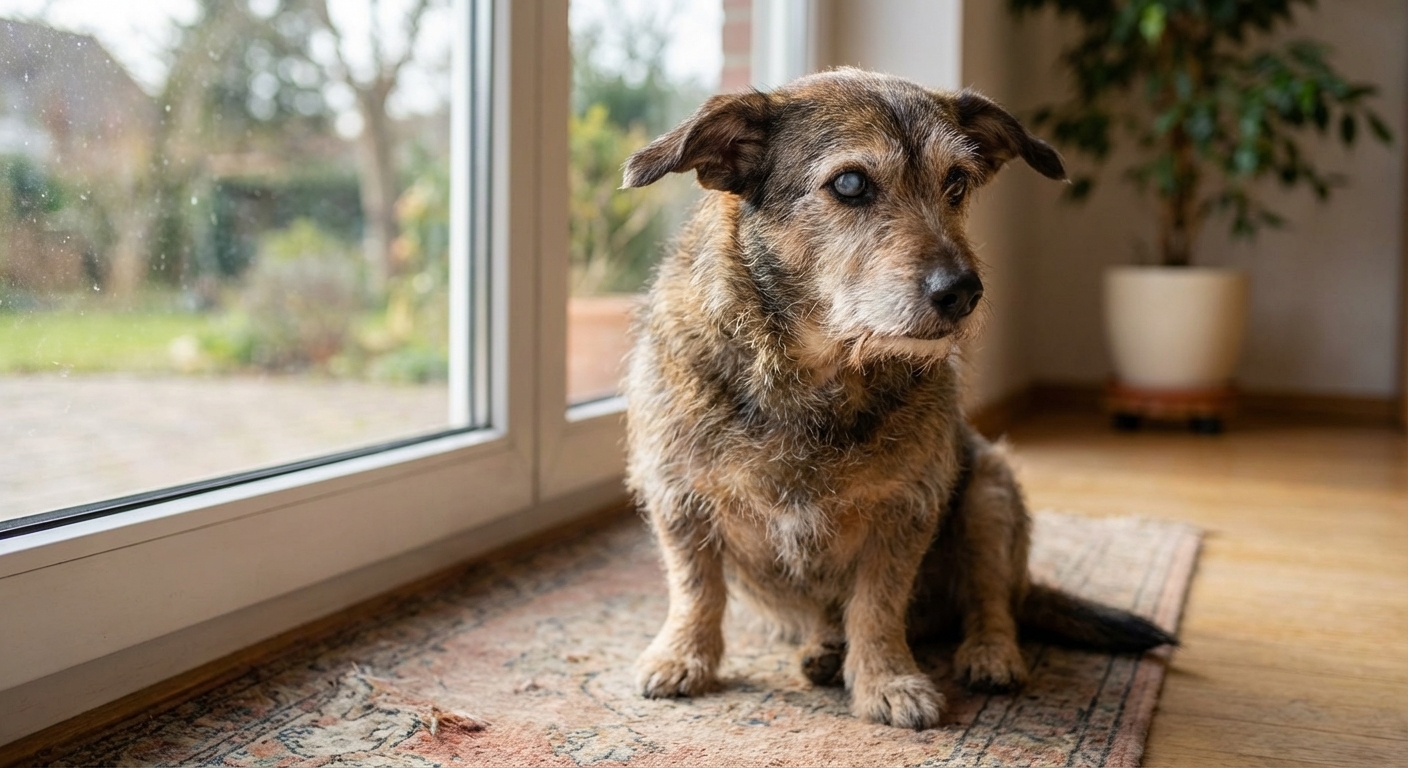
Quick take: is it urgent?
Use this as a practical guide. If any of the “urgent” signs are present, call your vet or an emergency clinic today.
Usually not an emergency
- Both eyes look mildly blue-gray, especially in a middle-aged to senior dog
- No squinting, redness, or discharge
- Your dog is acting normal and moving around confidently
Urgent today
- Sudden cloudiness in one eye
- Obvious redness, squinting, pawing at the eye, or light sensitivity
- Enlarged-looking eye or a very painful eye
- Cloudiness plus vomiting or lethargy (this can be a sign of severe pain, such as with glaucoma, or another illness, so it is worth urgent care)
- Your dog is bumping into things or seems to have sudden vision loss
Eye problems can change quickly, and pain is not always dramatic. If you are unsure, it is safer to be seen.
Where is the cloudiness coming from?
Dog owners often say “the eye is cloudy,” but veterinarians want to know which structure looks cloudy. Most commonly, the haze is in one of these areas:
- The cornea (the clear surface): haze here can happen with ulcers, dry eye, scarring, edema from glaucoma, injury, inflammation (keratitis), or surface deposits (lipid or mineral).
- The lens (behind the pupil): this is where nuclear sclerosis and cataracts happen.
- Inside the eye (the anterior chamber or vitreous): inflammation (uveitis) can create a foggy appearance.
The difference matters because lens issues are managed very differently than corneal disease or glaucoma.
Nuclear sclerosis: the common blue haze
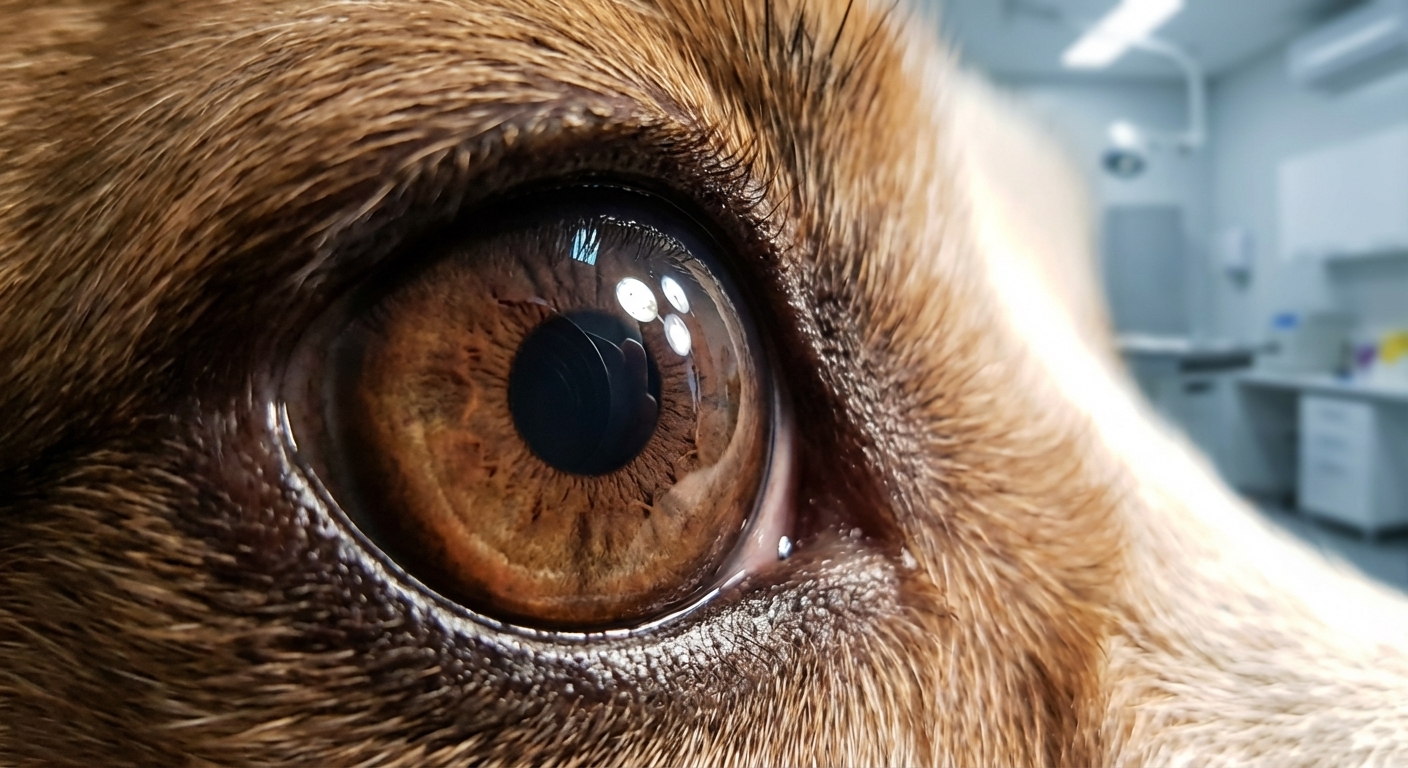
Nuclear sclerosis is a normal age-related change in the lens. As dogs get older, the lens fibers become more compact, which can make the lens look blue-gray or slightly cloudy, especially in certain light.
What it looks like
- Usually affects both eyes fairly evenly
- A mild blue-gray haze that seems “deep” in the eye
- Often noticed in middle-aged to senior dogs (commonly around 6 years and up), and becomes more noticeable with age
Does it cause blindness?
Most dogs with nuclear sclerosis still see well. They may have a little less ability to focus up close, but they typically navigate normally and do not act blind.
How vets confirm it
Your vet or a veterinary ophthalmologist can often identify nuclear sclerosis during an eye exam by looking at how light reflects through the lens and by checking whether the back of the eye (retina) is still visible.
Bottom line: Nuclear sclerosis is common, gradual, and usually not painful.
Cataracts: lens disease that can block vision
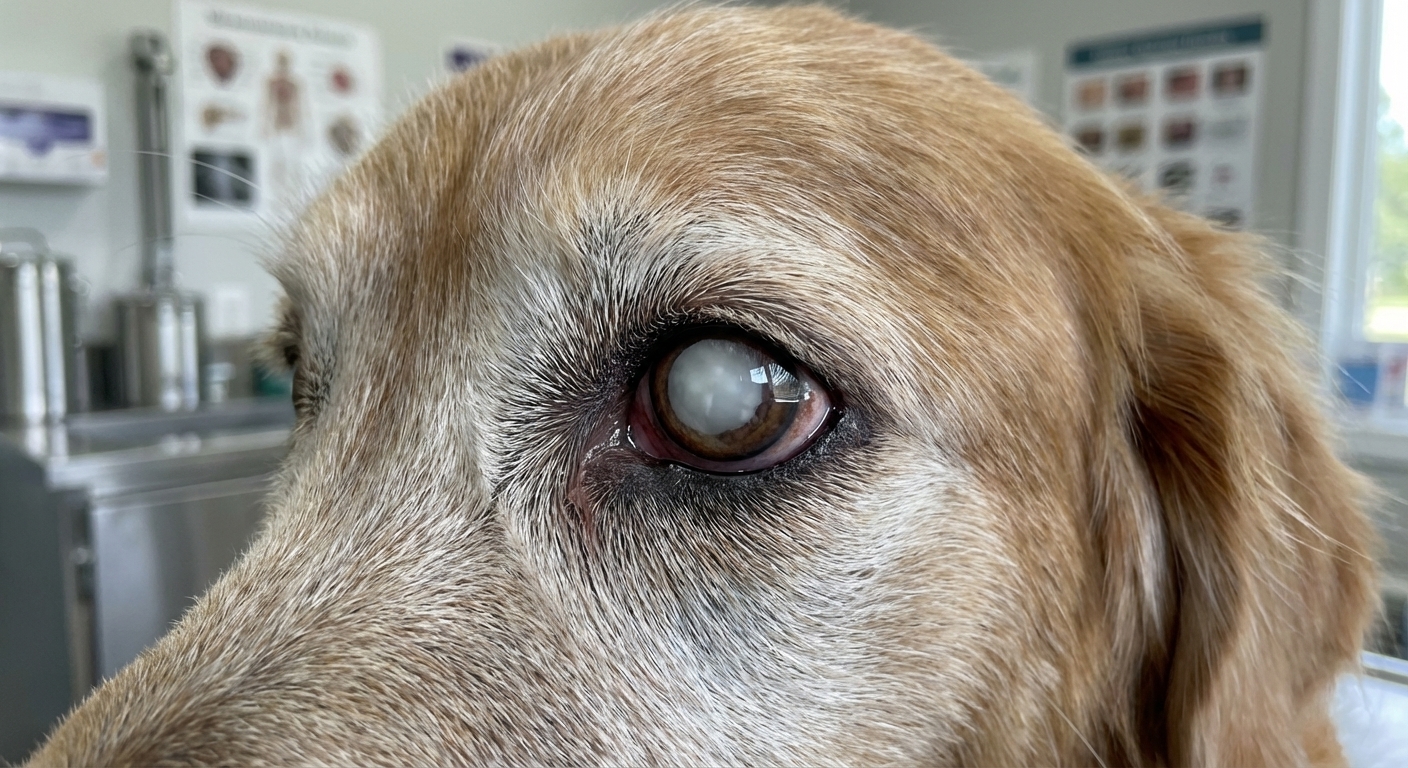
Cataracts are true opacities in the lens. Instead of a mild blue haze, cataracts can look white or milky and can progress to block light from reaching the retina, causing vision loss.
What cataracts can look like
- A white or gray spot in the pupil area that can grow over time
- Can be in one eye or both
- May start small and become more dense
Common causes
- Genetics (common in several breeds and mixes)
- Diabetes mellitus (cataracts can develop rapidly, sometimes over days to weeks, and should be treated as a prompt-vet situation)
- Age-related changes
- Trauma or inflammation inside the eye
Symptoms you might notice at home
- Bumping into objects, hesitating at stairs, less confidence in dim light
- Eye looks increasingly white or opaque
- In some dogs, redness or discomfort if cataracts trigger inflammation
Important: Cataracts are not automatically an emergency, but they do warrant a timely vet visit, especially if they appear suddenly or your dog seems uncomfortable.
Nuclear sclerosis vs cataracts
If you only remember one thing, remember this: nuclear sclerosis tends to look blue-gray and mild, while cataracts tend to look white and more opaque.
- Typical age: Nuclear sclerosis often starts in middle-aged to older adults. Cataracts can occur at many ages depending on cause.
- Progression: Nuclear sclerosis is slow and expected. Cataracts can be slow or fast (diabetes can be fast).
- Vision impact: Nuclear sclerosis is usually minimal. Cataracts can significantly reduce vision.
- Pain: Neither is inherently painful, but cataracts can be associated with inflammation inside the eye.
- Treatment: Nuclear sclerosis usually needs monitoring only. Cataracts may require surgery if vision and quality of life are affected.
That said, it is easy to confuse them at home. A proper eye exam is the best next step.
When it could be glaucoma or uveitis
Some cloudy eyes are not about the lens at all. Two conditions that can cause cloudiness and require faster care are glaucoma and uveitis.
Glaucoma (high eye pressure)
Glaucoma can cause a cloudy or blue cornea due to fluid buildup and is often painful. It can damage vision quickly.
Red flags for glaucoma:
- Sudden cloudiness
- Squinting, tearing, pawing at the eye
- Red eye
- Eye looks larger or more “bulging” than the other
- Severe lethargy or hiding behavior
Uveitis (inflammation inside the eye)
Uveitis can create a hazy look, redness, and significant discomfort. It can be caused by infection, immune issues, trauma, or underlying disease.
Red flags for uveitis:
- Redness, squinting, light sensitivity
- Cloudiness plus a smaller-looking pupil
- Head shy behavior or rubbing the face
Please do not wait this out. Glaucoma and uveitis can lead to permanent damage without prompt treatment.
What your vet will do
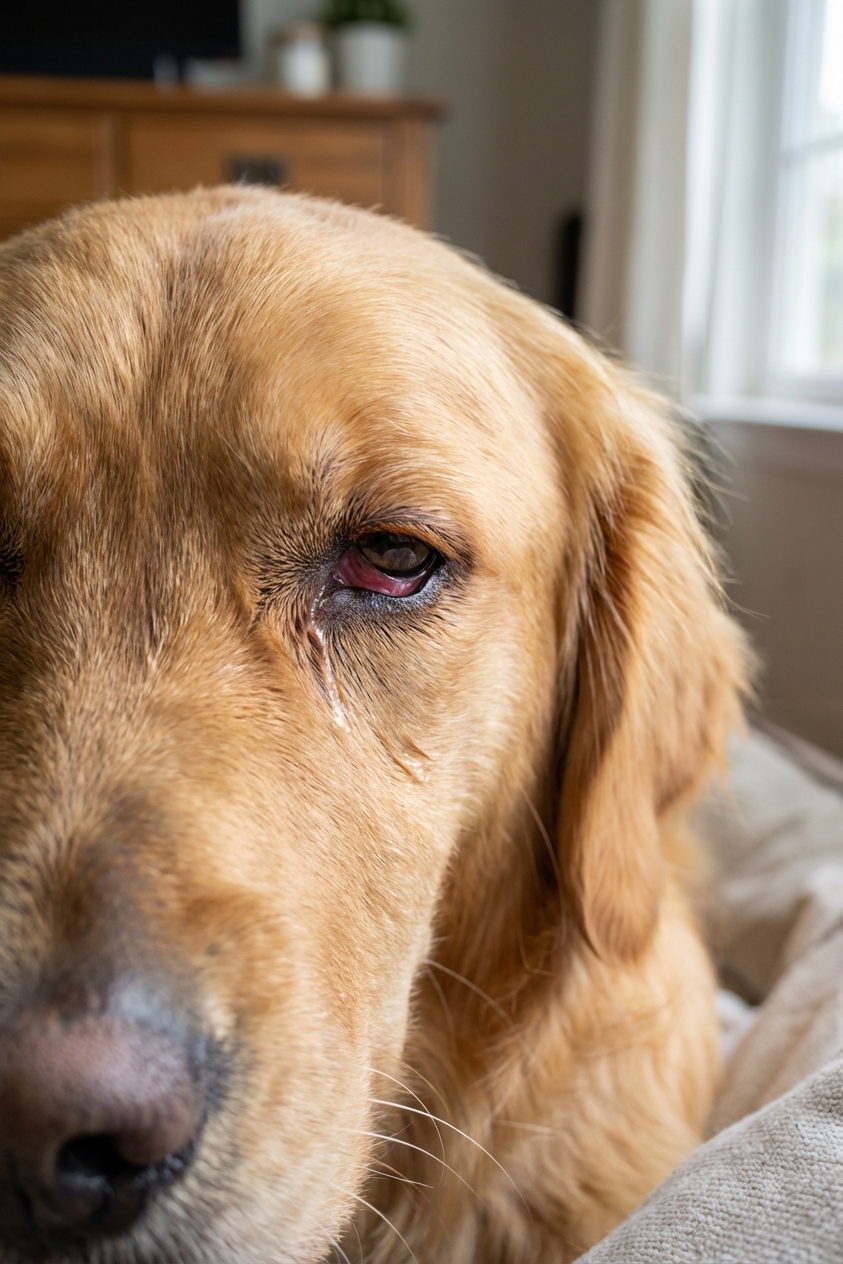
When you bring your dog in for cloudy eyes, your veterinarian is trying to determine whether the issue is on the surface, in the lens, or inside the eye. Common diagnostics include:
1) Eye exam and pupil checks
Your vet will look at symmetry, redness, discharge, pupil size, and how the pupil responds to light.
2) Fluorescein stain
A special dye test to check for corneal ulcers or scratches.
3) Tonometry (eye pressure test)
This measures intraocular pressure and is key for identifying glaucoma. It also helps detect pressure changes associated with uveitis, which often causes lower than normal eye pressure.
4) Schirmer tear test
Checks tear production and helps diagnose dry eye, which can cause irritation and surface haze.
5) Ophthalmoscopy and slit-lamp exam
These tools help your vet assess the lens (nuclear sclerosis vs cataract) and evaluate the retina and optic nerve when possible.
6) Bloodwork or diabetes screening
If cataracts are suspected, especially if they appeared quickly, your vet may recommend blood and urine testing to check for diabetes and other systemic illness.
7) Referral tests before cataract surgery
If cataract surgery is being considered, a veterinary ophthalmologist may recommend tests like ocular ultrasound and an electroretinogram (ERG) to make sure the retina can support vision after surgery.
When is surgery needed?
Nuclear sclerosis does not need surgery. It is typically monitored during routine wellness visits.
Cataracts are different. Surgery is not always required, but it can be life-changing for dogs who lose functional vision and are good candidates.
When cataract surgery is considered
- Your dog’s vision loss is affecting quality of life
- The cataract is mature or progressing
- The eye is otherwise healthy enough for surgery
- You can commit to post-op medications and follow-up visits
What surgery involves
The most common procedure is phacoemulsification, where the cloudy lens is broken up and removed, often with placement of an artificial lens. This is performed by a veterinary ophthalmologist.
If surgery is not an option
Many dogs adapt well to partial or full vision loss, especially if their home setup stays consistent. Your vet may also prescribe medications if there is inflammation or to help manage discomfort and complications. This can be especially important because cataracts can sometimes trigger lens-induced uveitis, even when surgery is not planned.
At-home tips while you wait
- Do not use human eye drops unless your vet tells you to. Some products can worsen ulcers or mask serious disease.
- Do not use leftover prescription drops from a prior pet or prior issue. This is especially true for steroid-containing drops, which can make a corneal ulcer much worse.
- Prevent rubbing with an e-collar if your dog is pawing at the eye.
- Take a clear photo of each eye in similar lighting. This helps track changes over time (and helps your vet see what you are seeing).
- Note the timeline: When did you first notice cloudiness? Did it appear suddenly?
- Watch behavior: hesitation on stairs, bumping into furniture, avoiding dark rooms.
If there is pain, sudden change, or marked redness, move your appointment up to urgent care.
Frequently asked questions
Can nuclear sclerosis turn into cataracts?
Nuclear sclerosis and cataracts are different processes. Nuclear sclerosis is a normal aging change, while cataracts are true lens opacities. A dog can have both, but one does not simply “turn into” the other.
My dog’s eyes look cloudy, but they still see fine. Should I worry?
It is still worth an exam, but if your dog is comfortable and navigating normally, nuclear sclerosis becomes more likely. Your vet can confirm and rule out problems that need treatment.
Do cloudy eyes always mean my dog is going blind?
No. Many senior dogs with mild blue-gray haze see quite well. Vision loss is more concerning with dense white cataracts, glaucoma, significant inflammation, or serious corneal disease.
What about blue eyes in dogs?
Natural blue eye color in some dogs is different from cloudiness. Cloudiness looks like a haze over or within the eye, not just a pigment color.
The takeaway
Cloudy eyes in dogs are common, especially as they age, and there are a few very different explanations. Nuclear sclerosis is usually normal and mild. Cataracts may reduce vision and sometimes need surgery. Surface problems like dry eye, corneal ulcers, or corneal deposits can also cause a hazy look. And if cloudiness comes with pain, redness, or a sudden change, conditions like glaucoma or uveitis move to the top of the list.
If you are seeing cloudiness for the first time, schedule an eye exam. And if your dog seems painful or the change was sudden, seek care today. In eye health, earlier is almost always better.