Fix cloudy aquarium water without harsh chemicals. Learn what murky water means, how to test parameters, do safe water changes, clean filters, and prevent re...
Article
•
Designer Mixes
Cloudy Aquarium Water Help

Shari Shidate
Designer Mixes contributor
Cloudy aquarium water can feel discouraging, especially when you are doing your best to care for your fish. The good news is that most cloudiness is fixable once you identify the cause. In this article, I will walk you through the most common reasons aquarium water turns cloudy, what to do today, and how to keep your tank clear long-term using simple, well-established aquarium care steps.
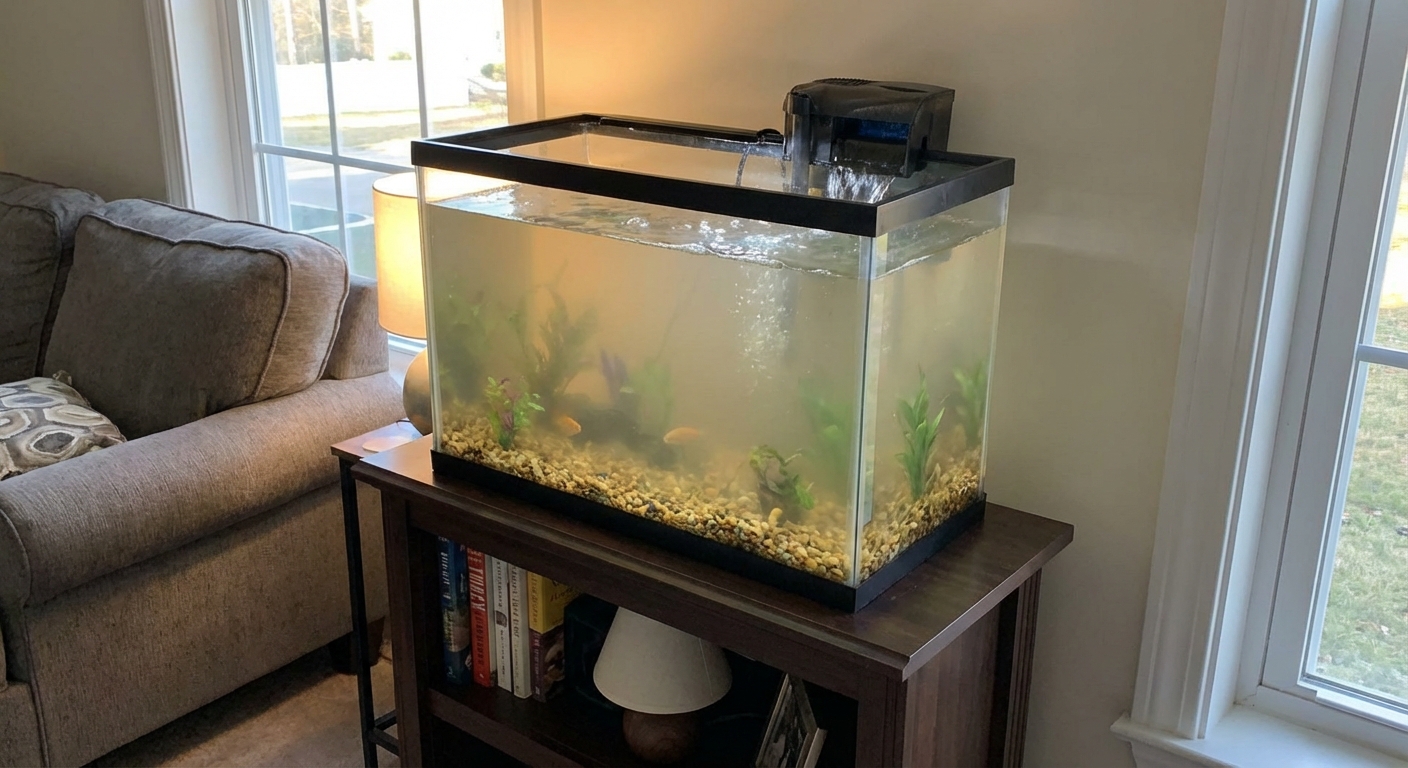
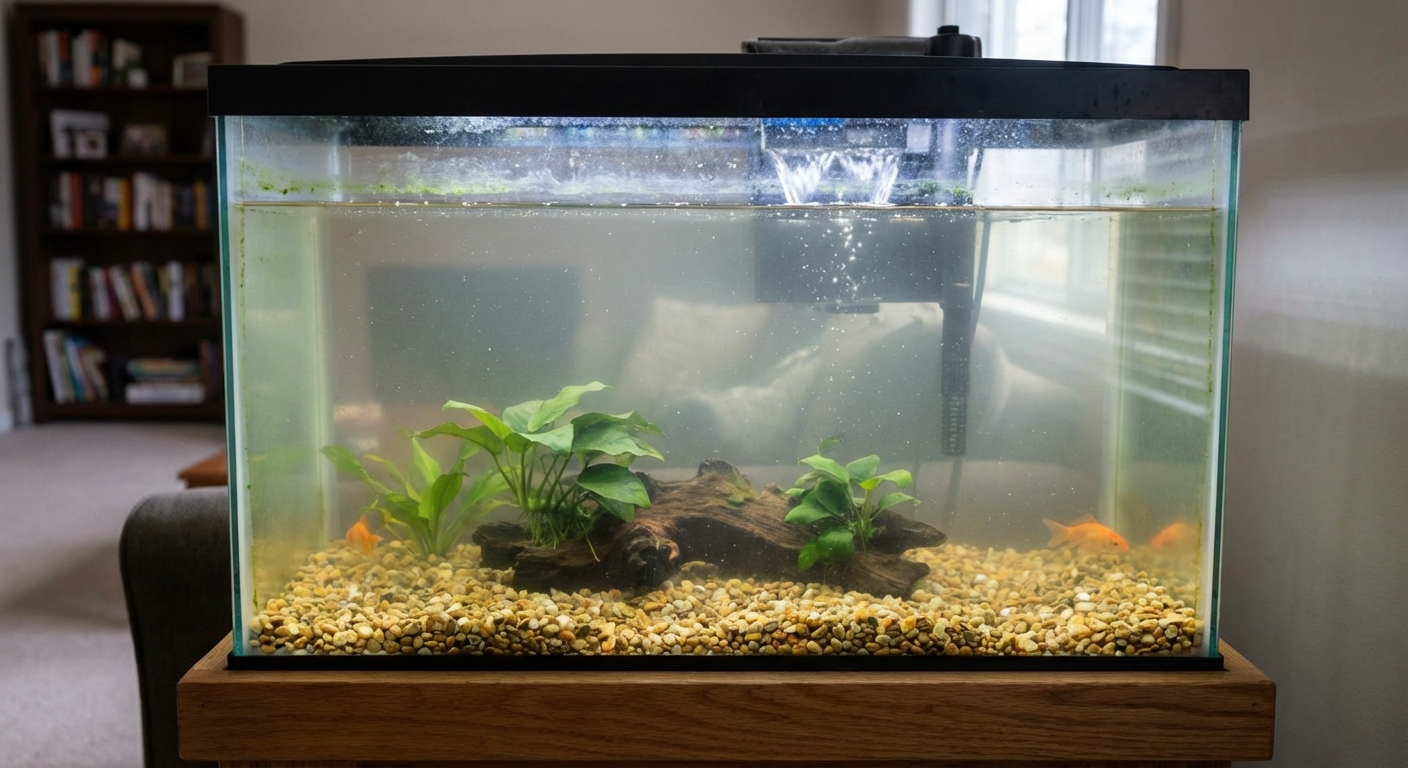
First: what kind of cloudy is it?
Different types of cloudiness point to different problems. Before you change anything, take a 30-second look at the water and ask these questions:
- Is it white or milky? Often a bacterial bloom or fine particles.
- Is it green? Usually algae suspended in the water column.
- Is it yellow or tea-colored? Often tannins from driftwood, botanicals, or some substrates.
- Is it brown or gray with visible “dust”? Often debris from disturbed substrate, a dirty filter, or under-rinsed media or decor.
- Do you see tiny “sparkles” that stick to glass? This may be microbubbles, not dirt or bacteria.
If you can match the look of the cloudiness, you can treat the cause instead of chasing symptoms.
Quick safety check: test before you treat
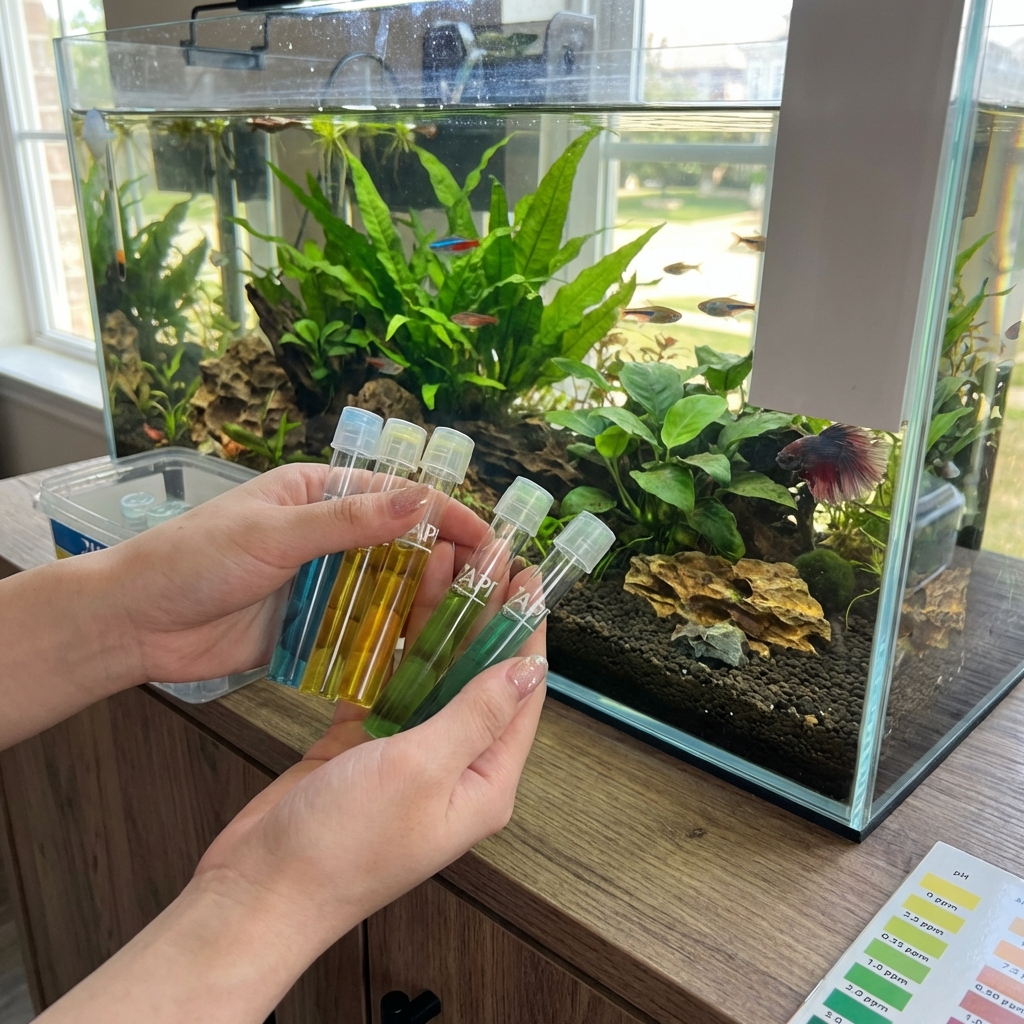
Cloudy water is sometimes just cosmetic, but it can also happen alongside dangerous ammonia or nitrite spikes. Testing gives you clarity and helps protect your fish.
Test these
- Ammonia (NH3/NH4+): should be 0 ppm
- Nitrite (NO2-): should be 0 ppm
- Nitrate (NO3-): often best kept under 20 to 40 ppm depending on stocking and plants
- pH: stable matters more than “perfect”
- Temperature: stable and species-appropriate
If ammonia or nitrite are above 0, treat that as urgent. Cloudiness can be a sign your biological filtration is not keeping up.
Common causes and fixes
1) New tank bloom (milky white)
This is extremely common in newly set up aquariums or after a major disruption. The cloudiness is often a bloom of fast-growing heterotrophic bacteria responding to extra organics (new substrate, new decor, overfeeding, heavy cleaning). In a cycling tank, it can happen alongside the slower build-up of nitrifying bacteria.
- Do: test daily for ammonia and nitrite, feed lightly, and give the tank time to stabilize.
- Do: keep the filter running 24/7 and ensure good surface agitation for oxygen.
- Avoid: replacing all filter media or deep-cleaning everything at once. That can set back your cycle.
- Helpful: add bottled nitrifying bacteria from a reputable brand, especially if fish are already in the tank.
- If fish-in cycling: consider an ammonia detoxifier that temporarily binds ammonia (follow label directions) while you keep up with testing and water changes.
2) Overfeeding and excess waste (haze or particles)
Uneaten food and heavy waste fuel bacterial blooms and clog mechanical filtration.
- Do: feed smaller portions. As a rough guide, many community fish do well with what they can eat in 30 to 60 seconds, but slow grazers, bottom feeders, shrimp, and snails may need different feeding approaches.
- Do: vacuum the substrate during water changes.
- Do: remove uneaten food with a net or siphon.
- Check: is your tank overstocked for its size and filtration?
3) Dirty or undersized filter (floating debris)
If you see “dust” in the water, you may need better mechanical filtration or a gentler cleaning routine.
- Do: rinse sponges or filter pads in old tank water during a water change, or in dechlorinated water. Avoid chlorinated tap water because it can harm beneficial bacteria.
- Do: add a layer of fine filter floss to polish the water if your filter can handle it.
- Do: monitor flow. If floss clogs and slows the filter, replace it promptly so oxygen and circulation stay strong.
- Avoid: changing all media at once. Stagger replacements to protect beneficial bacteria.
4) Green water (algae bloom)
Green, pea-soup water is caused by free-floating algae. It is often linked to long or intense lighting plus available nutrients, but it is also an imbalance issue, so you can see it even when standard test numbers look “fine.”
- Do: reduce light to 6 to 8 hours per day and avoid direct sunlight on the tank.
- Do: increase water changes and remove detritus.
- Do: consider adding fast-growing live plants to compete for nutrients.
- Option: try a 2 to 3 day blackout (lights off, tank covered), with the filter running and extra aeration. Feed lightly or skip feeding during the blackout.
- Option: a UV sterilizer can clear green water quickly when sized and used correctly.
5) Substrate and decor dust (after setup or rearranging)
New gravel, sand, rocks, or freshly moved decor can cloud water if not rinsed thoroughly or if the substrate gets stirred up.
- Do: run the filter and give it time. This often clears in 24 to 72 hours.
- Do: use fine filter floss temporarily, and swap it out if it clogs.
- Next time: rinse substrate until the rinse water runs mostly clear.
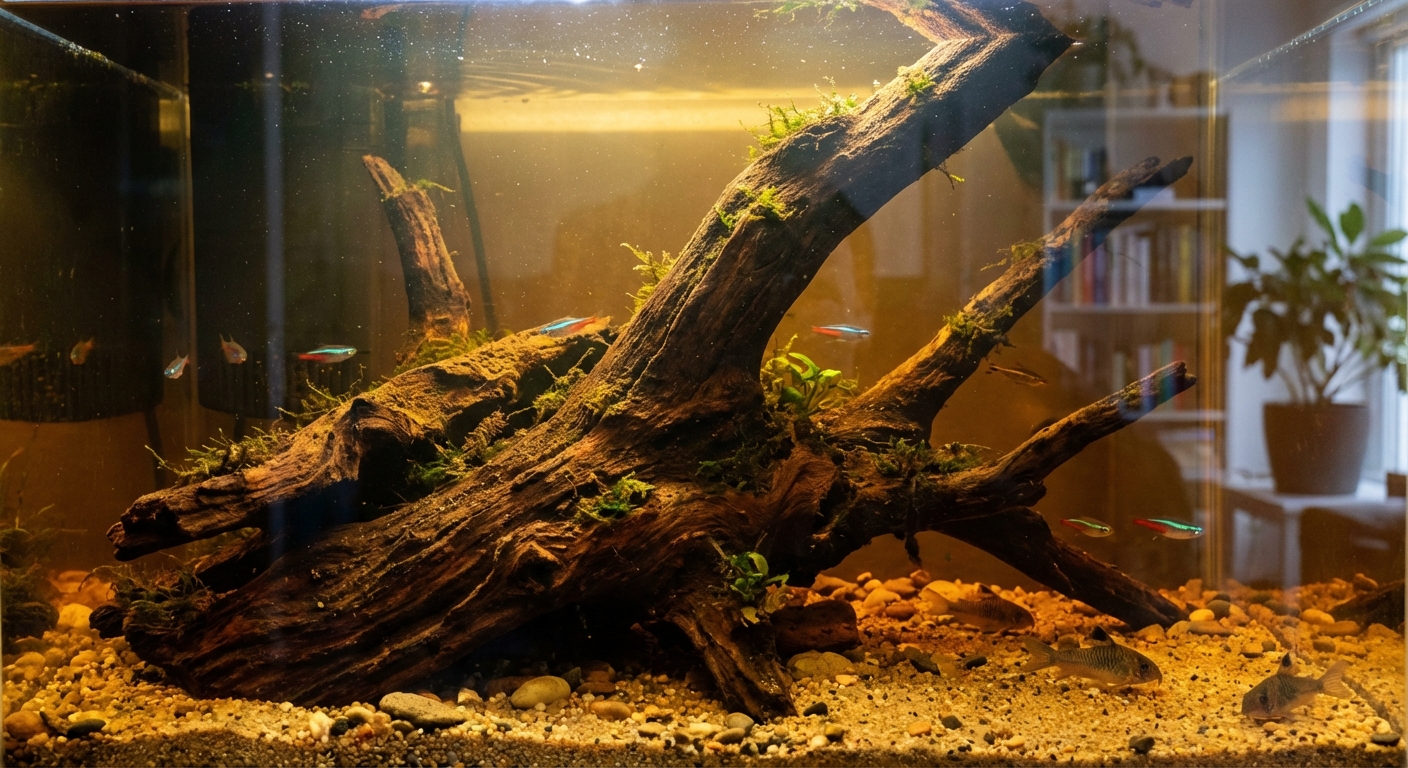
6) Tannins (tea-colored water)
Tannins from driftwood and botanicals are not usually harmful and can even benefit some species, but many keepers prefer a clear look.
- Do: use activated carbon or specialized chemical media if you want clearer water.
- Do: perform regular water changes.
- Option: pre-soak or boil driftwood (only if safe for the wood type) to reduce tannins before adding it.
7) Microbubbles (looks like glitter)
Sometimes “cloudiness” is actually tiny bubbles suspended in the water. This often happens with new filters, freshly cleaned equipment, air stones, or a small air leak on the intake side of a canister or power filter.
- Look for: tiny bubbles collecting on the glass and decor, and a sparkly look rather than a true haze.
- Try: check water level, tighten connections, and inspect tubing and O-rings for air leaks.
- Good news: microbubbles often settle on their own after a day or two as equipment “breaks in.”
What to do today
Here is a simple 60 minute action plan that helps in most situations without wrecking your cycle.
- Test ammonia and nitrite. If either is above 0, treat it as urgent.
- Do a 25 to 40% water change using dechlorinated, temperature-matched water. Always add dechlorinator before the new water enters the tank (or dose correctly for the full tank volume, depending on product directions).
- Vacuum the substrate lightly, especially where waste collects. If you run a deep sand bed, avoid aggressive deep stirring. Focus on the surface.
- Rinse mechanical filter media in removed tank water (or dechlorinated water). Avoid chlorinated tap water.
- Feed lightly for 48 hours and remove leftovers.
- Reduce lighting if the water is green or you have strong algae growth.
- Add aeration if fish seem stressed, you just did a big cleaning, or you suspect a bloom. Blooms and clogged media can reduce oxygen.
For most tanks, this combination addresses the most common drivers of cloudiness while protecting the beneficial bacteria your aquarium depends on.
When it is urgent
Cloudy water itself is not always an emergency, but these signs mean you should act quickly and consider reaching out to an aquatic veterinarian or an experienced fish specialist:
- Fish gasping at the surface or hanging near the filter outflow
- Sudden deaths, flashing, clamped fins, or rapid breathing
- Ammonia or nitrite above 0 ppm
- Strong rotten or sulfur smell (can point to decaying material or low-oxygen zones in the tank or substrate)
If fish are distressed and water tests are abnormal, prioritize a partial water change with properly dechlorinated water and add extra aeration right away. If there is a sulfur smell, check for a hidden dead fish or trapped debris and avoid aggressively stirring deep substrate layers.
Keep water clear long-term
Steady routine
- Weekly: 20 to 30% water change for most stocked tanks
- Weekly: light substrate vacuuming (or surface-only for deep sand beds)
- Monthly: rinse filter sponges or pads in old tank water as needed
- Always: treat new water with a quality dechlorinator
Filtration basics
A healthy filter typically includes:
- Mechanical: captures debris (sponges, pads, floss)
- Biological: houses beneficial bacteria (ceramic rings, bio-sponge)
- Chemical (optional): carbon or specialty media when needed
Think of your biological media as the “gut microbiome” of the aquarium. Protect it by avoiding full media replacements and harsh cleanings.
Light and nutrients
- Keep lights on a timer for consistency
- Avoid placing tanks in direct sunlight
- Do not overfeed, and remove decaying plant leaves
- Consider live plants to naturally use excess nitrate
FAQ
Will cloudy water hurt my fish?
Sometimes it is just a harmless bloom or suspended dust, but it can also show up with poor water quality. Testing ammonia and nitrite is the best way to know if your fish are at risk.
Should I do a 100% water change?
In most cases, no. Very large water changes can shock fish and destabilize your cycle. Smaller, frequent changes are safer unless you have a confirmed toxin or a severe ammonia issue that requires aggressive intervention.
Do water clarifiers work?
Some can help clump fine particles so your filter can catch them, but they do not fix the root cause. Use them as a short-term tool, not a main strategy, and always prioritize testing and basic husbandry.
Bottom line
Clear aquarium water is not about perfection, it is about stability. If you test first, make gentle changes, and protect your beneficial bacteria, most cloudy water clears up quickly. Your fish will thank you for the calm, consistent care.