
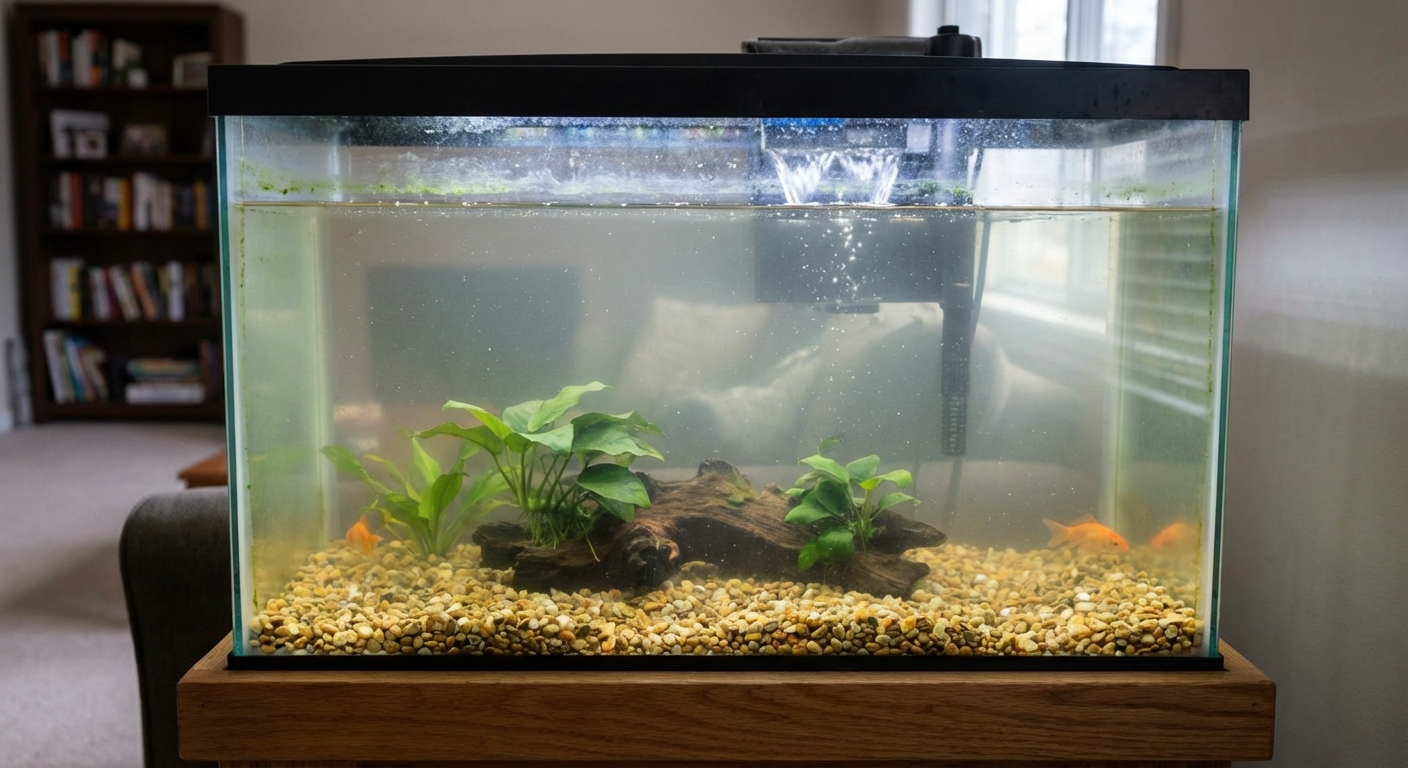
From milky bacterial blooms to microbubbles, green water algae, tannins, and debris—identify the type of cloudiness and follow clear, safe steps to restore...
Article
•
Designer Mixes
Cloudy Aquarium Water Explained

Shari Shidate
Designer Mixes contributor
Cloudy aquarium water is one of those things that can make any fish parent panic. I get it. You want that crystal-clear tank, and you also want to know your fish are safe. The good news is that most cloudy water has a straightforward cause, and once you identify which “type” of cloudiness you’re dealing with, the fix is usually simple and very doable.
Quick tip: the fastest diagnosis comes from combining color (white, green, sparkly particles) with timing (right after a water change, after cleaning the filter, after adding fish, after new substrate).
What “cloudy water” means
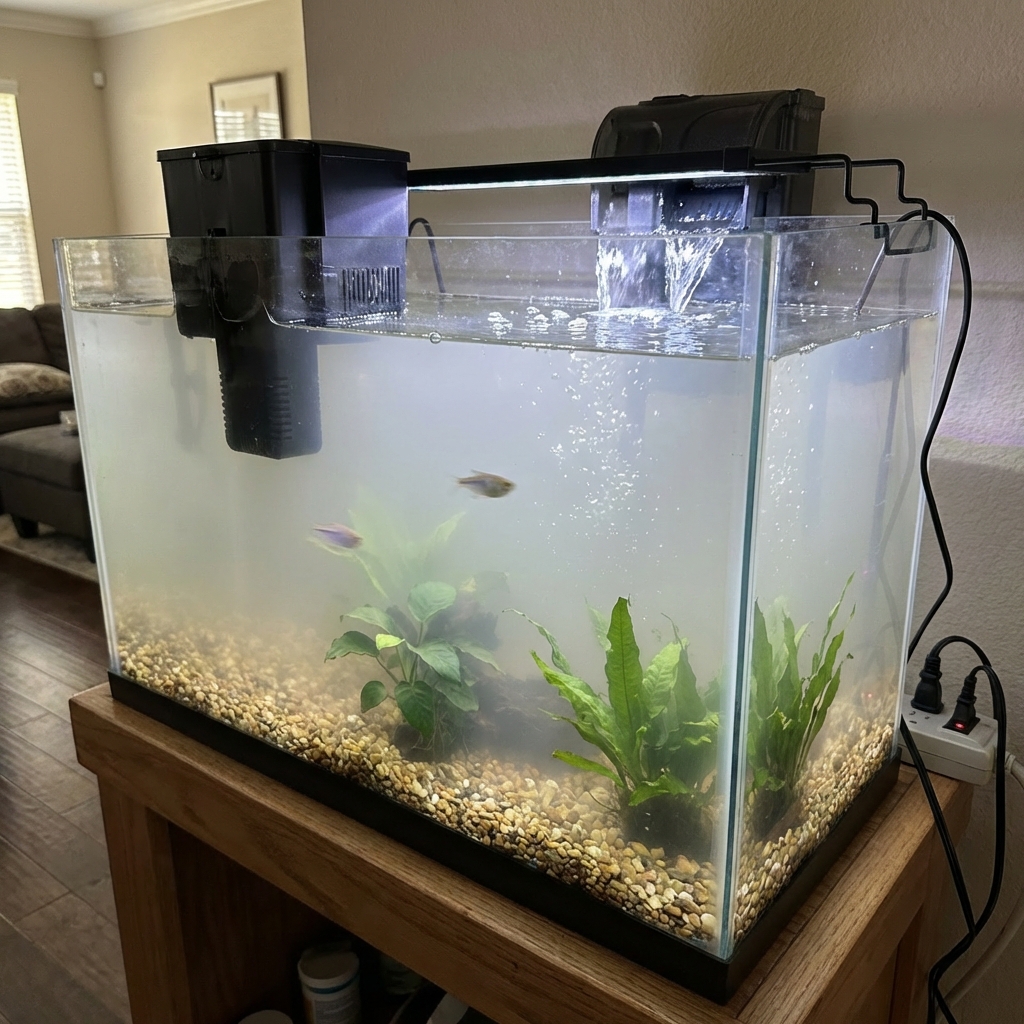
Cloudiness is not one single problem. It is a symptom. In most home aquariums, it comes from one of these categories:
- Bacterial bloom (water looks milky or foggy)
- Suspended debris (tiny particles floating, often after cleaning or adding new substrate)
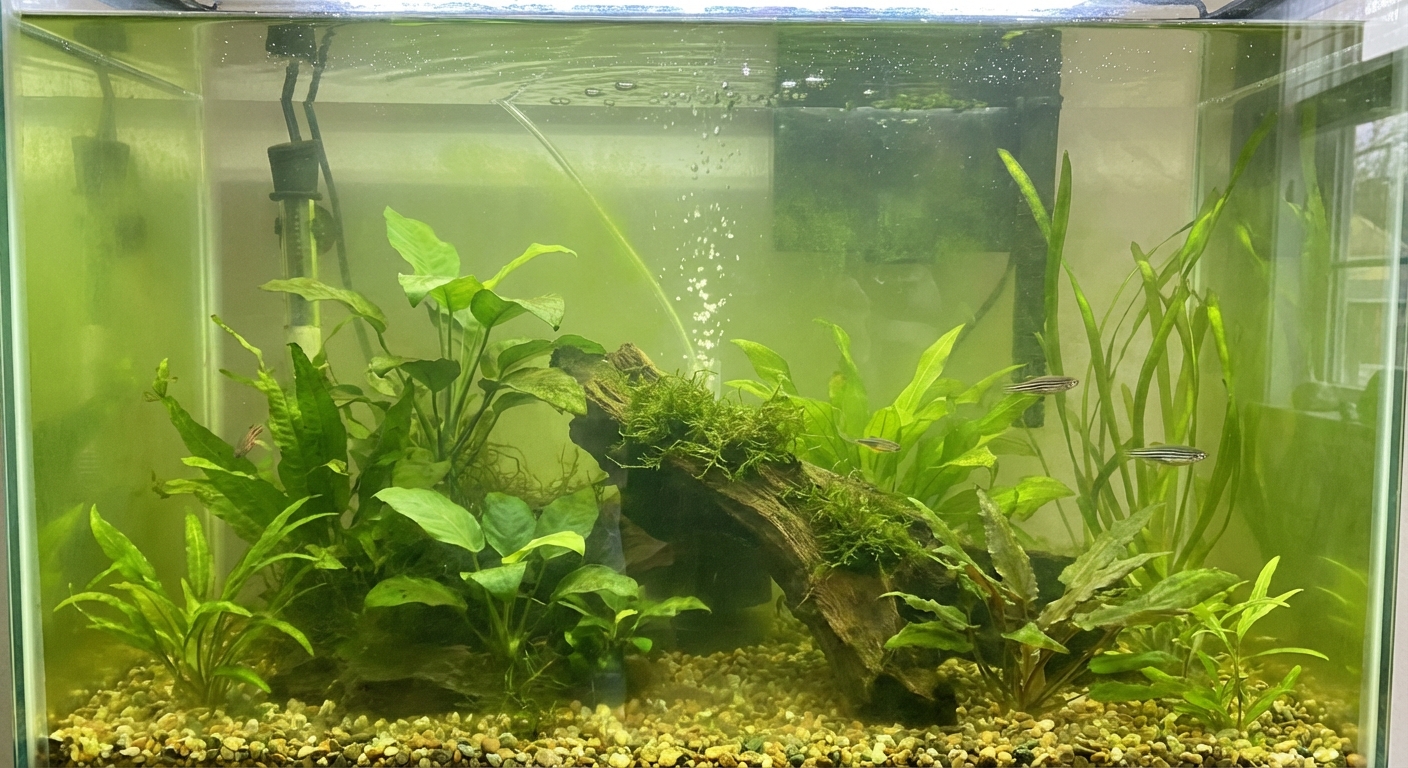
- Algae bloom (water turns green)
- Mineral haze (water looks whitish, often right after a water change)
- Organic waste overload (cloudy plus odor, rising nitrates, messy substrate)
Your first job is not to buy a “quick fix.” Your first job is to match the look and timing of the cloudiness with what is happening in your tank.
Helpful visual: milky white haze usually points to a bloom. “Sparkly” floating dots usually points to microbubbles or fine debris.
One common cause: bacterial bloom
If your water looks like diluted milk or fog, especially in a new tank or a tank that recently had a big change, you are likely seeing a bacterial bloom. This happens when bacteria rapidly reproduce in the water column, often because the biological filter is still maturing or was disrupted.
Why it happens
- New aquarium still cycling
- Filter media was replaced, over-cleaned, or left to dry out
- Overfeeding or sudden increase in fish load
- Dead plant matter or hidden decaying food
Is it dangerous?
The bloom itself is usually not the main danger. The real risk is that the tank may have unstable ammonia or nitrite while it cycles or re-cycles. That is what stresses fish and can become an emergency.
Also, heavy blooms can lower oxygen, especially when surface agitation is low and overnight when everything in the tank is respiring. If fish are hanging near the surface, treat that as a warning sign.
What to do
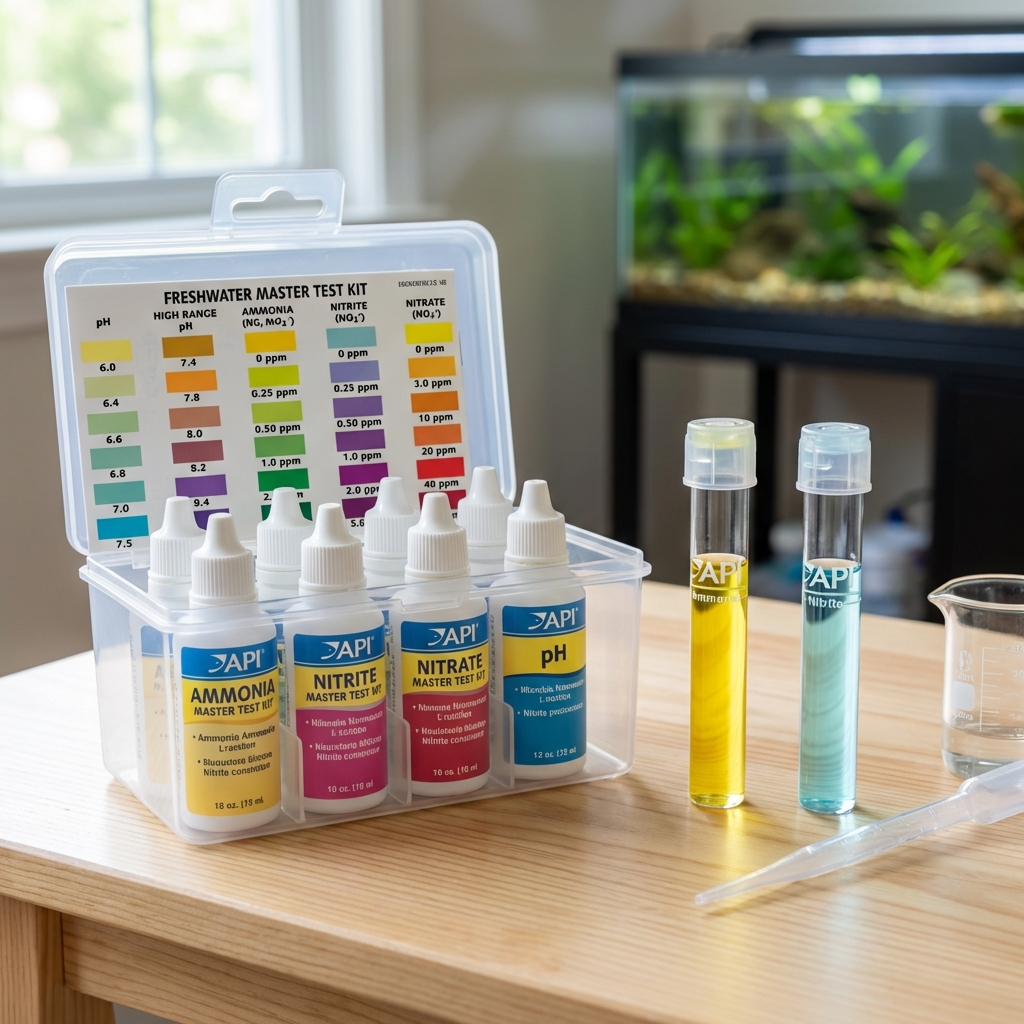
- Test your water today: ammonia, nitrite, nitrate, and pH.
- Do not replace your biological media unless it is literally falling apart. Beneficial bacteria live there.
- Rinse mechanical media gently (sponges, pads) in old tank water if flow is reduced. Avoid over-scrubbing anything that houses bacteria.
- Feed less for a few days. Most fish can easily handle this.
- Water changes based on tests: if ammonia or nitrite is above 0 ppm, do 20% to 50% and re-test. Repeat daily (or as needed) until ammonia and nitrite read 0 ppm and fish look comfortable.
- Increase aeration: add an air stone or adjust filter flow to ripple the surface.
In many cases, if ammonia and nitrite are controlled, the tank clears on its own in several days to two weeks as the system stabilizes. You are not failing. Your tank is just finding its balance.
Cloudy after a water change
If your tank turns cloudy right after you add water, think about what you just introduced or disturbed. Post-refill cloudiness is usually one of these: minerals, microbubbles, or debris.
Mineral haze
Some water sources carry high mineral content. When conditions shift, minerals can precipitate and create a temporary white haze.
- Use a dechlorinator every time.
- Match temperature closely to avoid stressing fish and the biofilter.
- Let the filter run and give it 12 to 24 hours.
- If this happens repeatedly, consider testing GH and KH and using a water source strategy that fits your livestock.
Microbubbles (often harmless)
If the cloudiness appears immediately after refilling and looks like tiny shimmering dots, it may be microbubbles. This can happen with certain filters, spray bars, air stones, or a strong refill stream. It typically clears within a few hours.
Suspended debris
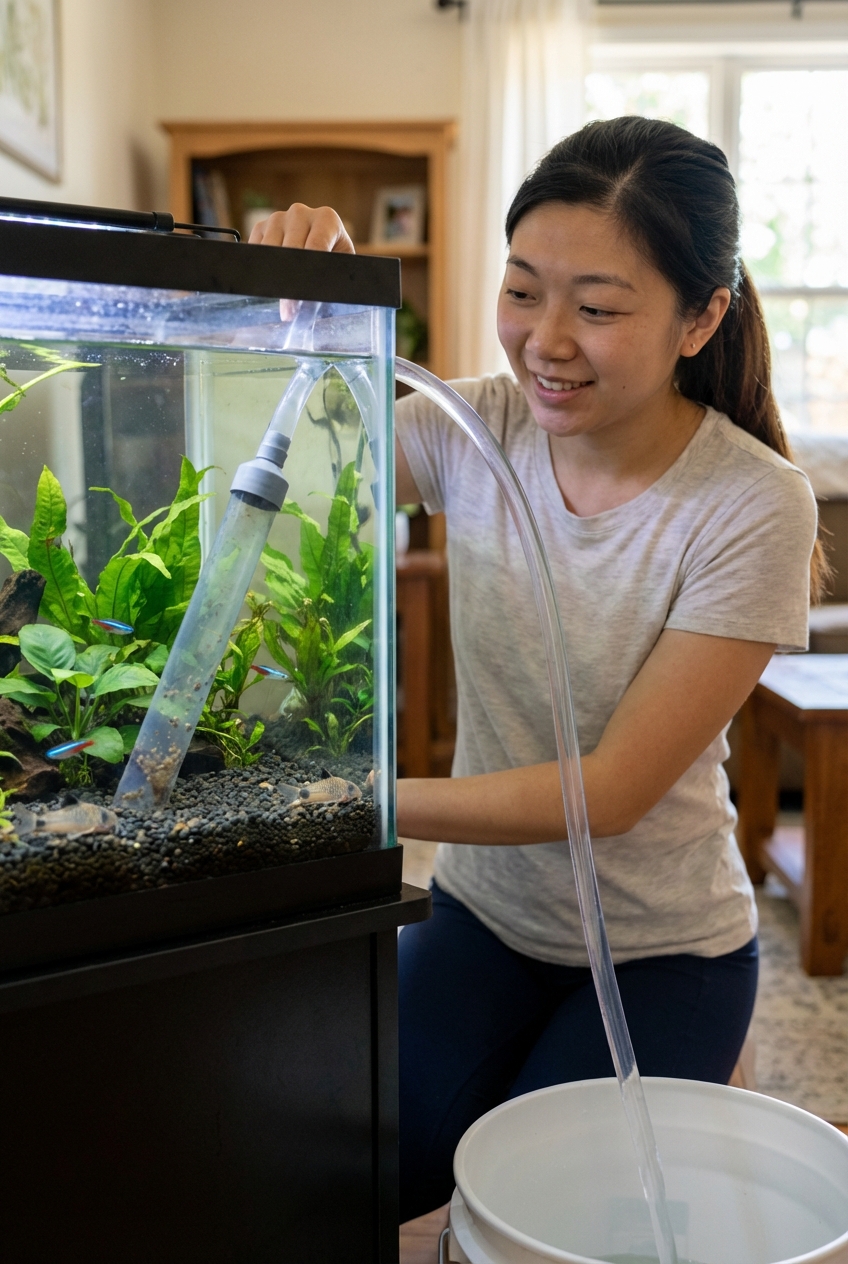
When you vacuum the substrate or rearrange decor, fine particles can float around for hours. New substrate (especially sand) can also cause a stubborn haze if it was not rinsed well before use.
- Rinse mechanical filter sponges in old tank water, not tap water.
- Add fine filter floss temporarily to trap particles.
- Vacuum more gently and in sections so you do not overwhelm the filter.
- If you recently added substrate, give it time, run extra mechanical filtration, and avoid stirring it up again until it settles.
Green water: algae bloom
If your water is green instead of white, that is typically free-floating algae. It is fueled by light plus available nutrients and an imbalance in the tank (photoperiod, sunlight, organics, and yes, nitrate and phosphate can all play a role).
Common triggers
- Lights on too long (or sunlight hitting the tank)
- Overfeeding
- Infrequent water changes
- High nutrient load from an overstocked tank, weak filtration, or lots of decaying organics
What works best
- Reduce lighting: aim for 6 to 8 hours/day and avoid direct sun.
- Increase plant competition in freshwater tanks. Healthy live plants help use excess nutrients.
- Water changes: multiple moderate changes are often better than one massive change.
- Consider a UV sterilizer if green water is persistent. UV can be very effective for free-floating algae when used correctly.
Avoid chasing algae with harsh chemical “clarifiers” as your main plan. You want to fix the environment that keeps feeding it.
Cloudy plus odor
If the tank is cloudy and smells “off,” that often points to a build-up of organic waste: uneaten food, decaying plant material, or an overloaded biofilter.
Signs this may be your issue
- Rising nitrates over time
- Mulm collecting in low-flow areas
- Fish food sinking and disappearing into the substrate
- Filter flow slowing down
What to do
- Dial in feeding: feed what they finish in about 30 to 60 seconds for many community fish, or follow species-specific needs. Remove uneaten food.
- Gravel vacuum 25% to 50% of the substrate per week until things improve.
- Service the filter: rinse sponges and pre-filters in old tank water. Replace only what is truly necessary.
- Check stocking: too many fish for the tank size and filtration will keep water quality unstable.
When it is not “cloudy”
Sometimes the water looks “different,” but it is not true cloudiness:
- Tannins from driftwood: tea-brown water, usually clear, not hazy.
- Medications and some bacterial starters: can tint water or create temporary haze.
- Dust from new decor: often looks like fine particles and improves with mechanical filtration.
If you are unsure, take a photo in bright light and compare: is it milky (bloom), green (algae), or sparkly particles (bubbles or debris)?
Quick checklist
When you want answers fast, this is the order I recommend:
- Step 1: Test ammonia and nitrite. If either is above 0 ppm, treat this as urgent and act with water changes and reduced feeding.
- Step 2: Identify the look. Milky white haze suggests bloom. Sparkly dots suggest microbubbles or fine debris. Green suggests algae.
- Step 3: Check timing. Did it start after adding fish, cleaning the filter, changing water, or adding new substrate?
- Step 4: Support oxygen and filtration. Surface agitation helps, and mechanical media like filter floss can clear particles.
- Step 5: Be patient, but not passive. Re-test daily during suspected cycling issues.
What not to do
- Do not replace all filter media at once. That can remove beneficial bacteria and restart cycling.
- Do not overuse “water clarifiers” as a substitute for fixing ammonia, nitrite, or overfeeding.
- Do not do a 100% water change unless a true emergency demands it. Big swings can stress fish and destabilize the tank.
- Do not scrub everything until it is sterile. Aquariums need healthy bacteria to function.
Clear water is great, but stable water is the real goal. Stability is what keeps fish thriving.
When to get help
If you see cloudy water plus any of the signs below, get water tests immediately and consider reaching out to a local aquarium store or aquatic vet:
- Fish gasping at the surface
- Sudden deaths
- Clamped fins, lethargy, or rapid breathing
- Ammonia or nitrite above 0 ppm that does not improve with water changes
With the right steps, most cloudy water situations turn around quickly. Start with testing, take it one change at a time, and let your tank’s biology do the heavy lifting.