Practical rabbit care tips for a healthier, happier bunny: ideal housing and flooring, hay-first diet, greens and pellets, litter training, safe handling, gr...
Article
•
Designer Mixes
Clever Veggies to Feed Rabbits

Shari Shidate
Designer Mixes contributor
If you have a rabbit at home, you already know they can be picky, adorable, and surprisingly sensitive when it comes to food. As a veterinary assistant, I love helping pet parents find simple, evidence-based ways to support gut health and long-term wellness. And one of the easiest upgrades you can make is offering the right vegetables in the right amounts.
Here is the big picture: hay is the foundation (it should be available 24/7), leafy greens and other veggies add nutrients and enrichment, and pellets and treats are the “supporting cast.” When you choose veggies wisely and introduce them slowly, you can encourage healthy digestion, better hydration, and a happier bunny.
Veggie basics
How much veg?
Portion guidelines vary a bit by rabbit rescue and exotics-vet sources, but a common rule of thumb for many healthy adult rabbits is about 1 to 2 packed cups of leafy greens per 5 pounds of body weight per day, ideally split into two feedings. Some guidelines simplify this as roughly about 1 cup per 2 pounds. Use your rabbit’s stool quality, appetite, and weight as your feedback loop, and adjust with your vet if you are unsure.
Hay still comes first
Even the best vegetables cannot replace the constant fiber from hay. Hay supports normal tooth wear and keeps the GI tract moving, which is critical because rabbits are prone to gastrointestinal stasis.
Pellets are the supporting cast
If you feed pellets, keep them simple. Choose a plain, timothy-based pellet for most adults (alfalfa-based is usually for young, growing rabbits) and avoid colorful “muesli” mixes with seeds and dried fruit. Many adult rabbits do well with a small daily portion (often around 1/8 to 1/4 cup per 5 pounds), but needs vary by age, weight, activity level, and health.
Introduce veggies slowly
Rabbits have a delicate gut microbiome. Add one new vegetable at a time and watch for soft stool, gas, or reduced appetite.
- Start with a bite-sized portion.
- Feed it for 2 to 3 days before adding another new item.
- If stools get soft, remove the newest veggie and go back to your safest greens for a few days.
Young rabbits and new arrivals
For baby rabbits and rabbits who are newly adopted, stressed, or recovering from illness, go extra slowly. Some rabbit-savvy veterinarians recommend delaying vegetables for very young rabbits until the digestive system is more stable, especially if the diet history is unknown. When in doubt, follow your exotics vet’s guidance for your specific bunny.
Clever veggies
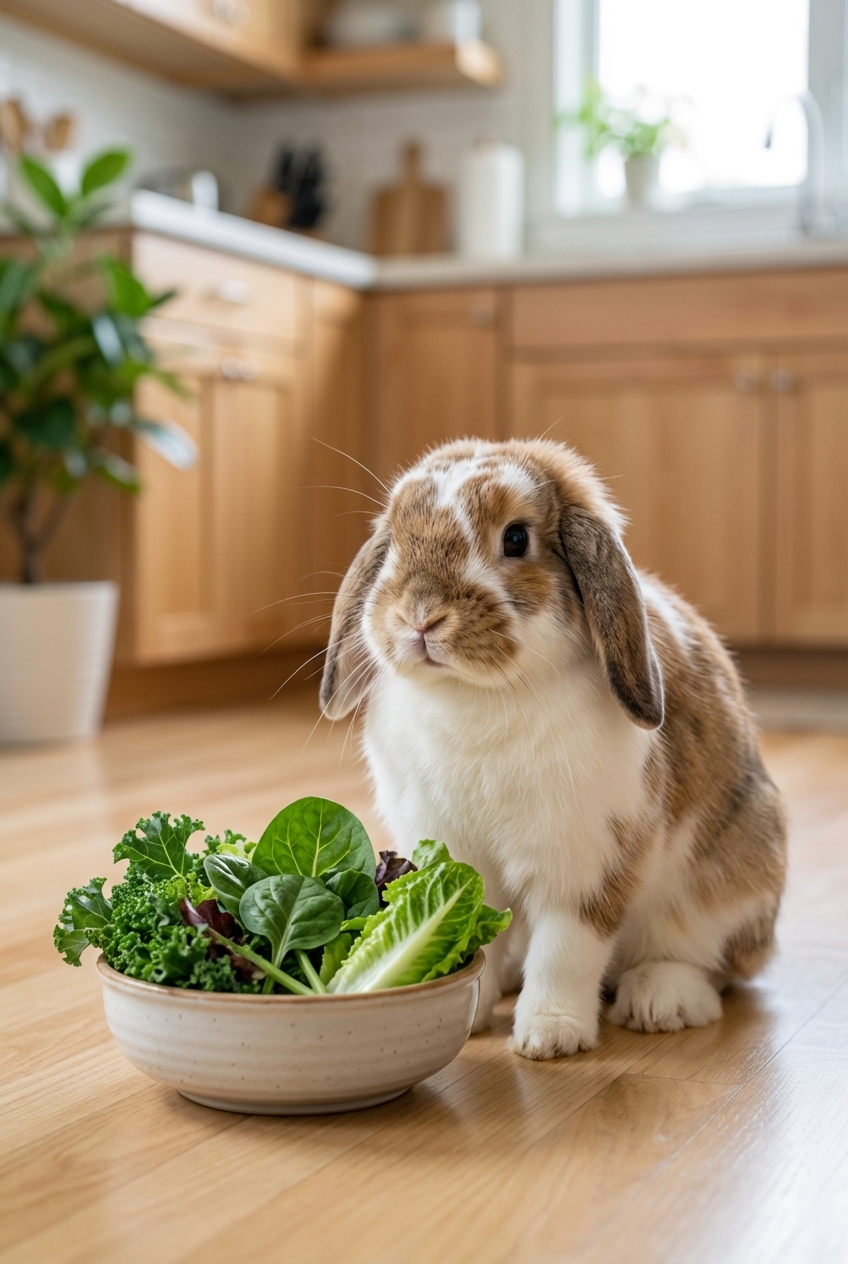
These options are popular because they add variety without being overly sugary or starchy. Always wash thoroughly. Most rabbits eat greens more readily when they are not ice-cold, so letting them warm slightly after rinsing can help.
1) Romaine and safe lettuces
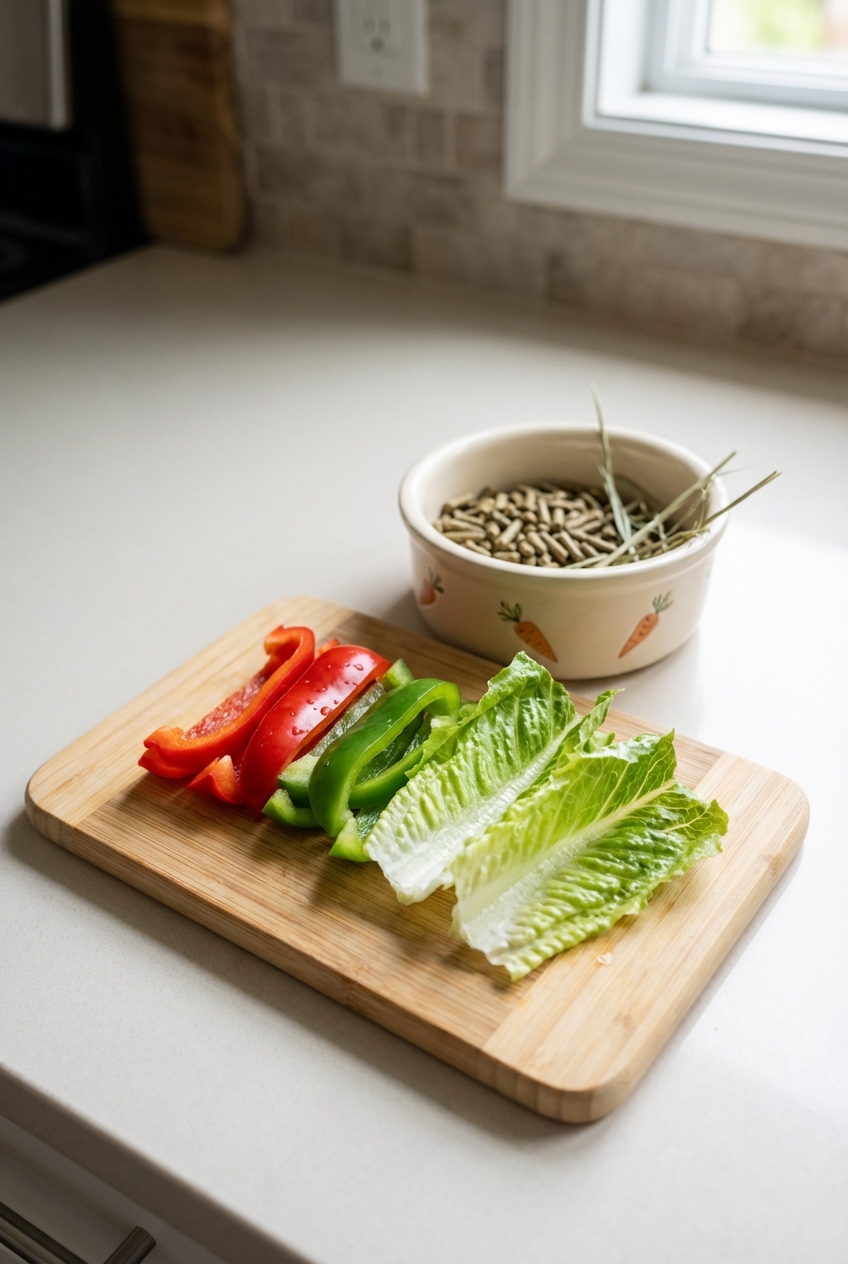
Romaine, green leaf, and red leaf lettuce are typically gentle on the gut and a great base for a rotation. Iceberg lettuce is low in nutrients and can cause digestive upset in some rabbits, so it is usually not a go-to choice.
2) Cilantro and parsley
Many rabbits go wild for fragrant herbs. Cilantro is often a great “starter green” for picky eaters. Parsley is nutrient-dense but can be richer, so introduce it slowly and rotate it rather than feeding a big bunch daily.
3) Bok choy
Bok choy is a fun texture change and fits well into a rotation of leafy greens. Because cruciferous veggies can cause gas in some rabbits, keep portions modest at first.
4) Bell pepper
Bell peppers (especially red) are a favorite for many rabbits. Offer small slices and remove seeds and stems. This is a smart option when you want a non-leafy veggie that still feels fresh and crisp.
5) Zucchini
Zucchini is mild, watery, and often well tolerated. It can be a nice choice for rabbits that get soft stools with richer greens, but it should still be part of a varied menu, not the only veggie.
6) Cucumber (small amounts)
Cucumber is mostly water, so think of it as a hydration-friendly add-on and enrichment. Too much can crowd out more nutrient-dense greens, so use it as an occasional accent.
7) Celery (slice thin)
Celery’s stringy fibers can be tough for some rabbits to manage and may cause chewing or tummy trouble in sensitive bunnies. If you offer celery, slice it thinly across the strings to make it easier to chew.

Rotations
A “clever” rabbit veggie plan is not about feeding the most exotic produce. It is about rotating a few reliable greens and adding small accents for novelty.
Easy rotation ideas
- Base greens (daily): romaine, green leaf lettuce, red leaf lettuce.
- Herb boosters (several times weekly): cilantro, basil, dill, mint, parsley.
- Crunch accents (a few times weekly): bell pepper, zucchini, a few cucumber slices.
Example day (adult rabbit)
- AM: romaine + cilantro
- PM: green leaf lettuce + a few bell pepper strips
If your rabbit is new to veggies, start with one leafy green and add one herb next.
Limit or skip
Some vegetables are not “bad,” but they can be too starchy, too sugary, or too gassy for many rabbits, especially in larger amounts.
Limit (treat-level)
- Carrots: Many people picture rabbits eating carrots daily, but carrots are higher in sugar than most leafy greens. Think small coin-sized pieces, not whole carrots.
- Peas and corn: Too starchy for regular feeding.
- Sweet potato and potato: Starchy and not ideal for routine rabbit diets.
Go easy on cruciferous veggies
Broccoli, cauliflower, cabbage, and kale can cause gas in some rabbits. Some bunnies do fine with small portions, others do not. Let your rabbit’s comfort and litter box habits be the guide.
High-calcium greens (moderation)
Spinach, Swiss chard, beet greens, and similar higher-calcium greens are common question marks. Many rabbits can have small amounts as part of a rotation, but if your rabbit is prone to urinary sludge or stones, your vet may recommend limiting high-calcium options.
Avoid
- Anything moldy or wilted
- Vegetables cooked with oil, salt, or seasoning
- Onion, garlic, leeks, chives
- Rhubarb (toxic)
- Avocado (toxic)
If you are ever unsure about a specific food, check with your rabbit-savvy veterinarian before offering it. The House Rabbit Society and other reputable rabbit rescue organizations also maintain beginner-friendly food lists you can cross-check.
When a veggie is not working
Rabbits often show subtle signs first, so it helps to watch daily habits.
- Soft stool or a messy bottom
- Less poop or smaller poop
- Reduced appetite or refusing hay
- Hunched posture, tooth grinding, or visible discomfort
- Less activity than normal
Soft stool vs cecotropes
One common confusion: cecotropes are the soft, shiny “night droppings” rabbits normally eat directly from their bottom. If you see clusters of these left behind, it can look like diarrhea, but it is usually uneaten cecotropes, not true diarrhea. True diarrhea is watery and unformed, and it is an urgent concern.
Important: If your rabbit stops eating, stops pooping, or seems painful, contact a veterinarian urgently. GI issues can escalate quickly in rabbits.
Prep and safety tips
- Wash everything to reduce pesticide residue and dirt.
- Shake off excess water after rinsing leafy greens.
- Serve a mix rather than large amounts of one item.
- Cut stringy veggies (like celery) into thin slices.
- Store properly: keep greens crisp and fresh, and toss slimy leaves right away.
Bottom line
Hay comes first, but the right vegetables can make your rabbit’s diet more nutritious, more enriching, and more enjoyable. Start with gentle leafy greens, rotate in aromatic herbs, and use crunchy veggies as accents. Go slowly, watch the litter box, and you will learn what your rabbit thrives on.
Small changes add up. A simple veggie rotation can support healthier digestion, better hydration, and a brighter, more curious bunny.