A vet-assistant guide to cleaning your dog’s ears the safe way—what to use, what to avoid, step-by-step technique, how often to clean, and when to call y...
Article
•
Designer Mixes
Clever Tips for a Dog’s Itchy Ears

Shari Shidate
Designer Mixes contributor
Few things tug at your heart like watching your dog scratch at an ear, shake their head, or whimper when you try to help. As a veterinary assistant here in Frisco, Texas, I see itchy ears every week, and the good news is this: many cases improve quickly once you identify the likely cause and use safe, evidence-based care.
This article will help you spot what is normal (and what is not), try gentle at-home steps, and know exactly when it is time to call your veterinarian. I am not diagnosing your dog here, but I can help you triage and avoid the most common mistakes.
What a normal ear looks like
A healthy ear is usually light pink, with little to no odor, and only a small amount of pale wax. Your dog should let you touch the ear comfortably.
Redness, swelling, strong odor, noticeable discharge, or pain are signs something is brewing.
Why dogs get itchy ears
Dogs do not usually get “random” ear itching. Most of the time, there is a reason, and it tends to fall into a few common buckets.
1) Allergies (very common)
Environmental allergies (pollen, grass, dust mites) and food sensitivities can inflame the ear canal. Many dogs with allergies also lick paws, rub their face, or get recurrent skin issues.
2) Yeast or bacterial overgrowth
When the ear canal gets warm and moist, yeast and bacteria can multiply. You might notice odor, redness, brown or yellow discharge, or increased wax.
3) Ear mites (more common in puppies and multi-pet homes)
Ear mites can cause intense itching and dark, crumbly debris. They spread easily between pets, and cats are a common source. If one pet has mites, all in-contact pets may need evaluation and treatment.
4) Water and trapped moisture
Swimming, baths, or humid weather can trap moisture, especially in floppy-eared dogs. That moisture changes the ear environment and can set off infections.
5) Foreign material or hair
Foxtails, seeds, or heavy hair growth in the canal can cause sudden head shaking and discomfort. Foxtails are an urgent situation in many regions.
6) Anatomy and underlying conditions
Narrow ear canals, heavy ear flaps, endocrine disease (like hypothyroidism), or chronic inflammation can make some dogs prone to recurrence.
7) Broader skin issues
Sometimes ear itch is part of a bigger skin picture, like flea allergy dermatitis or generalized atopy. If your dog also has itchy skin, hot spots, or recurrent rashes, mention that to your veterinarian.
Quick checklist: what you can safely look for
You do not need special tools to notice helpful clues. Just keep it calm, use good lighting, and avoid inserting anything into the ear canal.
- Smell: A strong, “yeasty” or sour odor is often associated with yeast, but bacterial infections can smell strong too.
- Discharge: Brown waxy buildup can be yeast, mites, or wax accumulation. Yellow, green, or pus-like discharge may suggest infection, but color alone is not diagnostic.
- Redness and swelling: Inflamed tissue can mean infection or an allergy flare.
- Pain: Pulling away, yelping, or not letting you touch the ear is a major clue.
- Head tilt or balance issues: This can indicate deeper ear involvement.
- One ear vs both: Both ears can point to allergies. One-sided sudden symptoms can point to a foreign body.
If your dog seems painful, has a head tilt, is stumbling, or has a swollen ear flap, skip the home experiments and call your veterinarian.
Practical, gentle relief tips
1) Stop the scratch spiral
Scratching feels relieving in the moment, but it can inflame tissue and invite infection. If your dog cannot stop, use an E-collar temporarily or a soft recovery cone to protect the ear while you arrange care.
2) Clean only the outer ear first
Use a soft, damp cloth or cotton pad to wipe the outside of the ear flap and the visible folds. This reduces irritants without pushing debris deeper.
- Do not use Q-tips inside the canal.
- Do not use hydrogen peroxide or alcohol, which can sting and irritate inflamed tissue.
3) Use a dog ear cleaner (only when appropriate)
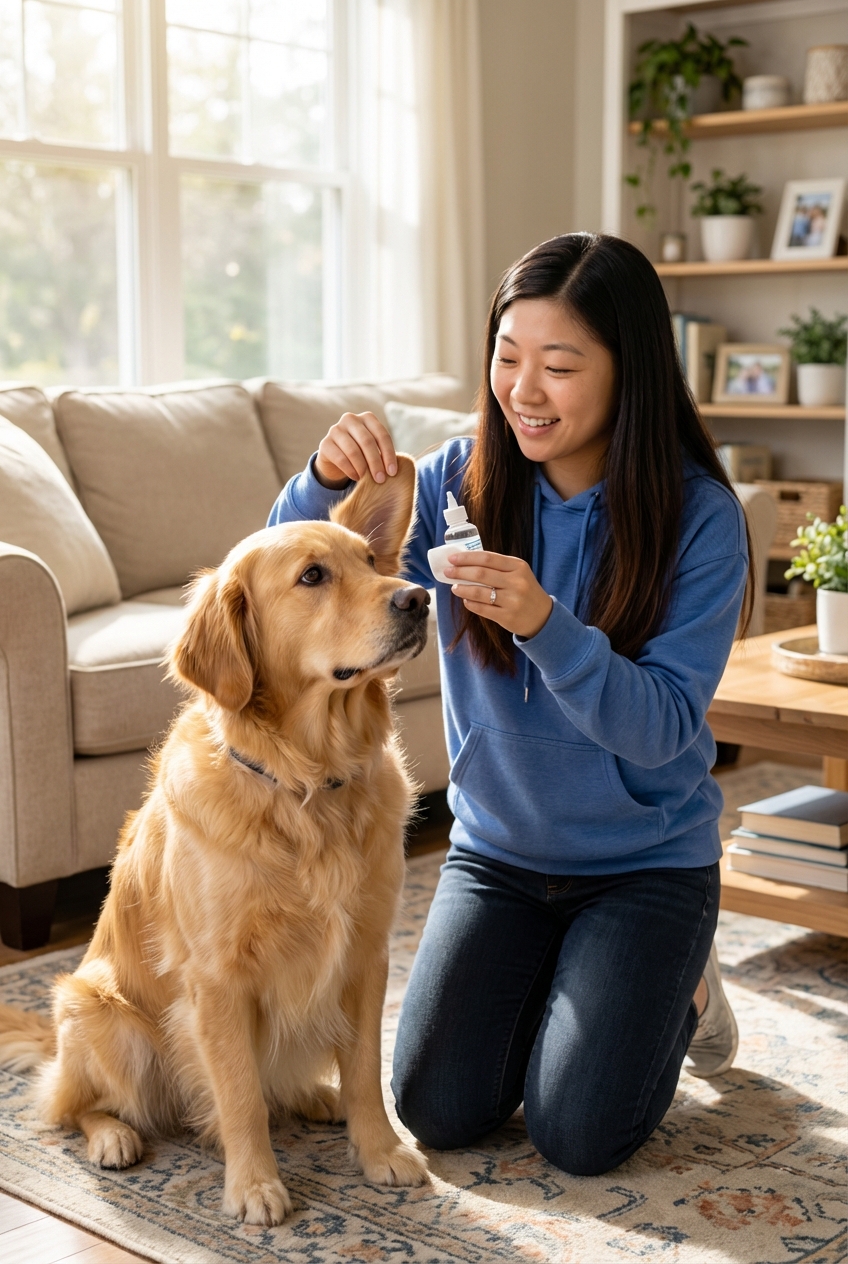
If your dog has mild itchiness with light wax and no pain, a veterinarian-recommended canine ear cleaner can help remove excess wax and reduce moisture. Follow label directions carefully.
- Stop immediately if your dog shows pain, yelps, or becomes more uncomfortable.
- Do not flush an ear if you suspect a ruptured eardrum (severe pain, head tilt, balance issues, sudden hearing changes) or if your veterinarian has told you the eardrum may be compromised.
Call your vet if you see significant redness, swelling, a bad odor, heavy discharge, or if your dog reacts as if it hurts.
4) Dry ears after swimming and baths
For water-loving pups, drying can be a game changer.
- Gently towel-dry the ear flap and visible outer ear.
- Keep ears as dry as possible, especially in floppy-eared dogs.
- Ask your veterinarian if a drying ear rinse is right for your dog, especially if infections recur.
5) Reduce allergy triggers
You cannot remove every allergen, but you can lower the load.
- Wipe paws and belly after outdoor time, especially during high pollen days.
- Wash bedding weekly in fragrance-free detergent.
- Consider a HEPA filter where your dog sleeps most.
6) Track patterns
This is one of the most helpful moves because it helps your vet treat the cause, not just the symptoms. Keep a quick note on:
- When itching flares (season, after grooming, after swimming, after a new food or treat).
- One ear or both.
- Odor, discharge appearance, and intensity of scratching.
- Any paw licking, face rubbing, skin bumps, or hot spots.
What not to do
I know the internet is full of DIY ear remedies. The problem is that the wrong product in the wrong ear can worsen inflammation or delay needed treatment.
- Do not put oils, vinegar mixtures, or “home drops” into an ear that may have an infection. If the eardrum is compromised, some substances can cause severe pain and complications.
- Do not use human ear medications unless specifically directed by your veterinarian.
- Do not pluck ear hair aggressively without guidance. Over-plucking can inflame the canal.
- Do not ignore a swollen ear flap (possible aural hematoma).
Aural hematomas often happen after vigorous head shaking or scratching. They can be painful, can damage the ear long-term, and they usually do best with prompt veterinary care.
When to call the vet now
Ear problems can go from mild to miserable fast. Please contact your veterinarian promptly if you notice any of the following:
- Head tilt, loss of balance, or stumbling
- Significant pain, yelping, or refusing ear touch
- Swollen ear flap or sudden “pillow ear” appearance
- Foul odor, pus-like discharge, bleeding, or open sores from scratching
- Symptoms in only one ear with sudden head shaking (possible foreign body)
- Signs that are worsening or not improving after about 48 hours of gentle care
- Recurring ear infections (more than a couple per year)
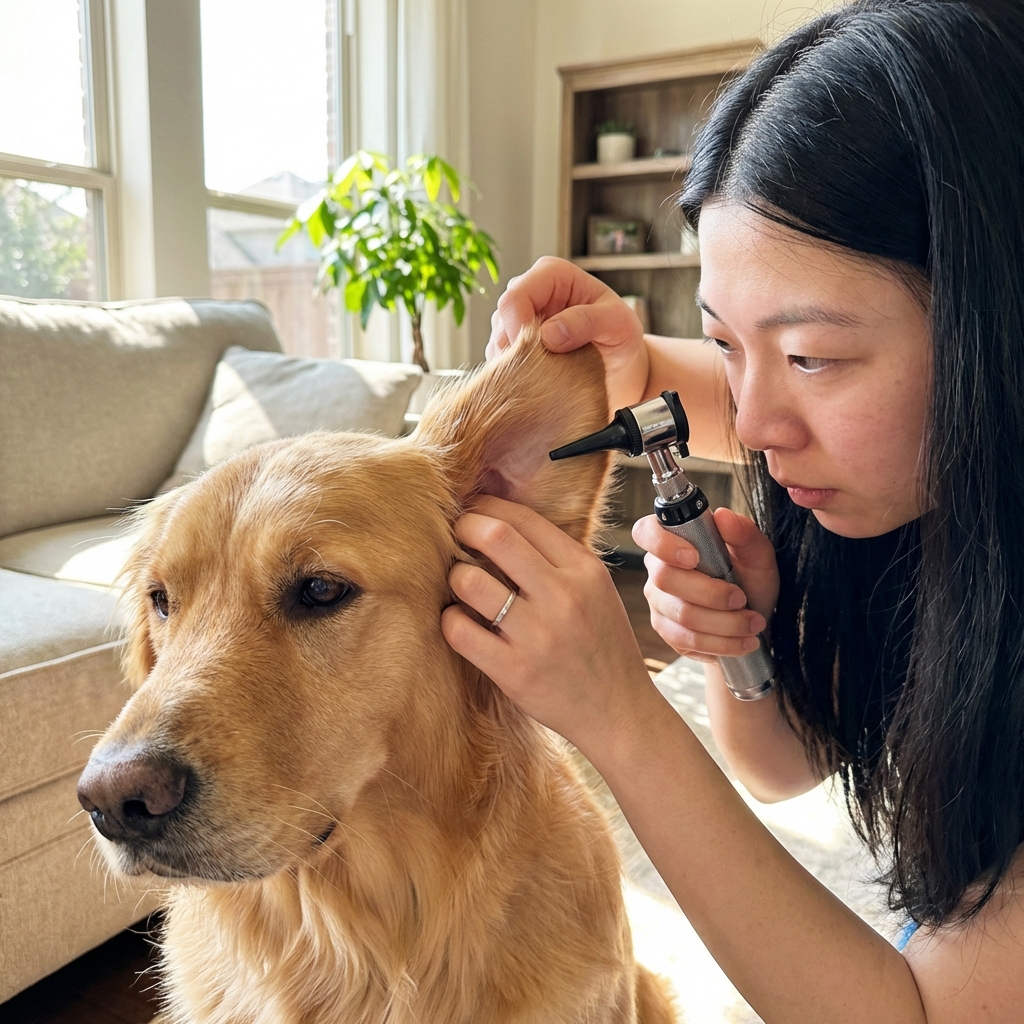
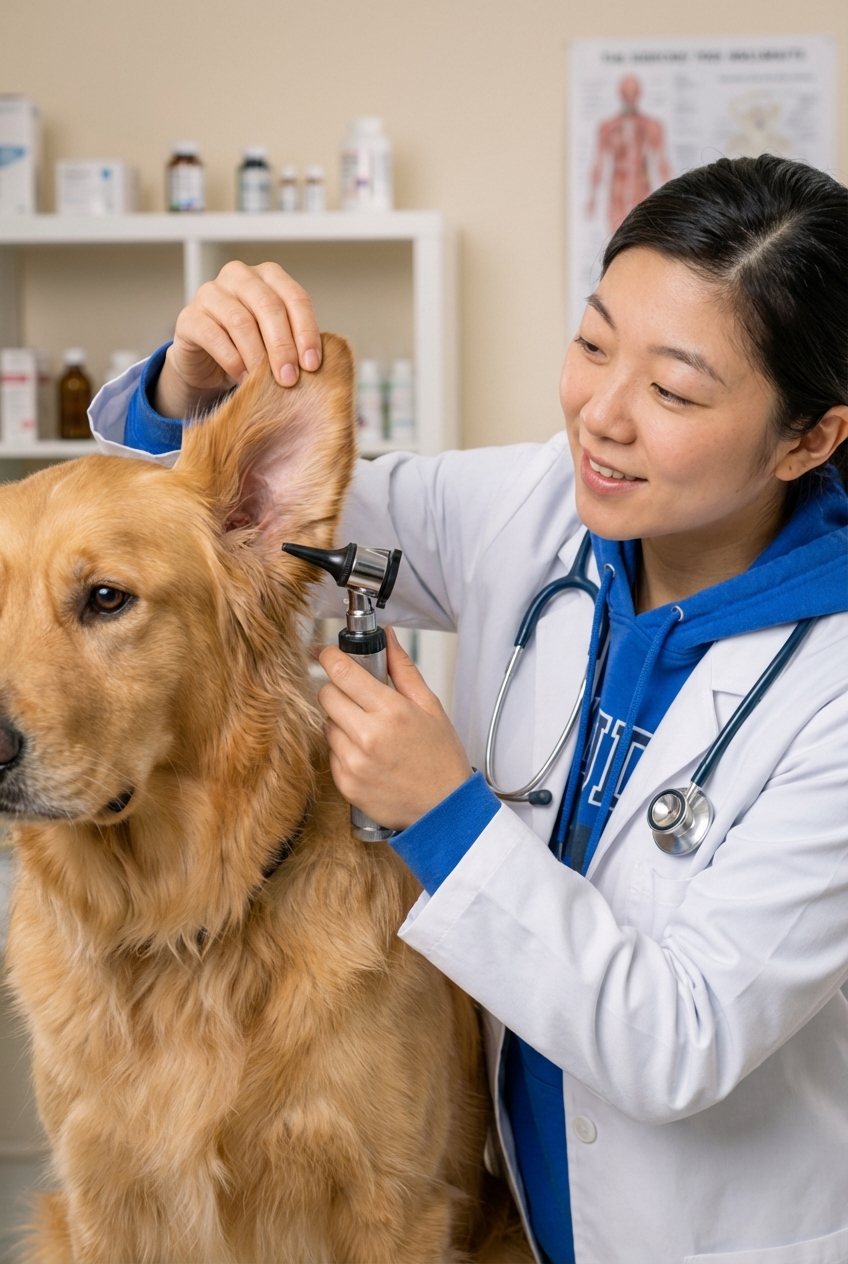
At the clinic, a veterinarian can look deep into the canal with an otoscope and may do an ear cytology (a simple microscope check) to see whether yeast, bacteria, or mites are present. That test is incredibly helpful because it guides the right medication and avoids guessing.
If your dog has frequent ear infections, it often means there is an underlying driver (especially allergies) that needs long-term management, not just repeated short courses of ear drops.
Long-term prevention
Make it routine
Dogs prone to ear trouble often do best with a consistent, low-drama routine.
- Ask your veterinarian how often your dog should have ears cleaned. Over-cleaning can irritate, so more is not always better.
- Keep hair around the ear opening neatly trimmed if your groomer recommends it.
- After water exposure, dry the outer ear every time.
Treat the underlying cause
If allergies are the driver, your veterinarian may recommend strategies like diet trials, medicated therapies, allergy medications, or referral for allergy testing. The goal is fewer flares, fewer infections, and a happier dog.
Support skin health
Nutrition matters for the skin barrier. Many dogs benefit from a veterinarian-approved diet and, when appropriate, omega-3 fatty acids (EPA and DHA) as an adjunct for skin and allergy support. They are not a stand-alone fix for infections, and dosing should be checked with your vet, especially if your dog has other medical conditions or is on medications.
My favorite mindset shift: do not chase ear infections. Prevent the inflammation that makes them easy to start.
Simple action plan
If you want a calm, step-by-step approach, here is a safe way to proceed.
- Look and sniff: Check for odor, redness, discharge, and pain.
- Protect the ear: Prevent scratching if needed.
- Wipe the outer ear only: Keep it gentle.
- Use a dog ear cleaner only if mild and non-painful: Follow directions, stop if it hurts.
- Call the vet: If red flags appear, if signs are worsening, or if there is no improvement after about 48 hours.
Your dog’s ears should not be a constant battle. With the right plan, most dogs get relief and stay comfortable long term.