House-train your puppy with a proven routine: best potty schedule, crate and confinement tips, reward timing, accident cleanup, door signals or bells, and a ...
Article
•
Designer Mixes
Clever Potty Training Puppies

Shari Shidate
Designer Mixes contributor
Potty training can feel like a full-time job in those first few weeks, especially when you are sleep deprived and your puppy has a tiny bladder. The good news is that puppies learn patterns fast. When you combine smart setup, consistent timing, and calm feedback, many families see steady progress within days and improving reliability over a few weeks. Some puppies take longer, especially if they are very young, adjusting to a new home, or working through normal regression phases.
As a veterinary assistant here in Frisco, Texas, I always remind new puppy parents of one evidence-based truth: potty training is mostly management. The fewer chances your puppy has to make a mistake indoors, the faster the habit sticks outdoors.
This article is for general education and is not a substitute for veterinary advice. If you are worried about your puppy’s health or behavior, contact your veterinarian.
How puppies learn potty habits
Puppies do not understand “house rules” automatically. They learn through:
- Association: going in a specific place feels normal and safe.
- Reinforcement: good things happen right after the right behavior.
- Routine: predictable timing makes outcomes predictable.
Your job is to make the right choice easy and the wrong choice unlikely.
When puppies can hold it
A rough guideline is that puppies can often hold urine for about one hour per month of age, up to about 6 to 8 hours for many healthy adult dogs. That is a best-case estimate when they are resting. Playing, excitement, small breed size, and drinking water can shorten that window. Many puppies need more frequent breaks, especially early on.
If your puppy is having frequent accidents despite a solid routine, do not assume they are stubborn. They may simply need more trips outside, or they may have a medical issue like a urinary tract infection.
Set up for success before you start
Choose one potty spot
Pick a consistent outdoor location and walk your puppy there on leash. The smells of prior potty trips become a powerful cue. If you change the spot constantly, you remove that helpful signal.
Use a crate or a small safe zone
A properly sized crate helps many puppies learn faster because most dogs avoid soiling where they sleep. The crate should be large enough to stand up, turn around, and lie down, but not so large that one corner becomes a bathroom.
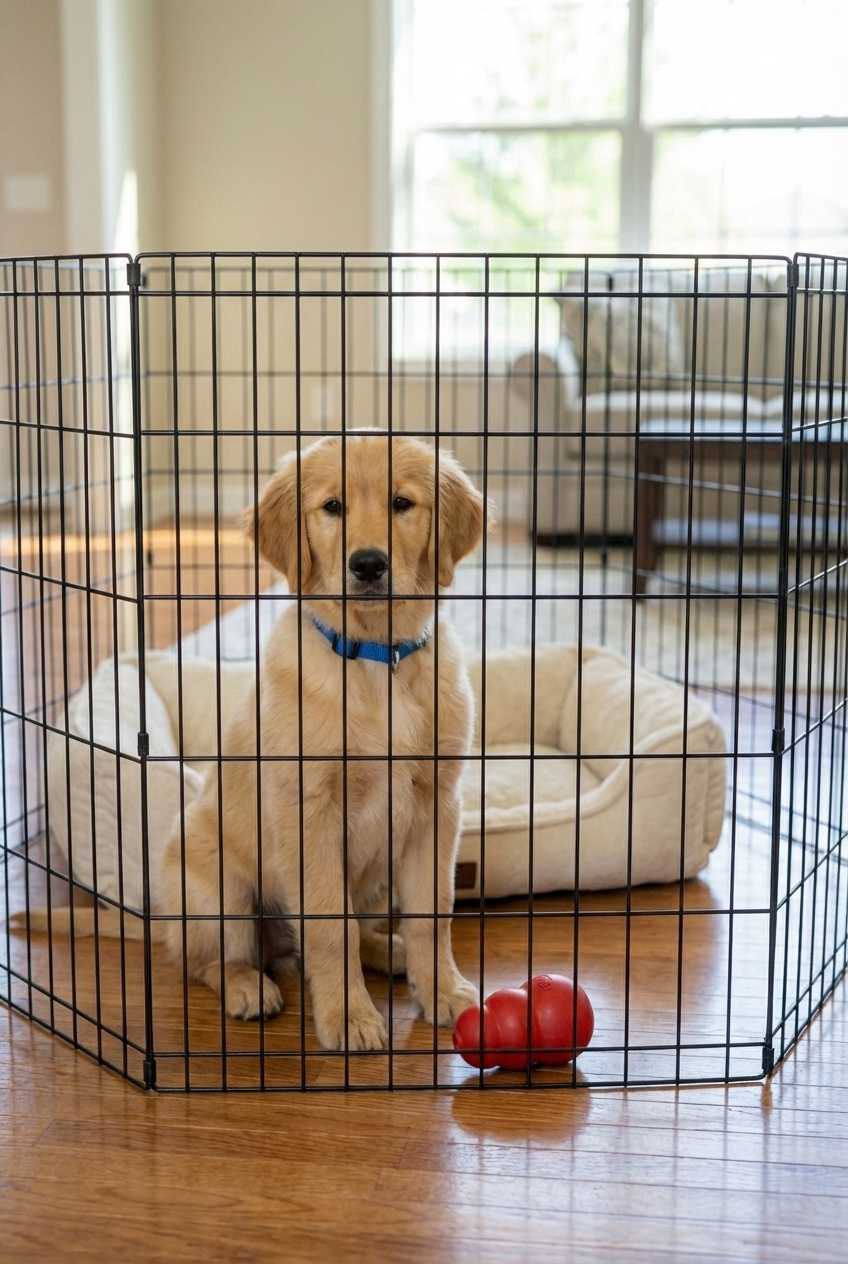
If crates are not for you, use an exercise pen or baby gate to create a small, easy-to-clean area. Big open access to the house is a very common reason accidents keep happening.
Pick your cleaning supplies now
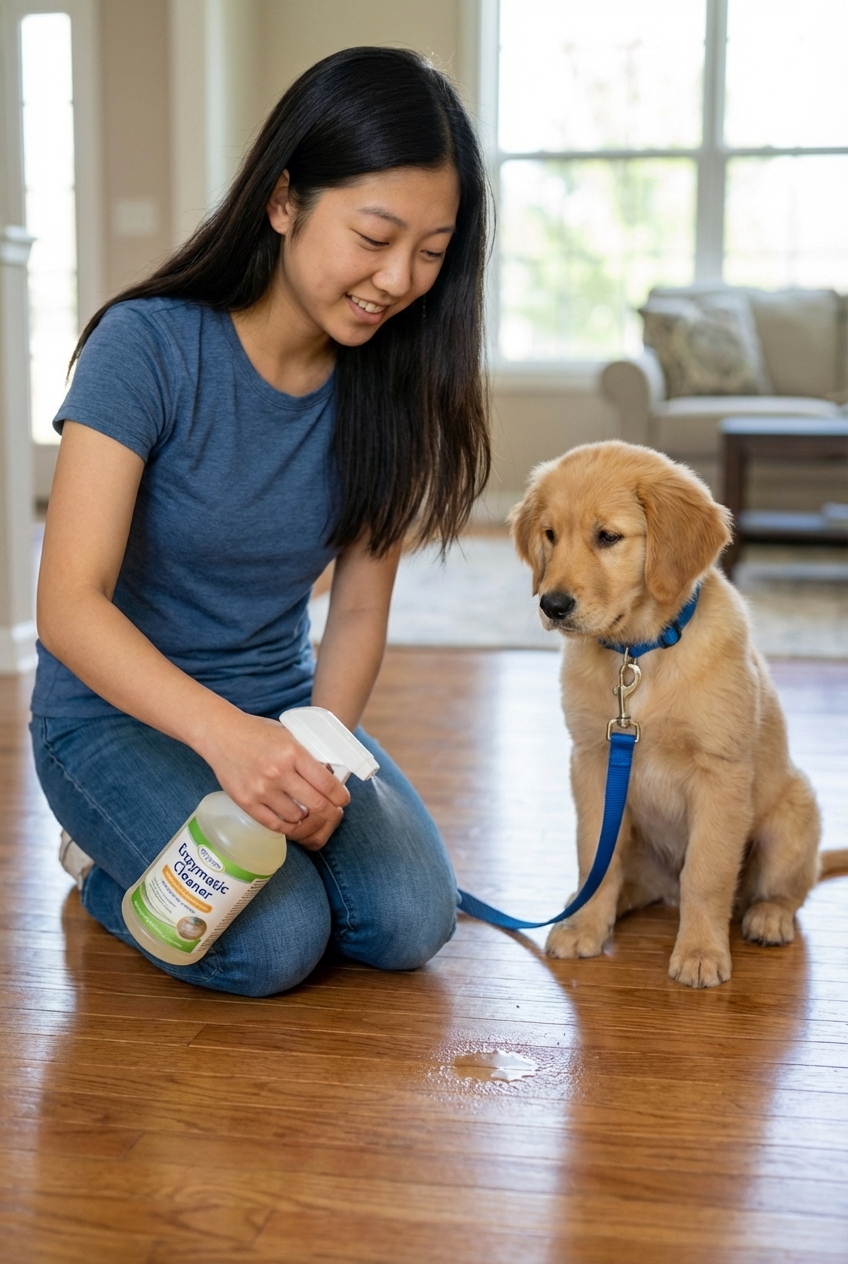
Use an enzymatic cleaner for accidents. Regular cleaners may remove the stain you see, but they can leave odor molecules behind that invite repeat accidents in the same spot.
A simple routine that works for most puppies
Think in terms of predictable potty breaks plus supervision in between.
Go out at the highest success times
- First thing in the morning
- After every meal
- After drinking a lot of water
- After play sessions
- After naps
- Before bedtime
- Any time you change activities, like coming out of the crate
Many puppies need a potty break every 30 to 90 minutes when awake at first. That is not a failure. That is normal puppy biology.
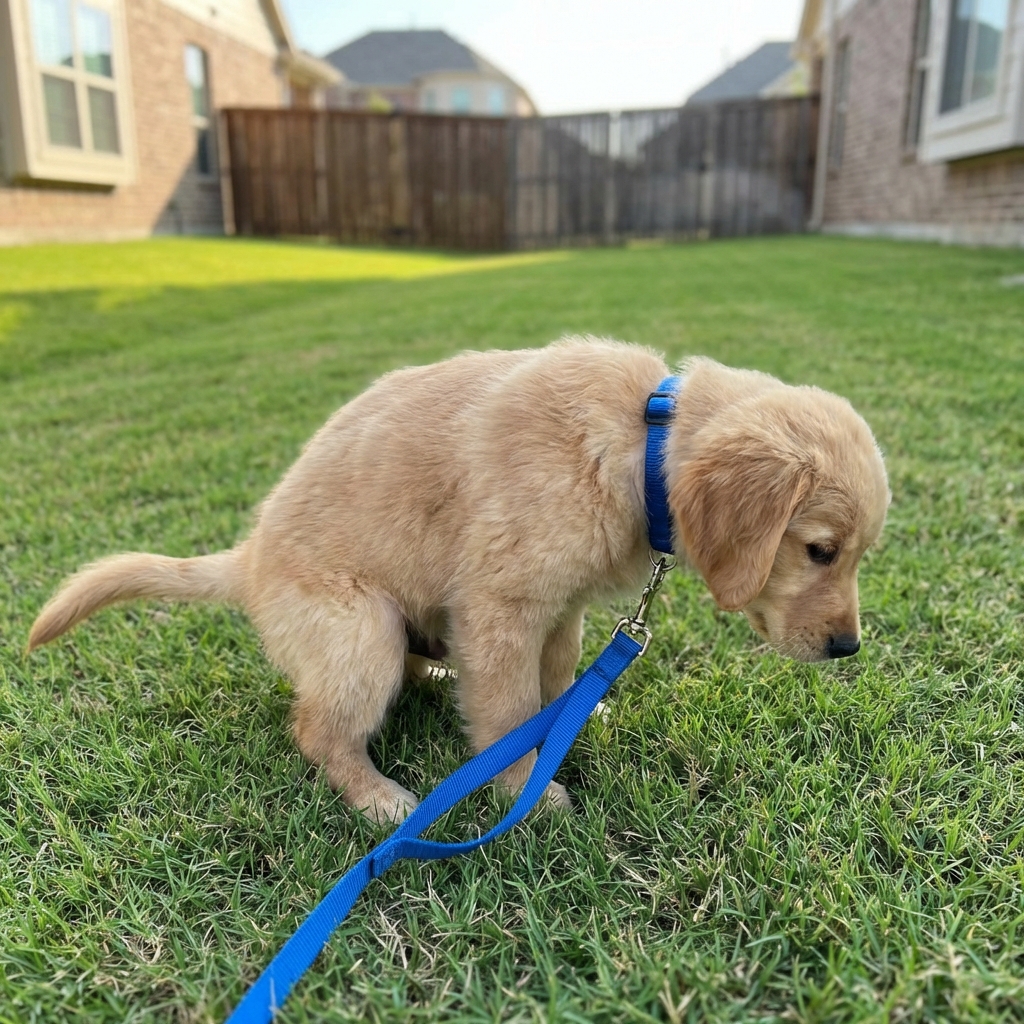
Do not forget poop timing, too: many puppies need to poop shortly after meals and after waking. If your puppy keeps pooping indoors, tighten your “after meals” and “after naps” routine the same way you would for pee.
Use a simple cue and reward fast
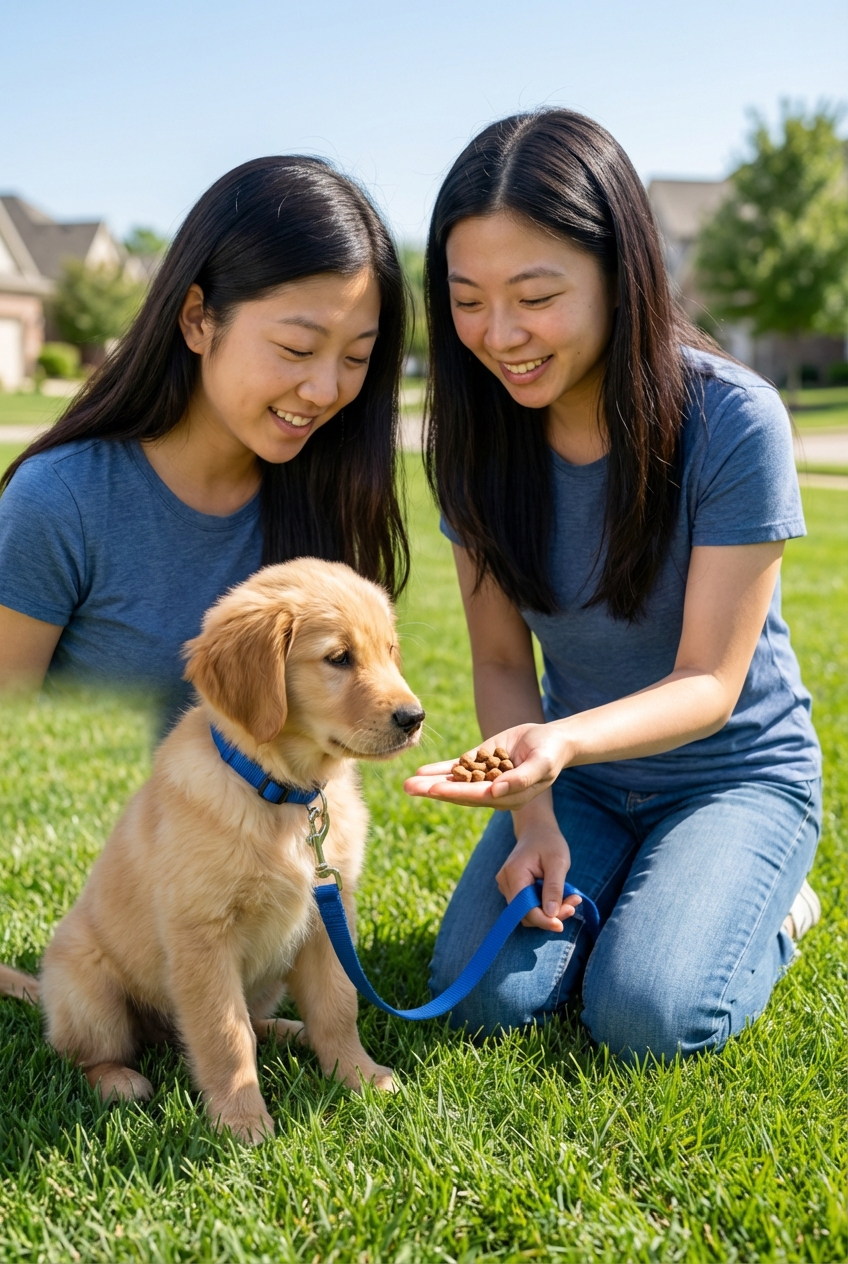
Take your puppy out on leash, stand quietly, and say a cue like “go potty” once. The moment they finish, reward within 1 to 2 seconds with a high-value treat and happy praise. Timing matters more than the size of the treat.
Then give them a short “bonus” walk or sniff time. This prevents your puppy from learning that peeing ends outdoor fun immediately.
Follow the 5-minute rule
If your puppy does not potty within about 5 minutes, bring them back inside and supervise closely. If you cannot supervise, place them back in the crate for 10 to 15 minutes and try again. This keeps you from standing outside for 30 minutes, then watching them potty on your rug as soon as you come in.
If the weather is loud, windy, or your puppy is very distracted, you may need a little longer outside. If you do, keep it boring and focused, then head back in and try again rather than turning it into playtime.
Supervision: the missing link for most families
When puppies have accidents, it is usually because they had privacy. If your puppy is loose, one of these should be true:
- Your puppy is attached to you with a leash (the “umbilical cord” method)
- Your puppy is in the same room and you are actively watching
- Your puppy is confined safely in a crate or pen
If you notice circling, sniffing, sudden wandering away, or a quick squat, calmly pick your puppy up or guide them outside immediately.
Nighttime potty training
Nighttime is where many people get discouraged. A few practical adjustments can help.
Sleep close, keep it boring
Place the crate near your bed at first so you can hear stirring before crying escalates. When you take your puppy out at night:
- Keep lights low
- Do not play
- Use the cue once
- Reward quietly and return to the crate
Adjust water thoughtfully
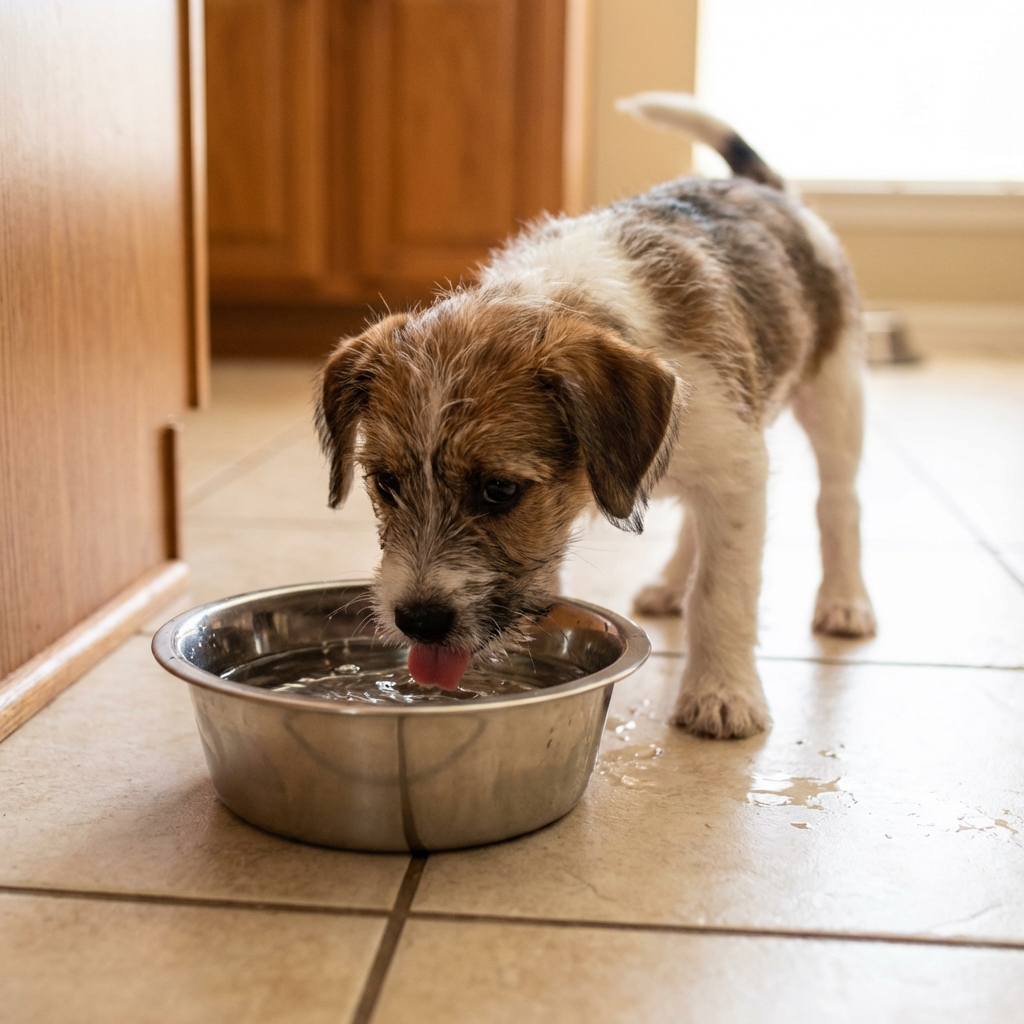
Do not restrict water during the day. For healthy puppies, many veterinarians suggest picking up the water bowl 1 to 2 hours before bedtime, then offering a final drink and a final potty trip. Some trainers prefer leaving water available and managing extra nighttime trips instead. Water should never be withheld for long periods. If your puppy is very young, has medical needs, or it is hot and you are worried about dehydration, ask your veterinarian for personalized advice.
Common potty training problems and what to do
Accidents happen right after coming inside
This usually means your puppy did not actually eliminate outside. Tighten management with the 5-minute rule and reward immediately when they do go outdoors.
Puppy pees when excited or greeted
Some puppies have submissive or excitement urination. Keep greetings calm, crouch sideways instead of leaning over them, and take them outside before guests interact. Most puppies grow out of this with maturity and confidence. If it is frequent or worsening, talk with your veterinarian to rule out medical causes.
Potty training was going well, then regressed
Regression can happen during growth spurts, schedule changes, stress, or adolescence. Go back to basics for a week:
- More frequent potty breaks
- Tighter supervision
- Higher value rewards
- Enzymatic cleaning
If your puppy suddenly starts urinating very frequently, straining, licking the genital area, or having accidents with discomfort, get a veterinary check promptly.
Puppy will not potty on leash
This is common. Practice short leash potty trips when you are not rushed. Stand still and give a little “sniff radius.” The goal is a calm, predictable routine. You can also take one or two slow steps, then pause again, to encourage sniffing and circling.
Indoor potty pads: helpful or confusing?
Pads can be useful in certain situations, like high-rise living, severe weather, or very young puppies who cannot hold it yet. The downside is that pads can teach “soft surfaces are bathrooms,” which sometimes becomes rugs and bath mats.
If you use pads, consider placing them near the door and gradually moving them outside, or transition to an outdoor-only routine as soon as your puppy is ready.
Apartment living and vaccine safety
If your puppy is not fully vaccinated yet, ask your veterinarian about local parvo risk and the safest potty options in your area. Many families use a private yard, a clean balcony setup (like a grass patch), or carry their puppy to a low-traffic spot rather than letting them walk through high-dog areas.
Positive reinforcement matters more than punishment
Potty training works best when your puppy feels safe and understands what earns rewards. Punishing accidents can create fear, hiding, and sneaky potty behavior.
What to do if you catch an accident midstream
- Interrupt gently with a calm sound like “oops”
- Take your puppy outside immediately
- Reward if they finish outside
- Clean the indoor spot with enzymatic cleaner
What not to do
- Do not rub your puppy’s nose in it
- Do not yell or hit
- Do not punish after the fact, because your puppy will not connect it to the earlier behavior
A simple 14-day potty training plan
If you love structure, here is a gentle two-week approach that works for many households.
Days 1 to 3: Build the routine
- Potty trips every 30 to 60 minutes when awake
- Potty after meals, naps, and play
- Crate or pen when you cannot supervise
- Reward immediately outdoors
Days 4 to 7: Stretch the time slightly
- Increase to every 60 to 90 minutes when awake, if accidents are minimal
- Keep the leash and cue consistent
- Continue close supervision indoors
Days 8 to 14: Add freedom slowly
- Allow short supervised access to one extra room
- Continue rewarding outdoor success
- If accidents return, reduce freedom and tighten timing again
Progress is rarely a straight line. The overall trend is what you are looking for.
What “reliable” usually means: fewer to no accidents when your puppy is supervised and on a predictable schedule. Full house freedom without accidents often comes later, after your puppy has a longer track record of success.
Sample daily schedule
If you want a simple template, try this rhythm and adjust the timing for your puppy’s age and needs:
- Wake up: potty
- Breakfast: potty 10 to 20 minutes after eating
- Play or short training: potty
- Nap in crate or pen
- After nap: potty
- Repeat through the day: potty after meals, naps, play, and big drinks
- Evening: final meal, potty, calm time
- Bedtime: last potty trip
When to call your veterinarian
Please reach out for medical guidance if you notice:
- Very frequent urination, straining, or crying
- Blood in urine
- Accidents paired with excessive thirst
- Sudden potty training regression with no routine change
- Persistent diarrhea or soft stools that make house training harder
Potty accidents are sometimes behavioral, but they can also be your puppy telling you something feels off.
Consistency wins. The more you calmly prevent accidents and reward outdoor success, the faster your puppy’s brain locks in the habit.