Kitten diarrhea can turn dangerous fast. Learn likely causes, safe at-home hydration and diet steps, what not to do, and the urgent red flags that mean call ...
Article
•
Designer Mixes
Clever Kitten Has Diarrhea

Shari Shidate
Designer Mixes contributor
Few things make your heart sink faster than seeing a kitten with diarrhea, especially when they are otherwise bright, playful, and curious. The good news is that many cases are mild and short-lived. The not-so-good news is that kittens can dehydrate quickly, and diarrhea can be a sign of parasites, infection, diet intolerance, or stress.
As a veterinary assistant, I like to approach kitten diarrhea with two goals: support hydration and comfort right away, and figure out the most likely cause so you can get targeted help if needed.
What counts as diarrhea?
Diarrhea is loose, watery, or unformed stool, often with increased frequency. In kittens it can look like:
- Soft-serve stool that still has some shape
- Watery stool that soaks into litter or leaves puddles
- Mucus (a shiny, jelly-like coating)
- Blood (bright red streaks or darker, tarry stool)
One soft stool after a new treat is not always an emergency. Multiple loose stools, watery diarrhea, or any blood means it is time to pay closer attention.
Why it is riskier in kittens
Kittens have smaller body reserves than adult cats. With diarrhea, they lose fluids and electrolytes quickly. Dehydration can sneak up fast, especially in kittens under 12 weeks old or those who are already small for their age.
A quick at-home clue: gently lift the skin over the shoulders. If it does not snap back quickly, it may suggest dehydration, but this test is not perfect in kittens and can be affected by age and body condition. Also watch for sticky gums, weakness, sunken eyes, or a kitten who is suddenly not interested in nursing or food. When in doubt, hydration status is best assessed by your veterinarian.
Common causes
Diarrhea is a symptom, not a diagnosis. Here are the most common culprits we see.
Diet changes and intolerance
Kittens have sensitive GI tracts. Switching foods too quickly, offering rich human foods, too many treats, or cow’s milk can all trigger diarrhea. (This is different from kitten milk replacer, which is formulated for kittens.) Even “kitten-safe” foods can cause trouble if introduced suddenly.
Parasites (very common)
Intestinal parasites are one of the top reasons kittens get diarrhea, even in clean homes. Common ones include roundworms, hookworms, coccidia, and Giardia. Kittens can pick up parasites from their mom, the environment, or other pets.
Viral or bacterial infections
Upper respiratory viruses get a lot of attention, but GI infections matter too. Some can be mild, while others require urgent veterinary care. In young kittens, infections can progress quickly.
Stress and changes
Adoption, moving homes, new pets, loud gatherings, or a change in routine can stress a kitten’s gut. Stress diarrhea is real, and it often improves once routines stabilize.
Medication side effects
Any medication can change gut bacteria and stool quality. If diarrhea starts after a new med, let your vet know before stopping anything on your own. Also, some antibiotics are prescribed specifically for certain diarrheal causes, so it is important not to self-start or self-stop medications.
Call the vet right away
Please do not “wait it out” if you see any of the following. These are red flags in kittens:
- Watery diarrhea, especially more than 1 to 2 episodes in a few hours
- Blood in stool or black, tarry stool
- Vomiting, especially repeated vomiting
- Not eating for a meal or more (kittens should eat frequently)
- Lethargy, weakness, crying, or hiding
- Signs of dehydration (sticky gums, sunken eyes, dry mouth, skin tenting)
- Very young age, especially under 4 weeks (neonatal kittens can crash quickly)
- Known exposure to illness, parasites, or unvaccinated animals
- Diarrhea lasting more than 24 hours in a kitten
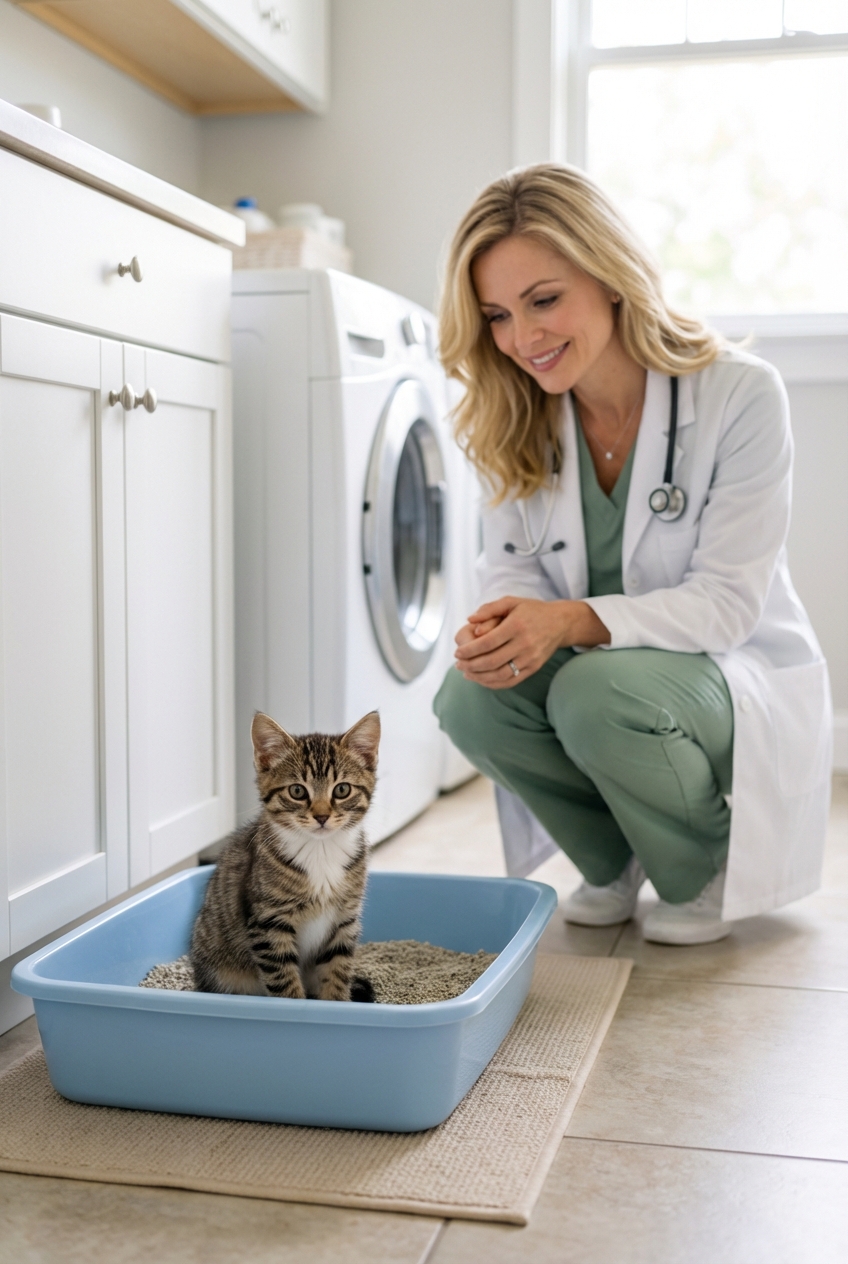
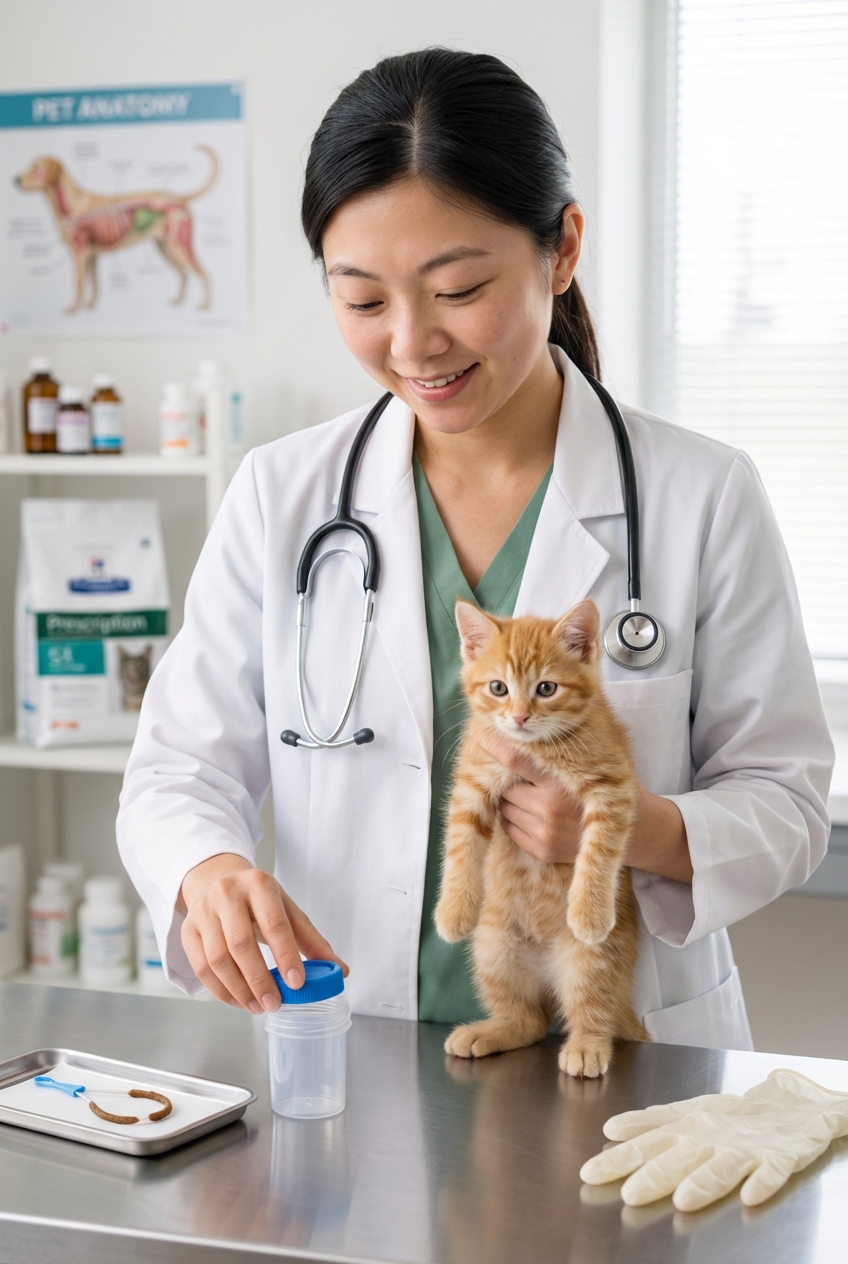
If your kitten is having diarrhea and seems “off” in any way, it is always safer to call your veterinarian and describe exactly what you are seeing. Bring a fresh stool sample if you can.
What you can do at home
At-home care is about support, not aggressive treatment. Avoid human anti-diarrheal medications. Many are unsafe for cats and can mask symptoms while the underlying problem gets worse.
1) Support hydration
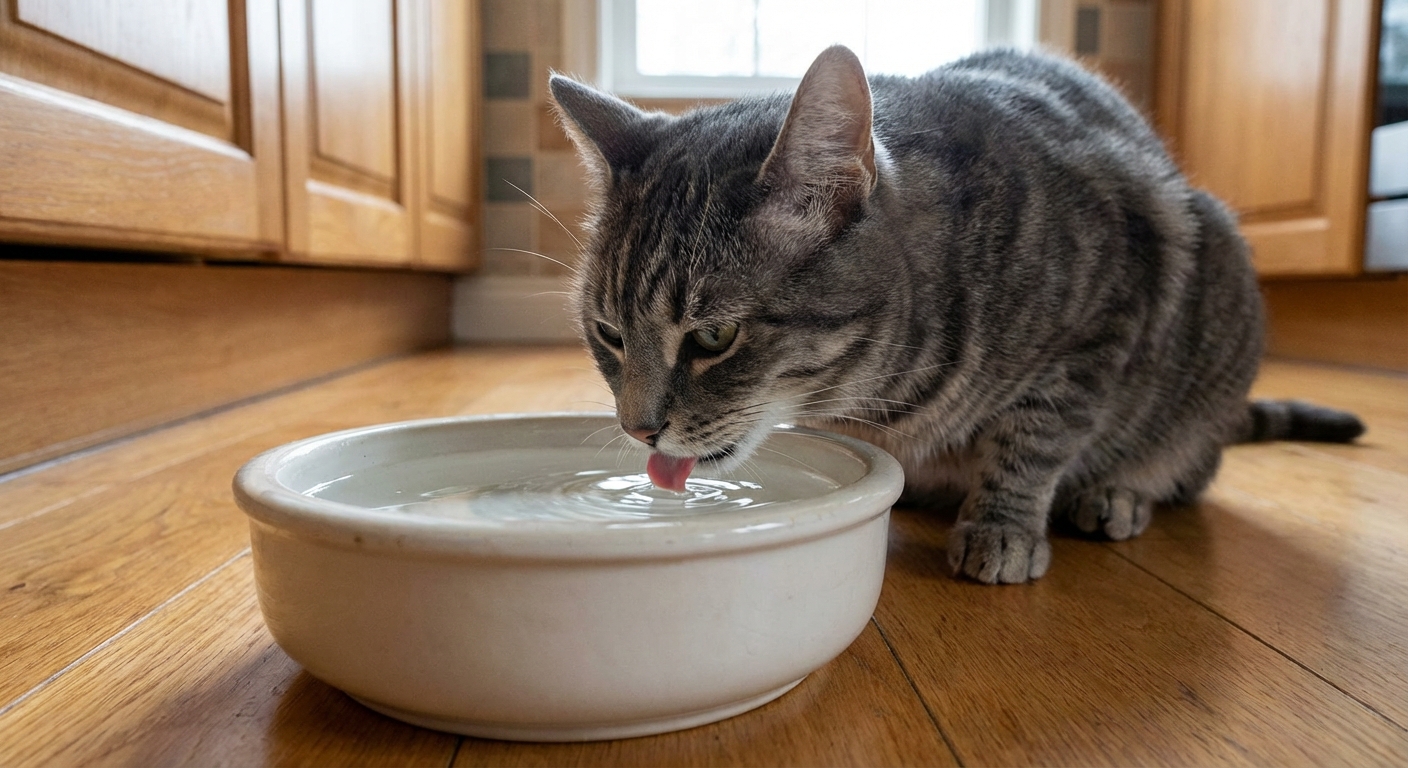
- Offer fresh water in multiple spots.
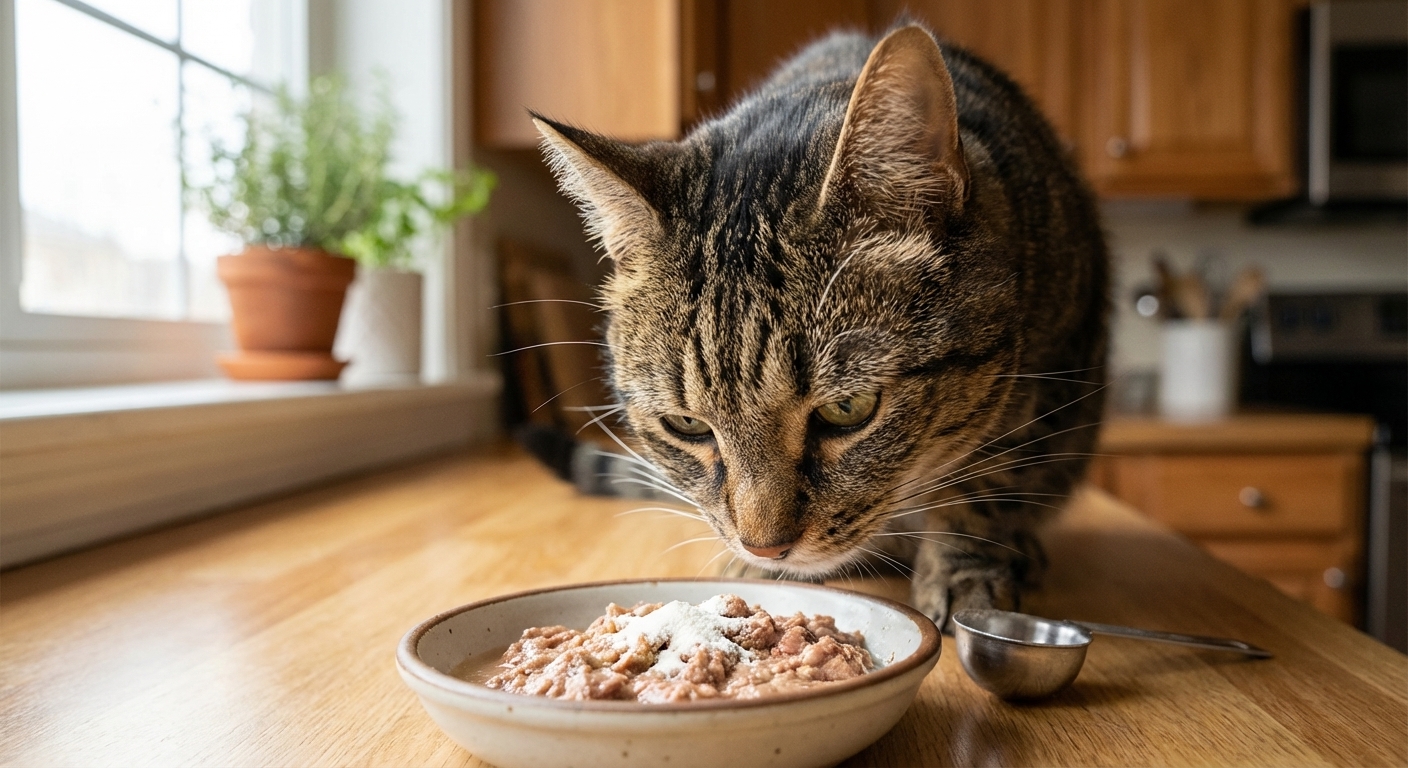
- Feed wet kitten food if your kitten is already eating solids. The extra moisture helps.
- If your vet recommends it, you may use a pet-safe oral electrolyte. Avoid homemade mixes unless your veterinarian gives a recipe and dosing.
- Monitor urine output. Less urine, very dark urine, or straining are all reasons to call your vet.
- For small kittens, consider daily weigh-ins on a kitchen scale. Weight drops can be an early warning sign.
2) Keep food consistent
If your kitten is otherwise acting normal and the stool is only mildly soft, you can often help by:
- Sticking to a high-quality kitten diet only
- Stopping treats and human foods for several days
- Avoiding sudden switches in brand or protein
Do not fast a young kitten without veterinary guidance. Kittens need frequent calories.
3) Keep things calm and warm
- Keep your kitten warm and comfortable.
- Reduce noise and handling if they seem stressed.
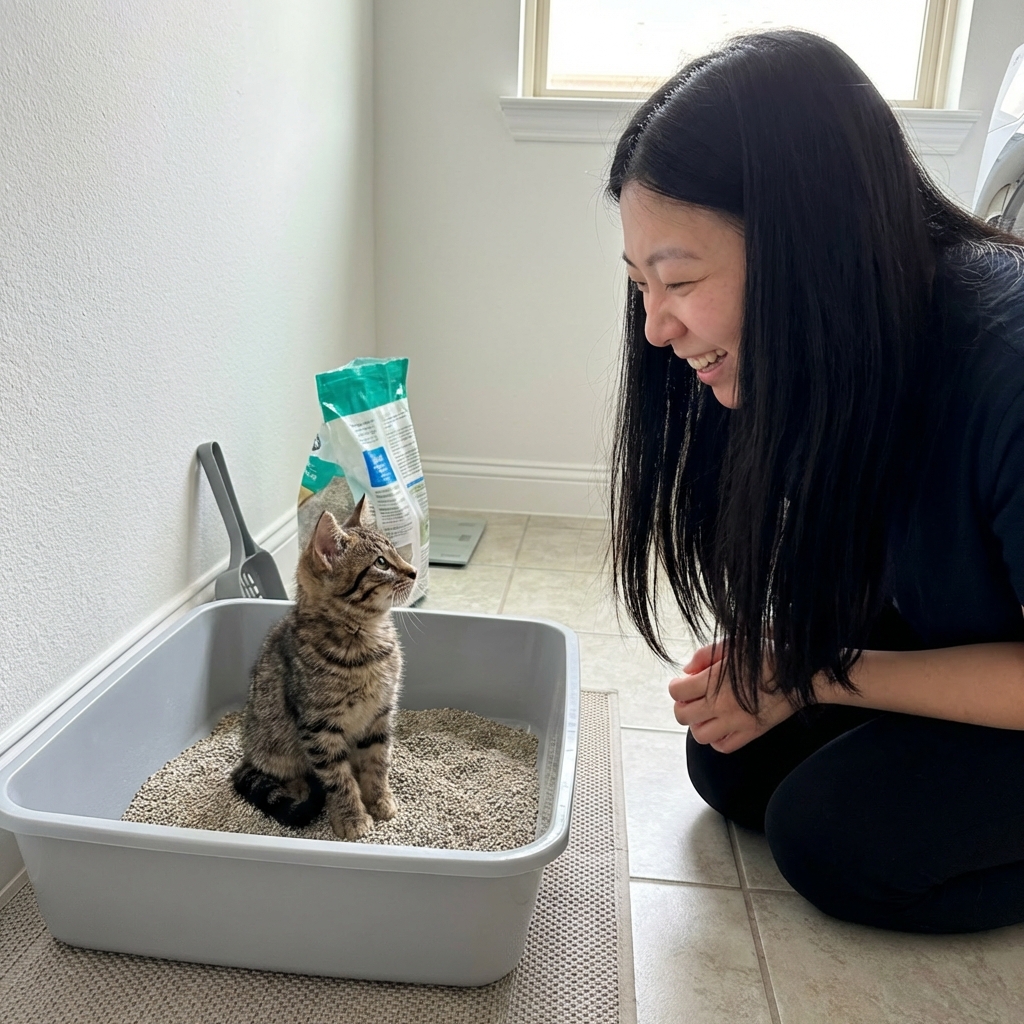
- Make sure the litter box is easy to reach and very clean.
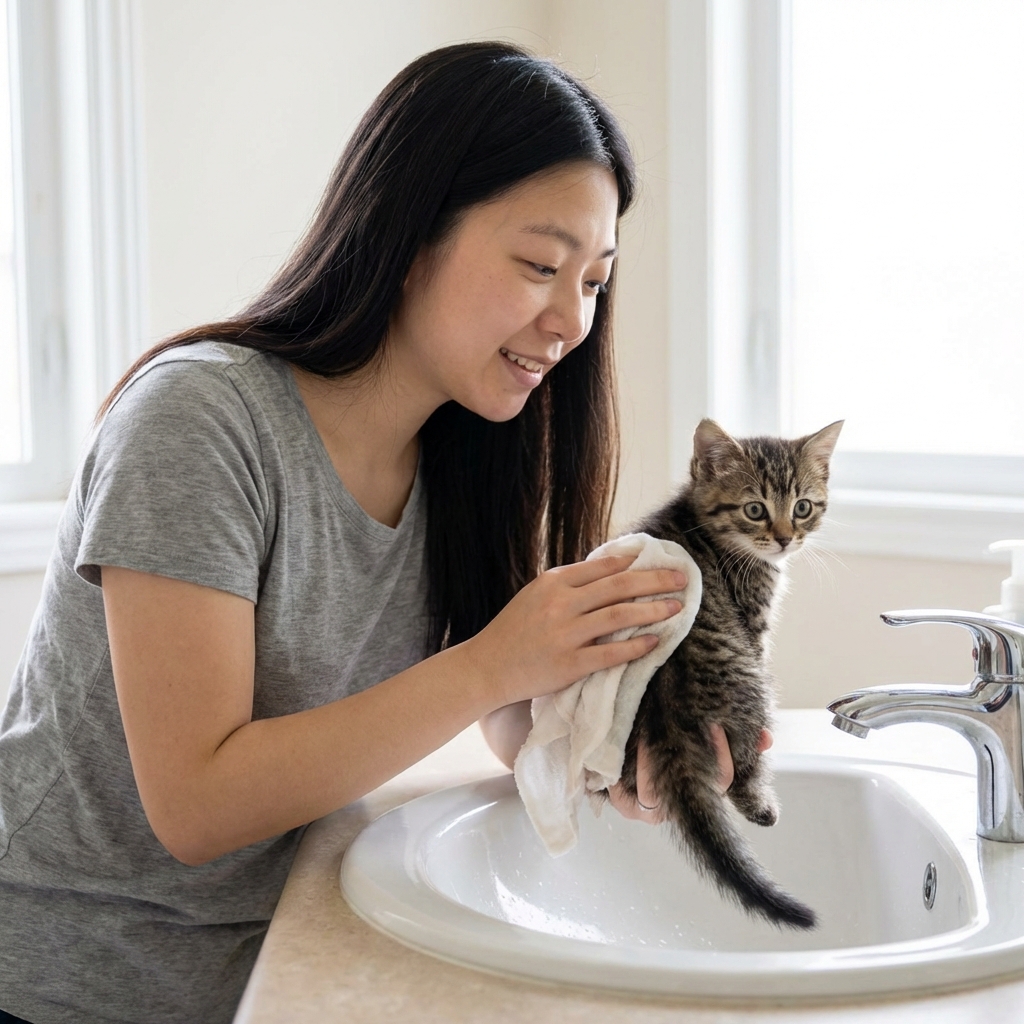
4) Protect skin and keep clean
Diarrhea can cause painful irritation around the rear end.
- Use a soft, damp cloth (warm water) to clean.
- Pat dry gently.
- Avoid scented wipes or harsh soaps.
5) Reduce spread in the home
Some causes of diarrhea are contagious (especially Giardia and coccidia).
- If possible, isolate the sick kitten from other pets until your vet advises otherwise.
- Wash hands after litter box cleanup and accidents.
- Clean soiled areas promptly, and scoop litter boxes daily.
What to expect at the vet
Your veterinarian will likely ask about diet, age, vaccines, deworming history, exposure risks, and stool appearance. Diagnostics commonly include:
- Fecal test for parasites, Giardia, and coccidia
- Physical exam focusing on hydration and abdominal comfort
- Viral testing when indicated, such as feline panleukopenia (FPV) in at-risk kittens
- In prolonged or severe cases, bloodwork to assess dehydration, infection, and overall health
Treatment depends on the cause and may include deworming medication, anti-parasitics, probiotics, diet support, fluids, and sometimes antibiotics when indicated. The key is targeted care rather than guessing.
Poop clues that help
If you can safely observe and describe details, it helps your vet tremendously. Take a photo if you are comfortable, and note:
- Color (yellow, green, very dark, bright red)
- Consistency (soft, pudding-like, watery)
- Frequency (once, hourly, after each meal)
- Odor (unusually foul can suggest certain infections)
- Mucus or worms (worms may look like spaghetti or rice)
- Any vomiting, appetite changes, or weight loss
If you see worms, bring a fresh sample or a clear photo. It is not gross to your veterinary team. It is helpful.
Preventing future diarrhea
You cannot prevent every tummy upset, but you can reduce the odds.
Stay current on deworming
Many kittens need multiple rounds of deworming. Even indoor-only kittens can have parasites early in life. Follow your veterinarian’s schedule, and do not skip rechecks if diarrhea persists.
Transition foods slowly
If you need to change diets, aim for a gradual transition over 7 to 10 days:
- Days 1 to 3: 75% old, 25% new
- Days 4 to 6: 50% old, 50% new
- Days 7 to 9: 25% old, 75% new
- Day 10: 100% new
Some kittens need even slower transitions. If stool worsens, pause the transition and check in with your veterinarian.
Use smart hygiene
- Scoop litter boxes daily.
- Wash bedding frequently during GI upsets.
- Keep kittens separated from unknown pets until cleared by your vet.
Choose kitten-appropriate nutrition
Look for a diet labeled for growth or all life stages (and ideally meeting AAFCO nutrient profiles). Kittens need more calories, protein, and specific nutrients than adult cats.
Bottom line
Most kitten diarrhea has a manageable cause, but kittens deserve a faster response than adult cats because dehydration can happen quickly. If your kitten is bright and the stool is only mildly soft, simple support and a consistent diet may be enough. If the diarrhea is watery, bloody, paired with vomiting, your kitten is very young (especially under 4 weeks), or symptoms last more than a day, call your veterinarian and bring a stool sample.
Your kitten is learning their world with every pawstep. With the right support and timely care, most little tummies settle down and get right back to being delightfully clever.