Stop cat biting by matching the bite to the cause—play, overstimulation, fear, pain, or redirected aggression. Get in-the-moment steps, training tips, and ...
Article
•
Designer Mixes
Clever Cats That Bite: Care Tips

Shari Shidate
Designer Mixes contributor
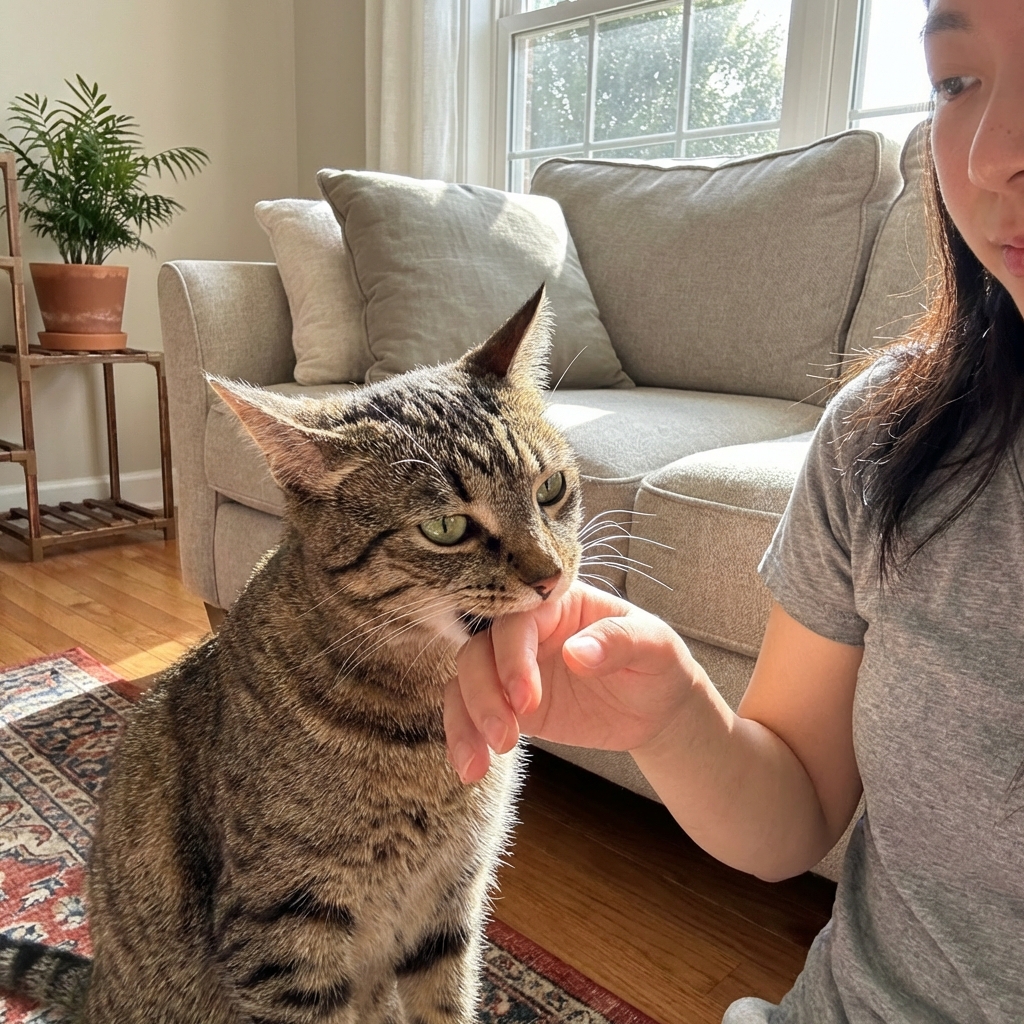
Some cats bite because they are frightened. Some bite because they are overstimulated. And some very clever cats bite because it works. If biting gets them attention, makes the petting stop, or speeds up dinner, they learn fast.
As a veterinary assistant, I want you to know two things can be true at once: your cat can be smart and sweet and still use their teeth when they do not have better tools. The goal is not punishment. The goal is to figure out what your cat is communicating, reduce the triggers, and teach safer habits.
First, what kind of bite is it?
Not all bites mean the same thing. Pinpointing the pattern is the quickest path to improvement.
Common “smart cat” bite patterns
- Play biting: quick pounce, stalking, bunny kicks, grabs your hand like prey. Often happens at dawn or dusk.
- Petting-related biting: starts with purring and leaning in, then a sudden nip after a minute or two of petting.
- Demand biting: your cat bites when you are on the phone, at the computer, or near the kitchen, then looks expectant.
- Fear or pain biting: stiff body, wide eyes, ears back, growl or hiss, attempts to escape first.
- Redirected biting: your cat gets worked up by something else (like another cat outside) and bites the nearest moving target.
If you can, jot down a quick “bite log” for 3 to 7 days: time of day, what was happening right before, and what your cat did right after. These clues are gold.
Cat body language: the warning signs most people miss
Cats rarely bite “out of nowhere.” They usually whisper first, then escalate when the whisper is ignored.
- Tail: tip twitching, thumping, or a fast swish can mean overstimulation.
- Skin: rippling skin along the back is a classic “I’m getting overwhelmed” sign.
- Ears: turning sideways or flattening back suggests discomfort or fear.
- Eyes: dilated pupils can mean excitement, fear, or high arousal.
- Feet: shifting weight away, tensing, or pulling a paw in can be an early “stop” signal.
When you see these signs, pause your hands, give space, and redirect to a toy or treat-based activity.
Why clever cats bite (and how the habit gets reinforced)
From your cat’s perspective, biting is effective communication. If a bite makes something happen, the behavior strengthens.
Accidental rewards that teach biting
- You pull your hand away quickly: for a playful hunter, that movement is exciting and invites another pounce.
- You talk to them or look at them: even “No!” can be attention.
- You feed them to stop the behavior: the cat learns, “Bite equals snacks.”
- You keep petting past the warning signs: the cat learns they must escalate to be heard.
The solution is simple in theory: stop rewarding biting and start rewarding the behavior you want instead. It takes consistency, but it works.
Step-by-step: what to do in the moment
When a bite happens, your response should be calm, boring, and predictable.
If it is a play bite
- Freeze. Do not yank your hand away. Hold still like a “tree.”
- Quietly disengage. If your cat is latched, gently push toward the bite rather than pulling away, then slip free.
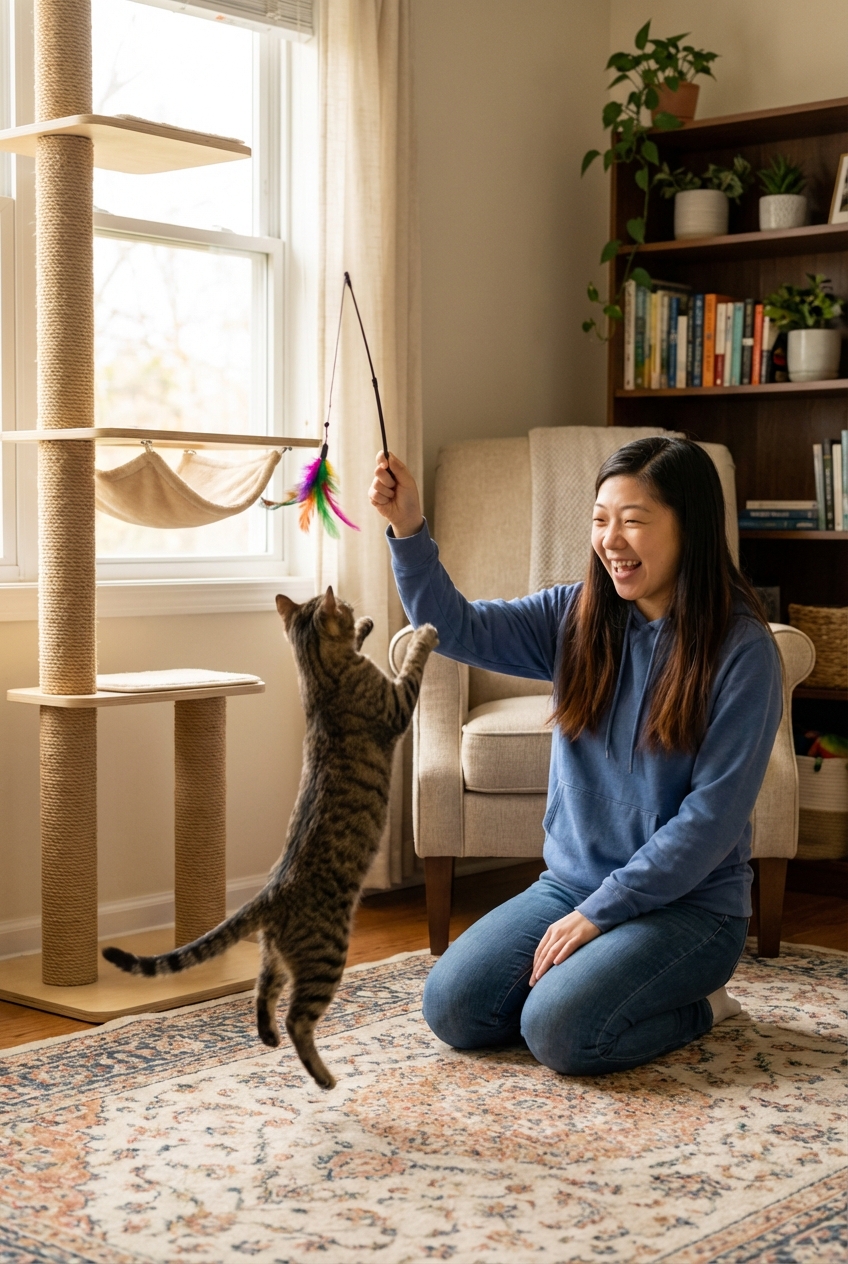
- Redirect. Toss a wand toy or a kicker toy away from your body.
- End play if needed. If they keep biting, calmly walk away for 30 to 60 seconds.
If it is a petting-related bite
- Stop petting immediately. Hands still. No lecture.
- Give space. Let your cat reset for a minute or two.
- Restart with shorter sessions. Pet for 3 to 5 seconds, then pause before they get overwhelmed.
If it is fear or pain-related
- Do not corner them. Let them escape to a safe spot.
- Reduce handling. If you must move them, use a thick towel as a barrier.
- Call your vet. Sudden biting can be a medical issue, not a behavior problem.
Teach “better ways to ask” (reward-based training)
Cats are absolutely trainable. In fact, many “bitey” cats are highly intelligent and enjoy learning. The trick is giving them a replacement behavior that pays well.
Three simple replacements for biting
- Targeting: teach your cat to touch their nose to your finger or a target stick. Reward with a tiny treat. Now they can “boop” instead of bite.
- Sit for greetings: reward sitting when you enter a room or approach the food bowl.
- Go to a mat: toss a treat onto a small blanket or cat bed. Over time, this becomes a calm “station” when your cat is wound up.
Keep sessions short, about 1 to 3 minutes. End before your cat loses interest. Smart cats love quick wins.

Meet their needs: the daily routine that reduces biting
A surprising number of biting issues improve when a cat’s basic needs are met consistently.
Try this simple daily structure
- Interactive play twice daily: 10 to 15 minutes with a wand toy, ending with a small meal or treat to mimic “hunt, catch, eat.”
- Food enrichment: puzzle feeders, treat balls, or scattered kibble (if your cat eats kibble) to prevent boredom.
- Vertical space: cat trees, shelves, or window perches for security and confidence.
- Predictable calm time: a quiet spot where no one bothers them, especially in busy households.
Biting often drops when a cat is less bored, less restless, and more in control of their environment.
Petting bites: make affection safer
Many cats enjoy affection in smaller doses than dogs. That does not mean they are unfriendly. It means their nervous system hits “too much” faster.
How to pet a bite-prone cat
- Use the “3-second rule”: pet for 3 seconds, then stop and see if they ask for more by leaning in.
- Stick to safer zones: many cats prefer cheeks, chin, and head. The belly and lower back often trigger bites.
- Let the cat lead: if they move away, respect it. Consent matters with cats.
Health checks: when biting can be medical
If a friendly cat suddenly becomes bitey, I always recommend ruling out pain or illness first. Cats are masters at hiding discomfort.
Common medical contributors
- Dental disease: sore gums or a painful tooth can make a cat reactive to touch.
- Arthritis: especially in adult and senior cats, petting along the back or picking them up can hurt.
- Skin issues: fleas, allergies, or infections can make touch feel irritating.
- Hyperthyroidism or other systemic illness: can increase agitation in some cats.
Contact your veterinarian if biting is new, escalating, associated with hiding or appetite changes, or tied to being touched in one specific area.
Household safety and bite care
Even a small cat bite can become a big human medical issue because cat teeth can create deep punctures that trap bacteria under the skin.
If you are bitten
- Wash right away with soap and running water for several minutes.
- Apply an antiseptic and cover with a clean bandage.
- Seek medical care promptly for bites on the hand, deep punctures, swelling, redness, warmth, pus, fever, or worsening pain.
If your cat bites visitors, use management while you work on training: separate room, baby gate, or a calm “station” with enrichment.
What not to do
These responses often make biting worse, even if they stop it for a moment.
- Do not hit, flick, or scruff. It increases fear and can escalate aggression.
- Do not use spray bottles. Many cats simply learn to bite when you are not holding it.
- Do not use your hands as toys. This teaches your cat that skin is acceptable prey.
- Do not force interaction. Consent-based handling builds trust and lowers bites over time.
When to bring in a pro
If bites are frequent, intense, or unpredictable, you do not have to handle it alone. Talk with your veterinarian first to rule out medical causes, then consider a credentialed behavior professional.
- Ask your vet about a referral to a veterinary behaviorist (DACVB) or a qualified cat behavior consultant.
- Seek urgent help if there is severe aggression, repeated bites to the face, or biting that occurs without any obvious trigger.
With biting cats, the fastest progress usually comes from a two-part plan: meet the cat’s needs daily, then teach a safer way to communicate.