Fix cloudy aquarium water without harsh chemicals. Learn what murky water means, how to test parameters, do safe water changes, clean filters, and prevent re...
Article
•
Designer Mixes
Clear Up a Cloudy Fish Tank

Shari Shidate
Designer Mixes contributor
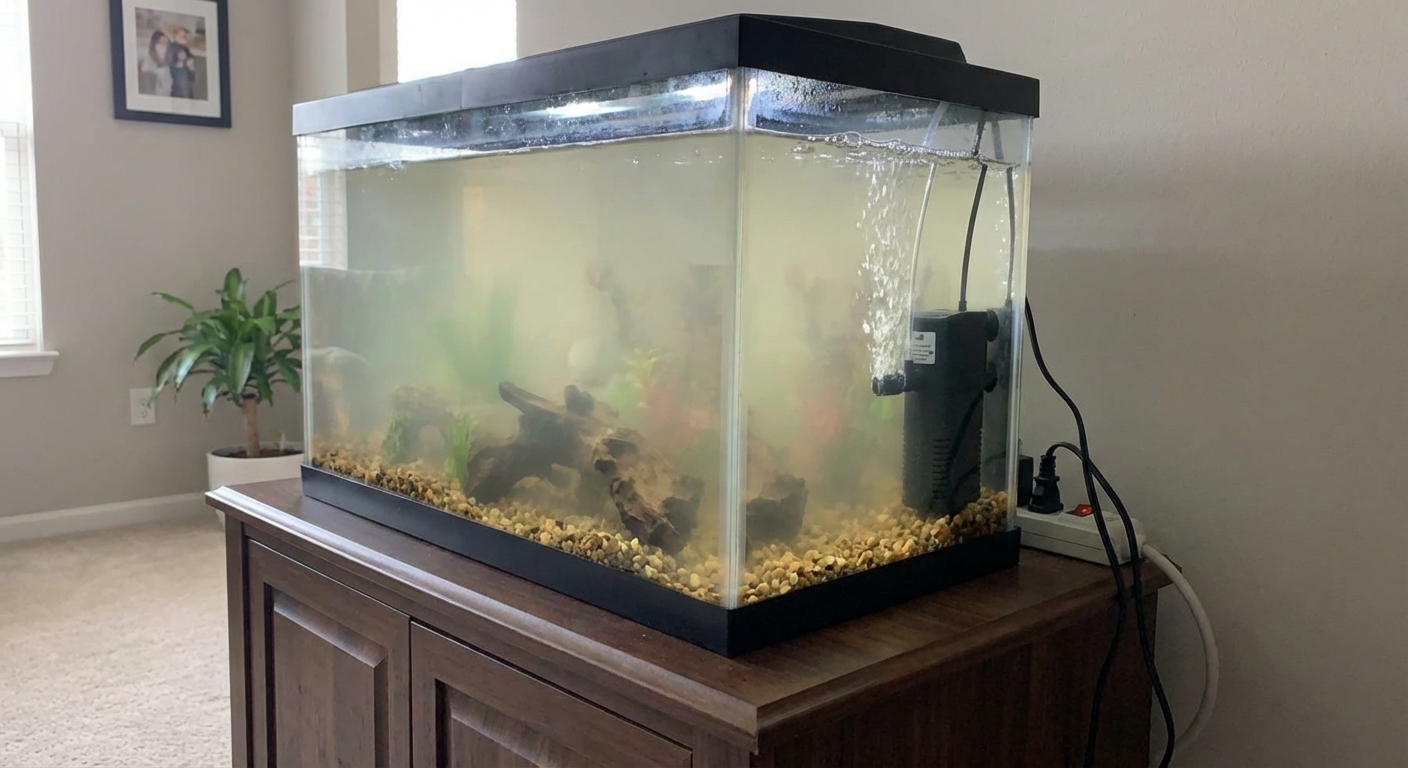
Cloudy aquarium water is one of the most common “uh oh” moments for fish keepers. The good news is that most cases are fixable, and once you understand why the water turned cloudy, you can usually clear it up without stressing your fish.
As a veterinary assistant, I’m always thinking in terms of environment and basics: clean water, stable parameters, and low stress. Fish health is very similar. If the tank is off, the fish pay the price first. Let’s walk through the smartest way to troubleshoot cloudy water, clear it fast, and keep it from coming back.
What “cloudy” means
Cloudiness is a symptom, not the diagnosis. The color and timing give big clues.
White or milky cloudiness
This is most often either:
- A bacterial bloom (very common in new tanks or after a disruption)
- Fine dust from new gravel, sand, or decorations
- Microbubbles from a filter return, air stone, or recent water change
New tank note: A white haze in a brand-new aquarium is often a heterotrophic bacterial bloom. It can happen even before you see a big ammonia or nitrite spike. That is exactly why testing matters. Cloudy water alone does not confirm where you are in the cycle.
Green cloudiness
Usually free-floating algae from too much light and excess nutrients.
Brownish haze
Often tannins leaching from driftwood, or a dirty substrate that is getting stirred up.
Quick safety note: If fish are gasping at the surface, have clamped fins, seem lethargic, or you suspect poor water quality (sometimes you may notice an odor, but do not rely on smell alone), skip ahead to the emergency steps. Cloudiness plus fish distress can signal toxic water conditions.
Step 1: Test first
Before you do a bunch of changes, get numbers. Cloudy tanks often happen when the nitrogen cycle is immature or unstable.
- Ammonia: should be 0 ppm
- Nitrite: should be 0 ppm
- Nitrate: ideally under 20 ppm. Under 40 ppm is a common upper guideline for hardy community fish, but sensitive species, many inverts, and some planted setups may need lower.
- pH: stability matters more than chasing a “perfect” number
- Temperature: confirm it matches your species needs
Liquid test kits are generally more reliable than strips, especially for ammonia and nitrite. If you only do one thing today, test ammonia and nitrite.
How to read the results: If ammonia or nitrite is above 0, treat it as an urgent water quality problem and start the emergency checklist. If both are 0, you are usually dealing with algae, dust, microbubbles, tannins, or a harmless bloom that will clear with time and good filtration.
Fast fixes by cause
Bacterial bloom
Bacterial blooms often happen:
- In a brand-new tank (classic “new tank syndrome”)
- After overcleaning the filter media
- After heavy overfeeding or a dead fish or snail you did not notice right away
- After adding many fish at once
- After certain medications or treatments that disrupt the biofilter
What to do:
- Do a partial water change (25 to 40%). If ammonia or nitrite is elevated, do 30 to 50% and repeat daily or every other day until both are 0. Match temperature and always dechlorinate to avoid shock.
- Stop overfeeding. Feed lightly for a few days. Many healthy fish can handle a brief reduction just fine.
- Do not replace filter media. Keep the beneficial bacteria. If you must rinse, rinse media gently in old tank water, not under tap water.
- Increase aeration. Blooms can lower oxygen. Add an air stone or increase surface agitation.
- Be patient. With stable parameters, many blooms clear in 2 to 7 days.
Helpful but optional: A quality bottled bacteria product can support cycling, especially if the tank is new or your filter was disrupted. It is not magic, but it can help stabilize.
Green water algae
Green water usually means the tank has enough nutrients and light for algae to thrive in the water column.
What to do:
- Reduce light. Aim for 6 to 8 hours a day. Avoid direct sunlight on the tank.
- Pause fertilizing (if you have a planted tank) until it clears.
- Increase water changes (30 to 50% weekly) and vacuum the substrate.
- Check feeding. Excess food becomes excess nutrients.
- Consider a UV sterilizer for persistent green water. This is one of the most effective tools because it targets free-floating algae directly.
Debris or dust
This often happens after adding new substrate, especially sand or very fine gravel, or after a deep clean. Mild haze from disturbed sand can take 24 to 48 hours to settle, even with good filtration.
What to do:
- Use fine filter floss (polishing pad) in your filter temporarily. It traps particles and can clear water fast.
- Gravel vacuum gently so you remove debris without constantly stirring it up.
- Let the filter run and avoid “resetting” the tank with large disruptive cleanings.
Microbubbles
Microbubbles look like glittery specks in the water, especially near the filter output.
- Check if the filter intake is sucking air.
- Make sure the water level is high enough for your filter type.
- If you just did a water change, give it a few hours. It often resolves on its own.
Tannins from wood
Tannins are not usually harmful. Many fish actually prefer them. But if you want clearer water:
- Add activated carbon or a specialized resin in the filter. Carbon can exhaust quickly, while some resins last longer.
- Do regular partial water changes.
- Pre-soak driftwood before adding next time.
Whitish haze plus surface film
If the water looks slightly cloudy and you also notice a slick film on the surface, that can point to excess dissolved organics (often from overfeeding, low surface agitation, or weak mechanical filtration).
- Reduce feeding for a few days and remove uneaten food.
- Increase surface agitation (adjust your filter output or add an air stone).
- Add filter floss or upgrade mechanical filtration and do routine maintenance.
Emergency checklist
If you see gasping, darting, sitting at the bottom, or red gills, treat it like an emergency until proven otherwise.
- Test ammonia and nitrite immediately.
- Do a 30 to 50% water change with dechlorinated, temperature-matched water.
- Add extra aeration right away.
- Reduce feeding for 24 to 48 hours.
- Consider a conditioner that temporarily binds ammonia (and may reduce its toxicity short-term), while you work on the root cause. Keep testing and keep up water changes as needed. Do not treat it as a substitute for fixing the cycle or removing the source.
If ammonia or nitrite keeps returning, the tank may not be fully cycled, or the biofilter may have been damaged by overcleaning, medication, or replacing media.
Mistakes to avoid
- Replacing filter cartridges too often. This can remove beneficial bacteria. If your filter uses cartridges, many hobbyists cut them open and keep the sponge or switch to reusable media.
- Overfeeding. A little extra food can turn into a lot of waste.
- Too many fish too soon. Stock slowly so the biofilter can grow with the bioload.
- Cleaning everything at once. If you vacuum deeply, scrub decor, and rinse filter media all in the same day, you can destabilize the cycle.
- Skipping dechlorinator. Chlorine and chloramine can harm your beneficial bacteria and your fish.
Weekly routine
If you want the “steady, clear tank” lifestyle, consistency wins.
- Weekly: 20 to 30% water change for most community tanks (more if heavily stocked).
- Weekly: Light substrate vacuuming, focusing on visible waste.
- Every 2 to 4 weeks: Rinse filter sponge or media gently in old tank water.
- Daily: Feed only what your fish can eat in about 30 to 60 seconds (species dependent).
- Monthly: Test nitrates and track trends. Rising nitrates often predict future algae and cloudiness.
When to get help
Cloudy water is usually manageable, but get experienced help from a reputable local aquarium shop or aquatic veterinarian if:
- Ammonia or nitrite will not drop to 0 despite repeated partial water changes
- You have repeated fish deaths, ulcers, or rapid breathing
- The tank is overstocked and you are unsure how to stabilize it
- You are treating a disease and cloudiness started after medication
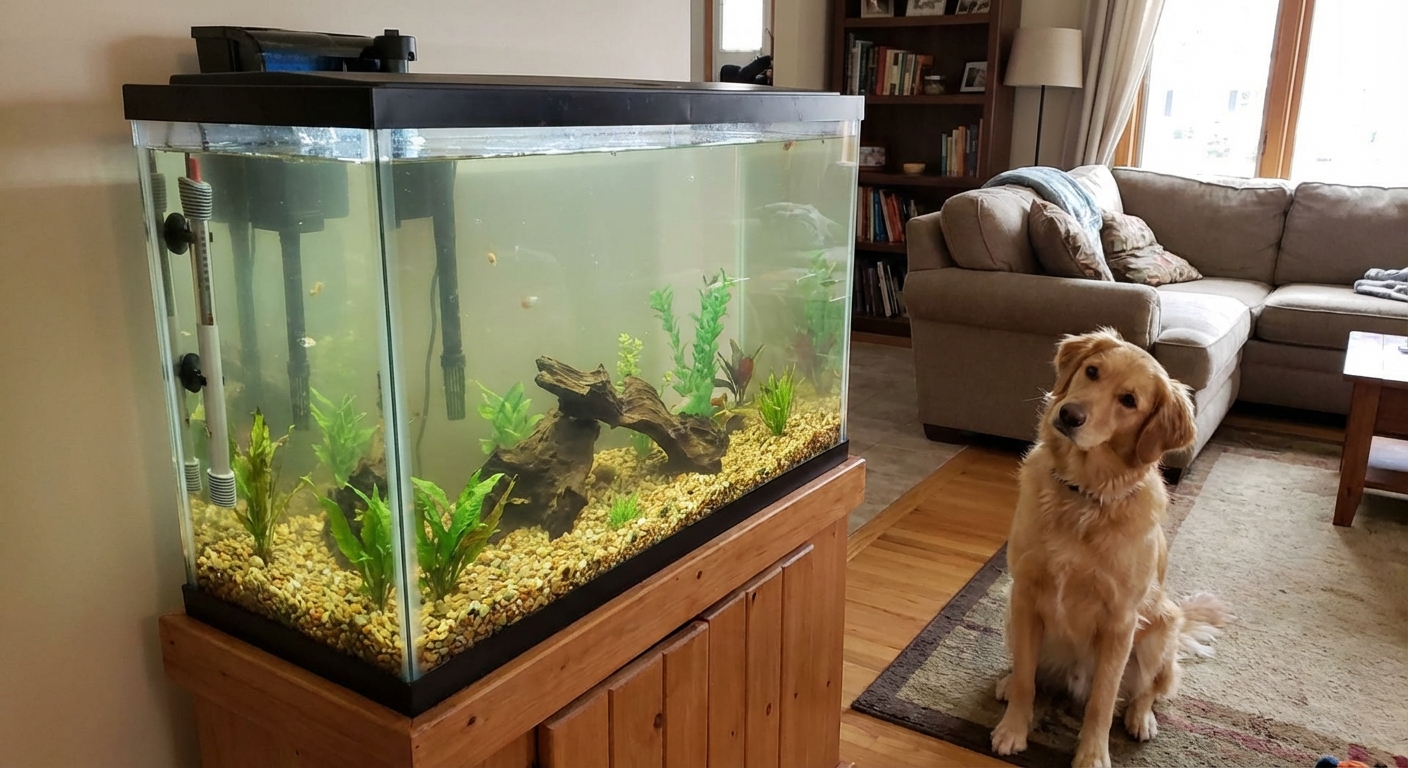
Clear water is not just about looks. It is often the first sign that your biological filter is stable, your feeding is dialed in, and your fish are living in a low-stress environment.
If you are stuck, bring your tank size, filter type, stocking list, and your latest ammonia, nitrite, and nitrate readings to a reputable local fish store or aquatic veterinarian. The numbers usually tell the story.