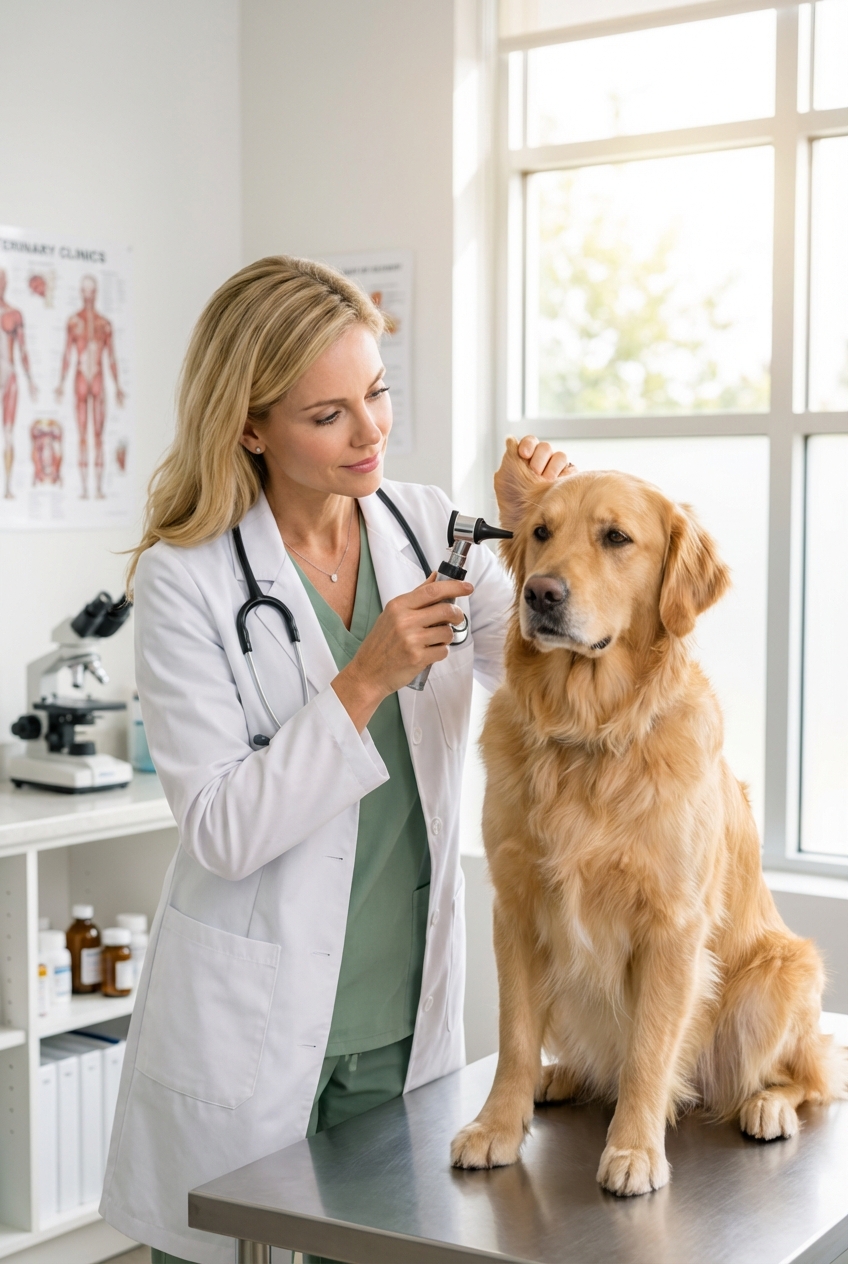
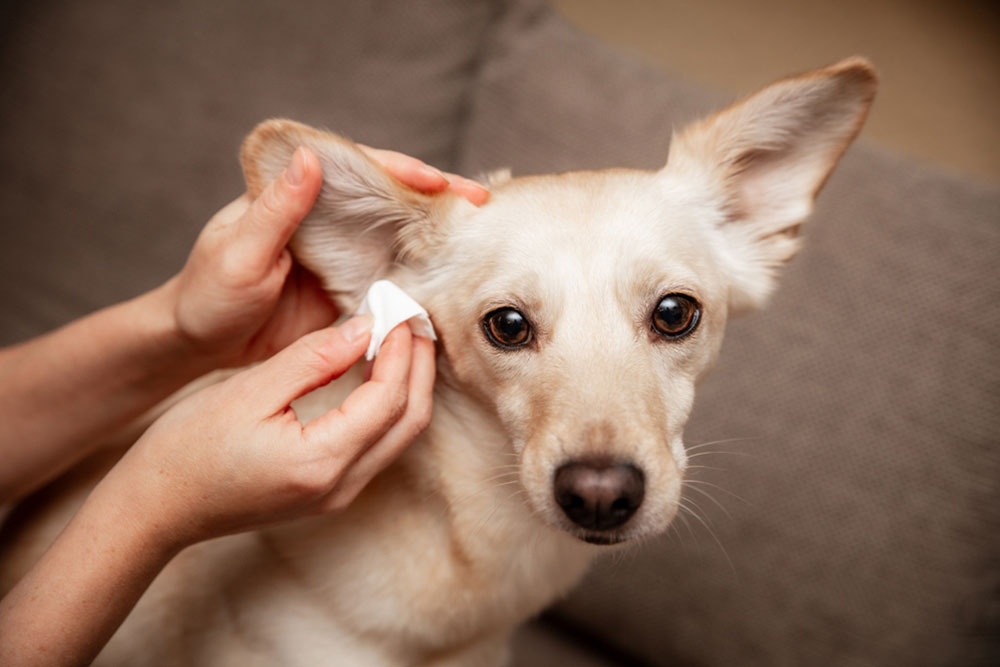
A calm, pet-friendly guide to cleaning your dog’s ears at home: safety checks, supplies to use (and avoid), step-by-step technique, frequency tips, and vet...
Article
•
Designer Mixes
Cleaning Your Dog’s Ears: Tips and Advice

Shari Shidate
Designer Mixes contributor
Ear care can feel intimidating at first, especially if your dog is wiggly or has had ear infections before. The good news is that ear cleaning is usually simple when it is truly needed, and doing it the right way can help prevent painful inflammation and recurring infections.
As a veterinary assistant, I always tell families this: the goal is not to scrub your dog’s ears until they look perfect. The goal is to remove excess wax and debris, keep the ears comfortable (especially after swimming or baths), and catch problems early.
Quick note: This article is for general education and is not a substitute for veterinary diagnosis or treatment.
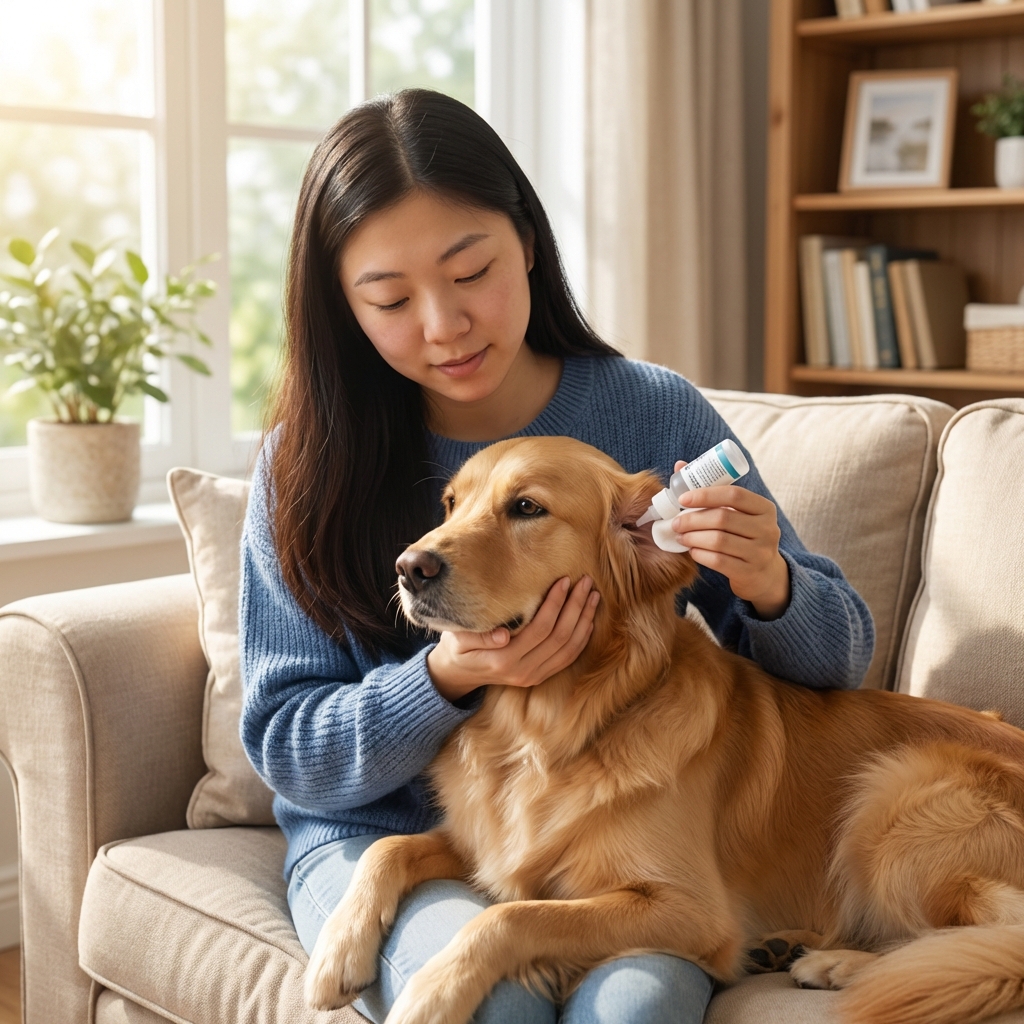
Do dogs need ear cleaning?
Some do, some do not. Many dogs have healthy ears that stay clean on their own and may need little to no routine cleaning. Others need more consistent help, especially dogs who are prone to wax buildup, allergies, or moisture in the ears.
Dogs that often need more ear care
- Floppy-eared breeds (less airflow, more trapped moisture)
- Hairy ear canals (hair can trap wax and debris)
- Dogs who swim or get frequent baths
- Dogs with allergies (allergies can inflame the ear canal and increase wax)
- Dogs with a history of ear infections
If your dog’s ears smell normal, look pale pink, and your dog is not scratching, that is often a sign you do not need frequent cleanings.
What you’ll need (and what to avoid)
What to use
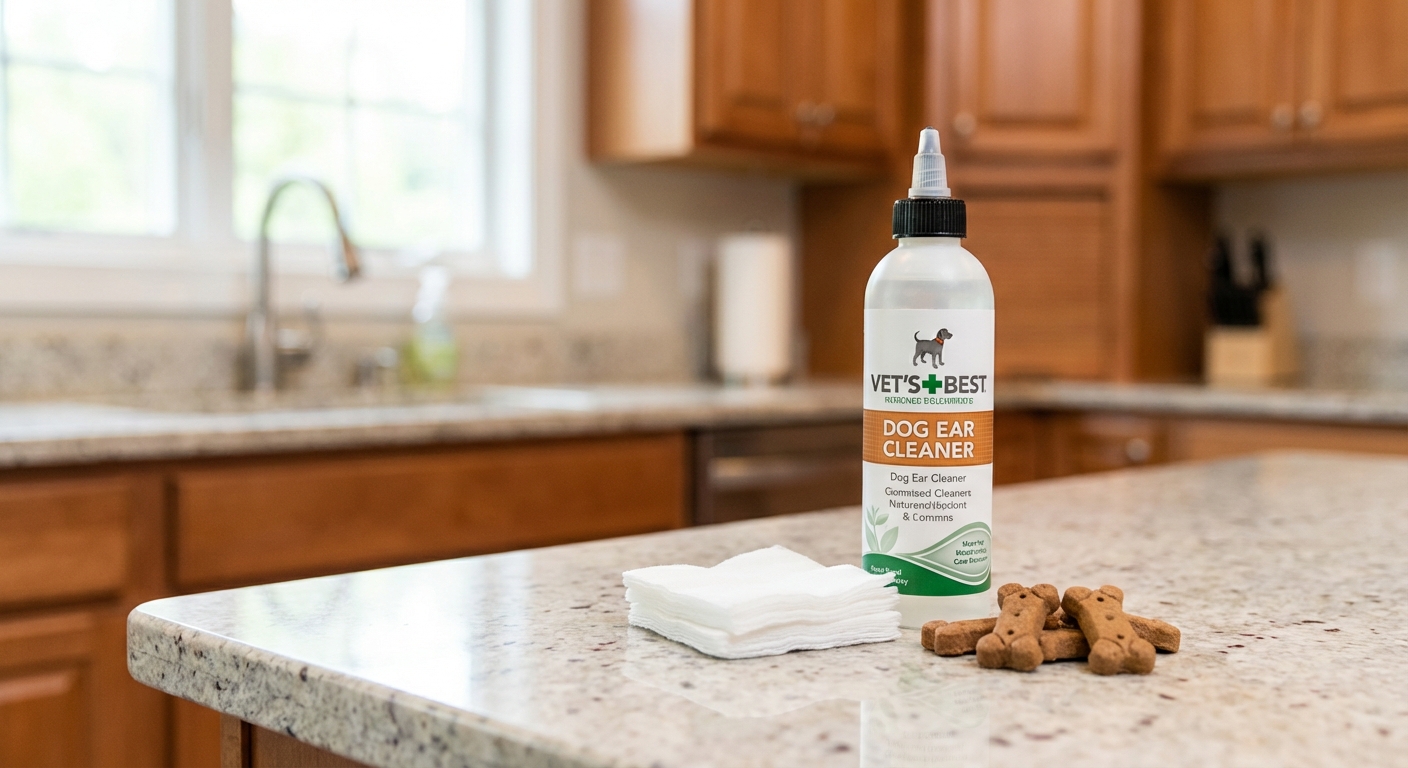
- Veterinarian-approved ear cleaner made for dogs (ask your vet if your dog has chronic issues)
- Gauze squares or cotton rounds for wiping
- Paper towels for the shake-out phase
- Treats for a calm, positive experience
What to avoid
- Cotton swabs (Q-tips) inside the ear canal. They can push debris deeper and may injure the ear.
- Hydrogen peroxide or alcohol unless your veterinarian specifically tells you to use it. These can be irritating and painful on inflamed tissue.
- Homemade vinegar mixes for routine care. Even when diluted, they can sting or irritate, especially if the ear is inflamed or has tiny abrasions.
- Essential oils. Many are irritating or unsafe for pets, especially near sensitive tissues.
- Medicated ear drops or cleaners unless prescribed for your dog. These are meant for specific conditions and should be vet-directed.
If your dog has an ear infection, a ruptured eardrum, or significant inflammation, the wrong product can make things worse. When in doubt, call your vet.
About cleaner types: Some products are designed to soften wax, some help with drying after water exposure, and some are medicated. Your veterinarian can help you pick the right one for your dog’s ears.
How to clean your dog’s ears
Choose a time when your dog is relaxed, like after a walk. Start slow and keep it upbeat. Most dogs tolerate ear cleaning much better when it is predictable and gentle.
Before you start: when not to clean
Skip cleaning and contact your vet promptly (or seek urgent care) if you notice:
- Severe pain, yelping, or your dog will not let you touch the ear
- Marked redness, swelling, or thick discharge
- Bleeding
- Neurologic signs like a head tilt, loss of balance, walking oddly, or rapid eye movements
- Possible foreign material like a foxtail or grass awn, sudden one-sided pain, or sudden intense head shaking after being outdoors
- Concern for a ruptured eardrum, which can sometimes look like sudden severe pain, head tilt, balance changes, or sudden hearing changes
1) Take a quick look
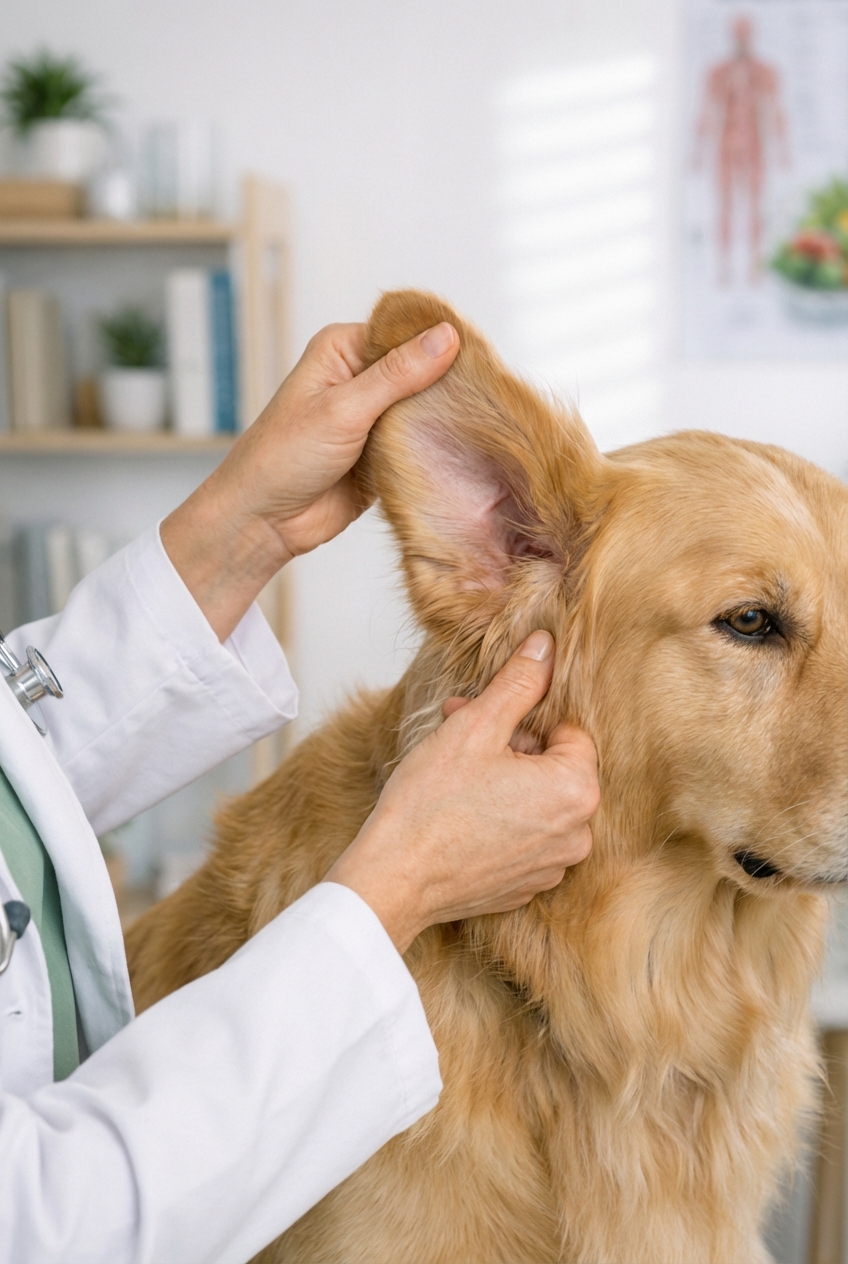
Lift the ear flap and look for:
- Light pink skin (healthy)
- Small amounts of light wax (often normal)
- Redness, swelling, heavy discharge, or a strong odor (not normal)
If your dog seems painful or you see marked redness, swelling, discharge, or a strong odor, pause and contact your vet before cleaning.
2) Add ear cleaner
Hold the ear flap up and place the tip of the bottle at the opening of the ear canal, without jamming it down inside. Apply a generous amount of cleaner until the canal is well-coated.
3) Massage the base of the ear
Massage the base of the ear (where the ear meets the head) for 20 to 30 seconds. You should hear a soft squishing sound. This helps loosen wax and debris deeper in the canal.
4) Let your dog shake
Step back and let your dog shake their head. This is a good thing. It helps bring debris up and out.
5) Wipe what you can see
Use gauze or a cotton round to wipe the inner ear flap and the parts of the canal you can easily reach. Do not force anything deep into the ear.
6) Stop if something feels wrong
If your dog yelps, you see blood, or the ear suddenly looks more irritated, stop and call your vet. It is always okay to pause and get guidance.
7) Reward and repeat on the other side
Offer a treat and calm praise. If your dog only tolerates one ear at a time right now, that is okay. Build up slowly.
How often to clean
There is no one perfect schedule. Too much cleaning can irritate the ear canal, and too little can allow buildup in dogs who need help.
- Many dogs: only as needed, when you notice wax, debris, or a mild “ear” smell
- Swimmers or frequent bath dogs: often after water exposure, using a vet-recommended routine
- Dogs with allergies or recurring infections: follow your veterinarian’s plan
A helpful rule: clean when needed, not just because it is on the calendar.
Ear infection signs
Ear infections are common, uncomfortable, and they can worsen quickly. Cleaning alone does not cure an infection, and it can be painful to clean an infected ear.
Call your vet if you notice
- Strong odor (yeasty, sour, or foul smell)
- Thick discharge (yellow, green, brown, or black)
- Redness, swelling, or heat
- Constant scratching or pawing at the ear
- Head shaking or head tilt
- Pain when you touch the ear
- Balance issues or walking oddly
Infections can involve bacteria, yeast, or both, and treatment depends on what is present. Many clinics will recommend an ear cytology test, which is a quick look under the microscope to guide the right medication.
One more cause to know: ear mites are less common in adult dogs but can show up in puppies, strays, and multi-pet homes. If you see intense itching with dark debris that looks like coffee grounds, your vet can confirm and prescribe the right treatment.
Keeping ears healthy
Prevention is usually simpler than treatment, and small habits can make a big difference.
Simple habits
- Dry ears well after baths and swimming. Water trapped in the canal is a common trigger.
- Address allergies. Itchy skin and recurring ear inflammation often go together.
- Keep grooming gentle. If your dog gets ear hair plucked, ask your vet or groomer if it is truly necessary for your dog.
- Do a weekly sniff and peek. A quick check helps you catch changes early.
If your dog is a frequent swimmer, ask your veterinarian about a safe, preventive ear routine. For the right dog, it can make a big difference.
Quick FAQ
Can I use baby wipes?
For the ear flap only, a gentle, fragrance-free wipe can be okay in a pinch. Avoid going into the canal, and do not use wipes with perfumes, alcohol, or essential oils.
Why is my dog’s ear wax dark brown?
Some dogs naturally have darker wax, but dark wax plus odor, redness, discharge, or itching can signal yeast or infection. If you are unsure, it is worth a vet check.
My dog hates ear cleaning. What can I do?
Go slower than you think you need to. Pair ear handling with treats daily for a week before you even bring out the cleaner. For very sensitive dogs, your veterinarian may recommend treating underlying pain or inflammation first.
The bottom line
Cleaning your dog’s ears should be gentle, simple, and low-stress. Many dogs need little to no routine cleaning. When cleaning is needed, use a dog-safe ear cleaner, avoid cotton swabs in the canal, and focus on what you can see and safely wipe. And if the ear looks inflamed, smells bad, has discharge, or your dog seems uncomfortable, trust your instincts and call your veterinarian.
Small, consistent check-ins go a long way for ear health.