Resource guarding is common and manageable. Learn why it happens, the early warning signs, how to de-escalate safely, and an evidence-based training plan usi...
Article
•
Designer Mixes
Chow Chow Aggression Myths and Tongue Color

Shari Shidate
Designer Mixes contributor
Chow Chows are one of those breeds that people think they already understand. You have probably heard that they are “naturally aggressive” or that their blue-black tongue means something wild about temperament or health. As a veterinary assistant, I have met plenty of Chows who are calm, polite, and deeply devoted to their families, and I have also met Chows who were fearful and reactive. The difference is almost never “the tongue” and it is not a simple “this breed is bad.” It is about genetics, early socialization, handling, and how we set them up to feel safe.
Quick note: This is general education, not a substitute for individualized veterinary or behavior advice. If you are worried about biting risk or sudden behavior changes, involve your veterinarian and a qualified professional.
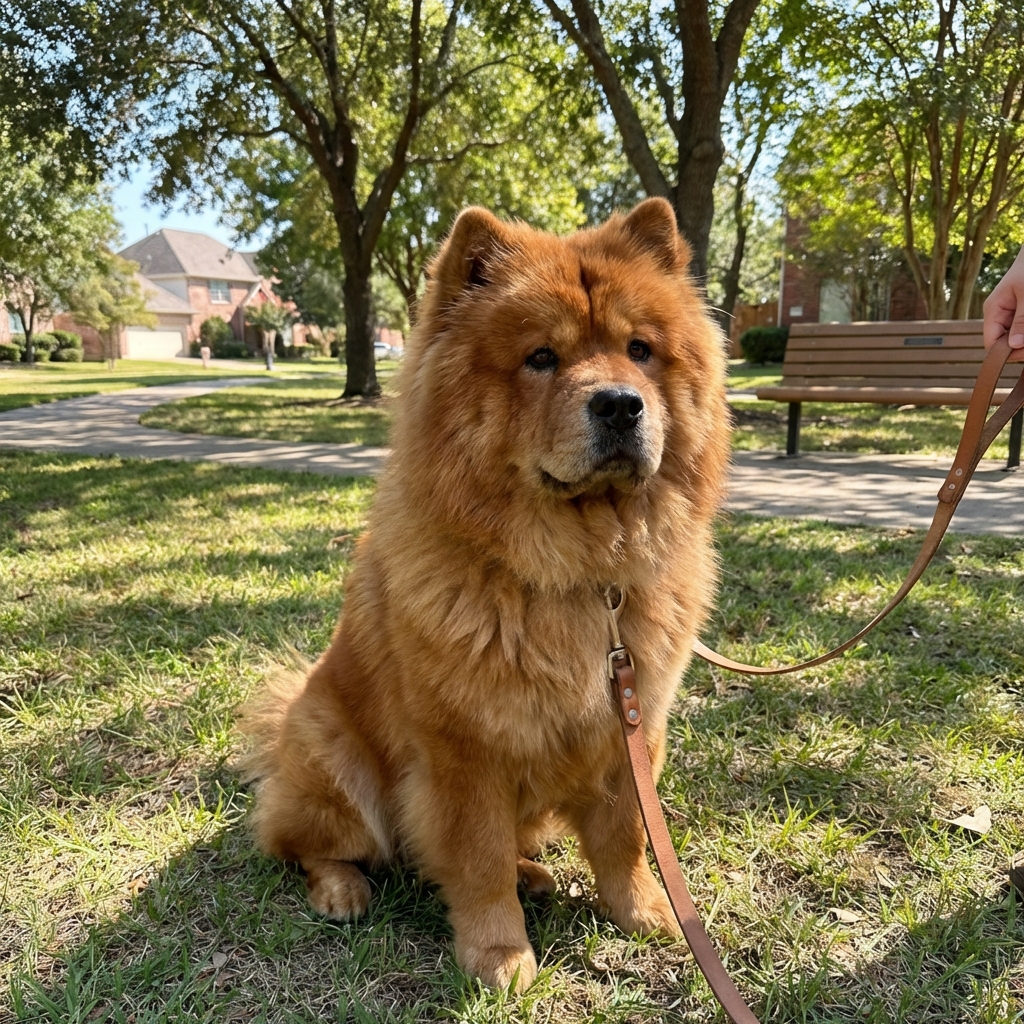
Are Chow Chows aggressive?
Chow Chows can be protective, independent, and quick to set boundaries with strangers or with unfamiliar handling. That can look like “aggression” to people who expect a dog to greet every stranger with a wagging tail. But true aggression is a behavior, not a breed identity.
It also helps to separate normal communication from danger. Growling, stiffening, backing away, and baring teeth are often warnings that a dog is uncomfortable and needs space. The goal is to listen to those warnings and change the situation, not punish the dog for communicating.
Most of the time, what owners see is one of these patterns:
- Fear-based reactivity: the dog is overwhelmed or unsure and uses barking, growling, or lunging to create distance.
- Territorial behavior : guarding the home, yard, car, or even the owner.
- Handling sensitivity: discomfort with strangers reaching toward the face, paws, or fluffy coat.
- Resource guarding : protecting food, toys, or favorite resting spots.
Chows are also a breed that tends to be reserved with unfamiliar people. Reserved is not the same thing as dangerous. In fact, many well-bred, well-socialized Chow Chows are quiet observers who simply prefer respectful space.
Why the stereotype sticks
There are a few reasons this myth sticks around:
- They do not always broadcast friendliness. Compared to a Golden Retriever, a Chow’s body language can be subtle and serious.
- They are powerful dogs. When a strong dog reacts, it gets remembered.
- Poor socialization shows quickly. If a Chow is not gently introduced to people, handling, grooming, and new environments early on, the breed’s natural caution can harden into avoidance or defensiveness.
- Grooming and vet care can be challenging. If early handling was rushed, painful, or frightening, some Chows learn to resist, and that can escalate.
It is also important to be honest: some lines may have higher risk for unstable temperament due to irresponsible breeding. That is not a Chow Chow problem so much as a breeding problem. If you are getting a puppy, look for a breeder who prioritizes temperament and early handling, and who will discuss the dog’s parents and socialization plan. If you are adopting, ask the rescue what they have observed around strangers, handling, and other dogs.
What is normal behavior?
A typical Chow Chow is often loyal and affectionate with their family and more selective with strangers. Many are not “dog park dogs,” and that is okay. Normal traits can include:
- Being calm at home and watchful with visitors
- Preferring respectful greetings over hugs and face-to-face leaning
- Bonding strongly with one or two people
- Needing consistent boundaries and routines
If you have a Chow, it helps to reframe the goal. Instead of “my dog must love everyone,” aim for “my dog can remain calm and safe around people and situations.”

Lowering bite risk
The best prevention is thoughtful, early work and ongoing management. These are research-supported, practical steps that make a real difference.
1) Start socialization early
Socialization does not mean forcing your puppy to be petted by everyone. It means creating positive, low-pressure exposures to:
- Different people (ages, hats, uniforms, wheelchairs)
- Handling (paws, ears, brushing, gentle restraint)
- Sounds and surfaces (vacuums, traffic, slippery floors)
- Veterinary and grooming environments
Pair new experiences with tiny treats and allow the puppy to choose distance. For cautious breeds like Chow Chows, choice builds confidence.
2) Teach cooperative grooming
Chows have heavy coats and need regular brushing, sometimes professional grooming, and occasionally medical shaving for hot spots . If grooming becomes a wrestling match, everyone loses.
Try short sessions (1 to 3 minutes) with rewards. Practice “chin rest,” “paw,” and “touch” cues. The biggest goal is to keep the coat mat-free and comfortable, since mats can trap moisture and pull on skin. Regular brushing and deshedding improves airflow through the coat.
A quick coat note: shaving a double-coated dog is not routinely recommended for cooling and can increase sunburn risk. If shaving is needed for medical reasons, your veterinarian can guide you.
If your dog is already struggling, ask your veterinarian about medication support for grooming and consider a fear-free groomer.
3) Skip punishment training
Harsh corrections can suppress warning signals (like growling) while increasing fear and stress. That is how bites happen “without warning.” Instead, focus on management, reward-based training, and addressing the emotion underneath the behavior.
4) Use safety tools
Muzzles, leashes, gates, and quiet spaces are not failures. They are responsible dog ownership. A properly fitted basket muzzle can allow safer training and vet visits while you work on behavior.
5) Manage visitors and kids
Many bites happen during greetings and high-traffic moments, not “out of nowhere.” Helpful rules:
- Do not force greetings. Let your Chow approach, sniff, and choose to leave.
- Ask guests not to reach over the head or go face-to-face.
- Use a leash, baby gate, or separate room during parties, deliveries, or chaotic visits.
- Supervise children closely. No hugging, climbing, or grabbing the coat.
6) Rule out pain
If a Chow suddenly becomes grumpy, reactive, or unwilling to be touched, assume discomfort until proven otherwise. Common contributors include ear infections, dental pain, arthritis, and skin irritation under the coat.
If problems are already happening
If you are seeing growling, snapping, or lunging, do not wait for it to “settle.” A realistic, safer plan is:
- Prevent rehearsal: avoid known triggers while you build skills (distance, barriers, no surprise greetings).
- Track patterns: write down what happened right before the reaction (who, where, distance, handling).
- Vet check: rule out pain and discuss anxiety support if needed.
- Get qualified help: a positive-reinforcement trainer or veterinary behaviorist can build a step-by-step plan.
Tongue color: what is normal?
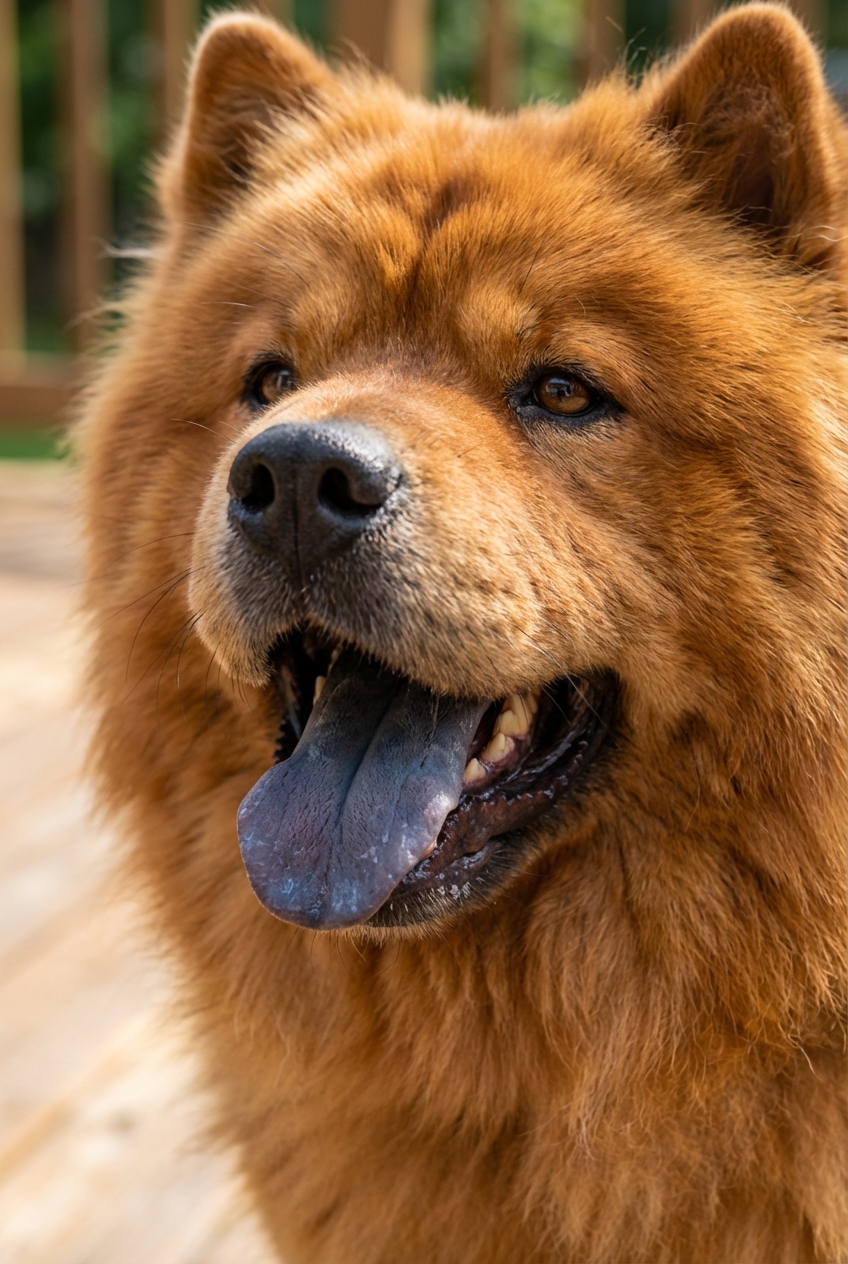
The Chow Chow is famous for its blue-black tongue. That coloration often includes the tongue, gums, and lips, and it can vary from deep purple to bluish-black. This is normal for the breed and is linked to pigmentation (melanin), not mood, dominance, or aggression.
Do all Chows have it?
Most purebred Chows have a dark tongue, but you can see variation. Some may have pink areas, especially when young. Puppies can start with a pink tongue that darkens over time, often by several months of age. A little residual spotting can persist in some dogs.
Also, Chow Chows are not the only breed with dark tongue pigment. Shar-Pei, for example, can have similar coloration.
Does it predict temperament?
No. A dark tongue does not mean a dog is more aggressive, more protective, or “stronger willed.” Temperament is influenced by genetics, early experiences, training, and health.
When color changes matter
Even though Chow tongues are naturally dark, there are mouth and mucous membrane color changes that should be treated as urgent.
Call a vet urgently if you see:
- Pale white or gray in normally pink tissues (possible shock, anemia, severe blood loss)
- Blue or purple in areas that are usually pink for your dog (possible poor oxygenation)
- Bright red with weakness or collapse (possible heat stroke, toxicity, inflammation)
- Yellow tint (possible liver disease or red blood cell breakdown)
- New dark spots, lumps, ulcers, or bleeding in the mouth (needs an exam)
Where to check in pigmented dogs
Because pigmentation is normal in the mouth, it can be harder for owners to judge gum color. A practical tip is to check the conjunctiva, the inner pink lining of the lower eyelid, since it is often easier to read than dark gums. You can also look for other less-pigmented mucous membranes (such as the inner prepuce or vulva) if appropriate and safe to do so.
Learn what “normal” looks like for your individual dog when they are healthy. If your Chow seems weak, is breathing hard, collapses, vomits repeatedly, or cannot cool down, do not wait based on tongue color alone.
Heat risk
Chow Chows can overheat more easily than many breeds due to their thick double coat and relatively low heat tolerance. Risk goes up in peak summer heat, high humidity, and with factors like obesity, older age, heavy exercise, and underlying airway or heart disease.
If your Chow is panting heavily, drooling, or seems confused, move them to shade or air conditioning and contact a veterinarian. Prevention is best: walk early, offer water, avoid hot pavement, and keep the coat well brushed and mat-free so air can move through it.
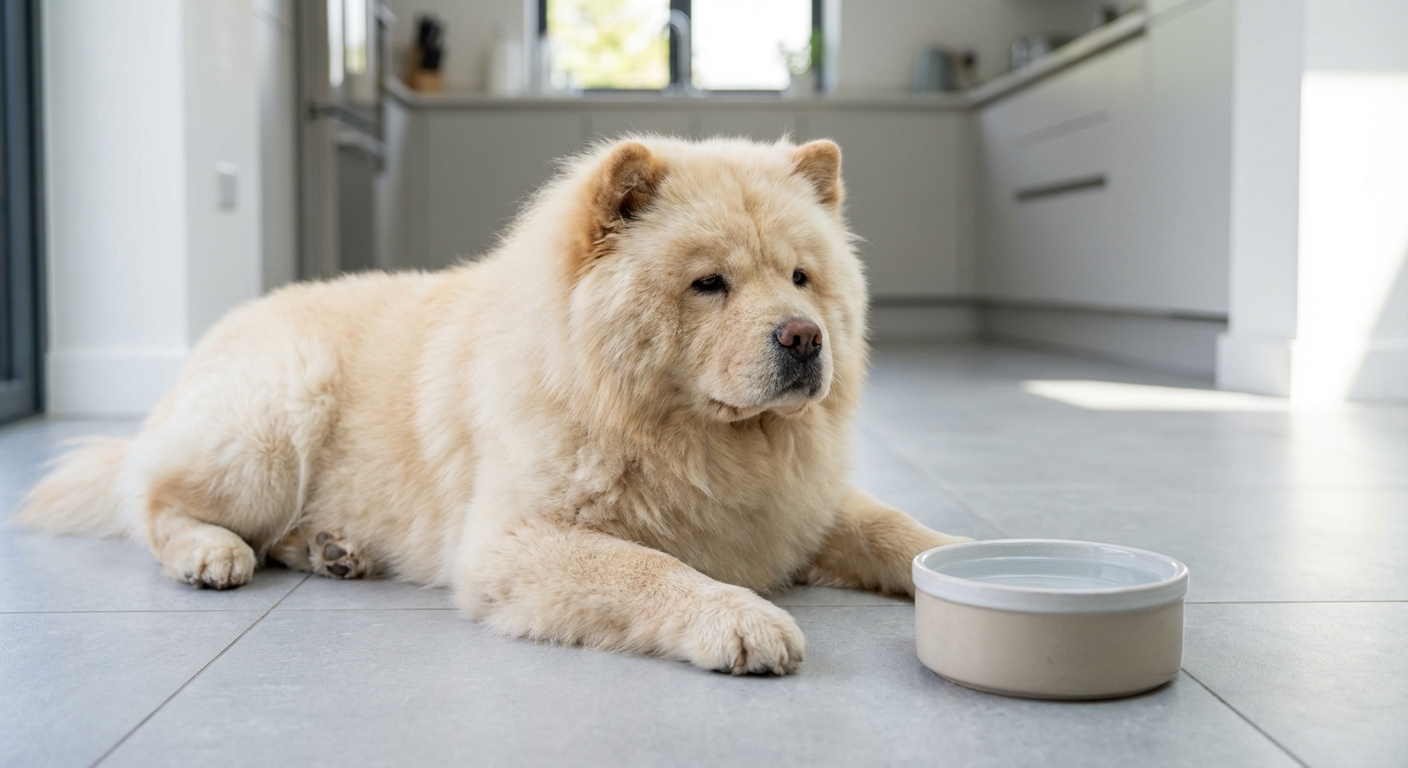
Bottom line
Chow Chows are not “born aggressive,” and their tongue color is not a behavior label. They are a dignified, loyal breed that thrives with calm leadership, early socialization, cooperative handling, and respect for their boundaries. If you are seeing growling, snapping, or intense guarding, do not wait for it to get worse. A veterinarian visit to rule out pain plus a qualified positive-reinforcement trainer or veterinary behaviorist can make a huge difference, and it can make life safer and more peaceful for everyone in your home.