Everything you need to care for pet gerbils: tank vs cage setups, safe bedding and sand baths, daily diet and treats, bonding and declanning signs, handling ...
Article
•
Designer Mixes
Chinchilla Care Basics

Shari Shidate
Designer Mixes contributor
Chinchillas are one of those pets that look sturdy but are actually very delicate. Their plush coat, sensitive digestive system, and strong need for cool temperatures mean they thrive with consistent routines. They are also a long-term commitment. Many chinchillas live 10 to 15+ years with good care, so it helps to plan for their space, vet access, and daily routine before you bring one home.
If you are new to chinchillas, focus on three essentials first: a hay-based diet, regular dust baths, and heat safety. Then build out their cage setup, social needs, handling habits, and health checks from there.
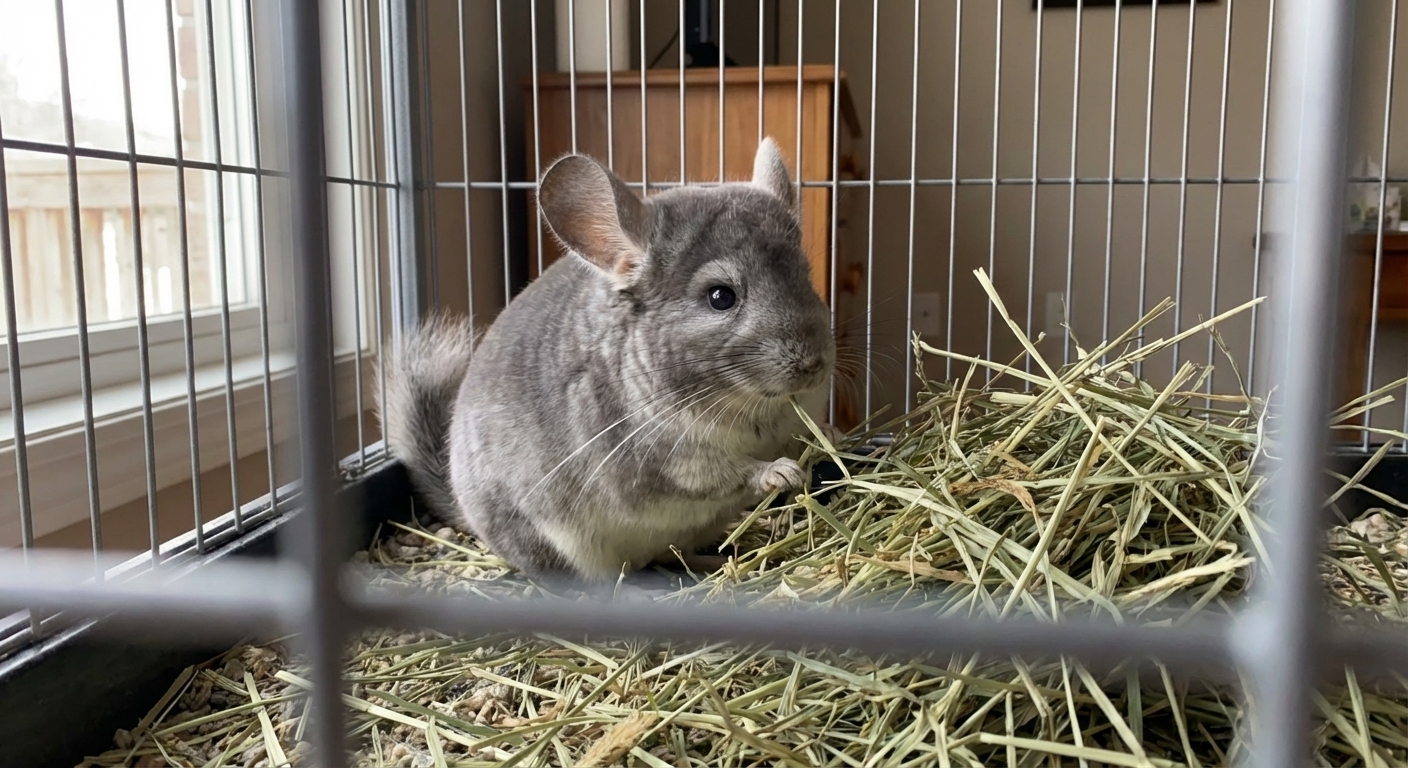
Diet: Hay first, pellets second
In clinic settings, we tend to think of chinchillas as true fiber specialists. Their gut is designed for dry, high-fiber foods, and diet mistakes are one of the fastest ways to end up with diarrhea, bloat, or painful GI slowdowns.
The daily foundation
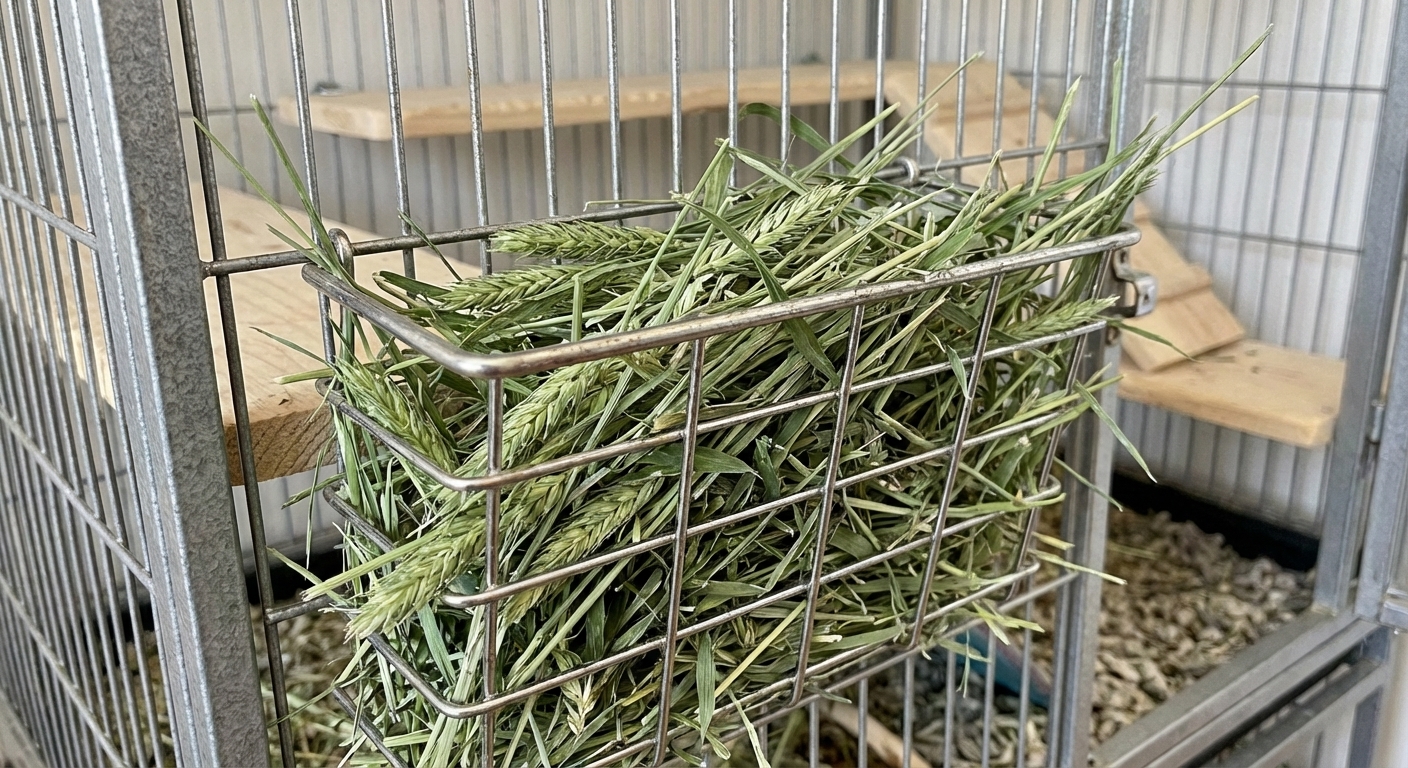
- Unlimited grass hay (timothy, orchard grass, or meadow hay): This should be available at all times. Hay supports proper tooth wear and keeps the digestive tract moving.
- Measured chinchilla pellets: Choose a plain, hay-based pellet made specifically for chinchillas, not a colorful mix. A common adult range is about 1 to 2 tablespoons per day (often roughly 15 to 30 grams depending on pellet density), but this varies by brand, age, and body size. Follow the label and your exotics vet’s guidance.
- Fresh water: A bottle is often easiest to keep clean and spill-free, but a heavy crock can work for some chinchillas. Either way, change water daily and monitor for leaks, tipping, or bedding contamination.
Treats and add-ons: less is more
Chinchillas do not handle sugar well. Too many sweet treats can disrupt their gut bacteria and lead to serious digestive upset.
- Best treats: tiny portions of safe, low-sugar options like a single plain rose hip or a pinch of dried herbs, used sparingly.
- Generally avoid for beginners: sugary fruit, raisins, yogurt drops, and most “trail mix” style pet-store blends. Nuts and seeds are also typically discouraged due to fat content and GI upset risk. If you want to offer any higher-fat treats, do it only with exotics-vet guidance.
- Be careful with fresh foods: Many chinchillas do poorly with fresh vegetables and fruit, especially if introduced suddenly. If you want to add anything beyond hay and pellets, check with your exotics vet first.
Quick diet checklist
- Hay smells fresh, not musty or dusty.
- Pellets are uniform and not full of colorful bits.
- Poops are plentiful, firm, and oval. A sudden decrease is an early warning sign.
Dust baths: not optional, just specific
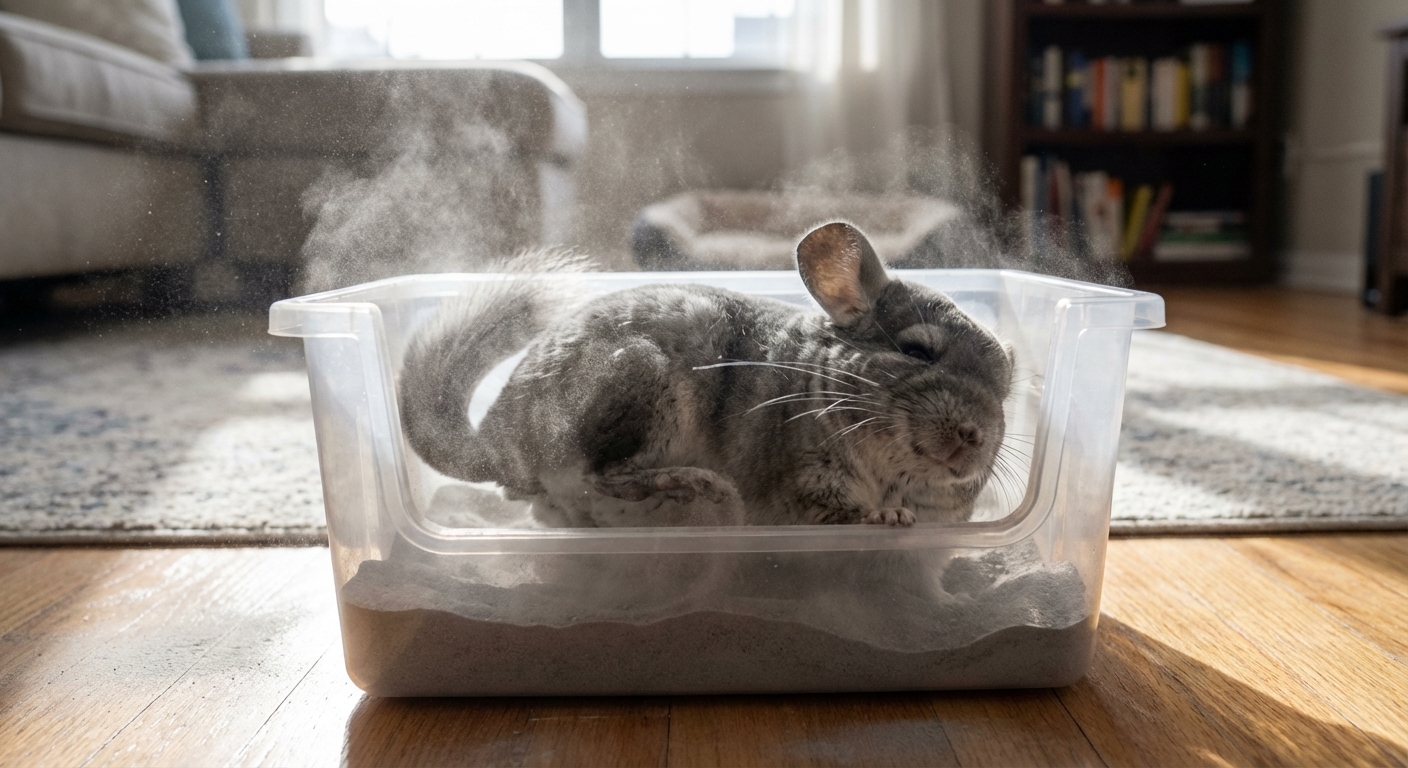
Once diet is steady, coat care is the next big routine. Chinchillas have incredibly dense fur, and they keep it healthy by bathing in dust, not water. A good dust bath routine helps remove oil and moisture and can prevent matting and skin issues.
How often?
- Most chinchillas do well with dust baths 2 to 4 times per week.
- In humid climates or during warmer months, some need them a bit more often.
- If your chinchilla’s skin looks dry or flaky, reduce frequency and check humidity and dust quality.
How to do it right
- Use commercial chinchilla bath dust (often volcanic ash or pumice-based), not sand.
- Offer the bath for about 10 to 15 minutes, then remove it. Leaving it in the cage can turn it into a litter box, and dirty dust is not good for the coat.
- Replace dust regularly and wash the bath house as needed.
Important: Never bathe a chinchilla in water. Wet fur can trap moisture close to the skin and contribute to fungal problems and overheating.
Temperature: your biggest safety issue
Before you perfect toys or cage decor, lock in the environment. If I could put one message on every new chinchilla owner’s fridge, it would be this: chinchillas overheat easily. Their thick coat is perfect for cool mountains, not warm living rooms.
Ideal environment
- Keep them cool and dry. Many chinchillas do best around 60 to 70°F.
- Try to avoid 75°F+, especially if humidity is elevated.
- A helpful target is humidity under 50%.
- Use air conditioning during hot seasons. Fans alone may not be enough.
Heat stroke warning signs
- Rapid breathing or open-mouth breathing
- Weakness, lying stretched out, or reluctance to move
- Bright red ears, drooling, glassy eyes
- Collapse or seizures in severe cases
What to do if you suspect overheating
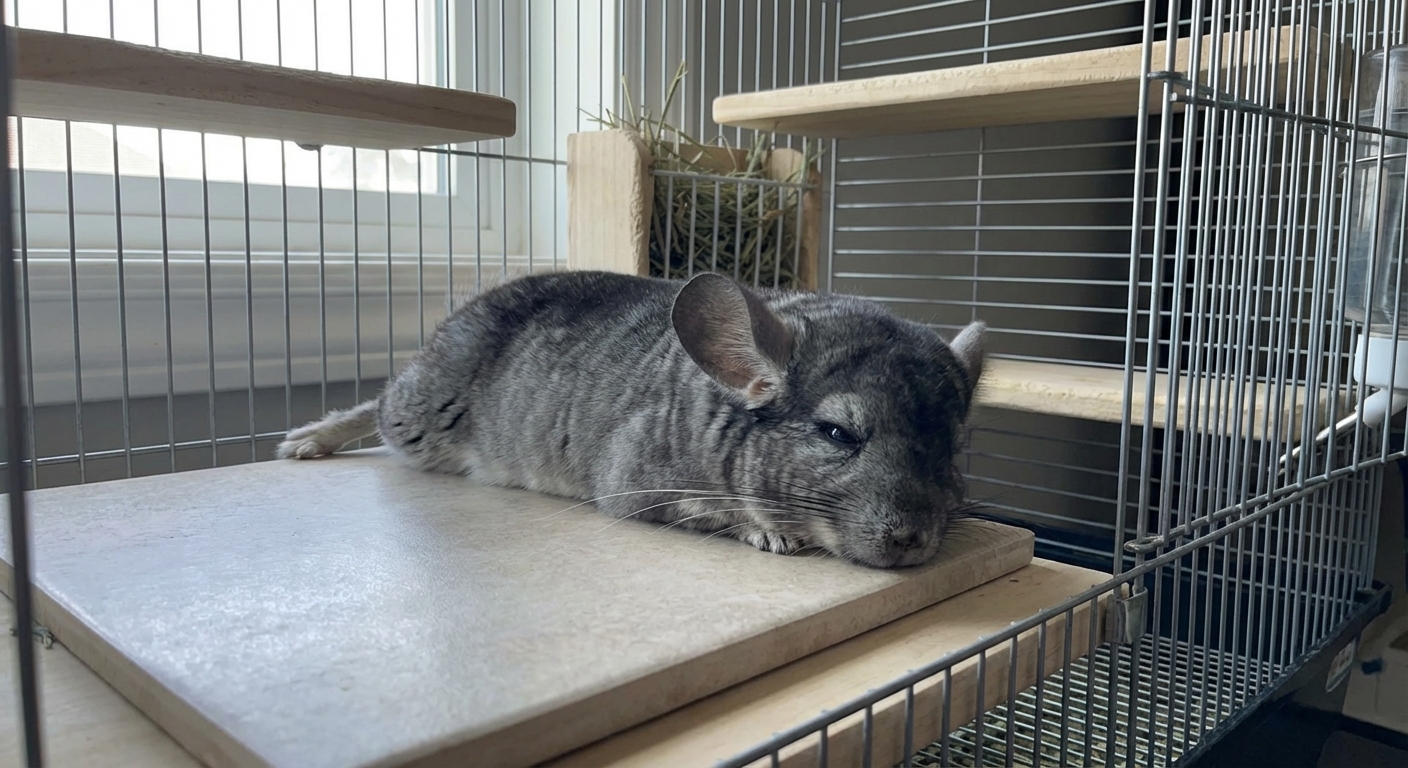
This is an emergency. Move your chinchilla to a cooler room immediately and contact an exotics veterinarian right away. You can offer a cool surface like a ceramic tile to rest on. Avoid extreme cold or ice baths, since sudden temperature swings can be dangerous.
Cage setup: space, ledges, and safe chewing
With diet, dust, and temperature handled, your cage setup becomes your daily quality-of-life multiplier. Chinchillas are athletic jumpers and dedicated chewers. A good cage supports both behaviors safely.
Cage basics
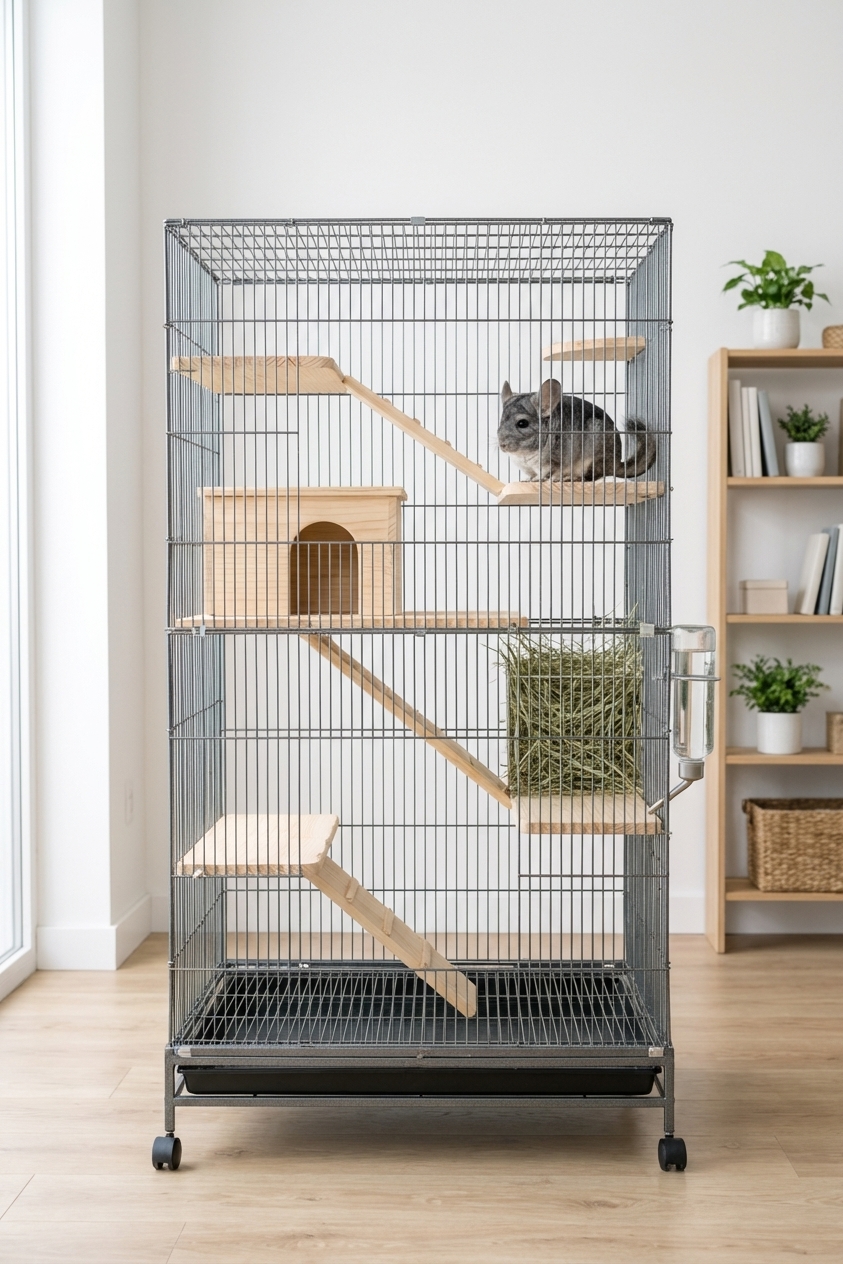
- Room to move: Bigger is always better. A practical minimum for one adult is often around 24 x 24 x 36 inches, but taller and wider cages with multiple levels are strongly preferred. If you are housing a pair, scale up.
- Bar spacing: Aim for 1 inch or less to reduce escape and injury risk, especially for smaller chinchillas.
- Vertical space and ledges: Multiple platforms encourage natural jumping and exercise.
- Solid flooring or solid shelves: Wire floors can contribute to foot injuries. If you have wire levels, cover them with safe, solid surfaces.
- Hide house: A quiet retreat helps them feel secure.
- Chew-safe items: Untreated wood chews help manage constant tooth growth. Avoid painted or glued items.
Wheel safety
- If you use a wheel, choose a large, solid-surface wheel designed for chinchillas.
- A common minimum size is 14 to 16 inches in diameter for adults.
- Avoid wire or rung wheels, which can cause foot and tail injuries.
Bedding and cleaning
- Use low-dust, absorbent bedding appropriate for small animals.
- Avoid cedar. Aromatic softwoods are generally not recommended for sensitive small mammals. If you use pine products, choose kiln-dried options and monitor for irritation.
- Spot-clean daily and do a deeper clean weekly to reduce ammonia and moisture.
- Keep the cage out of direct sunlight and away from vents that blow hot air.
Social needs: solo or bonded pair
Chinchillas are herd animals, and many do best with a compatible, bonded partner. That said, not every chinchilla will accept a roommate, and introductions should be slow and supervised.
- Pairs often do well: Same-sex pairs are common when properly introduced.
- Breeding risk: Opposite-sex pairs can reproduce quickly, so avoid mixed-sex housing unless you are intentionally working with an experienced exotics vet and a responsible breeding plan.
- Go slowly: Use separate cages side-by-side at first, watch for stress or aggression, and only allow shared time when both animals are calm.
Out-of-cage time: safe exercise
Most chinchillas benefit from regular, supervised playtime outside the cage. Keep it calm, cool, and short at first.
- Chinchilla-proof the space: Block access to cords, houseplants, gaps behind furniture, and anything plastic they can chew and swallow.
- Keep it cool: Playtime can raise body temperature. If your home is warm, shorten sessions or skip until conditions are safe.
- Supervise closely: These are fast animals with strong teeth. A quiet, enclosed room is best.
Common health problems to watch for
Chinchillas often hide illness until they feel truly unwell, so small changes matter. Trust your instincts. If something seems off, it is worth a call to an exotics vet.
1) Dental disease and overgrown teeth
Chinchilla teeth grow continuously. Without enough long-fiber hay and appropriate chewing, teeth can overgrow or develop sharp points and painful root issues.
Red flags:
- Drooling or wet chin and chest fur
- Reduced appetite or selective eating
- Weight loss
- Food dropping from the mouth
- Eye discharge or facial swelling in advanced cases
Prevention basics: unlimited hay, safe chews, and regular weigh-ins at home.
2) GI stasis (slowdown) and bloat risk
When the gut slows down, chinchillas can deteriorate quickly. This can be triggered by stress, pain (including dental pain), dehydration, or diet changes.
Seek veterinary care urgently if you notice:
- Fewer or smaller droppings
- No droppings
- Loss of appetite
- Hunched posture, grinding teeth, or signs of discomfort
- Swollen abdomen
3) Fur slip and stress-related issues
Chinchillas may release patches of fur if they feel threatened. This is a defense mechanism, not a grooming choice. Gentle handling and predictable routines help.
4) Ringworm and skin irritation
Fungal infections can occur, especially with damp conditions or contaminated dust baths.
- Look for circular hair loss, flaky skin, or persistent scratching.
- Because ringworm can spread to people, contact your vet promptly for proper diagnosis and treatment.
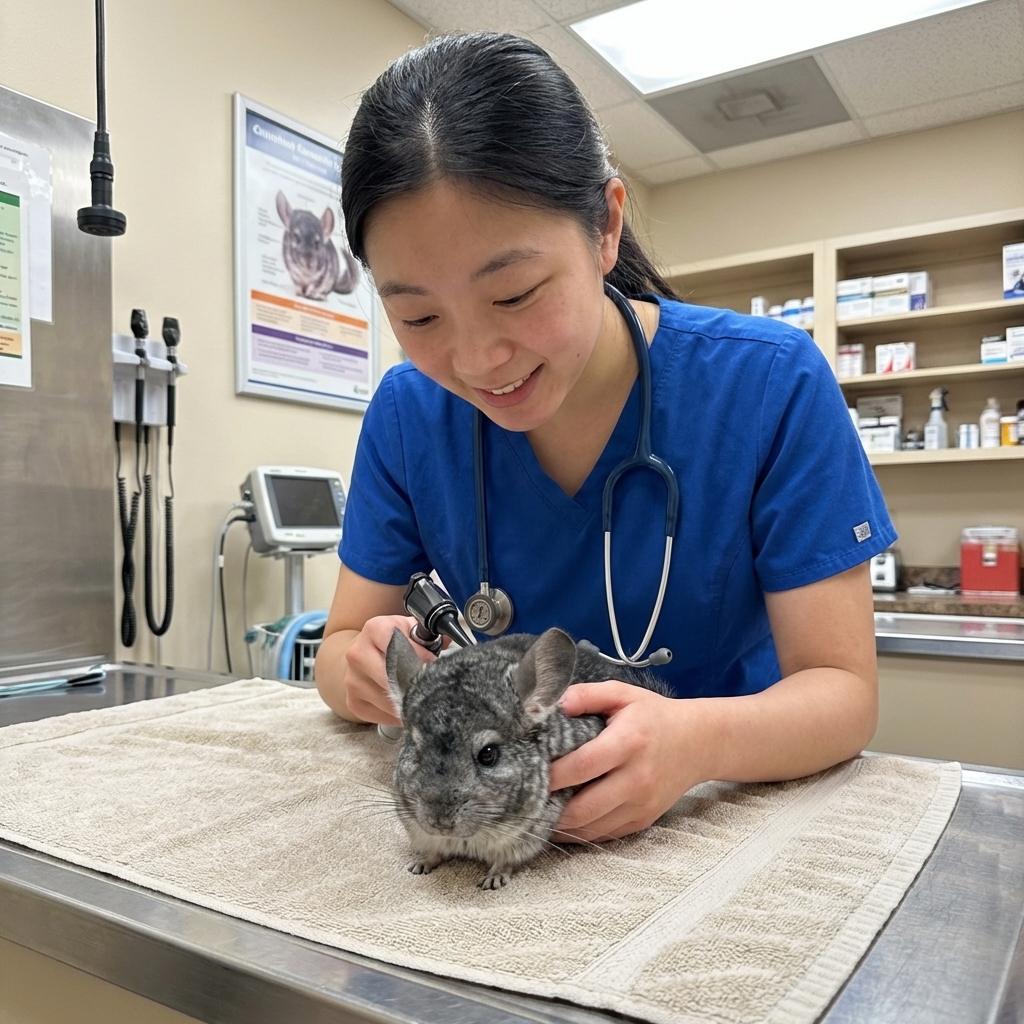
Handling and bonding: gentle and safe
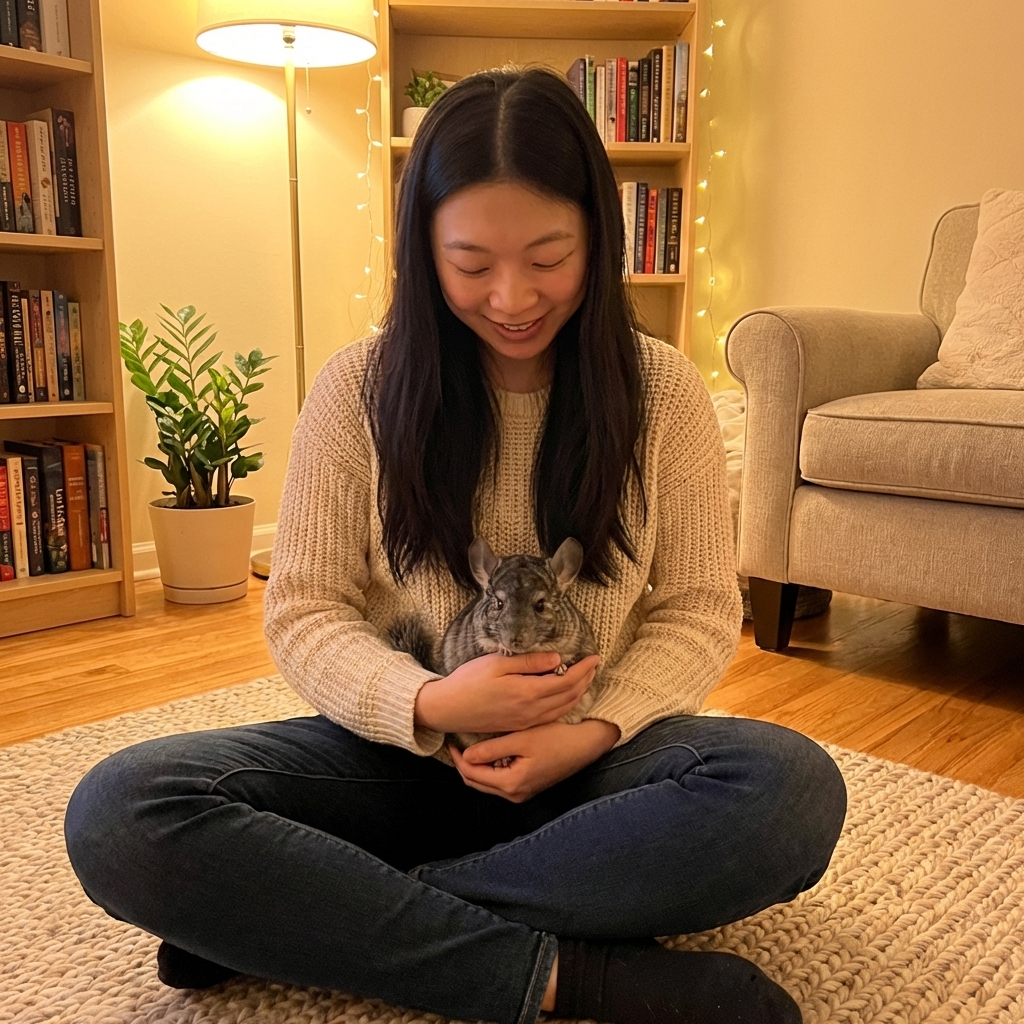
Chinchillas are not typically “cuddle pets,” but they can be wonderfully social once they trust you. The key is calm, consistent interactions.
Handling tips that protect your chinchilla
- Start low to the ground in a safe room. Chinchillas can leap suddenly, and falls can cause injury.
- Support the body with two hands. Avoid squeezing the chest.
- Never grab by the fur. Fur slip is common when they feel restrained.
- Keep sessions short at first. End on a calm note.
A simple bonding routine
- Offer hay or a tiny safe treat by hand.
- Talk softly and move slowly.
- Let your chinchilla approach you, rather than chasing them around the cage.
At-home wellness habits
You do not need complicated tools to keep your chinchilla healthy. You just need a few steady routines.
- Weigh weekly using a kitchen scale and log it. Small weight drops can be an early illness sign.
- Monitor poop daily. Quantity and size matter.
- Check eating and drinking. A chinchilla that is not eating normally needs attention quickly.
- Do a quick coat check after dust baths for any bald spots, redness, or dandruff.
- Find an exotics vet now, before you need one in an emergency.
When to call the vet fast
- Not eating or a major drop in appetite, especially if lasting 12 hours
- No droppings or a sudden sharp decrease in droppings
- Suspected overheating or open-mouth breathing
- Severe lethargy, collapse, seizures, or labored breathing
- Bloating or signs of significant pain
When it comes to chinchillas, prevention is not just cheaper. It is kinder. A steady hay-based diet, cool temperatures, and early vet care can add years of comfort to their lives.