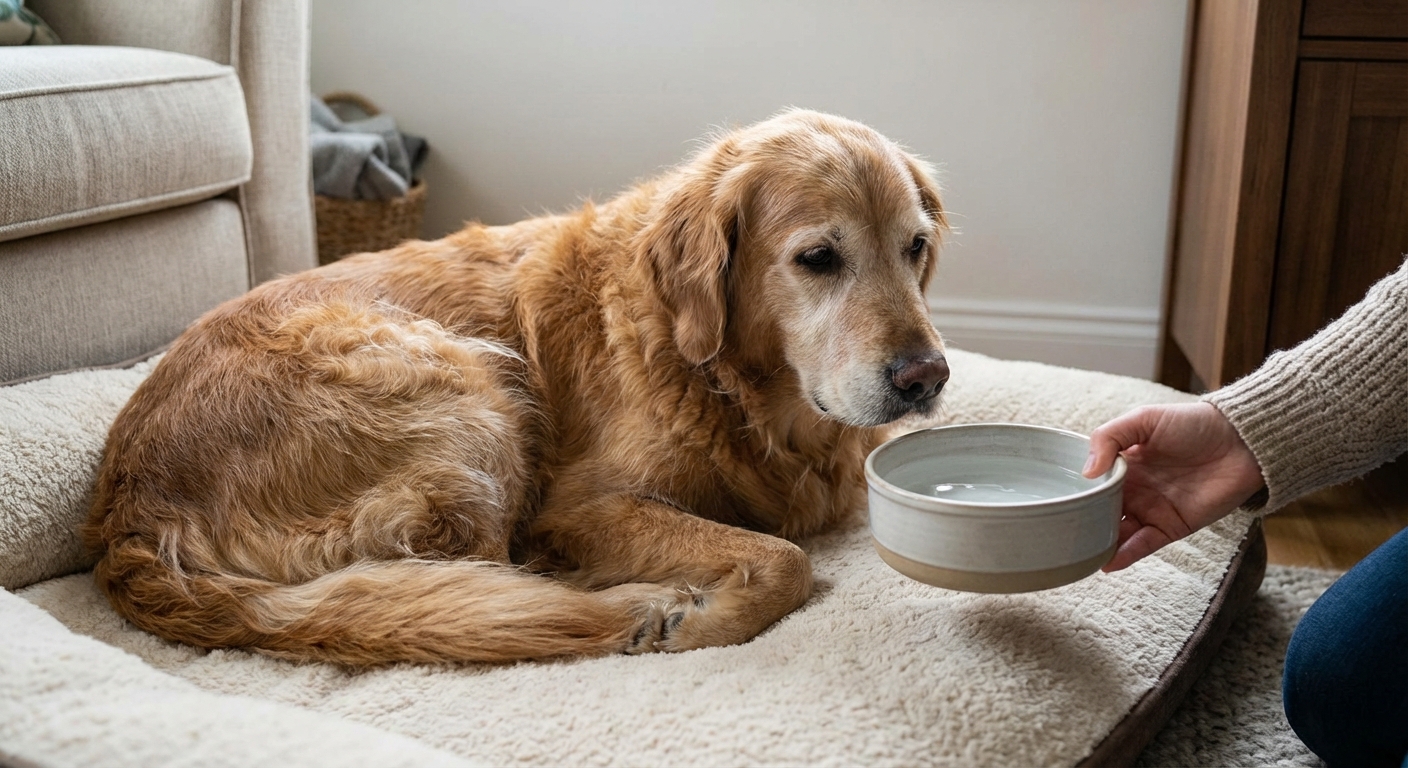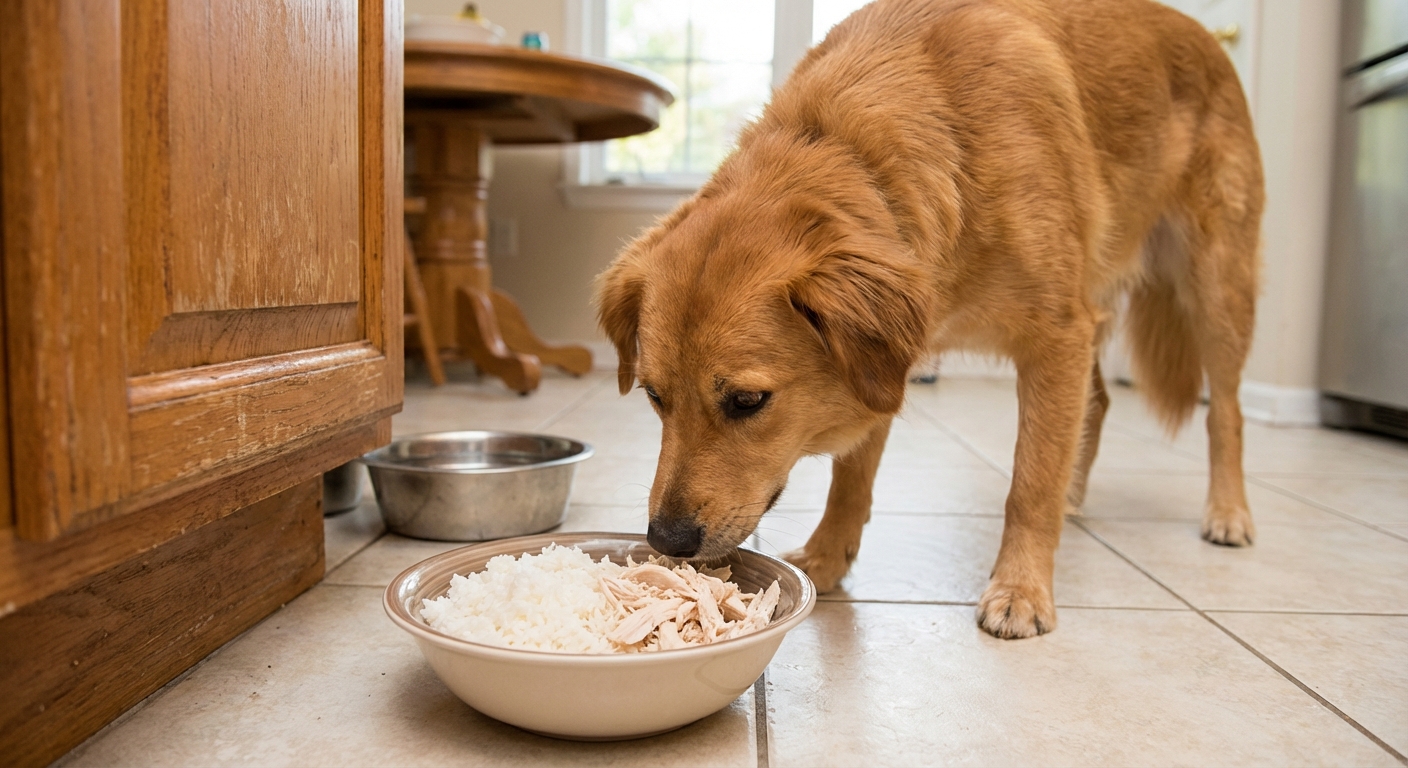
Vet-informed guide to a short-term bland diet for dogs: chicken and rice 1:2 ratio, daily cup ranges by weight, how many meals to split into, and red flags t...
Article
•
Designer Mixes
Chicken and Rice for Dogs: When It Helps

Shari Shidate
Designer Mixes contributor
Chicken and rice is one of the most well-known “comfort meals” for dogs, and for good reason. When it is used the right way, it can be gentle on the stomach, easy to digest, and helpful during short-term GI upset. But as a veterinary assistant, I also see the other side: chicken and rice is not a complete diet, and it can accidentally delay care when a dog needs medical help.
Let’s walk through when chicken and rice can help, when it is not the best choice, and how to do it safely.
Why it is easy on the gut
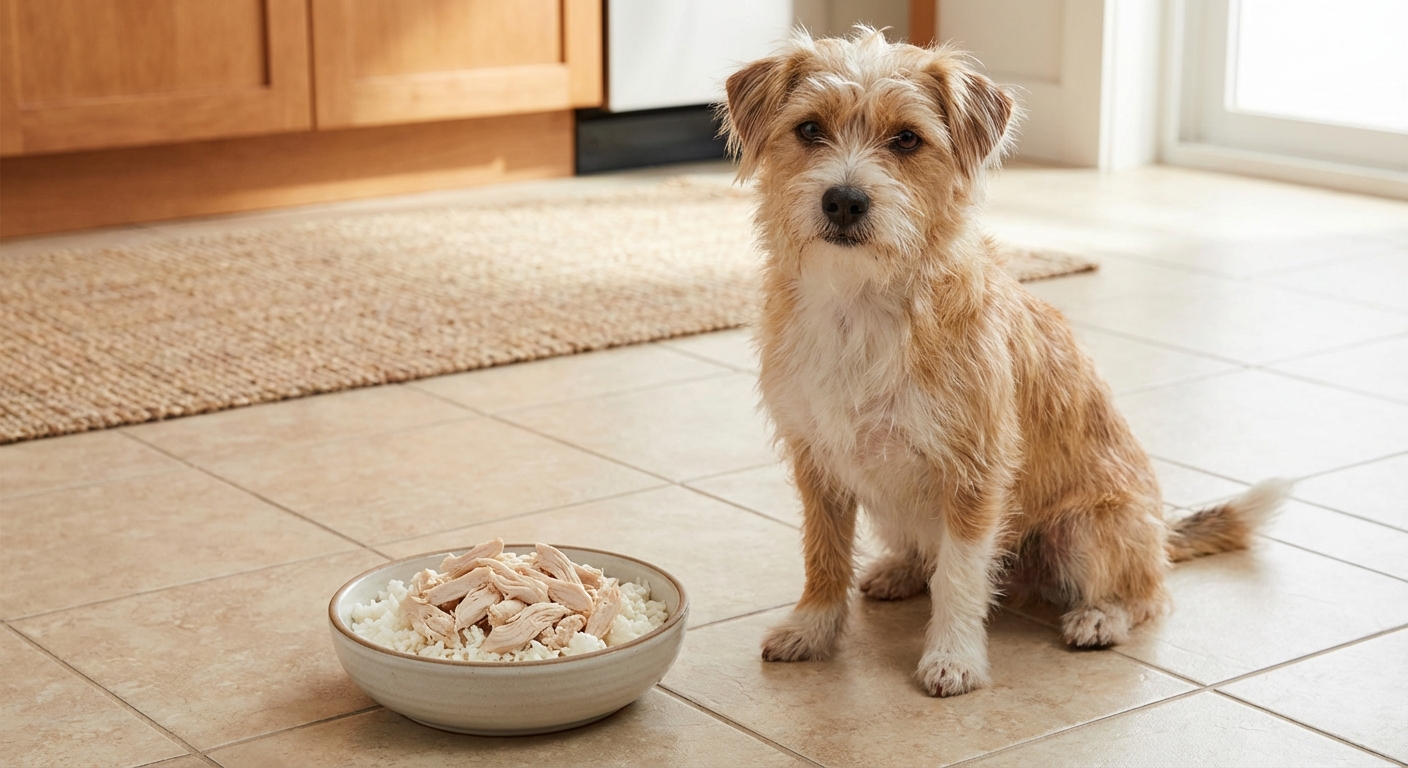
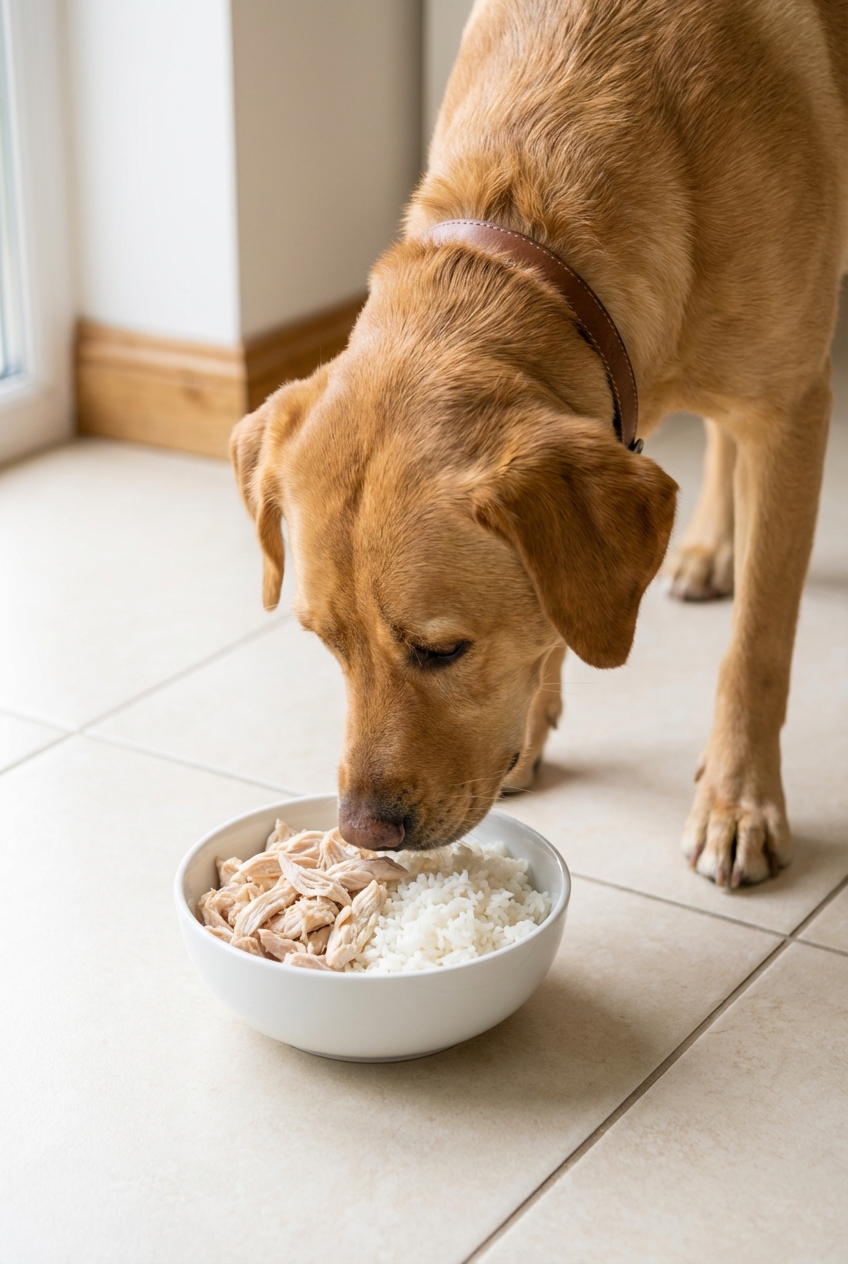
Plain cooked chicken (a lean protein) plus cooked white rice (a simple carbohydrate) is often suggested for short-term digestive upset because it tends to be:
- Lower fat, which matters because fatty meals can worsen diarrhea and may aggravate pancreatitis-prone dogs.
- Simple and predictable, meaning fewer ingredients that could irritate a sensitive gut.
- Appetizing for dogs with low appetite, especially when served warm and in small portions.
That said, “bland” does not mean “medically necessary” for every upset stomach. Many mild cases improve with rest, hydration, and a careful return to normal food.
When it can help
1) Mild, short-term diarrhea
If your dog is acting mostly normal, has mild diarrhea, and you are not seeing red flags (we will cover those below), a brief bland diet can give the GI tract a break.
2) Vomiting that has stopped
If vomiting has stopped and your veterinarian says it is okay to offer food again, small bland meals can be a gentle re-entry. Do not keep feeding through active vomiting unless your vet instructs you to.
3) Transitioning back to normal food
Sometimes the biggest value of chicken and rice is not the first meal. It is the bridge back to your dog’s normal complete and balanced food. Think short ramp, not long-term plan.
4) When your vet recommends it
Some dogs are discharged with instructions for a temporary bland diet. Follow the time frame your clinic gives you, and ask what to use if chicken is not ideal for your dog.
When not to use it
Chicken and rice is popular, but it is not universally appropriate. Skip it and call your veterinarian if you see any of these:
- Repeated vomiting or inability to keep water down
- Blood in vomit or stool, black tarry stool, or severe watery diarrhea
- Lethargy, weakness, collapse, or obvious abdominal pain
- Bloat signs (unproductive retching, swollen abdomen, distress)
- Puppies, seniors, or tiny dogs with GI signs (they dehydrate faster)
- Known or suspected pancreatitis (diet choice should be guided by your vet)
- Symptoms lasting more than 24 to 48 hours without improvement
- Chronic disease or higher risk (for example diabetes, kidney disease, Addison’s disease) or dogs taking NSAIDs or steroids, where vomiting and diarrhea can be more serious
- Known food allergy or sensitivity to chicken
A quick note on allergies: environmental allergies are more common overall, but food allergy can contribute to itchy skin and recurrent ear infections. Chicken is a frequent ingredient in many diets, so it can be a possible trigger for some dogs. If your dog has chronic itch, ear infections, or recurring GI issues, ask your vet whether chicken is a smart choice for a “bland” plan.
Also important: chicken and rice is not complete and balanced. It is missing key vitamins, minerals, essential fatty acids, and proper calcium-to-phosphorus balance. It is meant for short-term support only.
How to make it safely
If your veterinarian says a bland diet is appropriate, here is a simple, safe approach.
Choose ingredients
- Chicken: Skinless chicken breast is a common choice. Boil, bake, or poach it. Remove skin and visible fat. For extra fat reduction, you can drain and briefly rinse the cooked chicken, then shred it. Avoid oils, butter, seasoning, onion, and garlic. Skip rotisserie chicken.
- Rice: Plain cooked white rice is commonly used. It often has less fiber than brown rice and may be tolerated better during GI upset, but individual dogs vary.
Ratio and portions
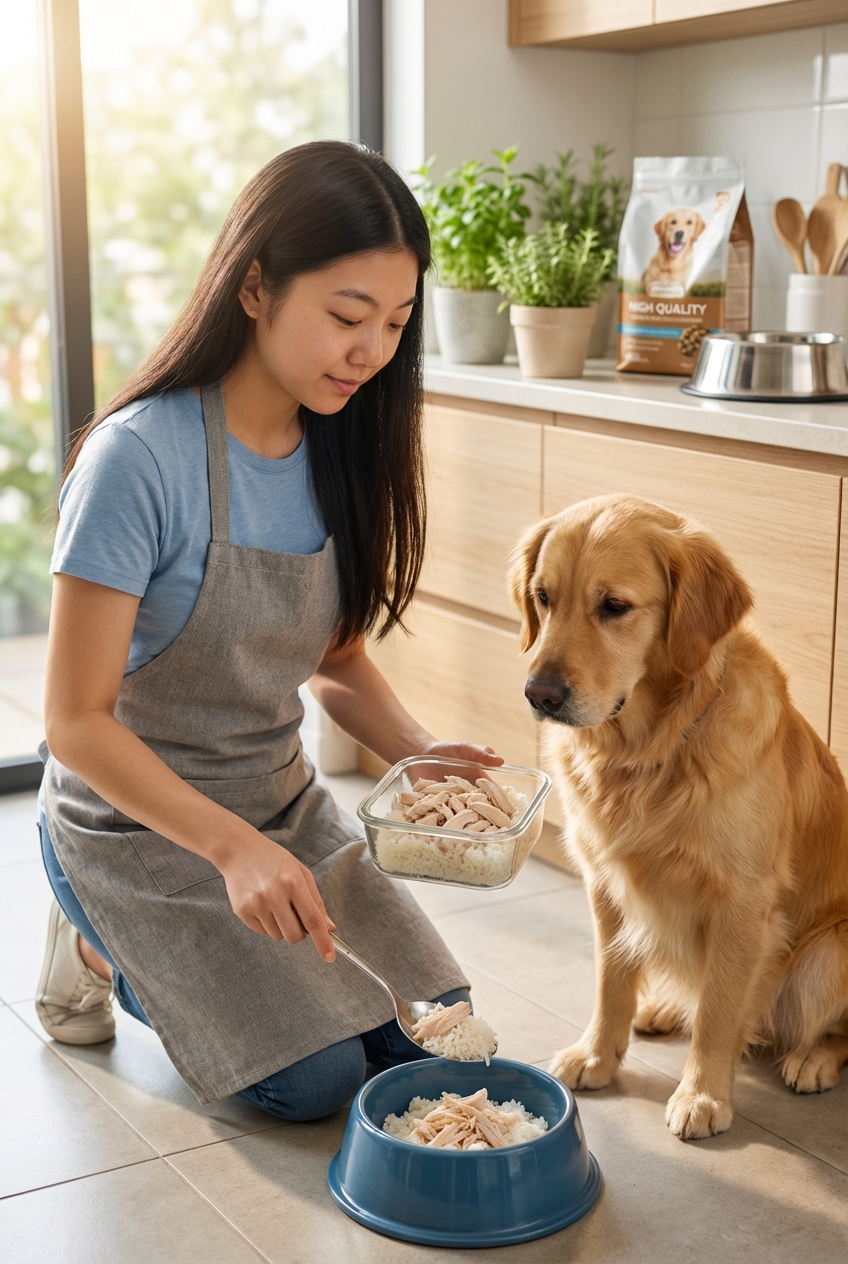
Many clinics start with about 1 part chicken to 2 parts rice by volume, then adjust based on your dog’s size and how they are doing.
Portion cue: Start small. For a small dog, that might be 1 to 2 tablespoons per meal. For a medium dog, 1/4 to 1/2 cup per meal. For a large dog, 1/2 to 1 cup per meal. Offer small, frequent meals and increase slowly only if they are keeping it down and stools are improving. When in doubt, ask your veterinary team for a weight-based amount.
Practical tip: Warm it slightly and add a splash of water or a small amount of truly plain, unsalted broth if you need extra aroma. Avoid broths with onion or garlic. Hydration can be a bigger challenge than calories during a brief stomach bug.
Safety reminder: Do not add sweeteners (including xylitol), spices, or “flavor boosters.” Keep it plain.
How long to use it
Many dogs use chicken and rice for 1 to 3 days, then gradually return to their normal diet. If you are still needing bland food after a few days, that is a sign to check in with your vet about the underlying cause. In some cases, a veterinary prescription GI diet is a better option than a home bland diet.
How to switch back
Once stools are improving and your dog is feeling better, transition slowly to avoid triggering another flare.
- Day 1: 75% chicken and rice, 25% regular diet
- Day 2: 50% chicken and rice, 50% regular diet
- Day 3: 25% chicken and rice, 75% regular diet
- Day 4: 100% regular diet
If diarrhea returns at any step, pause and call your veterinarian. Persistent GI upset can be caused by parasites, infections, dietary intolerance, pancreatitis, inflammatory bowel disease, stress colitis, foreign material, and more.
Common questions
Is it good for every dog with diarrhea?
No. It can help some mild cases, but it is not a cure and it is not a substitute for diagnostics when red flags are present.
Can I add pumpkin?
Sometimes. Plain canned pumpkin (not pie filling) can help some dogs with loose stool, but it can worsen symptoms in others. If you add it, start small and monitor stools closely.
What if my dog cannot eat chicken?
Ask your vet about a different bland option such as lean turkey, a veterinary prescription GI diet, or a plan designed for suspected food sensitivity. Repeated chicken-based “bland diets” can be a setback for dogs who do not tolerate chicken well.
What about long-term chicken and rice for picky eaters?
I know it is tempting when your dog finally eats, but long-term chicken and rice can lead to nutritional deficiencies. If your dog is consistently picky, it is worth addressing dental pain, nausea, medication side effects, stress, and food quality with your vet.
Bottom line
Chicken and rice can be a helpful, short-term tool for mild stomach upset and for transitioning back to a normal diet. The key is to use it briefly, keep it truly plain, and watch for red flags that call for veterinary care.
If you are ever unsure, call your veterinarian. You are not overreacting. Catching dehydration, pancreatitis, parasites, or a blockage early can make a huge difference in recovery.