Worried about fast breathing in your cat? Learn normal resting rates, how to count breaths, common causes (stress, heat, asthma, infection, heart disease), a...
Article
•
Designer Mixes
CHF in Cats: Care and Training Tips

Shari Shidate
Designer Mixes contributor
If your cat has been diagnosed with congestive heart failure (CHF), you are probably feeling two things at once: determined to help, and unsure where to start. I get it. In veterinary clinics we see how overwhelming this diagnosis can feel, and we also see many cats settle into a very good quality of life with the right routine.
This article focuses on practical, gentle “care and training” tips you can use at home: how to set up an easy environment, how to give meds with less stress, what to monitor, and when to call your veterinarian. Nothing here replaces your vet’s plan, but it can make day-to-day life calmer for you and your cat.
What CHF means
Congestive heart failure doesn’t mean the heart has stopped. It means the heart is not pumping efficiently enough, so fluid can back up where it should not be. In cats, fluid most commonly builds up around the lungs (pleural effusion), and less commonly in the lungs themselves (pulmonary edema). The result is that breathing becomes harder, and your cat may tire more easily.
Common underlying causes include hypertrophic cardiomyopathy (HCM) and other structural heart conditions. High blood pressure and thyroid disease can also contribute to, reveal, or worsen underlying heart disease in some cats, which is why your vet may screen for them.
Your veterinarian may recommend tests like chest X-rays, an echocardiogram, blood pressure checks, and lab work to guide treatment.
The goal at home is simple: keep breathing comfortable, keep stress low, and make it easy to stick to the medication plan.
Urgent signs
Cats hide illness extremely well. With CHF, waiting too long can be dangerous. Contact your veterinarian or an emergency hospital right away if you notice any of the following:
- Open-mouth breathing or panting
- Increased breathing effort (belly pushing, flared nostrils, head and neck stretched out)
- Fast resting breathing (see the RRR section below)
- Blue or gray gums
- Sudden weakness, collapse, or extreme lethargy
- Sudden hind limb pain or paralysis (this can be a blood clot emergency in some cardiac cats)
- Not eating for 24 hours, especially if paired with low energy, dehydration, vomiting, or any breathing change
- Hiding more than usual and acting distressed when approached
Important: Cats in respiratory distress should be handled as little as possible. Skip forcing medication and do not try to “train through it.” Put your cat in a carrier gently, keep the car quiet and cool, and go in. If your cat is open-mouth breathing, do not wait to count breaths.
Home setup
Create a calm zone
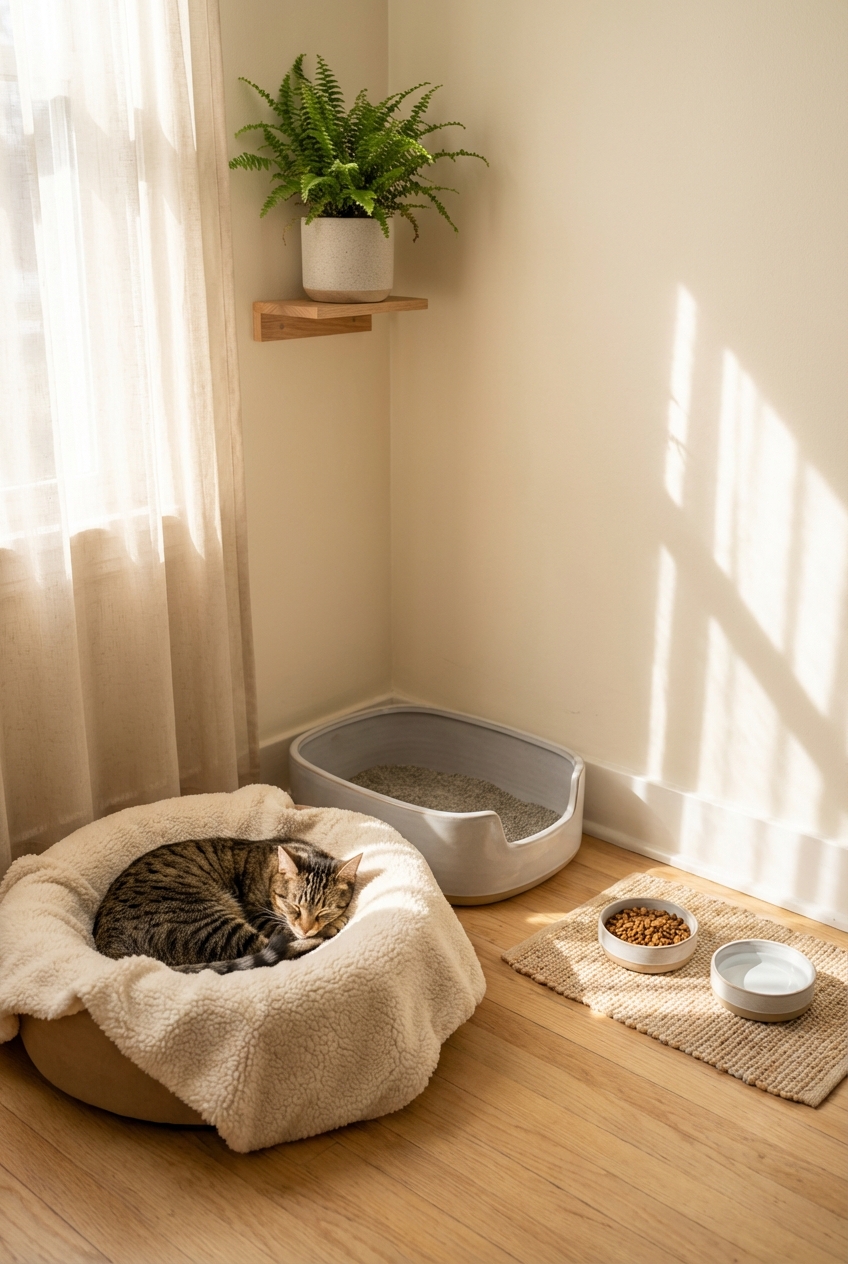
CHF cats do best when their environment is predictable. Pick one calm area of your home and set it up like a little cat-friendly studio apartment:
- Bed with low sides so your cat can sprawl in a comfortable position
- Litter box with a low entry (less exertion and less jumping)
- Food and water within a few steps of the bed
- Night light so your cat does not feel forced to navigate in the dark
- Temperature control, aiming for cool to neutral since overheating can increase breathing rate
Limit big bursts of exertion
Many cats love vertical space, but CHF changes the rules. You do not have to eliminate climbing, but you do want to reduce intense bursts of activity.
- Use pet stairs or ramps to favorite spots like a couch or bed.
- Temporarily block access to tall cat trees if your cat gets winded.
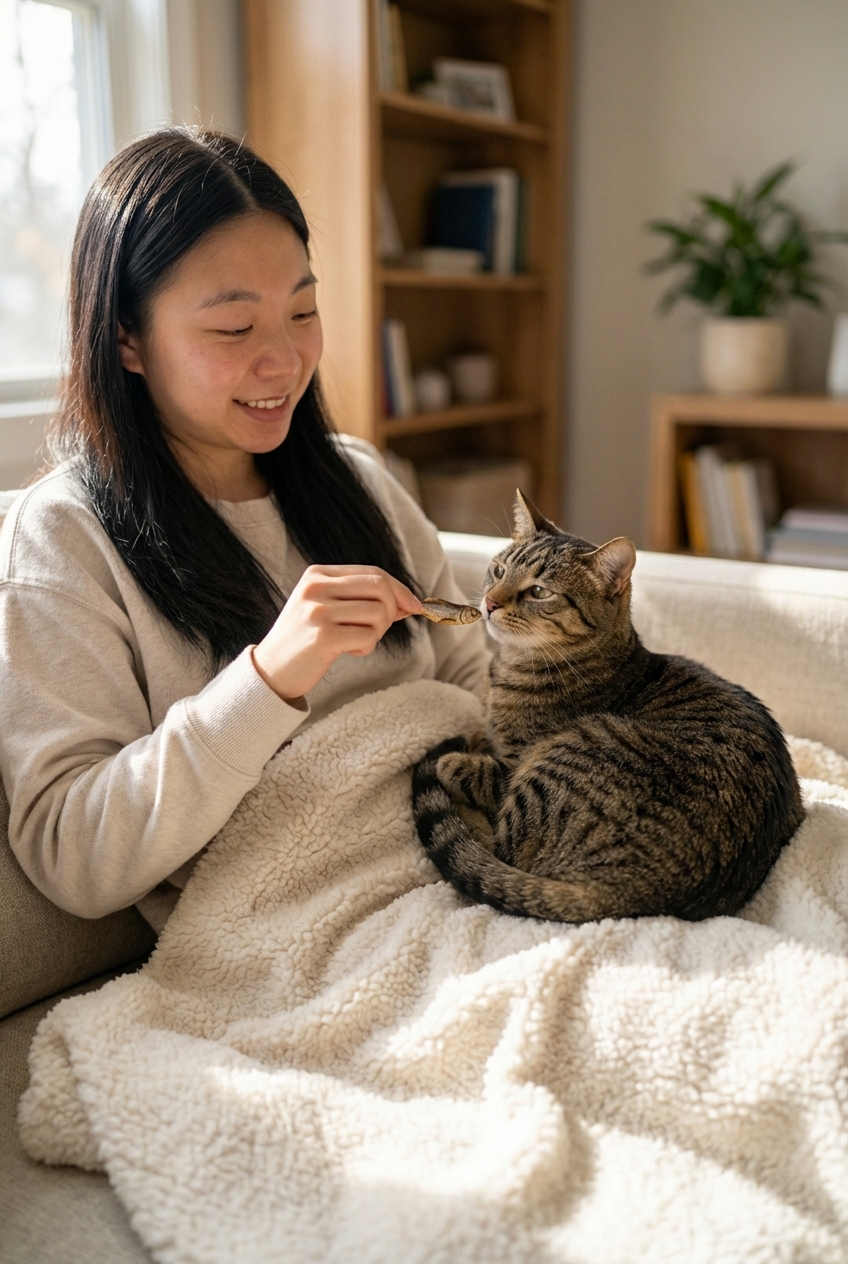
- Encourage low-energy enrichment like window watching, lickable treats, and gentle brushing.
Keep essentials close
A “handy cat” home means everything important is within a few steps. When a cat can reach the essentials without a big hike, breathing stays steadier and stress stays lower.
Monitoring that helps
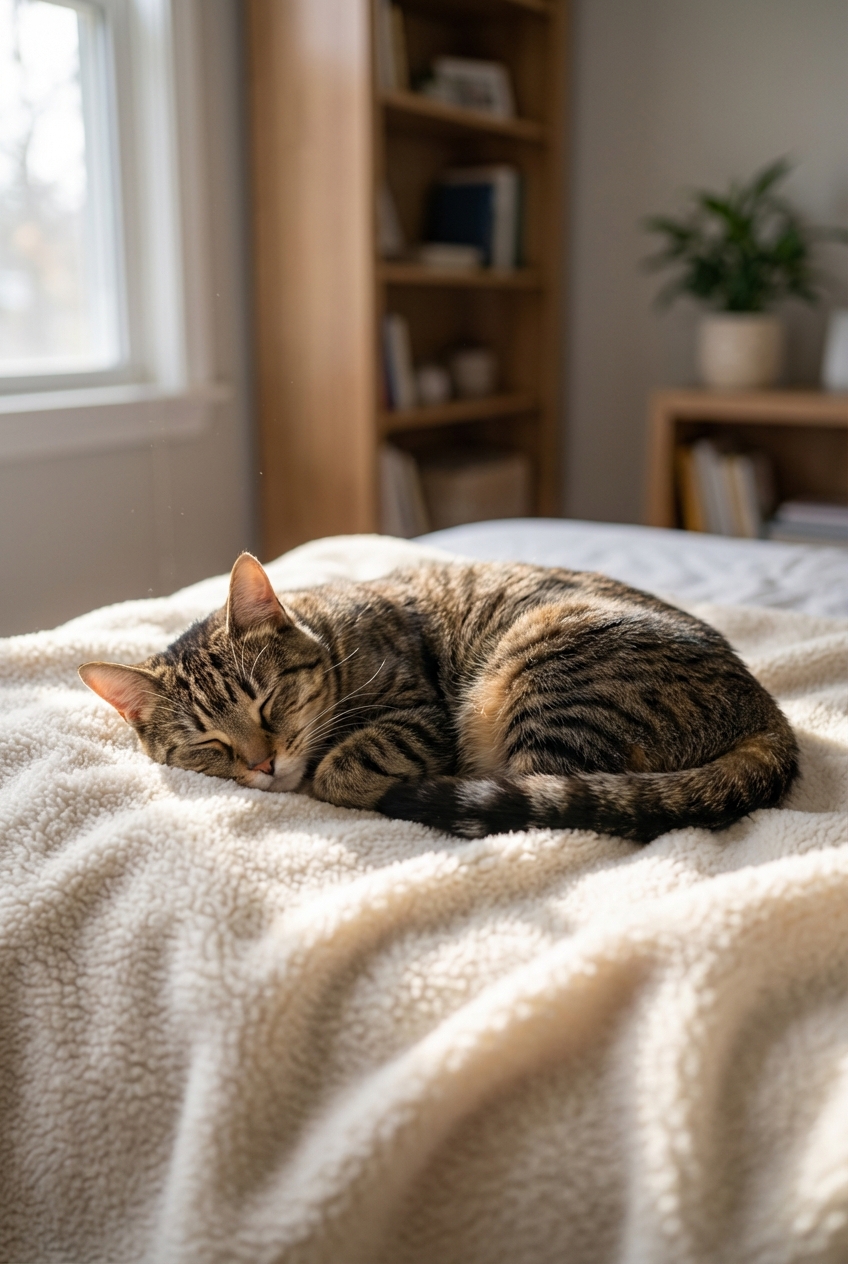
One of the most useful things you can do at home is track your cat’s resting respiratory rate (RRR). This is the number of breaths per minute while your cat is asleep or deeply relaxed.
How to count RRR
- Wait until your cat is asleep or very calm.
- Watch the chest or belly rise and fall. One rise and one fall equals one breath.
- Count breaths for 30 seconds and multiply by 2.
General guidance (confirm with your vet): Many relaxed, sleeping cats are often in the 20 to 30 breaths per minute range. A consistent RRR over 30, a clear upward trend over several readings, or any increase in effort is a good reason to call your veterinarian. Some vets may tell you to treat 40 or higher as an emergency threshold. Your cat’s personal “call now” number may be different, especially after a recent CHF episode.
Tip: Write it down in a notes app with the time of day and a comment like “after play” or “hot afternoon.” Trends are more valuable than a single number.
Other useful check-ins
- Breathing posture: sitting upright more than usual, elbows held away from the body, or reluctance to lie down can matter.
- Energy and comfort: sudden withdrawal, restlessness, or inability to settle can be a clue.
- Gum color: pale, blue, or gray gums are urgent.
What not to do: Do not give human cold medicines or leftover prescriptions. Avoid over-the-counter supplements unless your veterinarian approves them. If your vet wants you monitoring temperature, ask them to show you the safest method for your cat.
Helpful in emergencies: If your cat is breathing oddly but can be handled safely, take a 10 to 15 second video of them resting (do not stress them to get it). Bring your medication list or photos of each label to the ER.
Medication tips
Most CHF cats need medication, often more than one. Common categories include diuretics (to remove excess fluid), medications that may support heart function or reduce workload on the heart, and sometimes blood clot prevention depending on the diagnosis. Your veterinarian will tailor this to your cat. Give only what is prescribed, and call before making changes.
Your job at home is not just giving meds, it is helping your cat feel safe while meds happen. That is where training comes in.
Build a predictable routine
- Give meds in the same location each time.
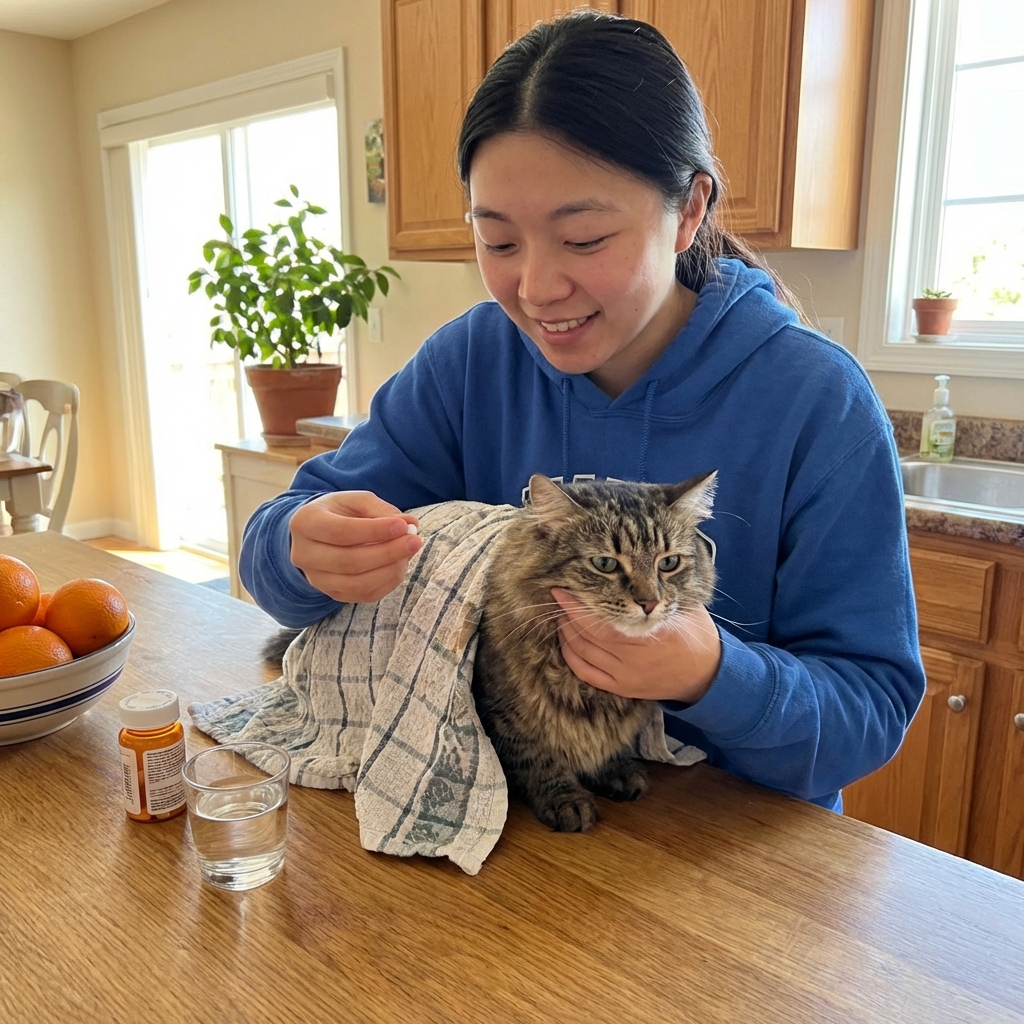
- Use the same gentle setup: a towel on your lap, calm voice, minimal talking.
- End with a guaranteed reward your cat loves (lickable treat, a favorite canned food bite, or a short calm cuddle if your cat prefers that).
Use cooperative care steps
Cooperative care means teaching your cat what will happen, in tiny steps, so the experience is less frightening.
- Step 1: Show the treat, then touch the cheek, reward.
- Step 2: Gently lift the lip for one second, reward.
- Step 3: Touch the pill or syringe to the lips, reward.
- Step 4: Give the medication, immediately reward.
Keep sessions short. Two calm 20-second practice sessions per day can be more effective than one long stressful one.
Pills
- Pill pockets or soft treats: Hide the pill, then offer a “decoy” treat first so your cat eats confidently.
- Small food ball: A tiny meatball of canned food can work for some cats.
- Direct pilling: If you must, ask your veterinary team to demonstrate. Follow with a small amount of water or food if your vet approves, because pills can irritate the esophagus when swallowed dry.
Liquids
- Aim the syringe into the cheek pouch, not straight back.
- Give small squirts allowing time to swallow.
- Stop immediately if your cat coughs, gags, seems to choke, or if breathing becomes faster or more labored. Call your vet for advice.
If meds are a daily battle
Please tell your veterinarian. Many medications have alternatives like compounding into flavored liquids, different tablet sizes, or adjusted schedules. There may also be anti-anxiety strategies to pair with treatment.
Food and water
Nutrition is not a cure for CHF, but steady intake matters because cats can spiral quickly when they stop eating. Here are practical, evidence-based priorities to discuss with your vet:
Keep intake steady
- If your cat is eating well, aim for steady routine meals.
- If appetite is low, prioritize palatability and ask your vet about appetite support.
Ask before changing sodium
People often assume “low sodium” is always best for heart disease. In cats, sodium changes can be more nuanced depending on stage of disease, other conditions, and the exact diet. Before switching foods, check with your veterinarian or a veterinary cardiologist.
Hydration matters, but do not force it
- Offer fresh water in multiple bowls.
- Consider a cat fountain if your cat likes moving water.
- Do not force water by syringe unless your vet specifically instructs you, especially in a cat with breathing issues.
Track weight and muscle
Weigh your cat as directed by your veterinarian. Weight loss, muscle loss, or sudden weight gain can all be meaningful in cardiac patients. If you can, take a quick monthly photo from above and from the side in the same spot and lighting. It helps you notice subtle changes.
Activity and play
Movement is not “bad,” but overexertion is not helpful. Think in terms of gentle, controlled activity that keeps your cat happy without triggering heavy breathing.
Good options
- Short, slow wand play for 30 to 60 seconds
- Treat puzzles that do not require intense effort
- Brushing, if your cat enjoys it
- Window perches with easy access via steps
Skip these for now
- Laser pointer marathons
- Chasing games up and down stairs
- Any play that causes panting or obvious breathing effort
Myth check: Coughing is less common in cats with CHF than in dogs. Do not use the presence or absence of a cough to decide whether breathing is okay. Watch effort and RRR trends instead.
Rule of thumb: If your cat’s breathing looks faster or harder, end the activity and let them rest. Calm is therapeutic.
Carrier readiness
With CHF, there may be times you need to go to the vet quickly. A cat that is already comfortable with the carrier gets help faster and with less stress.
Make it normal
- Leave it out all the time with the door open.
- Put a soft blanket inside that smells like home.
- Toss in a treat once a day with no strings attached.
Practice calm entries
- Reward any voluntary step toward the carrier.
- Work up to brief door closures, then open and reward.
- Take short “practice carries” around the house and reward.
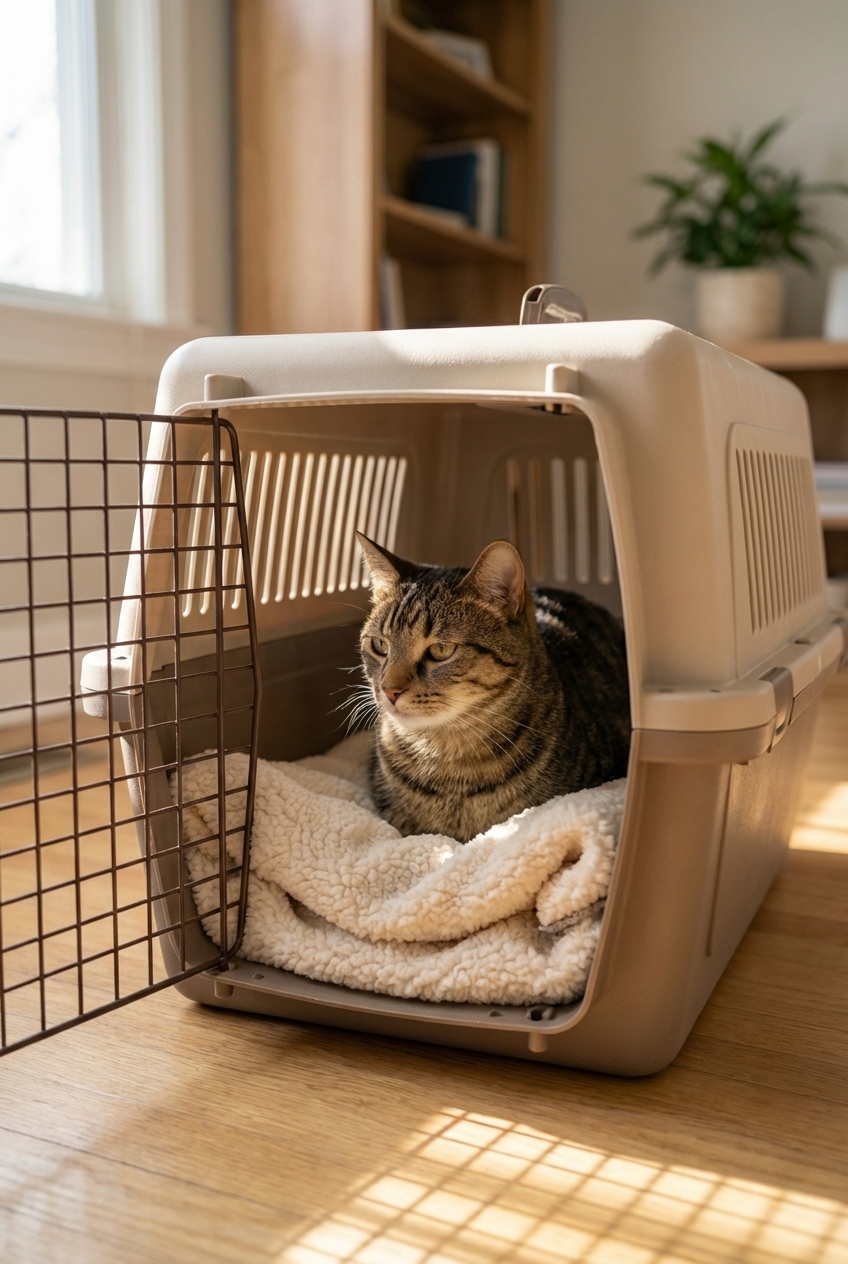
Tip: A top-loading carrier can be easier for cats that hate being pushed in from the front. Ask your vet team what they recommend for your cat’s needs.
Multi-pet stress
Stress increases respiratory rate in many CHF cats. If you have other pets, you can still keep life normal, just a bit more structured.
- Feed your CHF cat in a separate space so they can eat without pressure.
- Use baby gates or closed doors to provide a quiet zone.
- Keep play with other pets calm and supervised.
- Maintain predictable routines for cleaning, feeding, and bedtime.
Follow-ups
CHF management is not “set it and forget it.” Medication doses may change over time, and periodic rechecks help your veterinarian balance breathing comfort with kidney function and hydration status.
Bring your notes to appointments:
- Resting respiratory rates and dates
- Appetite changes
- Energy level and hiding behavior
- Any vomiting or diarrhea
- Missed doses or difficulty giving meds
- Short videos of resting breathing, if you have them
If you ever feel stuck, say so. There is almost always a way to simplify the plan or make it more cat-friendly.
A gentle final word
Living with a CHF cat is a journey, and you do not have to be perfect to make a big difference. If you focus on three things, you are doing a lot: keep breathing comfortable, keep meds consistent, and keep stress low.
Your cat does not need you to be fearless. They just need you to be steady. And with a calm routine and the right veterinary support, many CHF cats continue to enjoy their favorite things: sunny naps, quiet companionship, and the comfort of home.