A practical chameleon care guide covering species selection, enclosure size and plants, UVB and basking gradients, humidity and hydration, feeder insects and...
Article
•
Designer Mixes
Chameleon Care Help & Veterinary Tips

Shari Shidate
Designer Mixes contributor
Chameleons are incredible little athletes and artists, but they are also some of the most sensitive reptiles we keep as pets. In the veterinary clinic, many “sudden” chameleon problems turn out to be slow-building husbandry issues like low UVB, dehydration, or incorrect temperatures. The good news is that once you dial in a few essentials, most chameleons become steadier, better eaters, and far less stressed.
This veterinarian-aligned guide focuses on practical, evidence-based care you can start today, plus the red flags that mean it is time to see an experienced exotics veterinarian.
Start Here: Choosing the Right Chameleon
Not every species has the same care needs. Before you buy anything, decide which chameleon fits your lifestyle and local access to feeders and veterinary care.
- Veiled chameleon (Chamaeleo calyptratus): Common, hardy by chameleon standards, and often a better first species. Males get larger and can be more territorial.
- Panther chameleon (Furcifer pardalis): Stunning colors, typically does best with very consistent hydration, lighting, and a stable routine.
- Jackson’s chameleon (Trioceros jacksonii): Often prefers cooler temperatures and can struggle in hot, dry homes.
Vet tip: Whenever possible, choose a captive-bred chameleon. Wild-caught animals are more likely to arrive dehydrated, parasitized, and stressed, which can lead to chronic health issues.
Quick Targets by Species
Exact targets vary by locale, enclosure type, and individual animal, but new keepers often need a safe starting point. Use these as typical adult targets, then confirm with a trusted species guide and your exotics veterinarian.
- Veiled: Warmer basking, moderate daytime humidity with strong drying cycles, and a clear nighttime drop. Females need a lay bin once mature.
- Panther: Moderate to warm basking, humidity that cycles up and down with excellent airflow, and a consistent drinking routine. Females need a lay bin once mature.
- Jackson’s: Cooler overall temperatures, careful avoidance of overheating, and steady hydration. Often benefits from cooler nights more than other common species.
Action step: Get species-specific numbers from one reputable source, then verify them with digital probes and adjust slowly. Fast swings create stress even when the “average” looks right.
The Enclosure: Tall, Ventilated, and Secure
Chameleons are arboreal. They feel safest up high and need excellent airflow to reduce respiratory disease risk.
Recommended setup (general)
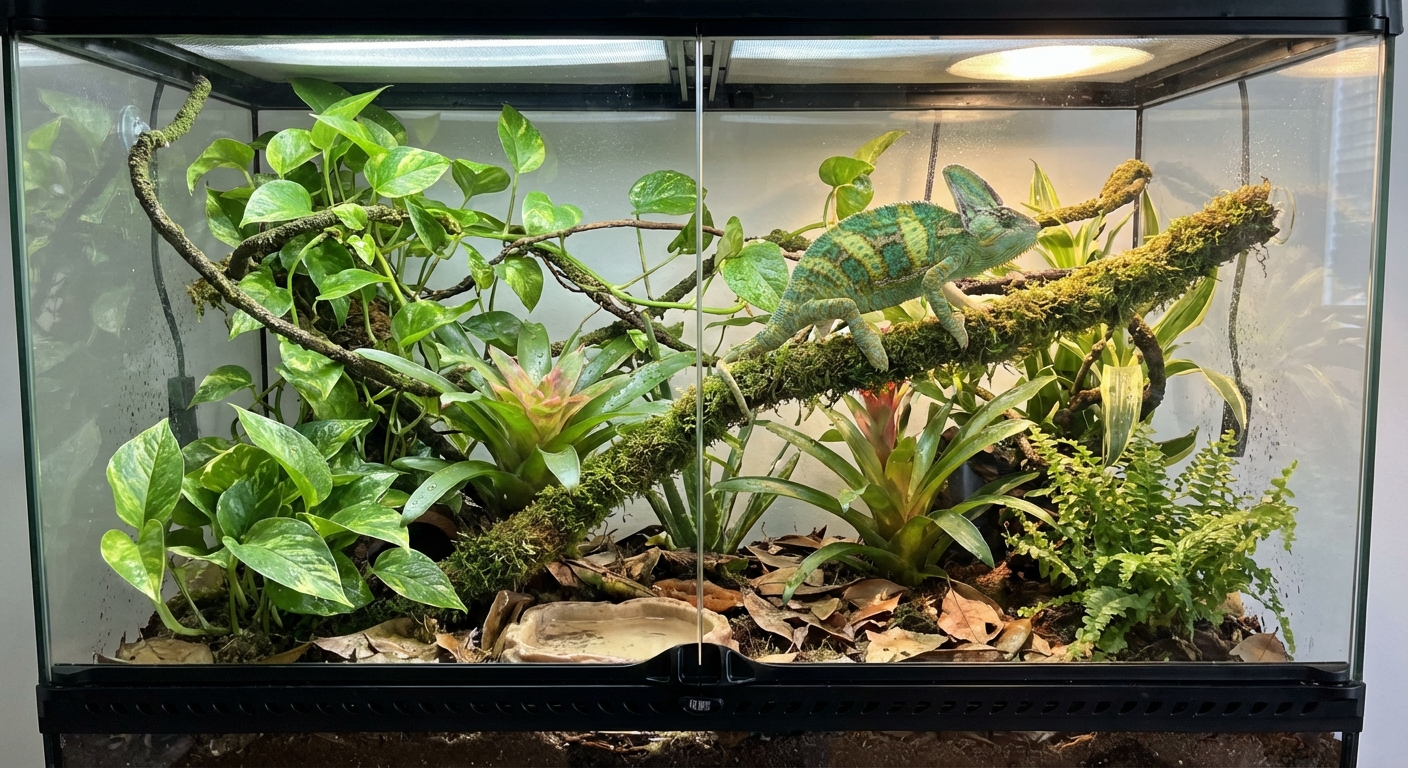
- Type: Screen enclosures are usually preferred for most common species in typical household conditions. Glass or hybrid enclosures can work, but ventilation must be excellent and humidity must be managed carefully.
- Size: Bigger is better. Many adults do well in a tall enclosure around 24" x 24" x 48" (or larger), depending on species and sex.
- Placement: Put the enclosure in a low-traffic area. Elevate it so the top is near your eye level. This reduces stress.
- Climbing and cover: Use a network of safe branches and plenty of leafy cover so your chameleon can hide when it wants.
Substrate and drainage
For most setups, keep the floor simple and cleanable. Many keepers use bare-bottom with a drain system, or paper towels that can be swapped easily. Loose substrates can trap moisture, grow bacteria or mold, and create ingestion risk during feeding.
Vet tip: Plan drainage first. A “perfect” misting routine can still cause problems if water pools in the cage.
Safe plants and furnishings
Live plants help with humidity and provide drinking surfaces. Pothos and schefflera are commonly used in the hobby. Ficus is also commonly used, but the sap can be irritating for some animals and people, and any plant can become a problem if heavily chewed.
Action step: Verify any plant’s toxicity risk, rinse leaves well, remove fertilizer spikes, and cover the soil (for example with large river rocks that cannot be swallowed) to reduce ingestion of potting media and improve cleanliness.
Lighting and UVB
If I could pick one husbandry factor that most often causes long-term illness, it would be incorrect UVB. Chameleons need UVB light to help them make vitamin D3, which supports calcium metabolism. Without adequate UVB (and appropriate calcium in the diet), they can develop metabolic bone disease, which can be painful and permanently damaging.
It is also possible to go too far. Overly strong UVB at close distances, or excessive vitamin D3 supplementation, can be harmful. The goal is controlled, measurable exposure and a consistent supplement plan.
Veterinarian-aligned UVB basics
- Prefer a quality linear UVB tube sized appropriately for the enclosure. Compact or coil UVB bulbs can be harder to use safely and consistently in larger, taller enclosures because the useful UVB zone is smaller and distance sensitive.
- Provide a basking area where UVB and heat overlap, so the chameleon can thermoregulate while receiving UV exposure.
- Replace UVB bulbs on schedule even if they still light up. UV output declines over time.
- Do not place UVB through glass or plastic, which can block UVB.
Action step: If you can, use a UVB meter and digital temperature tools. They take the guesswork out and help prevent both underexposure and overexposure.
Vet tip: UVB replacement intervals vary by brand, bulb type, and fixture. Follow manufacturer guidance, and trust meter readings when available.
Photoperiod
Most chameleons do best with a consistent day and night schedule.
- Light cycle: A steady 12 hours on and 12 hours off is a common baseline for many keepers.
- Nighttime darkness: Prioritize true darkness at night. Avoid colored night bulbs. If overnight heat is required for your species and home, choose a setup that does not add visible light and confirm targets for your species.
Temperature and Humidity
Chameleons need choices: a warmer basking zone, cooler resting zones, and a night drop appropriate for the species.
How to do it safely
- Basking spot: Provide a warm area under a heat lamp. Exact temperatures vary by species, age, and sex, so confirm a target range for your specific chameleon.
- Ambient gradient: The rest of the enclosure should be cooler than the basking spot.
- Night drop: Many species benefit from cooler nighttime temperatures. Avoid heat rocks and under-tank heaters for chameleons.
- Humidity: Aim for species-appropriate humidity with good airflow and daily drying cycles. Too damp with stagnant air can increase respiratory risk.
Vet tip: Use digital probes for temperature and humidity. Dial gauges are often inaccurate enough to cause real health issues over time.
Hydration
Most chameleons do not recognize standing water in a bowl. They typically drink droplets from leaves and branches. Chronic low-grade dehydration is extremely common and is associated with problems like poor sheds, constipation, reduced appetite, and in some cases kidney stress and gout. Good hydration is one of the most powerful preventive tools you have.
Practical hydration routine
- Misting: Provide multiple misting sessions so droplets form and your chameleon has time to drink.
- Dripper: A slow dripper can encourage natural drinking behavior during the day.
- Drainage: Prevent puddles and wet buildup. Standing water increases bacterial and mold risk.
What healthy hydration can look like: Alert behavior, good skin elasticity, and urates that are mostly white to off-white. Persistent yellow or orange urates often suggest dehydration, though diet and supplements can also influence color.
Note: Sunken eyes can occur with dehydration, but it is not specific. Stress and illness can look similar, so treat it as a reason to assess the whole situation, not a single-answer diagnosis.
Water quality
Use clean water and keep nozzles, tubes, and catch trays sanitized. Biofilm can build up quickly in damp systems.
Feeding
Chameleons thrive on a varied insect diet. Relying on one feeder long-term often leads to nutritional gaps.
Core feeder insects
- Crickets
- Roaches (species appropriate and legally permitted)
- Black soldier fly larvae
- Silkworms
- Hornworms (great for hydration, usually a treat)
Treat insects: Waxworms and mealworms are often higher in fat or harder to digest, so use them sparingly and based on your veterinarian’s guidance.
Gut-loading
Gut-loading means feeding your insects a nutritious diet 24 to 48 hours before they become a meal. Dark leafy greens, squash, and other nutrient-rich vegetables can improve the nutritional value of the feeders significantly.
Supplements
Most chameleons need a plan that includes calcium and, depending on your UVB setup and veterinary guidance, limited vitamin D3 and a multivitamin. Both too little and too much supplementation can cause problems, so aim for consistency and avoid “stacking” multiple products without a plan.
Example only (confirm with your exotics veterinarian): Many keepers use plain calcium routinely, then add a D3-containing calcium and a multivitamin on a less frequent schedule. The correct frequency depends on species, age, UVB strength, and diet.
Action step: Start a simple feeding log on your phone. Track what you fed, how many, supplement used, and whether your chameleon ate well. This is extremely helpful if you ever need a veterinary visit.
Female Care: Lay Bin
If you keep a female veiled or panther chameleon, plan ahead for egg laying. Females can develop eggs even without mating, and lack of an appropriate laying site is a preventable cause of serious illness.
- Provide a lay bin once she is mature or showing digging behavior.
- Watch for trouble signs: persistent digging with no eggs laid, lethargy, swelling, straining, or sudden decline.
Vet tip: Egg binding can be life-threatening. If you suspect it, do not wait it out. Call an exotics veterinarian promptly.
Handling and Stress
Many chameleons tolerate handling, but few truly enjoy it. Stress can reduce appetite, weaken immune function, and lead to defensive behavior.
- Limit handling to what is necessary for health checks and enclosure maintenance.
- Watch body language: gaping, puffing up, dark stress coloration, and hissing mean “please stop.”
- Provide visual privacy: a planted enclosure and a calm location help your chameleon feel secure.
Cleaning and Biosecurity
Chameleons can be sensitive to fumes and residues, so focus on routine cleaning with safe practices.
- Daily: Remove feces and uneaten insects.
- Weekly: Wipe down surfaces and wash removable items as needed.
- Monthly: Deep clean branches and decor, then rinse thoroughly and allow to dry.
Vet tip: Quarantine new reptiles away from other reptiles with separate tools. A minimum of several weeks is better than nothing, but many protocols recommend 60 to 90 days, especially if you have an established collection.
Common Health Problems
Metabolic bone disease (MBD)
- Soft or misshapen jaw
- Curved limbs or spine
- Tremors, weakness, trouble climbing
Dehydration and kidney strain
- Sunken eyes (non-specific)
- Persistent orange urates
- Lethargy, poor appetite
Respiratory disease
- Open-mouth breathing when not basking
- Bubbles, mucus, audible clicking
- Keeping head elevated, lethargy
Parasites
- Weight loss despite eating
- Loose stool
- Reduced energy
Important: These signs can overlap across multiple conditions. Diagnosis is not something you should guess at. If you see symptoms, schedule an exotics veterinarian visit.
Action step: Ask your veterinarian about a baseline fecal exam after purchase and periodic rechecks. Parasites are common, and “looks fine” is not the same as “tests clear.”
When to See an Exotics Vet
Chameleons hide illness until they cannot, so prompt care matters.
- Not eating for several days (especially in juveniles)
- Falling, inability to grip, or sudden weakness
- Swollen joints or limbs
- Severe lethargy, eyes closed during the day
- Wheezing, mucus, open-mouth breathing
- Prolapse, bleeding, or visible injury
- Female digging behavior with failure to lay eggs, or signs of egg binding
Preparation tip: Bring photos of your setup (lights, brand names, distances, thermometer and humidity readings) plus a list of feeders and supplements. This helps the veterinarian troubleshoot quickly and accurately.
Daily Checklist
- Confirm basking light and UVB are on and working
- Check digital temperature and humidity readings
- Mist or run hydration system as scheduled
- Feed appropriately sized, gut-loaded insects
- Remove uneaten insects and spot-clean waste
- Do a quick visual health check: posture, eyes, grip strength, and breathing
Consistency is your best “medicine.” Most preventable chameleon health issues come from small daily mismatches in light, heat, or hydration that add up over weeks.