Learn veterinarian-approved chameleon care essentials: choosing a species, enclosure setup, UVB and heat, humidity and hydration, feeding and supplements, pl...
Article
•
Designer Mixes
Chameleon Care Guide

Shari Shidate
Designer Mixes contributor
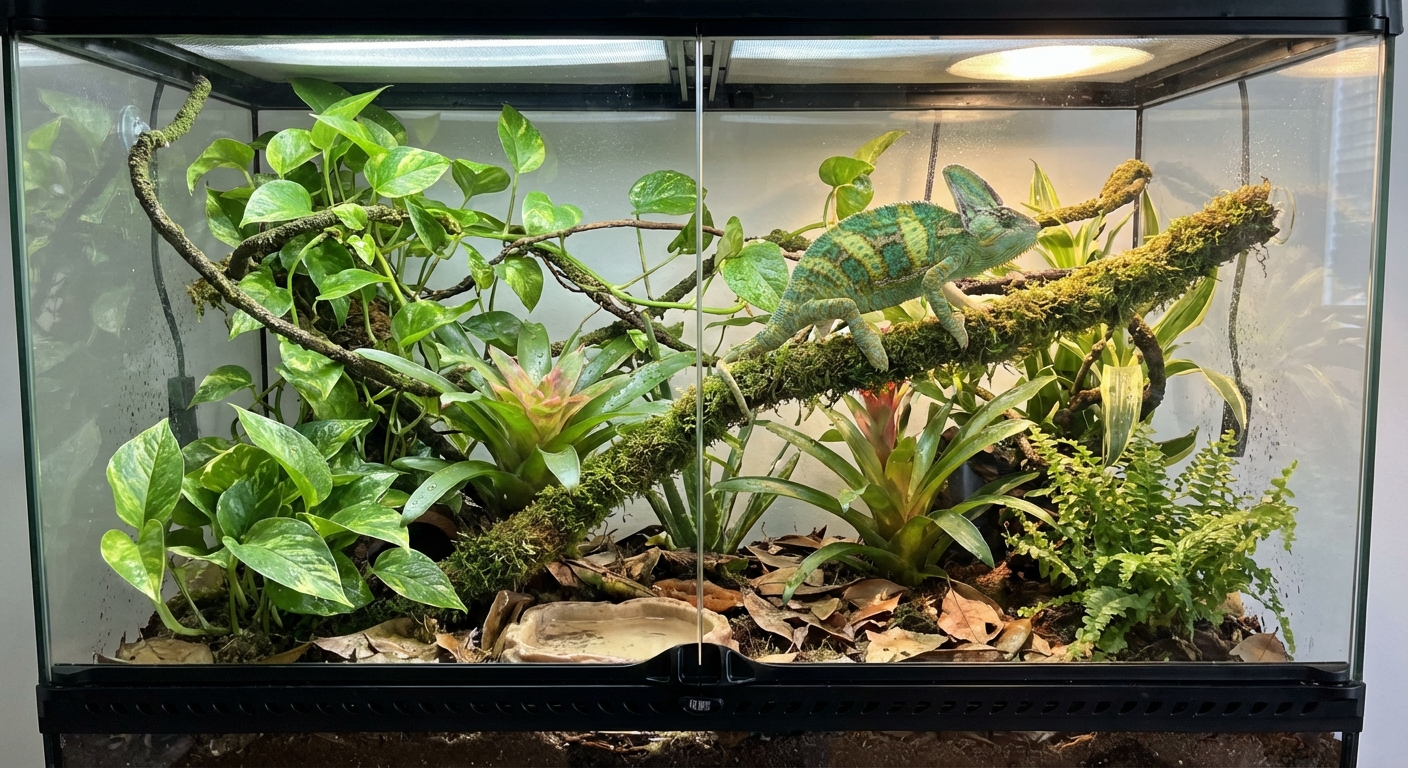
Chameleons are some of the most fascinating pets you can bring home, but they are not “set it and forget it” reptiles. In my work as a veterinary assistant in Frisco, Texas, I see the same pattern over and over: most chameleon health issues start with a habitat that is just a little off. The good news is that once you get the basics right, chameleons can do wonderfully.
This guide walks you through what matters most: the right species choice, enclosure setup, lighting and hydration, feeding, handling, and what to watch for if something seems wrong. I will also flag a few common safety mistakes and a couple of extra considerations for female veiled chameleons.
Pick the right species
When people say “chameleon,” they often mean a few common pet species. Each has slightly different needs, and choosing well upfront prevents a lot of stress for both you and your pet.
- Veiled chameleon (Chamaeleo calyptratus): Often recommended for beginners due to hardiness, but still requires precise lighting, hydration, and careful supplementation. Females have additional egg-laying needs (more on that below).
- Panther chameleon (Furcifer pardalis): Beautiful and popular, generally similar core care to veiled chameleons, with close attention to hydration, humidity balance, and low-stress handling.
- Jackson’s chameleon (Trioceros jacksonii): Typically prefers cooler temperatures and a reliable nighttime drop. They can be more sensitive and are not always the best first chameleon.
Practical tip from clinic experience: Whatever species you choose, plan your daily care first. Chameleons need consistent lighting schedules, frequent hydration opportunities, and routine feeder insect care. If your schedule is unpredictable, pick a pet that thrives with less precision.
Ethics note: If you can, choose a captive-bred chameleon from a reputable breeder. Ask about age, feeding routine, and any prior parasite testing. A new-pet exam with a reptile-experienced veterinarian (and a fecal check) is a smart first step.
Enclosure setup
Chameleons are arboreal, visual, and easily stressed. Your enclosure should give them height, privacy, airflow, and stable temperature zones.
Screen vs. glass
Many common pet chameleons do well in well-ventilated screen enclosures, especially in typical indoor U.S. conditions. That said, enclosure choice depends heavily on your room’s ambient humidity and temperature. In very dry homes (or during winter heating), a fully screen setup can make humidity and hydration harder to maintain. In those cases, a hybrid enclosure (screen plus solid sides) or a well-ventilated glass setup can work when managed correctly.
Glass and low-ventilation setups can trap humid air and reduce airflow, which can contribute to respiratory problems if conditions are persistently damp, cool, and stagnant. Respiratory disease is multifactorial, so think in terms of overall risk reduction: proper temperatures, clean surfaces, controlled humidity swings, and good airflow.
Minimum size
As a baseline, give your chameleon as much vertical space as you can. More space usually makes it easier to create safe gradients and reduce stress.
- Typical adult minimum for veiled and panther: 24 x 24 x 48 inches (bigger is better).
- Juveniles: Often start in smaller enclosures (commonly around 18 x 18 x 36 inches) so they can find food and basking areas more easily, then upgrade as they grow.
- Jackson’s: Similar or larger adult sizing is often appropriate, with extra attention to ventilation and a reliable nighttime drop.
Note: There are many workable setups. The goal is always the same: a safe basking zone, cooler areas, and lots of cover.
Layout
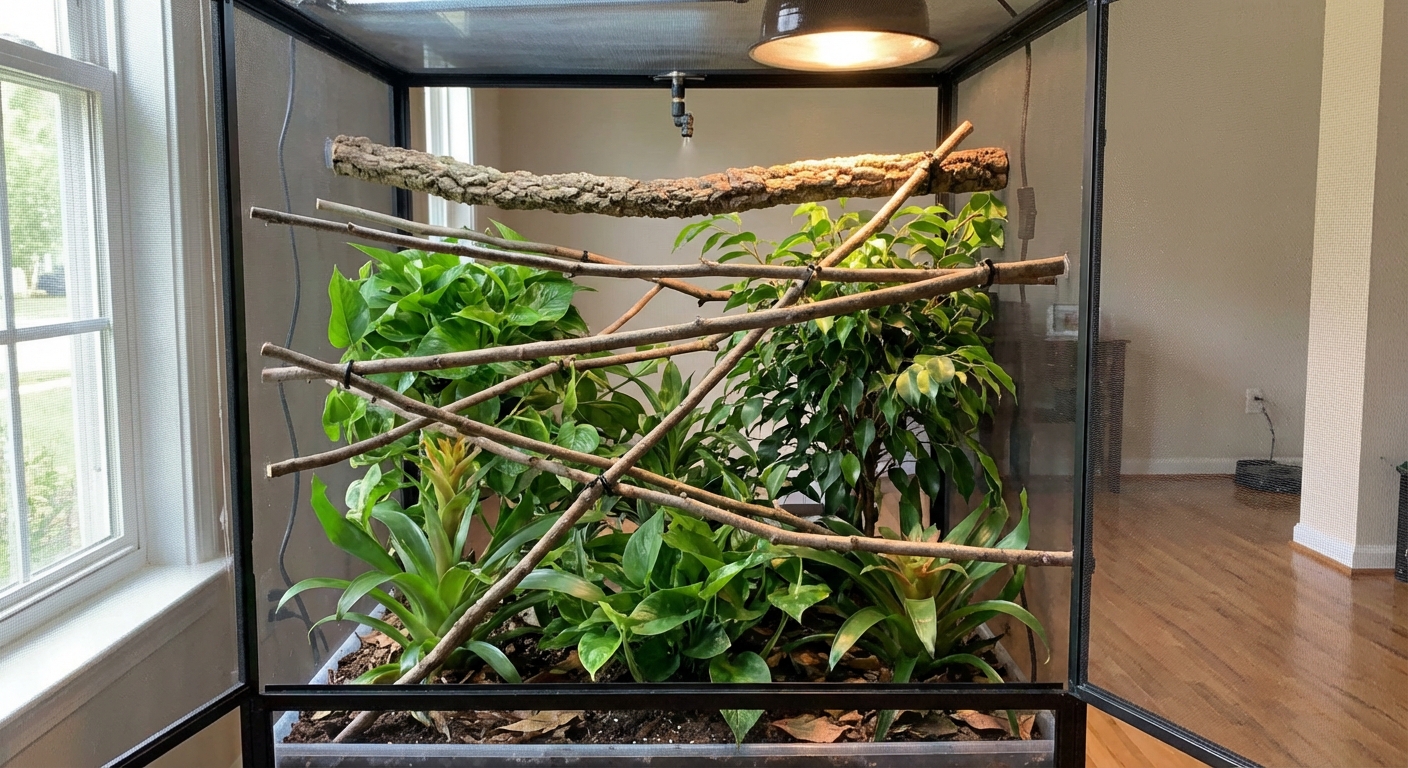
- Height matters: Chameleons feel safer up high. Provide sturdy branches and vines leading to a basking perch.
- Clutter on purpose: A “pretty” minimal tank can be stressful. Add dense foliage so your chameleon can hide.
- Safe climbing paths: Use horizontal branches of different widths to support secure footing and help reduce slips and falls.
Plants and materials
Live plants help hold humidity, provide cover, and create natural drinking surfaces. Commonly used options include pothos, schefflera, and hibiscus. Avoid sap-heavy or irritating plants, and rinse plants well to remove pesticide residues. Use reptile-safe branches or properly cleaned natural branches from safe tree species.
Substrate
For many keepers, a bare floor or paper towel is safest and easiest to clean. Loose substrates can increase risk of accidental ingestion and make it harder to monitor droppings, which are a huge health clue.
Drainage
Good drainage is not optional. Standing water under the enclosure can breed bacteria and push humidity in an unhealthy direction.
- Simple option: A drainage tray under the enclosure that you empty daily.
- Common DIY option: A “false bottom” (egg crate/light diffuser) with a drain hole leading to a bucket.
- Automation option: A drain line routed to a container if you use an automatic mister.
Lighting and heat
If there is one area you should “overdo” in research, it is lighting. Improper UVB and heat are strongly associated with metabolic bone disease and chronic weakness in reptiles.
UVB basics
- Use a quality linear UVB tube (often preferred over small coil bulbs for more even coverage).
- Replace UVB bulbs on the manufacturer schedule even if they still look bright, because UVB output declines over time.
- Provide shade zones so your chameleon can self-regulate exposure.
Specifics people get wrong: UVB “strength” (often listed as a percentage) and distance to the basking branch matter. Screen tops can reduce UVB reaching your animal, and placing the basking perch too close can increase the risk of overexposure.
- If you want to be truly precise, a Solarmeter (UV Index meter) lets you set a safe basking zone and adjust perch height and bulb choice to your exact setup.
- If you do not have a meter, follow a trusted species-specific care sheet for your bulb type and mounting method, then confirm behavior and health with your reptile veterinarian.
Basking and gradients
Chameleons need a warm basking area and cooler zones to move into. Exact basking temperatures vary by species and age, so confirm the target range for your specific chameleon. Measure temperatures with a reliable digital thermometer and create a gradient rather than heating the entire enclosure evenly.
Night drop
Most chameleons benefit from a nighttime temperature drop. Jackson’s chameleons, in particular, often do best with a more noticeable drop at night. Avoid trying to keep the enclosure “warm” 24/7 unless your veterinarian has instructed you to for a medical reason.
Photoperiod
A consistent day and night schedule supports appetite, activity, and overall health. Many owners do well with a simple timer, so lighting stays consistent even on busy days.
Nighttime lighting warning
Avoid red or colored bulbs at night. If your home drops too cold for your species, use a thermostat-controlled heat source designed for nighttime use (no light), and confirm temperature targets for your chameleon.
Hydration and humidity
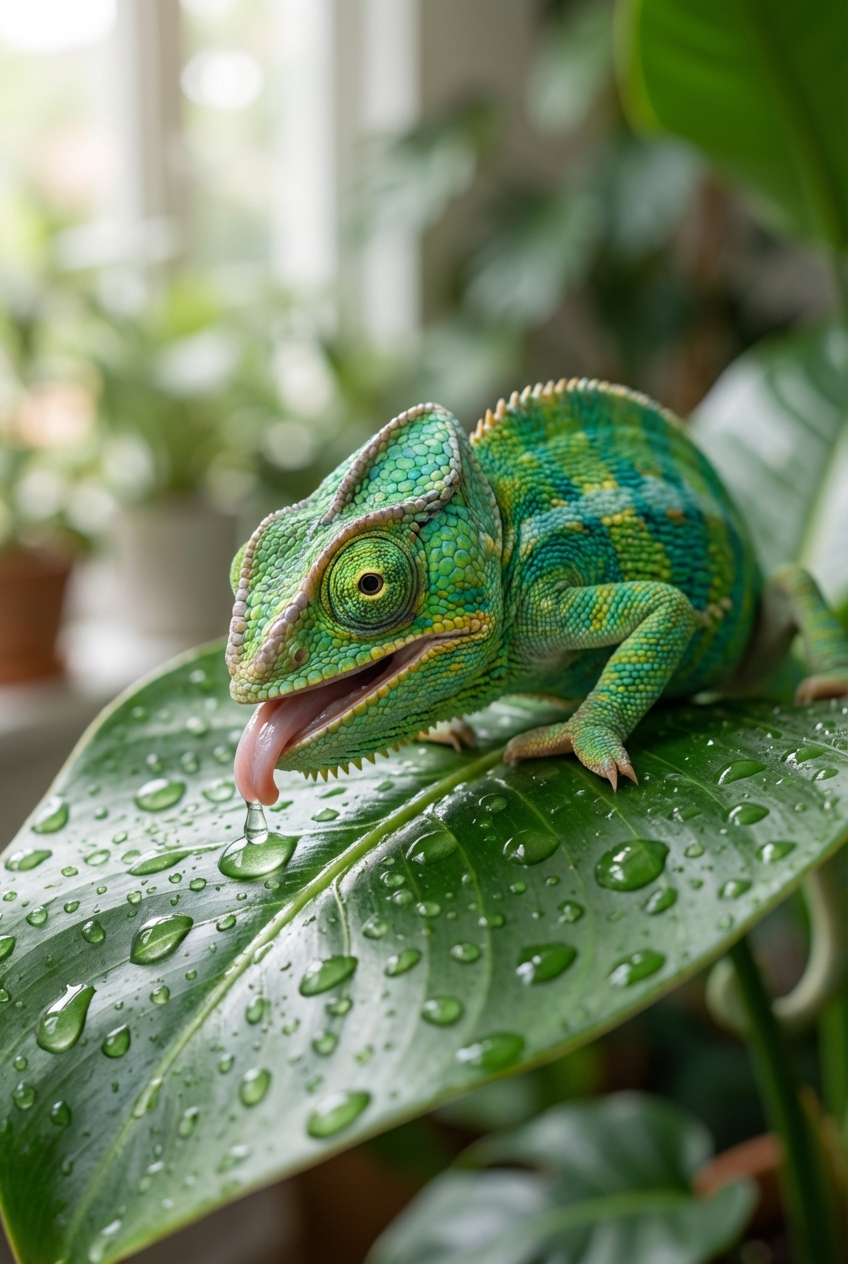
Chameleons often do not recognize standing water bowls, although some individuals will drink from a cup or dripper setup. Many prefer to drink droplets from leaves, which is why hydration takes a little planning.
Ways to provide water
- Misting: Helps create drinkable droplets. Mist long enough for your chameleon to notice and begin drinking, not just a quick spritz.
- Drippers: A slow drip onto leaves can encourage natural drinking behavior.
- Automatic misting systems: Great for consistency, especially if you work outside the home.
Humidity targets
Humidity needs vary by species and your home environment. Too low can contribute to dehydration and stuck sheds, while too high with poor ventilation can contribute to respiratory concerns. Use a digital hygrometer and focus on balance: hydration opportunities plus good airflow.
Helpful starting point: Many veiled and panther keepers aim for moderate daytime humidity with higher humidity overnight, then allow the enclosure to dry out between misting sessions. Jackson’s chameleons are often kept with cooler temperatures and careful humidity management. Always confirm ranges for your exact species, age, and enclosure type.
How to gauge hydration
- Droppings: The urate (the white portion) is often white to off-white. Yellow or orange can suggest dehydration, but it can also be influenced by supplements, diet, and first-morning urates. Look for patterns over several days, not a single dropping.
- Eyes: Sunken or persistently closed eyes are a red flag and deserve veterinary attention.
- Behavior: Weak grip, lethargy, or staying low in the enclosure can indicate a problem.
Feeding and supplements
Chameleons thrive on a varied diet of appropriately sized feeder insects. “Appropriate size” usually means insects no longer than the width between your chameleon’s eyes. It is a useful guideline, not a hard rule, and softer-bodied feeders may be tolerated at slightly larger sizes.
Common feeder insects
- Crickets
- Dubia roaches (where legal)
- Black soldier fly larvae
- Silkworms and hornworms (often helpful for hydration, but not the only feeder)
Gut-loading
The nutrition your insects eat becomes part of your chameleon’s nutrition. Feed insects a quality gut-load diet and fresh produce (as appropriate for the feeder species) before offering them.
A safe starter supplement framework
Supplementation is essential, but over-supplementation can be harmful. Your exact schedule depends on your UVB setup, species, and life stage. If you need a general starting point to discuss with your veterinarian, many keepers use:
- Calcium without D3: most feedings
- Calcium with D3: about 1 to 2 times per month
- Multivitamin: about 1 to 2 times per month (not on the same day as D3, unless directed)
Important cautions: More is not better with fat-soluble vitamins. Be especially careful with products containing preformed vitamin A unless your reptile veterinarian has recommended a specific plan.
Work with a reptile-savvy veterinarian to tailor a plan, especially for juveniles, breeding females, or any chameleon with a history of weakness or bone concerns.
Feeder safety
- Avoid wild-caught insects unless you are confident they are pesticide-free and safe (many are not).
- Never feed fireflies. They are toxic to many reptiles.
- Remove uneaten insects (especially crickets) so they do not bite or stress your chameleon.
Handling and stress
Most chameleons are best enjoyed as a “look, don’t hold” pet. Frequent handling can cause chronic stress, which can reduce appetite and overall resilience.
Low-stress handling tips
- Let your chameleon walk onto your hand rather than grabbing from above.
- Move slowly and keep sessions short.
- Offer a branch as a bridge if your chameleon seems hesitant.
- Do not force handling during shedding, after a move, or when appetite is off.
Kid safety note: Chameleons are delicate and can bite when frightened. Supervise closely and prioritize the animal’s comfort.
Female veiled chameleons
This is worth calling out because I see it missed often. Female veiled chameleons can produce eggs even without a male, and egg-laying problems can become emergencies.
Lay bin basics
- Provide a lay bin once your female is approaching maturity (ask your veterinarian for timing based on age and size).
- Use a container large enough for her to dig, filled with a safe digging medium kept slightly moist so tunnels hold their shape.
- Give privacy and minimize handling when she is digging or looks restless.
Red flags
Contact a reptile-experienced veterinarian promptly if you see straining, persistent digging with no eggs, swelling, weakness, collapse, or a sudden refusal to bask or eat in a female that may be gravid.
Cleaning and routine care
A clean environment supports gut health and reduces parasite risk.
- Daily: Remove uneaten insects, spot-clean droppings, wipe visible messes.
- Weekly: Clean perches and drainage areas, rinse plant leaves if mineral buildup occurs.
- Monthly or as needed: Deep clean with a reptile-safe disinfectant, rinse thoroughly, and allow to dry.
Health problems and vet care
Chameleons hide illness until they cannot anymore. Trust your instincts and act early.
Red flags
- Not eating for several days (especially in juveniles)
- Eyes closed during the day, sunken eyes, or eye swelling
- Wheezing, bubbling saliva, open-mouth breathing when not basking
- Weak grip, trembling, difficulty climbing, or falling
- Persistent dark coloration or unusual color changes with lethargy
- Severe constipation, straining, or diarrhea
- Swollen limbs or jaw softness (possible metabolic bone disease)
Habitat errors often look like “mystery illness.” Before you blame the chameleon, double-check UVB quality and distance, temperatures (including night drop), hydration routine, ventilation, and supplementation.
Find a reptile-experienced veterinarian before you need one. Ask if they see chameleons regularly and whether they can do fecal parasite checks and radiographs if needed.
Safety do-not list
- No heat rocks.
- No red or colored bulbs at night.
- No pesticide-exposed plants or wild-caught insects you cannot verify as safe.
- No “guessing” on temperature and humidity. Measure them.
Quick-start checklist
- Enclosure sized for your species, with height, climbing paths, and dense cover
- Linear UVB light installed at a safe distance (metered if possible) and replaced on schedule
- Basking light that creates a true temperature gradient plus a nighttime drop
- Hydration plan: misting plus dripper or auto-mister, with real drainage
- Varied feeder insects, properly gut-loaded
- Supplement plan matched to your UVB and species (use a safe starter framework, then tailor)
- Low handling, high observation
- Reptile vet contact saved in your phone
- Female veiled owners: lay bin plan in place before you need it
If you want the single biggest improvement most new owners can make: measure everything. A reliable thermometer and hygrometer take the guesswork out of care and help you catch small issues before they become big ones.