If you are torn between a Cavapoo and a Cockapoo, you are not alone. Both are small Poodle mixes known for sweet personalities and that teddy-bear look. But they can feel different day to day, especially when it comes to grooming, exercise needs, and what you might inherit from their non-Poodle parent.
Below is a practical, side-by-side style breakdown focused on real-life fit. Not perfection. Not hype. Just the factors that tend to matter most once the puppy stage is over.

At a glance
| Factor | Cavapoo | Cockapoo |
|---|---|---|
| Parent breeds | Cavalier King Charles Spaniel + Poodle | Cocker Spaniel + Poodle |
| Typical adult size | Often smaller overall | Often a bit sturdier |
| Grooming load | High, frequent brushing and regular trims | High, frequent brushing and regular trims |
| Daily activity (typical) | About 30 to 60 minutes total | About 45 to 90 minutes total |
| Vocality | Varies, often moderate | Varies, can be more vocal in some lines |
| Life expectancy | Often about 12 to 15 years | Often about 12 to 15 years |
| Best fit | People who want a softer pace and a cuddly companion | People who want a busier, sporty small dog |
Quick snapshot
- Cavapoo = Cavalier King Charles Spaniel + Poodle. Often chosen for a gentler, more cuddly vibe and a smaller “lap dog” feel, though individuals vary.
- Cockapoo = Cocker Spaniel + Poodle. Often a bit more energetic and sporty, with a wide range of coat types depending on lineage.
Both mixes can be wonderful family dogs, but neither is guaranteed “no-shed” or guaranteed hypoallergenic. Coat genetics are real, and regular grooming is essential.
Generation terms (F1, F1b, multigen)
Breeders often use generation labels. They matter because they can influence how predictable the coat and size are.
- F1 usually means 50 percent Poodle and 50 percent Cavalier or Cocker. Coat and shedding can vary a lot within the same litter.
- F1b often means an F1 mixed back to a Poodle (commonly about 75 percent Poodle). This can increase the odds of a curlier, more Poodle-type coat, but it is still not a guarantee.
- Multigen means mixes bred over multiple generations. Some lines become more consistent, but responsible breeding practices matter more than the label.
Practical takeaway: If coat predictability is a top priority for you, ask what generation the litter is, ask to see adult relatives if possible, and ask how the breeder assesses coat type before placement.
Size and weight
For both mixes, size depends heavily on the Poodle parent (Toy vs Miniature) and the size of the other parent. Generation and breeder selection also matter. Ask which Poodle size is used, the adult weights of both parents, and what past litters typically matured to.
Cavapoo typical ranges
- Height: often about 9 to 14 inches at the shoulder
- Weight: commonly 8 to 25 pounds (some lines can be smaller or larger)
- Why it varies: Toy Poodle lines tend to stay in the lower range, Miniature Poodle lines and bigger Cavaliers can land closer to the upper range.
Cockapoo typical ranges
- Height: often about 10 to 15 inches, sometimes more in larger lines
- Weight: commonly 12 to 30 pounds (some lines can be smaller or larger)
- Why it varies: Some Cockapoos come from smaller Cocker lines and Toy Poodles, others from larger Cockers and Miniature Poodles.
Practical takeaway: If your priority is the smallest possible dog for easy travel and true lap-dog proportions, Cavapoos more often land there. If you want a sturdier small dog that can keep up on longer walks, many Cockapoos fit that bill.

Coat and grooming
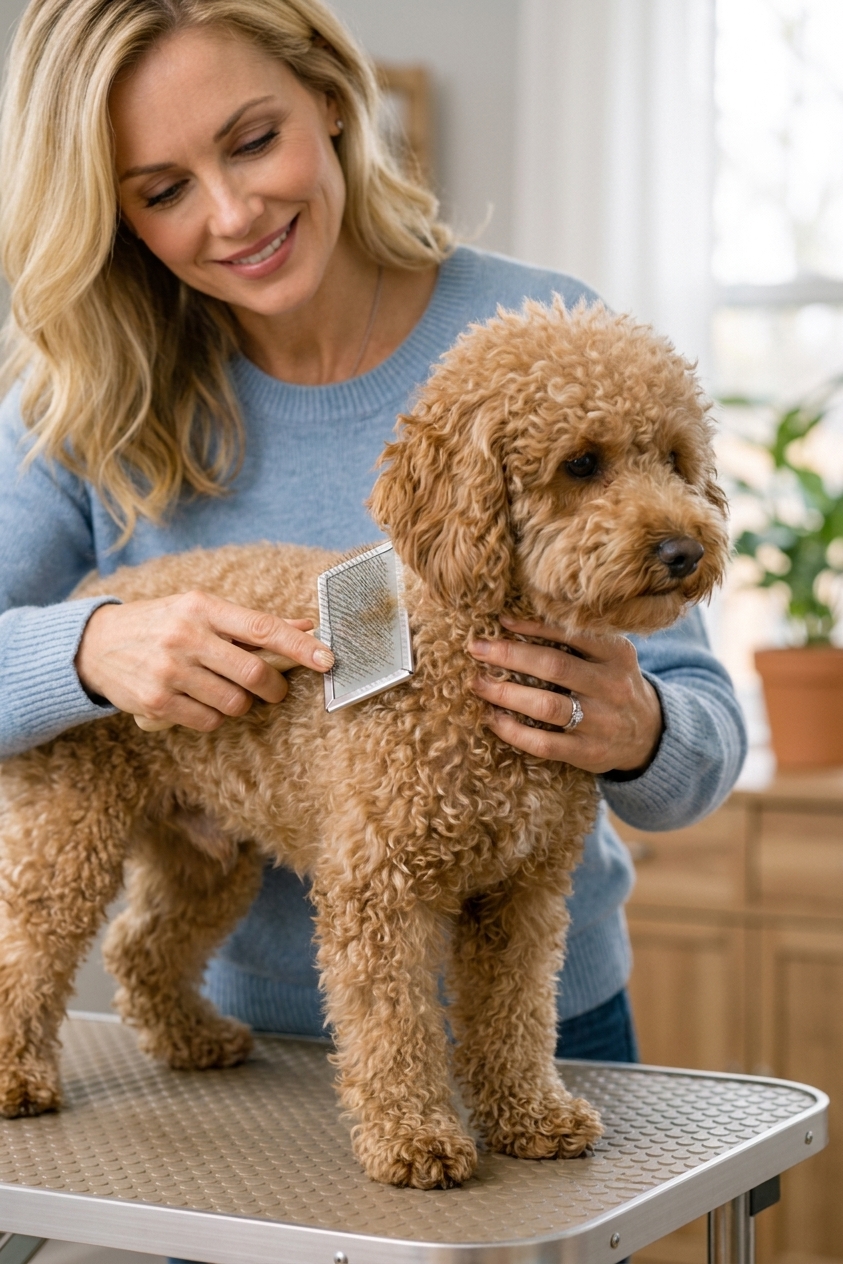
This is where many owners feel surprised later. Poodle mixes can mat quickly, especially in friction areas like behind the ears, armpits, collar line, and under the harness. The curlier the coat, the more it behaves like a Poodle-type coat that holds onto loose hair, which can increase mat risk without consistent upkeep.
Cavapoo coat tendencies
- Common coats: wavy to curly, sometimes a softer “teddy” wave
- Shedding: low to moderate depending on coat genetics (not always low)
- Grooming reality: plan on brushing several times per week and professional grooming about every 6 to 10 weeks, depending on coat length and how tight the curl is
Cockapoo coat tendencies
- Common coats: can be wavy, curly, or straighter and more spaniel-like
- Shedding: low to moderate, sometimes more noticeable in straighter coats
- Grooming reality: many Cockapoos have a thick coat and can mat easily, especially if kept long and plush, so 6 to 10 week trims are common for pet homes
What “high grooming” means
- Brush: 10 to 15 minutes, 3 to 5 times per week (daily if you keep the coat longer)
- Comb: use a metal “greyhound” comb (fine to medium teeth) to check for hidden tangles after brushing
- Bath: every 3 to 6 weeks for many homes, plus thorough drying to reduce matting
- Groomer: every 6 to 10 weeks depending on coat and style
Helpful tip from the clinic side: Ear care matters for both mixes. Hair in and around the ear canal, plus floppy ears (from Cavalier or Cocker heritage), can increase the risk of ear infections. If your dog is licking paws, shaking the head, or has a yeasty ear smell, talk with your vet early.
Energy and training
Both mixes are smart and people-oriented, which is great for training. The flip side is that they can develop nuisance behaviors if they are under-exercised or left alone too long without enrichment.
Cavapoo
- Energy: moderate for many dogs, with bursts of play
- Exercise: often about 30 to 60 minutes total daily activity, plus a little training and play
- Training style: tends to respond best to gentle, positive reinforcement and consistency
- Common challenge: separation-related stress can pop up in clingier individuals
Cockapoo
- Energy: moderate to high in many lines
- Exercise: often about 45 to 90 minutes total daily activity, especially for younger dogs, plus mental work
- Training style: usually food-motivated and eager, but can be distractible if not mentally tired
- Common challenge: some are vocal and may bark when bored or overstimulated
Apartment-friendly enrichment
- Scatter-feed part of a meal in a snuffle mat
- Teach “find it” with a few treats hidden in one room
- Rotate 4 to 6 toys weekly instead of leaving everything out
- Short training sessions (2 to 5 minutes) a few times a day
Practical takeaway: If you want a dog that is more likely to be satisfied with a calm home routine, many Cavapoos lean that way. If you want a small dog with more go-go-go and a sporting-dog spark, the Cockapoo often wins.
Allergies and shedding
As a veterinary assistant, I wish there were a simple promise here. There is not. No breed or mix is guaranteed hypoallergenic, and reactions can be triggered by dander and saliva. For some people, allergens can also include urine proteins, even if that is not the main trigger in most everyday situations.
- Poodle influence: can mean less shedding and more hair retention in the coat, which often reduces visible hair around the home.
- But: less shedding does not equal “no allergens.” Dander still exists, and saliva still coats fur during grooming.
- Coat variability: Cavapoos and Cockapoos can inherit more spaniel-like coats that shed more.
If allergies are a concern
- Spend time with an adult Cavapoo or Cockapoo in a home environment, not just a brief visit
- Ask your allergist what exposure testing or strategies make sense for you
- Plan on frequent grooming, washing bedding weekly, and using a HEPA air purifier
Lifespan
Both mixes often live about 12 to 15 years, sometimes longer with excellent preventative care and good genetics. Longevity is not just “breed,” it is also weight management, dental care, parasite prevention, and catching chronic issues early.
Practical note: A smaller dog is not automatically low-maintenance. Ongoing costs like grooming, dental cleanings, and allergy or ear care can add up over a decade plus.
Health considerations
Mixed-breed dogs can be very healthy, but they are not automatically protected from inherited issues. A responsible breeder reduces risk by health testing parents and being transparent about results. Your best protection is asking good questions up front and maintaining preventative vet care.
Cavapoo watch-outs
- Heart disease risk: Cavaliers are known for mitral valve disease, so ask about cardiac screening in the Cavalier line. Ideally, this includes a cardiologist exam and, when appropriate for the line, an echocardiogram.
- Patellar luxation: kneecap instability is common in small dogs. Watch for skipping steps or sudden yelps during running.
- Dental crowding: small mouths mean a higher need for dental care. Plan for brushing and professional cleanings as advised by your vet.
- Ear infections: floppy ears plus hair can trap moisture.
Cockapoo watch-outs
- Ear infections: Cocker Spaniels are especially prone. Regular ear checks and drying after baths or swimming help.
- Eye issues: risk varies by line, but spaniel and Poodle ancestry can be associated with conditions like cataracts or progressive retinal atrophy. Ask whether the parents have had ophthalmology screening.
- Hip and knee concerns: smaller dogs can still have orthopedic issues, especially with poor structure or excess weight.
- Skin allergies: not uncommon in Poodle mixes. Red paws, recurring ear issues, and itchiness often travel together.
Health questions to ask
- What health testing has been done on the parents (and can I see proof, such as OFA results)?
- For Cavapoo lines: what cardiac screening has been done on the Cavalier side (and at what ages)?
- For both mixes: have the parents had eye exams, and have patellas been evaluated?
- Have any related dogs had heart disease, chronic ear infections, severe allergies, or orthopedic surgery?
- What is the adult weight range of past litters from these lines?
- What is your socialization plan from weeks 3 to 12?
- Do you have a contract and a return policy if the placement does not work out?
Weight matters more than most people realize: keeping a small dog lean reduces stress on joints and can improve quality of life long term. If you can easily feel ribs with light pressure and see a waist from above, you are usually in a healthy range.
Temperament and family fit
Both mixes are typically friendly and people-focused. That is why they are so popular. The key is matching expectations to your household, and remembering that individuals can inherit different mixes of spaniel softness, spaniel vocality, and Poodle sensitivity.
Kids
- Cavapoo: often gentle and affectionate, but small bodies can be easily overwhelmed by rough handling. Best with kids who can follow quiet hands.
- Cockapoo: often playful and sturdy enough for active families, but may be mouthier as a puppy and needs training around jumping.
Apartments
- Cavapoo: frequently an excellent apartment candidate if you meet daily exercise and do not leave them alone for long stretches.
- Cockapoo: can do great in apartments, but plan for more exercise and more training around barking and excitement.
First-time dog owners
- Cavapoo: can be a softer landing for many first-timers, especially if you want a calmer companion and are committed to grooming.
- Cockapoo: also a good first dog for active owners who will train daily and provide structured outlets for energy.

Cost reality
Beyond the adoption or purchase price, both mixes can be expensive to maintain because of coat care and common small-dog needs.
- Grooming: professional grooms every 6 to 10 weeks, plus tools at home
- Dental care: brushing at home, and periodic professional cleanings as advised by your vet
- Training: puppy classes and ongoing “life skills” work help a lot with barking, jumping, and separation stress
- Insurance or savings: worth considering for ear infections, allergies, and orthopedic issues
Decision prompts
If you are still on the fence, these questions usually make the answer clearer.
Choose a Cavapoo if you want
- A smaller companion that is likely to be content with a moderate daily routine
- A cuddly dog that bonds closely with people
- A dog that may be a bit less intense in day-to-day energy needs
Choose a Cockapoo if you want
- A small dog with more sporty energy and play drive
- A dog who can join longer walks and more frequent outings
- A confident, eager learner who thrives with training games
Ask yourself before you commit
- Do I have the budget and time for professional grooming every 6 to 10 weeks?
- Can I commit to daily training and enrichment for the first year?
- Is anyone in the home sensitive to allergens, and have we done real-life exposure testing?
- Do we want a calmer Netflix buddy or a more active let’s go partner?
- Am I comfortable with a 12 to 15 year commitment and the long-term costs that come with it?
If you match your lifestyle first, you will love your dog more, and your dog will thrive more. That is the win for everyone.