
Designer Mixes
The Cavachon is a sweet, people-focused mix of the Cavalier King Charles Spaniel and the Bichon Frise. In my work as a veterinary assistant here in Frisco, Texas, I see why this designer mix has become such a favorite: they tend to be gentle, manageable in size, and happy with moderate daily activity. Many also have a low-shedding coat that can work well for some allergy-sensitive homes.
That said, “many” is the key word. A Cavachon can inherit traits from either parent, including health concerns like heart murmurs (from the Cavalier side) and eye conditions. This guide walks you through what to realistically expect so you can choose, train, and care for your Cavachon with confidence.

Temperament
Cavachons are best known for being affectionate, gentle, and eager to be close to their people. Many are calm enough to enjoy couch time, but playful enough to keep up with family life. They often do well with children when kids are taught respectful handling, and they frequently enjoy the company of other dogs.
What they are usually like
- Friendly and social: Typically warm with family members and friendly visitors, especially with early socialization.
- Emotionally tuned-in: Many Cavachons are sensitive and respond best to positive reinforcement training.
- Companion-oriented: They may struggle if left alone for long stretches, which can lead to nuisance barking or separation-related stress.
Tip: If you work long hours outside the home, plan for help like a midday dog walker, doggy daycare a few days a week, or a neighbor who can do a quick potty break and play session.
Size and appearance
Most Cavachons are small dogs, making them popular for apartments, smaller homes, and seniors who want a dog that is easier to lift and manage. Adult size varies based on the parents, the breeder’s lines, and even the generation (for example, first-generation mixes vs multigenerational Cavachons).
- Typical height: commonly about 12 to 14 inches at the shoulder
- Typical weight: often about 10 to 20 pounds, with some a bit smaller or larger
Coats can range from soft and wavy to curlier, with common colors including white, apricot, cream, tan, and combinations like white with patches.

Lifespan
With good preventative care, many Cavachons live about 12 to 15 years. Genetics, weight, dental care, and early detection of heart or orthopedic issues can all influence longevity.
Coat and allergies
Many people search for Cavachons because they hope for a “hypoallergenic” dog. The Bichon Frise is known for a low-shedding coat, and some Cavachons inherit that trait. However, no dog is truly hypoallergenic. Allergies are usually triggered by dander and saliva proteins, not just shedding. Allergen load also varies by individual dog and how a household manages grooming and cleaning.
What to know before you commit
- Low shedding is common, but not guaranteed: Some Cavachons shed lightly or seasonally depending on coat type.
- Grooming is not optional: Wavy and curly coats can mat quickly, especially behind the ears, under the collar, and in the armpits. This is one of the most common issues I see in clinic because mats can hide skin irritation.
- Plan for regular trims: Many families schedule professional grooming every 4 to 8 weeks.
- Brush on a schedule: Most Cavachons do best with brushing several times per week, and daily brushing if the coat is curlier or kept longer.
Actionable advice for allergy-sensitive homes: Spend time with the exact puppy or adult dog you are considering, ideally in a home setting, before adopting. If possible, do multiple visits. Keep a consistent grooming routine, wipe paws and faces after outdoor time, and wash dog bedding weekly.
Exercise
Cavachons typically have moderate exercise needs, but it is still dog-dependent. Many are happiest with daily walks plus short bursts of play. The Cavalier influence can bring a love of sniffing and exploring, while the Bichon side often adds a cheerful, bouncy play style.
A realistic daily routine
- Walks: about 20 to 40 minutes total per day, split into 1 or 2 walks
- Play: 10 to 15 minutes of indoor fetch or backyard play
- Mental enrichment: puzzle toys, snuffle mats, short training sessions
Important: Avoid over-exercising young puppies. Their joints are still developing, so use short, age-appropriate outings and let them set the pace.
Training and socialization
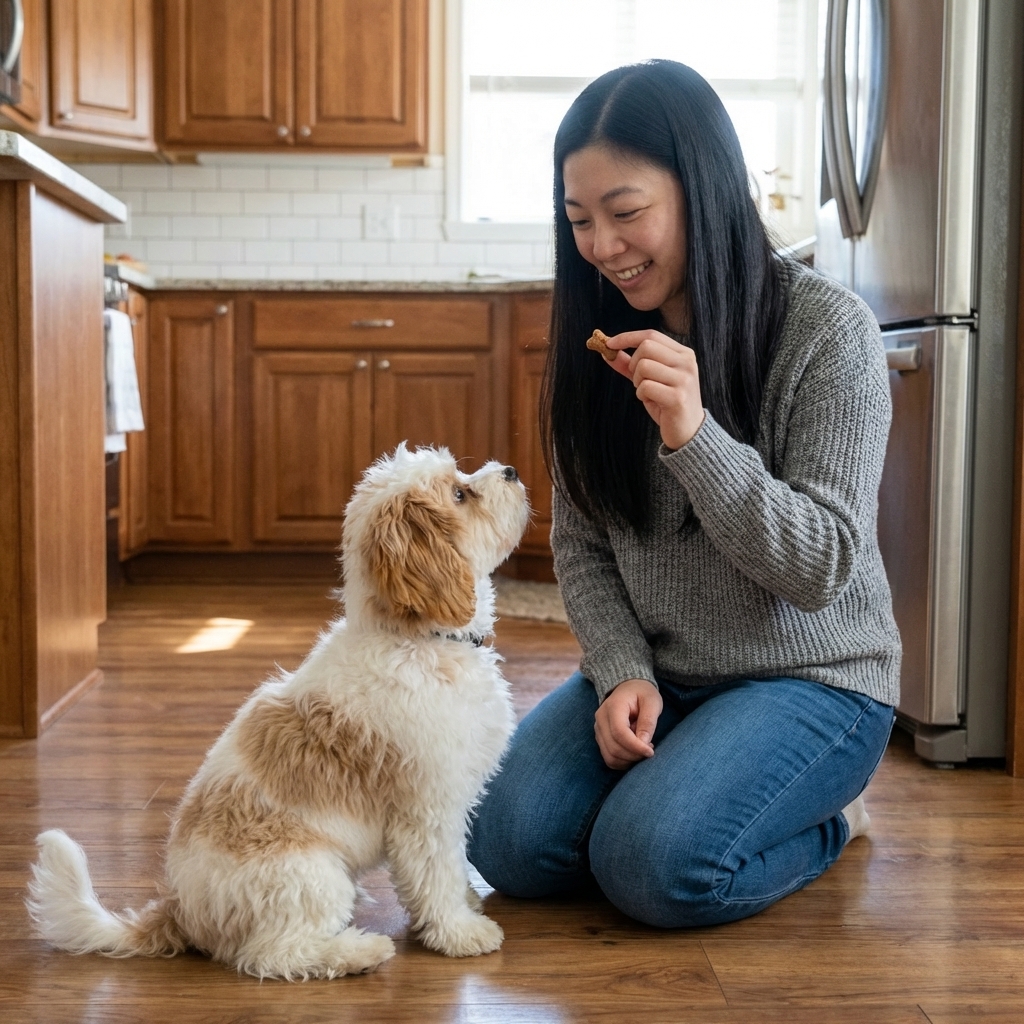
Cavachons are often bright and people-pleasing, which can make training feel surprisingly fun. They do best with gentle consistency and rewards like treats, praise, and play. Harsh corrections can backfire with sensitive dogs and may increase fear or anxiety.
Focus areas that pay off fast
- Potty training: Small dogs can take longer to housetrain, so keep a predictable schedule and reward immediately after success.
- Handling skills: Practice calm brushing, paw touches, and ear checks from day one to make grooming and vet visits easier.
- Alone-time practice: Teach short separations early so your Cavachon learns that you always come back.
Common health issues
Like most small companion dogs, Cavachons do best with proactive care. Designer mixes can still inherit the health risks of both parent breeds. The best step you can take is choosing a responsible breeder or rescue that prioritizes health, and partnering with a veterinarian for routine screening.
Heart concerns
Cavalier King Charles Spaniels are known for a higher risk of heart disease, especially mitral valve disease, which can be associated with a heart murmur. Not every Cavachon will develop heart disease, but it is a key risk to take seriously.
- What you may notice at home: coughing, reduced stamina, faster breathing at rest, or fainting episodes
- A useful at-home metric: ask your veterinarian how to track resting respiratory rate while your dog is asleep. A sustained increase over their normal can be an early clue that something is changing.
- What your vet may recommend: regular auscultation (listening for murmurs) and, if indicated, chest X-rays and an echocardiogram with a veterinary cardiologist
Actionable advice: Ask your breeder what cardiac testing was done on the parents and at what ages, and request documentation when available. Early screening can help catch problems before symptoms become severe.
Knee issues
Luxating patellas (slipping kneecaps) are very common in small dogs and are seen in both Cavalier and Bichon lines. In a Cavachon, it may show up as an occasional skip or hop on a back leg, especially during play.
- Signs to watch for: intermittent limping, “bunny hopping,” skipping steps, reluctance to jump, or discomfort going up stairs
- What helps: keeping your dog lean, using joint-friendly exercise, and following your veterinarian’s guidance if physical therapy, medication, or surgery is recommended
Neurologic concerns
Cavaliers are also known for a condition called Chiari-like malformation and syringomyelia. Not every Cavachon will be affected, and risk in mixes is not guaranteed, but it is worth being aware of since you may see it discussed online.
- Possible signs: unexplained neck sensitivity, yelping when picked up, persistent scratching at the neck or shoulder area (sometimes without touching the skin), or reluctance to wear a collar
- Practical tip: if your dog shows these signs, ask your vet whether a harness is a better choice than a collar and whether referral to a veterinary neurologist makes sense
Eye conditions
Both parent breeds can be prone to eye issues. Cavachons may be at risk for problems such as dry eye, cataracts, and other inherited eye concerns.
- Signs to watch for: squinting, redness, eye discharge, cloudiness, rubbing the face on carpet, or light sensitivity
- Helpful prevention: keep facial hair trimmed, clean tear staining gently as needed, and schedule routine veterinary eye checks
Allergies, skin, and ears
Many small companion breeds, including Bichon-type dogs, can be prone to environmental or food-related itching. Ear infections can also be common, especially with floppy ears and a coat that holds moisture.
- Red flags: licking paws, frequent scratching, head shaking, recurring ear odor, or “hot spots”
- Supportive care: regular ear cleaning as advised by your vet, consistent grooming, and prompt treatment when symptoms first appear
Dental disease
Small dogs are especially prone to tartar buildup and gum disease. In clinic, we often see surprisingly heavy tartar in young small dogs, so early dental habits really matter.
- Best habits: daily tooth brushing, dental chews approved by your veterinarian, and professional cleanings when recommended
Weight management
Extra weight puts pressure on joints (including knees) and can make heart and breathing issues harder to manage. Because Cavachons are small, a pound or two can make a bigger difference than many people realize.
- Helpful habits: measure meals, limit high-calorie treats, and ask your veterinarian what a healthy body condition score looks like for your dog
Why Cavachons are popular
The Cavachon’s popularity makes sense. Many families want a dog that is affectionate, small enough for younger kids to handle with supervision, and adaptable to different living situations. Many seniors want a companion breed that does not require intense exercise but still enjoys daily walks and connection.
Reasons people love them
- Gentle and affectionate: often happy to cuddle and follow you from room to room
- Manageable size: easier to travel with and easier to lift than larger breeds
- Moderate energy: typically not a marathon-running dog, but not a couch statue either
- Coat options: many have low-shedding coats with regular grooming
Best match: Cavachons tend to thrive in homes that can offer daily companionship, predictable routines, and a commitment to grooming and preventative care, especially around heart, knees, and dental health.
Choosing a healthy Cavachon
If you are purchasing a puppy, take your time. A reputable breeder will welcome questions and provide health information. If you are adopting, a good rescue will be transparent about what they know and what they do not know.
Questions worth asking
- What health testing was done on the Cavalier and Bichon parents, especially cardiac and eye evaluations?
- Were the parents evaluated for knee issues such as patellar luxation?
- Can I see veterinary records for the puppy, including vaccinations and deworming?
- How are puppies socialized, and what has been introduced so far (grooming, noises, car rides, crates)?
- What food is the puppy currently eating, and what transition plan do you recommend?
Helpful step: Schedule a new-pet exam with your veterinarian within the first few days of bringing your Cavachon home. This visit is a great time to discuss parasite prevention, vaccine schedule, spay or neuter timing, dental care, weight goals, and whether baseline heart or eye screening makes sense for your dog.
Bottom line
Cavachons can be wonderful companions with a soft temperament, a family-friendly vibe, and a coat that often sheds less than many other breeds. The trade-off is that they do require consistent grooming, early training, and thoughtful preventative healthcare, especially around heart health, knees, eyes, and dental disease.
If you want a gentle, affectionate dog who truly enjoys being part of your everyday life, the Cavachon is absolutely worth a close look.