A vet-assistant guide to cleaning your dog’s ears the safe way—what to use, what to avoid, step-by-step technique, how often to clean, and when to call y...
Article
•
Designer Mixes
Causes of Yeast Infections in Dogs’ Ears

Shari Shidate
Designer Mixes contributor
As a veterinary assistant here in Frisco, Texas, I have seen how quickly an itchy ear can turn into a full-blown infection. If your dog keeps scratching, shaking their head, or their ears suddenly smell “yeasty” or musty, you are not imagining it. Yeast ear infections are common, uncomfortable, and very often connected to an underlying cause that needs attention.
This guide breaks down what yeast is, why it overgrows, the most common triggers, how veterinarians diagnose it, what treatment often looks like, and what you can do to prevent repeat flare-ups.
What a yeast ear infection is
Yeast (most often Malassezia pachydermatis) normally lives on canine skin in small amounts. It becomes a problem when the ear environment changes in a way that lets yeast multiply too quickly. Yeast overgrowth can cause or contribute to inflammation of the outer ear canal (otitis externa), leading to itching, redness, discharge, and an odor owners often describe as “corn chips,” musty, or bread-like.
Important note: many ear infections are mixed, meaning yeast plus bacteria. Other problems like ear mites or a foreign body can also start the inflammation cycle, with yeast or bacteria moving in secondarily. That is why a proper exam matters.
Common signs pet owners notice
- Head shaking or ear scratching
- Redness, swelling, or heat in the ear flap or canal
- Brown, yellow, or waxy discharge
- Musty, sweet, or “yeasty” odor
- Rubbing the ear on the floor or furniture
- Pain when you touch the ear, or your dog pulls away
- Recurrent infections, often in the same ear
If your dog seems off-balance, has a head tilt, or you notice hearing changes, treat it as urgent. Those signs can suggest middle or inner ear involvement, not just a surface ear canal issue.
Why yeast overgrows in the ear
Think of yeast like weeds in a garden. The yeast itself is not always the main issue. The real issue is the “soil” and conditions that let it take over. In dogs, yeast loves warmth, moisture, and inflammation.
The most common causes
1) Allergies
Allergies are one of the most common underlying reasons yeast ear infections keep coming back. When a dog has environmental allergies (atopy) or food allergies, the immune system triggers inflammation in the skin and ears. That inflamed tissue changes the ear’s normal defenses and makes yeast overgrowth much more likely.
- Environmental allergies: pollen, grasses, weeds, molds, dust mites
- Food allergies: often proteins like beef, chicken, dairy, or other ingredients, but every dog is different
Clues pointing to allergies include itchy paws, licking, recurring skin infections, seasonal flare-ups, or ear problems that return soon after treatment.
2) Moisture trapped in the ear
Yeast thrives in moist environments. Anything that keeps the ear canal damp can trigger a flare-up, especially in floppy-eared breeds or dogs with a lot of hair in the ear canal. I see this a lot in swimmers, including many retrievers.
- Swimming and playing in lakes or pools
- Frequent baths with water getting into the ears
- Humid weather combined with limited airflow in the ears
One practical tip: if your dog is a swimmer, ask your veterinary team which ear drying product is safest for your dog’s ear type and history. Not every dog can use the same cleaner, especially if eardrum status is unknown.
3) Ear anatomy and poor airflow
Some dogs are simply built in a way that makes ear infections more likely. For example, many spaniels have heavy ear flaps, and some poodles and doodles have hair that traps wax and moisture.
- Floppy ears can reduce ventilation and trap humidity
- Narrow ear canals hold debris and discharge
- Hairy ear canals can trap wax and moisture
This does not mean your dog will always have infections, but it does mean prevention and early intervention matter more.
4) Wax buildup and skin oil changes
Yeast feeds on oils and thrives when wax and debris build up. Some dogs naturally produce more wax, and inflammation from allergies can increase wax production even more. That extra wax changes the ear’s micro-environment and gives yeast more “fuel.”
5) Bacteria, mites, and foreign material
Yeast is not always acting alone. Bacteria frequently occur alongside yeast. Ear mites are more often a primary cause of irritation and inflammation, and then yeast or bacteria can become a secondary infection. Foxtails or other debris can also trigger sudden, painful ear inflammation.
This is why veterinarians commonly recommend an ear cytology (looking at a swab under the microscope). Cytology helps identify yeast, bacteria, mites, and inflammatory cells so treatment targets the true problem.
6) Overcleaning or the wrong ear products
This surprises many loving pet owners. Cleaning can be helpful, but too much cleaning, harsh solutions, or home remedies can irritate the ear canal. Irritation causes inflammation, and inflammation sets the stage for yeast.
- Avoid putting vinegar, hydrogen peroxide, essential oils, or alcohol-based products into the ear unless your veterinarian specifically instructs you to.
- If the eardrum could be damaged, certain products can be unsafe.
7) Hormonal and metabolic conditions
Some medical conditions can increase the risk of skin and ear infections by changing immunity and skin barrier function.
- Hypothyroidism
- Cushing’s disease
- Diabetes (especially if poorly controlled, and it can also slow healing)
If ear infections are frequent and your dog also has changes like weight gain, excessive thirst, hair loss, or recurring skin issues, it is worth asking your veterinarian about screening labs.
8) Antibiotics or steroids (in certain situations)
These medications can be very appropriate, but repeated courses or incomplete control of the underlying inflammation can shift the microbial balance and make yeast more likely to overgrow. The goal is not to avoid medications. It is to treat the infection and the reason it keeps happening.
Why some dogs get repeat infections
When yeast ear infections are recurrent, it is usually because the underlying issue is still active. The most common root causes behind repeats are allergies and moisture management, followed by anatomy, chronic inflammation, or stopping treatment too soon.
In clinic, we often focus on three questions:
- What is in the ear right now (yeast, bacteria, both)?
- Why did this happen (allergy, moisture, anatomy, endocrine)?
- How do we prevent the next one (a realistic home plan)?
Over time, repeated inflammation can cause the ear canal to thicken and narrow, which makes infections harder to clear. Some chronic cases need more advanced management and sometimes referral to a veterinary dermatologist.
How vets diagnose it
A good ear visit is more than a quick look.
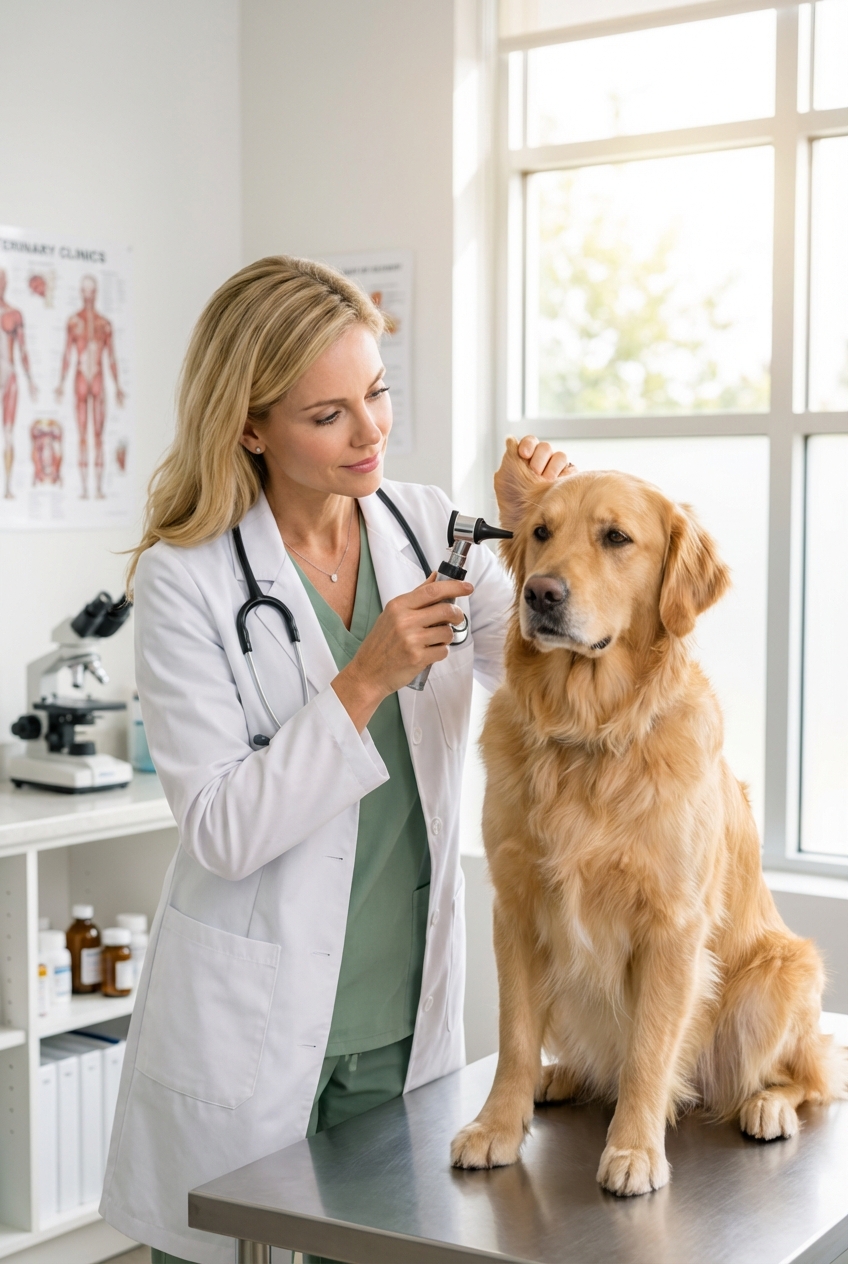
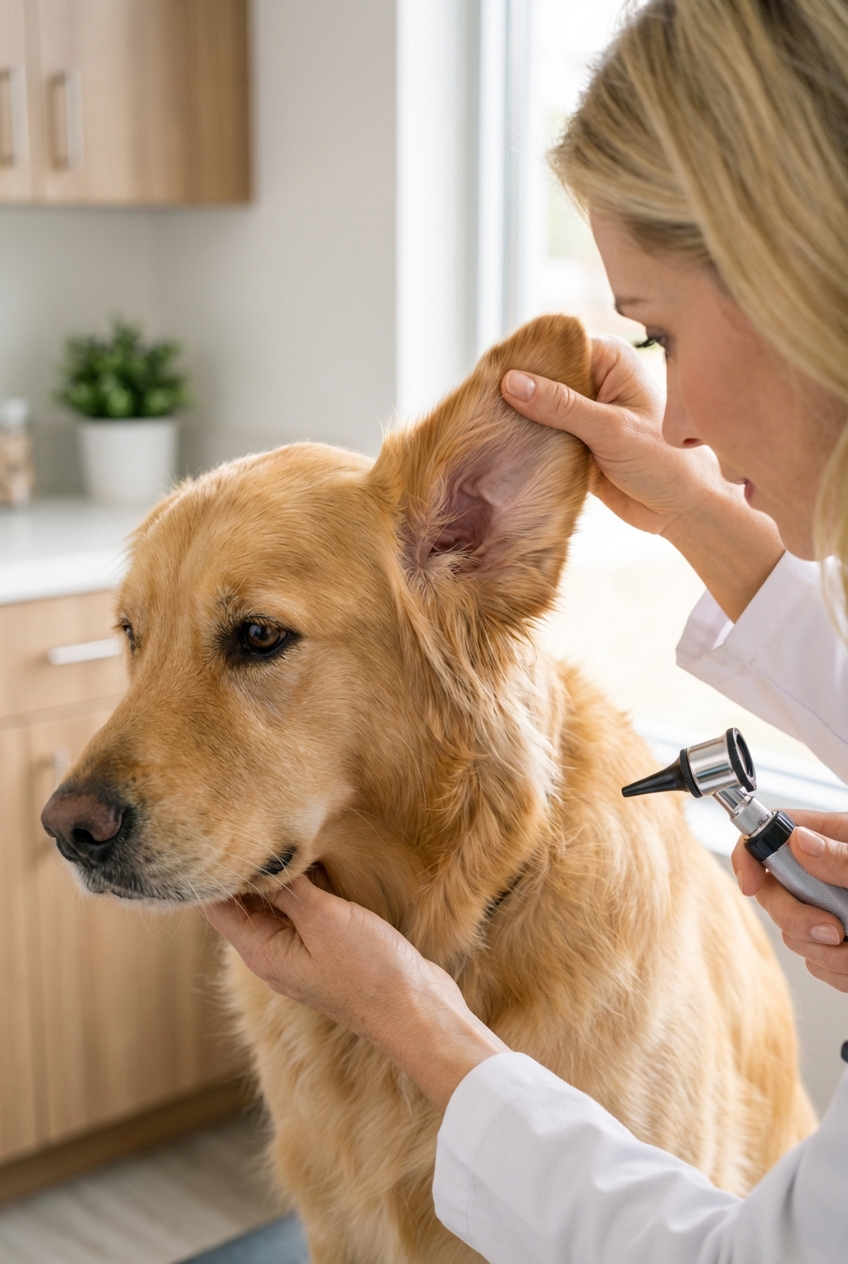
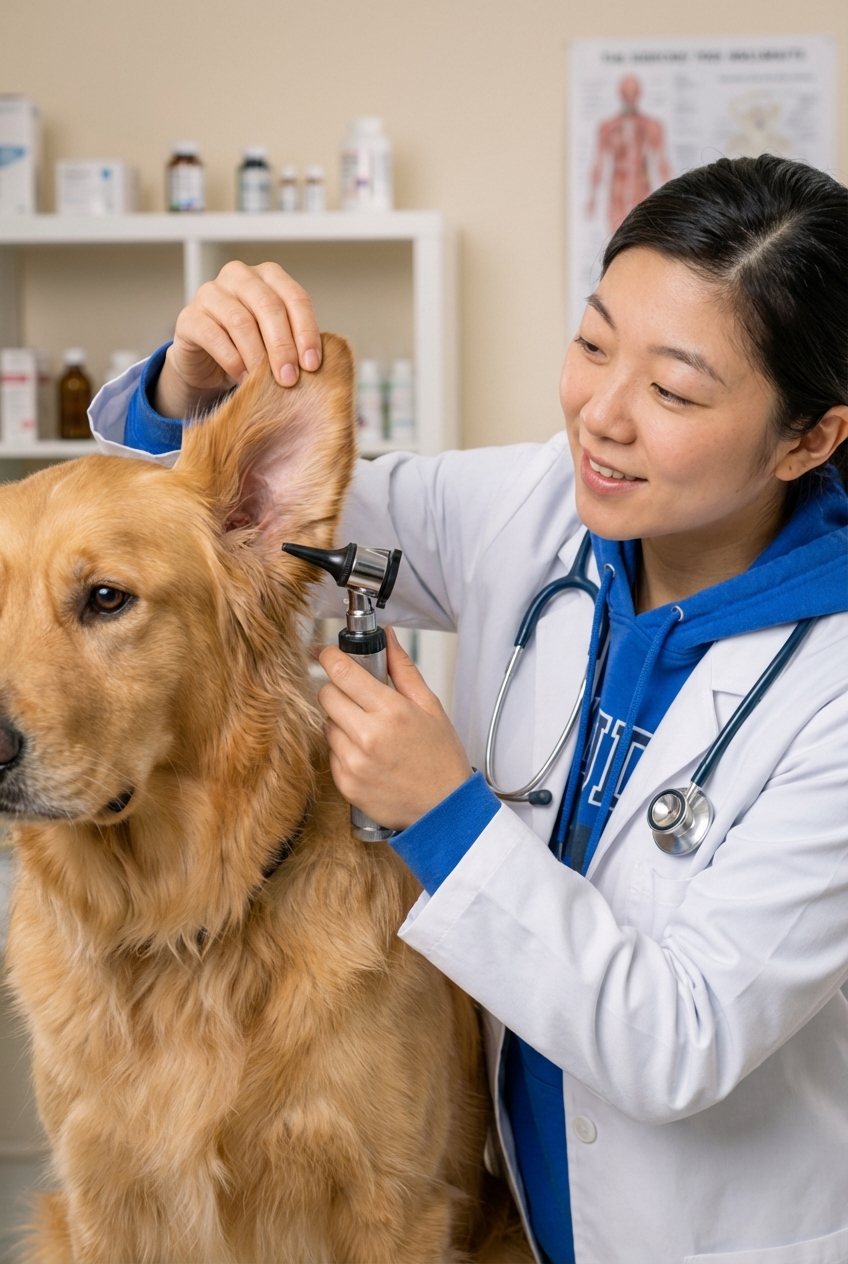
- Otoscope exam: checks the ear canal, looks for foreign material, and assesses the eardrum when possible.
- Ear cytology: confirms whether yeast, bacteria, mites, or significant inflammation are present.
- Culture and sensitivity: sometimes recommended for recurrent or severe infections, especially when bacteria are involved or treatment is not working as expected.
If a dog has chronic, painful infections or neurologic signs (head tilt, balance changes), the veterinarian may discuss deeper evaluation, including imaging, to look at middle ear disease.
Typical treatment
Treatment depends on what is found on exam and cytology, but commonly includes:
- Topical ear medication: antifungal medication for yeast, often combined with an antibiotic if bacteria are present, plus an anti-inflammatory to reduce swelling and pain.
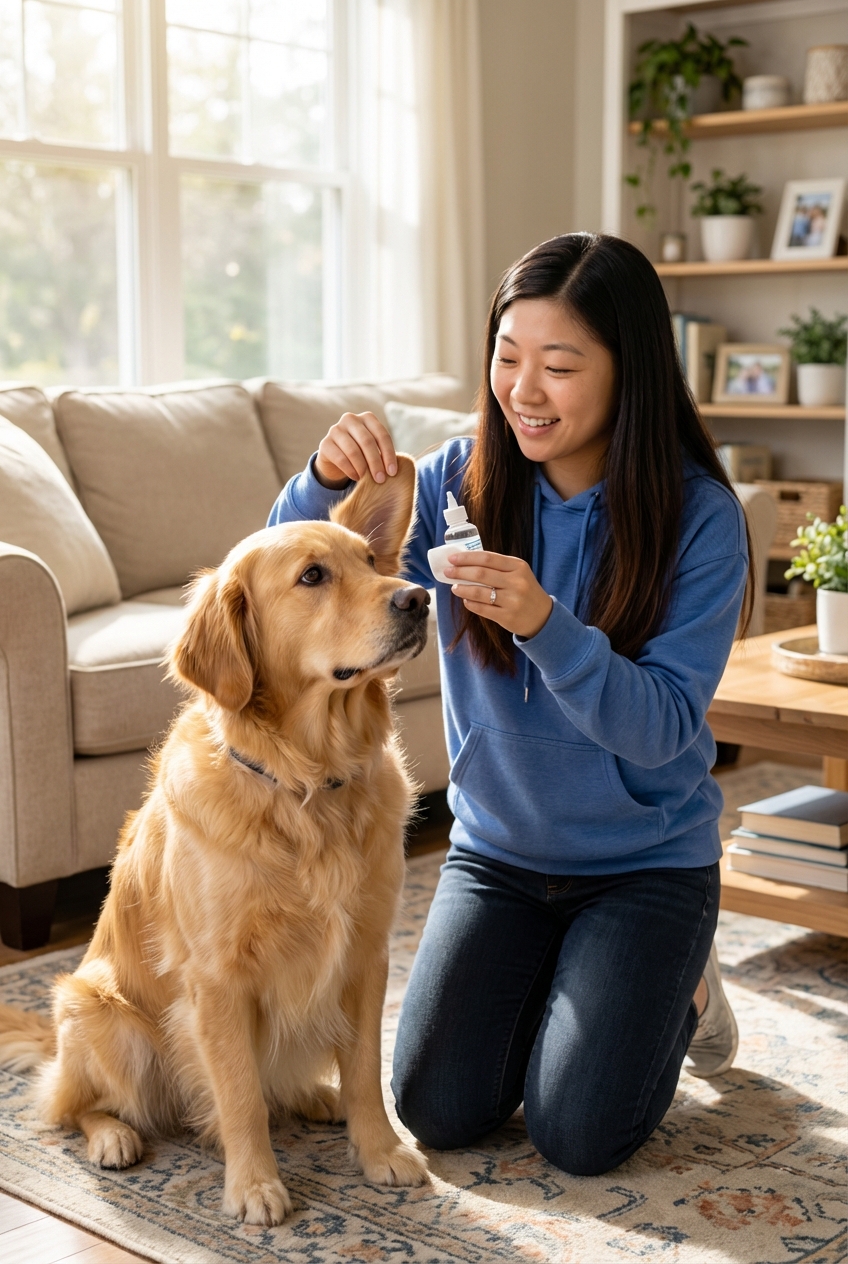
- Ear cleaning plan: a vet-selected cleanser used on a schedule that matches the amount of discharge and the sensitivity of the ear.
- Addressing the trigger: allergy control, moisture management for swimmers, or treatment for mites if present.
Please do not use leftover ear drops from a prior infection. The wrong product can delay healing, worsen inflammation, or be unsafe if the eardrum is not intact.
What to do if you suspect one
If you suspect yeast, the best next step is a veterinary visit for an ear exam and cytology. Many dogs feel better quickly once the right medication starts, but the wrong medication can make things worse or delay healing.
Until your appointment:
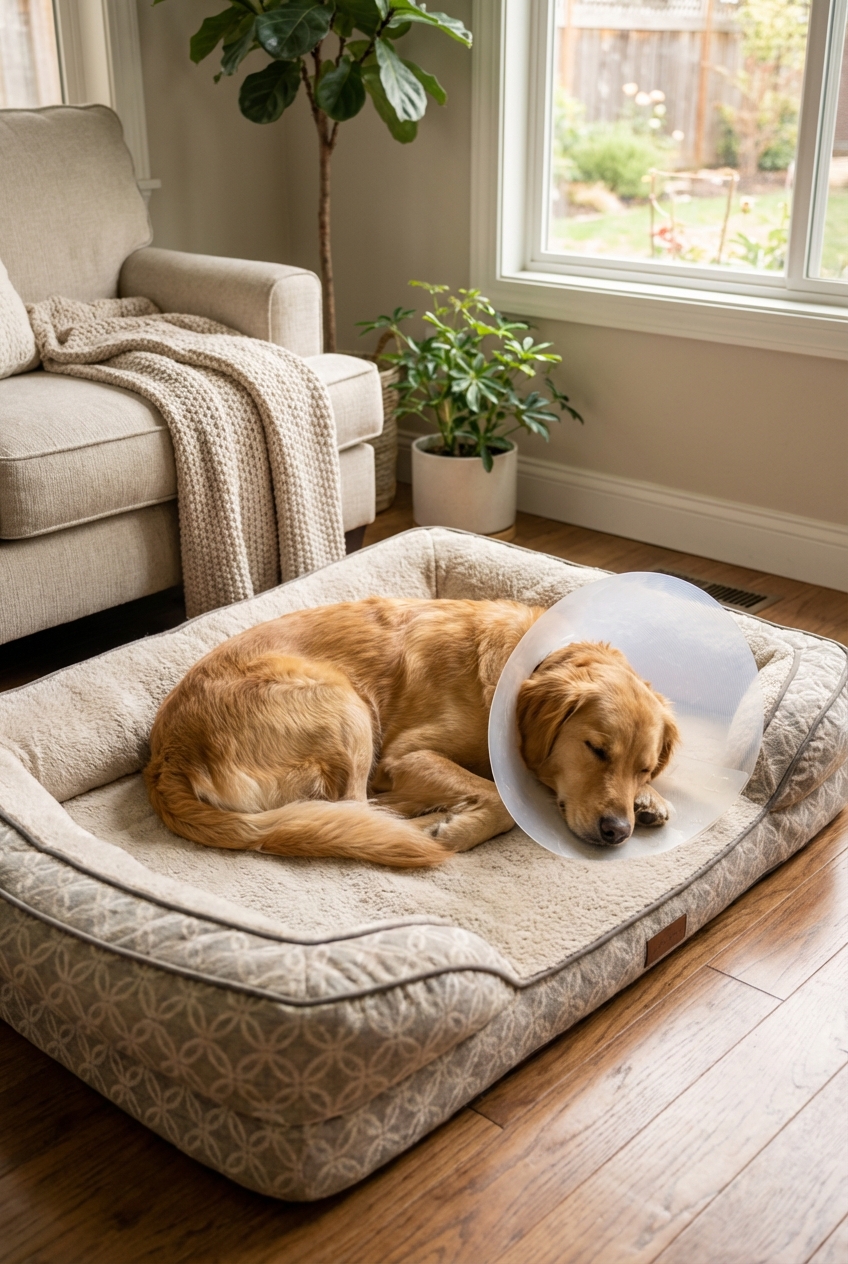
- Prevent scratching if possible (an e-collar can help if your dog is injuring the ear)
- Do not put random products in the ear, especially if there is pain, swelling, or discharge
- Keep the ear dry and avoid swimming
Prevention tips that help
- Keep ears dry: after baths or swimming, use a vet-approved drying routine if your dog is prone to infections.
- Use the right cleaner at the right frequency: some dogs need weekly maintenance, others need very little. Overcleaning can irritate.
- Clean safely: wipe only what you can see on the ear flap and outer opening. Do not use cotton swabs or Q-tips down in the ear canal.
- Address allergies: managing itching and inflammation reduces the conditions yeast loves. Ask your veterinarian about diet trials, allergy medications, and environmental control.
- Recheck chronic cases: follow-up exams matter, especially when infections are recurrent or severe.
- Watch for early signs: a little redness and mild odor today can become a painful infection in a week.
If your dog gets more than a couple ear infections per year, it is worth discussing an “ear plan” with your veterinarian. A simple prevention routine can save your dog a lot of discomfort.
When to seek urgent care
Please do not wait if you notice:
- Head tilt, stumbling, or balance issues
- Severe swelling, bleeding, or intense pain
- Sudden hearing loss
- Concern for a ruptured eardrum or middle ear involvement (only an otoscope exam can confirm this)
- Symptoms that return immediately after finishing medication
Quick FAQ
Are yeast ear infections contagious?
Typically, no. Yeast overgrowth is usually about your dog’s ear environment and underlying triggers, not something passed between pets.
Can diet cause yeast in the ears?
Food allergies can contribute to chronic ear inflammation in some dogs, which can lead to yeast overgrowth. That does not mean “carbs cause yeast” for every dog. The more evidence-based approach is to work with your veterinarian on a structured elimination diet trial if food allergy is suspected.
Can I treat a yeast ear infection at home?
Because yeast infections can look like bacterial infections and the eardrum status matters, at-home treatment without diagnosis is risky. A simple ear swab and exam can guide safe, effective treatment.