
Mange looks scary but is treatable. Learn the signs, how vets diagnose sarcoptic vs demodectic mange, safe home steps, cleaning tips, and when to seek urgent...
Article
•
Designer Mixes
Causes of Mange in Dogs

Shari Shidate
Designer Mixes contributor
Mange can look scary, and it can feel personal when your dog is uncomfortable, itchy, and losing hair. The reassuring truth is this: mange is common, treatable, and manageable once you understand what is driving it.
As a veterinary assistant, I like to break it down into two big ideas. First, mange is caused by mites. Second, whether those mites cause visible disease depends on opportunity. When a dog’s skin barrier, immune system, or environment is stressed, mange is more likely to become clinically apparent. This is not a sign you did something wrong. It can happen even to well-cared-for dogs.

What mange is
Mange is a skin condition caused by microscopic mites. These mites live on or in the skin and trigger inflammation. That inflammation leads to signs like itching, redness, scaling, hair loss, odor, and sometimes scabs or secondary infection.
There are two primary types you will hear about in dogs:
- Sarcoptic mange (also called scabies): highly itchy and contagious.
- Demodectic mange (demodex): linked to immune and skin health changes and not typically contagious to healthy adult dogs.
Cause 1: Sarcoptic mange
Sarcoptes scabiei mites burrow into the skin. This causes intense itching and a rash-like reaction. Many dogs scratch so hard that the skin breaks, which opens the door for bacterial or yeast infections.
How dogs get it
- Direct contact with an infected dog, fox, coyote, or other animal is the most common route.
- Shared items like bedding, grooming tools, crates, or blankets can sometimes play a role, especially in shelters, boarding, and multi-dog homes (less commonly than direct contact).
- Exposure in the environment: mites can survive off-host for a short time, so contaminated items and spaces can matter.
Clues it might be sarcoptic mange
- Sudden, relentless itching
- Hair loss and crusting, often on ears, elbows, hocks, belly, and chest
- Other pets in the home are itchy too
- People in the home develop temporary itchy bumps after handling the dog
Important: sarcoptic mites can cause itch in people, but they do not complete their life cycle on humans. Symptoms are often self-limiting once the dog is treated, but if your rash persists or worsens, check in with your physician.

Cause 2: Demodectic mange
Most dogs naturally have tiny numbers of Demodex mites living in hair follicles. In a healthy dog, the immune system keeps them in balance. Demodectic mange happens when mites overgrow.
Why demodex flares up
- Puppy immune immaturity: young dogs can develop localized demodex spots, often around the face or front legs.
- Early-life transmission: demodex is typically passed from mother to puppies very early in life. Adult-to-adult spread is uncommon.
- Genetics: some dogs are predisposed to poor mite control, and responsible breeders avoid breeding affected lines.
- Underlying illness: conditions that affect immunity can allow mites to flourish.
- Immune suppression medications: steroids or other immunosuppressive drugs can contribute in some cases.
- Stress and poor body condition: chronic stress, malnutrition, or heavy parasite burdens can make the skin more vulnerable.
Clues it might be demodectic mange
- Hair loss that may be less itchy than scabies at first
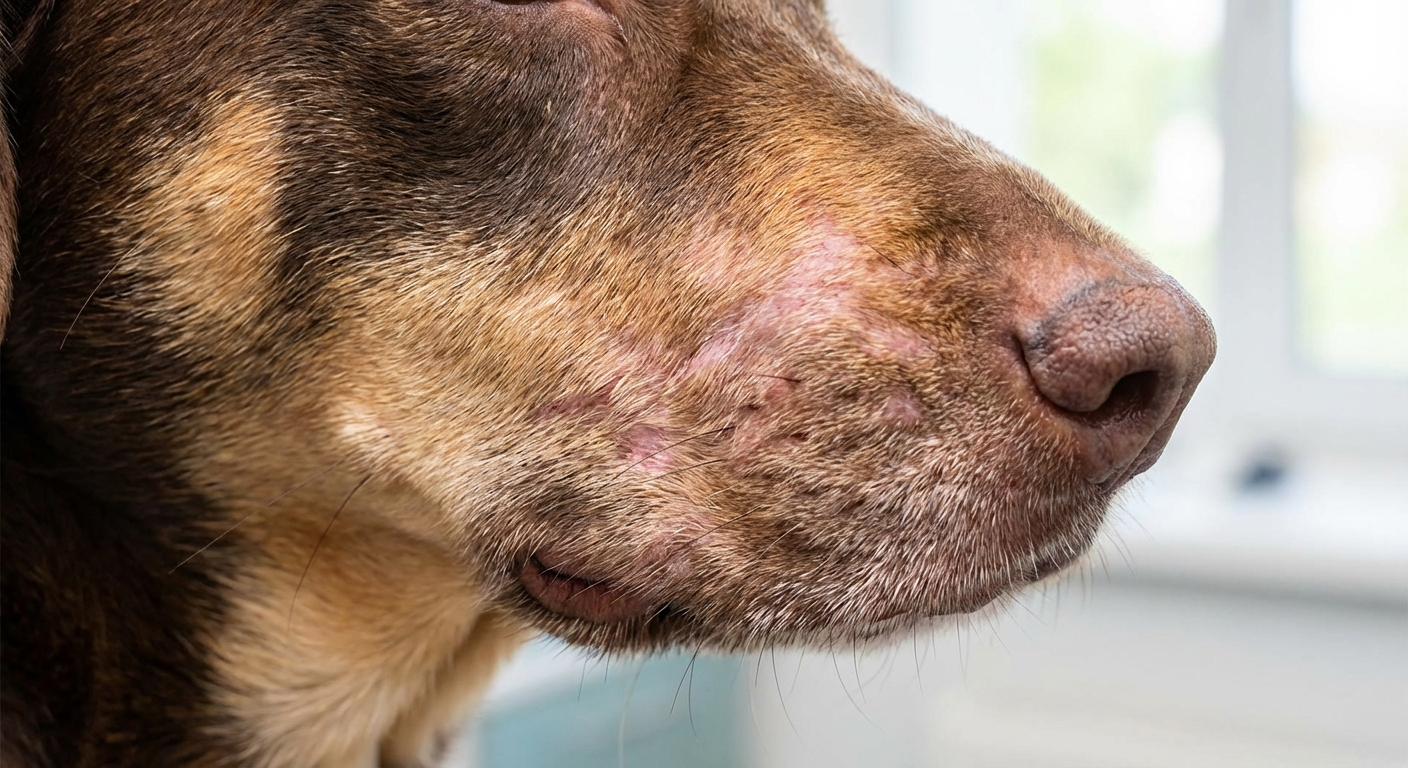
- Patchy bald spots, often around eyes, muzzle, or paws
- Skin may look scaly, oily, thickened, or inflamed
- Can progress to generalized disease, with widespread lesions and infection
Why some dogs get mange
Mites are the cause, but your dog’s overall skin and immune health affects how severe mange becomes and how quickly it improves. Here are common factors that can increase susceptibility or worsen signs.
Weak skin barrier
The skin is a protective organ. When it is inflamed or dry, mites and microbes have an easier time causing trouble.
- Frequent bathing with harsh shampoos
- Chronic itching from allergies
- Dry indoor air and poor coat condition
Allergies and chronic itch
Environmental allergies, food sensitivities, and flea allergy dermatitis can all cause inflammation. When dogs chew and scratch constantly, the skin becomes damaged and infected, and any mite issue can be harder to control.
Fleas and other parasites
Fleas do not cause mange, but they can intensify itching, trigger allergies, and keep a dog’s skin in a constant state of irritation. That makes mange look and feel worse.
Poor nutrition
Skin and coat are built from protein, essential fatty acids, vitamins, and minerals. Dogs on poorly balanced diets may have dull coats, flaky skin, and slower healing. In real life, that can mean mange and secondary infections are tougher to clear.
Actionable tip: if you are feeding homemade, make sure it is balanced for your dog’s life stage. Skin issues are one of the first places nutritional gaps show up.
Diagnosis matters
Mange can look like allergies, ringworm, bacterial folliculitis, or yeast dermatitis. That is why diagnosis matters. Some look-alikes also have different household implications, like contagious ringworm.
Common vet tests
- Skin scraping: checks for mites or mite eggs under a microscope (especially useful for demodex).
- Tape prep or impression smear: checks for bacteria and yeast.
- Coat brushing and flea combing: rules in or out parasite triggers.
- Sometimes a trial treatment: sarcoptic mites can be hard to find.
Note: a negative skin scraping does not rule out sarcoptic mange. If the pattern fits, vets often treat and watch for response.
If you try random home treatments first, you can accidentally worsen inflammation or delay getting the right medication. And with scabies, delay can mean more spread to pets and people in the home.
What treatment looks like
The best plan is always individualized, but most successful mange treatment has three parts: kill the mites, treat infections, and support the skin so it can heal.
1) Mite control
Veterinarians commonly use modern parasiticides that are highly effective against mites. Many of these medications are in the isoxazoline class, but the exact choice depends on the type of mange, your dog’s age, weight, medical history, and household situation.
- Sarcoptic mange often requires treating all in-contact dogs and cleaning bedding. Ask your vet what to do if you have cats in the home, since treatment choices can differ by species.
- Demodectic mange treatment length is guided by follow-up testing (often skin scrapings, sometimes hair plucks called trichograms) and clinical improvement.
2) Treat infection
Many dogs with mange also have bacterial or yeast overgrowth. This can cause odor, oozing, thickened skin, and extra itching.
- Medicated shampoos, mousses, or wipes may be recommended.
- Some dogs need oral antibiotics or antifungals.
3) Control itch safely
Itch control improves comfort and helps the skin barrier recover. Your veterinarian may use anti-itch medications that fit the diagnosis and your dog’s health history. Avoid giving leftover steroids or other immune-altering medications without guidance, especially if demodex is suspected.
4) Support skin healing
- High-quality protein supports repair and coat regrowth.
- Omega-3 fatty acids from fish oil can support skin comfort for many dogs.
- Consistent parasite prevention reduces flea-triggered flares that can complicate recovery.
- Gentle grooming and regular washing of bedding reduces reinfestation risk.

Home hygiene
Especially with sarcoptic mange, cleaning helps reduce reinfestation and spread while treatment kicks in.
- Wash bedding, blankets, and soft toys in hot water and dry on high heat.
- Vacuum carpets and upholstery thoroughly.
- Do not share grooming tools between pets until cleared by your veterinarian.
- Limit close contact with other dogs until treatment has started and your vet gives the okay.
What to expect
Most dogs start feeling more comfortable after effective mite treatment begins, but the timeline depends on the type of mange and whether infection is present.
- Itch relief may begin within days to a couple of weeks once the right therapy is on board.
- Skin healing often takes a few weeks.
- Hair regrowth can take several weeks to a few months.
If your dog seems worse, develops new sores, or you are not seeing steady improvement, follow up. Sometimes the missing piece is infection control, allergy management, or adjusting the treatment plan.
When to see the vet
Please do not wait if you notice any of the following. Mange can escalate quickly, and the sooner you treat it, the easier it is on your dog.
- Intense itching that disrupts sleep
- Rapid hair loss or widespread redness
- Open sores, pus, a strong odor, or bleeding
- Lethargy, fever, decreased appetite
- Puppies, seniors, or immune-compromised dogs with new skin lesions
Can mange be prevented?
You cannot control every exposure, but you can stack the odds in your dog’s favor.
- Use veterinarian-recommended parasite prevention year-round when appropriate. This can reduce the risk of sarcoptic mange and helps prevent other parasites that can complicate skin disease.
- Support immune health with balanced nutrition, healthy weight, and regular veterinary care. Demodex flare-ups are not always preventable, but healthy skin and immune support can lower the odds of severe disease.
- Manage allergies early to reduce chronic inflammation.
- Be cautious in high-risk settings like shelters or boarding facilities, and ask about their parasite protocols.
Most importantly, trust your instincts. If your dog’s skin looks different, smells different, or your dog is suddenly itchy, it is worth getting checked. Mange is very treatable, and relief can come faster than you think once you identify the cause.