From fleas and allergies to mites, infections, ringworm, and stress grooming—learn the top causes of itchy skin in cats, key symptoms, vet diagnostics, and...
Article
•
Designer Mixes
Causes of Cat Itching and How to Stop It

Shari Shidate
Designer Mixes contributor
When a cat cannot stop scratching, licking, or overgrooming, it is easy to assume it is just “dry skin.” In reality, itching can come from many causes, from fleas to food sensitivities to infections. The good news is that most cases improve significantly once you identify the trigger and protect the skin barrier while it heals.
This article is general information and not a substitute for veterinary diagnosis or treatment.
Below, I will walk you through the most common reasons cats itch, what you can do at home safely, and when it is time to bring your cat to a veterinarian.
What cat itching can look like
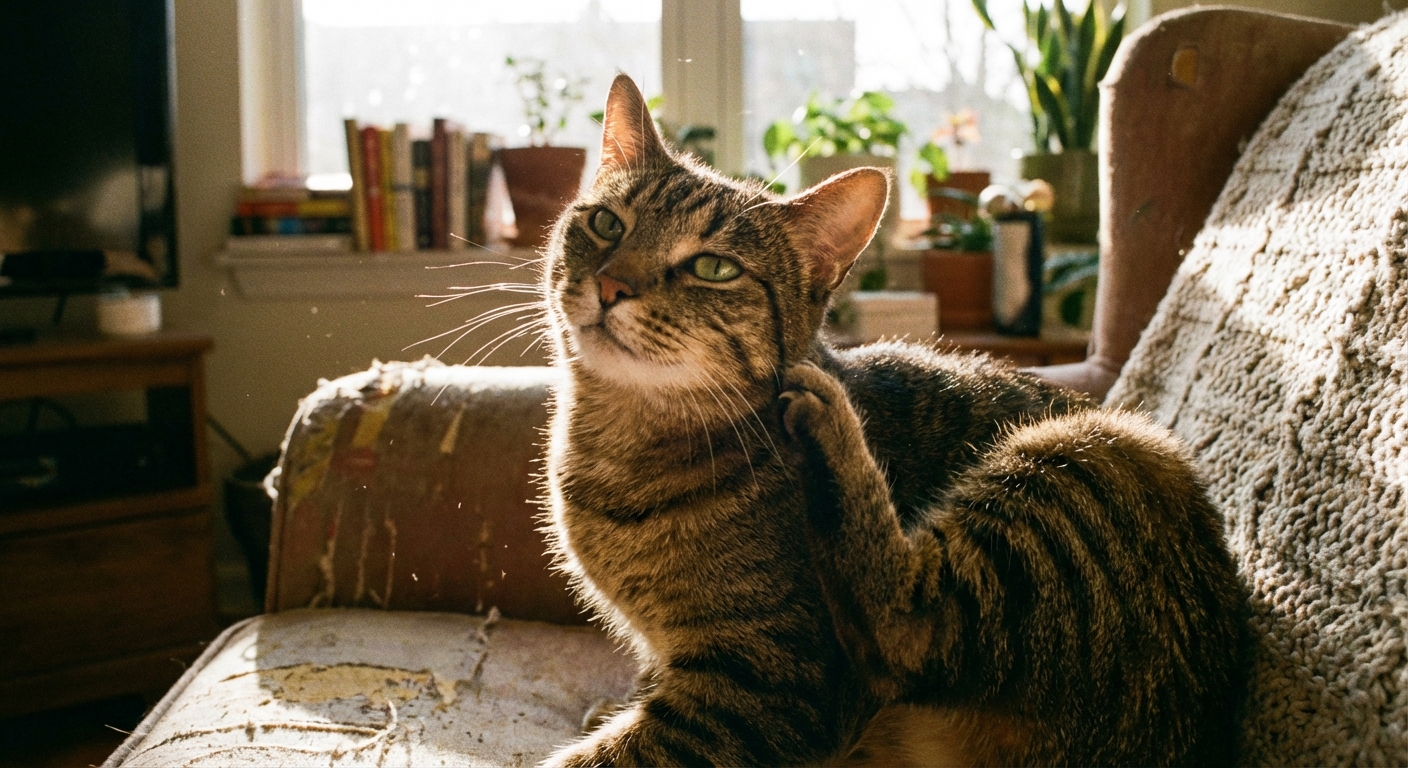
Cats do not always “scratch” the way dogs do. Many itchy cats primarily lick, chew, or pull out fur. Watch for these common clues:
- Frequent scratching around the ears, neck, and chin
- Overgrooming on the belly, inner thighs, or lower back
- Hair loss , thinning coat, or broken hairs
- Scabs, crusts, or tiny bumps (often along the back)
- Redness, dark skin, or thickened patches
- Head shaking or ear rubbing
If you notice open sores, bleeding, swelling, or a strong odor from the skin or ears, treat that as a prompt to seek veterinary care sooner rather than later.
Most common causes of cat itching
1) Fleas and flea allergy dermatitis
Fleas are one of the most common causes of itching in cats, even for indoor cats. A single flea bite can trigger intense itching in cats with flea allergy dermatitis . Many cats swallow fleas while grooming, so you might never see the insects.
Common pattern: itching and scabs along the lower back, base of the tail, and hindquarters.

2) Environmental allergies (atopy)
Just like people, cats can react to pollen, dust mites, molds, and other indoor or outdoor allergens. These cases often wax and wane with seasons, but some cats itch year-round, especially if the allergen is indoors.
Common pattern: face rubbing, ear irritation, licking the belly or legs, or recurring skin infections.
3) Food sensitivities or food allergy
Food-related itch is less common than fleas but important. It can show up at any age. The most reliable way to diagnose a food allergy is a veterinarian-guided elimination diet trial, which typically lasts 8 to 12 weeks. Blood and saliva tests are not consistently accurate for food allergies in cats .
Common pattern: itching around the head and neck, recurrent ear issues, or chronic licking with or without digestive upset.
4) Dry skin and low humidity
Dry indoor air, frequent grooming, and dehydration can all contribute to flaky, itchy skin. Some cats develop dandruff , especially in winter or in very climate-controlled homes.
Common pattern: mild itch with visible flakes, dull coat, and increased static in the fur.
5) Skin infections (bacterial or yeast)
Infections often develop secondary to another trigger, like allergies or parasites. Once the skin barrier is inflamed, microbes can overgrow, which ramps up itching fast.
Common pattern: redness, odor, greasy or crusty skin, and sometimes oozing or pimples.
6) Ear mites and ear infections
Ear issues are a major source of “itching” behaviors. Ear mites are more common in kittens and multi-pet households, but any cat can be affected.
Common pattern: head shaking, ear scratching, dark debris in the ear, or sensitivity when you touch the ears. Debris color and texture can overlap between mites, yeast, and bacterial infections, so testing is often needed to confirm the cause.
7) Ringworm (fungal infection)
Despite its name, ringworm is a fungus, not a worm. It can cause patchy hair loss and sometimes itch. It is also contagious to people and other pets, so it requires veterinary diagnosis and treatment. Many cats are only mildly itchy (or not itchy at all), and confirmation may involve fungal culture or PCR testing.
Common pattern: circular areas of hair loss, broken hairs, mild scaling, and occasional itch.
8) Stress and compulsive overgrooming
Cats can lick repetitively when stressed, bored, or anxious. This is sometimes called psychogenic alopecia. Importantly, stress licking can look identical to allergy licking, so it is best to rule out medical causes first.
Common pattern: symmetrical hair thinning on the belly or inner thighs, often with no obvious scabs.
9) Pain or arthritis (grooming as a response)
Some cats groom excessively near a painful area. Older cats with arthritis may lick joints or the lower back, and the behavior may be mistaken for “itching.”
Common pattern: excessive grooming over specific joints or the lower spine without general itchiness.
10) Contact irritation
Scented litter, cleaning products, essential oil diffusers, fabric sprays, or new carpets can irritate sensitive skin. Cats also react to some topical products made for other species.
Safety note: never apply human anti-itch creams, essential oils, or dog flea products to cats unless your veterinarian specifically recommends it. Some essential oils can irritate skin and can also be toxic to cats, especially when diffused in enclosed spaces.
11) Other parasites (less common, but worth ruling out)
In some regions and households, other ectoparasites can contribute to itching, dandruff, or hair loss. Examples include Cheyletiella (sometimes called “walking dandruff”), lice, and, more rarely, certain mites such as Demodex. Your veterinarian can check for these with skin and coat testing.
How to stop the itching: a practical plan
Step 1: Start with flea control, even if you never see fleas
Because fleas are so common and so itchy, many veterinarians recommend addressing them early. Use a veterinarian-approved flea preventive appropriate for your cat’s age and weight . Treat every pet in the home for best results, and keep up monthly coverage.
- Wash bedding in hot water.
- Vacuum carpets and furniture regularly, then empty the canister outside.
- If your home has a heavy flea burden, ask your vet about environmental options.
Step 2: Support the skin barrier
Think of your cat’s skin like a protective “brick wall.” When it is inflamed, it leaks moisture and becomes more reactive. Gentle support can reduce itch while you search for the cause.
- Hydration: encourage water intake with a fountain and wet food.
- Nutrition: feed a complete, balanced diet; ask your vet whether omega-3 fatty acids are appropriate for your cat.
- Humidity: consider a humidifier in dry months.
- Grooming: brush regularly to remove loose fur and reduce matting, which can tug at the skin.
Step 3: Check the ears and skin for clues
During a flare, try a quick, calm check once daily for about a week (or as often as is realistic for you) in good light:
- Look for pepper-like specks near the tail base (flea dirt).
- Check for scabs along the back and neck.
- Look for patchy hair loss or circular bald spots.
- Sniff for odor, which can suggest yeast or infection.
- Peek at the ears for debris or redness. Appearance alone is not diagnostic, but it can help you decide how quickly to call your vet.
If your cat resists handling, do not force it. Stress can worsen itching behaviors, and painful skin can make cats defensive.
Step 4: Reduce common household irritants
- Switch to unscented litter.
- Use fragrance-free detergents for pet bedding.
- Avoid aerosols, plug-in fragrances, and essential oils near your cat.
- Rinse cleaning products thoroughly from floors and surfaces.
Step 5: Work with your vet on targeted treatment
If itching persists after consistent flea prevention, your veterinarian may recommend:
- Skin and ear tests to look for mites, yeast, bacteria, or ringworm
- Prescription anti-itch medication when appropriate
- Antibiotics or antifungals for confirmed infections
- An elimination diet trial for suspected food allergy (often 8 to 12 weeks)
- Allergy management, which may include medications or immunotherapy in select cases
Try not to “trial” multiple new products at once. A stepwise approach makes it easier to identify what is helping.
What your vet may do (so you know what to expect)
Depending on your cat’s signs, your veterinarian may:
- Use a flea comb and check for flea dirt
- Perform skin cytology (tape prep or impression smear) to look for yeast and bacteria
- Do a skin scraping to look for mites
- Examine ears and perform ear cytology
- Check for ringworm using a Wood’s lamp screening plus culture or PCR when needed
What you can do at home safely, and what to avoid
Safe supportive options
- Keep nails trimmed to reduce skin trauma from scratching.
- Use an e-collar short term if your cat is creating sores. Your vet can help fit one that is cat-friendly.
- Gentle wipe-downs with a veterinarian-recommended pet wipe can remove allergens from fur in some cases.
Avoid these common mistakes
- No human creams like hydrocortisone unless your vet says it is safe. Cats lick products off, and some ingredients are harmful if swallowed.
- No essential oils applied to the coat or diffused in confined spaces. Cats are uniquely sensitive to many oils, and toxicity is possible.
- No dog-only flea treatments. Some dog products can cause severe toxicity in cats.
- Do not bathe repeatedly unless your vet recommends it. Over-bathing can worsen dryness and irritation.
- Do not use over-the-counter antihistamines unless your veterinarian directs you. Dosing and safety vary, and they may mask signs that need treatment.
When to see a veterinarian urgently
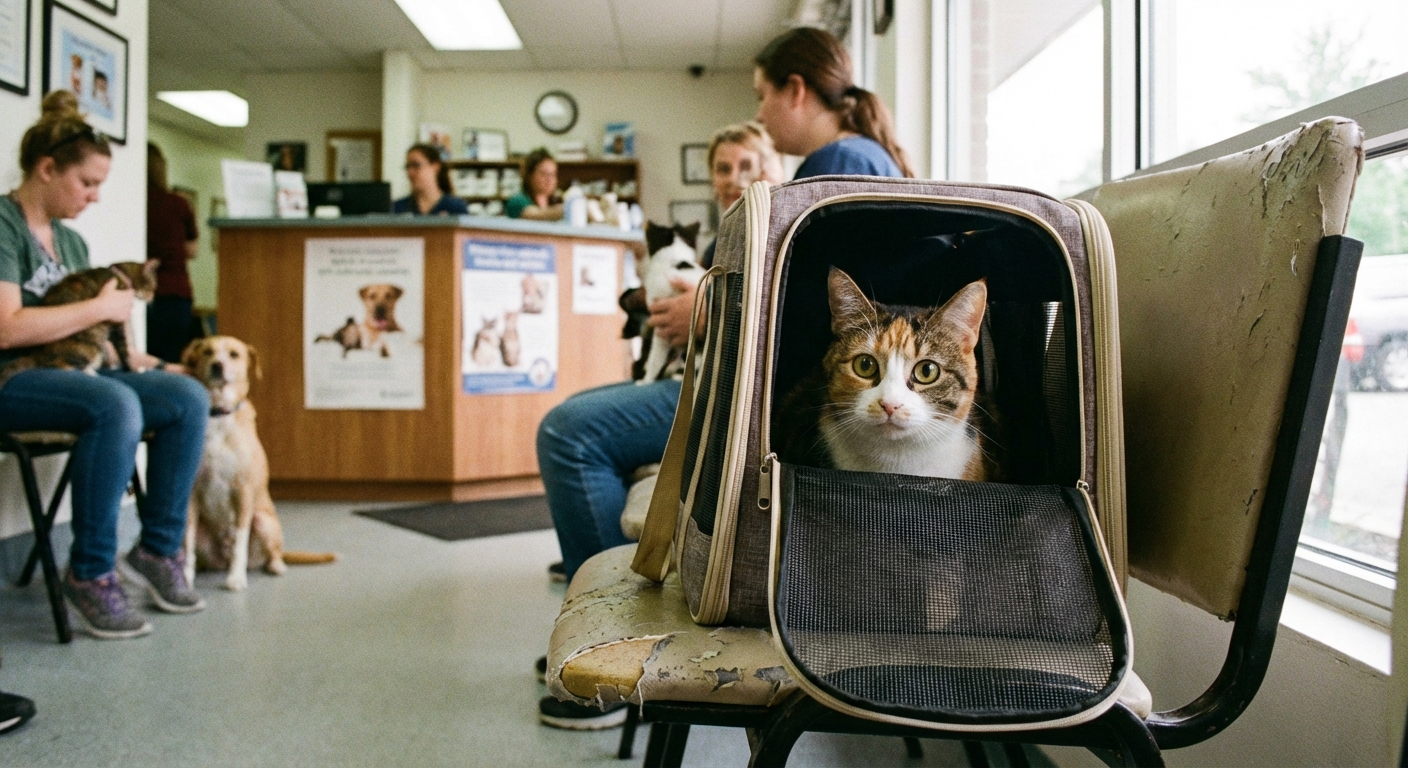
Book a veterinary visit as soon as possible if you see any of the following:
- Open wounds, bleeding, swelling, or rapidly spreading redness
- Pus, strong odor, or thick crusting
- Severe head shaking, head tilt, or apparent ear pain
- Hair loss with circular patches (possible ringworm)
- Lethargy, fever, poor appetite, or behavior changes
- Itching that persists more than 1 to 2 weeks despite consistent flea prevention
Prevention tips for fewer flare-ups
- Year-round flea prevention for all household pets, as recommended by your veterinarian
- Stable diet and slow transitions when changing foods
- Regular brushing, especially for long-haired cats
- Routine wellness visits to catch ear and skin issues early
- Enrichment and stress reduction with play, climbing spaces, hiding spots, and predictable routines
Small, consistent habits compound into remarkable results over time. For itchy cats, that often means steady parasite prevention, simple skin support, and prompt care when early warning signs appear.
Quick checklist: most likely causes by symptom
- Scabs along the back or tail base: fleas or flea allergy
- Ear scratching and head shaking: ear mites or ear infection
- Round patchy hair loss: ringworm or another fungal issue
- Belly or inner thigh licking: allergies, stress, or pain
- Greasy coat or odor: yeast or bacterial infection
- Flakes with mild itch: dry skin, low humidity, diet factors
If you are unsure, take a few well-lit photos of the affected areas and note when the itching is worst. That simple record can make your veterinary visit much more efficient and help your cat feel better faster.