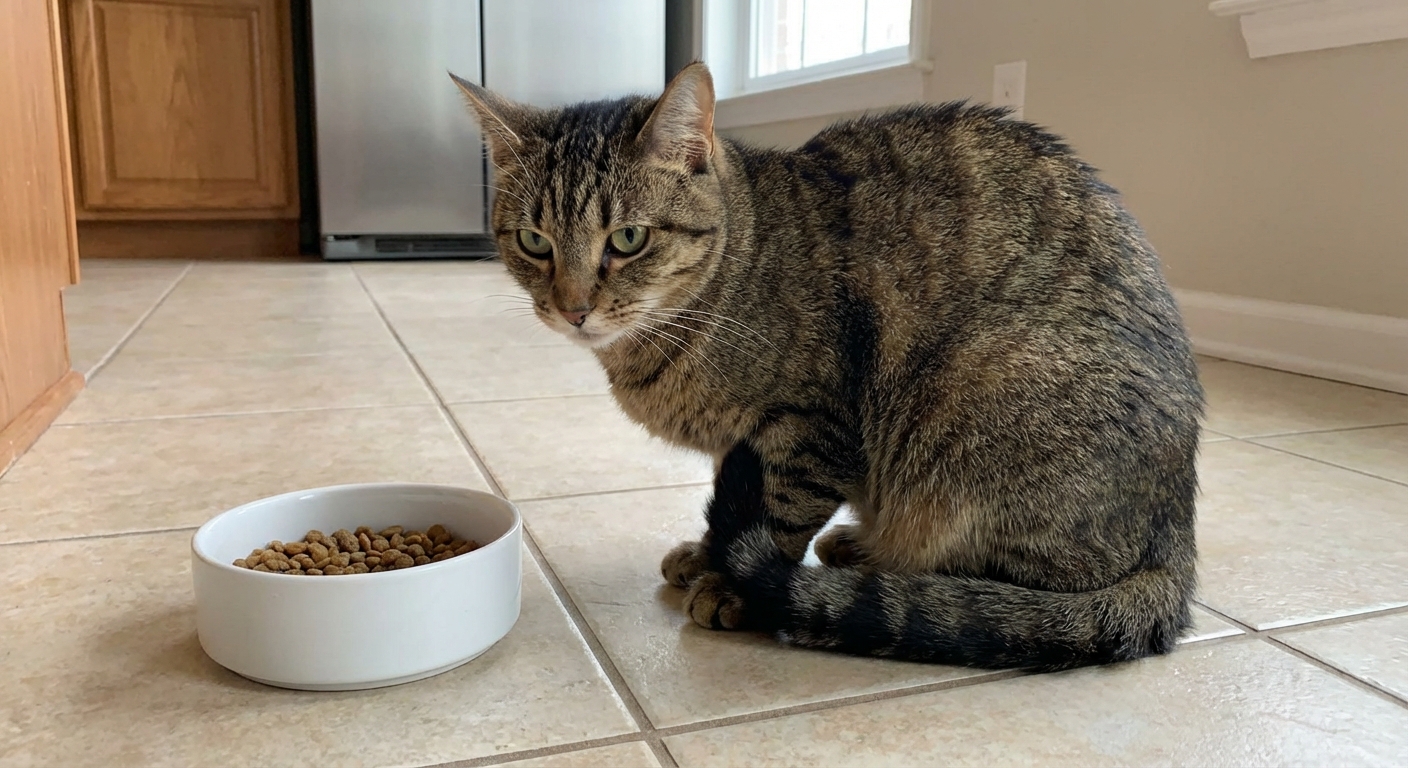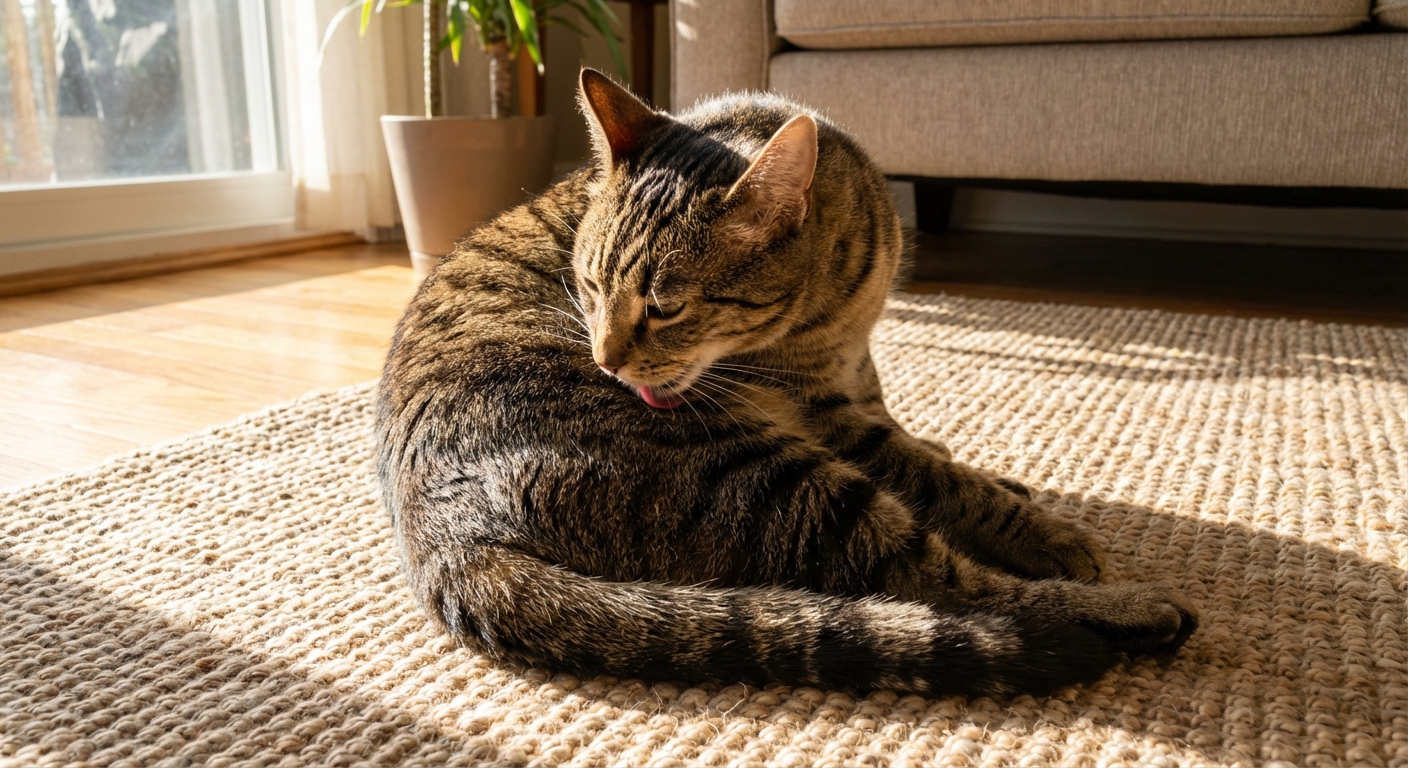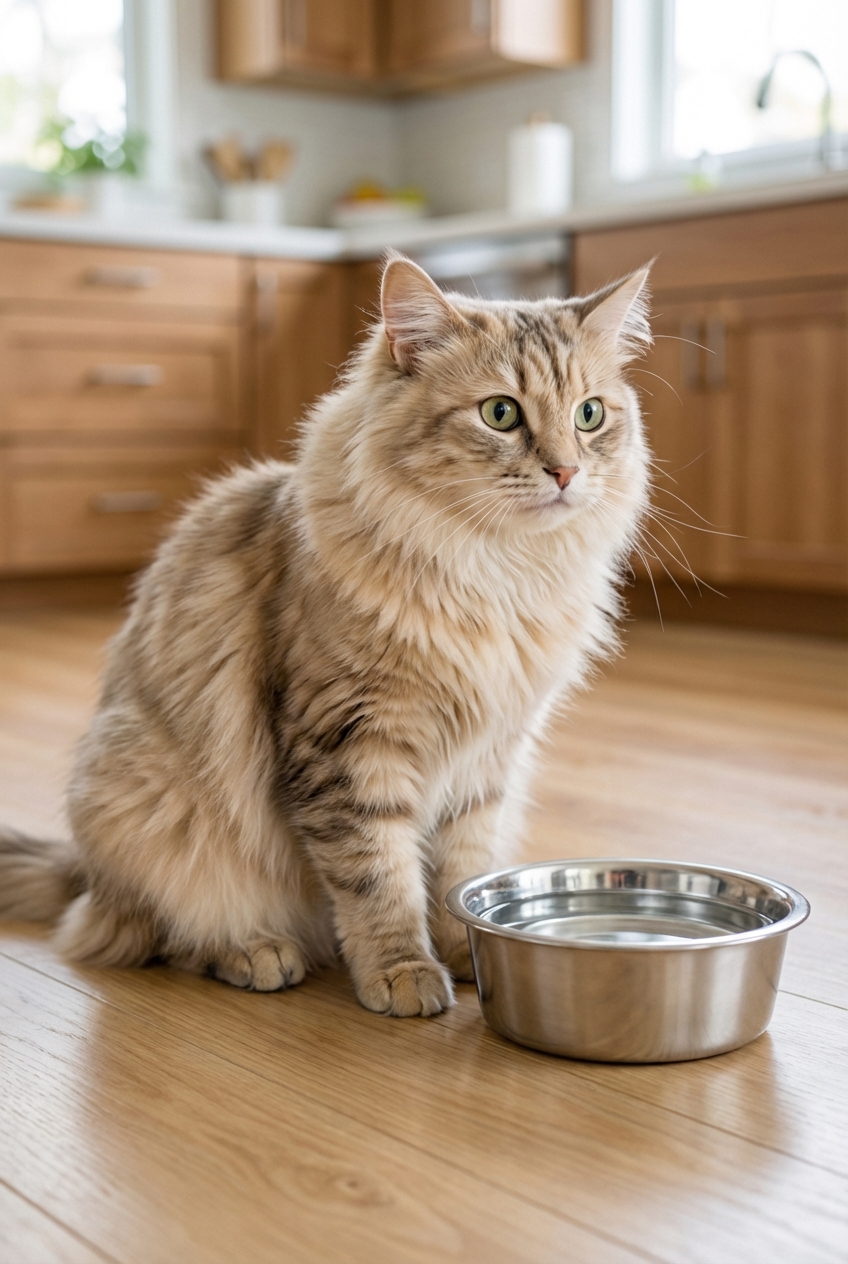
Vomiting or diarrhea in cats can turn serious fast. Learn safe home care steps, hydration and bland diet tips, probiotics, red flags for the vet, and risky r...
Article
•
Designer Mixes
Cats Vomiting: Causes, Care, and When to Worry

Shari Shidate
Designer Mixes contributor
Seeing your cat vomit can be scary, and I get it. As a veterinary assistant, I hear the same question all the time: “Is this normal, or is this an emergency?” The answer depends on what came up, how often it’s happening, and how your cat is acting the rest of the day.
This guide will walk you through the most common reasons cats vomit, what you can do at home, and the red flags that mean it’s time to call your veterinarian.
Vomiting vs. regurgitation
These two are easy to confuse, but they point to different problems.
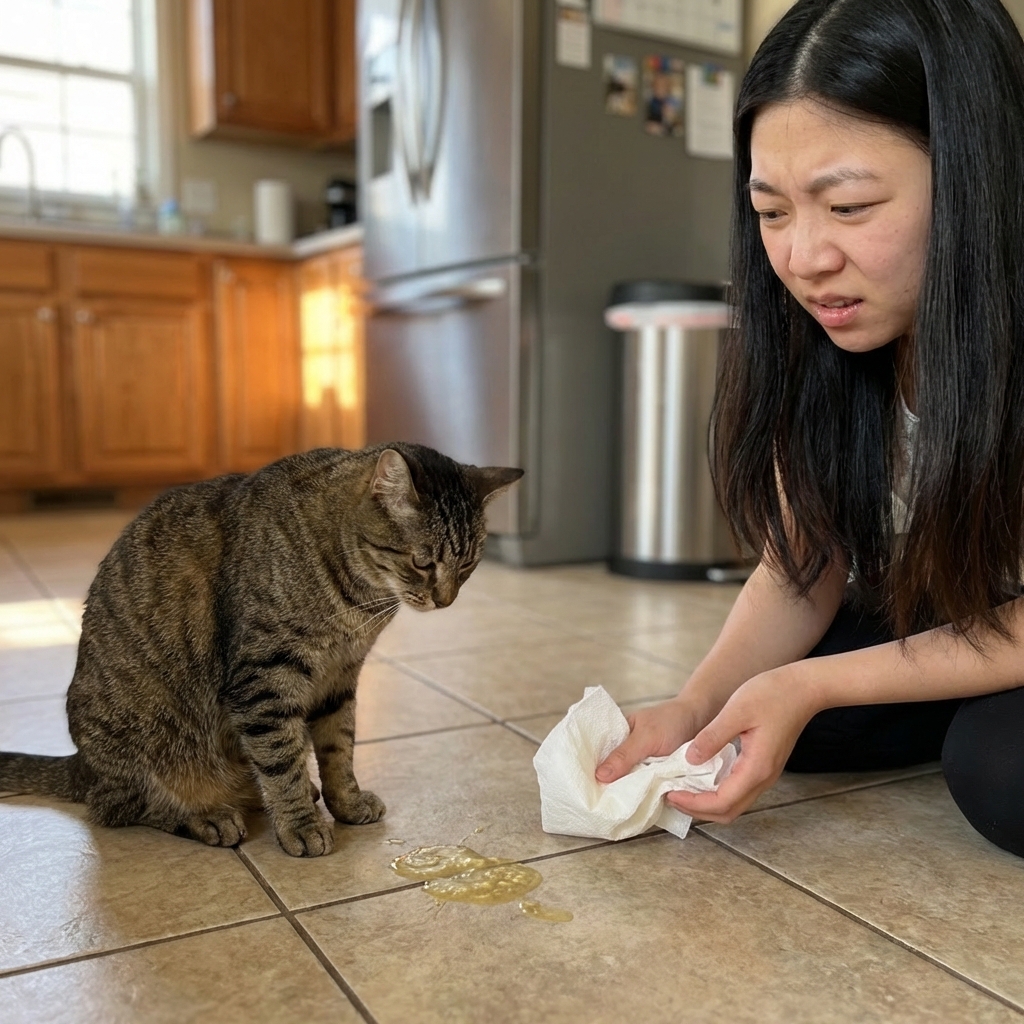
- Vomiting is an active process. You may see nausea signs first like drooling, lip smacking, repeated swallowing, or heaving. The material often contains partially digested food and may include bile (yellow foam).
- Regurgitation is more passive. Food or liquid comes up quickly with little effort, often shortly after eating. It may look like undigested kibble or tube-shaped material.
If you can, take a quick photo and note the timing relative to meals. Only do this if it’s safe and sanitary, and wash your hands afterward. That information is surprisingly helpful for your vet team.
What the vomit can tell you
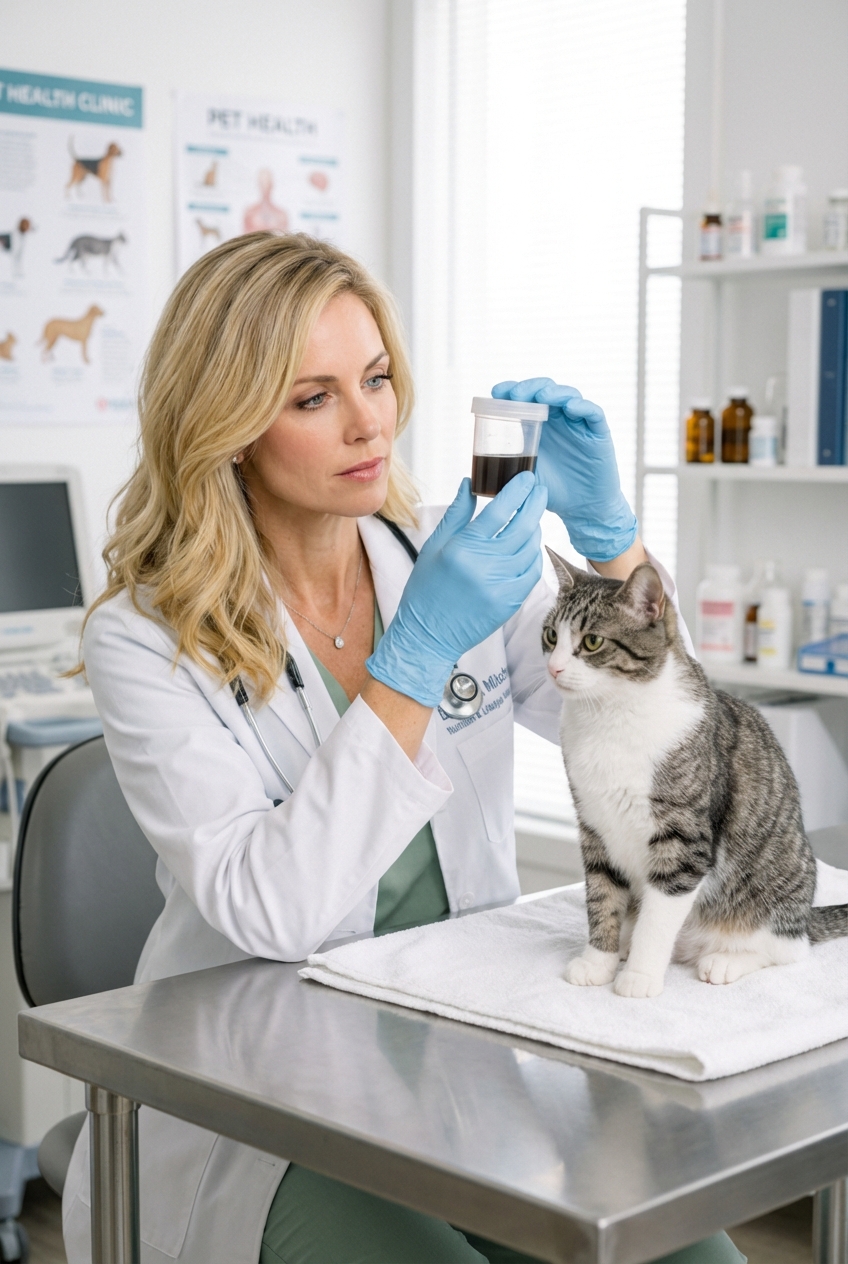
One episode is not always an emergency, but the details matter. Just keep in mind that appearance can help with triage, but it does not diagnose the cause by itself.
Food (partially digested)
Common with eating too fast, diet changes, mild stomach irritation, or food intolerance. Repeated episodes can also happen with intestinal parasites or more significant GI disease.
Clear liquid or white foam
Can happen when the stomach is empty, with mild nausea, hairballs, stress, or may be associated with reflux. If it keeps happening, it still deserves a call.
Yellow or greenish foam (bile)
Bile can show up when the stomach is empty, but it’s not specific. It can also be seen with inflammation in the stomach or small intestine and many other causes of vomiting.
Hairball material
Hairballs are common, but frequent vomiting “hairballs” can be a sign of underlying GI inflammation, allergies, or excessive grooming due to stress or skin issues.
Blood
- Bright red streaks can be from irritation of the esophagus or stomach.
- Dark, coffee-ground material suggests digested blood and is more concerning.
Any vomit with significant blood warrants veterinary guidance urgently.
Brown, foul-smelling vomit
Can indicate severe GI disease and may be associated with an intestinal obstruction or severe ileus. This is a same-day veterinary situation.
Most common reasons cats vomit
Vomiting is a symptom, not a diagnosis. Here are common categories we see in practice.
Hairballs and grooming-related vomiting
Cats swallow hair when they groom. A small amount is normal, but frequent vomiting is not something to shrug off. Long-haired cats and cats that overgroom are higher risk. As a general guideline, vomiting more than occasionally, such as more than once a month, is worth discussing with your veterinarian.
Diet changes or food intolerance
Switching foods too quickly, rich treats, table food, or sensitivity to certain proteins can irritate the GI tract. Some cats do better with slow transitions over 7 to 14 days.
Eating too fast
This is especially common in multi-cat homes or “scarf and barf” cats. Puzzle feeders and smaller, more frequent meals can help.
Parasites
Roundworms and other parasites can cause vomiting, diarrhea, and weight loss. Even indoor-only cats can be exposed. Some parasites are spread through contaminated environments, while others are linked to fleas or prey animals. Your vet can recommend the right prevention and testing based on your cat’s lifestyle.
Foreign material and obstructions
String, ribbon, hair ties, toys, and even thick clumps of hair can become dangerous. If your cat is vomiting repeatedly, not eating, and seems painful, we worry about a blockage.
Inflammation of the stomach or intestines
Gastritis, pancreatitis, inflammatory bowel disease (IBD), and food-responsive enteropathy can all cause chronic or recurring vomiting. Cats are very good at hiding chronic nausea, so subtle changes matter.
Kidney disease, hyperthyroidism, liver disease, diabetes
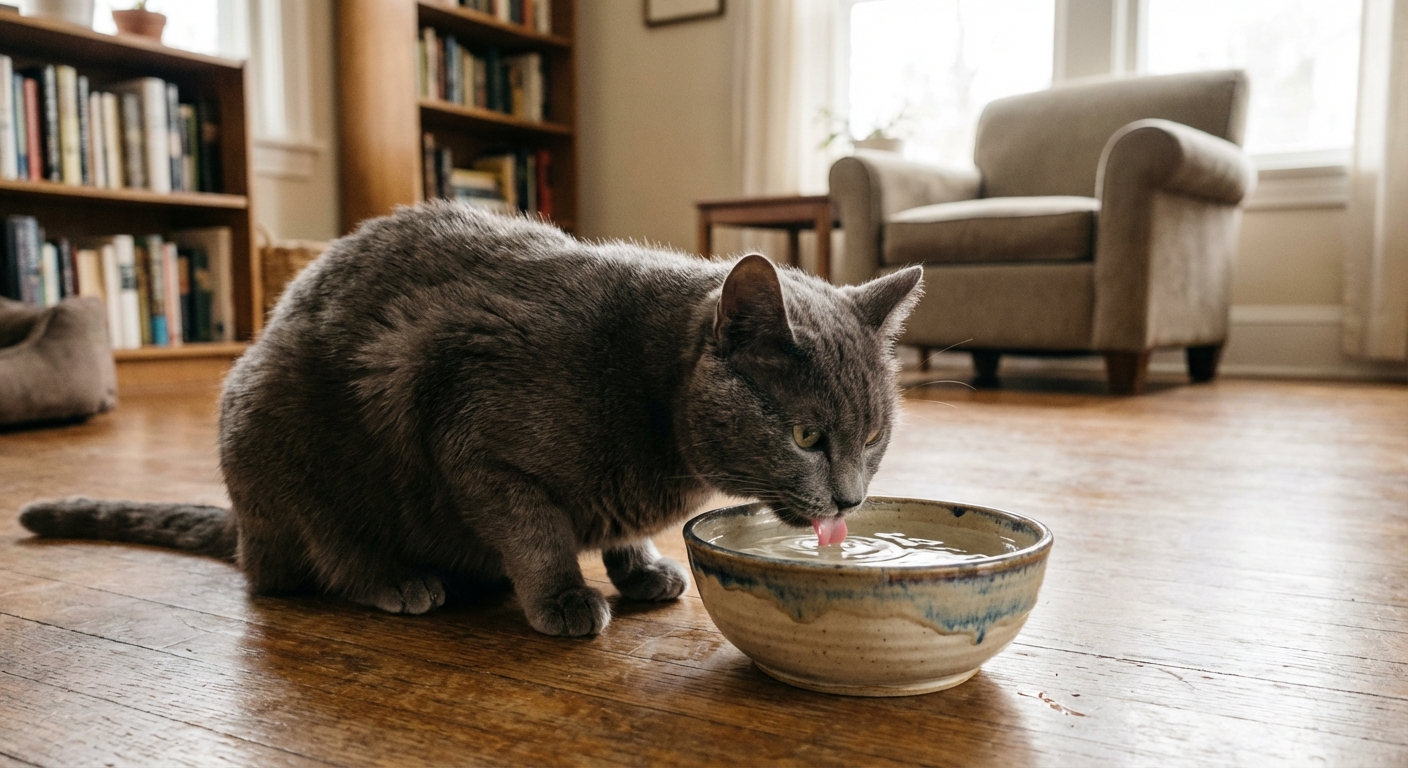
In middle-aged and senior cats, vomiting can be a sign of systemic illness. If you notice increased thirst, weight loss, or changes in appetite, a vet visit is the kindest next step.
Toxin exposure
Common household risks include lilies (extremely dangerous to cats), certain essential oils, rodent bait, human medications (especially NSAIDs), and many cleaners.
When to call the vet now
Please contact your veterinarian or an emergency clinic urgently if you notice any of the following:
- Repeated vomiting (more than 2 to 3 times in 24 hours) or vomiting that will not stop
- Vomiting plus lethargy, weakness, collapse, or hiding more than usual
- Vomiting plus not eating for a full day, or sooner for kittens
- Signs of dehydration: tacky gums, sunken eyes, skin that “tents,” very low urine output
- Blood in vomit, coffee-ground material, or black tarry stool
- Swollen or painful abdomen, crying when picked up, or a hunched posture
- Suspected foreign body (string, ribbon, toy) or known toxin exposure
- Kittens, senior cats, or cats with existing kidney disease, diabetes, or hyperthyroidism vomiting even once with behavior changes
- Ongoing vomiting, especially with weight loss or poor appetite over days to weeks
Trust your instincts. If your cat “just seems off” along with vomiting, it is always appropriate to call for guidance.
Safe at-home steps
If your cat vomits once, then acts normal, continues drinking, and has no red flags, you can usually monitor at home while you keep things gentle.
1) Remove food briefly, keep water available
For adult cats, your vet may recommend a short food break. Do not withhold water, and do not fast kittens without veterinary guidance.
2) Offer small, bland meals
Once vomiting has stopped, offer a small amount of an easy-on-the-stomach diet. Many veterinarians recommend a prescription GI diet for a short period. If you are using a home option, keep it simple and low-fat and ask your clinic what they prefer.
3) Go small and slow
Give tiny meals every few hours rather than one big meal. If your cat keeps food down, gradually return to the normal diet over a few days.
4) Minimize stress and monitor the litter box
Stress can worsen nausea. Keep your cat quiet, warm, and comfortable, and watch for diarrhea, constipation, or reduced urination.
5) Avoid human medications
Many human meds are toxic to cats. Always check with your veterinarian before giving anything, including over-the-counter stomach products. Do not give ibuprofen, acetaminophen, or Pepto-Bismol unless your vet specifically instructs you to.
6) Do not do these things
- Do not pull string from your cat’s mouth or anus. This can cause severe internal damage. Go to a vet immediately.
- Do not try to induce vomiting at home unless a veterinarian instructs you to.
How vets find the cause
If vomiting is frequent, persistent, or paired with other symptoms, your vet may recommend:
- History and exam: diet, treats, plants, strings, medications, weight trends
- Fecal testing and parasite control review
- Bloodwork and urinalysis to check kidney, liver, thyroid, glucose, electrolytes
- X-rays for foreign bodies, constipation, abnormal gas patterns
- Ultrasound to evaluate organs and intestinal thickness
- Diet trial (novel protein or hydrolyzed diet) for suspected food sensitivity
- GI panel or specific tests based on age and symptoms
It can feel overwhelming, but think of it as a step-by-step process to rule out the dangerous causes first, then address the chronic ones.
Common scenarios
“My cat vomits right after eating.”
Often eating too fast, gulping air, or food intolerance. If it’s frequent, we also consider reflux, parasites, or GI inflammation.
“My cat vomits yellow foam early in the morning.”
Sometimes related to an empty stomach, but bile is not diagnostic and can appear with many causes of vomiting. A small late-night meal can help some cats, but repeated episodes should be discussed with your vet.
“My cat ‘vomits hairballs’ all the time.”
Hairballs happen, but frequent vomiting deserves a closer look. Ask your vet about grooming support, diet options, and whether an underlying GI condition could be driving the problem.
“My cat is vomiting and not pooping.”
Constipation can cause nausea, but so can an obstruction. This combination is a strong reason to seek veterinary care quickly.
Prevention tips
- Slow transitions when changing foods, usually over 7 to 14 days
- Smaller meals and puzzle feeders for fast eaters
- Routine grooming, especially for long-haired cats
- Parasite prevention year-round as recommended by your veterinarian
- Cat-proof strings: keep ribbon, floss, yarn, hair ties, and dangling toys put away when unsupervised
- Hydration support: fountains, wet food, and multiple water stations
- Senior screening: regular exams and labs can catch kidney disease and hyperthyroidism early
If you are noticing vomiting more than occasionally, prevention starts with a vet visit. Once you know the “why,” it gets much easier to build a plan that works for your specific cat.
Quick symptom tracker
If vomiting is recurring, jot down:
- Date and time of each episode
- What it looked like (food, foam, bile, hair, blood)
- Timing relative to meals
- Appetite, water intake, energy level
- Stool and urination changes
- New foods, treats, plants, stressors, or possible string access
This simple list can save time and money by helping your veterinarian narrow down the most likely causes faster.
The bottom line
Occasional vomiting can happen, especially with hairballs or a minor upset. But frequent vomiting, vomiting with behavior changes, or anything involving blood, dehydration, weight loss, or suspected foreign material is not something to wait out.
If you are unsure, call your veterinary clinic. You are not overreacting. You are being a thoughtful cat parent, and that matters.