Hairballs can be normal—but frequent gagging or vomiting may signal a bigger issue. Get vet-approved tips on brushing, hydration, fiber, diet, gels, and wh...
Article
•
Designer Mixes
Cats and Hairballs

Shari Shidate
Designer Mixes contributor
Hairballs can look dramatic, but most of the time they are a very normal side effect of a cat being an excellent groomer. Still, frequent hairballs can signal an underlying problem, and a rare but serious emergency can look similar to “just a hairball.” In this handbook, I will walk you through what veterinarians want cat parents to know, what actually helps, and when to call your clinic right away.
What a hairball is
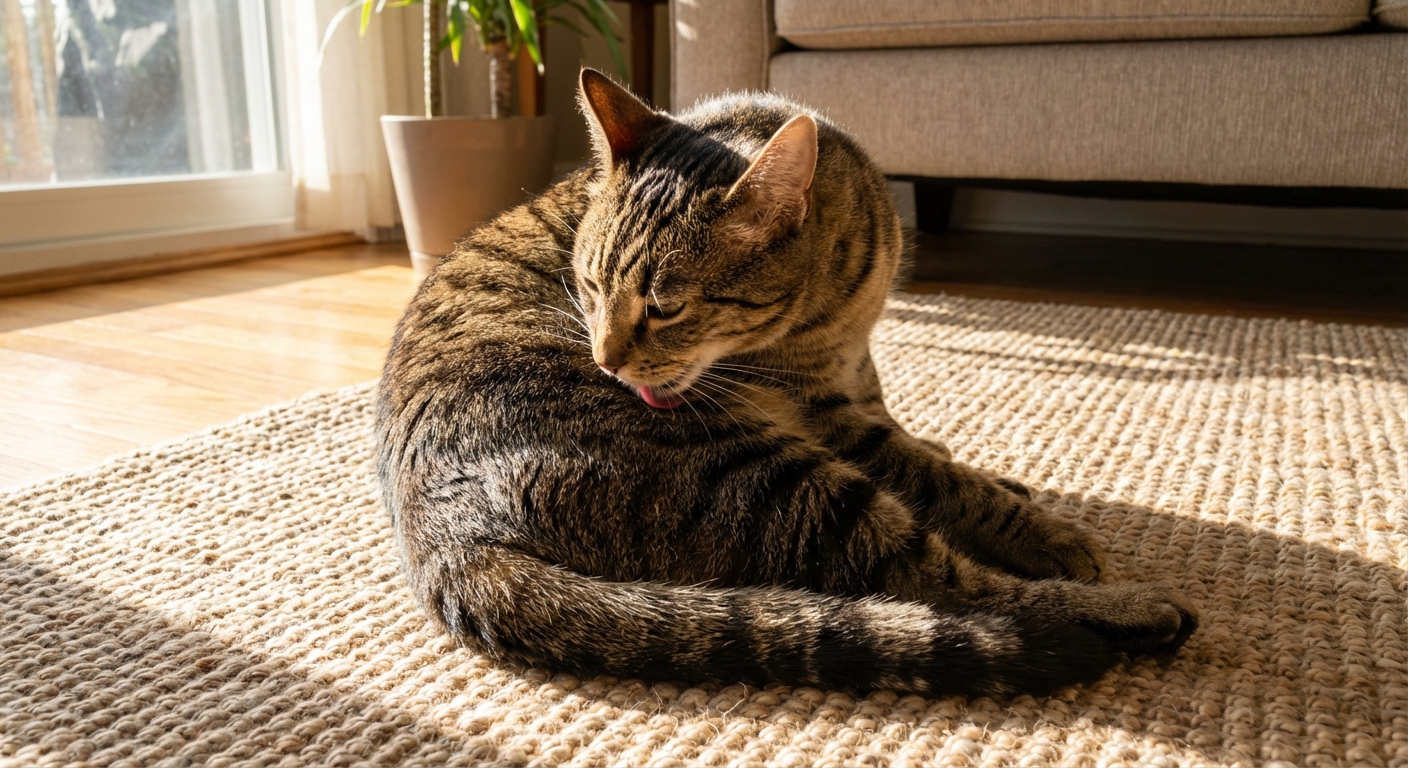
When cats groom, their tongue pulls loose hair into the mouth and most of it passes through the digestive tract and leaves in the stool. A hairball forms when some hair stays in the stomach, tangles together, and gets vomited up as a damp, tube-shaped wad.
What people mean by a “true hairball”: a mostly hair-based, sausage-shaped clump with a little liquid. If you are seeing repeated vomiting with foam, bile, or food and no hair clump, that is often not a hairball problem, even if it looks like one.
Occasional hairballs are common, especially during seasonal shedding, in long-haired cats, and in cats that groom more due to stress or skin irritation.
Normal vs. trouble
What is often normal
- An occasional hairball (some veterinarians consider about 1 to 2 per month to be within normal range for many cats, especially during shedding season, but many cats have fewer)
- Cat is otherwise acting normal: eating, drinking, using the litter box, and playful
- Vomits up a true hairball and then returns to normal behavior
Call your veterinarian within 24 to 48 hours
- Hairballs are happening more than every couple of weeks
- Vomiting or retching episodes without producing a hairball
- Decreased appetite, weight loss, or dull coat
- Diarrhea or constipation
- Excessive grooming, dandruff, scabs, or bald patches
Go to an emergency clinic now
A “hairball emergency” is usually not the hairball itself. It is the possibility of an intestinal blockage, severe dehydration, or a cat that cannot keep food or water down.
- Repeated retching or gagging with little or no vomit
- Sudden lethargy, hiding, or painful belly
- Refusing food for more than 24 hours (or more than 12 hours for kittens or cats with chronic disease), especially if combined with vomiting, lethargy, or no stool
- Bloated abdomen
- No stool, or straining in the litter box with little output
- Fast breathing, drooling, or collapse
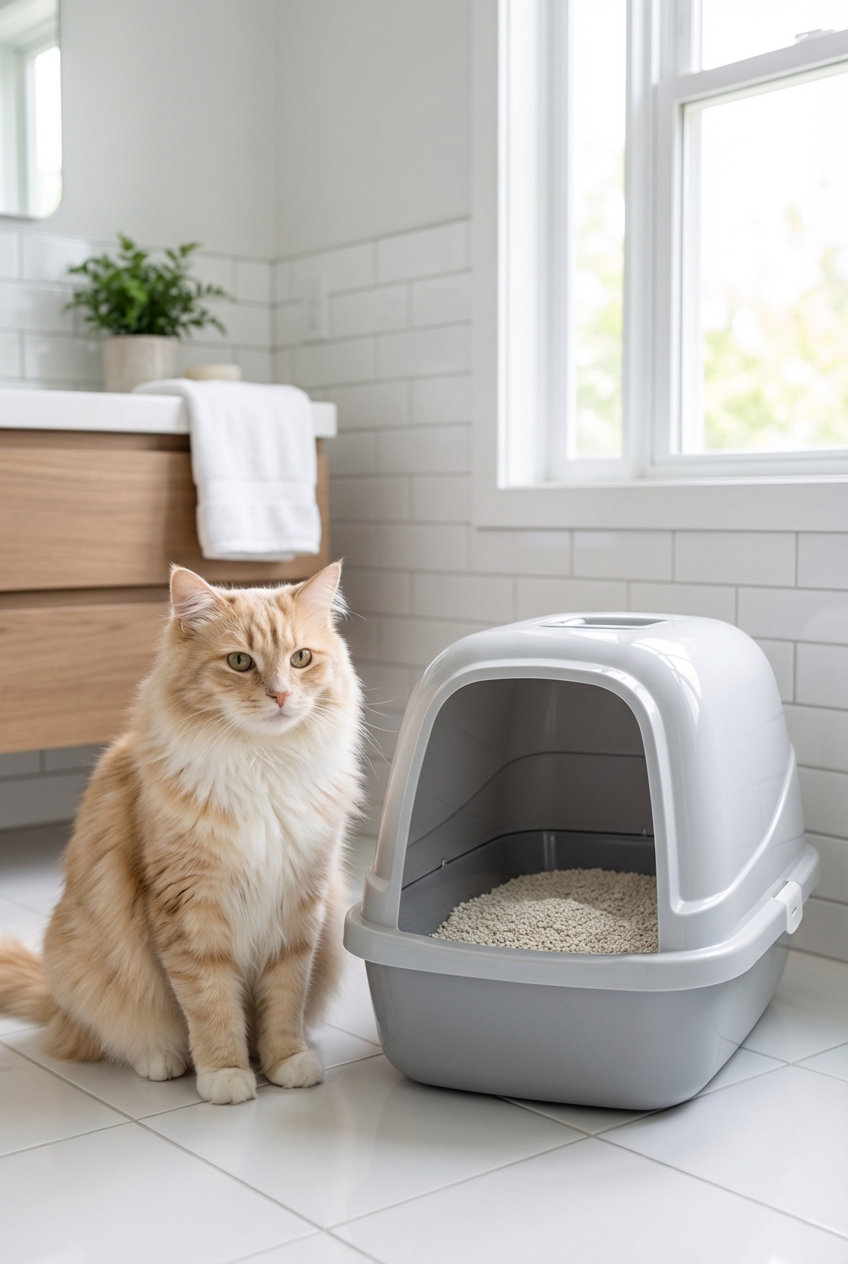
If your cat is retching but not producing a hairball, do not assume it will pass. Call your veterinarian or an emergency hospital. Blockages can become life-threatening quickly.
Why some cats get them
In clinic, the most common “why” falls into a few buckets. The key is that frequent hairballs are often a symptom, not the main problem. Also, some vomiting episodes get mislabeled as “hairballs” simply because the cat was grooming earlier that day.
- Normal shedding and long coats: More hair in circulation means more hair swallowed.
- Overgrooming from stress: New pets, moving, construction noise, schedule changes, or boredom can trigger extra grooming.
- Skin disease: Fleas, mites, allergies, or fungal infections can cause itching and overgrooming.
- GI disease: Inflammatory bowel disease, parasites, food sensitivities, and other issues can cause vomiting. Owners may assume each episode is a hairball even when little hair is involved.
- Obesity or arthritis: Some cats groom awkwardly or incompletely, leading to matting and shedding patterns that contribute to hair ingestion.
- Coat quality: Dry skin or poor coat health can increase shedding. Nutrition matters here.
Prevention that helps
1) Brush smarter
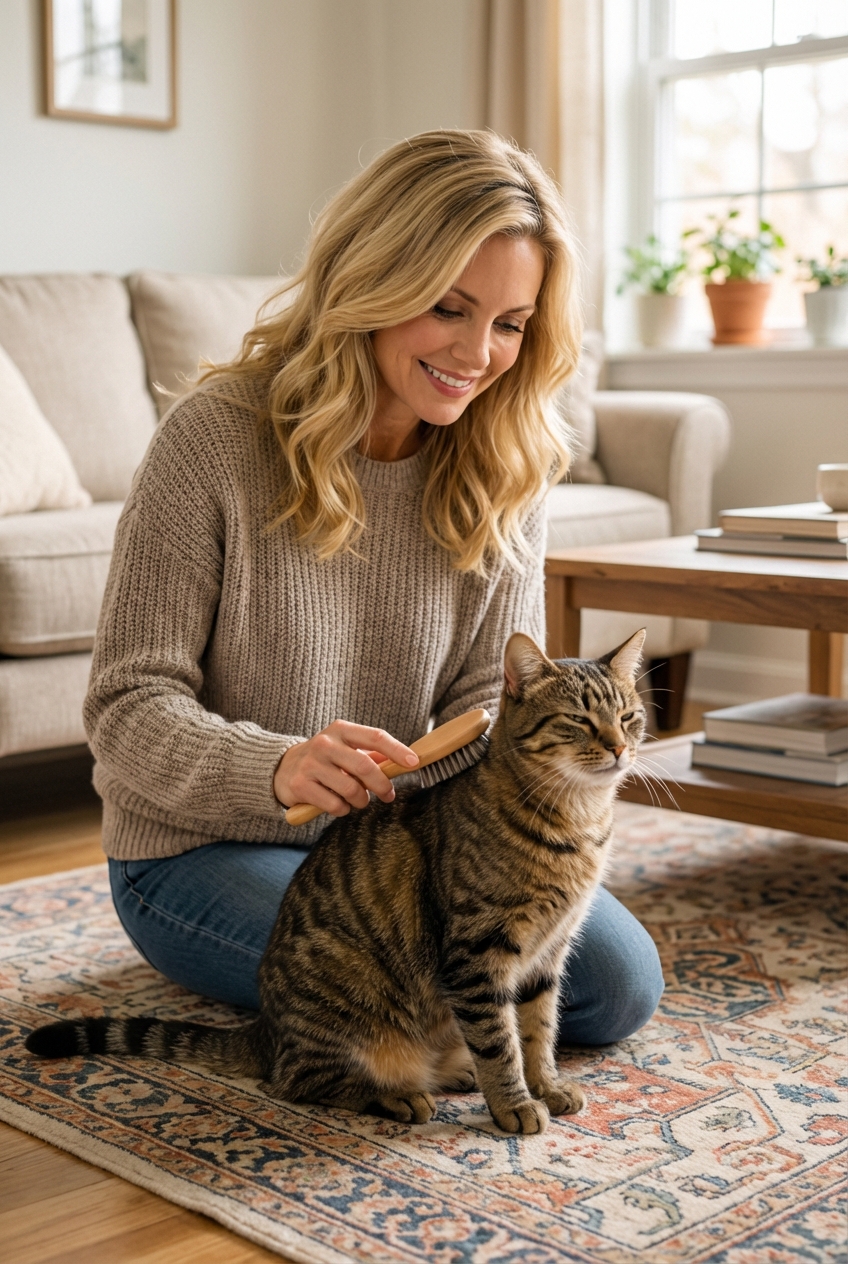
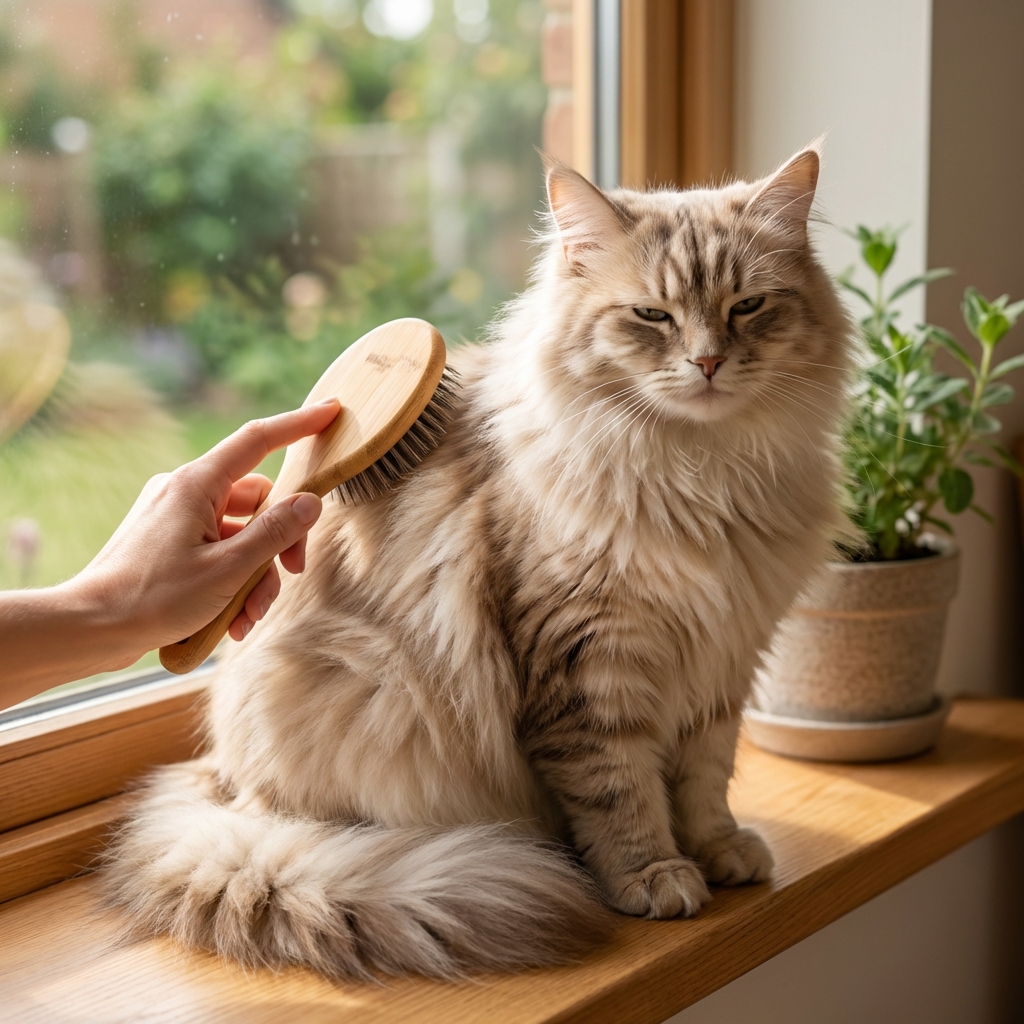
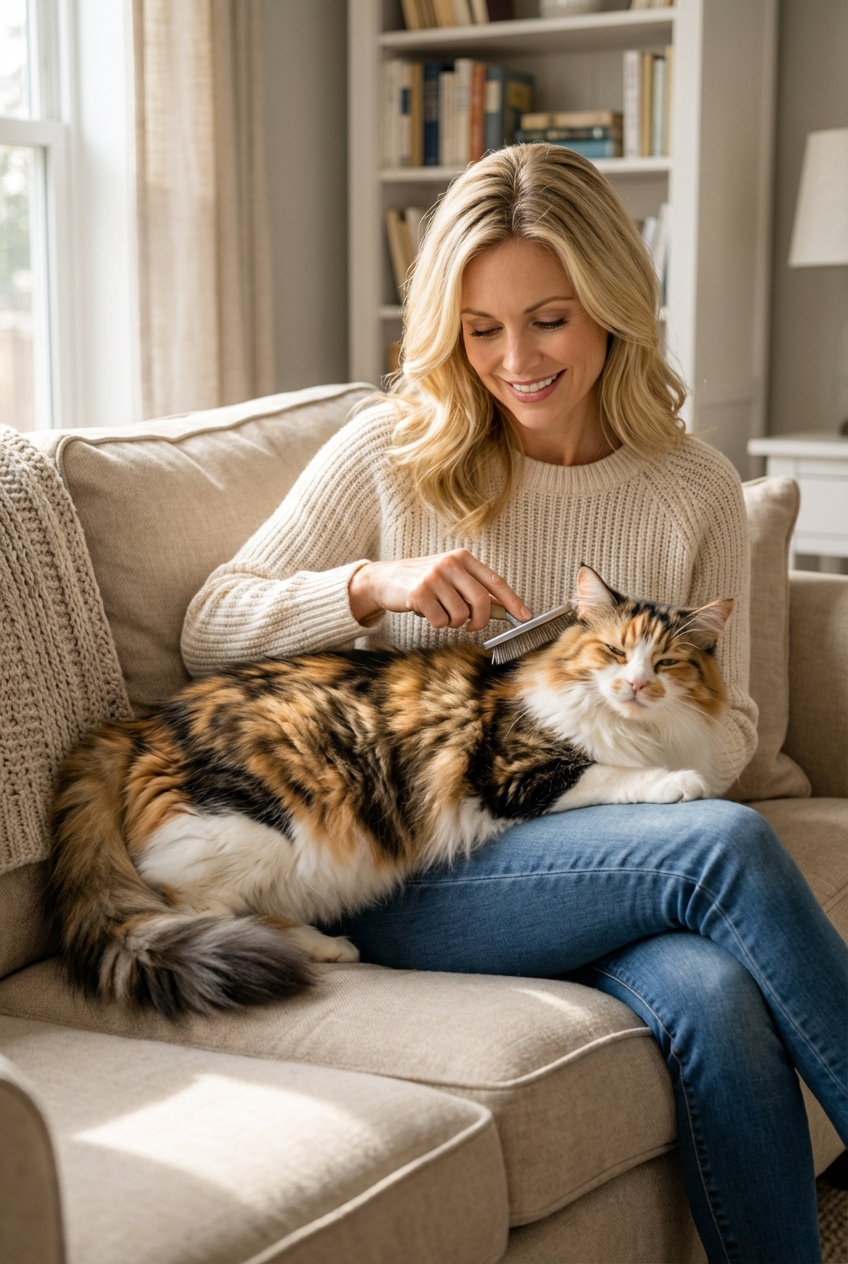
Brushing removes loose hair before your cat swallows it. For many cats, this is the single biggest improvement.
- Short-haired cats: 2 to 3 times per week, more during heavy shedding.
- Long-haired cats: Daily is ideal, especially around the belly, armpits, and behind the legs.
- Keep sessions short (1 to 3 minutes) and end with a treat so your cat learns it is safe.
2) Hydration supports motility
Dehydration can slow gut motility and contribute to constipation, which can make hair and stool harder to pass.
- Consider feeding some canned food if your vet agrees it fits your cat’s needs.
- Add a pet water fountain or multiple water stations in quiet areas.
- Ask your vet if adding water or broth to meals is appropriate. Use only onion-free, garlic-free broths made for pets or plain meat cooking water.
At home, constipation and dehydration clues can include: hard, small stools; straining; fewer bowel movements; tacky or dry gums; and low energy. If you are unsure, call your clinic.
3) Nutrition: fiber can help (sometimes)
Some cats do well with added dietary fiber because it helps move hair through the intestines. Others with sensitive GI tracts may worsen with too much fiber.
- Hairball-control diets: Often use specific fiber blends and sometimes increased omega-3s for skin and coat. These can be helpful for mild to moderate hairballs.
- Gradual changes: Switch foods slowly over 7 to 10 days to avoid GI upset.
- Weight and life stage matter: Kittens, seniors, and cats with kidney disease, diabetes, or urinary disease need individualized choices.
If you are considering a fiber supplement (like psyllium) or a laxative, do it with veterinary guidance. The “right” option depends on your cat’s history and stool quality.
4) Hairball gels and lubricants
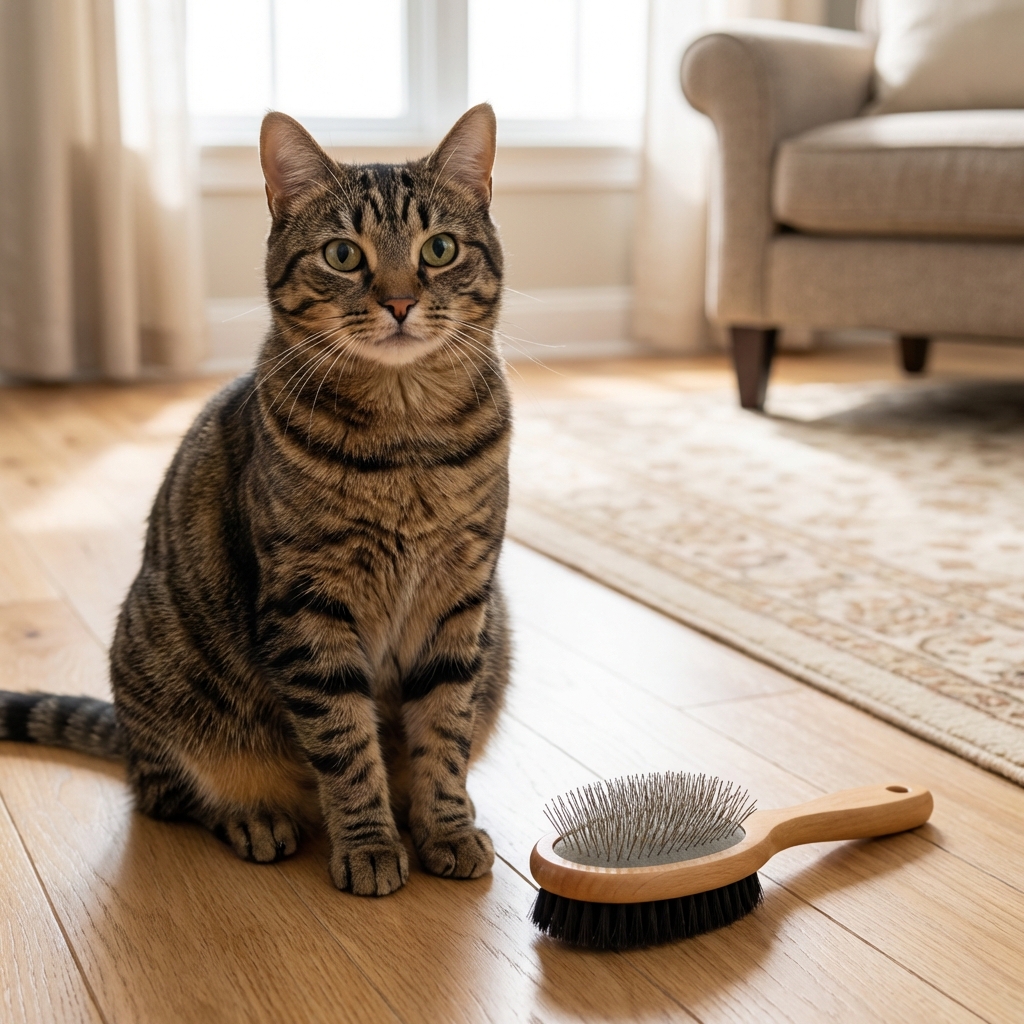
Petroleum-based or oil-based hairball gels can reduce friction and help hair pass. Use only products made for cats and follow label directions or your veterinarian’s plan. Many are used short-term or a few times per week, but the best schedule varies by product and cat.
If your cat has ongoing vomiting, do not mask it with gels. Book an exam to look for a root cause.
5) Hairball treats
Some hairball treats are useful. Others are calorie-dense and can contribute to weight gain, which can worsen grooming and GI health.
- Count treats in your cat’s daily calories.
- If your cat is overweight, ask your vet for a treat plan that supports weight loss.
6) Reduce overgrooming triggers
- Enrichment: Daily play sessions, puzzle feeders, window perches, and rotating toys reduce boredom grooming.
- Predictable routine: Cats thrive on consistency.
- Safe spaces: Provide a quiet area with bedding, litter box access, and a hiding spot.
- Ask your vet about anxiety support: Pheromone diffusers, behavior plans, or medication when needed.
Myths, gently busted
“Hairballs are always harmless.”
Occasional hairballs can be normal, but frequent vomiting is never something to ignore. Cats are masters at hiding illness, so subtle changes matter.
“My cat is just trying to cough up a hairball.”
Some cats that appear to be “trying to hack up a hairball” are actually coughing due to asthma or airway irritation. Coughing episodes often look like a low crouch with the neck stretched forward and a series of dry, forceful coughs, sometimes with a wheeze at the end. Retching to vomit tends to have more abdominal heaving and may produce liquid, food, or a hairball. If you are not sure, take a video and show your veterinarian. It can be incredibly helpful for diagnosis.
“A little olive oil or butter will fix it.”
People mean well, but random fats can cause stomach upset and diarrhea. They may also be risky for pets that are prone to pancreatitis or have other digestive sensitivities. Dosing is inconsistent, too. Stick with cat-formulated products and your vet’s advice.
When your vet will test
If hairballs are frequent or accompanied by other signs, your vet may recommend:
- Physical exam and weight check: to assess hydration, pain, coat, and body condition.
- Fecal testing: to rule out parasites.
- Bloodwork: to evaluate organ function and inflammation clues.
- X-rays or ultrasound: to look for constipation, foreign material, masses, or obstruction.
- Skin evaluation: flea combing, cytology, or allergy discussions if itch is present.
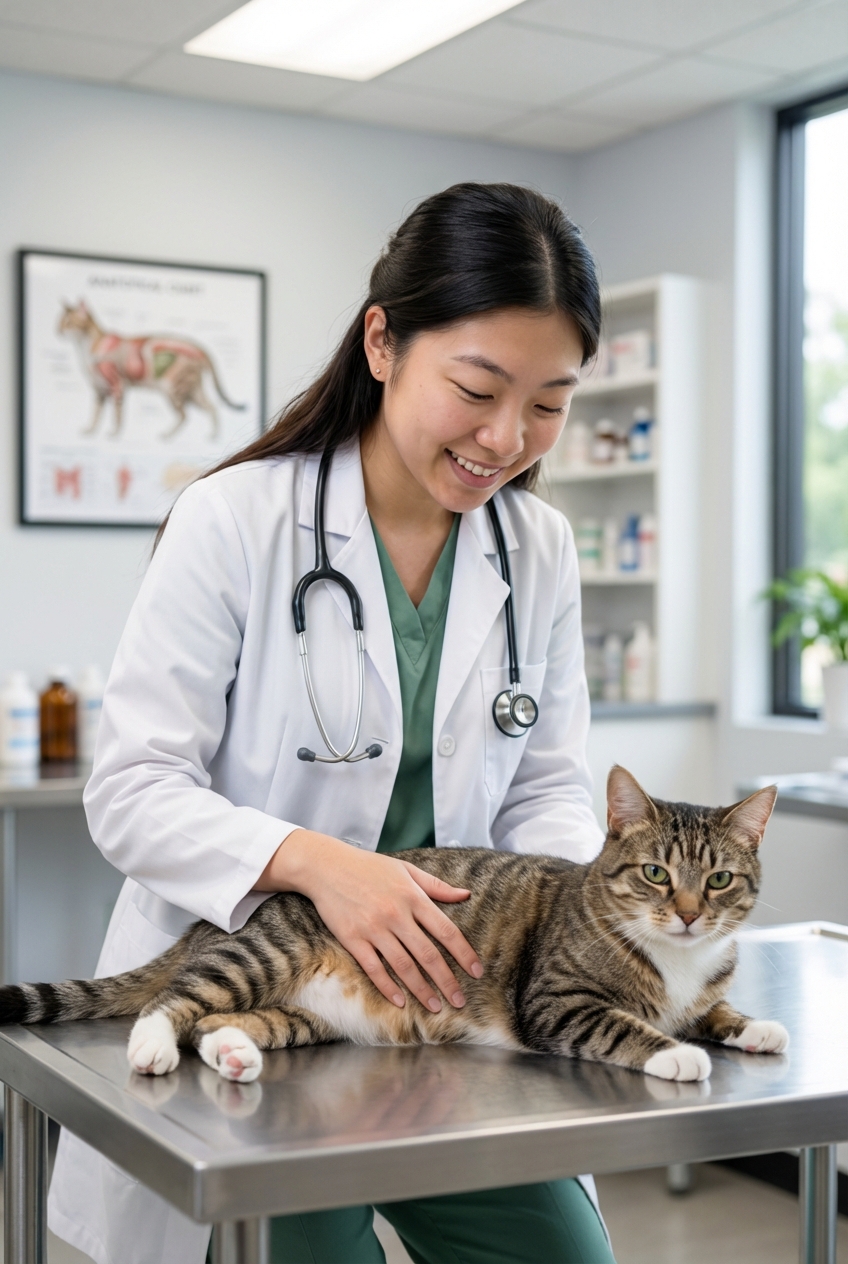
It can feel like a lot, but the goal is simple: make sure we are not missing something treatable that is driving the vomiting or overgrooming.
Simple home plan
- Brush daily for 7 days (even short-haired cats) and note how much hair you collect.
- Track episodes in your phone calendar. Add notes about appetite, stool (including hard, small stools), and energy.
- Boost hydration with a fountain or adding wet food, if appropriate.
- Use a cat-formulated hairball product as directed if your cat is otherwise healthy.
- Schedule a vet visit if episodes are increasing or your cat is vomiting or retching without producing a hair clump.
The most encouraging truth is this: small changes add up. A few minutes of brushing, better hydration, and the right diet choice can make a big difference in comfort and long-term health.
Hairball FAQ
How often is too often?
Many healthy cats may have an occasional hairball, especially during shedding season. If it is happening more than once or twice a month, or if your cat has repeated vomiting or retching without producing a hair clump, it is time to check in with your veterinarian. If it is seasonal, focus on brushing and hydration during heavy shed times. If it is year-round or escalating, think “medical check” rather than “more hairball paste.”
Are hairballs more common in long-haired cats?
Yes. Long-haired cats, seniors who groom differently, and cats with skin irritation are more prone.
Do hairball diets work?
They can help, particularly by using targeted fiber and skin-supporting nutrients. The best diet depends on your cat’s age, weight, medical history, and stool quality, so ask your vet for a recommendation.
Can hairballs cause blockage?
True hairball obstructions (trichobezoars) can happen, but they are less common than people think. More often, a cat that seems to be having a hairball episode may actually have another issue like constipation, GI disease, or coughing. If your cat is repeatedly retching, lethargic, not eating, or not passing stool, treat it as urgent.