Think your cat has fleas? Learn the most common and subtle signs—scratching, flea dirt, scabs, hair loss—plus an easy at-home check, safe treatment tips,...
Article
•
Designer Mixes
Cats and Fleas: Symptoms, Tips, and Advice

Shari Shidate
Designer Mixes contributor
Fleas are tiny, fast, and surprisingly persistent. If your cat has been scratching more than usual, you are not being “paranoid.” You are being observant, and that matters because fleas can trigger skin infections, allergies, and even tapeworms. The good news is that with the right plan, most flea problems can be solved and prevented.
Common signs of fleas in cats
Cats can be masters at hiding discomfort. Some cats show dramatic itching, while others barely scratch at all, especially early on. Here are the most common symptoms I see in veterinary settings and in foster homes.
Itching and over-grooming
- Frequent scratching around the neck, head, and ears
- Excessive licking or chewing, especially over the lower back or base of the tail
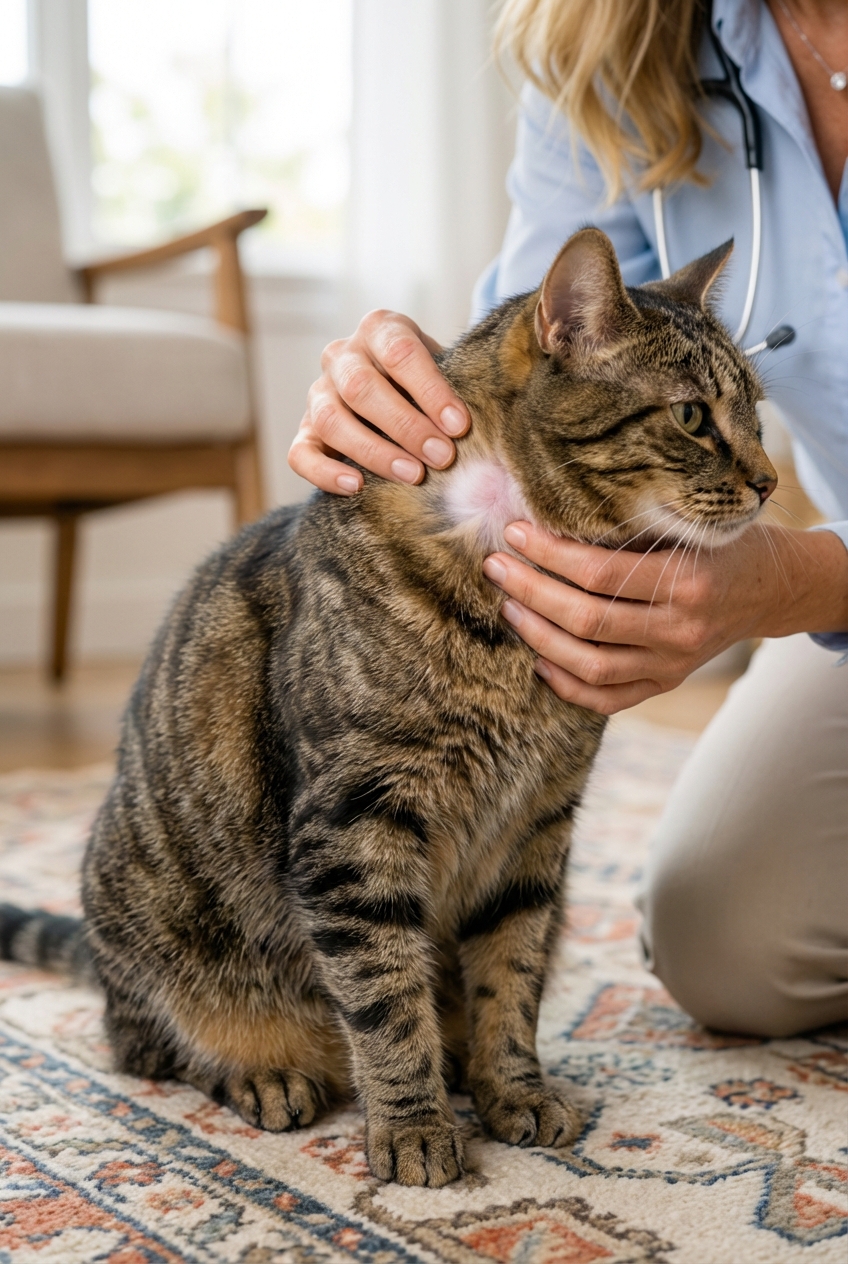
- Hair thinning, broken hairs, or bald patches from over-grooming
Skin changes
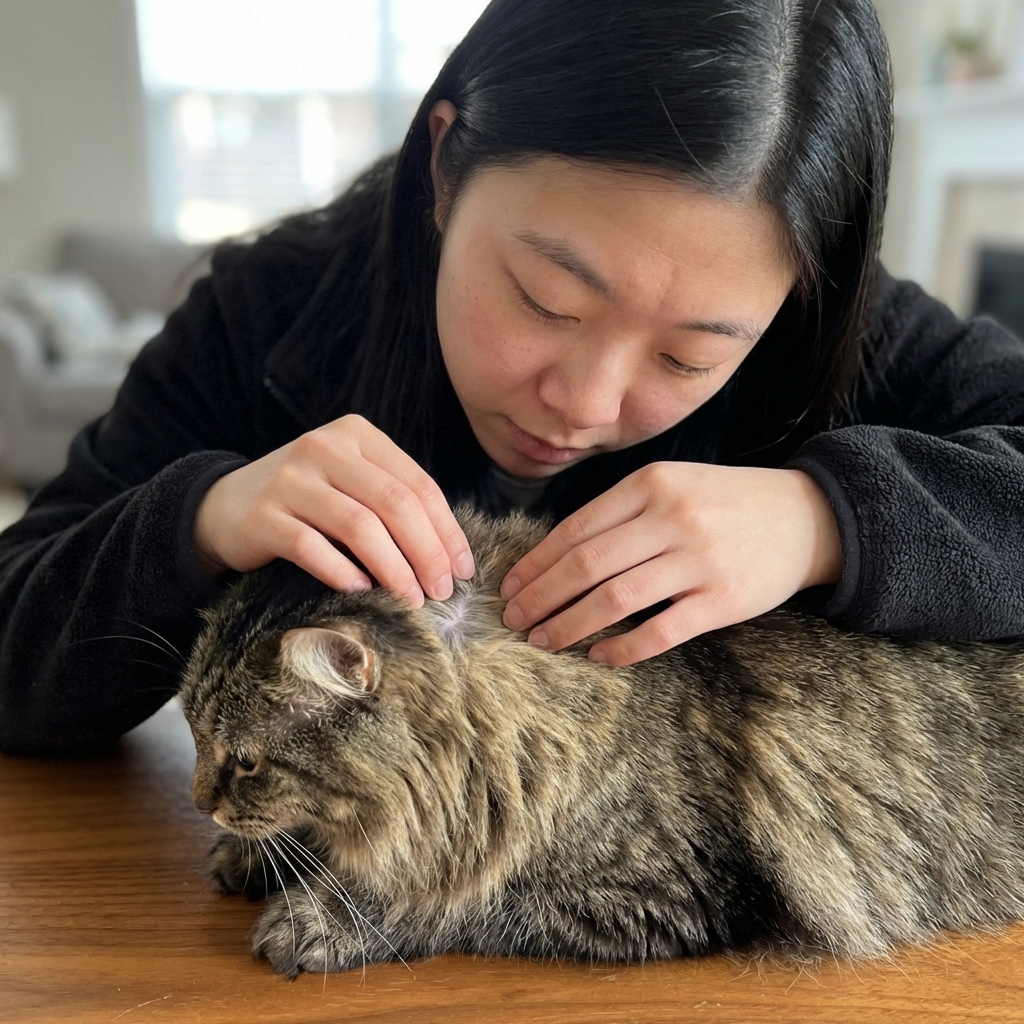
- Small red bumps or scabs, often on the back and rear half of the body
- Crusty skin, or “miliary dermatitis,” which feels like little grains under the coat
- Moist, irritated patches from self-trauma (this can happen in cats, although true “hot spots” are more common in dogs)
Flea dirt (the big clue)
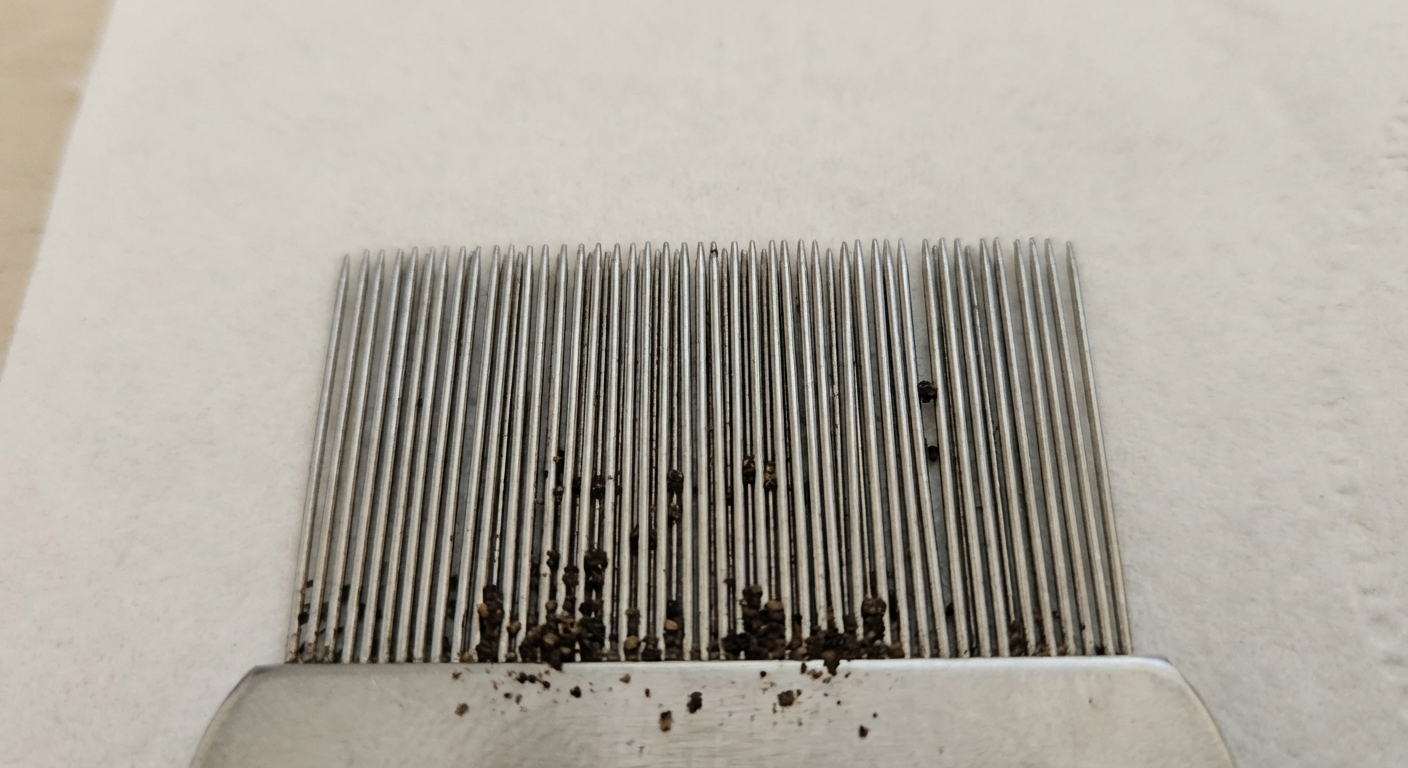
Flea dirt looks like black pepper sprinkled in the coat. It is actually flea feces made of digested blood. You will often find it along the back, near the tail base, and around the neck.
More subtle symptoms
- Restlessness or trouble settling down
- Hiding more than usual
- Irritability when you touch the back end or belly
How to check your cat for fleas at home
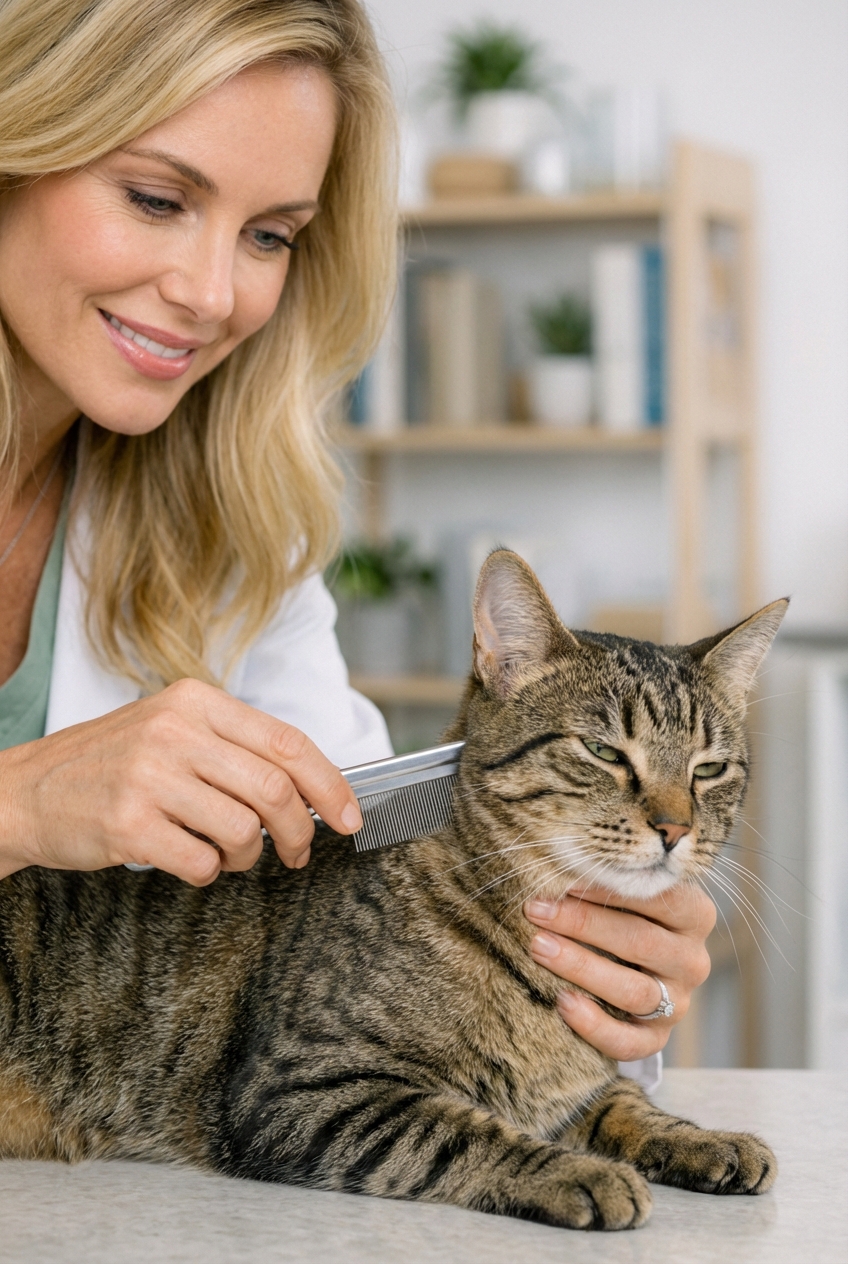
You do not need fancy tools to get a solid answer. A simple flea comb and a few minutes can tell you a lot.
Quick flea comb check
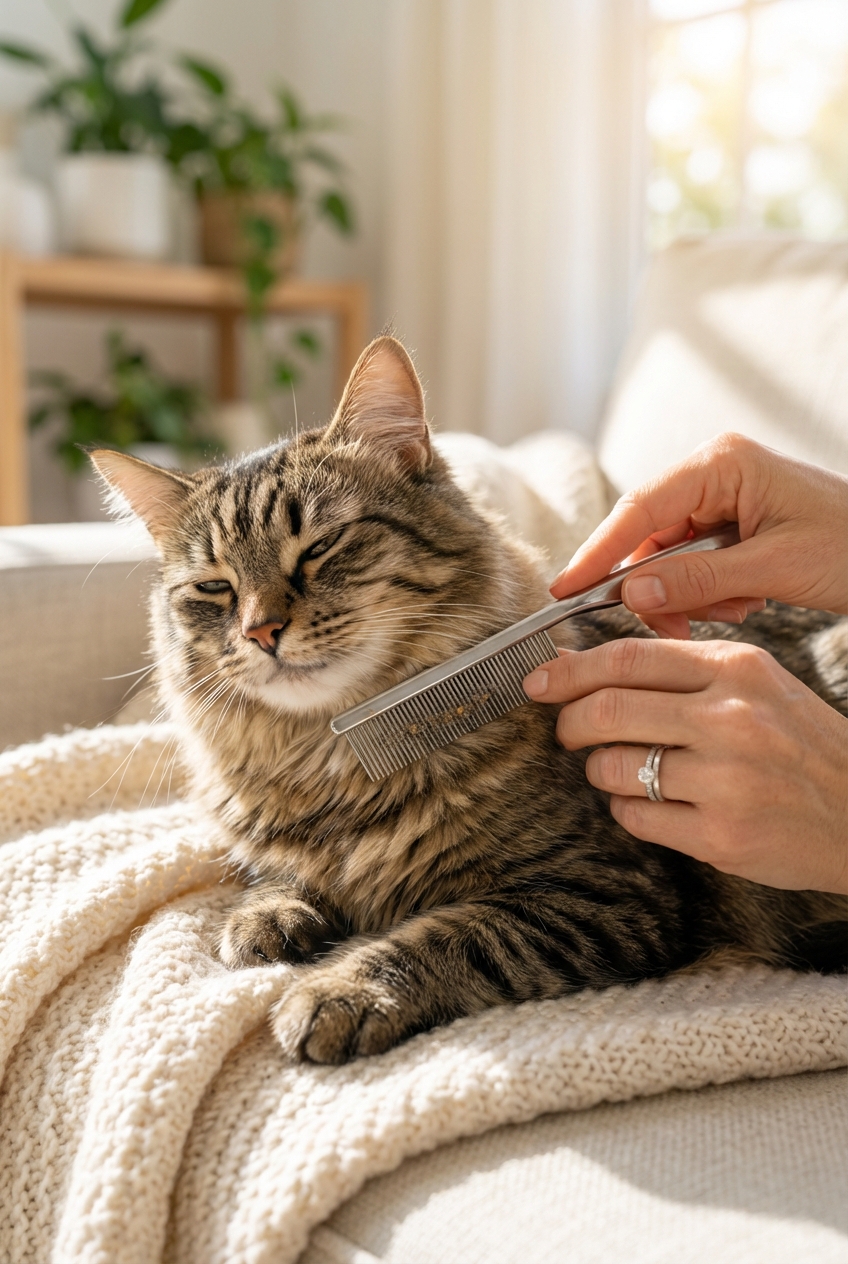
- Use a fine-toothed flea comb and comb from head to tail in short strokes.
- Focus on the neck, along the spine, and the base of the tail.
- Wipe what you collect onto a damp white paper towel.
The “red smear” test
If the black specks smear reddish-brown on the wet towel, that is consistent with flea dirt. It is one of the most reliable home clues.
If you find live fleas or flea dirt, assume there are more than you can see. Fleas spend a lot of their life cycle off the pet, in your home environment.
Why fleas are more than “just itchy”
Flea allergy dermatitis (FAD)
Some cats are allergic to flea saliva. For them, even a few bites can cause intense itching and scabbing. This is one reason indoor cats can still look miserable even if you only spot one flea.
Anemia risk in kittens
Kittens and small cats can become anemic from heavy flea burdens. Call your veterinarian promptly if you see pale gums, weakness, rapid breathing, or a kitten that is unusually quiet or not nursing well.
Tapeworms
Cats can get tapeworms by swallowing infected fleas while grooming. A common clue is seeing small rice-like segments near the anus or in bedding.
Indoor cats can get fleas too
I hear this all the time: “But my cat never goes outside.” Fleas can hitchhike in on people, dogs, visiting pets, or even wildlife that gets close to doors and patios. If any pet in the home goes outdoors, every pet is at risk.
What to do if your cat has fleas
The most effective flea control is a two-part plan: treat the cat and treat the environment. If you only do one, fleas tend to come right back. Think of it as an all-pets, whole-home problem, not just a single itchy cat problem.
1) Use a veterinarian-recommended flea preventive
Today’s prescription and vet-recommended products are usually the safest and most effective. Many kill adult fleas and/or disrupt the life cycle (for example, by preventing eggs and larvae from developing). The “best” option depends on your cat’s age, weight, other pets, and medical history. If you have a kitten, a senior cat, a pregnant or nursing cat, or a cat with chronic health issues, it is especially important to ask your vet before choosing a product.
- Stick to cat-labeled products. Never use a dog flea medication on a cat unless your veterinarian specifically directs it.
- Avoid essential oils on cats. Cats are uniquely sensitive to many essential oils, and toxicity can be serious.
- Be cautious with over-the-counter products. Some OTC flea products are less effective, and some have a higher risk of adverse reactions.
2) Treat every pet in the household
If you have a dog and a cat, both need effective prevention, even if only one is itchy. Fleas are not loyal to one species, and untreated pets can keep the cycle going.
3) Clean the environment to break the life cycle
Flea eggs and larvae live in carpets, cracks, and bedding. A consistent cleaning routine makes a huge difference, but it takes time. Plan on at least 4 weeks, and in many homes it can take 8 to 12 weeks (or longer) to fully break the cycle, depending on temperature, humidity, and how established the infestation is.
- Vacuum carpets, rugs, and furniture thoroughly, especially where your cat sleeps. Bonus “expert” tip: vacuuming does not just remove debris, it also helps stimulate dormant flea pupae to hatch. That makes them easier to kill with ongoing prevention.
- Wash pet bedding in hot water weekly.
- Empty the vacuum canister or discard the bag right away.
If you are dealing with a heavy infestation, ask your veterinarian about safe, targeted home treatments (often an insect growth regulator product is part of the plan). In my experience, foggers are frequently less effective than treating the places fleas actually live, like carpets, baseboards, and pet resting areas.

4) Talk to your vet about itch relief
When cats are miserable, they can over-groom and create skin infections. Your vet may recommend medication to calm inflammation, treat infection, and help your cat heal. This is especially important for cats with flea allergy dermatitis.
5) Stay consistent for multiple months
One dose is rarely the full solution. Most households need consistent prevention for several months to outlast the flea life cycle and prevent reinfestation.
What not to do
- Do not use permethrin products on cats. Permethrin is found in some dog flea and tick products and is highly toxic to cats.
- Do not “DIY dose” with random home remedies. Garlic, essential oils, and many natural sprays can be risky for cats, and they rarely break the flea life cycle.
- Do not bathe your cat repeatedly as the main solution. Bathing may remove some fleas, but it does not address eggs and larvae in the home, and it can stress many cats.
When to call the veterinarian
It is time to get professional help if you notice any of the following:
- Kittens with fleas, or any cat that seems weak, lethargic, or has pale gums
- Open sores, oozing skin, strong odor, or significant hair loss
- Itching that persists after you start flea control
- Signs of tapeworms
- You are unsure what product is safe for your cat’s age and weight
As a veterinary assistant, I always tell people this: it is much easier to prevent fleas than to fight a full infestation. If you are feeling overwhelmed, your vet team can help you choose a plan that fits your cat and your home.
Quick note: This article is educational and not a substitute for veterinary care. If your cat is very young, pregnant, nursing, or has medical conditions, check with your veterinarian before starting any flea product.
Maintenance checklist
Once you are back to baseline, a consistent routine helps keep fleas from returning.
- Use a monthly flea preventive year-round if your vet recommends it for your region and lifestyle.
- Keep all pets protected, not just the one that had symptoms.
- Comb weekly with a flea comb as a quick “early warning system.”
- Wash bedding regularly and vacuum high-traffic pet areas.