Border Collies thrive on more than long runs. Learn ideal daily exercise ranges, enrichment ideas, sniff walks, recovery, and sample routines to prevent rest...
Article
•
Designer Mixes
Catahoula Leopard Dog Personality

Shari Shidate
Designer Mixes contributor
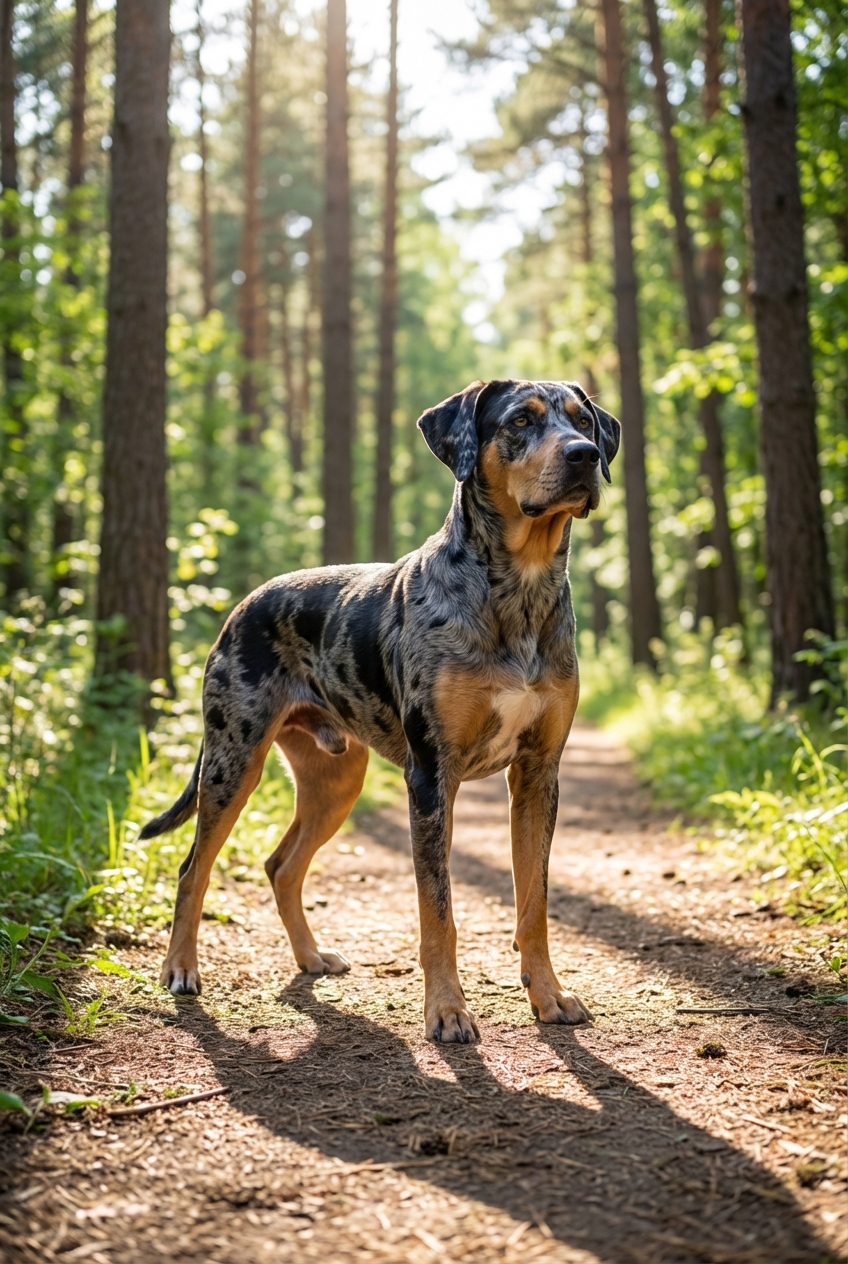
The Catahoula Leopard Dog is one of those breeds you do not forget after you meet one. Sometimes nicknamed a “swamp dog” because of its Louisiana roots and gritty working background, the Catahoula is smart, intense, and deeply loyal. They can also be a lot of dog if you are expecting an easygoing couch companion.
As a veterinary assistant, I like to describe the Catahoula personality in one sentence: a working brain in an athletic body with a big heart for their people . If that sounds like your kind of match, keep reading.
Why they are called “swamp dogs”
Catahoulas developed in Louisiana to do tough jobs in tough terrain, including herding and catching feral hogs and cattle. The exact origin story varies depending on who you ask (and which historians you read), but the end result is consistent: a dog built around problem-solving, independence, and stamina.
That history helps explain why many Catahoulas:
- Think for themselves instead of automatically looking to you for direction
- Have high drive to chase, track, herd, or patrol
- Stay on the move and get bored easily without a “job”
- Bond strongly with their household and can be wary of strangers
None of these traits are “bad.” They just require the right home setup and the right expectations.
Core traits
1) Loyal and people-focused
Catahoulas often form a deep attachment to their family. You might notice they pick a favorite person, but they typically stay tuned in to the whole household once they feel secure.
What this looks like at home: following you from room to room , checking the yard perimeter, and watching visitors carefully before deciding who is “safe.”
2) Confident and independent
This is not a breed that always waits for permission. They were bred to make fast decisions in the field, and that independent streak can show up as “selective hearing” if training is inconsistent.
Helpful mindset: You are not trying to “dominate” a Catahoula. You are building a working partnership with clear rules and meaningful rewards.
Vet assistant note: “Selective hearing” is not always attitude. Catahoulas can be affected by deafness or partial hearing loss, and the risk is higher in some dogs with merle coloring. If your dog seems to ignore cues, start by ruling out hearing issues with your veterinarian before you label it stubbornness.
3) High-energy with serious stamina
Catahoulas are athletes. A quick potty walk is not enough for most adults, and it definitely is not enough for adolescent dogs and young adult dogs.
If their needs are not met, they can become:
- Destructive (chewing, digging, fence-running)
- Vocal
- Restless and pushy for attention
- Reactive to movement (bikes, squirrels, joggers)
4) Alert and watchful
Many Catahoulas are very aware of their environment. That is a great trait if you want an attentive companion, but it can tip into territorial behavior or over-protectiveness without early socialization, clear routines, and skills for settling.

With people and pets
With kids
Catahoulas can do well in families, especially when children understand respectful dog handling. The key is supervision and teaching both sides what “good manners” look like. Because Catahoulas can be physical and fast, they may accidentally knock over small children during play.
Tip: If your Catahoula gets overexcited, teach a simple “place” cue (go to bed, settle) and reward calm behavior generously.
With strangers
Many are reserved at first. A Catahoula that is “all over guests” is less common than a Catahoula that watches from a distance and decides when to engage.
Socialization goal: neutral and calm, not necessarily friendly with everyone. The most important window is early puppyhood, but socialization is an ongoing life skill, not a one-and-done checklist.
With other dogs
Some do great with other dogs, especially if raised together. Others can be selective, same-sex reactive, or bossy. Early socialization helps, but genetics and individual temperament matter too.
Vet assistant note: If your dog shows tension at the clinic, ask about low-stress handling and bring high-value treats. Many working breeds do better when they know what to expect.
With cats and small pets
Prey drive varies, but it can be strong. If you have cats, it is best to start with a puppy and do structured introductions, management, and training from day one. Adult rescues can still succeed, but it depends on the individual dog and your ability to supervise and separate when needed.
Stubborn or smart?
Catahoulas are often labeled stubborn, but in my experience it is more accurate to say they are highly intelligent and highly motivated . If the environment offers a more exciting reward than you do, they will choose it, like a squirrel bolting across the trail or an irresistible scent line in the grass.
They respond best to:
- Short, upbeat training sessions (5 to 10 minutes)
- Clear boundaries and consistency
- Work-based enrichment like scent games and task training
- Positive reinforcement that pays well enough to compete with distractions
A Catahoula that is mentally fulfilled is usually a much calmer dog.
Daily needs
Exercise and decompression
These dogs typically need both structured exercise (leash walks, running, training) and decompression time (sniffing, exploring safely). Sniffing is not “wasted time.” It is enrichment that helps regulate stress.
Mental work
Try rotating activities across the week:
- Food puzzles and frozen enrichment feeders
- Scent work: hide treats around the house or yard
- Basic obedience plus real-life skills (door manners, polite greetings)
- Beginner agility or parkour-style obstacle work
Predictable routines
Many high-drive dogs do best with a schedule. Predictability reduces anxiety and helps them settle because they know what comes next.
Containment and safety
Safe containment is part of meeting a Catahoula’s needs. If you see fence-running or boundary testing, assume they will practice it until you change the setup.
- Use secure fencing and check for dig spots, loose boards, and gaps
- Skip off-leash freedom in unfenced areas if prey drive is high or recall is not reliable yet
- Train with a long line for safe freedom while you build real-world skills

Common challenges
Territorial behavior that escalates
If your dog barks or postures at visitors, it does not automatically mean aggression, but it is information. The goal is to teach safe, repeatable routines.
- Use a leash and a “place” cue when guests arrive
- Reward calm observation
- Do not force greetings
- Consider working with a qualified trainer if you see lunging, snapping, or prolonged inability to settle
Destruction when bored
If your Catahoula is chewing furniture or digging craters, increase enrichment and management first. Many “bad behaviors” are unmet needs.
- Crate train or use a safe dog-proofed room
- Offer legal chewing outlets (durable chews approved by your vet)
- Feed meals through enrichment toys sometimes
Chasing and herding behavior
Chasing is self-rewarding. Practice impulse control skills like “leave it,” “wait,” and “look” and consider using a long line for safety during training.
Good fit?
A Catahoula Leopard Dog can be a wonderful companion for the right person. They tend to thrive with owners who enjoy training and want an engaged, purposeful dog.
Great match if you want:
- An active partner for hiking, running, or working sports
- A loyal dog that bonds deeply with the household
- A smart dog that learns quickly with positive training
Not the best match if you want:
- A low-energy dog
- A dog that is naturally social with everyone
- A breed that is easy for first-time owners without support
Quick checklist
- Energy: High
- Trainability: High, but needs motivation and consistency
- Independence: Moderate to high
- Watchfulness: Often moderate to high (varies by dog and training)
- Social needs: Early and ongoing socialization
- Best environment: Active home with structure, enrichment, and safe containment
If you can meet their needs, a Catahoula is not just a pet. They feel like a teammate.
Health and care notes
Behavior and health are connected. If a normally steady dog becomes irritable, reactive, or unwilling to exercise, it is worth discussing with your veterinarian. Pain, ear infections, thyroid imbalances (which can contribute to behavior changes in some cases), and GI discomfort can all change temperament.
Hearing matters, too: Deafness or partial hearing loss can occur in this breed, particularly in some merle-patterned dogs. A dog that does not respond to cues may not be blowing you off. They may not hear you clearly. If you have concerns, ask your vet about hearing assessment and adjust training to include clear hand signals.
Because Catahoulas can be very active and intense, also pay attention to:
- Joint support and maintaining a lean body condition
- Paw and nail care if they run hard outdoors
- Parasite prevention, especially if they are in brush, fields, or water often
Grooming: Most Catahoulas have a short coat that is fairly low-maintenance, but they still benefit from weekly brushing, routine ear checks, and regular nail trims.
Breed note: If you are researching registries, you may notice the Catahoula is not recognized the same way across all kennel clubs. That does not change who the dog is, but it can affect what you see in breed listings and competitive venues.
Final thought from the clinic side: set your plan up early. Training, secure containment, and structured enrichment tend to prevent the “too much dog” spiral and bring out what people love about Catahoulas in the first place.