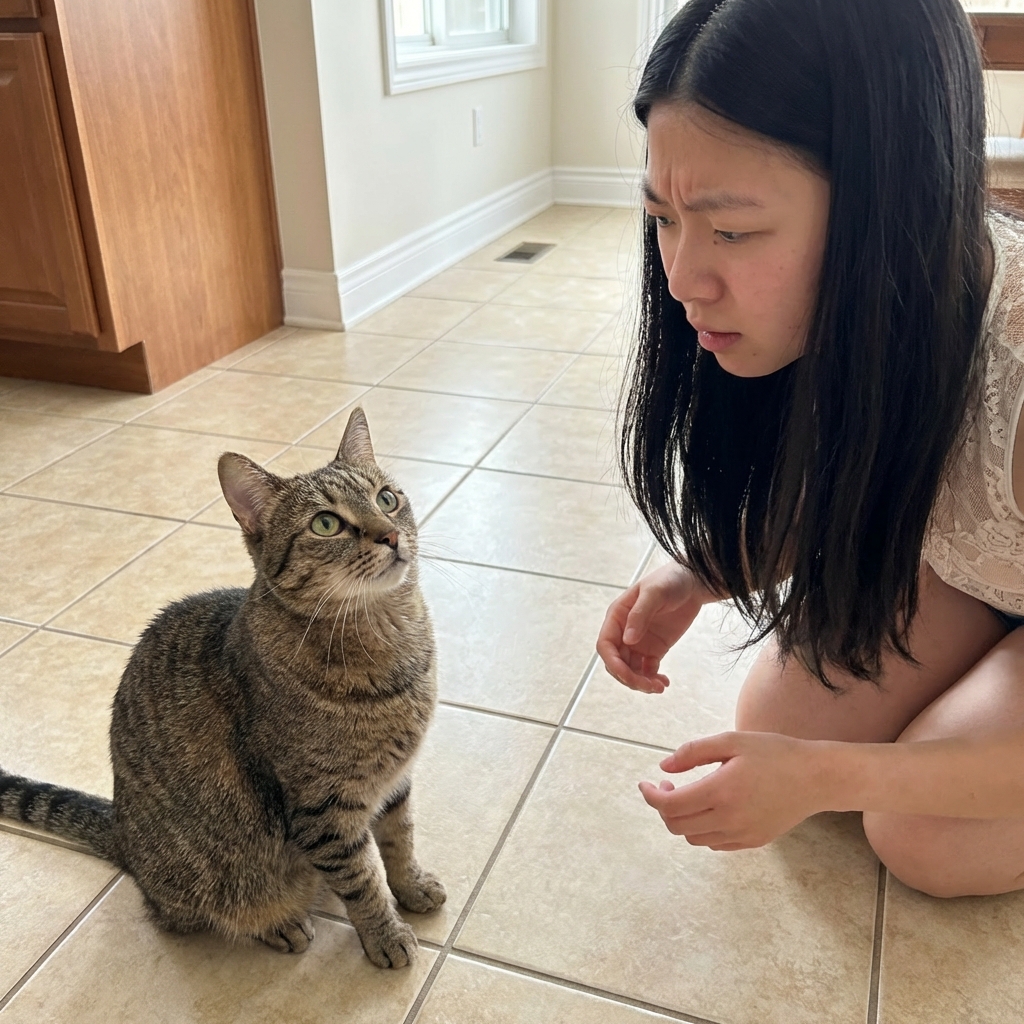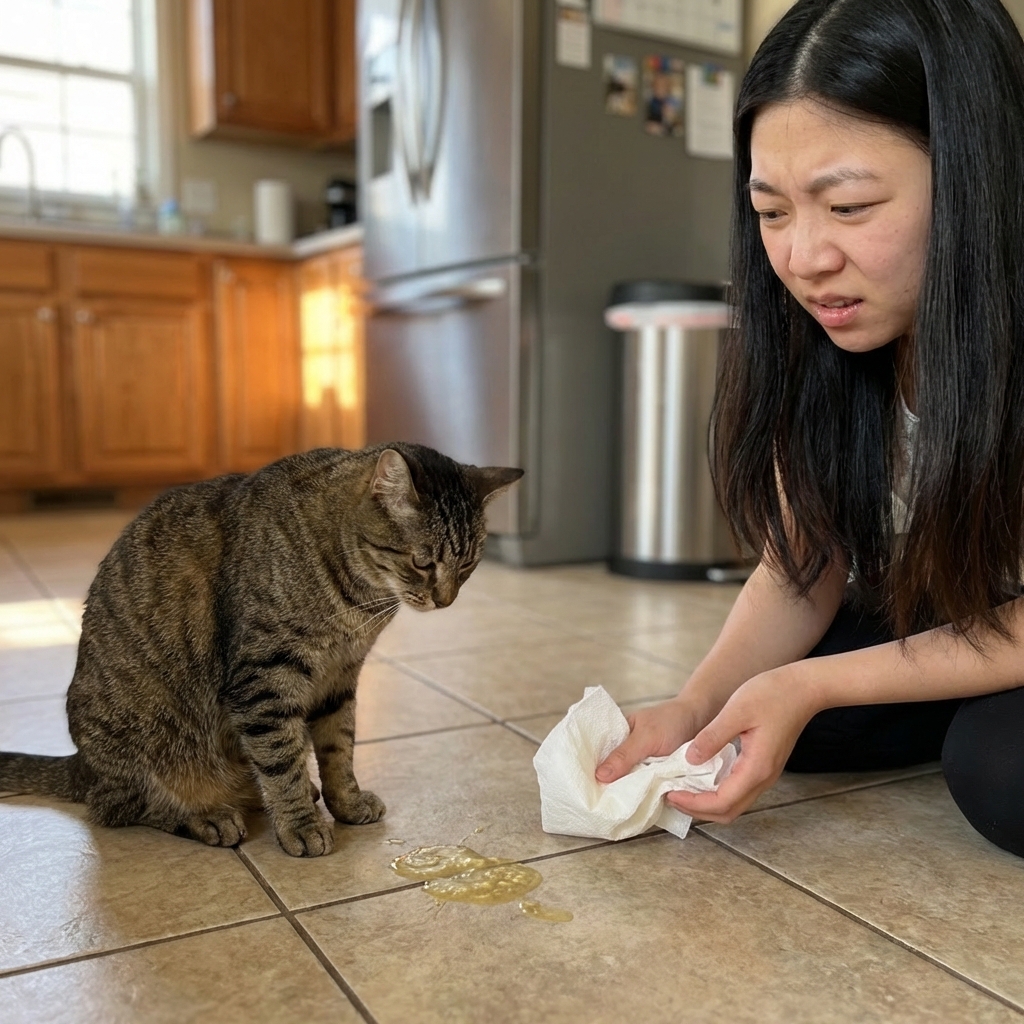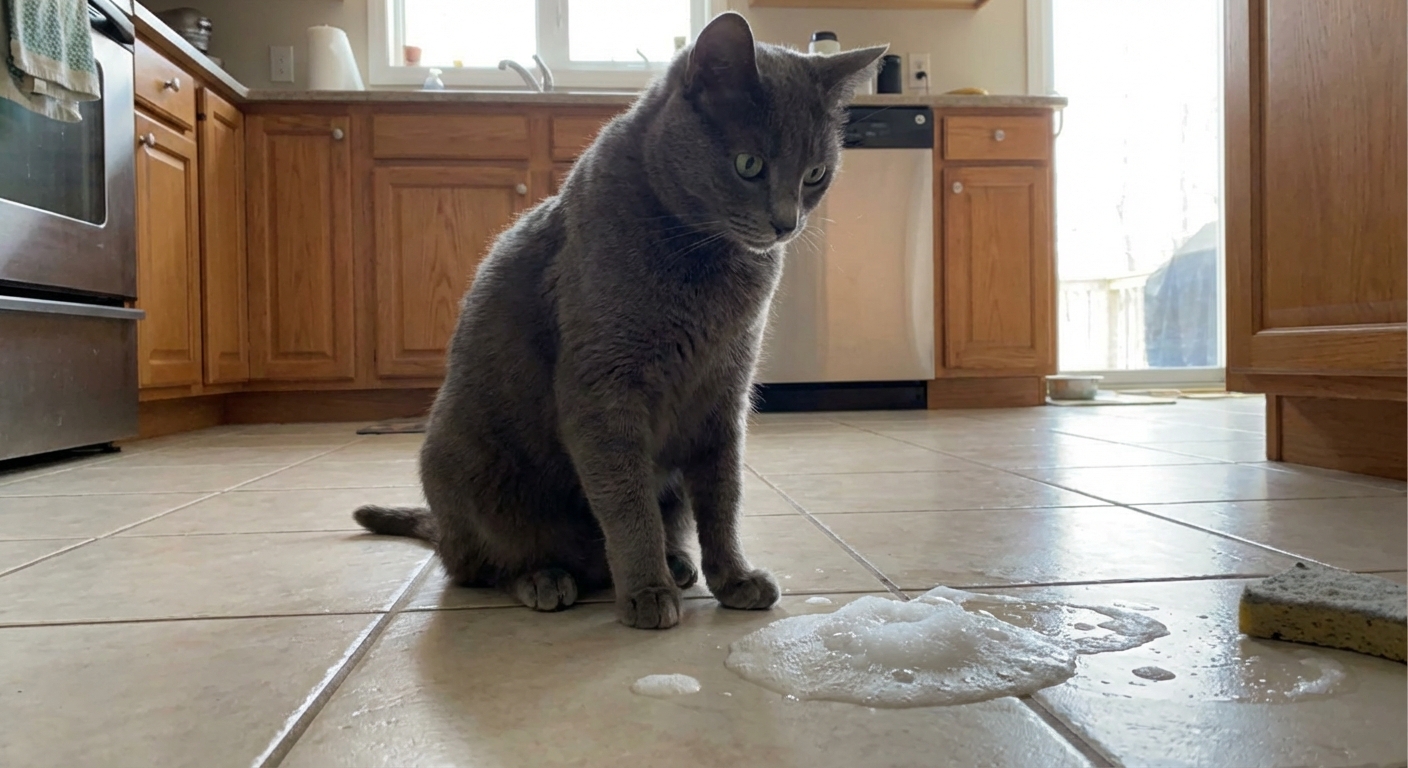
Found white or yellow foam? This quick guide covers vomiting vs regurgitation, common causes like hairballs or an empty stomach, toxin warnings, home care ti...
Article
•
Designer Mixes
Cat Vomiting White Foam: Causes and Home Steps

Shari Shidate
Designer Mixes contributor
If you have ever walked into the room and found a little puddle of white foam, it is completely normal to feel worried. In many cases, foamy vomit is related to an empty stomach, mild stomach irritation, or a hairball brewing. But sometimes it is your cat’s way of saying, “Something is really off.”
As a veterinary assistant, I like to think of white foam as a symptom, not a diagnosis. Your next steps depend on your cat’s overall behavior, how often it’s happening, and whether you see other red flags.
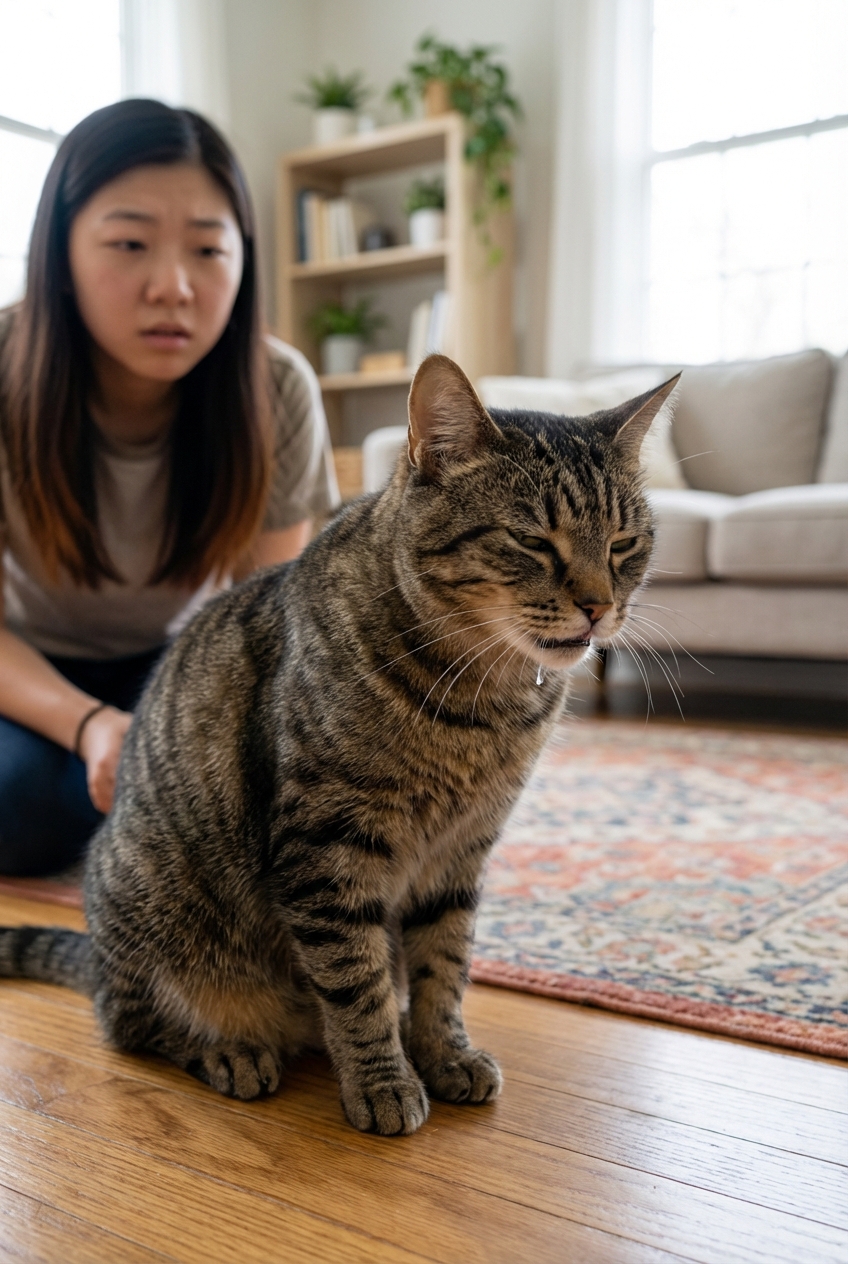
What white foam usually is
White foam is most often a mix of saliva and a small amount of stomach fluid. When there is not much food in the stomach, there is nothing substantial to bring up, so the vomit can look bubbly, frothy, or like whipped foam.
It can show up after repeated gagging, swallowing, or even coughing, and it can also appear when the stomach lining is irritated (sometimes with a little bile or acid involved).
Vomiting vs regurgitation
This matters because the causes can be different.
- Vomiting usually includes nausea signs (drooling, lip-licking), abdominal heaving, and a more forceful expulsion.
- Regurgitation is often more sudden, with little warning and less abdominal effort. Material may look like undigested food or foamy fluid.
If you are not sure which one you are seeing, a quick video for your veterinarian can be very helpful.
Common causes
1) Empty stomach or “hunger pukes”
This is a common scenario: your cat goes a long stretch without food (often overnight), then vomits foam or a small amount of yellowish fluid. The exact mechanism varies, but bile and stomach irritation can play a role when the stomach is empty.
2) Hairballs and grooming-related irritation
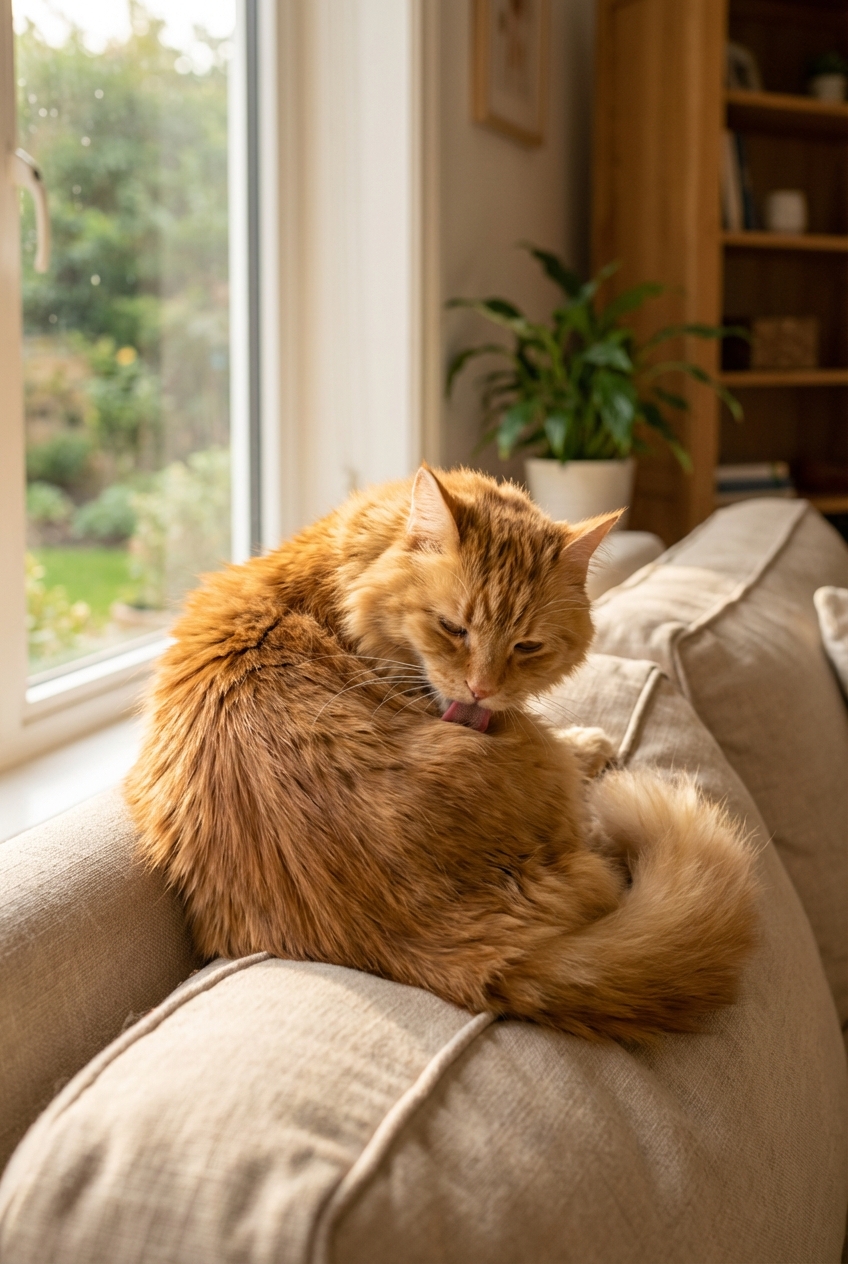
Cats swallow hair while grooming. Sometimes they vomit foam first, then produce a hairball, or they may vomit foam without a hairball if the stomach is irritated.
3) Mild stomach upset
Diet changes, eating too fast, rich treats, spoiled food, or getting into human food can trigger vomiting. Foam can show up when only a small amount comes up.
4) Parasites (especially in kittens or outdoor cats)
Intestinal parasites can irritate the GI tract and cause vomiting, diarrhea, poor growth, or a pot-bellied look, especially in kittens. Not every cat with parasites vomits, but it is on the list to rule out.
5) Stress or anxiety
Cats are sensitive to change: new pets, moving, visitors, construction noises, or schedule changes can lead to nausea and vomiting in some cats.
6) IBD or food sensitivities
Chronic vomiting, especially with weight loss, appetite changes, or loose stool, can be associated with inflammatory bowel disease (IBD) or diet intolerance. Frequent hairballs or frequent vomiting can also be a sign there is an underlying issue, not just “a hairball cat.” These cats often need veterinary guidance and a structured diet plan.
7) Foreign material, string, or intestinal blockage
Cats can swallow ribbon, dental floss, hair ties, toy pieces, or plants. Vomiting may start as foam and progress. This can become an emergency quickly.
8) Toxin exposure
Some common household risks include lilies (highly toxic to cats), essential oils, certain cleaners, medications, rodenticides, and insecticides. Vomiting foam can be one of several signs.
9) Internal illness
Foamy vomiting is not specific to one condition, but repeated vomiting can be a sign of systemic illness, especially in older cats. Examples include pancreatitis, kidney disease, liver disease, and hyperthyroidism.
10) Coughing that looks like vomiting
Sometimes cats with asthma, bronchitis, or an upper respiratory issue will gag and produce white foam. This can look like vomiting, but it may be more of a coughing episode.
- With coughing, cats may crouch low with the neck stretched out and cough repeatedly.
- With vomiting, you more often see nausea signs and abdominal heaves before anything comes up.
Either way, if it is recurring or your cat seems distressed, your vet should evaluate.
When to call a vet now
Please reach out to your veterinarian urgently or go to an emergency clinic if you notice any of the following:
- Repeated vomiting, or unable to keep water down
- Blood in vomit, or vomit that looks like coffee grounds (digested blood)
- Severe lethargy, collapse, weakness, or hiding and acting “not themselves”
- Swollen or painful belly, crying out, or a tense abdomen
- Straining without producing stool, or suspected constipation with vomiting
- Possible foreign body exposure (string, ribbon, toy parts)
- Known or possible toxin exposure (especially lilies)
- Vomiting plus trouble breathing, open-mouth breathing, or blue or pale gums
- Kittens, seniors, or cats with chronic conditions (diabetes, kidney disease) that are vomiting or “off”
Trust your instincts. If your cat looks unwell, it is always safer to call. Cats hide illness extremely well.
How often is too often
Every cat is different, but these are reasonable, general guideposts:
- More than once in 24 hours, or vomiting that continues into the next day, is a good reason to call your vet.
- Two or more episodes in a day, especially with appetite changes or lethargy, should be treated as more urgent.
- Any vomiting plus not eating deserves prompt advice. Cats that stop eating can be at risk for hepatic lipidosis (fatty liver), especially if they are overweight.
Home steps (mild, one-time vomiting)
If your cat vomited once, is otherwise bright and alert, and there are no red flags, these gentle steps are reasonable while you monitor closely.
Step 1: Pause and observe
- Note the time, what the vomit looked like (foam only, yellow bile, hair, food), and how much.
- Watch energy level, breathing, gum color, and whether your cat is seeking water.
Step 2: Offer small amounts of water
Dehydration is a big concern with vomiting. Offer fresh water in small amounts. If your cat gulps and vomits again, pause for 30 to 60 minutes, then offer small sips again. Avoid restricting water for long periods. If your cat cannot keep even small sips down, call a veterinarian.
Step 3: Restart food slowly
For many adult cats, you can try a small meal once the stomach settles. Choose a familiar, gentle option your vet has recommended in the past. Avoid introducing a brand-new food during an upset stomach. If your cat has other medical conditions, or if you are considering a “bland diet,” it is best to check with your veterinarian first since cats have specific nutritional needs.
- Start with a small portion (think snack-size).
- If tolerated, feed small meals every 4 to 6 hours for the day.
- Once normal for 24 hours, transition back to the regular schedule.
Step 4: Reduce hairball triggers
- Brush daily for long-haired cats or heavy shedders.
- Ask your vet about a hairball gel or a hairball-focused diet if this is frequent.
- Increase hydration with wet food or a cat water fountain if appropriate.
Step 5: Check the environment
- Look for chewed plants, strings, ribbons, toy pieces, or trash access.
- Confirm no exposure to lilies, essential oils, or medications.
What not to do
- Do not give human medications like Pepto-Bismol, ibuprofen, or acetaminophen. Some are toxic to cats.
- Do not force-feed a nauseated cat.
- Do not pull string if you see it from the mouth or anus. This can cause serious internal injury. Go to a vet.
- Do not ignore repeated vomiting even if it “looks mild.” Cats can decline quickly.
How vets find the cause
If vomiting is recurrent, your veterinarian may recommend some combination of:
- Physical exam and abdominal palpation
- Fecal testing for parasites
- Bloodwork to evaluate hydration, kidney and liver values, electrolytes, thyroid (especially in older cats)
- X-rays or ultrasound if a blockage, foreign material, or organ disease is suspected
- Diet trial for suspected food sensitivity or IBD
Bringing a quick phone photo or video (vomiting vs coughing episodes) and a list of recent foods, treats, plants, and household products can genuinely help your vet connect the dots faster.
Prevention tips
- Smaller, more frequent meals can help cats prone to empty-stomach vomiting.
- Slow-feeding options (puzzle feeders, spread-out feeding) can reduce scarf-and-barf vomiting.
- Hairball support through brushing and vet-approved products, especially during seasonal shedding.
- Hydration through wet food and fresh water access.
- Cat-proofing for strings, rubber bands, and toxic plants, especially lilies.
Quick decision guide
Monitor at home if: it happened once, your cat is acting normal, and there are no red flags.
Call your vet today if: vomiting repeats, appetite drops, your cat seems painful, or this becomes a pattern.
Seek emergency care if: your cat cannot keep water down, is very lethargic, you suspect string or toxin exposure, breathing seems abnormal, or there is blood (including coffee-ground vomit).
Helpful reminder
You do not have to guess alone. If you tell your clinic, “My cat vomited white foam,” they will likely ask about frequency, appetite, stool, and behavior. Those details matter, and you are already doing the right thing by paying attention.
Educational note: This article is for general education and is not a substitute for veterinary diagnosis or treatment.