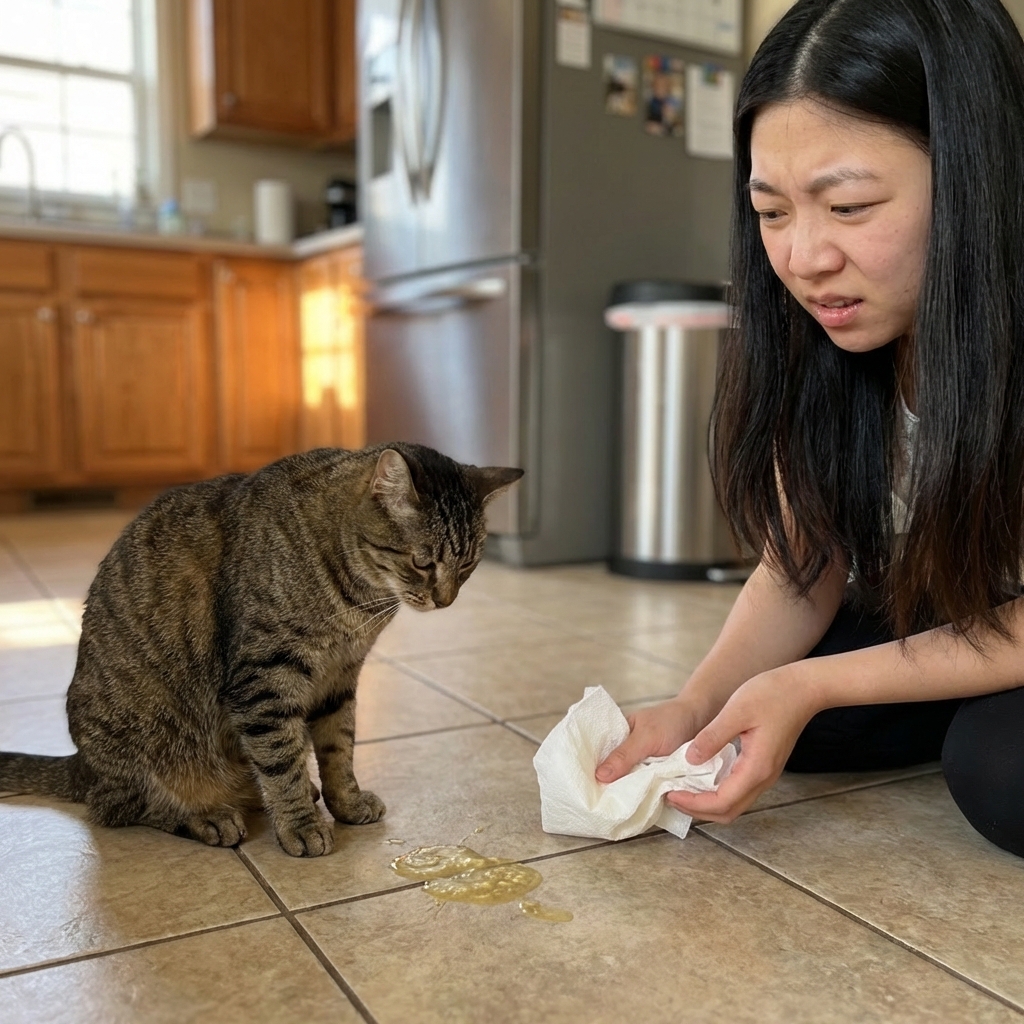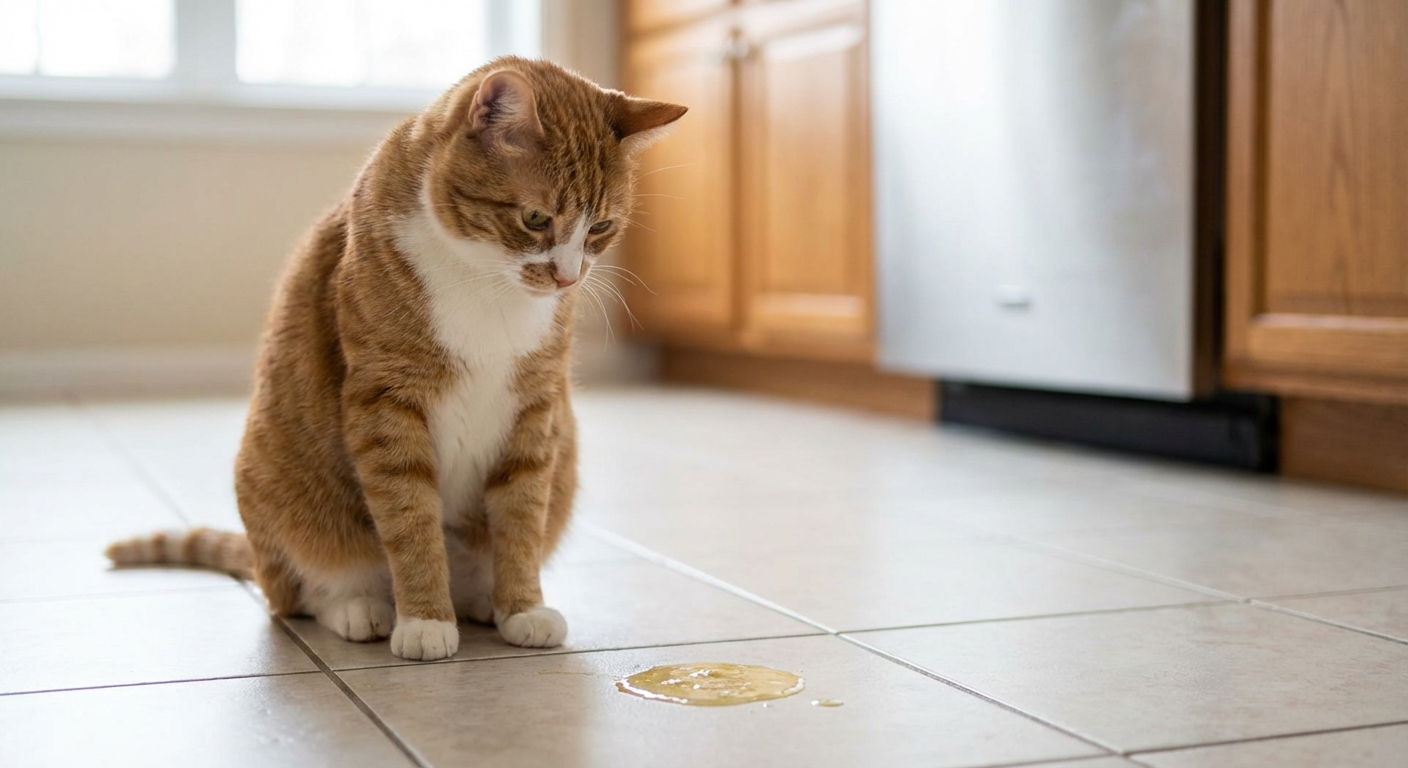
From hairballs to toxins and foreign bodies, this guide explains what cat vomit can mean, when it’s an emergency, what to do at home, and what your vet wil...
Article
•
Designer Mixes
Cat Vomiting at Night: When to Worry

Shari Shidate
Designer Mixes contributor
If your cat only seems to vomit at night, you are not imagining it. Some cats do vomit in the late evening or early morning hours, often because their stomach has been empty for a while, a hairball is ready to come up, or nausea is worse when they settle in to rest. The tricky part is separating the common, “messy but manageable” causes from the situations that need a veterinarian right away.
As a veterinary assistant in Frisco, Texas, I always tell families this: one isolated episode of vomiting can be no big deal, but patterns matter. Frequency, what the vomit looks like, and how your cat acts afterward are what guide your next step. And a quick note: online advice can help you triage, but it cannot replace an exam if your cat is unwell.
Why it happens more at night
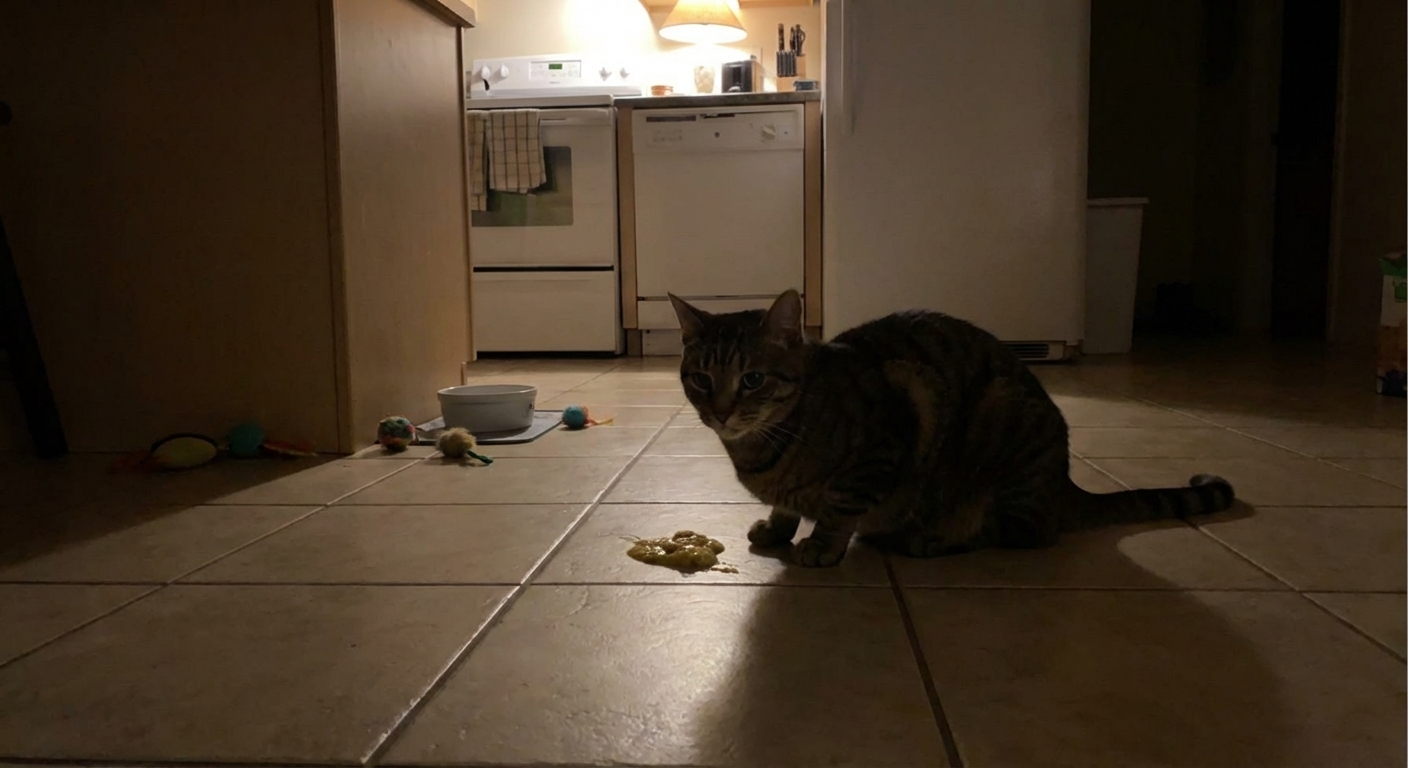
Nighttime vomiting usually comes down to timing, posture, and an empty stomach. Here are the most common reasons we see:
- Empty-stomach nausea. Cats may vomit yellow fluid or white foam when their stomach has been empty for hours. If this is recurring, it still deserves a vet conversation so you are not missing a bigger issue.
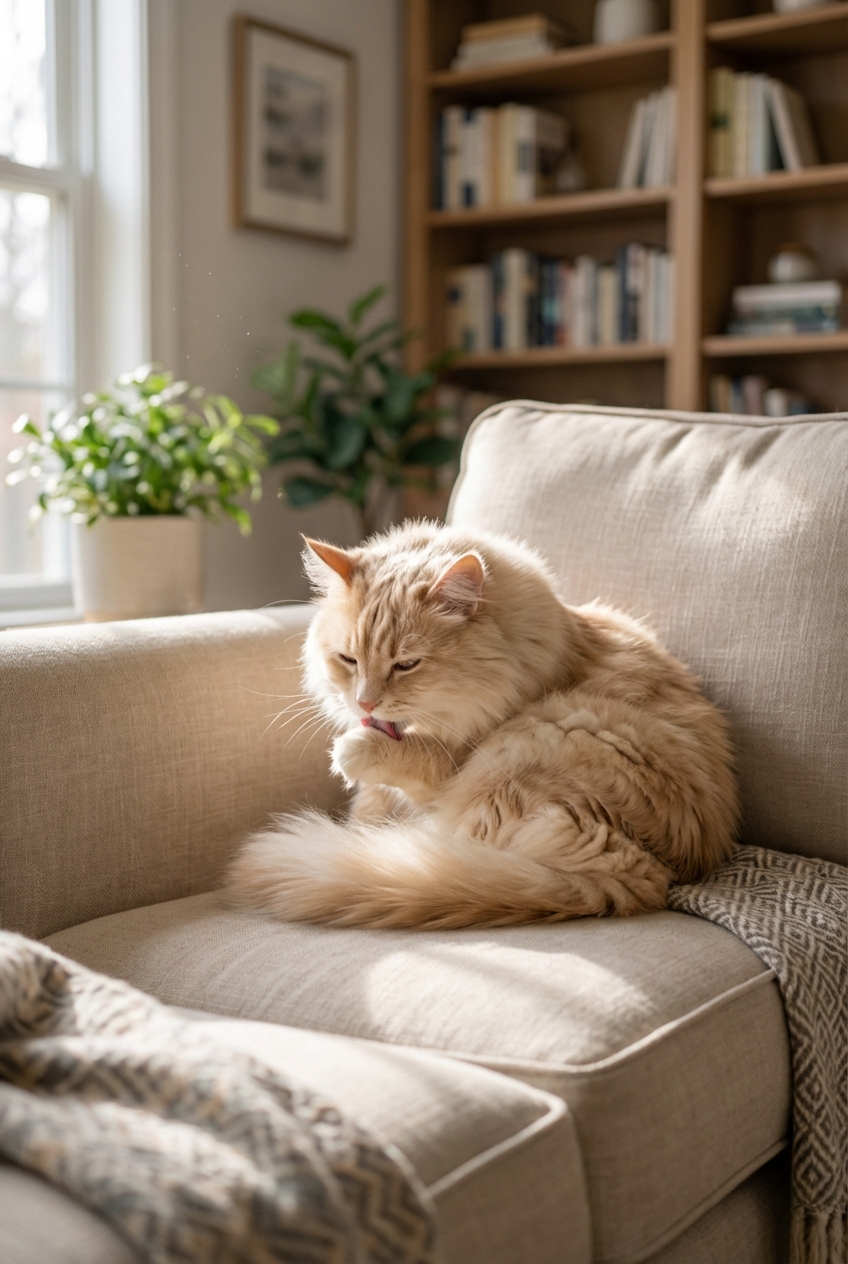
- Hairballs. Grooming during the day can lead to coughing, gagging, and bringing up a hairball, sometimes with liquid. Owners often notice it overnight because the house is quiet and the mess is easier to spot in the morning.
- Reflux or stomach irritation. Some cats can reflux or feel more nauseated when lying down, especially after a large late meal. If it is happening regularly, do not assume it is “just reflux.”
- Eating too fast or overeating at dinner. A big or fast meal may be vomited soon after eating.
- Diet sensitivity. A food intolerance can cause intermittent vomiting that seems tied to routine feeding times.
- Parasites or GI infection. Less common in strictly indoor cats, but possible, especially with new pets, fleas, or hunting behavior.
- Chronic disease. Kidney disease, hyperthyroidism, inflammatory bowel disease, pancreatitis, and other issues can show up as nighttime or early morning vomiting.
Vomiting or regurgitation?
Many people use “vomit” for both, but the difference matters.
- Vomiting usually involves nausea, drooling, and heaving or abdominal effort. The material may be liquid, foam, bile, food, or hair.
- Regurgitation is often more sudden and passive, with little to no heaving. It is commonly undigested food or tube-shaped material.
If you think it is regurgitation, tell your veterinarian. It can point to different causes (like esophageal issues) and different next steps.
What it looks like
You do not need to become a detective, but a quick look can give your veterinarian important clues.
Clear or white foam
Often linked to an empty stomach, mild nausea, or irritation. If it happens rarely and your cat is otherwise normal, it may be manageable with feeding schedule tweaks. If it is frequent, it needs a vet workup.
Yellow liquid
Yellow fluid is usually bile mixed with stomach contents, and it is commonly seen when a cat has gone a long stretch without eating. Recurrent bile vomiting is still a pattern worth discussing with your vet.
Undigested food
If your cat brings up food soon after eating, think fast eating, eating too much, stress, or a sudden diet change. If it is hours after eating and looks unchanged, that can suggest delayed stomach emptying and should be discussed with your vet.
Hairball with liquid
Occasional hairballs can be normal, especially in longhaired cats. But frequent hairballs can be a sign of skin issues, overgrooming from stress, or underlying GI inflammation.
Blood or coffee grounds
Bright red blood can come from irritation of the throat or stomach. Dark, coffee-ground material suggests digested blood and is more concerning. Either way, call your veterinarian promptly.
Green vomit
Green material can be bile or sometimes something your cat ate (like plant material). If the color is unusual for your cat, the smell is foul, or your cat seems sick, do not wait it out.
Black vomit
Black vomit can indicate digested blood (similar to coffee-ground material) and should be treated as urgent.
Red flags that need a vet
Please seek veterinary care urgently (same day, and sometimes emergency) if you notice any of the following:
- Repeated vomiting (more than 2 to 3 episodes in 24 hours, or vomiting that continues into the next day)
- Any vomiting plus lethargy, hiding, weakness, or collapse
- Not eating for more than 24 hours (sooner for kittens, seniors, or cats with medical conditions). Cats can develop hepatic lipidosis (fatty liver disease) if they stop eating for too long, so do not “wait it out.”
- Dehydration signs: dry or tacky gums, reduced urination, marked weakness, or your cat seems “off”
- Panting or open-mouth breathing, which can signal stress, pain, overheating, respiratory disease, or other serious problems
- Diarrhea alongside vomiting, especially if watery or bloody
- Abdominal pain: hunched posture, growling when picked up, tense belly
- Bloated abdomen or repeated unproductive retching
- Blood or coffee-ground vomit
- Foreign body risk: string, ribbon, hair ties, toys, bones, sewing thread
- Toxin exposure: lilies, rodent poison, certain human medications, essential oils, antifreeze
- Underlying medical conditions (kidney disease, diabetes, hyperthyroidism) or a very young or senior cat
If your cat vomits at night and then acts totally normal, it is often less urgent. If your cat vomits at night and seems “not themselves” the next morning, that is when I want you to call.
How often is too often?
These guidelines are general, but they help you decide your next step:
- Once, then normal: Monitor closely for 24 hours.
- About once a week: Worth a non-urgent vet appointment, especially if it has become a pattern.
- More than once a week or any increasing trend: Book a vet visit soon. Chronic vomiting is never “just normal.”
- Multiple episodes in one night: Call the vet same day.
Safe first steps at home
If your cat is bright, alert, and only vomited once, these gentle steps can help while you watch for changes. Always call your veterinarian first if your cat has other medical conditions or takes medications.
1) Adjust the feeding schedule
- Offer a small snack before bed to help prevent empty-stomach nausea.
- Try smaller, more frequent meals instead of one large dinner.
- Consider a timed feeder for an early morning snack if vomiting happens around dawn.
2) Slow down fast eaters
- Use a puzzle feeder or slow feeder bowl.
- Serve wet food spread thinly on a plate to reduce gulping.
3) Support hairball control
- Brush regularly, especially for longhaired cats.
- Ask your vet about hairball gels, fiber options, or a diet change if hairballs are frequent.
4) Keep a simple log
Track the time, what was eaten, what it looked like, and behavior afterward. If possible, take a quick photo to show your veterinarian.
What not to do
- Do not give human anti-nausea or acid-reducing medications unless your veterinarian tells you exactly what and how much. Cats are very sensitive to dosing errors.
- Do not withhold water. Dehydration is a big risk with vomiting. If your cat cannot keep water down, that is a reason to seek care.
- Do not ignore repeated hairballs. “Hairball vomiting” can mask asthma, bronchitis, or GI disease.
- Do not pull string from your cat’s mouth or rear. If you suspect a string foreign body, go to the vet immediately.
Age and risk clues
When I triage vomiting cases, age and history help us prioritize what to rule out first.
- Kittens and young cats: parasites, infections, diet changes, and foreign bodies are higher on the list. Dehydration can happen faster, so call sooner.
- Adult cats: food sensitivity, hairballs, and GI inflammation are common, but repeated vomiting should still be worked up.
- Senior cats: kidney disease and hyperthyroidism become more likely, and even “mild” vomiting patterns deserve attention. Seniors also do not tolerate dehydration as well.
What your vet may check
If nighttime vomiting is recurring, your veterinarian will likely start with a full exam and history, then recommend testing based on risk factors and age:
- Fecal testing for parasites
- Bloodwork to assess kidney and liver values, thyroid levels, hydration status, and inflammation markers
- Urinalysis (especially in older cats)
- X-rays to look for foreign material, constipation patterns, and other clues. Radiographs can suggest a problem but do not always confirm it.
- Ultrasound to evaluate stomach and intestinal lining, pancreas, and other organs
- Diet trial for food sensitivity or inflammatory bowel disease
The goal is not to throw tests at your cat. It is to find the cause early, before a mild pattern becomes a painful emergency.
Quick nighttime guide
- One episode, normal behavior, normal appetite: monitor, offer a small bedtime snack the next night, and keep a log.
- Vomits again that night or the next day: call your veterinarian.
- Vomiting plus lethargy, pain, dehydration signs, blood, breathing changes, or foreign body risk: urgent vet or emergency clinic.
If you are ever unsure, calling your veterinary clinic is always appropriate. Describing what you saw and how your cat is acting often helps the team guide you to the safest next step.