Is your cat inhaling food and vomiting after meals? Learn why cats eat too fast and how to slow them safely with smaller meals, slow feeders, puzzles, wet fo...
Article
•
Designer Mixes
Cat Vomiting After Eating Fast: What Helps

Shari Shidate
Designer Mixes contributor
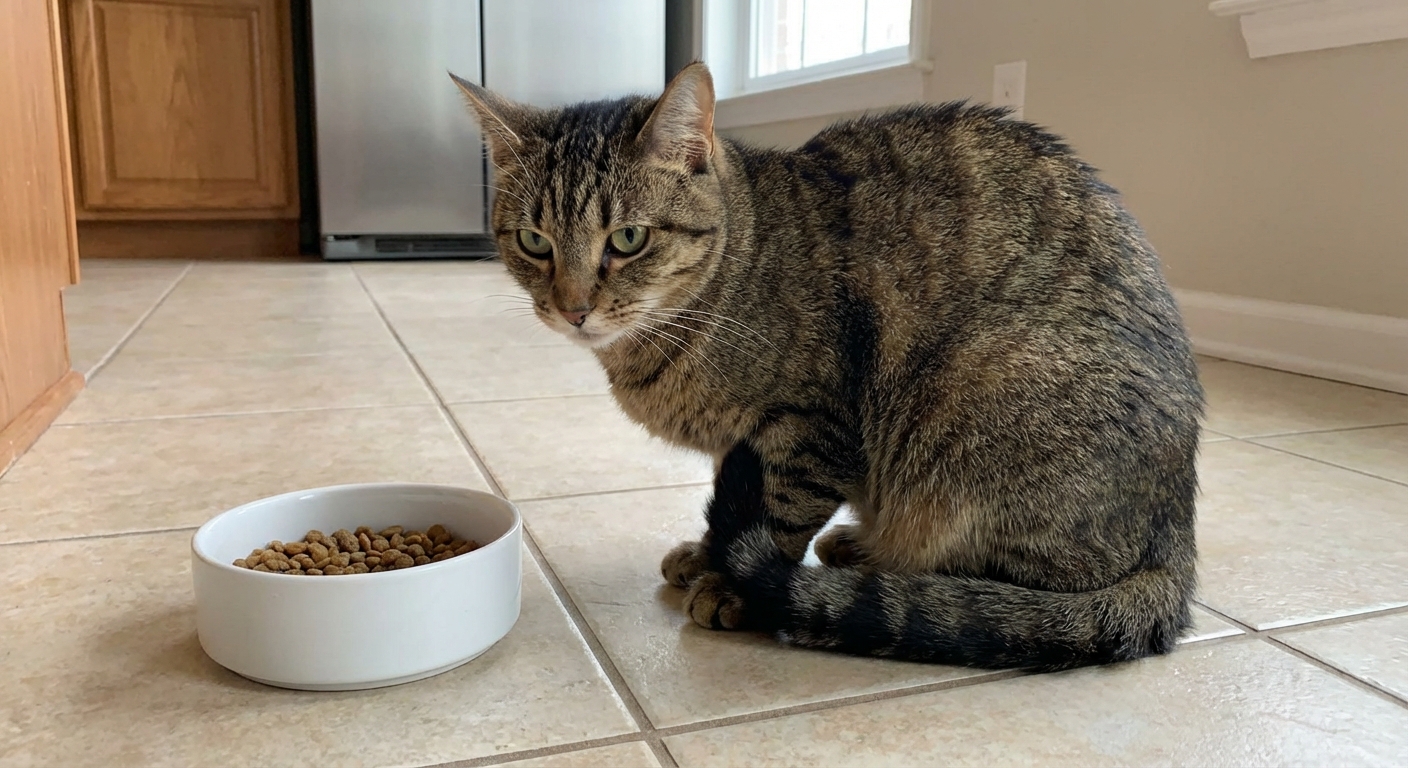
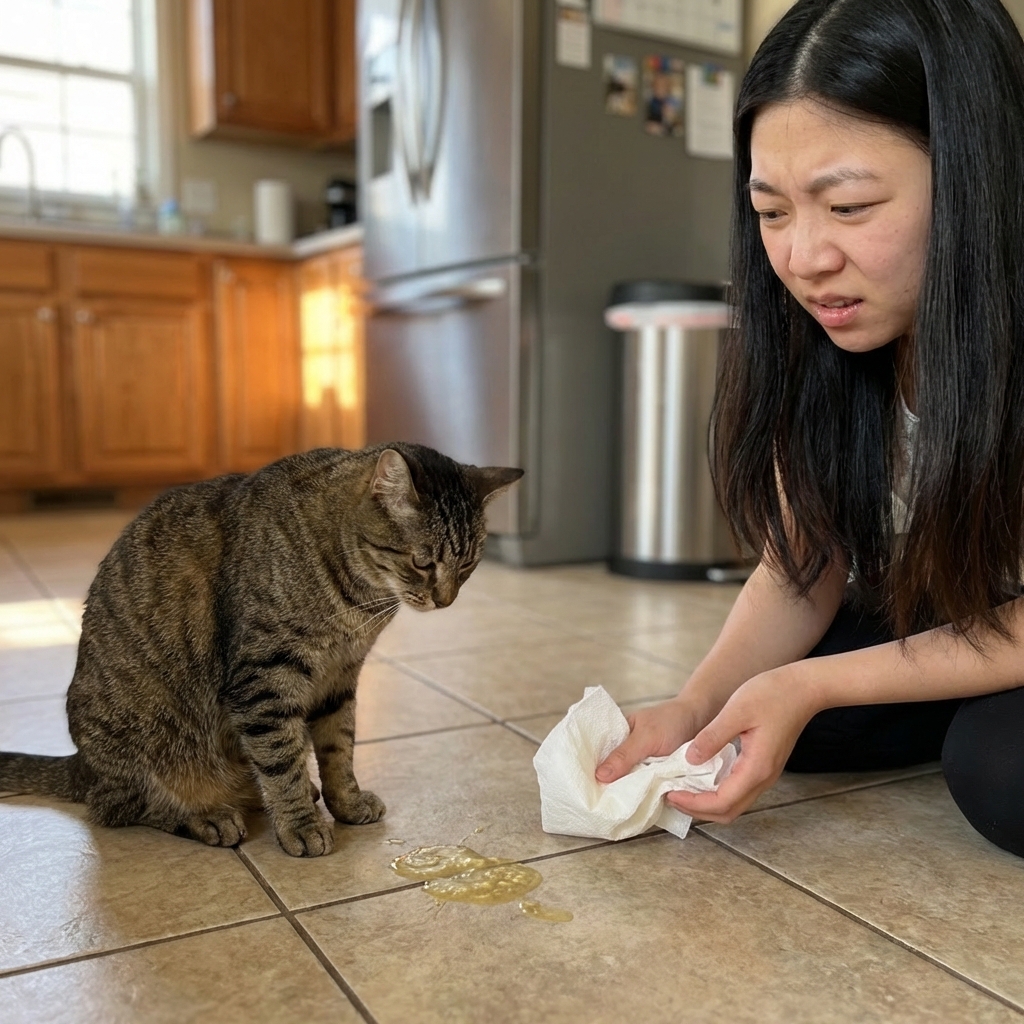
If your cat vomits right after eating, it is scary and frustrating. In my work as a veterinary assistant, one of the most common patterns I see is a cat who eats too fast, then brings it back up shortly after. The good news is that many cases improve quickly with a few targeted changes.
Important note: Vomiting can also signal illness, not just speed-eating. This article covers practical solutions, plus clear red flags so you know when to call your veterinarian.
Vomiting or regurgitation?
This distinction matters because it helps you and your vet narrow down the cause. There can be overlap, so think of these as typical patterns, not strict rules.
- Regurgitation is often soon after eating (or drinking). Food comes up easily, often looks undigested, and there is usually little to no heaving.
- Vomiting can happen minutes to hours after a meal. You may see heaving/abdominal effort, drooling, and the material may look partially digested or be mixed with foam or fluid.
Fast eating can trigger either one. Repeated true vomiting, or any regurgitation that becomes a pattern, deserves a closer look.
Why cats throw up after eating fast
Speed eating can overwhelm the stomach and throat. Common contributors include:
- Competition or stress in multi-cat homes
- Long gaps between meals that lead to frantic eating
- Kibble shape and bowl design that make it easy to gulp
- Hairballs that irritate the stomach
- Diet intolerance or sudden food changes
- Underlying medical issues like parasites, dental pain, inflammatory bowel disease, hyperthyroidism (especially in older cats), or pancreatitis
Fast fixes to try today
1) Smaller, more frequent meals
Instead of one or two large meals, try 3 to 6 smaller meals. This reduces hunger spikes and slows intake naturally.
- If you are away during the day, an automatic feeder can help.
- For wet food, you can portion meals into covered containers in the fridge for quick serving.
2) Puzzle feeder or slow feeder
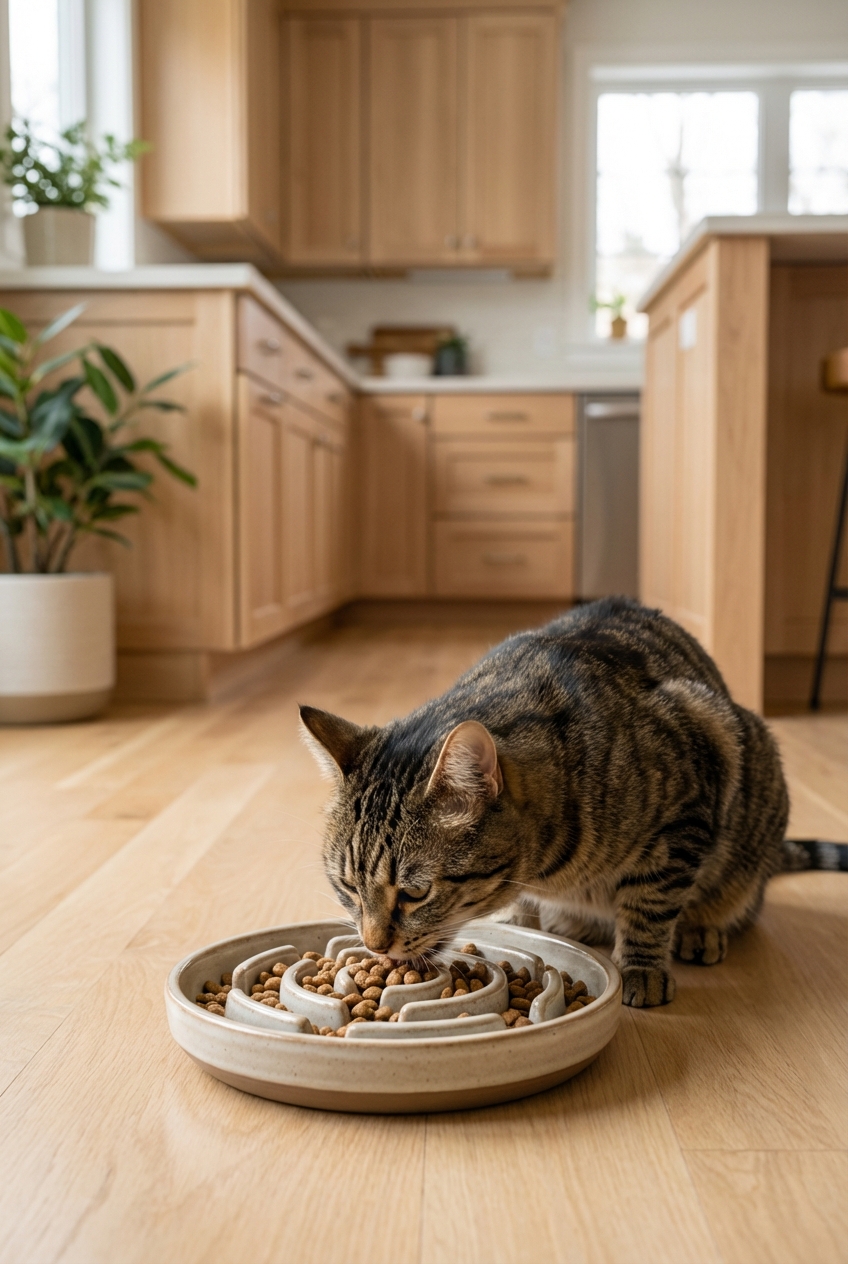
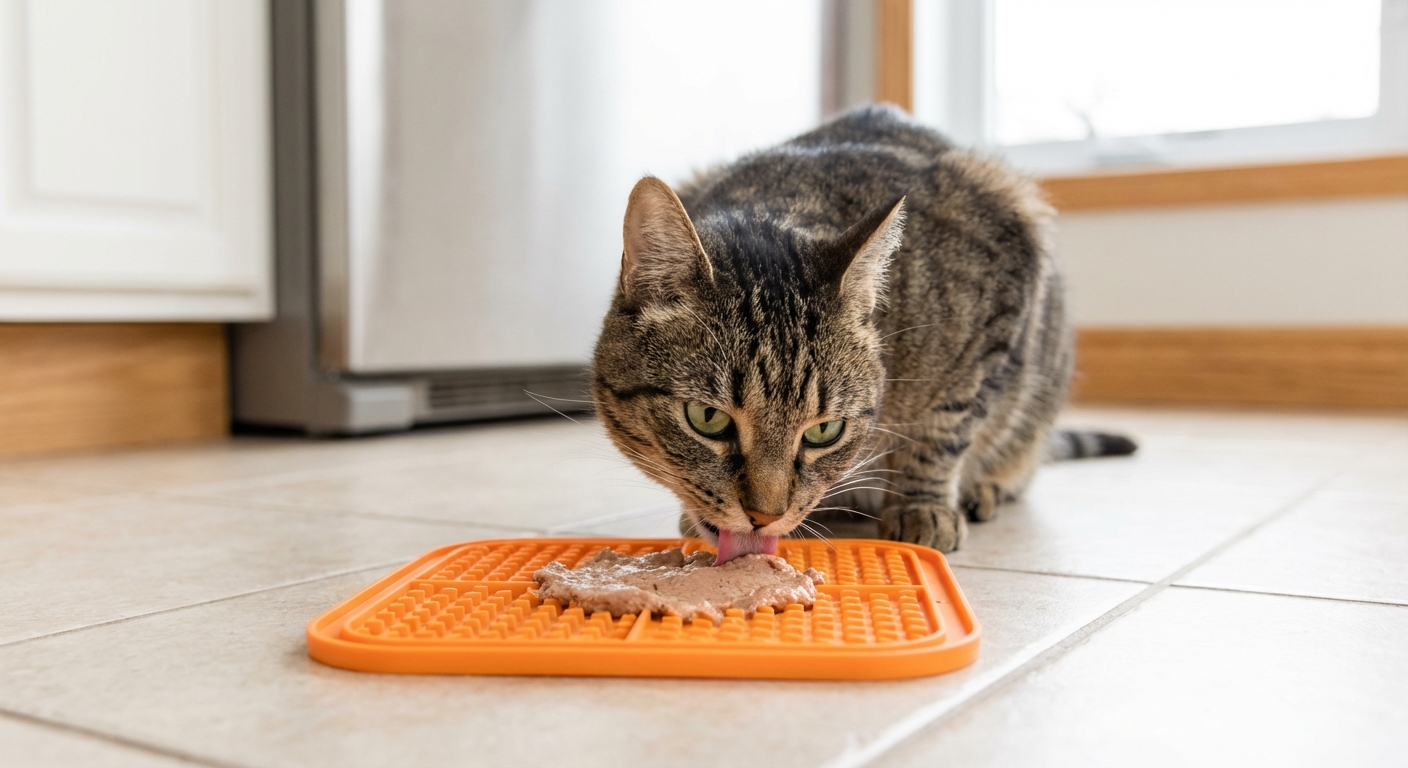
Slowing down is often the biggest win. Puzzle feeders make cats work for each bite.
- For kibble: try a treat ball or puzzle tray.
- For wet food: use a lick mat or a slow feeder designed for wet diets.
3) Spread the food out
If you do not have a special feeder, you can still slow eating by changing the presentation:
- Serve kibble on a large baking sheet so it is not piled up.
- Place small portions in 2 to 4 separate dishes around the room.
- For wet food, smear it thinly on a plate rather than serving a mound in a bowl.
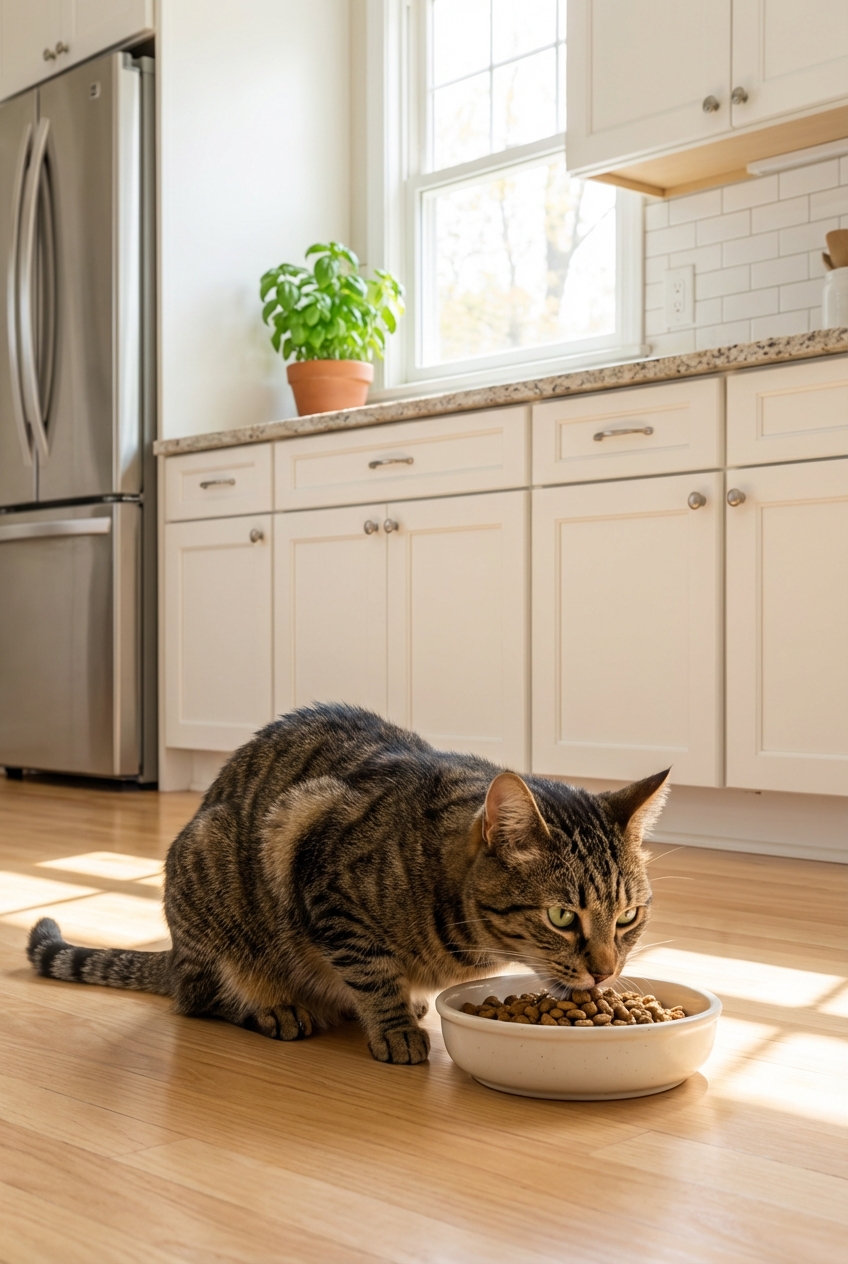
4) Try a different dish shape
Many cats do better with a wide, shallow dish. Narrow or deep bowls can be uncomfortable for some cats, and a stable dish can help reduce gulping. If your cat seems to hesitate at the bowl or eats “around the edges,” a different shape is an easy experiment.
5) Reduce multi-cat pressure
Competition is a huge speed-eating trigger.
- Feed cats in separate rooms with doors closed if needed.
- Use multiple feeding stations so one cat cannot guard resources.
- Keep mealtimes calm, consistent, and predictable.
6) Slow food changes
A sudden switch can cause vomiting that looks like fast-eating trouble. If you are changing diets, aim for a gradual transition over 7 to 10 days, unless your veterinarian instructs otherwise.
7) Hairball support
Hairballs can worsen after-meal vomiting. Helpful steps include:
- Daily brushing, especially for long-haired cats
- Vet-approved hairball gels or fiber supplements when appropriate
- Hydration support through wet food or a water fountain
Tip: If hairballs or hairball-like vomiting is happening more than about once a month, it is worth a vet chat. Repeated vomiting should not be brushed off as “just hairballs.”
8) Elevated feeders (only for some cats)
If you suspect regurgitation (food comes up easily with little effort), an elevated bowl may help some cats, especially if an esophageal issue is involved. It is not a universal fix, so if regurgitation is frequent, discuss the setup with your veterinarian.
After your cat throws up
If your cat vomits once and then seems normal, you can usually take a calm, conservative approach.
- Pause food briefly: remove food for about 2 to 3 hours, then offer a small portion.
- Important exceptions: do not fast kittens. Use extra caution and call your vet for individualized advice if your cat has diabetes, a history of not eating well, liver concerns, or any condition where regular calories matter.
- Offer water, but do not force drinking. Some cats do better with a fountain or a fresh bowl placed away from food.
- Clean and observe: note timing (how soon after eating), what it looked like (undigested food vs digested), and frequency.
If your cat keeps vomiting, do not keep “re-testing” with more food. That is a sign to call your veterinarian.
Call the vet right away
Please seek veterinary care promptly if you notice any of the following:
- Repeated vomiting (more than 2 to 3 times in 24 hours)
- Blood (red or coffee-ground appearance). Coffee-ground vomit can indicate digested blood.
- Lethargy, hiding, or weakness
- Refusing food for more than 24 hours (or any refusal in kittens)
- Diarrhea with vomiting
- Signs of dehydration (tacky gums, sunken eyes, weakness)
- Pain (hunched posture, growling when picked up, tense belly)
- Possible foreign body exposure (string, ribbon, toys, hair ties)
- Weight loss or vomiting that becomes a routine pattern
- Kittens, seniors, or cats with chronic disease (kidney disease, diabetes, hyperthyroidism) should be assessed sooner
One practical tip: take a quick photo of the vomit and write down what and when your cat ate. That information is genuinely useful for your veterinary team.
Long-term prevention
Build a slow-eating routine
- Small meals at set times
- Slow feeder or puzzle setup
- Quiet feeding space
- Separate feeding for multi-cat homes
Support digestion
If your cat is otherwise healthy, your veterinarian may recommend a diet tweak (for example, a sensitive stomach formula) or a targeted probiotic. Avoid random supplement stacking. Cats are small, and dosing matters.
If this is new, get it checked
If your cat suddenly starts scarfing and vomiting, I always encourage a quick vet visit. A change in appetite and vomiting pattern can be a clue to pain, thyroid disease, parasites, or gastrointestinal inflammation.
What your vet may do
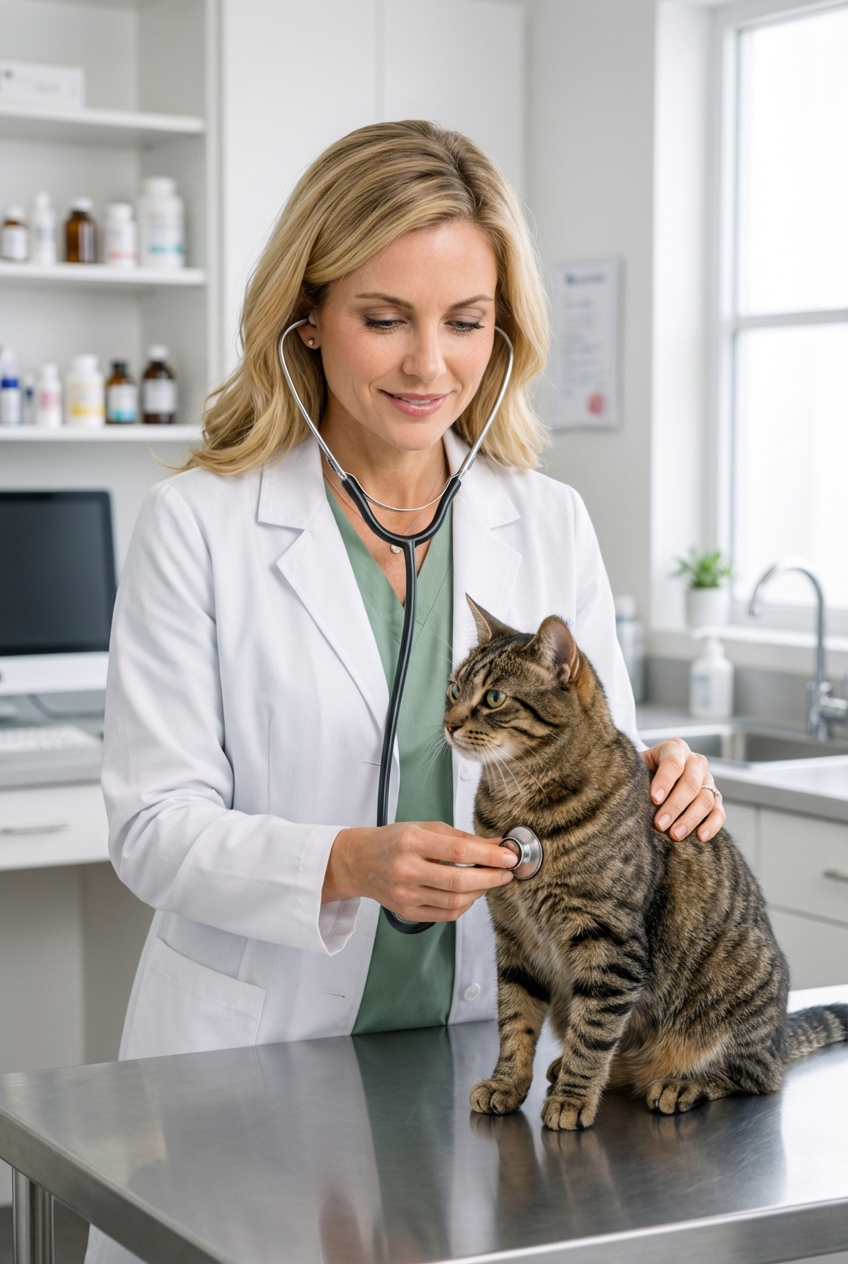
Depending on your cat’s age and symptoms, your vet may recommend a physical exam and a few basics like a fecal test, bloodwork, and sometimes X-rays or ultrasound to look for inflammation or a blockage. Getting answers early can prevent a small issue from turning into a bigger one.
Quick checklist
- Try smaller meals today
- Use a slow feeder, puzzle feeder, or lick mat
- Spread food out on a large surface
- Feed cats separately if competition is present
- Brush regularly and discuss hairball management with your vet
- Watch for red flags and call your veterinarian when in doubt
Many fast-eating vomiters improve with slower feeding strategies, often within about a week. If the vomiting continues, becomes frequent, or your cat seems “off,” trust your instincts and get them checked. You are not overreacting. You are protecting your cat.