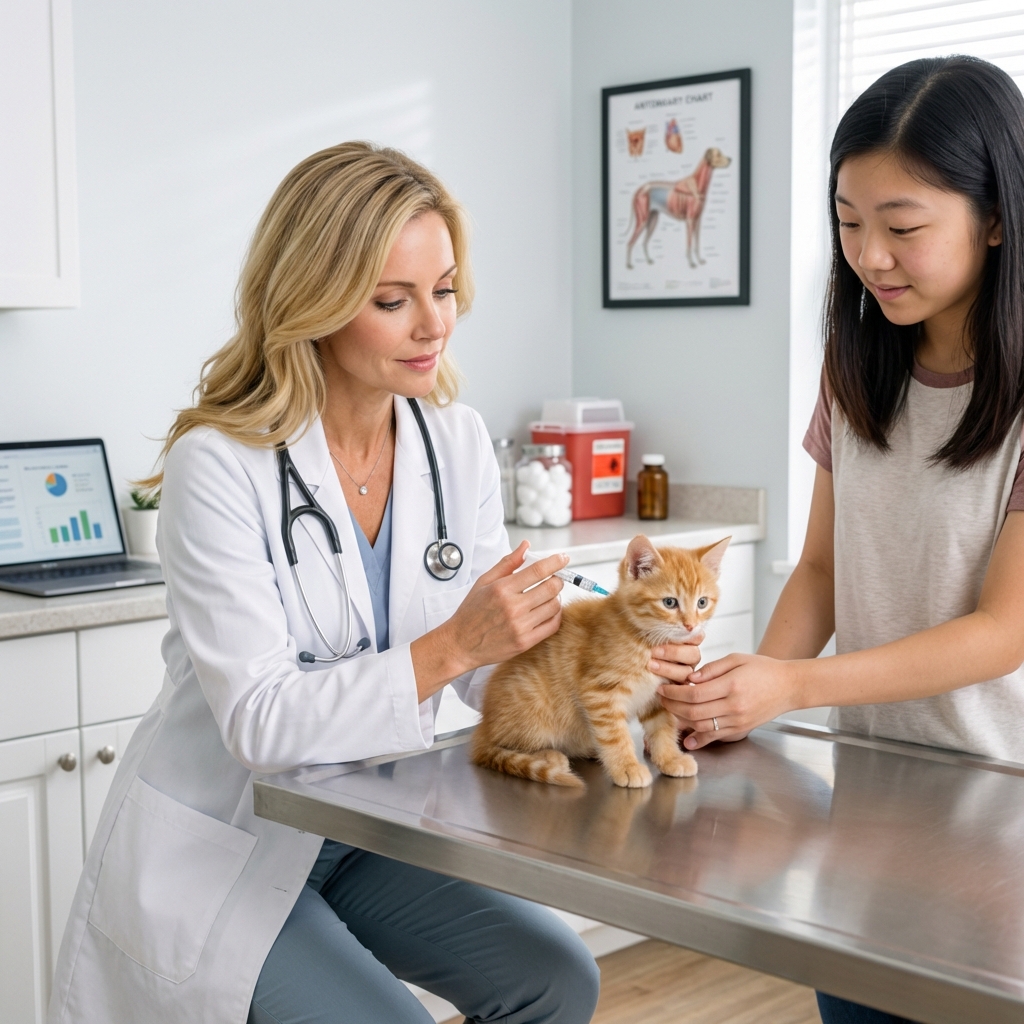
Confused about cat vaccines? Learn core shots (FVRCP, rabies), lifestyle vaccines like FeLV, kitten timelines, adult booster intervals, indoor-cat needs, and...
Article
•
Designer Mixes
Cat Vaccinations Guide

Shari Shidate
Designer Mixes contributor
As a veterinary assistant here in Frisco, Texas, I have seen one simple truth play out again and again: vaccines save cats from suffering. The tricky part is that vaccine plans are not one-size-fits-all. Your cat’s age, lifestyle, health history, and even local risk factors all matter.
This guide walks you through the vaccinations most cats need, what to expect at the appointment, and how to build a plan with your veterinarian that feels clear, practical, and evidence-based.
Why vaccines matter for cats
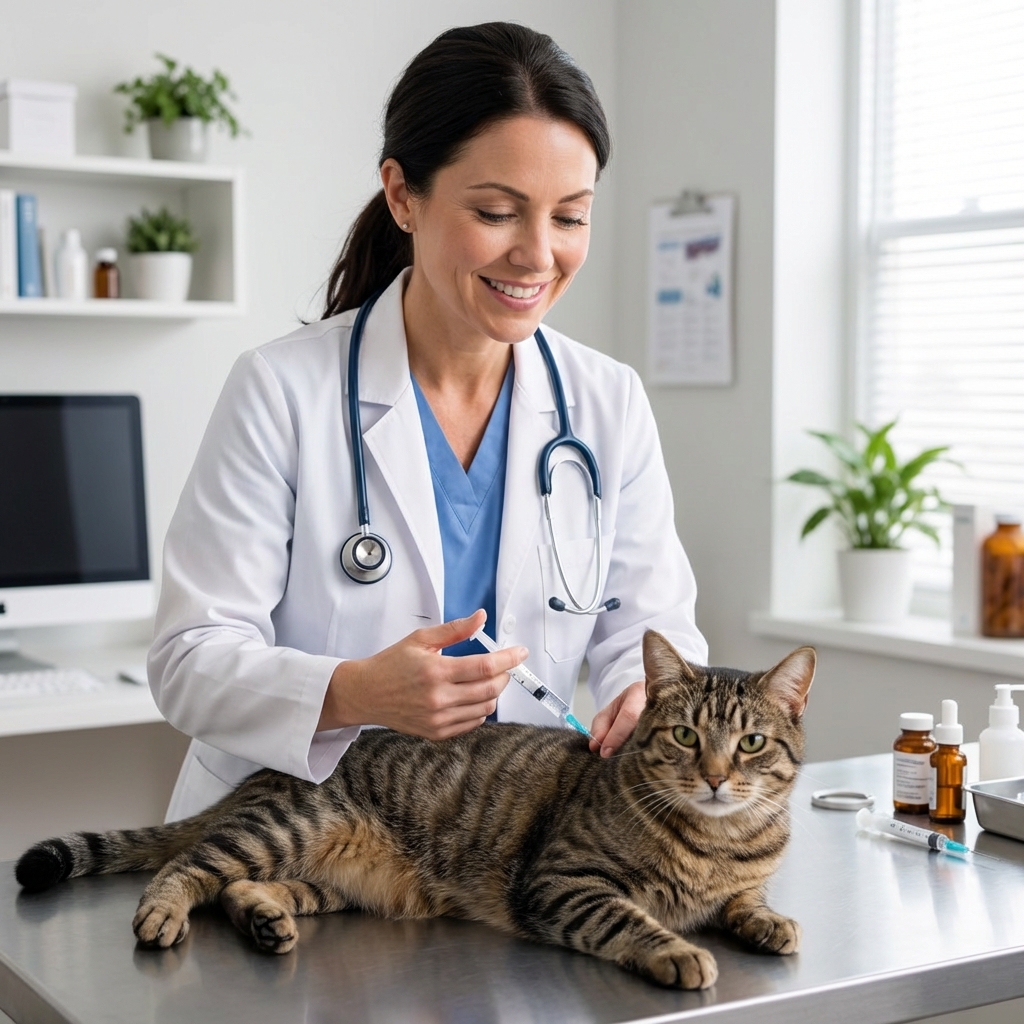
Vaccines train your cat’s immune system to recognize dangerous viruses and bacteria before an actual infection occurs. That means your cat is far less likely to get sick, and if they do get exposed, their illness is often milder.
Vaccines also protect the community. Some infections spread quickly in multi-cat households, shelters, and boarding facilities. Preventing outbreaks protects kittens, seniors, and cats with weaker immune systems.
Core vs non-core vaccines
You will often hear vaccines described as core or non-core.
- Core vaccines are recommended for nearly all cats by major veterinary guideline groups, because the diseases are widespread, serious, and prevention is highly effective.
- Non-core vaccines are recommended based on risk, such as outdoor access, exposure to other cats, travel, or certain local disease patterns.
Your veterinarian will help match the vaccine list to your cat’s real-world exposure risk, and they can individualize even “core” recommendations when a cat’s health situation calls for it.
Core vaccines for most cats
FVRCP (feline viral rhinotracheitis, calicivirus, panleukopenia)
FVRCP is often called the “distemper combo” for cats. (In cats, “distemper” refers to panleukopenia, not canine distemper.) It protects against three major illnesses:
- Herpesvirus (FVR) and calicivirus: frequent causes of upper respiratory infections that can lead to painful mouth ulcers, fever, and, in some cases, more serious complications.
- Panleukopenia: a highly contagious, potentially fatal virus, especially in kittens.
This vaccine is a cornerstone for kittens and adult cats, including indoor-only cats. Panleukopenia is especially hardy in the environment and can be carried in on shoes and surfaces. The respiratory viruses (herpesvirus and calicivirus) can also spread through contaminated objects and close contact, although they generally do not persist as long in the environment as panleukopenia.
Rabies
Rabies is fatal once symptoms begin, and it is a public health concern because it can infect people.
Rabies vaccination requirements vary by state and city, so it is worth checking your local rules. Many areas require rabies vaccination for cats, even for cats who live indoors.
Your clinic may use a 1-year or 3-year rabies vaccine depending on local regulations, your cat’s medical history, and the vaccine product used.
Common non-core vaccines
FeLV (feline leukemia virus)
FeLV spreads primarily through close contact with infected cats, including grooming, shared bowls, and bites. It can suppress the immune system and contribute to cancers and chronic illness.
Many veterinarians recommend:
- FeLV vaccination for all kittens, because young cats are more vulnerable to infection.
- Continued FeLV vaccination for at-risk adults, such as cats who go outdoors, live with an FeLV-positive cat, or have frequent contact with new cats.
Testing for FeLV is typically recommended before starting the series, especially for adult cats with unknown history.
Bordetella and Chlamydia
These vaccines are less commonly used and tend to be situation-dependent. They may be recommended for specific scenarios such as shelters, boarding, or outbreak situations in households with recurring respiratory disease problems.
Typical vaccine schedule
Exact timing varies by clinic and vaccine type, but here is a common framework you can discuss with your veterinarian.
Kittens
- FVRCP: start around 6 to 8 weeks, then boosters every 3 to 4 weeks until at least 16 weeks. Some kittens benefit from a final booster at 18 to 20 weeks depending on risk (for example, shelter exposure).
- Rabies: often given around 12 to 16 weeks (varies by local law and product).
- FeLV: commonly started around 8 to 12 weeks with a booster 3 to 4 weeks later.
Adults
- Booster at 1 year after the kitten series (or after an initial adult series).
- Then every 1 to 3 years depending on vaccine type, lifestyle risk, and your veterinarian’s recommendation.
If you adopted an adult cat and you are unsure of vaccine history, your veterinarian may treat them as unvaccinated and start an appropriate series.
What to expect at the appointment
Most vaccine visits are pretty straightforward, and knowing the flow ahead of time can help you feel prepared.
- Quick history check: We will ask about indoor or outdoor habits, contact with other cats, travel, boarding, and any prior reactions.
- Physical exam: Your veterinarian will listen to the heart and lungs, check eyes, ears, mouth, and weight, and make sure your cat is healthy enough for vaccines that day.
- Vaccine plan: Your vet will recommend core vaccines, and any non-core vaccines that match your cat’s risk. Vaccine products can differ (for example, adjuvanted vs non-adjuvanted options for certain vaccines), and your veterinarian may choose based on your cat’s medical history and safety considerations.
- Vaccines given: Many clinics give vaccines in specific locations on the body for consistency and safety tracking.
- After-care and timing: You will get a printout of what was given, what is due next, and what side effects to watch for.
If your cat gets anxious at the vet, ask ahead of time about pre-visit calming options. It can make the whole visit smoother.
Indoor cats and vaccines
I hear this question all the time, and it is a fair one. Indoor cats generally have lower exposure risk, but it is not zero.
- Panleukopenia virus can be carried in on shoes and surfaces.
- Upper respiratory viruses can come in through new pets, visitors, or grooming and boarding situations.
- Rabies exposure can happen if a bat gets inside the home, which is not unheard of in Texas.
Most veterinarians still recommend core vaccines for indoor cats, with a schedule tailored to risk and comfort level.
Vaccine safety
Most cats do very well after vaccination. Mild, short-lived side effects can happen, including:
- Sleepiness for 24 hours
- Mild soreness where the vaccine was given
- Low appetite for a day
- A small lump at the injection site that slowly shrinks over a few weeks
Call your veterinarian promptly if you notice:
- Facial swelling, vomiting, hives, or trouble breathing
- Severe lethargy that lasts longer than a day
- An injection-site lump that is growing after 1 month, is larger than about 2 cm, or persists for more than 3 months (many clinics use this “3-2-1” guideline as a helpful safety check)
Serious reactions are uncommon, but it is always better to ask quickly if something feels off. Your clinic would rather reassure you than have you worry at home.

How vets choose the right plan
Your veterinarian is balancing protection with practicality. The goal is to prevent disease while avoiding unnecessary vaccines.
Bring these details to your appointment:
- Indoor-only, outdoor, or supervised patio time
- Any new cats in the home, fostering, or frequent visitors with pets
- Boarding, grooming, travel, or shelter exposure
- Prior vaccine records if you have them
- History of vaccine reactions or chronic illness
If your cat has health challenges, your veterinarian may adjust timing, choose specific vaccine types, or space vaccines out to reduce stress. Cats who are pregnant, FIV-positive, or on immune-suppressing medications may need extra planning and, in some cases, delayed or modified vaccination choices.
Less stressful vaccine visits
Vaccines protect health, but the experience matters too. A calmer cat means a safer, easier appointment for everyone.
- Use a sturdy carrier and leave it out at home with a cozy blanket so it feels familiar.
- Practice short car rides if your cat panics in the car.
- Ask about fear-free options like pre-visit calming medication or pheromone sprays.
- Schedule smart: quieter times of day can mean less noise and waiting.
Bottom line
A proven cat vaccination plan is not about doing “everything.” It is about doing the right things, at the right time, for the cat in front of you.
If you are unsure what your cat needs, start with a vet visit and ask for a written vaccine schedule you can keep on your fridge. That one step takes a lot of the uncertainty out of cat ownership, and it gives your cat a healthier, safer life.