Cats can be picky drinkers. Learn normal water needs, warning signs, and step-by-step ways to boost hydration with bowls, fountains, clean water, and wet food.
Article
•
Designer Mixes
Cat UTI Treatment at Home: What Helps and When to Go to the Vet

Shari Shidate
Designer Mixes contributor
If you are googling “cat UTI treatment at home,” I want you to take a breath first. I am Shari, a veterinary assistant in Frisco, Texas, and I have seen how quickly urinary problems can go from uncomfortable to dangerous in cats. The good news is that there are safe, practical things you can do at home to support your cat. The important truth is that some urinary signs are emergencies, and home care is not enough.
UTI vs urinary issue
Many pet lovers use “UTI” to describe any litter box issue, but in cats it is often more complicated. Cats can have:
- Bacterial urinary tract infection (UTI): true infection is more common in older cats, cats with diabetes, kidney disease, or other underlying issues.
- Feline idiopathic cystitis (FIC): bladder inflammation often triggered by stress, with no bacterial infection found.
- Crystals, stones, or urethral plugs: crystals can show up in urine without causing signs, but stones and plug material can irritate the bladder and, in some cats, cause blockage.
- Urethral obstruction (blocked cat): a life-threatening emergency, especially in male cats.
Because the at-home plan is different depending on the cause, your best next step is usually a vet visit for a urine test. But you can still do supportive care at home right away while you arrange help, as long as your cat is stable and urine is coming out.
Go to the vet today
Home care is not appropriate if you see any of the following. These can signal a blockage or severe pain.
- Straining to urinate with little or no urine produced
- Frequent trips to the litter box with minimal output
- Crying out, yowling, hiding, or sudden aggression due to pain
- Blood in urine plus lethargy, vomiting, or refusing food
- A firm, swollen belly
- Male cat with straining or repeated attempts to pee: treat this as urgent and plan for same-day care, and go to an ER immediately if there is little or no urine, vomiting, weakness, or a painful abdomen
Why the urgency: a blocked cat can develop dangerous electrolyte imbalances and kidney injury within 24 to 48 hours, and sometimes sooner.
Also, there are safe pain medications for cats. If your cat looks painful, please do not wait it out at home.
What you can do at home
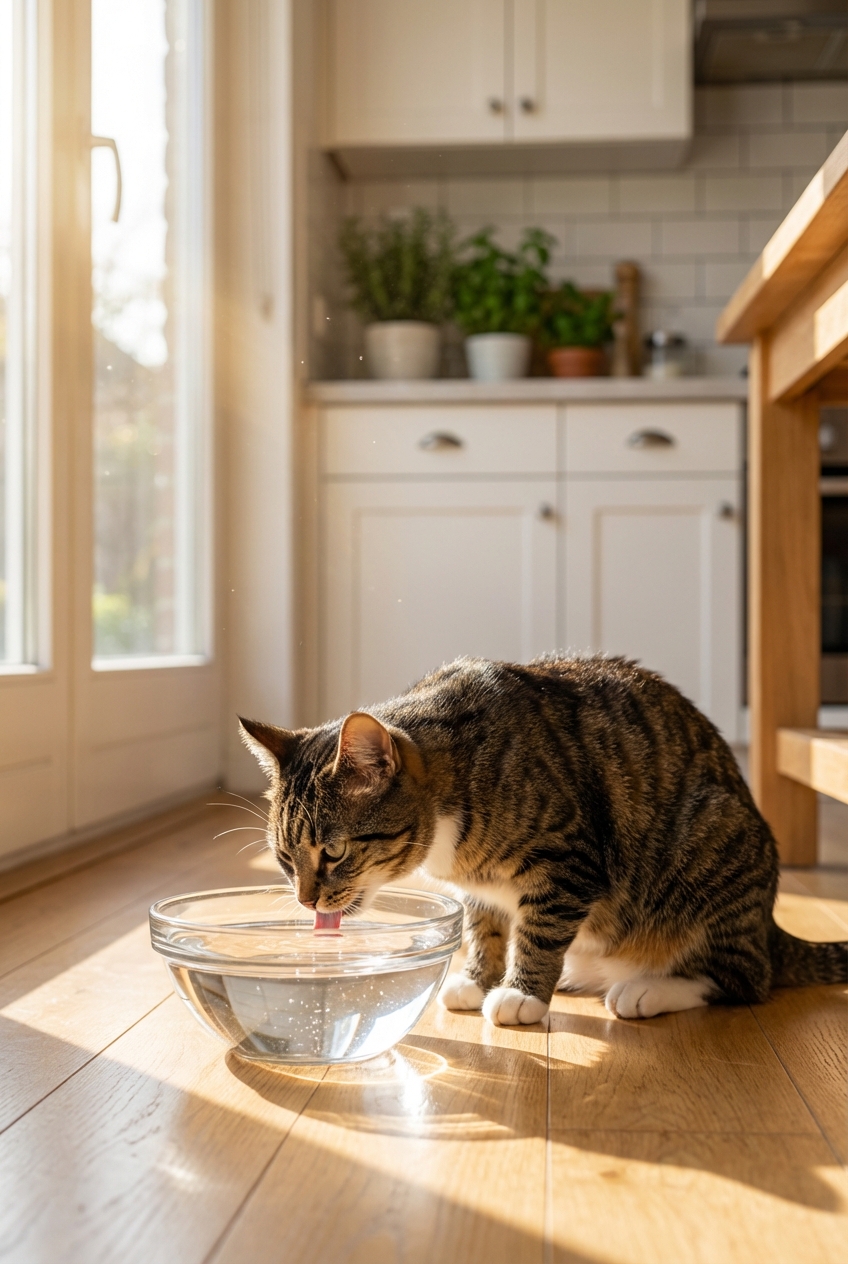
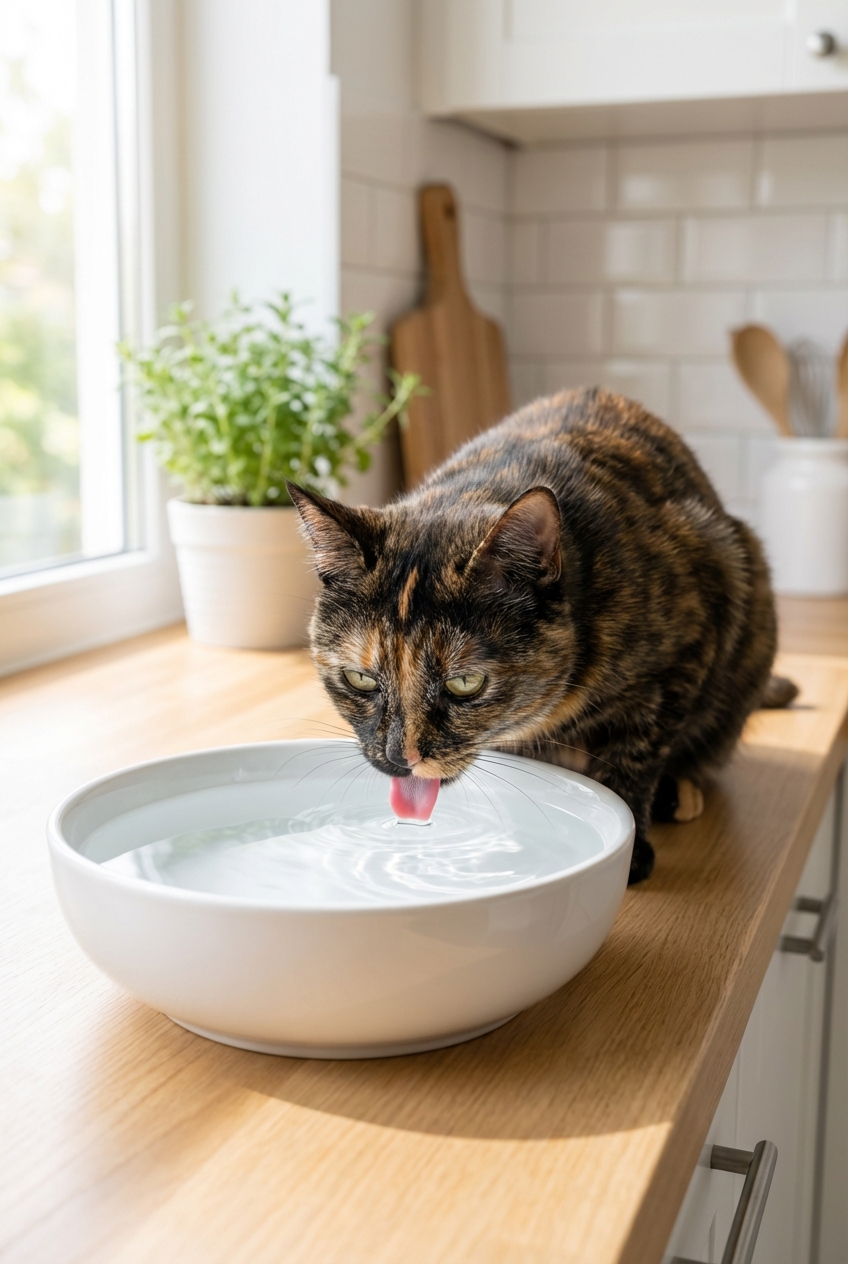
1) Increase water intake
Hydration is one of the most helpful home strategies for many urinary issues because it dilutes urine and encourages more frequent emptying of the bladder.
- Switch to wet food if your cat will eat it. Even a partial switch helps.
- Add water to food: start with 1 to 2 teaspoons and gradually increase if your cat accepts it.
- Use a cat water fountain: many cats drink more with moving water.
- Offer multiple water stations: quiet, separate locations, away from litter boxes.
- Try wider bowls: some cats dislike their whiskers touching the sides.
If your cat is not drinking at all, seems weak, or is vomiting, do not try to “out-hydrate” a serious condition at home. That is a vet visit.
2) Lower stress
Stress is a major factor in feline idiopathic cystitis. Lowering stress can reduce flare-ups and may shorten episodes.
- Keep your cat’s routine consistent: feeding times, play, and quiet rest.
- Provide a safe space: one room with food, water, litter, bed, and hiding spots.
- Use gentle enrichment: short play sessions with wand toys, puzzle feeders, window perches.
- Consider feline pheromones: a diffuser in the main area can help some cats relax.
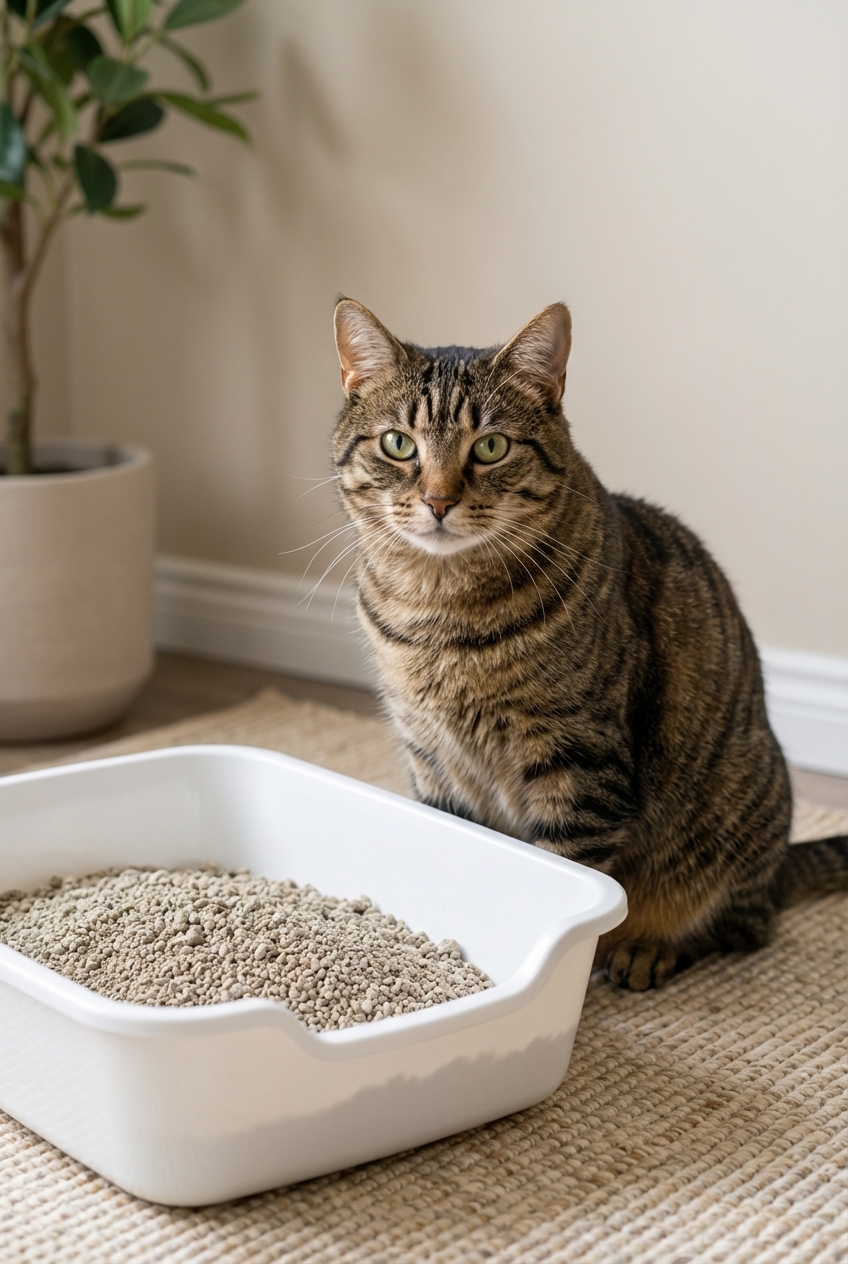
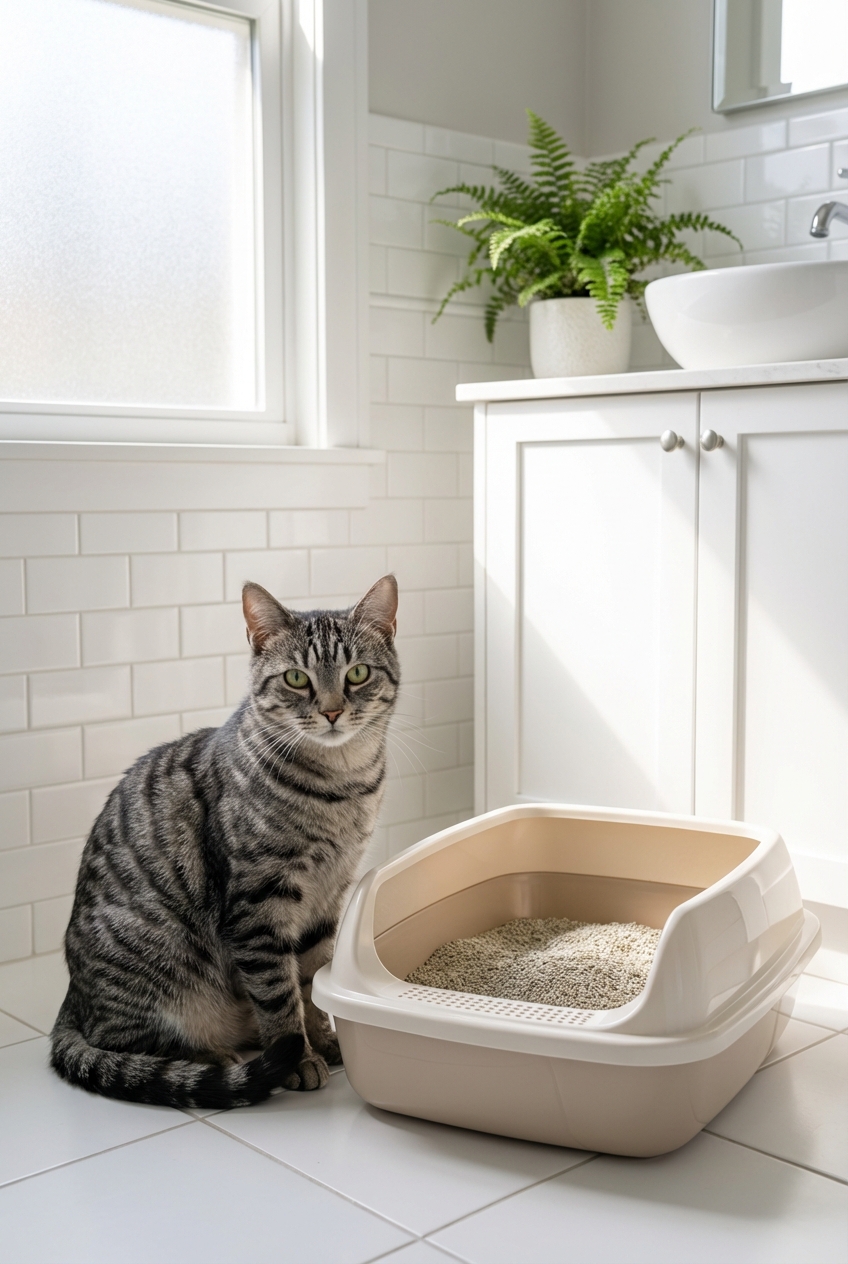
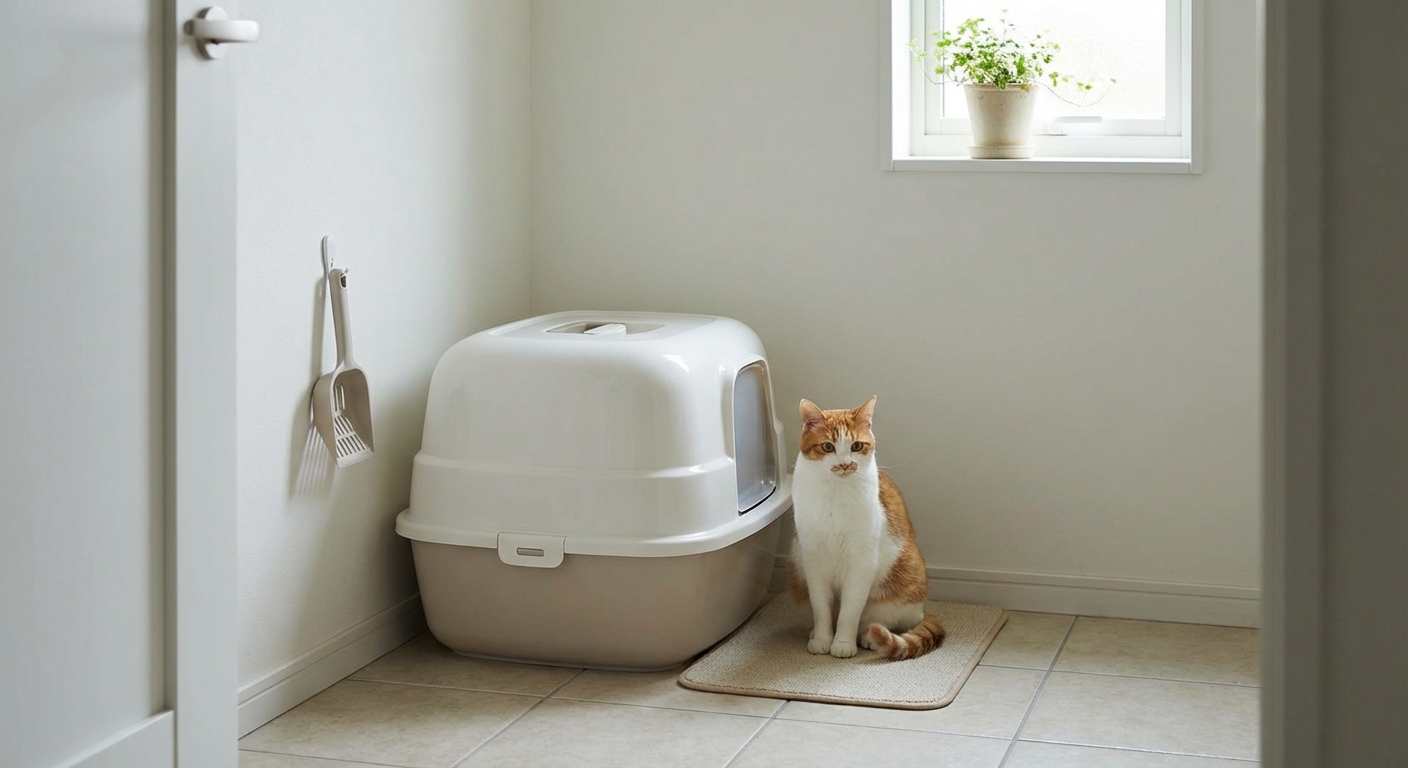
3) Make the litter box easy
When urination hurts, cats can start associating the litter box with pain and may avoid it. Help your cat feel safe and comfortable.
- Keep boxes very clean: scoop at least once daily, more if possible.
- Offer an additional box: the common rule is 1 box per cat plus 1 extra.
- Choose unscented litter: strong scents can be a turn-off for sensitive cats.
- Use a low-entry box if your cat is older or painful.
4) Track symptoms
This helps your vet and helps you notice worsening signs early.
- How often your cat attempts to urinate
- Whether urine is produced each time
- Any blood, clumps, or unusual odor
- Appetite, water intake, energy level
- Vomiting, hiding, or crying out
If you have multiple cats and you are not sure who is struggling, it is OK to temporarily separate them with their own litter boxes so you can confirm who is urinating. Some owners also use a pee pad or a small layer of non-absorbent litter temporarily to better see output.
If possible, collect a fresh urine sample in a clean container and refrigerate it until your appointment (ask your clinic for exact timing and instructions). A home sample may help with an initial screening, but your clinic may still need a sterile sample for culture.
Do not delay emergency care to collect a sample if your cat may be blocked.
What the vet will do
Knowing what to expect can make the decision to go in a little easier. Depending on your cat’s signs, your vet may:
- Ask detailed questions about litter box habits, stress, diet, and water intake
- Check for dehydration and pain, and palpate the bladder
- Run a urinalysis to look at concentration, blood, inflammation, crystals, and bacteria
- Recommend a urine culture in some cases, especially recurrent signs, older cats, or suspected infection
- Do x-rays or ultrasound if stones are a concern
- Run bloodwork if there is concern for kidney involvement, dehydration, or a systemic issue
If there is any concern for obstruction, they will treat it as an emergency and focus on restoring urine flow and stabilizing your cat.
What not to do
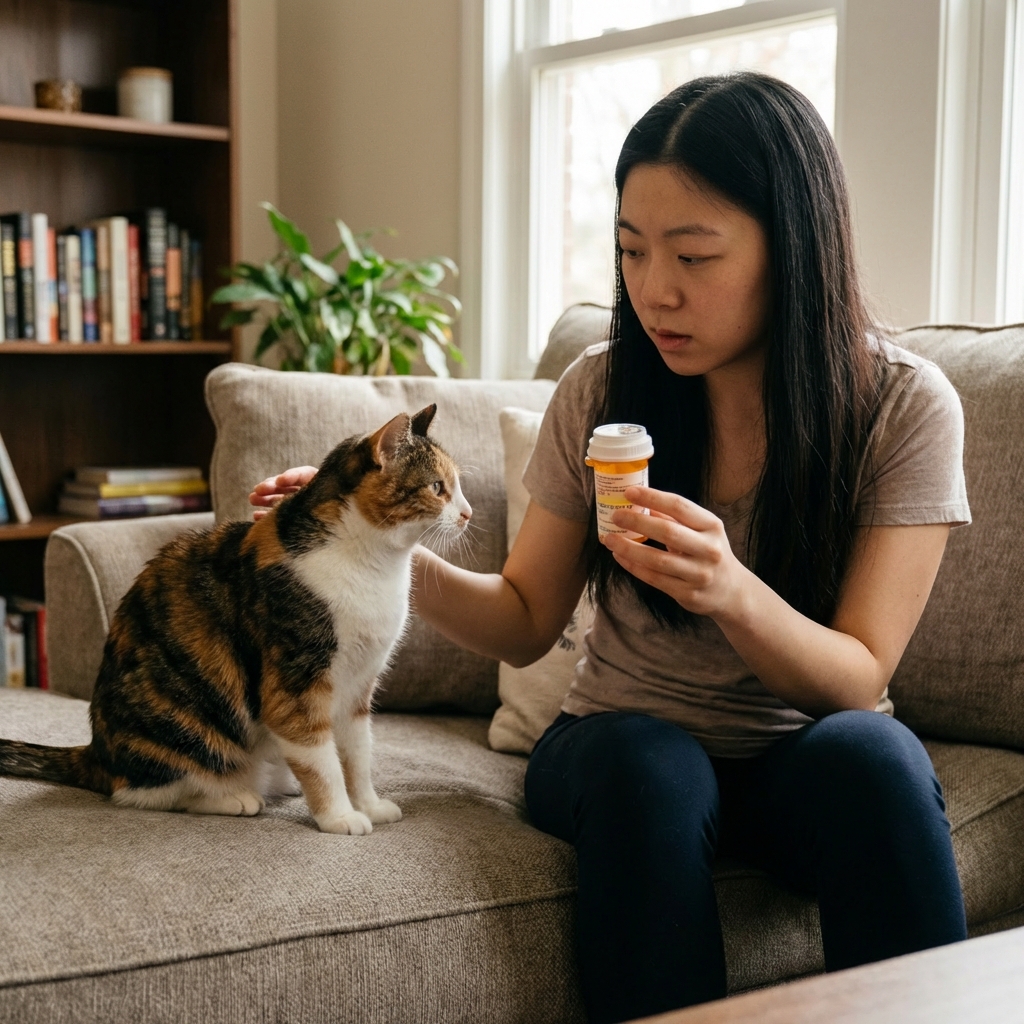
- Do not give human pain meds like ibuprofen, acetaminophen, aspirin, or naproxen. These can be toxic to cats.
- Do not give leftover antibiotics or someone else’s prescription. Wrong drug and wrong dose can worsen outcomes and delay the correct diagnosis.
- Do not assume it is “just a UTI” if your cat is straining. In cats, straining can be inflammation, stones, plug material, or blockage.
- Do not restrict water to reduce accidents. Concentrated urine makes urinary issues worse.
- Avoid essential oils around cats unless your veterinarian specifically approves. Cats are very sensitive to many oils.
Vet-guided home options
These are not DIY treatments, but they are commonly used in urinary plans and may be appropriate once your cat has been evaluated.
- Prescription urinary diets that help dilute urine and manage minerals that contribute to stones and plug material.
- Pain control designed for cats, plus medications to reduce urethral spasm if needed.
- Stress support strategies for FIC, sometimes including targeted supplements.
- Antibiotics only when a bacterial infection is confirmed or strongly suspected, ideally supported by culture in recurrent cases.
If your cat has recurrent urinary signs, ask your veterinarian whether urine culture, imaging (x-ray or ultrasound), or bloodwork is appropriate to look for stones or underlying disease.
Prevention tips
Once your cat is feeling better, prevention becomes the long game. These habits help many cats have fewer flare-ups.
- Prioritize moisture: wet food, water added to meals, fountains, and multiple water stations.
- Weight management: overweight cats are at higher risk for urinary and inflammatory issues.
- Daily play: even 5 to 10 minutes twice a day reduces stress and supports a healthy routine.
- Stable environment: slow introductions for new pets, multiple resources in multi-cat homes (food, water, litter, perches).
- Regular vet checks, especially for senior cats.
Warm reminder: If your cat is straining to urinate, acting painful, or producing little to no urine, treat it like an emergency until proven otherwise.
At-home checklist
- Confirm urine is actually coming out
- Switch to wet food and add extra water
- Provide multiple water bowls or a fountain
- Clean, low-stress litter box setup
- Reduce stress and keep routine steady
- Call your vet for a same-day plan if symptoms persist longer than 12 to 24 hours, or sooner if worsening