Cat peeing on the bed isn’t spite. Learn the most common medical and stress-related causes, how to reset the litter box routine, clean urine properly, and ...
Article
•
Designer Mixes
Cat Urinates on the Bed: Care and Training Tips

Shari Shidate
Designer Mixes contributor
When a cat urinates on the bed, it feels personal. But in my experience as a veterinary assistant, it is rarely “spite.” It is your cat communicating a problem, and your bed is often a soft, comforting place that smells strongly like you. The good news is that most bed-peeing cases improve a lot once you tackle the cause and reset the litter box routine.

This guide walks you through what to do today, what to ask your vet, how to clean correctly, and how to retrain litter habits in a way that is realistic and kind.
Note: This article is for general information and does not replace veterinary diagnosis or treatment.
First, rule out a medical issue
If your cat is suddenly urinating on the bed, assume a health problem until proven otherwise. Urinary conditions can become urgent quickly, especially in male cats.
Also, even if your cat only pees on the bed (and nowhere else), it can still be medical. Pain, urgency, and negative litter box associations can all funnel accidents toward soft surfaces.
Call your vet promptly if you notice
- Straining to pee, crying in the litter box, or frequent trips with little output
- Blood-tinged urine or a notable change in urine odor (especially along with other symptoms)
- Urinating outside the box plus excessive licking of the genital area
- Changes in thirst, appetite, or weight
- Accidents that began suddenly in an adult cat who was previously reliable
Emergency red flags
Go to an ER immediately if your cat cannot pass urine, is straining with no urine produced, is lethargic, vomiting, or has a painful, firm belly. A urinary obstruction is life-threatening.
Important nuance: some male cats with an obstruction may pass a few drops and still be in trouble. If you are seeing repeated, unproductive trips or only tiny amounts, treat it as urgent.
Common medical causes your veterinarian may check
- Feline lower urinary tract disease (FLUTD), a broad category of painful urinary signs
- Feline idiopathic cystitis (FIC), often stress-related inflammation (a very common cause in young to middle-aged cats)
- Urinary crystals or stones
- Urinary tract infection (UTI) (true bacterial UTIs are less common in younger cats and more common in seniors or cats with underlying issues)
- Kidney disease or diabetes (more likely with increased thirst and larger urine clumps)
- Arthritis in older cats, making box entry painful
Most clinics will recommend a urinalysis, and sometimes a urine culture, bloodwork, and imaging depending on your cat’s history.
Urine sample tips (if your clinic asks)
- Many clinics can provide a collection kit, or they can collect a sample in-hospital.
- At home, your vet may suggest non-absorbent litter (or clean, empty box), then transferring urine into a clean container.
- If you collect at home, ask how quickly they want it delivered, since timing can affect results.

Urine vs. marking
Owners often ask, “Is my cat peeing or spraying?” The pattern can give helpful clues.
- Urinating is usually a squat with a larger puddle, often on soft surfaces like bedding, laundry, rugs, or bathmats.
- Spraying is typically standing with a raised tail, backing up to a vertical surface, leaving a smaller amount of urine.
Both can be stress-related. Spraying is often linked to territorial and social stress (including conflict with other pets or outdoor cats). Squatting on the bed frequently points to discomfort, litter box aversion, urgency, or a strong preference for soft, absorbent materials.
Why cats target beds
A bed is warm, soft, and saturated with your scent. For a cat who feels anxious or uncomfortable, that combination can be powerfully reinforcing.
Common triggers
- Litter box dislike (box too small, dirty, covered, hard to access, or placed near noise)
- Litter preference changes (scented, dusty, rough texture)
- Stress (new baby, new pet, guests, construction, moving, schedule changes)
- Conflict with another cat (blocking access to the box, staring, ambushing)
- Negative box association after a painful urination episode
- Too few boxes in multi-cat homes
What to do now (24 hours)
1) Protect the bed
- Close bedroom doors if possible.
- Use a waterproof mattress protector and washable cover.
- Temporarily remove comforters and thick quilts that hold odor.
- If you must allow access, use a clean shower curtain or plastic tablecloth over bedding when you are not home. Soft surfaces invite repeat behavior.
2) Add a better option
Place an extra litter box near the bedroom or just outside the door. When cats are choosing the bed, convenience and safety often play a role.
3) Book the vet appointment
Even if you are also adjusting the litter setup, schedule the medical check. Treating the medical cause is the fastest route to long-term success.
How to clean the bed
Cats have sensitive noses. If any urine scent remains, the bed can become a learned bathroom location.
Use an enzymatic cleaner
- Choose a cleaner designed for cat urine (enzymes matter).
- Follow the label exactly and allow the proper dwell time.
- Avoid ammonia-based cleaners. They can smell similar to urine and may increase repeat incidents.
Cleaning bedding
- Rinse urine-soaked fabric with cool water first if possible.
- Wash with detergent plus enzymatic additive or pre-soak with enzymatic cleaner (per product instructions).
- Air dry once to ensure the smell is gone before using a dryer, since heat can set residue and make lingering odors harder to remove.
Cleaning the mattress
- Blot, do not rub.
- Saturate the spot with enzymatic cleaner so it penetrates to a similar depth as the urine.
- Cover with a clean towel and apply pressure to wick out moisture.
- Allow full drying time. A fan helps.

Litter box reset
These are the adjustments most commonly recommended by veterinary behaviorists, clinics, and experienced foster homes.
Number and location
- Use one box per cat, plus one extra.
- Place boxes in separate locations, not all lined up together.
- Avoid areas next to loud appliances, tight closets, or high-traffic hallways.
Box style and size
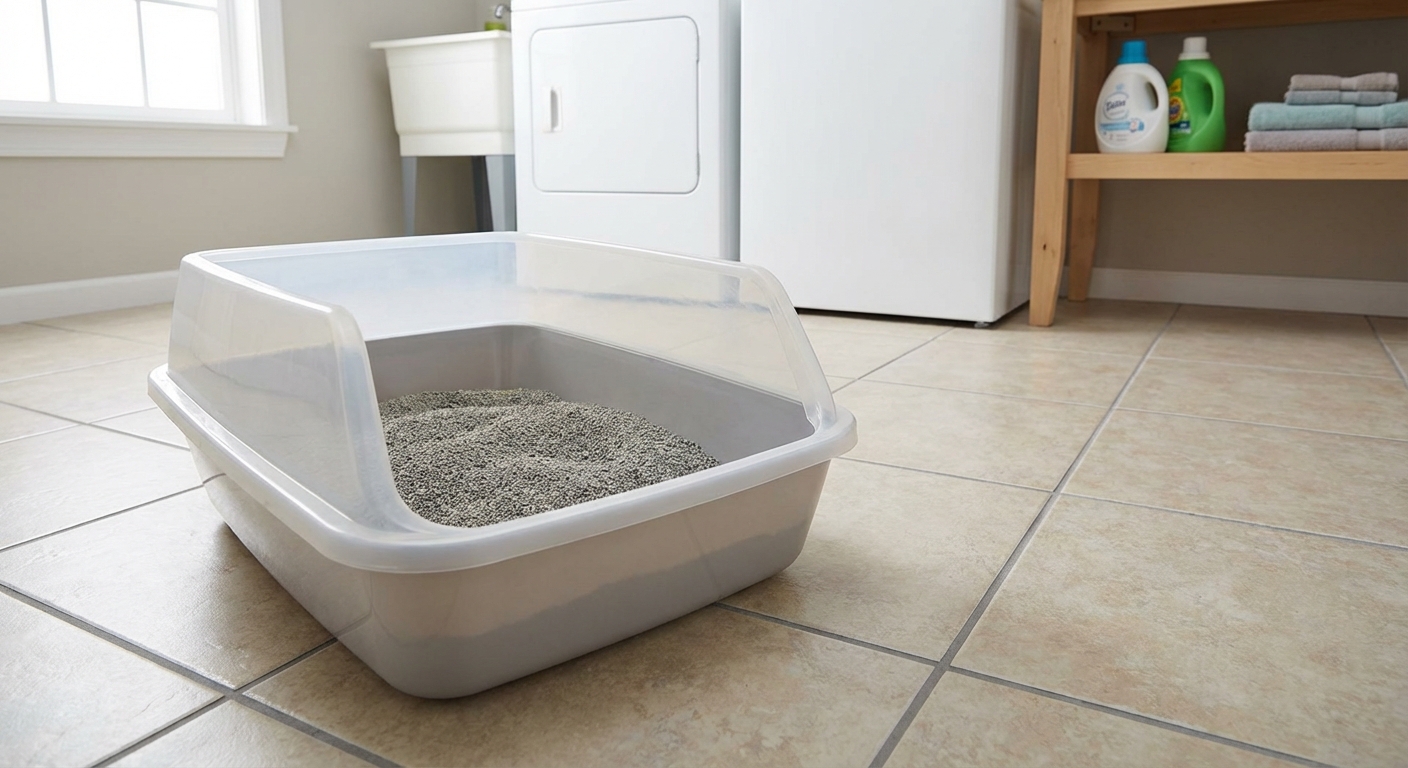
- Choose a box at least 1.5 times your cat’s body length (nose to base of tail).
- If your cat is older or arthritic, use a low-entry box.
- Covered boxes help some cats, but many prefer open boxes because they feel less trapped.
Litter type
- Start with unscented clumping litter with a fine, sand-like texture, which many cats prefer.
- If switching litter, do it gradually by mixing old and new over 7 to 10 days.
Cleaning routine
- Scoop at least once daily, ideally twice.
- Wash the box with mild soap and water regularly, then fully dry before refilling.
- Keep 2 to 3 inches of litter depth unless your cat shows a clear preference.
Training plan
Please skip punishment. Scolding, rubbing a cat’s nose in urine, or yelling often increases stress and makes the problem worse. Your cat needs clarity and comfort, not fear.
Step 1: Make the litter box the easiest yes
- Keep boxes spotless and easy to access.
- Use nightlights if your cat is hesitant in the dark.
- For anxious cats, place a box in a quiet safe-zone room.
Step 2: Use positive reinforcement
- When you see your cat use the box, calmly offer a small treat after they exit.
- Keep treats near the box so reinforcement is immediate.
Step 3: Address stress patterns
If accidents correlate with changes at home, think like your cat and stabilize the environment.
- Keep feeding times consistent.
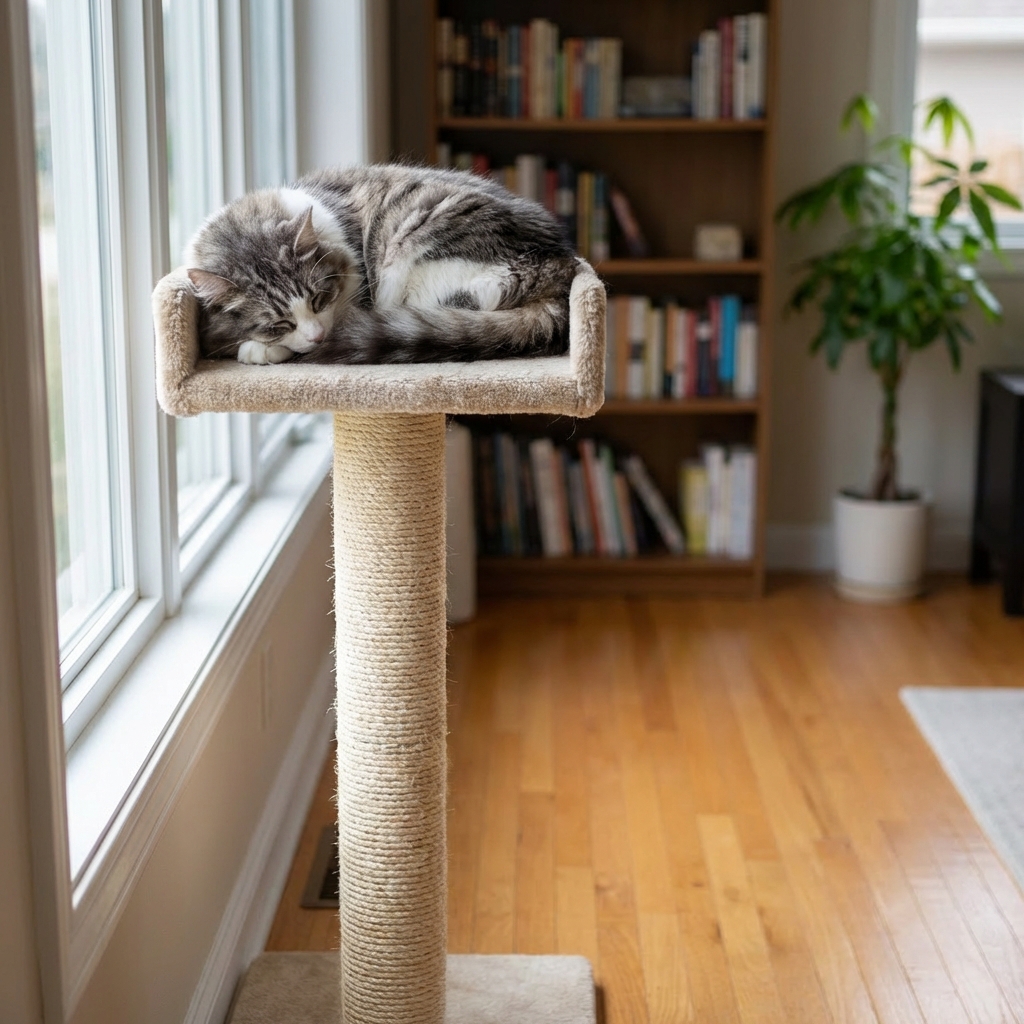
- Add vertical space like a cat tree or wall perch.
- Offer hiding spots, especially in multi-pet homes.
- Increase play sessions to 5 to 10 minutes, one to two times daily, especially before bed.
Step 4: Reduce cat-to-cat conflict
- Separate resources: multiple food stations, water bowls, and resting areas.
- Place litter boxes so one cat cannot guard access.
- Use slow reintroductions if tension is high.
What to avoid
- No punishment or scare tactics. They tend to increase anxiety and can worsen inappropriate elimination.
- Avoid strong deterrent sprays unless your vet or behavior professional recommends them. Many simply add more stress.
- Be cautious with essential oils. Some are toxic to cats, and even “pet-safe” products can be irritating. If you use any calming products, use cat-specific options and follow directions carefully.
Extra support options
If your vet rules out medical causes and you have optimized the litter setup, lingering bed-peeing can be driven by anxiety, learned preference, or FIC flare-ups.
- Pheromone diffusers can help some cats feel more secure in key rooms.
- Environmental enrichment is a first-line tool: predictable routine, play, climbing, scratching surfaces.
- Prescription anxiety medication may be appropriate in persistent cases, especially if your cat is also overgrooming, hiding, or showing increased aggression.
Work with your veterinarian on a plan that fits your cat’s health history. Behavior changes involve your cat’s nervous system, and it is OK to use medical tools when needed.
Special situations
Senior cats
- Ask your vet about arthritis and cognitive changes.
- Use low-entry boxes and place them on every floor of the home.
- Consider more frequent scooping since seniors may be extra sensitive to odor.
After a move or big household change
- Confine your cat to one calm room temporarily with food, water, and a box.
- Expand access slowly once litter use is consistent.
New kitten or newly adopted cat
- Start with a simple, quiet setup.
- Show them the box location after meals and naps.
- Use the same litter the shelter or breeder used at first, then transition slowly.
Quick checklist
- Vet check scheduled or completed, including urinalysis
- Know the red flags for obstruction, especially in male cats
- At least one box per cat plus one extra
- Unscented clumping litter, preferred texture
- Boxes in quiet, accessible, unguarded locations
- Scooping daily minimum
- Enzymatic cleaning of bedding and mattress
- Bedroom access temporarily restricted or bed protected
- Stress reduced with routine, play, and safe spaces
If you remember one thing, let it be this: bed-peeing is a solvable problem when you treat it as communication. Your cat is not trying to upset you. They are trying to cope.
When to get help
If your cat continues to urinate on the bed for more than 2 to 3 weeks after medical issues are addressed and litter changes are in place, ask your veterinarian for a referral to a qualified cat behavior professional.
- A board-certified veterinary behaviorist (DACVB) is the top credential.
- Certified consultants (for example, IAABC or other reputable certification bodies) can also be a great fit, especially when they collaborate with your vet.
Persistent elimination issues often require a tailored plan, and you do not have to figure it out alone.