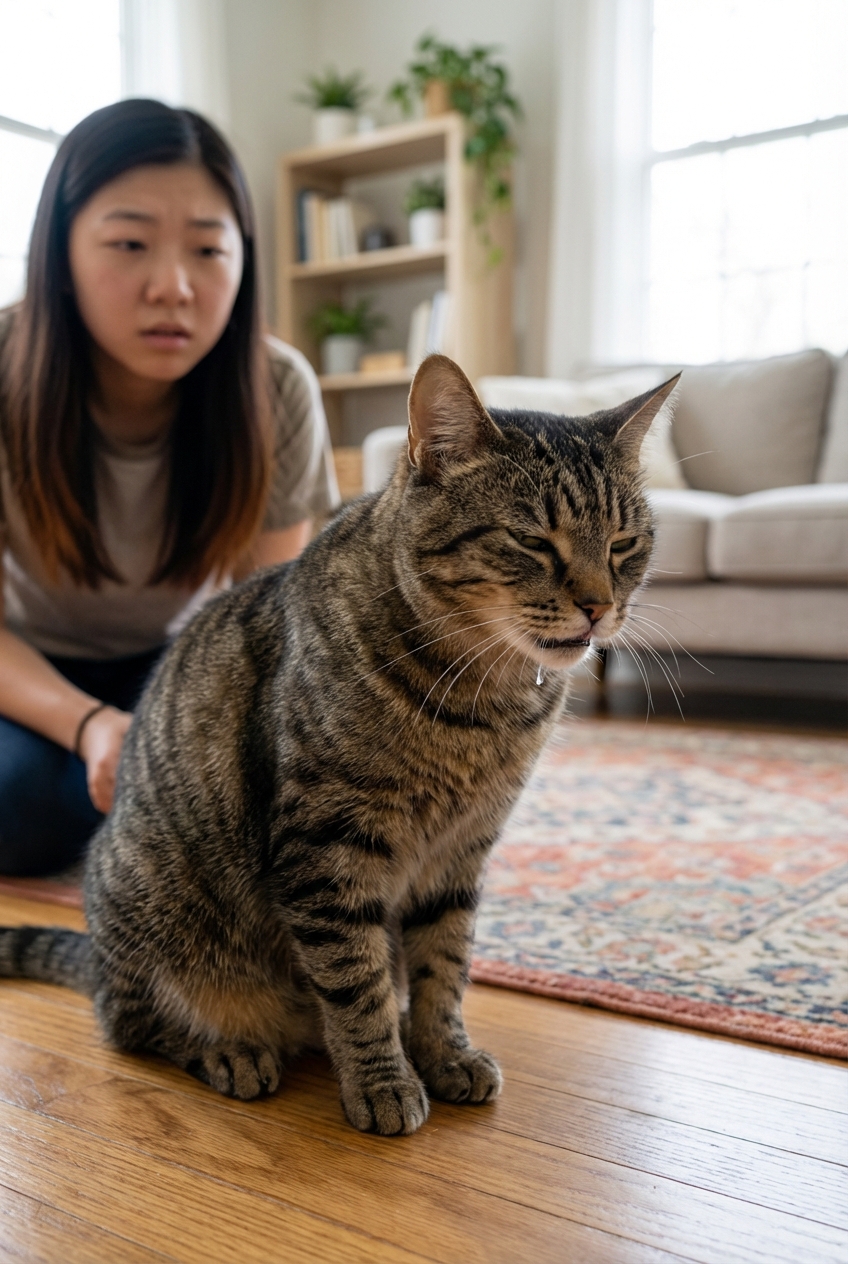
Yellow foam vomit is often bile from an empty or irritated stomach. Learn common causes, safe step-by-step home care, red-flag emergencies, and prevention tips.
Article
•
Designer Mixes
Cat Throwing Up Yellow Bile: What It Means

Shari Shidate
Designer Mixes contributor
Seeing your cat throw up yellow liquid can be alarming, especially when it seems to happen “out of nowhere.” The good news is that yellow vomit is often bile, and it can be triggered by something as simple as a long gap between meals. But sometimes it is a sign your cat needs veterinary care, especially if vomiting is frequent, your cat seems painful, or they are not keeping food and water down.
As a veterinary assistant, I like to think of yellow bile vomit as a clue. It can point us toward what the stomach and upper intestines might be doing, but it is not a diagnosis by itself. If you are worried, it is always reasonable to call your veterinarian. Online info cannot replace an exam.
What is yellow bile?
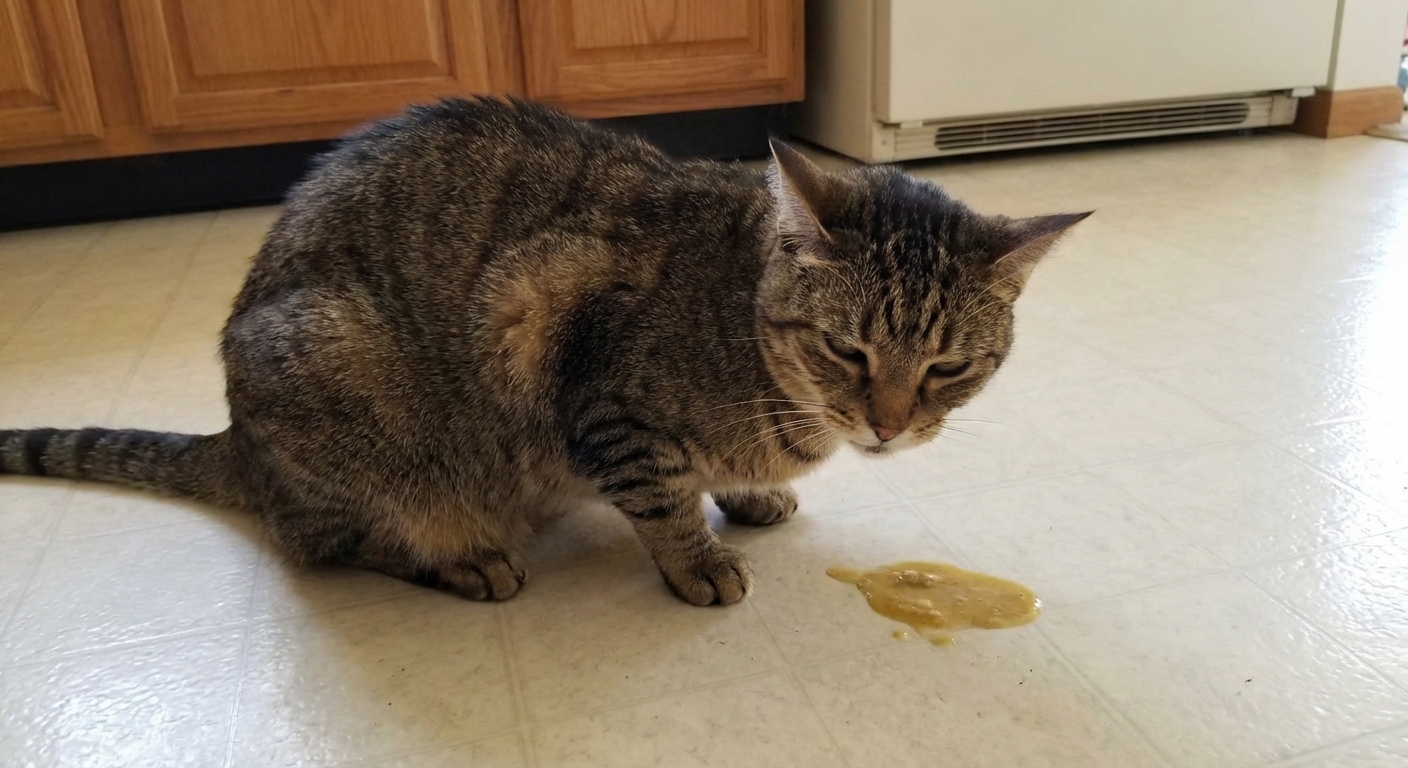
Bile is a yellow to yellow-green digestive fluid made by the liver and stored in the gallbladder. It normally enters the small intestine to help digest fats.
When a cat vomits and the vomit looks yellow, bile is a common reason. This can happen when the stomach is relatively empty, but bile can also show up with stomach irritation, reflux from the upper intestine, or other GI conditions. So think of it as a clue that helps narrow down the next best step.
Bile vomit can look:
- Bright yellow, mustard-yellow, or yellow-green
- Foamy or watery
- Small volume, sometimes mixed with clear fluid
Common causes
1) Empty stomach (hunger vomiting)
This is one of the most common patterns: your cat vomits yellow foam early in the morning or long after a meal. When the stomach is empty, gastric acid and refluxed bile can irritate the stomach lining and trigger vomiting.
Helpful clue: your cat acts pretty normal afterward and is eager to eat.
2) Eating too fast
Cats who go a long time between meals may eat quickly, which can lead to vomiting. The vomit may include bile if the stomach was empty to start.
3) Diet change or rich foods
New foods and rich treats can upset a cat’s stomach. Even “just a bite” of something fatty can trigger nausea.
4) Hairballs and irritation
Hairballs do not always come up as a neat tube. Some cats vomit bile first, then later bring up hair, or they may vomit bile because the stomach is irritated while trying to move hair through.
5) Parasites
Intestinal parasites can cause intermittent vomiting and nausea, especially in kittens and outdoor cats.
6) IBD or food sensitivity
Chronic inflammation in the stomach or intestines can cause recurring vomiting, including bile. You may also notice loose stools, weight loss, gassiness, or picky appetite.
7) Pancreatitis or liver and biliary disease
These conditions can trigger nausea and vomiting. Cats with pancreatitis may act withdrawn, hide, stop eating, or seem painful.
8) Foreign material or blockage
If a cat swallows string, ribbon, hair ties, or other non-food objects, vomiting can become frequent and serious. Bile vomiting can occur when food cannot pass normally.
9) Toxins or medication reactions
Some household products, toxic plants, human medications, or even certain pet medications can cause stomach upset, drooling, vomiting, and lethargy.

Vomiting or regurgitation?
This helps your vet a lot:
- Vomiting usually includes nausea, drooling, lip-licking, retching, and abdominal effort.
- Regurgitation is more passive and sudden, and material often comes up without retching.
Yellow liquid can occur with either, but the pattern and “how it happened” matters.
When it is urgent
Call your veterinarian or seek urgent care if you notice any of the following:
- Repeated vomiting, vomiting that continues beyond 24 hours, or your cat cannot keep water down
- Lethargy, weakness, collapse, or hiding more than usual
- Not eating for about 24 hours (or sooner for kittens), or any refusal to eat with other concerning signs
- Signs of pain: hunched posture, growling when picked up, tense belly
- Dehydration signs that may include tacky gums, skin that does not “snap back,” or sunken-looking eyes
- Blood in vomit, vomit that looks like coffee grounds, or black, tarry stool
- Suspected string or foreign body ingestion
- Known toxin exposure (plants, chemicals, human meds)
- Diabetes or a history of serious medical issues and any vomiting
Cats can deteriorate quickly, and obstruction, pancreatitis, and toxin exposure are not “wait and see” situations.
If it happened once
If your cat vomited yellow bile one time, then acts normal (bright, alert, eating, drinking, and normal litter box habits), you can often monitor at home while you tighten up the routine.
Low-risk steps
- Smaller, more frequent meals. For hunger vomiting, a bedtime snack helps many cats.
- Slow down fast eaters with a puzzle feeder or spreading food on a flat plate.
- Keep diet consistent. Avoid new treats or table food for now.
- Hydration. Encourage water intake with a fountain or wet food.
- Hairball support if hairballs are common. Regular brushing can make a big difference.
What not to do
- Do not give human medications like Pepto-Bismol (bismuth subsalicylate), ibuprofen, or acetaminophen. Many are dangerous for cats.
- Do not force feed if your cat is nauseated or refusing food.
- Do not pull string from your cat’s mouth or rectum. Prevent further chewing and go to a vet.
How often is too often?
Even when a cat seems mostly fine, ongoing vomiting should be discussed with your vet. Consider booking an appointment if:
- It happens more than once in 24 to 48 hours
- It becomes a pattern, such as weekly vomiting or “on and off” episodes
- Your cat is losing weight, eating less, or has ongoing diarrhea or constipation
Cats who need quicker advice
Some cats have less wiggle room. Call sooner if your cat is:
- A kitten or a senior cat
- Diagnosed with kidney disease, hyperthyroidism, or diabetes
- On medications that can upset the stomach, including steroids or certain pain medications
What your vet may do
If vomiting is recurring or your cat seems unwell, your vet will focus on hydration, nausea control, and finding the cause. Depending on your cat’s age, history, and exam findings, they may suggest:
- Physical exam with abdominal palpation and temperature
- Fecal testing for parasites
- Bloodwork to evaluate liver, kidneys, pancreas, electrolytes, and inflammation
- Urinalysis for broader health clues
- X-rays or ultrasound to look for obstruction, inflammation, or organ changes
- Anti-nausea medication and possibly stomach protectants
- Diet trial (a gentle gastrointestinal diet or a prescription hydrolyzed protein diet if food sensitivity is suspected)
- Fluids (subcutaneous or intravenous) if dehydration is present
The goal is not just to stop the vomiting, but to make sure we are not missing something serious underneath.
Quick home checklist
If you are monitoring your cat before a visit, write down these details. They help your veterinarian a lot.
- How often vomiting occurs and what time of day
- Color and consistency (yellow foam, yellow liquid, food present, hair present)
- Appetite changes and water intake
- Energy level and behavior (hiding, vocalizing, restlessness)
- Litter box changes (diarrhea, constipation, urination changes)
- Any new foods, treats, plants, medications, or stressors

Bottom line
Yellow bile vomit can be as simple as a long gap between meals, but it can also be an early warning sign that something is off. If it is happening more than once, becomes a pattern, your cat is not acting like themselves, or you see any red flags, trust your instincts and call your veterinarian.
You know your cat best. And you do not have to figure this out alone.