If your cat throws up right after gulping food, try these proven strategies: smaller frequent meals, slow feeders, lick mats, dish changes, and stress reduct...
Article
•
Designer Mixes
Cat Throwing Up After Eating Fast: How to Help

Shari Shidate
Designer Mixes contributor
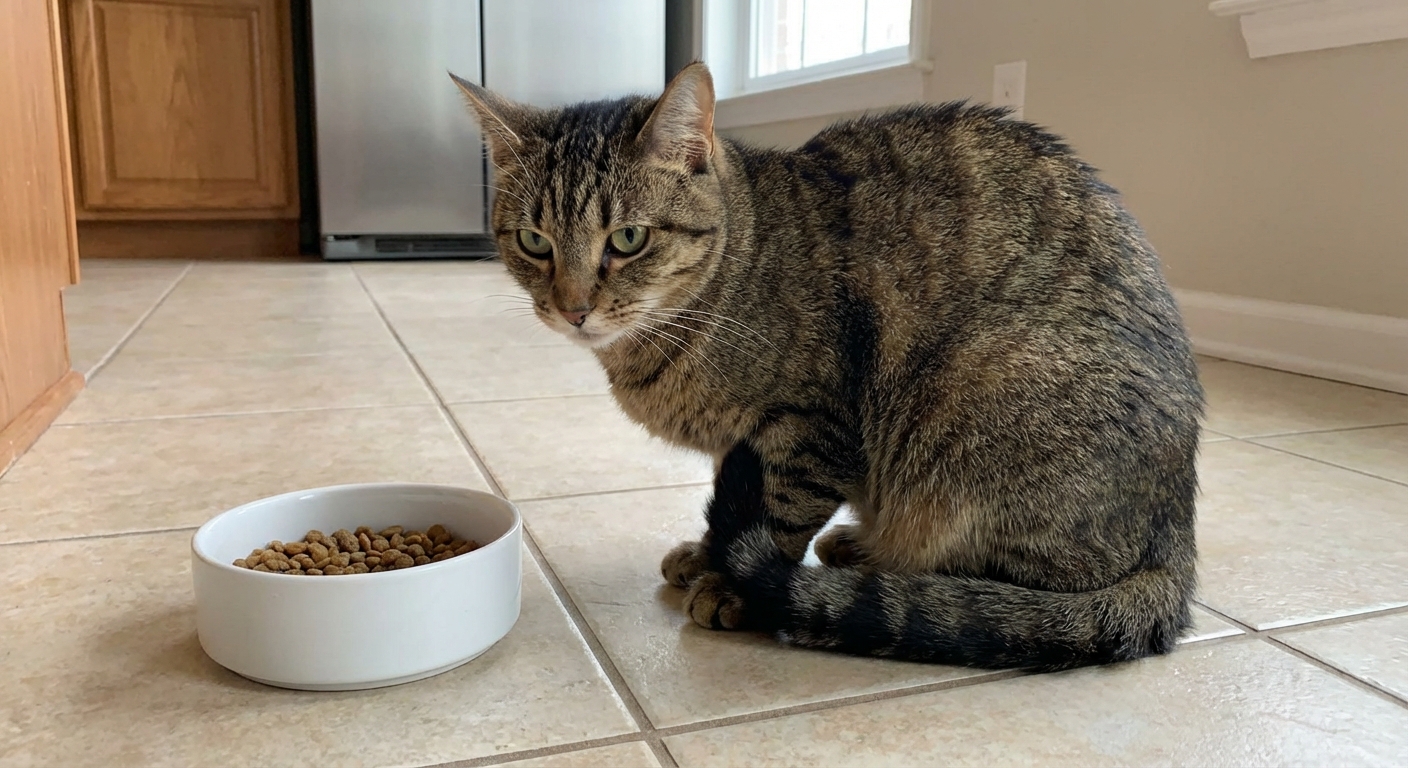
If your cat eats like they are racing a timer and then throws up minutes later, you are not alone. In veterinary clinics, we see this a lot, and the good news is that many “scarf and barf” cases improve with a few simple feeding changes. Still, vomiting can also be a sign of a medical issue, so it helps to know what is normal, what is not, and when to call your veterinarian. This article is general education and is not a substitute for veterinary care.
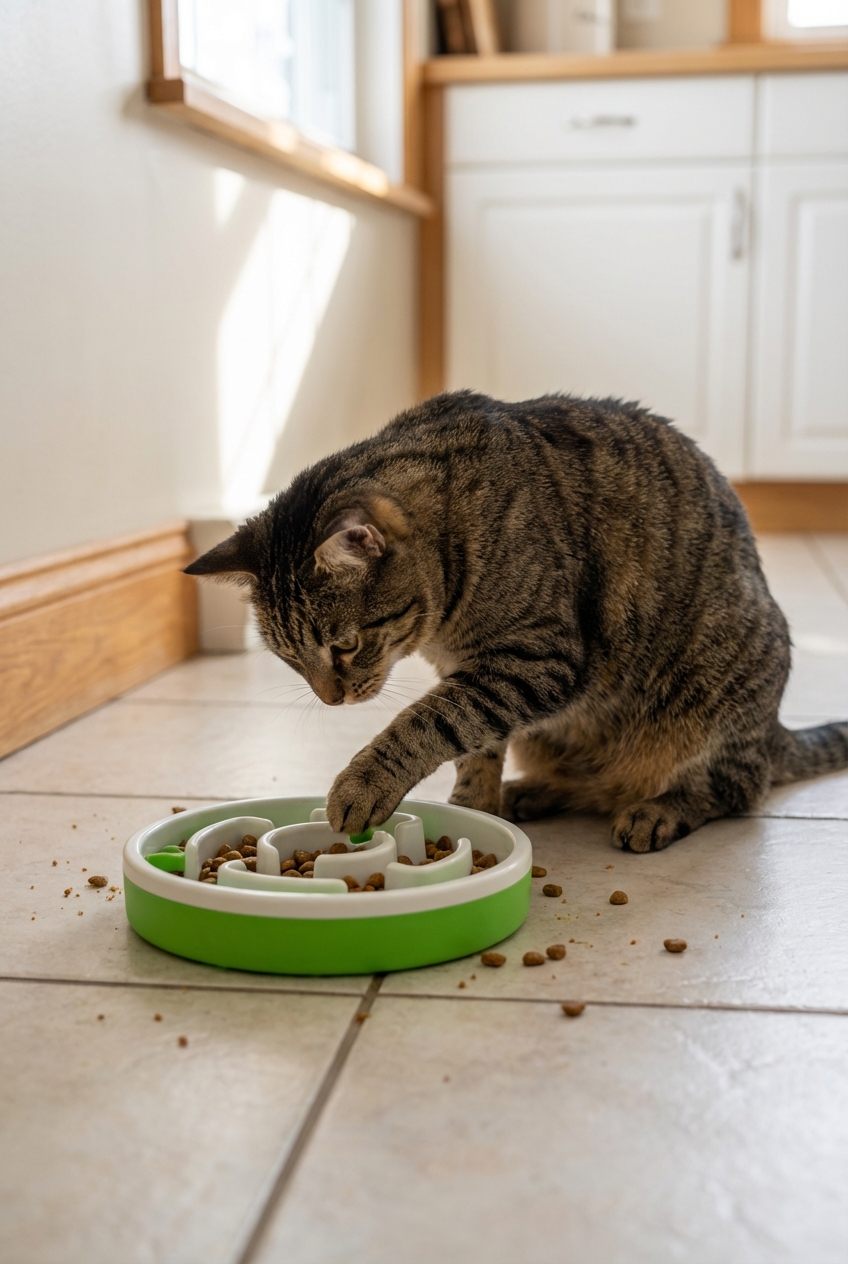
Why cats throw up after eating fast
Fast eating can trigger regurgitation or vomiting for a few reasons. Some are harmless habits, and some point to underlying problems.
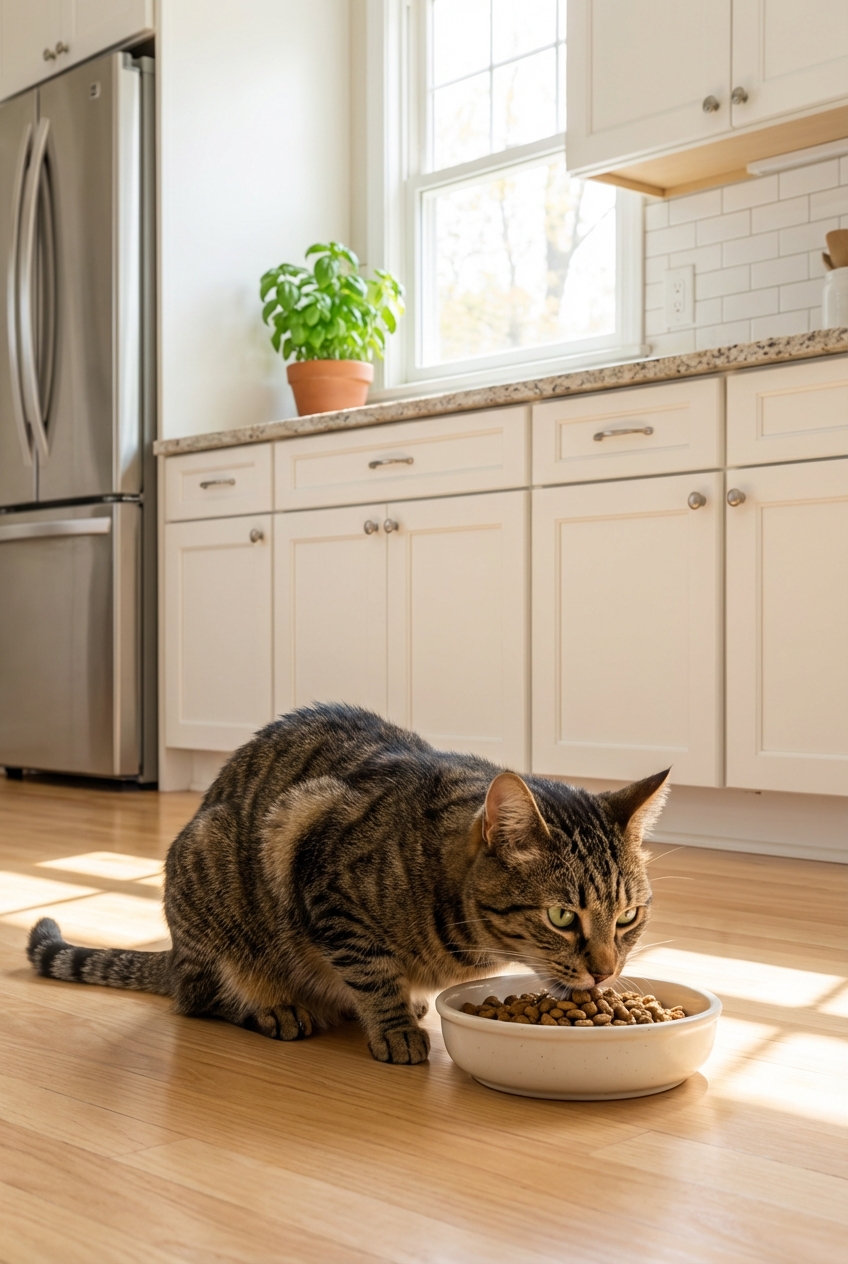
- Rapid intake and poor chewing. Gulping food quickly (especially kibble) can make it easier for food to come back up soon after eating.
- Swallowed air may contribute. Some cats take in extra air while gulping, which can add to stomach discomfort and make regurgitation more likely.
- Gastric distension (a very full stomach). A big meal eaten quickly can stretch the stomach and trigger post-meal regurgitation or vomiting.
- Hairballs and grooming. Hair in the stomach can make a cat more likely to vomit, especially after a fast meal. Also note: frequent “hairball vomiting” is not normal and is worth discussing with your veterinarian.
- Food sensitivity or diet changes. Some cats vomit more when a diet is changed too quickly or when an ingredient does not agree with them.
- Stress, competition, or routine disruptions. Multi-cat households and “food insecurity” can drive speed-eating.
- Medical causes. Parasites, inflammatory bowel disease, pancreatitis, hyperthyroidism, diabetes, dental pain, and gastrointestinal obstruction can all cause vomiting. Some conditions (like hyperthyroidism and diabetes) can also increase appetite, which can lead to frantic eating.
If your cat has a single episode after eating too fast and otherwise seems normal, simple feeding changes often help. If it becomes a pattern, shows up with other symptoms, or worsens, it is time to involve your veterinarian.
Vomiting vs. regurgitation
Many people call it all “vomit,” but your veterinarian will ask for details because it changes the next steps.
- Regurgitation is usually quick and effortless. Food comes up soon after eating, often within minutes, and it often looks similar to how it looked going down. This is common with fast eating.
- Vomiting typically includes nausea signs like drooling, lip smacking, heaving, and abdominal contractions. The material may look partially digested and may include fluid or foam. It may happen right after a meal or later (often 30 to 60+ minutes), depending on the cause.
If you can safely do so, note the timing, appearance, and whether there was heaving. Those clues are very helpful for your veterinarian.
At-home steps that help
1) Feed smaller, more frequent meals
This is often the biggest win. Instead of one or two large meals, try splitting the daily amount into 3 to 6 smaller meals. A timed automatic feeder can be a lifesaver for busy schedules.
2) Slow your cat down
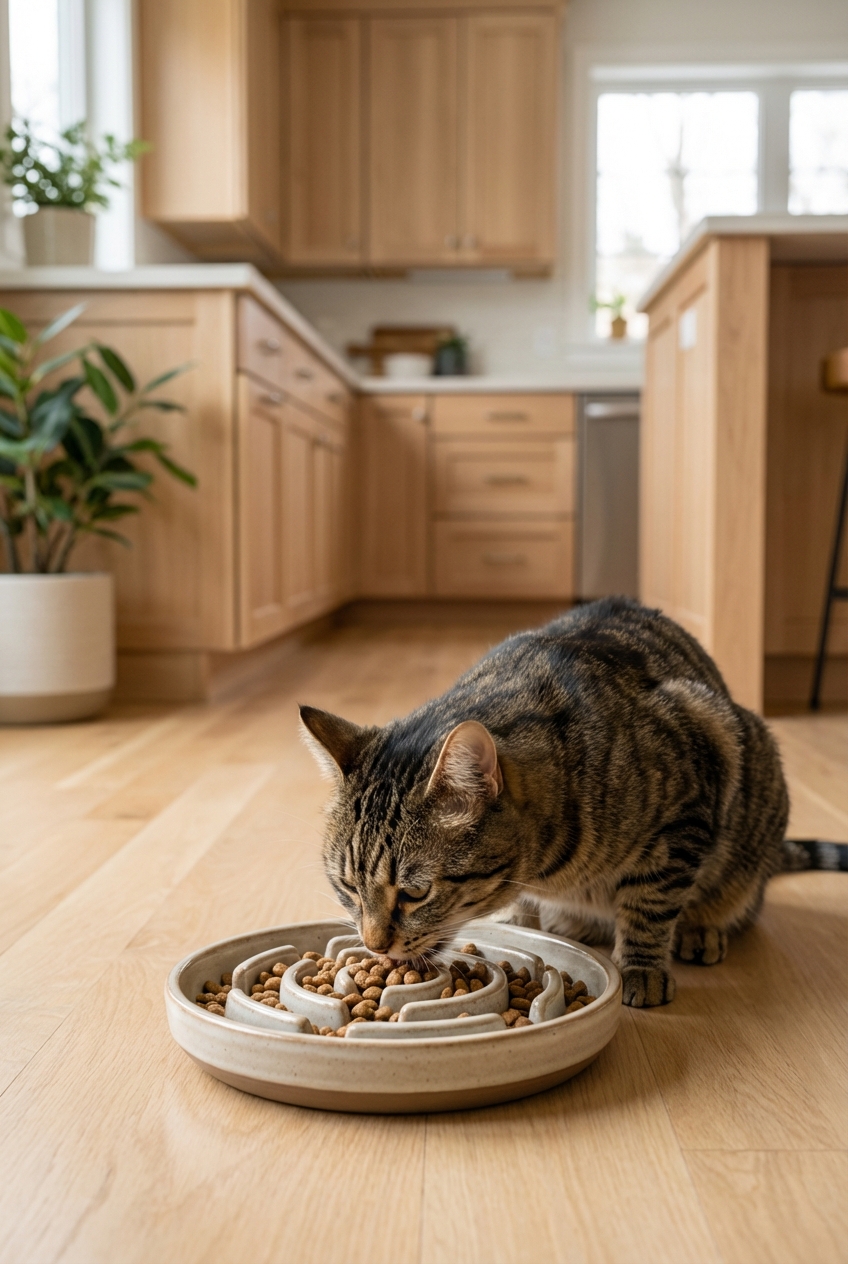
- Puzzle feeders or slow-feed bowls for kibble can dramatically reduce gulping.
- Scatter feeding (tossing kibble over a clean mat or tray) encourages natural foraging and slows intake.
- Food in multiple small dishes placed a few feet apart turns one fast meal into a mini “hunt.”
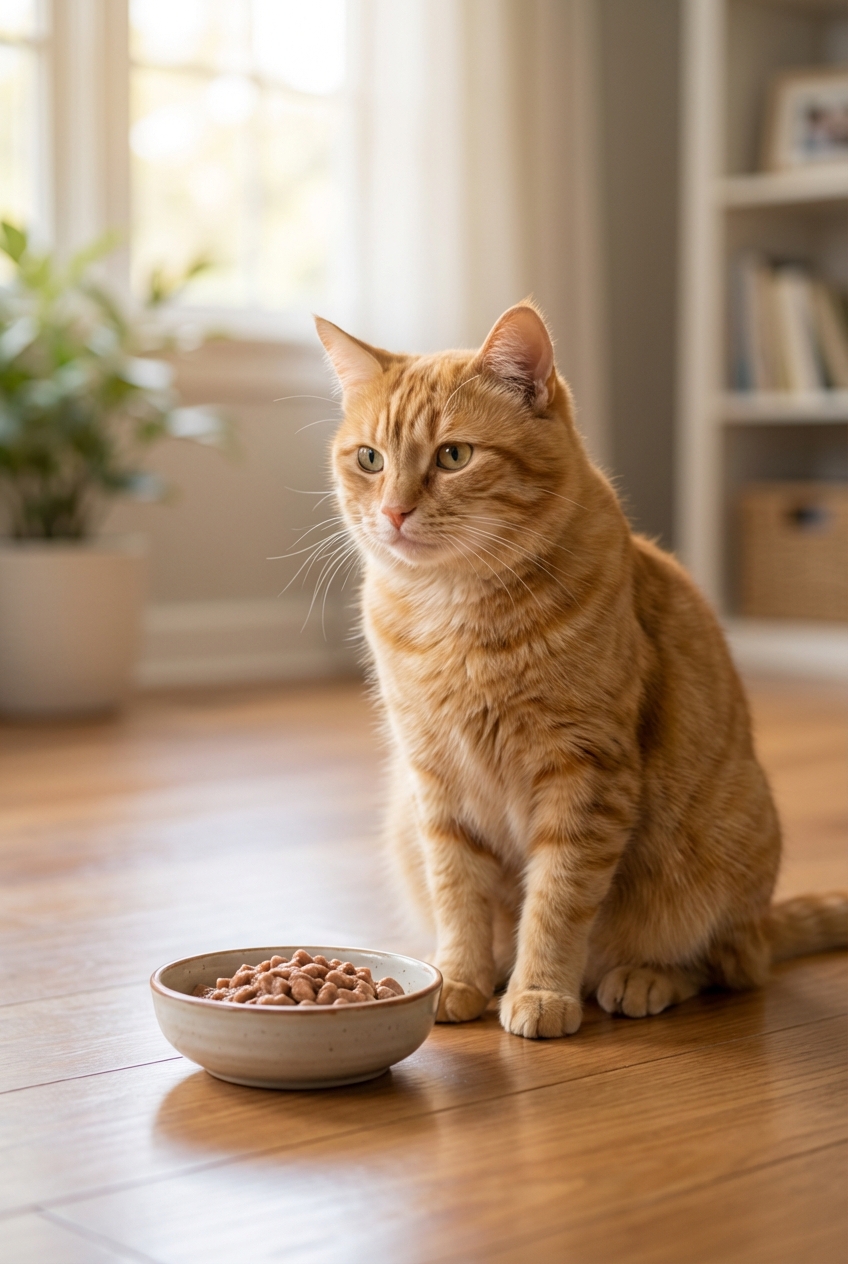
- For wet food, spread it thinly on a large, flat plate or use a lick mat to slow licking.
3) Portion accuracy matters
Overfeeding can worsen speed-eating and post-meal vomiting. Measure your cat’s daily amount carefully, and consider using a kitchen scale for consistent portions (cups can vary). If you are unsure how much to feed, ask your veterinarian for a target daily calorie range based on your cat’s age, body condition, and health.
4) Create a calm feeding setup
Stress can turn a normal eater into a speed eater. If you have more than one cat, feed them separately with a closed door or visual barrier. Keep the feeding area quiet, consistent, and away from the litter box.
5) Water: offer access, avoid chugging
Most cats do best with multiple water stations or a fountain. If your cat tends to gulp water and then vomit, offer smaller bowls in different areas rather than one large “chug spot.”
6) Hairball support
- Brush routinely, especially for long-haired cats.
- Ask your veterinarian about a safe hairball plan, which may include diet tweaks or lubricating gels.
7) Transition foods slowly
If you are changing diets, go slowly over 7 to 10 days (longer for sensitive cats). A gradual transition reduces stomach upset that can look like “vomiting after eating fast.”
8) Tips for wet-food-only cats
- Keep meals small and frequent. Many cats do better with several small wet meals rather than two large ones.
- Use a lick mat or spread thin. Spreading food on a flat plate can also help slow eating.
- Consider timed feeding safely. If you use a timed feeder for wet food, follow the manufacturer’s food-safety guidance (some use ice packs). Discard leftover wet food that has been out too long.
- Supervise new feeders. If your cat chews on lick mats or tries to tear them, remove the mat and switch to a flat plate to reduce ingestion risk.
When it is a red flag
Contact your veterinarian promptly if you notice any of the following:
- Repeated vomiting (more than once in 24 hours, or a pattern that continues for more than 1 to 2 days)
- Blood (red streaks) or dark, coffee-ground material
- Not eating, hiding, or acting painful
- Lethargy, fever, or weakness
- Diarrhea, dehydration, or weight loss
- Severe abdominal distension, unproductive retching, or significant distress
- Possible string, ribbon, hair tie, or toy ingestion (or if you see string at the mouth or in stool, do not pull it)
- Throwing up in a kitten, senior cat, or a cat with chronic disease
If your cat cannot keep water down, seems painful, or is vomiting repeatedly, call your veterinarian or an emergency clinic the same day.
What your veterinarian may check
If the problem is frequent or worsening, your veterinarian may recommend:
- Physical exam and weight trend
- Fecal testing for parasites
- Bloodwork to screen for issues like hyperthyroidism, kidney disease, diabetes, and inflammation
- X-rays or ultrasound if obstruction, foreign body, or gastrointestinal disease is suspected
- Diet trial for suspected food sensitivity or inflammatory bowel disease
Bring a list of foods and treats, how often vomiting occurs, and photos of the vomit if you can. I know it sounds unpleasant, but it can speed up answers.
Quick plan for this week
- Day 1: Split meals into 4 smaller portions.
- Day 2: Add a slow feeder or puzzle feeder for at least one meal.
- Day 3: Feed in a calmer space, separated from other pets.
- Day 4: Confirm portions are accurate, and adjust to your veterinarian’s guidance.
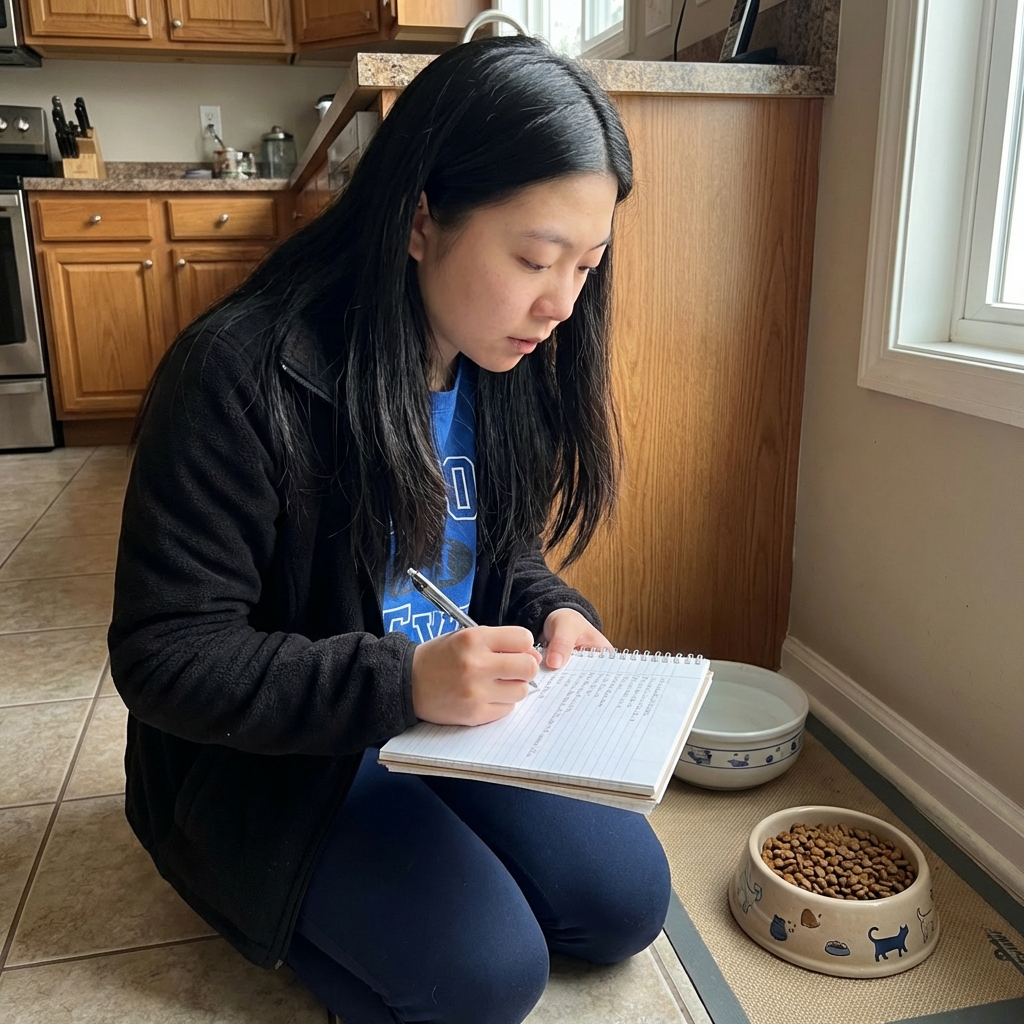
- Day 5 to 7: Track results. Note timing, whether it is regurgitation or vomiting, and any other signs.
If there is no improvement within a week, or if symptoms intensify, schedule a veterinary visit. Fast-eating regurgitation is common, but persistent vomiting is never something to ignore.