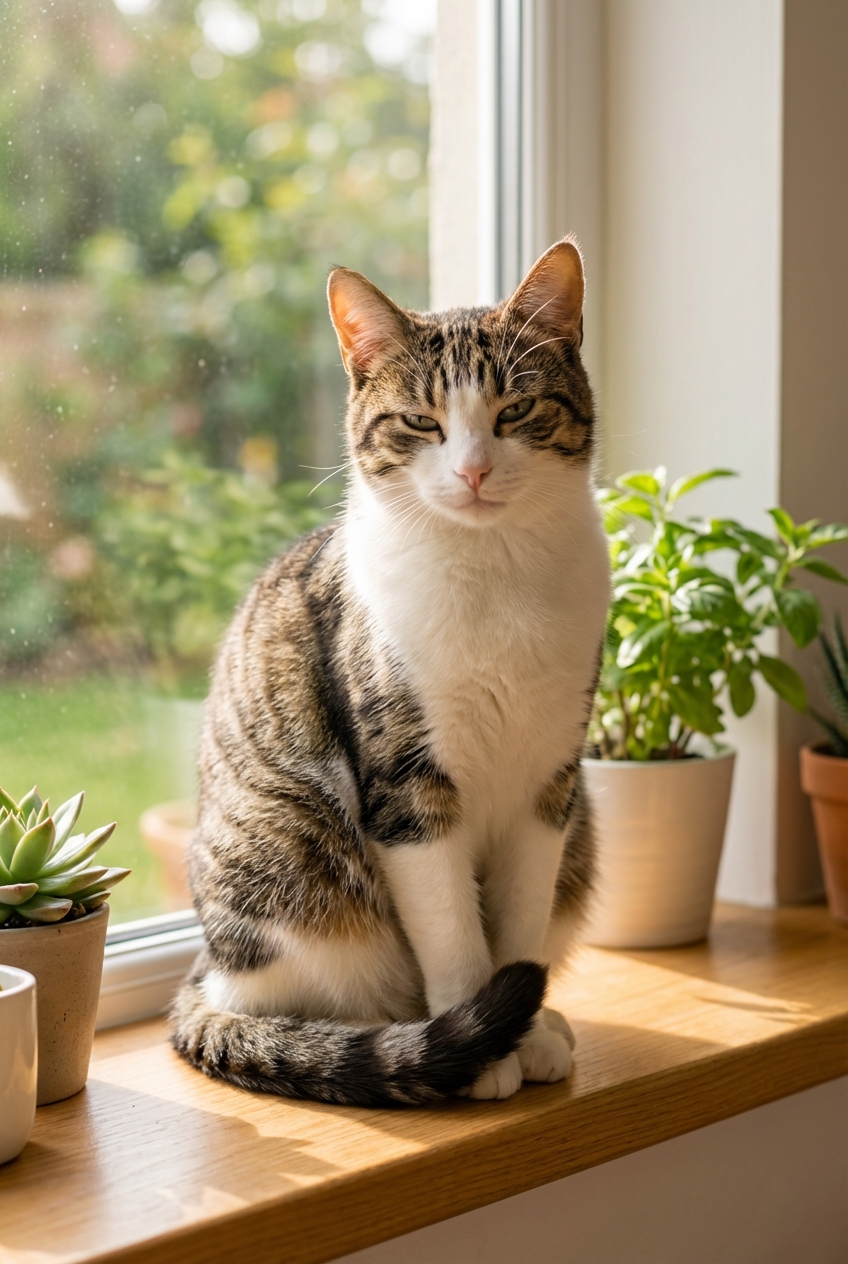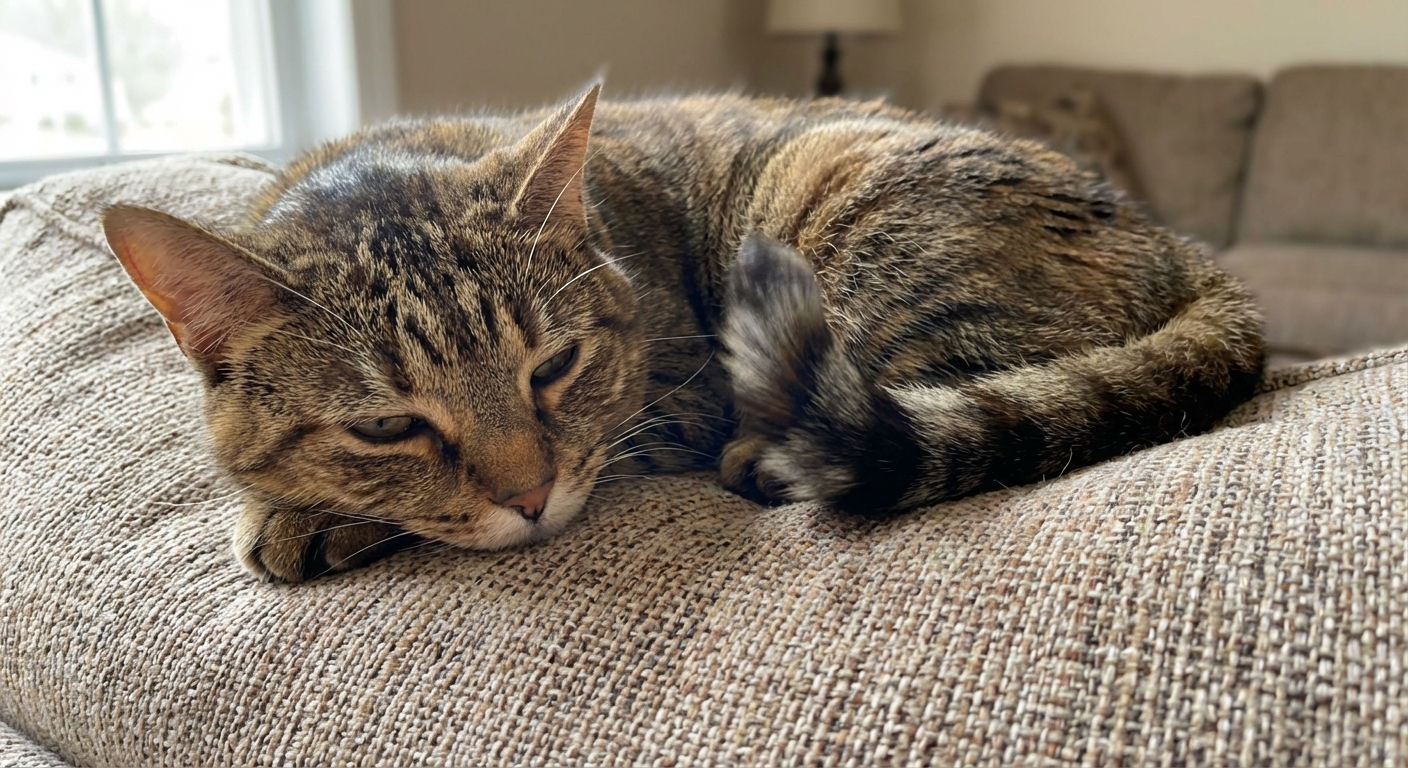
Decode cat tail twitching and swishing: focus, excitement, stress, or “I’m done.” Learn how to read ears and posture, prevent bites, and spot vet-worth...
Article
•
Designer Mixes
Cat Tail Wagging Secrets Revealed

Shari Shidate
Designer Mixes contributor
If you have ever watched your cat’s tail flick, swish, or thump and wondered, “What are you trying to tell me?”, you are not alone. Cats communicate with their bodies constantly, and the tail is one of their clearest, most honest signals. The tricky part is that a “wagging” tail in cats rarely means the same thing it means in dogs.
As a veterinary assistant, I like to think of the tail as your cat’s emotional volume knob. It can turn up with excitement, buzz with tension, or go still when your cat is focused. When you learn the patterns, you can reduce stress, avoid scratches, and build trust in a very pet-friendly way.
Do cats wag their tails like dogs?
Not really. Dogs often wag to signal friendly excitement. Cats move their tails for many reasons, and tail motion is frequently linked to stimulation, rising arousal, or irritation rather than pure happiness.
That said, tail movement is not automatically “bad.” It is simply information. Your job is to read the whole cat, not just the tail. Individual cats also vary a lot. Some simply have more expressive tails than others.
- Look at the eyes: soft blinks and relaxed lids usually mean comfort.
- Check the ears: forward is curious, sideways can be uncertain, pinned back is often warning.
- Notice the body: loose muscles are calmer, stiff posture is more alert.
Common tail motions
1) Slow swishing side to side
A slow, steady swish often means your cat is thinking hard or feeling conflicted. Many cats do this while watching birds, stalking toys, or deciding whether they want more petting.
Try this: If you are petting and the tail starts slow swishing, pause for a second. Let your cat choose whether to lean back in or step away.
2) Fast thrashing or thumping
This is one of the clearest “I’m done” or “I’m stressed” signals, especially during petting or handling. A tail that’s whipping quickly or thumping the floor often shows high arousal.
It can also show up during intense play or frustration right before a pounce, so context matters. Look for stiff posture, pinned ears, widened pupils, growling, or a sudden freeze.
What to do: If your cat looks tense, stop petting, reduce noise, and give space. This can help prevent a swat or bite.
3) The tip twitch
A twitching tail tip is a big clue that your cat is highly focused or mildly irritated. You might see it during play, when a new person enters the room, or when your cat is watching something intently.
Pet-friendly tip: If the tip twitch happens during cuddles, switch to gentler contact or stop. If it happens during play, that can be normal prey-drive focus.
4) Tail held high
A tail held upright is often a friendly greeting or a sign of confidence. Many cats approach their favorite people with a “tail-up hello.” Sometimes the tail tip is slightly curved, which can signal extra friendliness.
5) Tail vibrating or quivering
A quick little tail vibration, usually held up, often happens during happy greetings or excited anticipation, like when you are preparing food. Some cats also do this when rubbing or scent-marking.
Quick note: If the quiver is paired with backing up to a wall and a small urine spot, that can be spraying, which is more common in intact cats and can also be stress-related. If you are seeing that, talk with your veterinarian.
6) Puffed tail
A bottle-brush tail usually means fear or surprise. Your cat is trying to look bigger to protect themselves. This can happen with loud sounds, unfamiliar animals, or sudden conflict between pets.
What to do: Do not chase or corner your cat. Create an exit route and allow decompression time in a quiet space.
7) Tail tucked close to the body
A tucked tail can signal fear, insecurity, pain, or feeling unwell. If this is new or combined with hiding, appetite changes, or a hunched posture, it is worth a call to your veterinarian.
Also watch for: persistent changes in tail carriage, a tail held oddly, or any trouble moving the tail. Those deserve prompt evaluation.
8) Tail wrapped around the body
A tail wrapped around the paws or curled neatly to the side often reads as relaxed, neutral, or “I’m just observing.” In some situations, though, a tight wrap combined with a crouch and wide eyes can signal uncertainty or a desire for space.
Overstimulation
One of the biggest misunderstandings I see is when a cat seems to enjoy petting, then the tail swishing escalates and a bite follows. That is often overstimulation. Your cat’s nervous system hits a threshold and the skin becomes too sensitive.
Signs you are approaching that threshold:
- Tail swishing speeds up
- Skin ripples along the back
- Ears rotate sideways or back
- Sudden head turn toward your hand
- Pupils widen
Pet-friendly fix: A simple method many people find helpful (and many cat behaviorists recommend) is “three-second pets.” Gently pet for about three seconds, then pause and let your cat choose more by leaning in, head-butting, or staying close. If your cat steps away, respect that boundary and end on a good note.
Play vs stress
Tail movement during play is normal. The key is whether your cat’s body looks loose and engaged, or tight and defensive.
Healthy play signs
- Wiggly body, bouncy movements
- Tail may flick at the tip while stalking
- Ears mostly forward
- Cat returns for more play after a brief pause
Stress signs
- Tail thrashing hard (especially with a stiff body)
- Body low and stiff, crouched without playful bounce
- Ears pinned back
- Growling, hissing, or sudden hiding
Pet-friendly tip: If play is getting intense, switch to a wand toy that creates distance between your hands and your cat’s claws. End sessions with a small treat or a meal to mimic a successful “hunt,” which helps many cats settle.
Tail signals with other pets
Tail signals also matter in multi-pet homes. A high, relaxed tail is often social and confident. A low or puffed tail can signal fear, which can trigger chasing or conflict.
- If you see puffed tails or tucked tails: separate pets calmly and reduce visual contact.
- If you see tail thrashing during introductions: pause the introduction and go slower next time.
- If one cat tail-flicks while staring: that is often rising tension. Redirect with a toy or break line-of-sight.
Tail behavior and health
Behavior is communication, but sudden changes can be medical. If your cat’s tail movement looks new or painful, or the tail is carried oddly, consider a veterinary check. Tail and lower-back pain can come from injuries, arthritis, skin conditions, and other issues.
Call your vet promptly if you notice:
- Sudden tail paralysis, limp tail, or inability to lift the tail
- Crying out when the tail base is touched
- New aggression paired with sensitivity near the back end
- Hair loss, scabs, or intense itching near the tail base (fleas are a common culprit)
- Bathroom accidents combined with tail or hind-end discomfort
Safety note
Never grab or pull a cat’s tail. If you have kids in the home, teach them to pet gently and avoid the tail entirely. If a cat is getting wiggly, swishy, or thumpy, that is your cue to pause and give space.
Quick cheat sheet
If you only remember one thing, remember this: cats often move their tails when arousal is rising, whether that arousal is positive, negative, or simply intense focus.
- Tail up: friendly, confident
- Slow swish: thinking, mildly conflicted
- Tip twitch: focused or slightly irritated
- Fast thrash: overstimulated, stressed, “stop now” (check context)
- Vibrating tail: excited greeting or anticipation (sometimes marking related)
- Puffed: scared, startled
- Tucked: fearful, insecure, or possibly painful
- Wrapped: relaxed or cautious, depending on the rest of the body
Your cat is not “being moody.” They are giving you real-time feedback. When you listen to the tail, you build trust fast.