Build calm first-aid habits for your cat with quick nose-to-tail checks, gentle “purrito” practice, a simple kit list, and clear emergency warning signs.
Article
•
Designer Mixes
Cat Stung by a Wasp: What to Do

Shari Shidate
Designer Mixes contributor
If your cat got stung by a wasp, it can be scary, especially because cats tend to get stung right where it hurts most: the face, lips, paws, or inside the mouth after trying to bite the insect. Most wasp stings cause short-lived pain and swelling. But in some cats, stings can trigger a dangerous allergic reaction (anaphylaxis) or swelling that interferes with breathing.
As a veterinary assistant, I always tell families: your job is to decide quickly whether this is a “monitor at home” situation or a “go now” emergency. This guide will help you do that.
First: Is your cat in danger right now?
Use this quick triage list. If you see any of the signs below, treat it as an emergency.
Go to an emergency vet immediately if you notice
- Trouble breathing, open-mouth breathing, wheezing, loud breathing, or blue or pale gums
- Swelling of the face, tongue, throat, or neck that is progressing
- Repeated vomiting, severe drooling, or diarrhea within minutes to a few hours after the sting
- Weakness, collapse, wobbliness, or acting “drunk”
- Hives or widespread itchy bumps
- Multiple stings or you suspect a sting inside the mouth or throat
- Known allergy to insect stings from a prior event
Breathing changes and rapidly spreading swelling are not “wait and see” symptoms. Cats can crash quickly with anaphylaxis.
Timing note: the highest-risk window for severe allergic reactions is usually the first minutes to couple of hours. Delayed swelling can still happen, so keep a closer eye on your cat for the rest of the day.
Common symptoms that are usually mild
Many cats have a localized reaction that peaks within a few hours and often improves within 24 to 48 hours.
- Sudden yelp, pawing at the face, or limping
- Small area of swelling or a firm “puffy” spot
- Redness at the sting site
- Mild drooling (often from pain, especially if stung near the mouth)
- Brief hiding, irritability, or reduced appetite for a few hours
If symptoms stay mild and your cat is breathing normally, you can usually monitor at home while providing comfort. If swelling or pain is not clearly improving by about 48 hours, or if it gets worse after the first day, call your veterinarian.
Immediate at-home steps (safe and helpful)
1) Get your cat somewhere calm and contained
Stings hurt. Pain can make even sweet cats swat or bite. Move your cat into a quiet room, and handle gently. Try not to repeatedly check the sting area if it stresses your cat.
2) Look for the sting site, but do not dig
Wasp stingers usually do not remain in the skin the way honeybee stingers do, but you may still see a tiny puncture, a red spot, or mild oozing. Rarely, there may be retained material or a visible puncture that looks more dramatic than expected. If you do not see anything obvious, that is okay. Focus on your cat’s overall condition, especially breathing.
3) Use a cool compress for swelling and pain
Wrap an ice pack or a bag of frozen peas in a thin towel and apply it for 5 to 10 minutes, then take a break. Repeat as tolerated over the next hour or two, and you can do several short sessions during the first day if it seems to help.
- Do not apply ice directly to the skin.
- If your cat hates the compress, do not force it. Stress can make things worse.
4) Prevent further stings
Remove the insect if it is still inside the home. Close your cat in a safe room while you deal with the wasp.
What not to do
- Do not give human pain medications. Many are toxic to cats. Never give acetaminophen (Tylenol), even small amounts. Avoid ibuprofen (Advil) and naproxen (Aleve) as well. If your cat needs pain relief, your vet can provide cat-safe options.
- Do not use essential oils on the skin. Cats are very sensitive to many oils.
- Do not cut the skin or squeeze the site to “get venom out.” It increases inflammation and infection risk.
- Do not apply topical creams (like hydrocortisone) near the eyes or mouth unless a veterinarian advises it.
Should you give Benadryl?
This is one of the most common questions I hear. Do not give diphenhydramine (Benadryl) unless your veterinarian tells you the dose for your cat. Cats are small, dosing errors happen easily, and some products contain added ingredients that are not safe.
In particular, avoid combination products like Benadryl-D (decongestants) or any product that also contains pain relievers.
Also, antihistamines may help with mild allergic signs, but they are not enough for true anaphylaxis. If your cat has breathing changes, weakness, collapse, or rapidly worsening facial swelling, skip the home meds and go straight to the ER.
Face and mouth stings
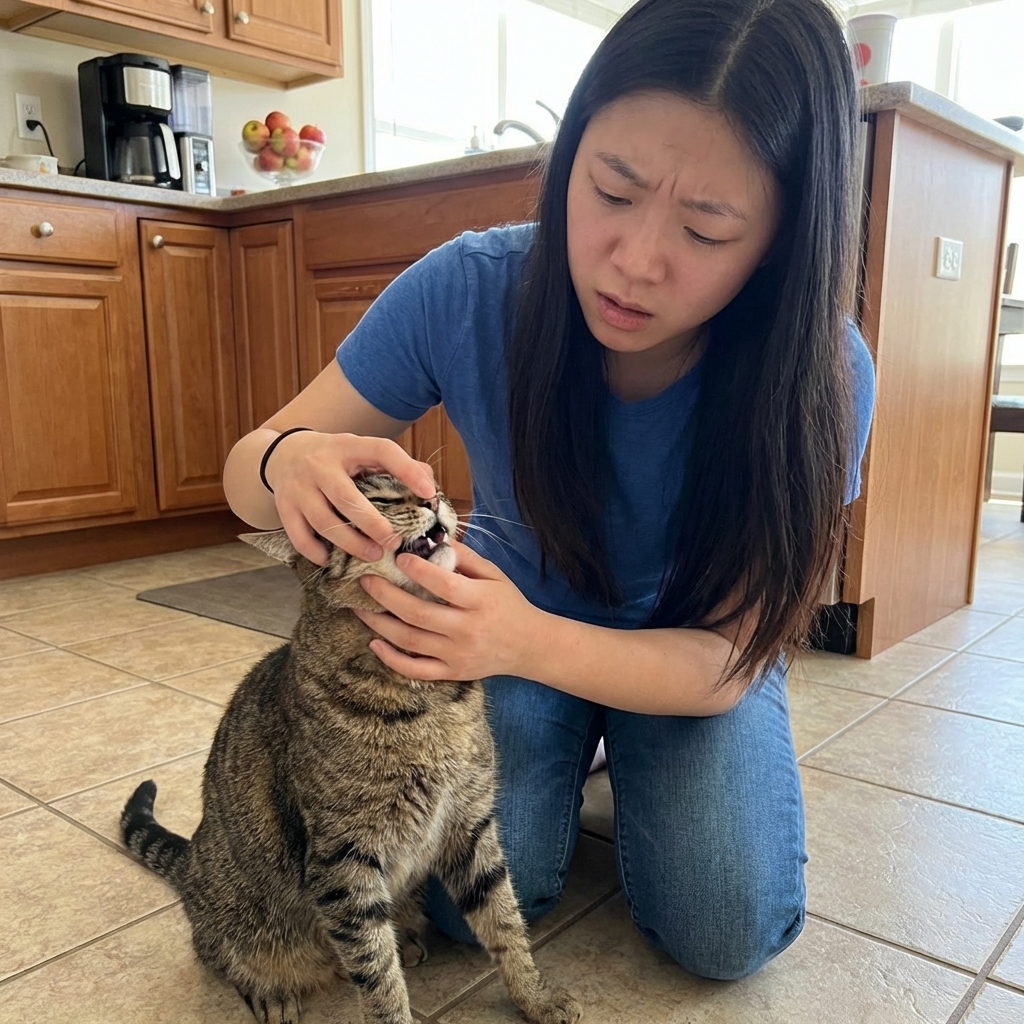
Many cats get stung on the lips, nose, or tongue because they try to investigate the wasp. Facial swelling can look dramatic, and sometimes it is still mild, but mouth and throat swelling are the main reasons we worry.
Signs a mouth or throat sting may be serious
- Excessive drooling, gagging, or repeated swallowing
- Pawing at the mouth
- Voice change or unusual meow
- Refusing food or water due to pain
- Noisy breathing or any increased effort to breathe
If you suspect a sting inside the mouth or you see your cat’s tongue swelling, seek urgent veterinary care.
Also call urgently if swelling around the eye is making it hard for your cat to open the eye, or if the eyelids are swelling shut.
What your veterinarian may do
Veterinary treatment depends on how severe the reaction is and where the sting occurred. Your vet may recommend:
- Exam and monitoring of breathing, heart rate, gum color, and blood pressure
- Injectable antihistamines for allergic swelling or hives
- Corticosteroids in select cases to reduce inflammation
- Epinephrine for anaphylaxis (this is time-sensitive)
- Oxygen therapy if breathing is affected
- IV fluids and supportive care for vomiting, diarrhea, or shock
- Pain control that is cat-safe
If there are multiple stings, your vet may watch for broader inflammation and systemic effects, especially in smaller cats.
Home monitoring (24 to 48 hours)
If your cat seems stable and your veterinarian agrees home care is appropriate, keep an eye on these basics:
- Breathing: no open-mouth breathing, no wheezing, no increased effort
- Swelling: should stay the same or slowly improve, not spread rapidly
- Eating and drinking: mild appetite drop is common, but refusal for more than a day warrants a call
- Vomiting/diarrhea: any repeated episodes after a sting should be reported
- Behavior: extreme lethargy, hiding, or collapse is not normal “just pain”
Also watch for uncommon signs of a developing infection or abscess over the next few days, especially if your cat was stung on a paw: increasing redness, heat, pus, worsening pain, or fever. If you see these, contact your veterinarian.
If anything worsens, trust your gut and call your veterinarian or an emergency clinic.
Prevent another sting
- Check patios, eaves, garages, and shed corners for nests, especially in warm months.
- Keep window screens intact and doors closed during high insect activity.
- Avoid letting cats “hunt” flying insects indoors if possible.
- If you find a nest, consider a professional removal service, especially if anyone in the home has allergies.
Cats are curious by nature. Prevention is often about making it harder for curiosity to turn into a sting.
When in doubt, call
If you are unsure whether your cat’s reaction is mild or trending serious, call your veterinarian or a local emergency clinic. Describe:
- When the sting happened
- Where the sting likely occurred (face, paw, mouth)
- Current symptoms (swelling, vomiting, drooling, breathing)
- Any history of allergies or prior sting reactions
It is always okay to ask for guidance. A quick phone triage can help you make the safest next decision.