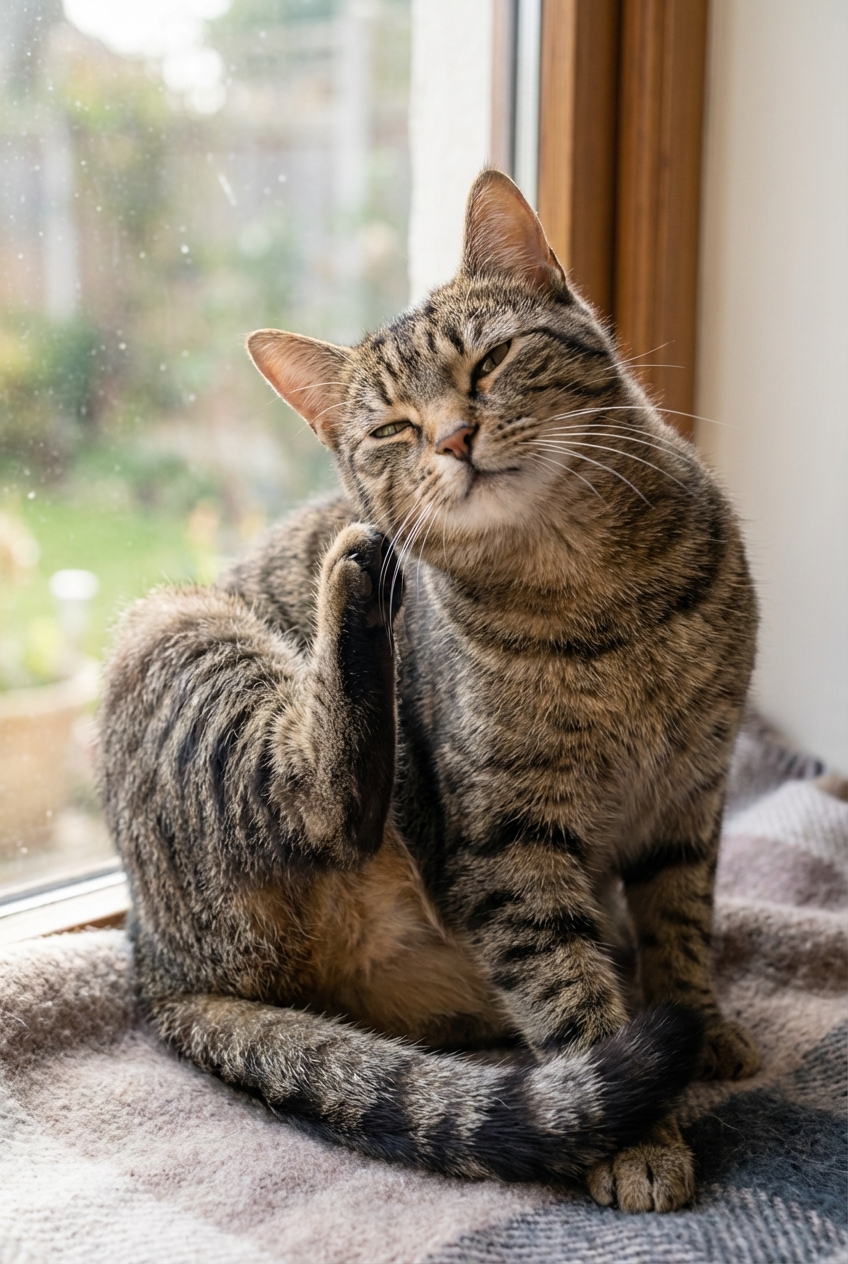
From fleas and allergies to mites, infections, ringworm, and stress grooming—learn the top causes of itchy skin in cats, key symptoms, vet diagnostics, and...
Article
•
Designer Mixes
Cat Skin Problems and Behavior

Shari Shidate
Designer Mixes contributor
As a veterinary assistant here in Frisco, Texas, I hear a version of the same worry all the time: “My cat is itching, over-grooming, or acting grouchy. Is it stress, or is something wrong with their skin?” The truth is, skin and behavior are closely connected in cats. When the skin itches or hurts, behavior changes. And when a cat is stressed, their skin and coat can take a hit too.
This guide walks you through the most common cat skin problems, what they look like at home, how they can affect behavior, and what you can do right now to help. I will also share the red flags that mean it is time to call your veterinarian.
Quick symptom checker
Use this as a starting point, not a final diagnosis. Many skin issues look similar, so your vet may recommend testing to pinpoint the cause.
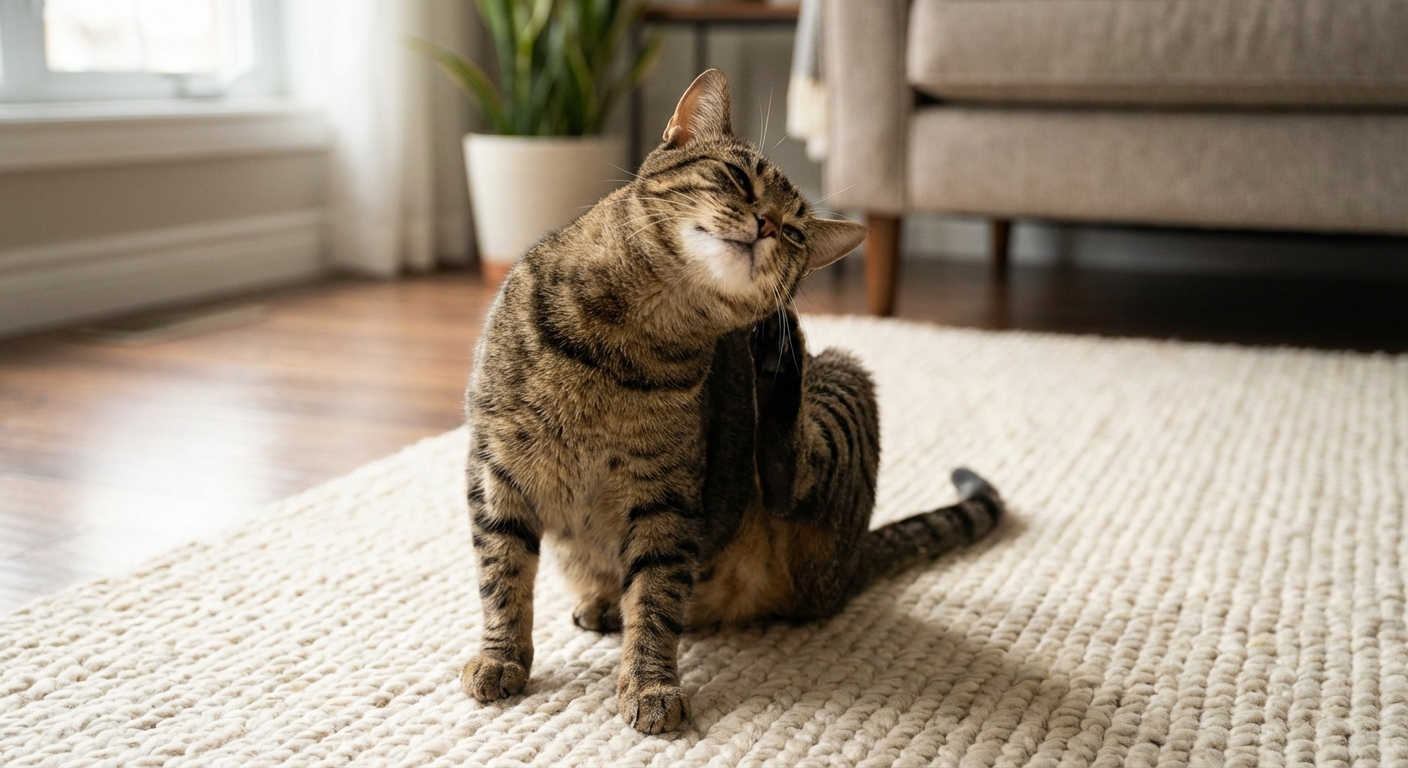
- Itching and scratching: fleas, allergies, mites, infection, dry skin
- Over-grooming or licking the belly and legs: allergies, pain, stress, urinary issues, arthritis
- Scabs, especially on head or neck: flea allergy, mites, bacterial infection
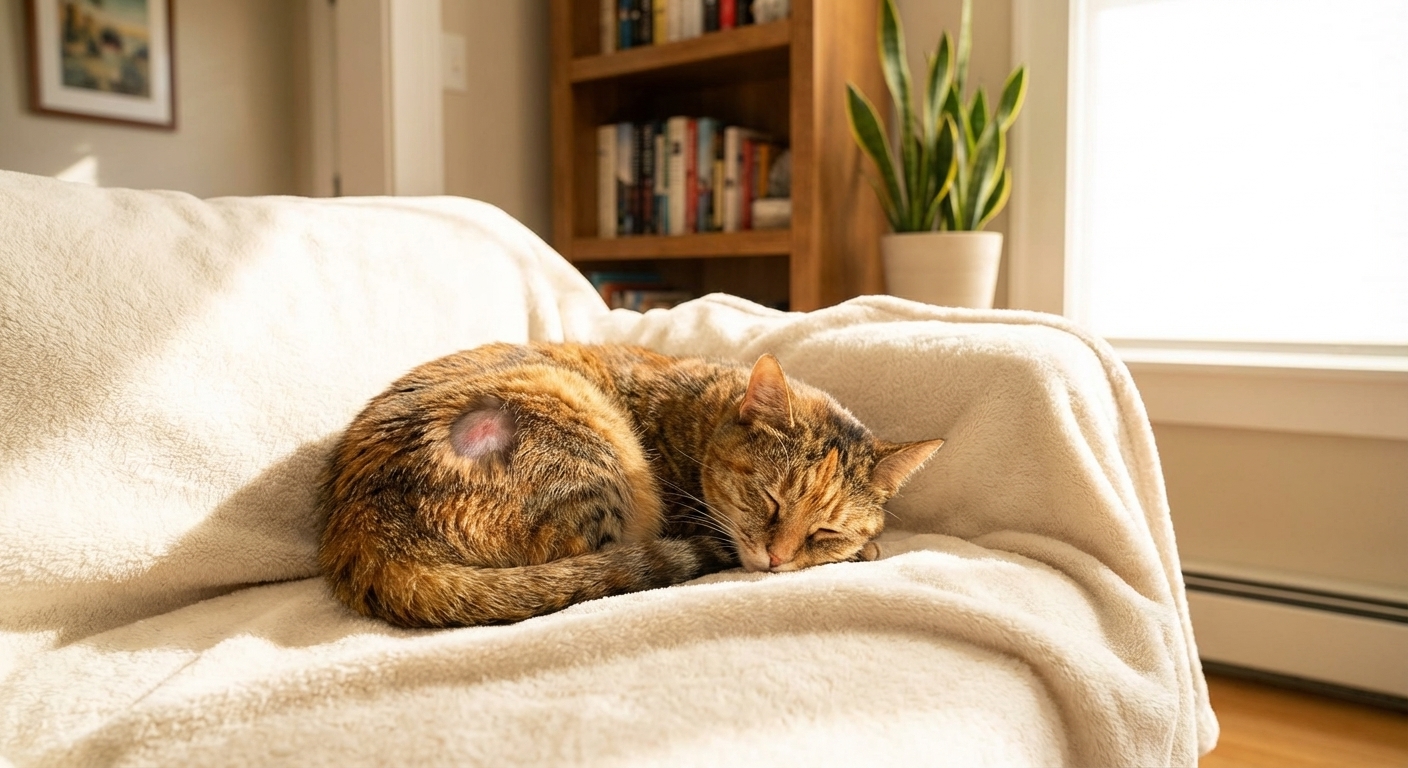
- Hair loss in patches: ringworm, mites, barbering from stress, endocrine disease (uncommon)
- Greasy coat or dandruff: poor grooming, obesity, parasites, seborrhea, nutritional deficiencies (uncommon on complete diets)
- Red, wet, or smelly skin: yeast or bacterial infection
- Ear debris or head shaking: ear mites, infection, allergies
Behavior clue: If your cat suddenly hides, swats, cries when touched, or stops jumping, consider pain or a skin infection as a possible trigger.
Why skin problems change behavior
Cats are masters at being subtle. A cat with itchy skin may not scratch constantly like a dog. Instead, you might notice:
- Irritability (less tolerant of petting, swatting, sudden bites)
- Withdrawal (hiding, sleeping more, avoiding family)
- Restlessness (pacing, changing sleep spots, grooming in bursts)
- Litter box changes (avoiding the box if it is painful to squat or if stress is high)
Itch is not just annoying. It can disrupt sleep, increase stress hormones, and make cats feel unsafe in their own bodies. That is why treating the underlying cause often improves mood quickly.
Common cat skin problems
1) Fleas and flea allergy dermatitis
Even indoor cats can get fleas. Fleas ride in on people, dogs, or through screens and doorways. Some cats are also allergic to flea saliva, meaning even a single bite may trigger intense itching.
- Signs: itching around tail base, rump, neck; tiny black specks that look like pepper (flea dirt); scabs; hair thinning
- Behavior: sudden zoomies, frantic grooming, irritability when touched near the back
At-home tip: Use a flea comb on the rump and neck. If black specks turn reddish-brown on a damp paper towel, that is flea dirt.
Texas note: In our area, flea pressure can be persistent for much of the year, so your veterinarian may recommend consistent prevention even for indoor cats.
2) Environmental allergies (atopy)
Cats can react to pollen, dust mites, mold, and more. Allergies can show up as skin issues, ear problems, and even asthma in some cats. Many cats show allergies through over-grooming, scabs, or specific lesion patterns, not classic “hives.”
- Signs: itchy face and ears, recurrent ear infections, licking belly or inner thighs, seasonal flare-ups, small scabs or crusts
- Behavior: head shaking, face rubbing, increased hiding during flare-ups
3) Food allergy or food sensitivity
True food allergy is less common than people think, but it is real. The most common culprits are proteins (like chicken, beef, or fish), not grains.
- Signs: year-round itching, recurrent ear issues, vomiting or soft stool in some cats
- Behavior: discomfort after meals, increased grooming, crankiness
Evidence-based note: A vet-guided elimination diet trial is the diagnostic standard for cutaneous adverse food reactions. It typically takes 8 to 12 weeks (sometimes longer) using a prescription hydrolyzed diet or a carefully chosen novel protein diet. Blood, saliva, and hair tests are not considered reliable for diagnosing food allergy in cats.
4) Mites (ear mites, mange mites)
Ear mites are especially common in kittens and multi-cat homes, but any cat can be affected.
- Signs: dark crumbly ear debris (often like coffee grounds), intense ear itching, head shaking; some mites also cause body scabs and hair loss
- Behavior: head tilt, sensitivity around the ears, avoiding handling
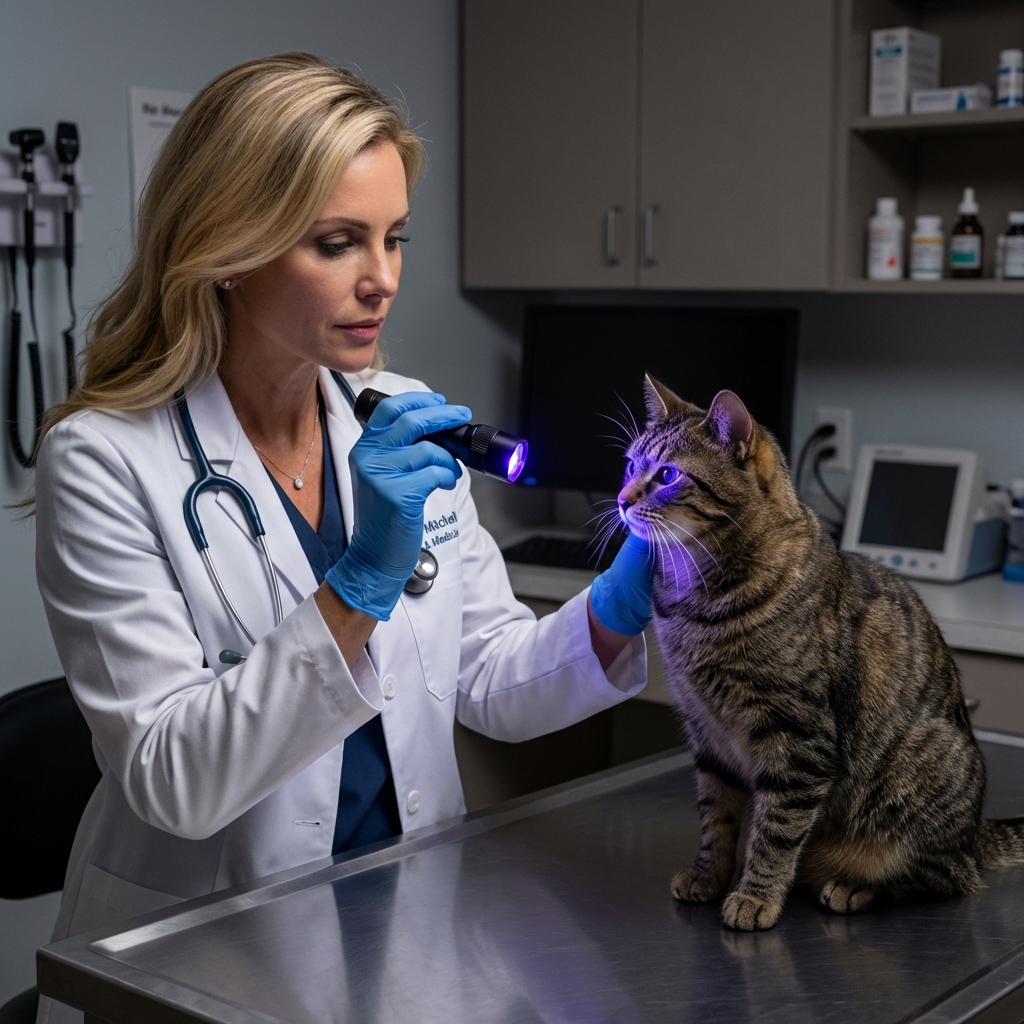
5) Ringworm (fungal infection)
Ringworm is contagious to other pets and people. It does not always form a perfect ring, and some cats are carriers without obvious lesions.
- Signs: patchy hair loss, broken hairs or stubbly “barbered” spots, mild scaling, sometimes redness
- Behavior: often normal, but some cats groom more in affected areas
Containment tip: If ringworm is possible, limit close contact until your vet can advise you, wash bedding regularly, and vacuum often. Avoid starting over-the-counter antifungals without guidance, because diagnosis and treatment plans matter for both pets and people.
6) Bacterial and yeast infections
These are often secondary problems. The skin barrier gets damaged from allergies, fleas, or over-grooming, then bacteria or yeast overgrow.
- Signs: odor, redness, greasy feel, crusting, oozing sores, moist dermatitis
- Behavior: painful reaction to petting, decreased activity, hiding
7) Acne (chin acne)
Feline acne can look like blackheads on the chin. It can become infected and sore.
- Signs: black specks on chin (comedones), swelling, crusts, sometimes pimples
- Behavior: rubbing chin, avoiding chin scratches, irritability
Small change that helps: Switch plastic bowls to stainless steel or ceramic and wash daily.
8) Stress-related over-grooming
Behavior and skin overlap the most here. Cats can “barber” their fur from anxiety, conflict with another pet, boredom, or changes in the household.
- Signs: symmetrical hair loss on belly, inner thighs, or forelegs; the skin may look normal at first
- Behavior: hiding, startle response, nighttime vocalizing, tension with other pets
Important: Many cats with “stress grooming” also have allergies or pain. It is not either-or.
9) Allergy pattern: eosinophilic lesions
This is a common allergy-associated pattern in cats. You might hear your vet call it eosinophilic granuloma complex.
- Signs: raised red plaques (often on the belly or inner thighs), firm linear bumps (sometimes on the back of the legs), or a chronic upper lip sore
- Behavior: licking, guarding certain areas, irritability during flare-ups
10) Abscesses and bite wounds
Cats can hide wounds under fur. A bite wound can seal over and form an abscess that becomes painful fast.
- Signs: sudden swelling, heat, pain, drainage or odor, a new limp, a cat who suddenly will not be touched
- Behavior: hiding, growling, decreased appetite
11) Pain and medical conditions that look like grooming problems
If your cat obsessively licks one area or avoids being touched, consider pain. Arthritis, dental disease, and urinary tract discomfort can all change grooming patterns and mood.
- Signs: licking low belly or flank, decreased jumping, stiffness, litter box avoidance
- Behavior: irritability, hiding, sudden aggression when handled
12) Endocrine and internal causes (less common)
Hormonal or internal diseases are less common causes of skin issues in cats compared with parasites and allergies, but they can contribute to poor coat quality and hair loss. Your vet may consider these if there are other clues like weight change, increased thirst, or ongoing digestive issues.
What to do at home today
You do not need to solve everything in one day. Start with safe, supportive steps that help your cat feel better and give your veterinarian clearer clues.
1) Check parasite protection
If your cat is not on consistent, vet-recommended flea prevention, that is step one for many itchy cats. Over-the-counter products can be ineffective or unsafe in cats, especially if the wrong product is used.
2) Track patterns
- When did it start?
- Is it seasonal or constant?
- What body areas are affected?
- Any new foods, treats, litter, cleaners, or plants?
- Any new pets, guests, construction, or schedule changes?
3) Reduce stress in simple ways
- Predictable routine: meals and play at similar times daily
- Daily play: 5 to 10 minutes twice a day with a wand toy
- Safe zones: a quiet room, covered bed, or cat tree
- Litter box basics: one box per cat plus one extra, scooped daily
4) Support the skin barrier
Ask your veterinarian about an omega-3 supplement made for cats. Omega-3 fatty acids can support skin health and reduce inflammation in some cats, especially when allergies are involved. Do not start human supplements without guidance, since dosing and purity matter.
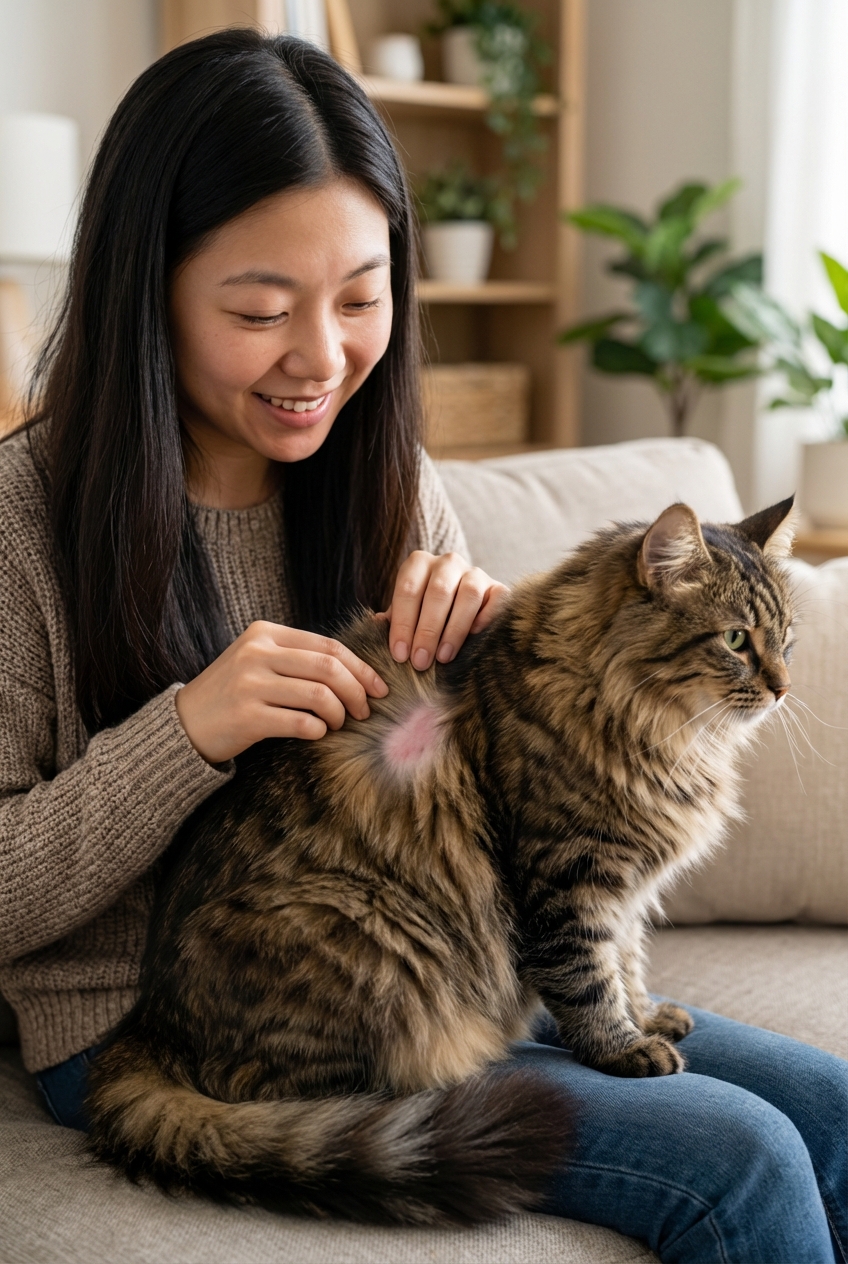
5) Take clear photos
Photos of lesions, hair loss, the chin, and the ears can be incredibly helpful, especially if symptoms come and go.
What not to do
- Do not use dog flea or tick products on cats. Some contain pyrethroids that can be life-threatening to cats.
- Do not give human antihistamines or steroids unless your veterinarian specifically instructs you.
- Do not apply essential oils to your cat’s skin or in diffusers without veterinary guidance. Cats metabolize some compounds differently, which can make many oils risky.
- Do not use human shampoo or bathe too often. It can dry out the skin and worsen irritation.
- Do not assume “it is just stress.” Rule out parasites, infection, allergy, and pain first.
When to see a vet urgently
Skin issues can move from mild to severe quickly. Call your veterinarian promptly if you notice:
- Open sores, swelling, pus, or a strong odor
- Rapidly spreading hair loss or crusting
- Head shaking with pain, bleeding ears, or ear swelling
- Not eating, lethargy, fever, or sudden behavior changes
- Breathing changes along with itch (possible allergic flare or asthma)
- Any concern for ringworm in a household with children, elderly, or immunocompromised people
How your veterinarian may diagnose the cause
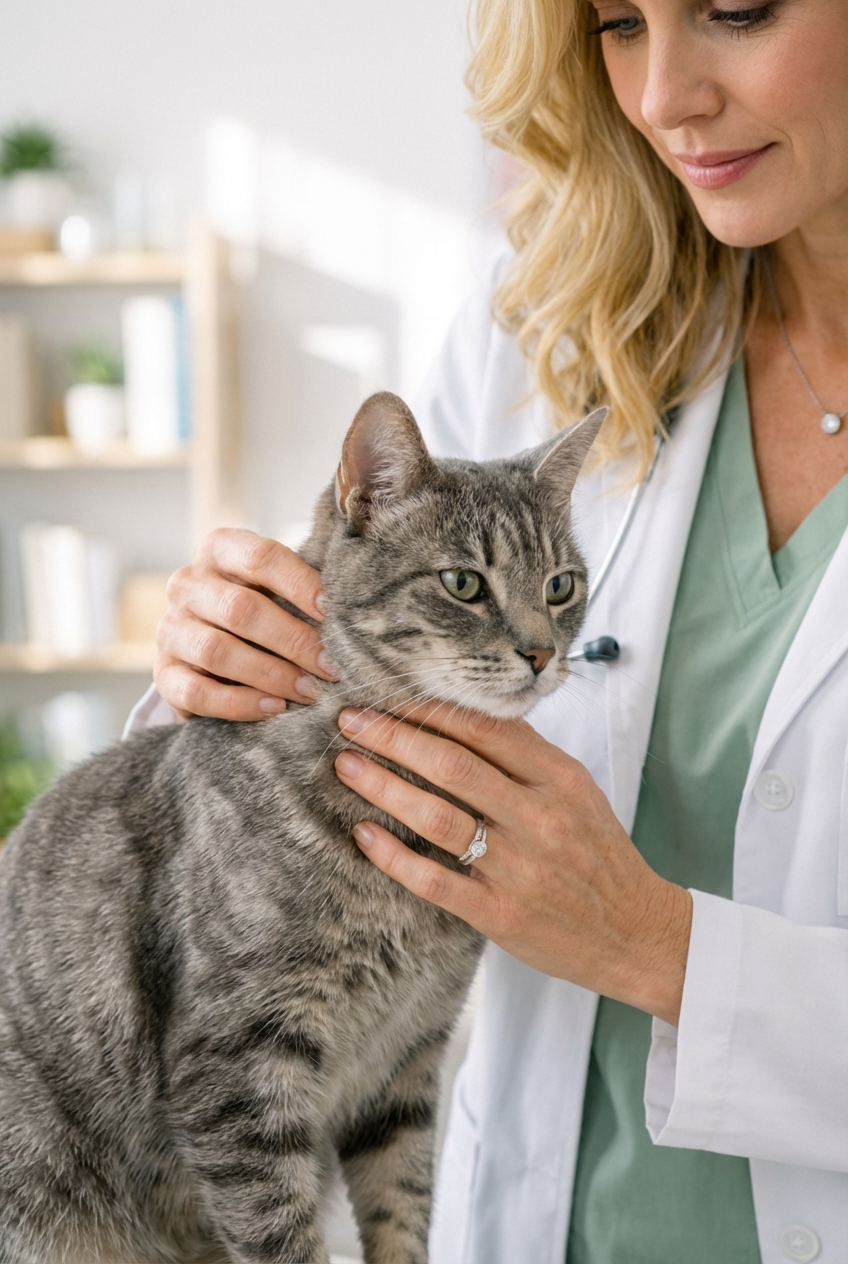
Getting to the root of skin problems is often a step-by-step process. Common tests include:
- Skin cytology (tape prep or impression smear) to look for bacteria or yeast
- Skin scraping to check for mites
- Fungal testing (culture or PCR) for ringworm
- Ear cytology for infections or mites
- Flea control trial for suspected flea allergy
- Elimination diet trial for suspected food allergy
- Bloodwork if an internal condition is suspected
The goal is targeted treatment. When we guess, cats often stay itchy longer than they need to.
Long-term plan
- Year-round parasite prevention if recommended for your region and your cat’s lifestyle
- Regular grooming, especially for long-haired cats, to prevent mats and help you spot problems early
- Weight support so your cat can groom comfortably and maintain a healthy skin barrier
- Environmental enrichment to reduce stress grooming: climbing, scratching posts, play, and quiet resting areas
- Nutrition you can trust: a complete and balanced diet appropriate for your cat’s age and health status, with vet guidance for supplements
If you take away one thing, let it be this: when skin improves, behavior often improves too. Your cat is not being “difficult.” They are trying to cope with discomfort the only way they know how.
Frequently asked questions
Can my cat be itchy without fleas?
Yes. Allergies, mites, infections, and dry skin can all cause itch. But fleas are so common and so easy to miss that vets often start with a solid flea prevention plan.
Why is my cat licking their belly so much?
Common causes include allergies, stress, and pain. Belly licking can also be linked to urinary tract discomfort. If you see frequent trips to the litter box, crying while urinating, or urine outside the box, seek veterinary care right away.
Is coconut oil safe for cat skin?
I recommend caution. Cats often lick anything applied to their coat, and too much fat can upset the stomach. Some cats also develop irritation. If you want a topical product, ask your vet for a cat-safe option.
Should I bathe my cat for dandruff?
Sometimes bathing helps, but it can also dry the skin further if the wrong product is used. Cat-specific shampoos and a plan tailored to the cause of dandruff work best.